

Understanding Korean Culture for International Students
 |
Description
Book Introduction
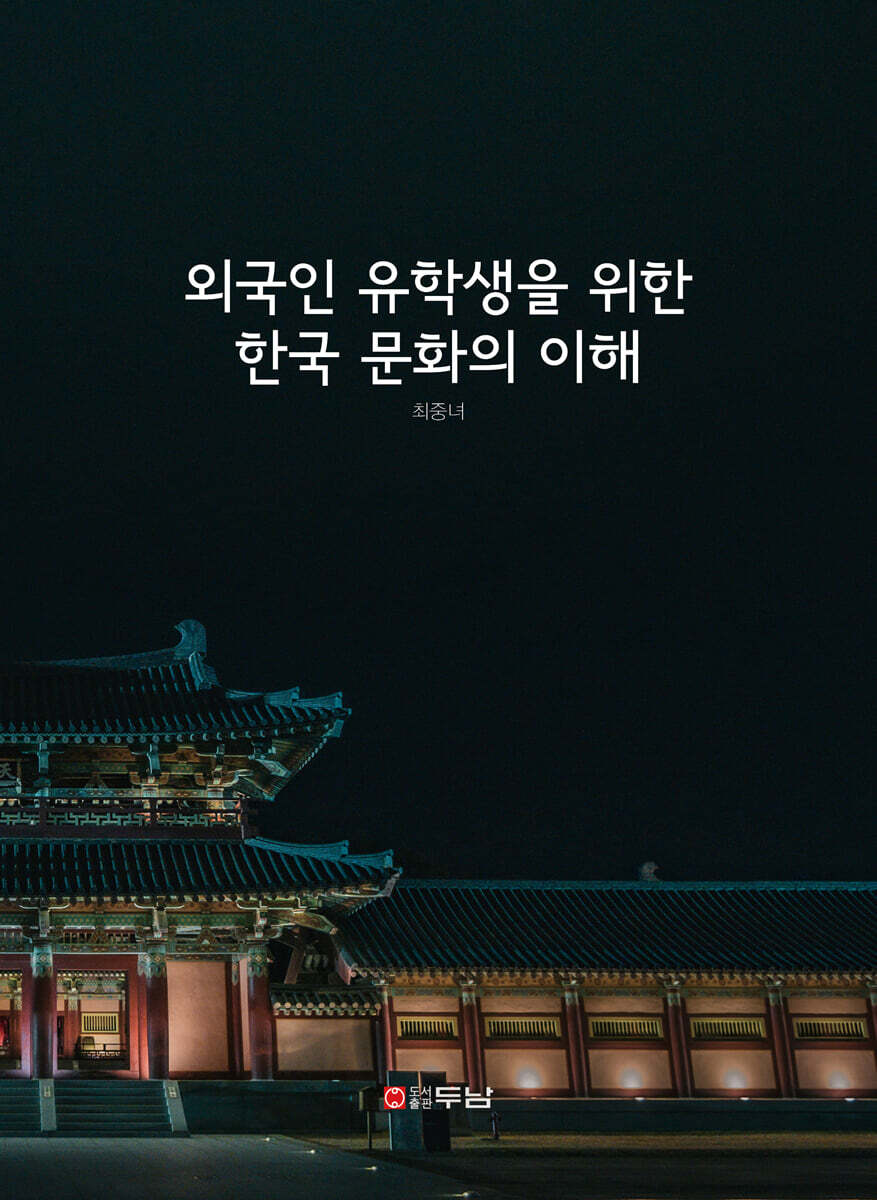
"Understanding Korean Culture for International Students" is a textbook designed to help international students understand Korean culture.
By expanding and specializing the cultural sector, which was merely a part of language education in Korean language education, into a practical cultural education area, we aimed to develop Korean culture that foreign learners want to know, and that serves as an important foundation for understanding Korea and learning Korean, in accordance with the learners' language capabilities.
To this end, we categorized Korean culture, which constitutes the lives of Koreans, and attempted to modularize cultural items to present as many diverse aspects as possible.
Through this process, it became possible to create more realistic and diverse cultural content.
Culture can be broadly divided into ideological culture and achievement culture.
Ideological culture is an anthropological or sociological concept of culture that refers to the attitudes, customs, daily activities, ways of thinking, and values of members of a society.
Achievement culture refers to achievements in geography, history, art, science, and social sciences, and includes tangible or intangible relics inherited from ancestors.
In this textbook, the educational content is organized by classifying it into ideological culture and achievement culture.
First, ideological culture was subdivided into values, nationality, emotions, thoughts, and beliefs.
The culture of achievement was re-established with Korean studies knowledge and cultural knowledge.
And Korean studies knowledge was composed of formal and daily life, and cultural knowledge was composed of concrete and abstract knowledge.
By expanding and specializing the cultural sector, which was merely a part of language education in Korean language education, into a practical cultural education area, we aimed to develop Korean culture that foreign learners want to know, and that serves as an important foundation for understanding Korea and learning Korean, in accordance with the learners' language capabilities.
To this end, we categorized Korean culture, which constitutes the lives of Koreans, and attempted to modularize cultural items to present as many diverse aspects as possible.
Through this process, it became possible to create more realistic and diverse cultural content.
Culture can be broadly divided into ideological culture and achievement culture.
Ideological culture is an anthropological or sociological concept of culture that refers to the attitudes, customs, daily activities, ways of thinking, and values of members of a society.
Achievement culture refers to achievements in geography, history, art, science, and social sciences, and includes tangible or intangible relics inherited from ancestors.
In this textbook, the educational content is organized by classifying it into ideological culture and achievement culture.
First, ideological culture was subdivided into values, nationality, emotions, thoughts, and beliefs.
The culture of achievement was re-established with Korean studies knowledge and cultural knowledge.
And Korean studies knowledge was composed of formal and daily life, and cultural knowledge was composed of concrete and abstract knowledge.
index
Chapter 1: Lecture Guide and Various Greetings in Korea
1.
Course Introduction·10
2.
Class Schedule·11
3.
Various Greetings from Korea·12
Part 1 Society
Chapter 2: Korea's Four Seasons
1.
The Four Seasons of Korea·26
2.
Seasonal Foods·28
3.
Seasonal Outdoor Activities·29
Chapter 3: Korean Education
1.
Early Childhood Education Institutions in Korea·36
2.
Korean elementary, middle, and high school educational institutions·37
3.
Korea's College Entrance Exam System and Private Education·38
Chapter 4: Korean Corporate Culture and Employment
1.
Korean Corporate Culture·48
2.
Employment Situation in Korea·50
3.
Preparing for Employment·51
Chapter 5: Healthcare and Safety in Korea
1.
Types of Medical Institutions in Korea and How to Use Them·60
2.
Safety Rules and Response Tips·61
3.
Korean Folk Remedies·62
Part 2 Culture
Chapter 6: Korean Food
1.
Types and Characteristics of Korean Food·72
2.
Food for Special Occasions·73
3.
Foods to Eat for Health·74
4.
Korean Dining Etiquette·75
Chapter 7: Religion in Korea
1.
Korean Folk Religion·82
2.
Religions in Korea Today·84
Chapter 8: Korean Popular Culture
1.
Diverse Korean Popular Culture·92
2.
Korean pop culture loved by people around the world·94
Chapter 9: Geography and Tourism in Korea
1.
Geographical Features of Korea·102
2.
Living in Korea's Diverse Geography·104
3.
Korean tourist destinations·105
Part 3 History
Chapter 10: Korean History
1.
The Flow of Korean History·118
2.
Korean currency·122
Chapter 11: Symbols of Korea
1.
Korean Flag and National Anthem·132
2.
Chrysanthemum and Hangul·133
3.
Arirang and Taekwondo·134
Chapter 12: Korean Traditional Culture
1.
Korean Etiquette·142
2.
Public Etiquette in Korea·145
Chapter 13: Korea's Cultural Heritage
1.
World Heritage Sites of Korea·154
2.
Intangible Cultural Heritage of Humanity in Korea·157
3.
Korea's World Documentary Heritage·159
1.
Course Introduction·10
2.
Class Schedule·11
3.
Various Greetings from Korea·12
Part 1 Society
Chapter 2: Korea's Four Seasons
1.
The Four Seasons of Korea·26
2.
Seasonal Foods·28
3.
Seasonal Outdoor Activities·29
Chapter 3: Korean Education
1.
Early Childhood Education Institutions in Korea·36
2.
Korean elementary, middle, and high school educational institutions·37
3.
Korea's College Entrance Exam System and Private Education·38
Chapter 4: Korean Corporate Culture and Employment
1.
Korean Corporate Culture·48
2.
Employment Situation in Korea·50
3.
Preparing for Employment·51
Chapter 5: Healthcare and Safety in Korea
1.
Types of Medical Institutions in Korea and How to Use Them·60
2.
Safety Rules and Response Tips·61
3.
Korean Folk Remedies·62
Part 2 Culture
Chapter 6: Korean Food
1.
Types and Characteristics of Korean Food·72
2.
Food for Special Occasions·73
3.
Foods to Eat for Health·74
4.
Korean Dining Etiquette·75
Chapter 7: Religion in Korea
1.
Korean Folk Religion·82
2.
Religions in Korea Today·84
Chapter 8: Korean Popular Culture
1.
Diverse Korean Popular Culture·92
2.
Korean pop culture loved by people around the world·94
Chapter 9: Geography and Tourism in Korea
1.
Geographical Features of Korea·102
2.
Living in Korea's Diverse Geography·104
3.
Korean tourist destinations·105
Part 3 History
Chapter 10: Korean History
1.
The Flow of Korean History·118
2.
Korean currency·122
Chapter 11: Symbols of Korea
1.
Korean Flag and National Anthem·132
2.
Chrysanthemum and Hangul·133
3.
Arirang and Taekwondo·134
Chapter 12: Korean Traditional Culture
1.
Korean Etiquette·142
2.
Public Etiquette in Korea·145
Chapter 13: Korea's Cultural Heritage
1.
World Heritage Sites of Korea·154
2.
Intangible Cultural Heritage of Humanity in Korea·157
3.
Korea's World Documentary Heritage·159
Publisher's Review
preface
Today, South Korea has achieved the status of a global nation ranked among the top 10 in various fields, including industry, culture, sports, and hosting international events.
Along with these developments, more than 1.56 million foreigners are residing in South Korea.
At a time like this, people around the world who are interested in Korea are also becoming more interested in Korean culture.
It is time for an in-depth discussion about what Korean culture is and how it should be conveyed.
"Understanding Korean Culture for International Students" is a textbook designed to help international students understand Korean culture.
By expanding and specializing the cultural sector, which was merely a part of language education in Korean language education, into a practical cultural education area, we aimed to develop Korean culture that foreign learners want to know, and that serves as an important foundation for understanding Korea and learning Korean, in accordance with the learners' language capabilities.
To this end, we categorized Korean culture, which constitutes the lives of Koreans, and attempted to modularize cultural items to present as many diverse aspects as possible.
Through this process, it became possible to create more realistic and diverse cultural content.
Culture can be broadly divided into ideological culture and achievement culture.
Ideological culture is an anthropological or sociological concept of culture that refers to the attitudes, customs, daily activities, ways of thinking, and values of members of a society.
Achievement culture refers to achievements in geography, history, art, science, and social sciences, and includes tangible or intangible relics inherited from ancestors.
In this textbook, the educational content is organized by classifying it into ideological culture and achievement culture.
First, ideological culture was subdivided into values, nationality, emotions, thoughts, and beliefs.
The culture of achievement was re-established with Korean studies knowledge and cultural knowledge.
And Korean studies knowledge was composed of formal and daily life, and cultural knowledge was composed of concrete and abstract knowledge.
To this end, Korean culture classes were designed to be possible by presenting Korean cultural content based on interculturalism, which is necessary to improve foreign students' Korean communication skills and expand their understanding of Korean culture.
By focusing on 13 major themes of Korean culture, including society, culture, and history, the basic content of each cultural topic is presented in an easy-to-understand manner, and the cultural content is supplemented and expanded through interesting detailed topics and activity materials, enabling a deeper understanding of Korean culture.
This has made it easier for foreign learners to integrate into Korean society.
"Understanding Korean Culture for International Students" is more than just a textbook for cultural education.
Through this textbook, we will clearly see that traditional culture, which is often associated with "Korean culture," is not the only aspect of Korean culture, but rather that the diverse aspects that form the foundation of Korean life are all part of Korean culture.
And you will be able to gain knowledge about Korean culture, Korean cultural etiquette, understand the differences with your own culture, and recognize the value of Korean culture.
Before publishing 『Understanding Korean Culture for International Students』, I received much help from 『Sejong Korean Culture』 by the King Sejong Institute Foundation (2017), 『Korean Language and Culture for Beginners 1』 by Lee Mi-hye et al. (2020), 『Understanding Korean Society Basics』 by the Ministry of Justice’s Immigration and Foreigner Policy Headquarters (2015), and 『Korean Language and Culture for Immigrants for Beginners 2』.
These materials served as key references in compiling this book and greatly helped international students gain a deeper understanding of Korean culture.
Once again, I would like to express my gratitude to the ground.
July 2025
Written by the author
Today, South Korea has achieved the status of a global nation ranked among the top 10 in various fields, including industry, culture, sports, and hosting international events.
Along with these developments, more than 1.56 million foreigners are residing in South Korea.
At a time like this, people around the world who are interested in Korea are also becoming more interested in Korean culture.
It is time for an in-depth discussion about what Korean culture is and how it should be conveyed.
"Understanding Korean Culture for International Students" is a textbook designed to help international students understand Korean culture.
By expanding and specializing the cultural sector, which was merely a part of language education in Korean language education, into a practical cultural education area, we aimed to develop Korean culture that foreign learners want to know, and that serves as an important foundation for understanding Korea and learning Korean, in accordance with the learners' language capabilities.
To this end, we categorized Korean culture, which constitutes the lives of Koreans, and attempted to modularize cultural items to present as many diverse aspects as possible.
Through this process, it became possible to create more realistic and diverse cultural content.
Culture can be broadly divided into ideological culture and achievement culture.
Ideological culture is an anthropological or sociological concept of culture that refers to the attitudes, customs, daily activities, ways of thinking, and values of members of a society.
Achievement culture refers to achievements in geography, history, art, science, and social sciences, and includes tangible or intangible relics inherited from ancestors.
In this textbook, the educational content is organized by classifying it into ideological culture and achievement culture.
First, ideological culture was subdivided into values, nationality, emotions, thoughts, and beliefs.
The culture of achievement was re-established with Korean studies knowledge and cultural knowledge.
And Korean studies knowledge was composed of formal and daily life, and cultural knowledge was composed of concrete and abstract knowledge.
To this end, Korean culture classes were designed to be possible by presenting Korean cultural content based on interculturalism, which is necessary to improve foreign students' Korean communication skills and expand their understanding of Korean culture.
By focusing on 13 major themes of Korean culture, including society, culture, and history, the basic content of each cultural topic is presented in an easy-to-understand manner, and the cultural content is supplemented and expanded through interesting detailed topics and activity materials, enabling a deeper understanding of Korean culture.
This has made it easier for foreign learners to integrate into Korean society.
"Understanding Korean Culture for International Students" is more than just a textbook for cultural education.
Through this textbook, we will clearly see that traditional culture, which is often associated with "Korean culture," is not the only aspect of Korean culture, but rather that the diverse aspects that form the foundation of Korean life are all part of Korean culture.
And you will be able to gain knowledge about Korean culture, Korean cultural etiquette, understand the differences with your own culture, and recognize the value of Korean culture.
Before publishing 『Understanding Korean Culture for International Students』, I received much help from 『Sejong Korean Culture』 by the King Sejong Institute Foundation (2017), 『Korean Language and Culture for Beginners 1』 by Lee Mi-hye et al. (2020), 『Understanding Korean Society Basics』 by the Ministry of Justice’s Immigration and Foreigner Policy Headquarters (2015), and 『Korean Language and Culture for Immigrants for Beginners 2』.
These materials served as key references in compiling this book and greatly helped international students gain a deeper understanding of Korean culture.
Once again, I would like to express my gratitude to the ground.
July 2025
Written by the author
GOODS SPECIFICS
- Date of issue: August 15, 2025
- Page count, weight, size: Checking page count | Checking size
- ISBN13: 9791194666172
- ISBN10: 1194666175
You may also like
카테고리
korean


korean

![GQ KOREA Mark (Monthly): December [2025]](http://librairie.coreenne.fr/cdn/shop/files/8ef265dbbfbf186523ed75ba7319009d.jpg?v=1765340328&width=3840)


