

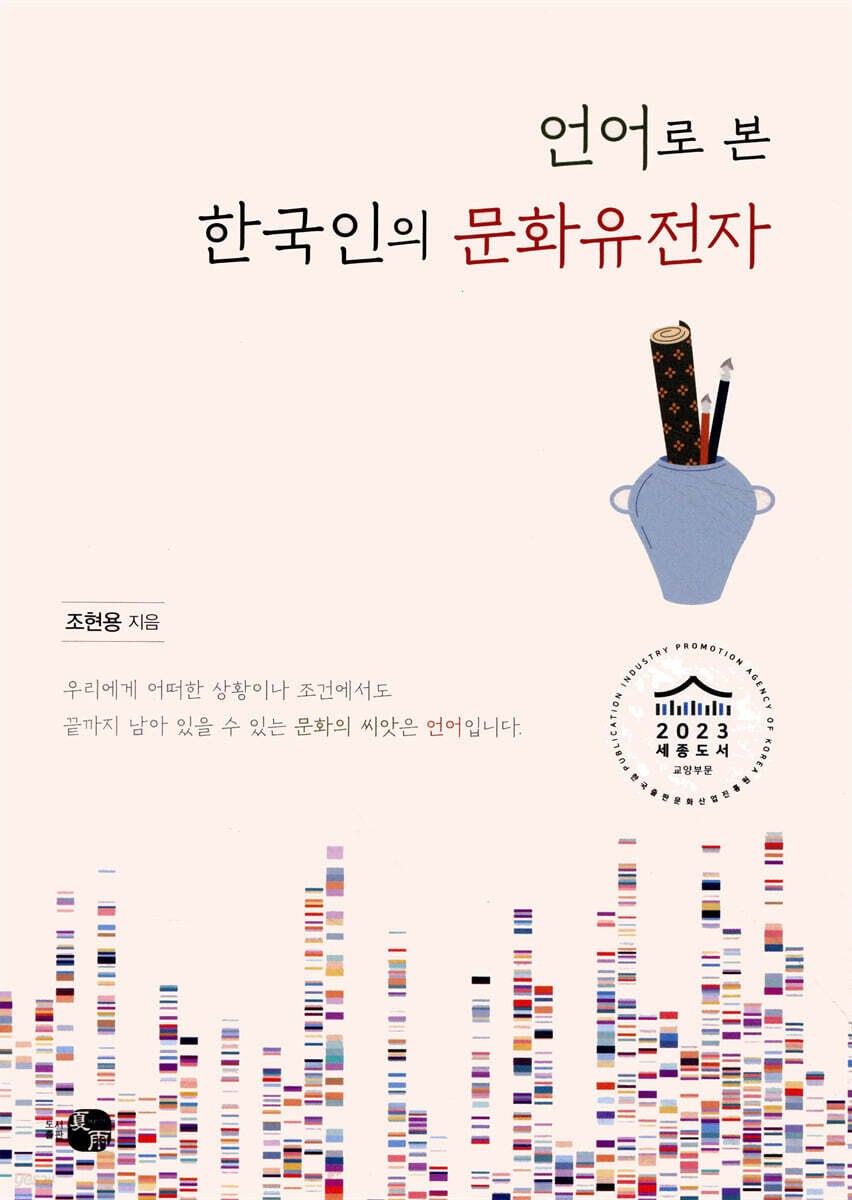
Korean cultural genes seen through language
 |
Description
Book Introduction
Korean is the root of the Korean Wave.
〈Korean Cultural Genes Seen Through Language〉 explains the cultural elements contained in the Korean language.
This book is recommended to those who love the Korean language and culture and want to know the origins of the Korean Wave.
This book is written in an easy-to-understand lecture format for those who want to understand the Korean language and Korean people.
In particular, it will provide a new perspective on Korean language to researchers of Korean language and culture, Korean language teachers, Korean language school teachers, and advanced Korean language learners.
It explains in an interesting way words that we use every day, from infant words like dori dori and gonji gonji to words like chilseong, spoon, ondol, teacher, scholar, shaman, and arirang, as well as words like beautiful, glad, love, and good.
It explains words such as “we,” “han,” and “jeong,” which well represent the Korean people, from a new perspective.
This is a book that you can read comfortably, as if you were listening to an old story.
Language and culture are tools of peace and tools of communication.
I hope that by learning Korean, we can communicate, share culture, and talk about peace.
And I hope that we can have a beautiful relationship where we can comfort and be comforted through language and culture.
〈Korean Cultural Genes Seen Through Language〉 explains the cultural elements contained in the Korean language.
This book is recommended to those who love the Korean language and culture and want to know the origins of the Korean Wave.
This book is written in an easy-to-understand lecture format for those who want to understand the Korean language and Korean people.
In particular, it will provide a new perspective on Korean language to researchers of Korean language and culture, Korean language teachers, Korean language school teachers, and advanced Korean language learners.
It explains in an interesting way words that we use every day, from infant words like dori dori and gonji gonji to words like chilseong, spoon, ondol, teacher, scholar, shaman, and arirang, as well as words like beautiful, glad, love, and good.
It explains words such as “we,” “han,” and “jeong,” which well represent the Korean people, from a new perspective.
This is a book that you can read comfortably, as if you were listening to an old story.
Language and culture are tools of peace and tools of communication.
I hope that by learning Korean, we can communicate, share culture, and talk about peace.
And I hope that we can have a beautiful relationship where we can comfort and be comforted through language and culture.
index
Chapter 1.
Language, the seed of culture
01.
Cultural lectures from the heart
02.
The concept of culture
03.
Culture and Peace
04.
Culture and Language
05.
Korean language and cultural genes
Chapter 2.
The Beginning of Language, Words and Play
06.
Walking, the beginning of language
07.
Teach speech and movement
08.
Dori Dori and Gyeom Gyeom (Horse Movement Play ①)
09.
Gonjigonji, Gondugondu, Burabura (Horse Movement Play ②)
10.
The effects of horse movement play
Chapter 3.
Language and Culture
11.
sound
12.
Words and sounds
13.
Koreans' view of language and the power of words
14.
Delicious words
15.
Be careful what you say
Chapter 4.
Greetings and Culture
16.
Reason for greeting
17.
Greetings and Gestures (Korean Body Language)
18.
Greetings and words
19.
Understanding the greetings "coincidentally" and "nice to meet you"
20.
Real Korean greetings
Chapter 5.
Emotional Expression and Culture
21.
Crying and laughter
22.
'Beautiful' and 'Pretty'
23.
'I love you' and 'I miss you'
24.
'Sad' and 'dislike', 'happy' and 'fun' and good
25.
It's precious, it's annoying, and it's fortunate
Chapter 6.
Nature and Korean Culture
26.
Big Dipper
27.
sun
28.
moon
29.
water
30.
Pine and cedar trees
Chapter 7.
People and Korean Culture
31.
person
32.
Me, you and who
33.
we
34.
scholar
35.
Master and Shaman
Chapter 8.
Lifestyle Culture - Food, Clothing, and Shelter and Song Culture
36.
Hanbok
37.
spoon
38.
Ondol
39.
The meaning of Arirang
40.
Arirang Pass
Chapter 9.
Koreans as seen through language expressions
41.
Time expressions
42.
Numerical representation
43.
figurative expressions
44.
Idioms and Phrases
45.
Proverbial expression
Chapter 10.
Key to Korean Culture
46.
fun
47.
Different, similar, and compatible
48.
Han (恨)
49.
god
50.
affection
Closing the lecture: Seeing the direction culture points
Books referenced or recommended
Language, the seed of culture
01.
Cultural lectures from the heart
02.
The concept of culture
03.
Culture and Peace
04.
Culture and Language
05.
Korean language and cultural genes
Chapter 2.
The Beginning of Language, Words and Play
06.
Walking, the beginning of language
07.
Teach speech and movement
08.
Dori Dori and Gyeom Gyeom (Horse Movement Play ①)
09.
Gonjigonji, Gondugondu, Burabura (Horse Movement Play ②)
10.
The effects of horse movement play
Chapter 3.
Language and Culture
11.
sound
12.
Words and sounds
13.
Koreans' view of language and the power of words
14.
Delicious words
15.
Be careful what you say
Chapter 4.
Greetings and Culture
16.
Reason for greeting
17.
Greetings and Gestures (Korean Body Language)
18.
Greetings and words
19.
Understanding the greetings "coincidentally" and "nice to meet you"
20.
Real Korean greetings
Chapter 5.
Emotional Expression and Culture
21.
Crying and laughter
22.
'Beautiful' and 'Pretty'
23.
'I love you' and 'I miss you'
24.
'Sad' and 'dislike', 'happy' and 'fun' and good
25.
It's precious, it's annoying, and it's fortunate
Chapter 6.
Nature and Korean Culture
26.
Big Dipper
27.
sun
28.
moon
29.
water
30.
Pine and cedar trees
Chapter 7.
People and Korean Culture
31.
person
32.
Me, you and who
33.
we
34.
scholar
35.
Master and Shaman
Chapter 8.
Lifestyle Culture - Food, Clothing, and Shelter and Song Culture
36.
Hanbok
37.
spoon
38.
Ondol
39.
The meaning of Arirang
40.
Arirang Pass
Chapter 9.
Koreans as seen through language expressions
41.
Time expressions
42.
Numerical representation
43.
figurative expressions
44.
Idioms and Phrases
45.
Proverbial expression
Chapter 10.
Key to Korean Culture
46.
fun
47.
Different, similar, and compatible
48.
Han (恨)
49.
god
50.
affection
Closing the lecture: Seeing the direction culture points
Books referenced or recommended
GOODS SPECIFICS
- Date of issue: March 30, 2023
- Page count, weight, size: 328 pages | 152*215*30mm
- ISBN13: 9791167480996
- ISBN10: 1167480996
You may also like
카테고리
korean


korean

![ELLE 엘르 스페셜 에디션 A형 : 12월 [2025]](http://librairie.coreenne.fr/cdn/shop/files/b8e27a3de6c9538896439686c6b0e8fb.jpg?v=1766436872&width=3840)


