

Open Your Ears Wide
 |
Description
Book Introduction
The listening section is a common learning difficulty for learners of Korean as a foreign language, as well as for overseas Korean learners of Korean (as a succession language), especially those learning Korean overseas.
In reality, learners often find it difficult and difficult to understand when they actually listen to something, even though they understand the vocabulary and grammar.
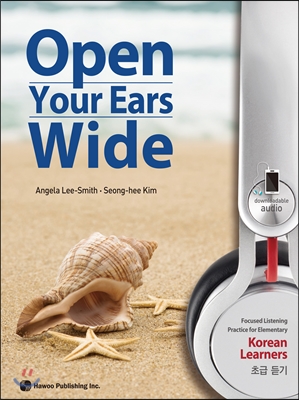
Open Your Ears Wide is a listening practice textbook jointly developed by Seonghee Kim and Angela Lee-Smitth, who have been working hard on Korean language education and material development. It was developed to provide beginner Korean language learners with an opportunity for intensive listening practice and to help improve their listening skills.
This is a listening practice textbook that allows Korean language learners to encounter natural Korean expressions in real life. It can be easily self-studied anywhere and can also be used as a supplementary or practice textbook in Korean language education settings.
In reality, learners often find it difficult and difficult to understand when they actually listen to something, even though they understand the vocabulary and grammar.
Open Your Ears Wide is a listening practice textbook jointly developed by Seonghee Kim and Angela Lee-Smitth, who have been working hard on Korean language education and material development. It was developed to provide beginner Korean language learners with an opportunity for intensive listening practice and to help improve their listening skills.
This is a listening practice textbook that allows Korean language learners to encounter natural Korean expressions in real life. It can be easily self-studied anywhere and can also be used as a supplementary or practice textbook in Korean language education settings.
index
Book Introduction
Characters
1.
Hangeul ?Vowels I
2.
Hangeul ?Vowels II
3.
Hangeul ? Consonants
4.
Hangeul ? Syllables
5.
There is a watch.
There is a clock.
6.
Where are you now?
7.
The umbrella is next to the desk.
The umbrella is next to the desk.
8.
What is your phone number?
When is your birthday?
9.
What time is it now?
10.
How much is it? How much is it?
11.
What are you doing now?
12.
What day do you work?
13.
We have lunch at one o'clock.
I eat lunch at 1 o'clock.
14.
What time did you get up?
15.
You didn't?/couldn't get up in the morning?
16.
I did my homework.
And then I went to a party.
I did my homework and then went to the party.
17.
I studied for the test for four hours yesterday.
Yesterday I studied four hours for the test.
18.
I have a test next Tuesday.
I have an exam next Tuesday.
19.
I met a friend at the theater last Thursday.
Last Thursday, I met my friend at the theater.
20.
I want to travel.
I want to travel.
21.
What are you going to do this summer?
22.
Did you have lunch?
23.
I usually sleep for an hour after class.
I usually take a nap for one hour after class.
24.
It takes about 40 minutes by subway.
It takes 40 minutes by subway.
25.
Transfer to Line 3 at Gyeongbokgung Station.
Transfer to Line 3 at Kyungbok station.
26.
I couldn't do it because I was busy.
I couldn't do it because I was busy.
27.
Thank you for giving me a ride.
Thank you for giving me a ride.
28.
I will eat well!
29.
I went to the library to borrow a book.
I went to the library to borrow a book.
30.
Do you want to go have a cup of tea?
31.
Don't forget./Let's not forget.
Don't/Let's not forget.
32.
I'm busy, but I'll go if I finish early.
I am busy, but I'll go if it ends early.
33.
I can't go because I'm busy.
I can't go because I am busy.
34.
From whom did you get this?
35.
Whenever you have a sore throat, try drinking lemon tea.
Whenever you get a sore throat, please try to drink lemon tea.
36.
May I go with you?
37.
You shouldn't do this!
38.
Doing yoga before bed is good for your health.
It is good for your health if you do yoga before going to bed.
39.
I want to become a lawyer.
I want to be a lawyer.
40.
Red goes much better with you than black.
Red looks much better on you than black.
41.
I decided to go to Korea after I graduated.
I decided to go to Korea after I graduated.
42.
I think I'll be late.
I think I will be late.
43.
I was listening to movie music.
I was listening to the movie soundtracks.
Appendix
Answer Keys
Listening Transcripts
Translations
Characters
1.
Hangeul ?Vowels I
2.
Hangeul ?Vowels II
3.
Hangeul ? Consonants
4.
Hangeul ? Syllables
5.
There is a watch.
There is a clock.
6.
Where are you now?
7.
The umbrella is next to the desk.
The umbrella is next to the desk.
8.
What is your phone number?
When is your birthday?
9.
What time is it now?
10.
How much is it? How much is it?
11.
What are you doing now?
12.
What day do you work?
13.
We have lunch at one o'clock.
I eat lunch at 1 o'clock.
14.
What time did you get up?
15.
You didn't?/couldn't get up in the morning?
16.
I did my homework.
And then I went to a party.
I did my homework and then went to the party.
17.
I studied for the test for four hours yesterday.
Yesterday I studied four hours for the test.
18.
I have a test next Tuesday.
I have an exam next Tuesday.
19.
I met a friend at the theater last Thursday.
Last Thursday, I met my friend at the theater.
20.
I want to travel.
I want to travel.
21.
What are you going to do this summer?
22.
Did you have lunch?
23.
I usually sleep for an hour after class.
I usually take a nap for one hour after class.
24.
It takes about 40 minutes by subway.
It takes 40 minutes by subway.
25.
Transfer to Line 3 at Gyeongbokgung Station.
Transfer to Line 3 at Kyungbok station.
26.
I couldn't do it because I was busy.
I couldn't do it because I was busy.
27.
Thank you for giving me a ride.
Thank you for giving me a ride.
28.
I will eat well!
29.
I went to the library to borrow a book.
I went to the library to borrow a book.
30.
Do you want to go have a cup of tea?
31.
Don't forget./Let's not forget.
Don't/Let's not forget.
32.
I'm busy, but I'll go if I finish early.
I am busy, but I'll go if it ends early.
33.
I can't go because I'm busy.
I can't go because I am busy.
34.
From whom did you get this?
35.
Whenever you have a sore throat, try drinking lemon tea.
Whenever you get a sore throat, please try to drink lemon tea.
36.
May I go with you?
37.
You shouldn't do this!
38.
Doing yoga before bed is good for your health.
It is good for your health if you do yoga before going to bed.
39.
I want to become a lawyer.
I want to be a lawyer.
40.
Red goes much better with you than black.
Red looks much better on you than black.
41.
I decided to go to Korea after I graduated.
I decided to go to Korea after I graduated.
42.
I think I'll be late.
I think I will be late.
43.
I was listening to movie music.
I was listening to the movie soundtracks.
Appendix
Answer Keys
Listening Transcripts
Translations
GOODS SPECIFICS
- Date of publication: July 29, 2016
- Page count, weight, size: 140 pages | 393g | 128*190*20mm
- ISBN13: 9791186610695
- ISBN10: 1186610697
You may also like
카테고리
korean


korean

![ELLE 엘르 스페셜 에디션 A형 : 12월 [2025]](http://librairie.coreenne.fr/cdn/shop/files/b8e27a3de6c9538896439686c6b0e8fb.jpg?v=1766436872&width=3840)


