

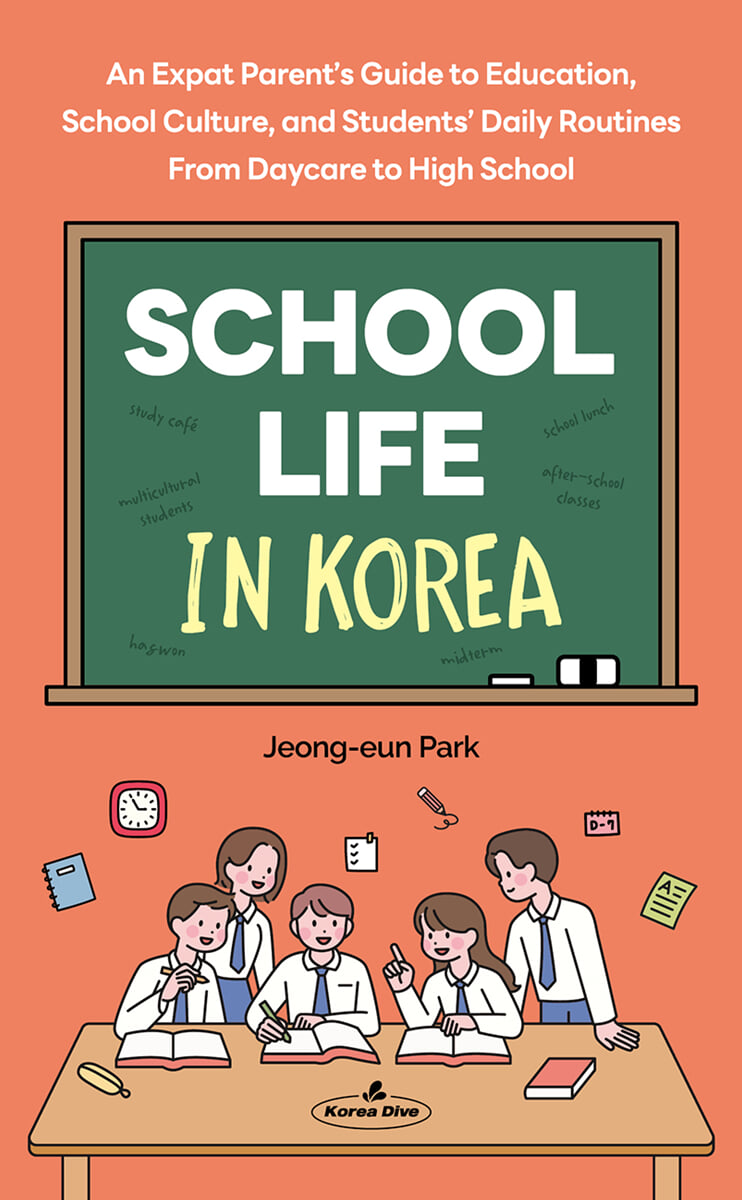
School Life in Korea
 |
Description
Book Introduction
What is School Life Really Like in Korea?
What is school life in Korea really like?
At first glance, Korea's school system may seem similar to those in other countries.
But it also has uniquely Korean features—such as the private after-school education system known as hagwon, intense academic pressure from Suneung (the College Scholastic Ability Test) and naesin (school academic records), nutritious school lunches served nationwide, and a growing number of multicultural students.
These aspects can sometimes be surprising or confusing for students and parents moving to Korea from abroad.
This book provides a clear and practical overview of Korean daycare centers, kindergartens, elementary schools, and high schools—what students learn, how daily school life works, and what both students and parents should know and pay attention to.
It's a helpful guide for anyone looking to better understand Korea's education culture—especially immigrant families who are trying to adapt smoothly to the school system.
On the surface, Korea's school and education systems may not seem much different from those of other countries.
However, Korea has its own unique educational culture.
Private education centers, the intense academic stress caused by the college entrance exam and school grades, free, nutritious school meals, and the growing number of multicultural students—these factors can feel unfamiliar and awkward to students and parents who have immigrated to Korea and are attending school.
This book provides a clear and practical introduction to school life at each stage, from kindergarten to high school in Korea.
It provides an easy-to-understand explanation of what students learn, how daily school life unfolds, and important information for students and parents to know.
This book will be a particularly helpful guide for multicultural families seeking to adapt well to the Korean school system.
What is school life in Korea really like?
At first glance, Korea's school system may seem similar to those in other countries.
But it also has uniquely Korean features—such as the private after-school education system known as hagwon, intense academic pressure from Suneung (the College Scholastic Ability Test) and naesin (school academic records), nutritious school lunches served nationwide, and a growing number of multicultural students.
These aspects can sometimes be surprising or confusing for students and parents moving to Korea from abroad.
This book provides a clear and practical overview of Korean daycare centers, kindergartens, elementary schools, and high schools—what students learn, how daily school life works, and what both students and parents should know and pay attention to.
It's a helpful guide for anyone looking to better understand Korea's education culture—especially immigrant families who are trying to adapt smoothly to the school system.
On the surface, Korea's school and education systems may not seem much different from those of other countries.
However, Korea has its own unique educational culture.
Private education centers, the intense academic stress caused by the college entrance exam and school grades, free, nutritious school meals, and the growing number of multicultural students—these factors can feel unfamiliar and awkward to students and parents who have immigrated to Korea and are attending school.
This book provides a clear and practical introduction to school life at each stage, from kindergarten to high school in Korea.
It provides an easy-to-understand explanation of what students learn, how daily school life unfolds, and important information for students and parents to know.
This book will be a particularly helpful guide for multicultural families seeking to adapt well to the Korean school system.
- You can preview some of the book's contents.
Preview
index
01 Daycare Center & Kindergartenㆍ8
What You'll Learn
ㆍ At what age can kids start attending daycare or kindergarten?
ㆍWhat does a typical day look like at these facilities?
ㆍ How can parents get in touch with the facilities?
Keywords: Home Daycare Centers│English Kindergartens│Full-Day Programs│Children's Play Cafes│Birthday Parties│Child Health Checkups
A Mother's Diary: Who Knew Sending a Child to Kindergarten Was This Hard?
02 Elementary School Elementary Schoolㆍ16
What You'll Learn
ㆍ What school supplies do elementary school students need?
ㆍWhat subjects do they study at school?
ㆍWhat do they usually do after school?
Keywords: Open Classes│School Lunches│After-School Classes │After-School Child Care Program│Survival Swimming Classes│Experiential Learning Leave Application
A Mother's Diary: A Day That Felt Like Starting Elementary School Again
03 Middle Schoolㆍ25
What You'll Learn
ㆍ What subjects do middle school students study in Korea?
ㆍ How is students' academic performance assessed?
ㆍ What is dating like for middle school students?
Keywords: School Uniforms│Seniors & Juniors│Study Cafes│Menstrual Leave│Middle School Syndrome
A Mother's Diary: How Should I Handle My Child's Extreme Mood Swings Throughout the Day?
04 High Schoolㆍ33
What You'll Learn
ㆍ What subjects do high school students study in Korea?
ㆍWhat kinds of school events do they participate in?
ㆍWhat causes the most stress for high school students?
Keywords: Specialized High Schools│Third Year of High School│Snack Shop│School Festivals│School Life Record Book
A Mother's Diary: Thoughts on Whether College Is Really Necessary
05 College Admissions & Suneung College Entrance Exams & CSATㆍ41
What You'll Learn
ㆍ What does it take to get into a university in Korea?
ㆍ What kind of exam is the Suneung (CSAT)?
ㆍHow do students prepare for the Suneung?
Keywords: First-Class Star Instructors│College Admissions Results │Grade Cut-Off Scores│Difficult Suneung│Partial Repeaters│Special Offers for Suneung-Takers
A Mother's Diary: Avoiding All Exam-Related Superstitions
06 Teachersㆍ49
What You'll Learn
ㆍWhat kinds of teachers work in Korean schools?
ㆍWhat do homeroom teachers do in each school level?
ㆍ How do teachers teach and interact with students?
Keywords: A Casual Term for Teacher│Teacher's Office│Teacher's Day│Backbiting│Corporal Punishment Ban
A Mother's Diary: Mission Accomplished─Buying Teacher's Day Gifts
07 Peer Relationshipsㆍ58
What You'll Learn
ㆍHow do students build friendships in Korea?
ㆍWhat kinds of things do they do with their friends?
ㆍ How are serious conflicts between peers handled?
Keywords: Bestie│Friendship Ring│“Would You Rather” Game│Coin Singing Room│A Bullied Person
A Mother's Diary: My Child, a Bully?
08 After-School Classesㆍ65
What You'll Learn
ㆍ What are after-school classes in Korea?
ㆍ How do after-school classes differ at each school level?
ㆍWhat are the benefits of after-school classes?
Keywords: Dual-Income Households│Working Mom│Hagwon Hoping│Preemptive Learning│School Banking
A Mother's Diary: Why I Look Forward to Mondays
09 School Lunchesㆍ73
What You'll Learn
ㆍDo all schools in Korea serve school meals?
ㆍWhat types of food are included in school lunches?
ㆍ What if a student can’t eat something on the menu?
Keywords: Nutritionists & Cooks│Meal Carts│Spoons and Chopsticks│Legendary│Table Manners Education
A Mother's Diary: The Egg War
10 Multicultural Studentsㆍ80
What You'll Learn
ㆍ How do students from multicultural backgrounds study in Korea?
ㆍWhat school activities are available for them?
ㆍHow do they choose their future career?
Keywords: Children Who Enter Korea Midway│Mentoring│Community Learning Centers│Formal & Informal Speech│Family Titles
A Mother's Diary: My Child Is Gradually Adjusting to Korean School Life
11 Private Educationㆍ88
What You'll Learn
ㆍ What types of private education are available in Korea?
ㆍWhat kinds of hagwons (private academies) exist?
ㆍWhat should be considered when choosing a hagwon?
Keywords: Hyper-Competitive School Districts│Daechi-dong Hagwon District│Level Test│Past Exam Questions│Cram│Students Who Give Up on Math│Disappearing
A Mother's Diary: Should We Move or Not?
12 Special Education Special Educationㆍ97
What You'll Learn
ㆍ How is special education provided in Korea?
ㆍ Can students with disabilities learn alongside their peers?
ㆍWhat support do schools provide for students with disabilities?
Keywords: Inclusive Education│Welfare Centers│Vocational Training│Special Admissions for Students with Disabilities│Social Service Personnel
A Mother's Diary: Independence Day
13 Online classes Online educationㆍ105
What You'll Learn
ㆍIs online education widely used in Korean schools today?
ㆍ How is online learning used in private education?
ㆍ What are the advantages of online education?
Keywords: Zoom Class│Tablet│Mute│Secretly Using a Phone│Eating Show
A Mother's Diary: Even Better!
Useful Websitesㆍ111
About the Authorㆍ112
What You'll Learn
ㆍ At what age can kids start attending daycare or kindergarten?
ㆍWhat does a typical day look like at these facilities?
ㆍ How can parents get in touch with the facilities?
Keywords: Home Daycare Centers│English Kindergartens│Full-Day Programs│Children's Play Cafes│Birthday Parties│Child Health Checkups
A Mother's Diary: Who Knew Sending a Child to Kindergarten Was This Hard?
02 Elementary School Elementary Schoolㆍ16
What You'll Learn
ㆍ What school supplies do elementary school students need?
ㆍWhat subjects do they study at school?
ㆍWhat do they usually do after school?
Keywords: Open Classes│School Lunches│After-School Classes │After-School Child Care Program│Survival Swimming Classes│Experiential Learning Leave Application
A Mother's Diary: A Day That Felt Like Starting Elementary School Again
03 Middle Schoolㆍ25
What You'll Learn
ㆍ What subjects do middle school students study in Korea?
ㆍ How is students' academic performance assessed?
ㆍ What is dating like for middle school students?
Keywords: School Uniforms│Seniors & Juniors│Study Cafes│Menstrual Leave│Middle School Syndrome
A Mother's Diary: How Should I Handle My Child's Extreme Mood Swings Throughout the Day?
04 High Schoolㆍ33
What You'll Learn
ㆍ What subjects do high school students study in Korea?
ㆍWhat kinds of school events do they participate in?
ㆍWhat causes the most stress for high school students?
Keywords: Specialized High Schools│Third Year of High School│Snack Shop│School Festivals│School Life Record Book
A Mother's Diary: Thoughts on Whether College Is Really Necessary
05 College Admissions & Suneung College Entrance Exams & CSATㆍ41
What You'll Learn
ㆍ What does it take to get into a university in Korea?
ㆍ What kind of exam is the Suneung (CSAT)?
ㆍHow do students prepare for the Suneung?
Keywords: First-Class Star Instructors│College Admissions Results │Grade Cut-Off Scores│Difficult Suneung│Partial Repeaters│Special Offers for Suneung-Takers
A Mother's Diary: Avoiding All Exam-Related Superstitions
06 Teachersㆍ49
What You'll Learn
ㆍWhat kinds of teachers work in Korean schools?
ㆍWhat do homeroom teachers do in each school level?
ㆍ How do teachers teach and interact with students?
Keywords: A Casual Term for Teacher│Teacher's Office│Teacher's Day│Backbiting│Corporal Punishment Ban
A Mother's Diary: Mission Accomplished─Buying Teacher's Day Gifts
07 Peer Relationshipsㆍ58
What You'll Learn
ㆍHow do students build friendships in Korea?
ㆍWhat kinds of things do they do with their friends?
ㆍ How are serious conflicts between peers handled?
Keywords: Bestie│Friendship Ring│“Would You Rather” Game│Coin Singing Room│A Bullied Person
A Mother's Diary: My Child, a Bully?
08 After-School Classesㆍ65
What You'll Learn
ㆍ What are after-school classes in Korea?
ㆍ How do after-school classes differ at each school level?
ㆍWhat are the benefits of after-school classes?
Keywords: Dual-Income Households│Working Mom│Hagwon Hoping│Preemptive Learning│School Banking
A Mother's Diary: Why I Look Forward to Mondays
09 School Lunchesㆍ73
What You'll Learn
ㆍDo all schools in Korea serve school meals?
ㆍWhat types of food are included in school lunches?
ㆍ What if a student can’t eat something on the menu?
Keywords: Nutritionists & Cooks│Meal Carts│Spoons and Chopsticks│Legendary│Table Manners Education
A Mother's Diary: The Egg War
10 Multicultural Studentsㆍ80
What You'll Learn
ㆍ How do students from multicultural backgrounds study in Korea?
ㆍWhat school activities are available for them?
ㆍHow do they choose their future career?
Keywords: Children Who Enter Korea Midway│Mentoring│Community Learning Centers│Formal & Informal Speech│Family Titles
A Mother's Diary: My Child Is Gradually Adjusting to Korean School Life
11 Private Educationㆍ88
What You'll Learn
ㆍ What types of private education are available in Korea?
ㆍWhat kinds of hagwons (private academies) exist?
ㆍWhat should be considered when choosing a hagwon?
Keywords: Hyper-Competitive School Districts│Daechi-dong Hagwon District│Level Test│Past Exam Questions│Cram│Students Who Give Up on Math│Disappearing
A Mother's Diary: Should We Move or Not?
12 Special Education Special Educationㆍ97
What You'll Learn
ㆍ How is special education provided in Korea?
ㆍ Can students with disabilities learn alongside their peers?
ㆍWhat support do schools provide for students with disabilities?
Keywords: Inclusive Education│Welfare Centers│Vocational Training│Special Admissions for Students with Disabilities│Social Service Personnel
A Mother's Diary: Independence Day
13 Online classes Online educationㆍ105
What You'll Learn
ㆍIs online education widely used in Korean schools today?
ㆍ How is online learning used in private education?
ㆍ What are the advantages of online education?
Keywords: Zoom Class│Tablet│Mute│Secretly Using a Phone│Eating Show
A Mother's Diary: Even Better!
Useful Websitesㆍ111
About the Authorㆍ112
Into the book
In the first year of middle school, however, one of the two semesters is often designated as a jayul hakgije (free semester), during which students are exempt from written exams like midterms and finals.
Instead, they spend that semester exploring different career paths, joining creative projects, and participating in self-directed learning activities.
--- From "Middle School"
IP-gyeol (admission) is short for ipsi gyeolgwa (entrance exam results) and refers to the academic records of students admitted to a particular university.
Based on the previous year's admission results, prospective students can estimate the scores needed to get into their desired universities and gauge the level of competition.
However, as admission results vary each year, students are advised to base their strategies on data from the past three to four years.
--- From "College Admissions & Suneung"
Gongbubang is a space where children gather after school to study.
In particular, hangugeo gongbubang (Korean language study room) is a Korean language study room where people from diverse backgrounds learn Korean together.
These study rooms are usually run by local communities, religious organizations, or multicultural family support centers.
They provide a comfortable and supportive learning environment, and teachers or volunteers assist students with challenging subjects.
Here, students can also enjoy snacks, play games, and participate in various activities with friends.
--- From "Multicultural Students"
For students with dietary restrictions due to religious beliefs, health conditions, or allergies, alternative menus are provided.
Vegetarian options are available for those who don't eat meat or other animal products, and on days when wheat-based main dishes are served, rice is offered as an alternative for students avoiding gluten.
At the start of the school year, parents report their child's dietary needs, and meals are prepared accordingly.
Special meals are labeled with the student's name to avoid confusion with regular lunches and to ensure proper handling.
Instead, they spend that semester exploring different career paths, joining creative projects, and participating in self-directed learning activities.
--- From "Middle School"
IP-gyeol (admission) is short for ipsi gyeolgwa (entrance exam results) and refers to the academic records of students admitted to a particular university.
Based on the previous year's admission results, prospective students can estimate the scores needed to get into their desired universities and gauge the level of competition.
However, as admission results vary each year, students are advised to base their strategies on data from the past three to four years.
--- From "College Admissions & Suneung"
Gongbubang is a space where children gather after school to study.
In particular, hangugeo gongbubang (Korean language study room) is a Korean language study room where people from diverse backgrounds learn Korean together.
These study rooms are usually run by local communities, religious organizations, or multicultural family support centers.
They provide a comfortable and supportive learning environment, and teachers or volunteers assist students with challenging subjects.
Here, students can also enjoy snacks, play games, and participate in various activities with friends.
--- From "Multicultural Students"
For students with dietary restrictions due to religious beliefs, health conditions, or allergies, alternative menus are provided.
Vegetarian options are available for those who don't eat meat or other animal products, and on days when wheat-based main dishes are served, rice is offered as an alternative for students avoiding gluten.
At the start of the school year, parents report their child's dietary needs, and meals are prepared accordingly.
Special meals are labeled with the student's name to avoid confusion with regular lunches and to ensure proper handling.
--- From "School Lunches"
GOODS SPECIFICS
- Date of issue: April 18, 2025
- Page count, weight, size: 112 pages | 114*184*20mm
- ISBN13: 9791199223417
- ISBN10: 1199223417
You may also like
카테고리
korean


korean

![GQ KOREA Mark (Monthly): December [2025]](http://librairie.coreenne.fr/cdn/shop/files/8ef265dbbfbf186523ed75ba7319009d.jpg?v=1765340328&width=3840)


