

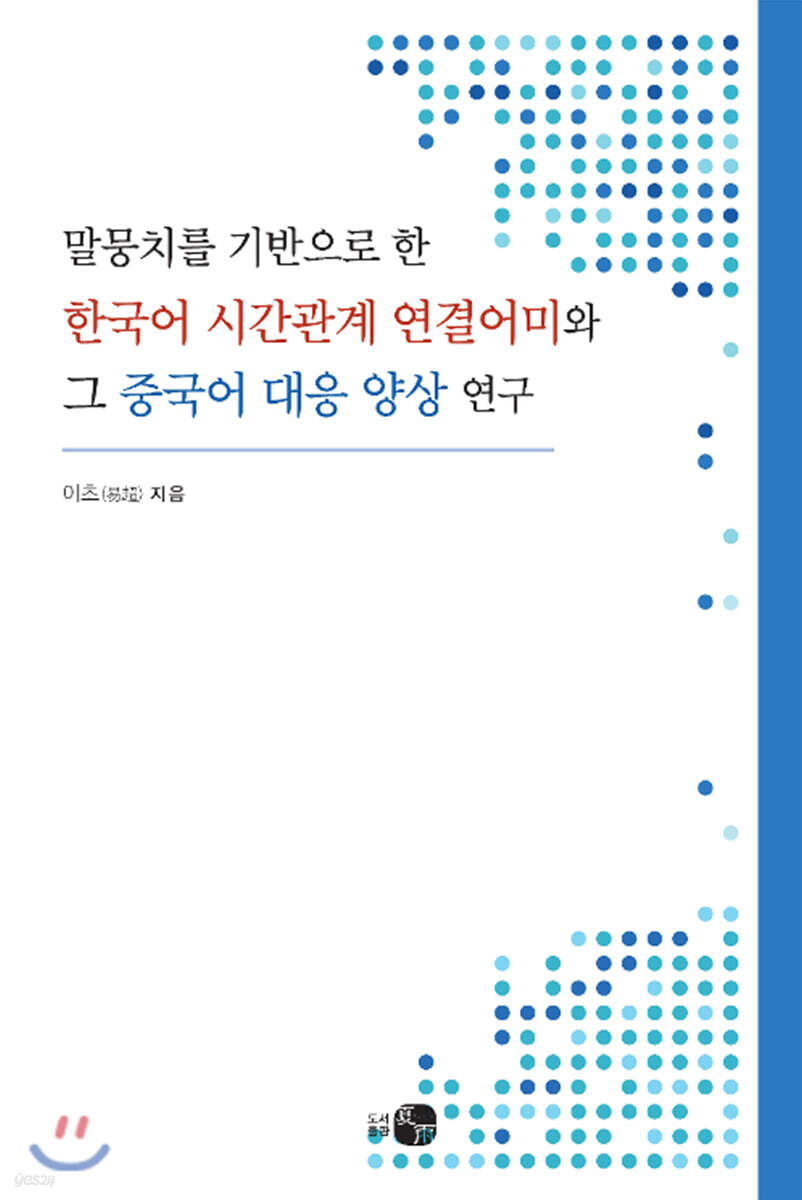
A Corpus-Based Study of Korean Temporal Connective Endings and Their Chinese Correspondences
 |
Description
index
Chapter 1.
introduction
1.1 Purpose and necessity of the study
1.2 Research subjects and methods
1.3 Previous research
Chapter 2.
Theoretical background and research subjects
2.1 Contrastive Analysis Theory
2.2 Corpus Theory
2.3 Korean connective ending system
2.4 Chinese related history system
Chapter 3.
Temporal connective endings and their characteristics in parallel corpora
3.1 Temporal connection endings in parallel corpora
3.2 Connective ending '-myeo'
3.3 Connective ending '-myeonseo'
3.4 Connective ending '-ja'
3.5 Connective ending '-ajja'
3.6 Connective ending '-go'
3.7 Connective ending '-eoseo'
Chapter 4.
Korean temporal connective endings and their Chinese counterparts
4.1 The temporal connective ending '-myeo' and its Chinese counterpart
4.2 The temporal connection ending '-면며' and its Chinese counterpart
4.3 The temporal connective ending '-ja' and its Chinese counterpart
4.4 The temporal connective ending '-ajja' and its Chinese counterpart
4.5 The temporal connective ending '-go' and its Chinese counterpart
4.6 The temporal connection ending '-어서' and its Chinese counterpart
Chapter 5.
Analysis of Korean temporal connective endings and their Chinese counterparts
5.1 Analysis of the temporal connection ending '-myeo' and its Chinese counterpart
5.2 Analysis of the temporal connection ending '-myeonseo' and its Chinese counterpart
5.3 Analysis of the temporal connection ending '-ja' and its Chinese counterpart
5.4 Analysis of the temporal connection ending '-ajja' and its Chinese counterpart
5.5 Analysis of the temporal connection ending '-go' and its Chinese counterpart
5.6 Analysis of the temporal connection ending '-어서' and its Chinese counterpart
Chapter 6.
conclusion
References
introduction
1.1 Purpose and necessity of the study
1.2 Research subjects and methods
1.3 Previous research
Chapter 2.
Theoretical background and research subjects
2.1 Contrastive Analysis Theory
2.2 Corpus Theory
2.3 Korean connective ending system
2.4 Chinese related history system
Chapter 3.
Temporal connective endings and their characteristics in parallel corpora
3.1 Temporal connection endings in parallel corpora
3.2 Connective ending '-myeo'
3.3 Connective ending '-myeonseo'
3.4 Connective ending '-ja'
3.5 Connective ending '-ajja'
3.6 Connective ending '-go'
3.7 Connective ending '-eoseo'
Chapter 4.
Korean temporal connective endings and their Chinese counterparts
4.1 The temporal connective ending '-myeo' and its Chinese counterpart
4.2 The temporal connection ending '-면며' and its Chinese counterpart
4.3 The temporal connective ending '-ja' and its Chinese counterpart
4.4 The temporal connective ending '-ajja' and its Chinese counterpart
4.5 The temporal connective ending '-go' and its Chinese counterpart
4.6 The temporal connection ending '-어서' and its Chinese counterpart
Chapter 5.
Analysis of Korean temporal connective endings and their Chinese counterparts
5.1 Analysis of the temporal connection ending '-myeo' and its Chinese counterpart
5.2 Analysis of the temporal connection ending '-myeonseo' and its Chinese counterpart
5.3 Analysis of the temporal connection ending '-ja' and its Chinese counterpart
5.4 Analysis of the temporal connection ending '-ajja' and its Chinese counterpart
5.5 Analysis of the temporal connection ending '-go' and its Chinese counterpart
5.6 Analysis of the temporal connection ending '-어서' and its Chinese counterpart
Chapter 6.
conclusion
References
GOODS SPECIFICS
- Date of publication: July 22, 2019
- Page count, weight, size: 322 pages | 153*224*30mm
- ISBN13: 9791190154291
- ISBN10: 1190154293
You may also like
카테고리
korean


korean

![GQ KOREA Mark (Monthly): December [2025]](http://librairie.coreenne.fr/cdn/shop/files/8ef265dbbfbf186523ed75ba7319009d.jpg?v=1765340328&width=3840)


