

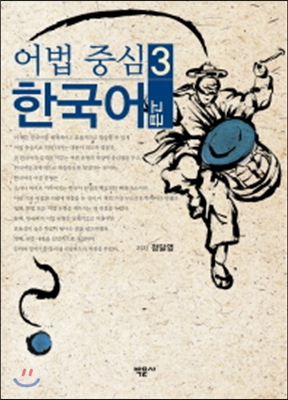
Grammar-focused Korean 3 Advanced
 |
Description
Book Introduction
This textbook is designed to help you learn Korean systematically and efficiently, focusing on grammar.
It focuses on learning the grammar types that form the backbone of the Korean language, and is designed to help you learn Korean scientifically.
Korean grammar types are the core structural elements of Korean sentences, which are made up of particles and endings.
The most notable feature of this book is its emphasis on mastering basic grammar.
It focuses on learning the grammar types that form the backbone of the Korean language, and is designed to help you learn Korean scientifically.
Korean grammar types are the core structural elements of Korean sentences, which are made up of particles and endings.
The most notable feature of this book is its emphasis on mastering basic grammar.
index
Lesson 1: Expressing Intentions, Purposes, and Desires
1.1 Intentional endings
1.2 Purpose-oriented endings
1.3 Conditional Purpose Endings
1.4 Wish Mark
Lesson 2 Special Meaning Particles
2.1 Noun + determining particle
2.2 Adverbial + determining particle
2.3 Noun + Inclusive Particle
2.4 Adverbial + Inclusive Particle
Lesson 3: Noun Modifier Endings of Verbs
3.1 Noun modifiers whose adjective stem is a consonant
3.2 Noun modifiers with a vowel in the adjective stem
3.3 Present tense of verbs
3.4 Past tense of verbs
Lesson 4: Future Tense Endings of Verbs Modifying Nouns
4.1 Future tense endings of noun modifiers
4.2 Expressing possibilities
4.3 Method expression
4.4 Barely Escaped
Lesson 5 Compound forms of adjectives
5.1 “Hada” compound form of adjectives
5.2 The “lose” compound form of the adjective
5.3 Progressive “-go ista” complex form
Lesson 6: Conjugated Verbs
6.1 Compound forms of verbs meaning request or service
6.2 Compound forms of verbs meaning to try
6.3 Compound forms of verbs meaning to possess
6.4 Compound forms of verbs meaning completion
Lesson 7: Concessive Endings
7.1 Concessionary Mother (1)
7.2 Concessionary Mother (2)
7.3 Concessionary Mother (3)
7.4 Concessionary Mother (4)
Lesson 8: Connective particles and endings of choice
8.1 Noun selection conjunction particle “-deundeun”
8.2 Noun selection conjunction particle “-(이)나”
8.3 Unlimited selection access survey “-(this) or”, “-or”
8.4 Optional ending “-deundeun”
Lesson 9: Contrasting Connective Endings
9.1 Contrastive ending “-(으)나”
9.2 Contrastive ending “-jiman”
9.3 Contrastive ending “-(eun)nde”
Lesson 10: Connective Endings in Situational Descriptions
10.1 Explanation Situational Connecting Suffix “-는”
10.2 Request situation connecting ending “-(으)ㄴ데”
10.3 Implicit situational connective ending “는, -(으)ㄴ데”
Lesson 11 Indirect Speech
11.1 Indirect speech in narrative sentences “ㄴ/는하다”
11.2 Indirect method of questioning “-(Neunya)?”
11.3 Indirect speech in imperative sentences “-(으)를려”
11.4 Indirect speech in the question “-sleep”
11.5 Practice Transformation of Speech
Lesson 12 Nominalization
12.1 Nominalization of “-기”
12.2 Nominalization of “-(으)ㅁ”
12.3 Nominalization substitute “-neun geot”
12.4 Indirect Interrogative Nominalization
Lesson 13 Causative and Passive Mood
13.1 Suffix causative verbs
13.2 Long-form causative verb “-ge ha da/make”
13.3 Causative verb “to make”
13.4 Passive Voice “-i-, -hi-, -gi-, -ri-”
Lesson 14 Comparative Display Investigation
14.1 Comparative Study
14.2 Comparative investigation and dependent noun “-daero”
14.3 Comparative endings and dependent nouns “-like”
14.4 Differential Comparison “- than” 129
14.5 Differential Comparison “-Unlike”
Lesson 15: Estimation Notation
15.1 Estimated mark “-I guess-”
15.2 Future Estimation Indicator “-(으)ㄹ 것”
15.3 Subjective guessing indicator “-(으)ㄹ 그 그/그 그 그”
15.4 Expected indication “-line know/don’t know”
15.5 Practice distinguishing between intentional and inferential expressions
Lesson 16: Interruptions and Transition Marks
16.1 Present tense of interruption and transition endings “-da”
16.2 Perfect tense of interruption and transition endings
16.3 Idiomatic expressions for interruptions and transitions “-da-ga-mal-da-ga”
Lesson 17 Addition and Incrementation
17.1 Additive notation “-(으)ㄹ”
17.2 Additive notation “-(으)ㄹ とは”
17.3 Incremental notation “-(으)ㄹ보다”
17.4 Interpretation of proverbs related to “-(으)ㄹ보다”
Lesson 18 Irregular Verbs and Adjectives
18.1 “ㄹ” irregular verbs and adjectives
18.2 “ㅅ” irregular verbs
18.3 “ㄷ” irregular verbs
18.4 Irregular Verbs of “Le”
Lesson 19 Irregular Adjectives with “ㅂ” and “ㅎ”
19.1 “ㅂ” irregular adjectives
19.2 “ㅎ” irregular adjectives
19.3 “ㅡ” irregular verbs and adjectives
Lesson 20: “-ge” and “-do-rok” to make adverbs
20.1 “-ge” to create adverbs
20.2 “-ge” to create general causative forms
20.3 Contract type “-Dokdo”
Lesson 21 Special Semantic Columns “-every, -each, -kkiri”
21.1 Special semantic particle “-mada”
21.2 Special semantic particle “-ssik”
21.3 Semantic particle “-kiri”
21.4 Special semantic particle “-ma-jja”
Lesson 22: Final Reporting Method
22.1 Final Reporting Method “-Thera”
22.2 Final honorific reporting method “-dida”
22.3 Conclusion Reporting Method “-Summary”
22.4 Final Reporting Method “-More than”
Lesson 23: Connecting the Reporting Method
23.1 Past formula reporting method “-Dun”
23.2 Reporting method using past perfect tense
23.3 Past Reminiscence Connective Ending “-then”
23.4 Past Perfect Reminiscence Connective Endings
1.1 Intentional endings
1.2 Purpose-oriented endings
1.3 Conditional Purpose Endings
1.4 Wish Mark
Lesson 2 Special Meaning Particles
2.1 Noun + determining particle
2.2 Adverbial + determining particle
2.3 Noun + Inclusive Particle
2.4 Adverbial + Inclusive Particle
Lesson 3: Noun Modifier Endings of Verbs
3.1 Noun modifiers whose adjective stem is a consonant
3.2 Noun modifiers with a vowel in the adjective stem
3.3 Present tense of verbs
3.4 Past tense of verbs
Lesson 4: Future Tense Endings of Verbs Modifying Nouns
4.1 Future tense endings of noun modifiers
4.2 Expressing possibilities
4.3 Method expression
4.4 Barely Escaped
Lesson 5 Compound forms of adjectives
5.1 “Hada” compound form of adjectives
5.2 The “lose” compound form of the adjective
5.3 Progressive “-go ista” complex form
Lesson 6: Conjugated Verbs
6.1 Compound forms of verbs meaning request or service
6.2 Compound forms of verbs meaning to try
6.3 Compound forms of verbs meaning to possess
6.4 Compound forms of verbs meaning completion
Lesson 7: Concessive Endings
7.1 Concessionary Mother (1)
7.2 Concessionary Mother (2)
7.3 Concessionary Mother (3)
7.4 Concessionary Mother (4)
Lesson 8: Connective particles and endings of choice
8.1 Noun selection conjunction particle “-deundeun”
8.2 Noun selection conjunction particle “-(이)나”
8.3 Unlimited selection access survey “-(this) or”, “-or”
8.4 Optional ending “-deundeun”
Lesson 9: Contrasting Connective Endings
9.1 Contrastive ending “-(으)나”
9.2 Contrastive ending “-jiman”
9.3 Contrastive ending “-(eun)nde”
Lesson 10: Connective Endings in Situational Descriptions
10.1 Explanation Situational Connecting Suffix “-는”
10.2 Request situation connecting ending “-(으)ㄴ데”
10.3 Implicit situational connective ending “는, -(으)ㄴ데”
Lesson 11 Indirect Speech
11.1 Indirect speech in narrative sentences “ㄴ/는하다”
11.2 Indirect method of questioning “-(Neunya)?”
11.3 Indirect speech in imperative sentences “-(으)를려”
11.4 Indirect speech in the question “-sleep”
11.5 Practice Transformation of Speech
Lesson 12 Nominalization
12.1 Nominalization of “-기”
12.2 Nominalization of “-(으)ㅁ”
12.3 Nominalization substitute “-neun geot”
12.4 Indirect Interrogative Nominalization
Lesson 13 Causative and Passive Mood
13.1 Suffix causative verbs
13.2 Long-form causative verb “-ge ha da/make”
13.3 Causative verb “to make”
13.4 Passive Voice “-i-, -hi-, -gi-, -ri-”
Lesson 14 Comparative Display Investigation
14.1 Comparative Study
14.2 Comparative investigation and dependent noun “-daero”
14.3 Comparative endings and dependent nouns “-like”
14.4 Differential Comparison “- than” 129
14.5 Differential Comparison “-Unlike”
Lesson 15: Estimation Notation
15.1 Estimated mark “-I guess-”
15.2 Future Estimation Indicator “-(으)ㄹ 것”
15.3 Subjective guessing indicator “-(으)ㄹ 그 그/그 그 그”
15.4 Expected indication “-line know/don’t know”
15.5 Practice distinguishing between intentional and inferential expressions
Lesson 16: Interruptions and Transition Marks
16.1 Present tense of interruption and transition endings “-da”
16.2 Perfect tense of interruption and transition endings
16.3 Idiomatic expressions for interruptions and transitions “-da-ga-mal-da-ga”
Lesson 17 Addition and Incrementation
17.1 Additive notation “-(으)ㄹ”
17.2 Additive notation “-(으)ㄹ とは”
17.3 Incremental notation “-(으)ㄹ보다”
17.4 Interpretation of proverbs related to “-(으)ㄹ보다”
Lesson 18 Irregular Verbs and Adjectives
18.1 “ㄹ” irregular verbs and adjectives
18.2 “ㅅ” irregular verbs
18.3 “ㄷ” irregular verbs
18.4 Irregular Verbs of “Le”
Lesson 19 Irregular Adjectives with “ㅂ” and “ㅎ”
19.1 “ㅂ” irregular adjectives
19.2 “ㅎ” irregular adjectives
19.3 “ㅡ” irregular verbs and adjectives
Lesson 20: “-ge” and “-do-rok” to make adverbs
20.1 “-ge” to create adverbs
20.2 “-ge” to create general causative forms
20.3 Contract type “-Dokdo”
Lesson 21 Special Semantic Columns “-every, -each, -kkiri”
21.1 Special semantic particle “-mada”
21.2 Special semantic particle “-ssik”
21.3 Semantic particle “-kiri”
21.4 Special semantic particle “-ma-jja”
Lesson 22: Final Reporting Method
22.1 Final Reporting Method “-Thera”
22.2 Final honorific reporting method “-dida”
22.3 Conclusion Reporting Method “-Summary”
22.4 Final Reporting Method “-More than”
Lesson 23: Connecting the Reporting Method
23.1 Past formula reporting method “-Dun”
23.2 Reporting method using past perfect tense
23.3 Past Reminiscence Connective Ending “-then”
23.4 Past Perfect Reminiscence Connective Endings
Publisher's Review
This textbook is designed to help you learn Korean systematically and efficiently, focusing on grammar.
It focuses on learning the grammar types that form the backbone of the Korean language, and is designed to help you learn Korean scientifically.
Korean grammar types are the core structural elements of Korean sentences, which are made up of particles and endings.
The most notable feature of this book is its emphasis on mastering basic grammar.
This book consists of three volumes: beginner, intermediate, and advanced.
First, the emphasis was placed on awakening grammar or grammar types.
Grammar types are the skeleton and framework of a sentence, which is mainly composed of particles and endings.
This book emphasizes that in order to learn accurate Korean, you must master the basic grammar.
Second, it was emphasized that learning Korean grammar types in stages is the most efficient way to learn them.
It was emphasized that learners should always keep in mind that the most efficient way to learn Korean is to start with easy grammar frequently used in everyday sentences and then gradually move on to more difficult grammar.
Third, the text is structured primarily in a question-and-answer format, with an emphasis on simultaneously mastering listening and speaking skills.
The content of the text has been carefully considered to help learners master speaking skills through listening to content in classroom teaching and learning, self-study, recordings, or meeting Koreans.
It focuses on learning the grammar types that form the backbone of the Korean language, and is designed to help you learn Korean scientifically.
Korean grammar types are the core structural elements of Korean sentences, which are made up of particles and endings.
The most notable feature of this book is its emphasis on mastering basic grammar.
This book consists of three volumes: beginner, intermediate, and advanced.
First, the emphasis was placed on awakening grammar or grammar types.
Grammar types are the skeleton and framework of a sentence, which is mainly composed of particles and endings.
This book emphasizes that in order to learn accurate Korean, you must master the basic grammar.
Second, it was emphasized that learning Korean grammar types in stages is the most efficient way to learn them.
It was emphasized that learners should always keep in mind that the most efficient way to learn Korean is to start with easy grammar frequently used in everyday sentences and then gradually move on to more difficult grammar.
Third, the text is structured primarily in a question-and-answer format, with an emphasis on simultaneously mastering listening and speaking skills.
The content of the text has been carefully considered to help learners master speaking skills through listening to content in classroom teaching and learning, self-study, recordings, or meeting Koreans.
GOODS SPECIFICS
- Date of publication: February 20, 2014
- Page count, weight, size: 476 pages | 350g | 160*232*30mm
- ISBN13: 9788998468200
- ISBN10: 8998468204
You may also like
카테고리
korean


korean

![GQ KOREA Mark (Monthly): December [2025]](http://librairie.coreenne.fr/cdn/shop/files/8ef265dbbfbf186523ed75ba7319009d.jpg?v=1765340328&width=3840)


