

Basics of Thinking and Expression
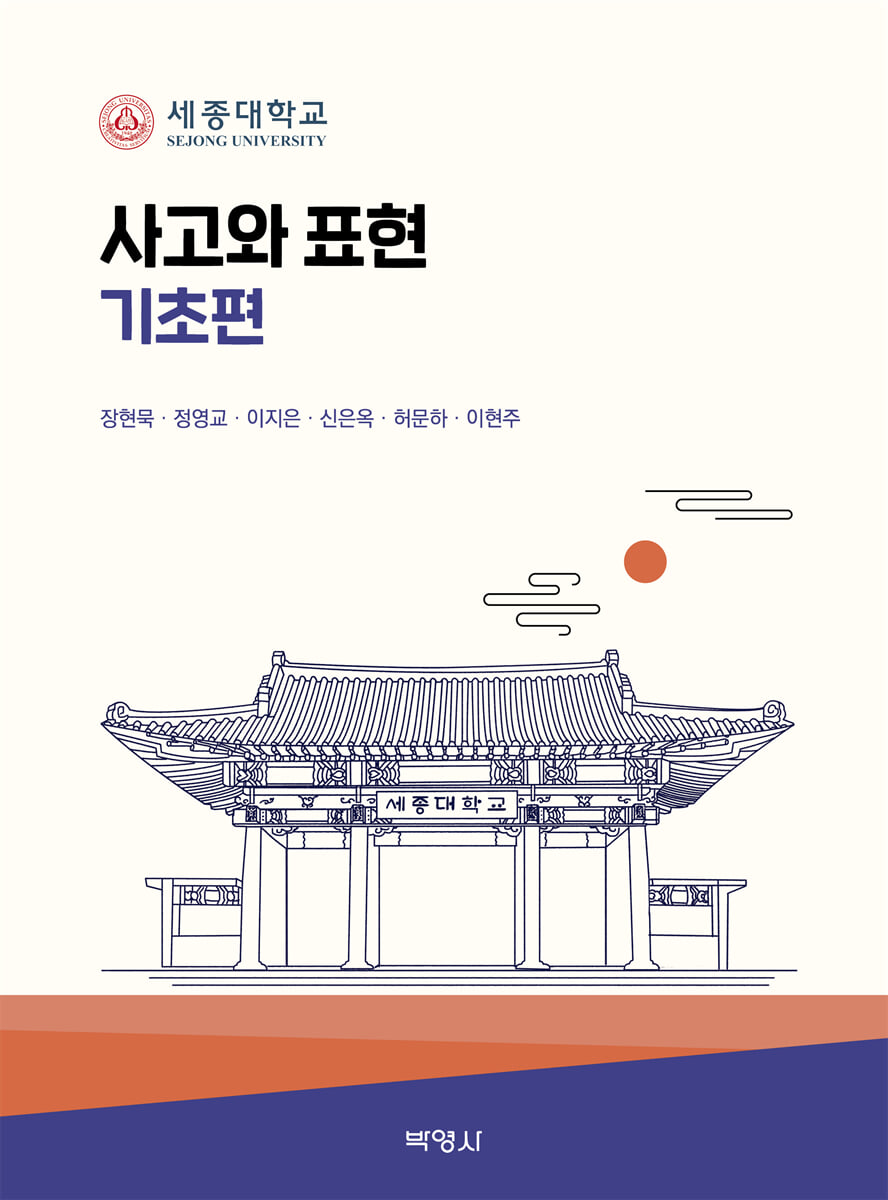 |
Description
Book Introduction
I am truly delighted that Sejong University has published 『Basics of Thinking and Expression』, a liberal arts Korean language textbook for teaching Korean to international students.
Sejong University, which inherits the spirit of King Sejong, who created the Korean alphabet based on creative and scientific principles along with a love for the people, has grown into a research-oriented global university, educating many international students. I believe that the publication of the 『Basics of Thinking and Expression』 is very meaningful and timely.
In the difficult past, we were envious of the advanced countries we studied in and learned their languages and cultures. Now, Korean culture has become an object of envy, and it is easy to find foreigners both at home and abroad who put in a lot of effort to become fluent in Korean.
『Thinking and Expression Fundamentals』 is the result of the meticulous writing of six instructors, including Professor Jang Hyeon-muk.
Since the liberal arts Korean language course was first introduced in the first semester of 2014, we have put a lot of thought and effort into developing it based on educational materials produced during the Korean language curriculum and our passionate teaching experience.
Although it covers beginner-level Korean, the topics were carefully selected and structured around grammar and activities to provide practical help to international students continuing their studies at university.
To help foreign students easily understand Korean, we provide ample and appropriate practice, including explanations of the characteristics of Korean sounds.
I firmly believe that the textbook, "Basics of Thinking and Expression," will be of great help to many international students in developing their Korean language skills and enabling them to continue their studies smoothly.
Sejong University, which inherits the spirit of King Sejong, who created the Korean alphabet based on creative and scientific principles along with a love for the people, has grown into a research-oriented global university, educating many international students. I believe that the publication of the 『Basics of Thinking and Expression』 is very meaningful and timely.
In the difficult past, we were envious of the advanced countries we studied in and learned their languages and cultures. Now, Korean culture has become an object of envy, and it is easy to find foreigners both at home and abroad who put in a lot of effort to become fluent in Korean.
『Thinking and Expression Fundamentals』 is the result of the meticulous writing of six instructors, including Professor Jang Hyeon-muk.
Since the liberal arts Korean language course was first introduced in the first semester of 2014, we have put a lot of thought and effort into developing it based on educational materials produced during the Korean language curriculum and our passionate teaching experience.
Although it covers beginner-level Korean, the topics were carefully selected and structured around grammar and activities to provide practical help to international students continuing their studies at university.
To help foreign students easily understand Korean, we provide ample and appropriate practice, including explanations of the characteristics of Korean sounds.
I firmly believe that the textbook, "Basics of Thinking and Expression," will be of great help to many international students in developing their Korean language skills and enabling them to continue their studies smoothly.
index
Introduction to Hangul
Introduction to Hangul: Consonants, Basic Verbs, and Adjectives
Chapter 1: The Beginning of College Life
N is/is N, what is N?, N is/is not
liaison
Sejong University symbol
Chapter 2: College Campus
N is / is not there, N is (located), N and
lenition
Sejong University Campus Guide
Chapter 3 School Life
V/A-아/어요, N을/를, N에서 (location)
Overlapping
Sejong Korean Language and Culture Education Center
Chapter 4 Weekend Activities
V/A-was/was, not V/A, N in (time)
Pronunciation of 'ㅢ' 1
Academic Information Center
Chapter 5 Exam Notice
V-(으)ㄹ 것, V-(으)세요, V-지 마, -니까
Pronunciation of 'ㅘ'
Check your grades
Chapter 6: University Festival
V-(으)ㄹ까?, V-고싶, unit noun
Pronunciation of 'ㅎ'
University festival
Chapter 7: Interview with the Professor
V/A-jiyo?, N-kei, V/A-(eu)si, V/A-jiman
Weakened 'ㅎ'
Student Union
Chapter 8 Vacation
V-(으)러, can't V, V-(으)ㄹ know/don't know
Aspirated consonant 1
Student Council
Chapter 9 Introduction
I wish I could say N(이), V(으)려, V/A-있다/때
Aspirated 2
Club activities
Chapter 10 Health Care
A-ah/uh, it looks like, V-ah/uh, it must be, V-ah/uh, it must be
Add 'ㄴ'
Health Center
Chapter 11 Group Activities
V-아/어 주다, V-(으)ㄹ게, informal speech
Nasalization 1
study room
Chapter 12 Extracurricular Activities
V-아/어보다, V/A-(으)ㄴ/는, V/A-(으)ㄴ/있는 to know/not know
Voiced
Extracurricular programs
Introduction to Hangul: Consonants, Basic Verbs, and Adjectives
Chapter 1: The Beginning of College Life
N is/is N, what is N?, N is/is not
liaison
Sejong University symbol
Chapter 2: College Campus
N is / is not there, N is (located), N and
lenition
Sejong University Campus Guide
Chapter 3 School Life
V/A-아/어요, N을/를, N에서 (location)
Overlapping
Sejong Korean Language and Culture Education Center
Chapter 4 Weekend Activities
V/A-was/was, not V/A, N in (time)
Pronunciation of 'ㅢ' 1
Academic Information Center
Chapter 5 Exam Notice
V-(으)ㄹ 것, V-(으)세요, V-지 마, -니까
Pronunciation of 'ㅘ'
Check your grades
Chapter 6: University Festival
V-(으)ㄹ까?, V-고싶, unit noun
Pronunciation of 'ㅎ'
University festival
Chapter 7: Interview with the Professor
V/A-jiyo?, N-kei, V/A-(eu)si, V/A-jiman
Weakened 'ㅎ'
Student Union
Chapter 8 Vacation
V-(으)러, can't V, V-(으)ㄹ know/don't know
Aspirated consonant 1
Student Council
Chapter 9 Introduction
I wish I could say N(이), V(으)려, V/A-있다/때
Aspirated 2
Club activities
Chapter 10 Health Care
A-ah/uh, it looks like, V-ah/uh, it must be, V-ah/uh, it must be
Add 'ㄴ'
Health Center
Chapter 11 Group Activities
V-아/어 주다, V-(으)ㄹ게, informal speech
Nasalization 1
study room
Chapter 12 Extracurricular Activities
V-아/어보다, V/A-(으)ㄴ/는, V/A-(으)ㄴ/있는 to know/not know
Voiced
Extracurricular programs
Detailed image

Publisher's Review
Note
〈Basics of Thinking and Expression〉 is a textbook for liberal arts Korean language classes at universities.
This textbook was created by selecting essential grammar and expressions based on situations that international students will encounter while studying at university.
〈Basic Thinking and Expression〉 focuses on developing listening and speaking skills, and is a 15-week course of 3 hours per week, suitable for two semesters.
The structure of the textbook is divided into three stages: introduction, learning, and conclusion.
In the introduction stage, the learning objectives for each lesson are presented, and the topic, target vocabulary, and grammar for each lesson are identified through listening to dialogues.
In the learning phase, target vocabulary and grammar are learned and oral skills are developed through speaking activities and pronunciation practice.
In the final stage, Sejong Tip provides useful information on course registration, grade check, and on-campus facilities, and provides vocabulary notes for review or assignments.
Unit composition
Introduction
Listen to the learning objectives
<vocabulary>
Expressions 1, 2, 3
Speaking 1, 2
pronunciation
<finish>
Sejong Tip
Vocabulary Notes
- Learning objectives: Presents what to study in each unit and provides motivation for learning.
- Listening: Listen to the dialogue, answer the questions, and confirm what you heard.
- Vocabulary: Learn vocabulary related to the topic.
- Expression: Check the form rules and examples for each grammar expression.
Learn the rules and meaning of each grammar expression through practice problems.
- Speaking: Try speaking using the grammar and vocabulary you have learned.
- Pronunciation: Learn pronunciation rules for natural and fluent communication.
- Sejong Tip: Check out the information you need for college life and studies.
- Vocabulary Notes: Review new vocabulary that appears in each unit.
It provides ample practice, including explanations of Lee's characteristics.
The textbook “Basics of Thinking and Expression” helps many international students develop their Korean language skills and communicate smoothly.
I firmly believe that it will be of great help in continuing my studies.
Dean of Ocean Humanities College
Lee Hee-won
〈Basics of Thinking and Expression〉 is a textbook for liberal arts Korean language classes at universities.
This textbook was created by selecting essential grammar and expressions based on situations that international students will encounter while studying at university.
〈Basic Thinking and Expression〉 focuses on developing listening and speaking skills, and is a 15-week course of 3 hours per week, suitable for two semesters.
The structure of the textbook is divided into three stages: introduction, learning, and conclusion.
In the introduction stage, the learning objectives for each lesson are presented, and the topic, target vocabulary, and grammar for each lesson are identified through listening to dialogues.
In the learning phase, target vocabulary and grammar are learned and oral skills are developed through speaking activities and pronunciation practice.
In the final stage, Sejong Tip provides useful information on course registration, grade check, and on-campus facilities, and provides vocabulary notes for review or assignments.
Unit composition
Introduction
Listen to the learning objectives
<vocabulary>
Expressions 1, 2, 3
Speaking 1, 2
pronunciation
<finish>
Sejong Tip
Vocabulary Notes
- Learning objectives: Presents what to study in each unit and provides motivation for learning.
- Listening: Listen to the dialogue, answer the questions, and confirm what you heard.
- Vocabulary: Learn vocabulary related to the topic.
- Expression: Check the form rules and examples for each grammar expression.
Learn the rules and meaning of each grammar expression through practice problems.
- Speaking: Try speaking using the grammar and vocabulary you have learned.
- Pronunciation: Learn pronunciation rules for natural and fluent communication.
- Sejong Tip: Check out the information you need for college life and studies.
- Vocabulary Notes: Review new vocabulary that appears in each unit.
It provides ample practice, including explanations of Lee's characteristics.
The textbook “Basics of Thinking and Expression” helps many international students develop their Korean language skills and communicate smoothly.
I firmly believe that it will be of great help in continuing my studies.
Dean of Ocean Humanities College
Lee Hee-won
GOODS SPECIFICS
- Date of issue: September 22, 2023
- Page count, weight, size: 324 pages | 188*254*4mm
- ISBN13: 9791130318448
You may also like
카테고리
korean


korean

![GQ KOREA Mark (Monthly): December [2025]](http://librairie.coreenne.fr/cdn/shop/files/8ef265dbbfbf186523ed75ba7319009d.jpg?v=1765340328&width=3840)


