

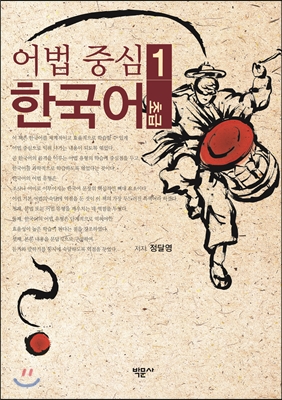
Grammar-focused Korean 1 Beginner
 |
Description
Book Introduction
The content is organized to focus on grammar so that you can learn Korean systematically and efficiently.
It consists of three volumes: beginner, intermediate, and advanced.
First, the emphasis was placed on awakening grammar or grammar types.
Grammar types are the skeleton and framework of a sentence, which is mainly composed of particles and endings.
This book emphasizes that in order to learn accurate Korean, you must master the basic grammar.
Second, it was emphasized that learning Korean grammar types in stages is the most efficient way to learn them.
It was emphasized that learners should always keep in mind that the most efficient way to learn Korean is to start with easy grammar frequently used in everyday sentences and then gradually move on to more difficult grammar.
Third, the text is structured primarily in a question-and-answer format, with an emphasis on simultaneously mastering listening and speaking skills.
The content of the text has been carefully considered to help learners improve their speaking skills through listening to content in classroom teaching and learning, self-study, recordings, or meeting Koreans.
It consists of three volumes: beginner, intermediate, and advanced.
First, the emphasis was placed on awakening grammar or grammar types.
Grammar types are the skeleton and framework of a sentence, which is mainly composed of particles and endings.
This book emphasizes that in order to learn accurate Korean, you must master the basic grammar.
Second, it was emphasized that learning Korean grammar types in stages is the most efficient way to learn them.
It was emphasized that learners should always keep in mind that the most efficient way to learn Korean is to start with easy grammar frequently used in everyday sentences and then gradually move on to more difficult grammar.
Third, the text is structured primarily in a question-and-answer format, with an emphasis on simultaneously mastering listening and speaking skills.
The content of the text has been carefully considered to help learners improve their speaking skills through listening to content in classroom teaching and learning, self-study, recordings, or meeting Koreans.
index
Lesson 1: Vowels in Korean
1.1 Simple vowels in Korean
1.2 Simple vowels and syllables
1.3 Diphthongs in Korean
Lesson 2: Pronunciation of Korean Consonants
2.1 Pronunciation position of consonants
2.2 Explanation of pronunciation positions of consonants
Lesson 3: Pronunciation of Korean Initial Consonants
3.1 Bilabial plosives “ㅂ”, “ㅍ”, “ㅃ”
3.2 Alveolar plosives “ㄷ”, “ㅌ”, “ㄸ”
3.3 Research palatal plosives “ㄱ”, “ㅋ”, “ㄲ”
3.4 Palatal affricates “ㅈ”, “ㅊ”, “ㅉ”
3.5 Frictional sounds “ㅅ”, “ㅆ”, “ㅎ”
3.6 Nasal sounds “ㅁ”, “ㄴ”, “ㅇ”
3.7 The Korean vowel “ㄹ”
Lesson 4: Pronunciation of Korean Final Consonants and Consonants
4.1 Differences between initial and final consonants
4.2 Pronunciation of final consonants
Lesson 5: Formation of Korean Syllables and Words
5.1 Korean Syllables
5.2 Korean Syllables and Words
5.3 Writing Korean letters
Lesson 6: Asking and Answering Object Names
6.1 Saying the names of things
6.2 Asking for the names of objects
6.3 Asking and answering the names of objects
Lesson 7 Pointing Words
7.1 Words that refer to object names
7.2 Referential words for person nouns
7.3 Subject particle
Lesson 8 Interrogative Pronouns
8.1 Interrogative pronoun “what” and subject particles
8.2 Words asking about the type or nature of things
8.3 Interrogative pronouns asking about location
Lesson 9: Affirmative and Negative Dialogue
9.1 “-is” and “is not”
Lesson 10 First-Person Pronouns
10.1 First-person humble pronoun “I”
10.2 First-person pronoun “I”
10.3 First-person plural pronouns “we, us”
10.4 Second-person pronoun “you”
Lesson 11 Second-Person and Third-Person Pronouns
11.1 Second-person pronoun “you”
11.2 Third-person pronoun “he”
11.3 Third-person honorific pronouns “this person, that person, that person”
11.4 Interrogative pronoun “who”
Lesson 12 Possessive Pronouns
12.1 First-person humble possessive pronoun “je”
12.2 First-person possessive pronoun “my”
12.3 Second-person possessive pronoun “yes”
12.4 Possession Investigation “-of”
Lesson 13 Chinese Characters and Numbers
13.1 Chinese characters and numbers
13.2 Asking and answering questions about values “How much”
13.3 Asking and answering about dates “How many days”
Lesson 14 Native Numbers
14.1 Reading and writing native Korean numbers
14.2 Native Numbers and Time Display
14.3 Native Numbers and Age Display
14.4 Asking and Answering the Day of the Week “What day is it?”
Lesson 15: Existential Indicators “There is/There is not”
15.1 Positive form of existential indicator “there is”
15.2 Negative form of existential indicator “no”
15.3 The honorific form of the subject of the existential indicator “There is”
15.4 Existential Indicators “There is” and “There is”
Lesson 16: Expressing Possessive Relationships in Existentials
16.1 The possessive sign of existence “is”
16.2 The absence of existence “None”
16.3 Indicating the relationship of existence “exist/exist”
16.4 Indicating the affiliation of “Gyesida”
Lesson 17 Adjectives
17.1 Adjectives of Quality and State
17.2 “-hada” adjective
17.3 Short negative forms of adjectives
17.4 Long negative forms of adjectives
Lesson 18: Intransitive and commutative verbs
18.1 Intransitive verbs
18.2 The verb “to go”
18.3 The verb “come”
Lesson 19: Transitive Verbs and Objects
19.1 Transitive Verbs
19.2 Characteristics of transitive verb sentences
19.3 Choosing the Object Particle
Lesson 20 “Do” and “Become”
20.1 Verb “-hada”
20.2 “Noun + -hada” and object particles
20.3 Verbs “-become”
Search
1.1 Simple vowels in Korean
1.2 Simple vowels and syllables
1.3 Diphthongs in Korean
Lesson 2: Pronunciation of Korean Consonants
2.1 Pronunciation position of consonants
2.2 Explanation of pronunciation positions of consonants
Lesson 3: Pronunciation of Korean Initial Consonants
3.1 Bilabial plosives “ㅂ”, “ㅍ”, “ㅃ”
3.2 Alveolar plosives “ㄷ”, “ㅌ”, “ㄸ”
3.3 Research palatal plosives “ㄱ”, “ㅋ”, “ㄲ”
3.4 Palatal affricates “ㅈ”, “ㅊ”, “ㅉ”
3.5 Frictional sounds “ㅅ”, “ㅆ”, “ㅎ”
3.6 Nasal sounds “ㅁ”, “ㄴ”, “ㅇ”
3.7 The Korean vowel “ㄹ”
Lesson 4: Pronunciation of Korean Final Consonants and Consonants
4.1 Differences between initial and final consonants
4.2 Pronunciation of final consonants
Lesson 5: Formation of Korean Syllables and Words
5.1 Korean Syllables
5.2 Korean Syllables and Words
5.3 Writing Korean letters
Lesson 6: Asking and Answering Object Names
6.1 Saying the names of things
6.2 Asking for the names of objects
6.3 Asking and answering the names of objects
Lesson 7 Pointing Words
7.1 Words that refer to object names
7.2 Referential words for person nouns
7.3 Subject particle
Lesson 8 Interrogative Pronouns
8.1 Interrogative pronoun “what” and subject particles
8.2 Words asking about the type or nature of things
8.3 Interrogative pronouns asking about location
Lesson 9: Affirmative and Negative Dialogue
9.1 “-is” and “is not”
Lesson 10 First-Person Pronouns
10.1 First-person humble pronoun “I”
10.2 First-person pronoun “I”
10.3 First-person plural pronouns “we, us”
10.4 Second-person pronoun “you”
Lesson 11 Second-Person and Third-Person Pronouns
11.1 Second-person pronoun “you”
11.2 Third-person pronoun “he”
11.3 Third-person honorific pronouns “this person, that person, that person”
11.4 Interrogative pronoun “who”
Lesson 12 Possessive Pronouns
12.1 First-person humble possessive pronoun “je”
12.2 First-person possessive pronoun “my”
12.3 Second-person possessive pronoun “yes”
12.4 Possession Investigation “-of”
Lesson 13 Chinese Characters and Numbers
13.1 Chinese characters and numbers
13.2 Asking and answering questions about values “How much”
13.3 Asking and answering about dates “How many days”
Lesson 14 Native Numbers
14.1 Reading and writing native Korean numbers
14.2 Native Numbers and Time Display
14.3 Native Numbers and Age Display
14.4 Asking and Answering the Day of the Week “What day is it?”
Lesson 15: Existential Indicators “There is/There is not”
15.1 Positive form of existential indicator “there is”
15.2 Negative form of existential indicator “no”
15.3 The honorific form of the subject of the existential indicator “There is”
15.4 Existential Indicators “There is” and “There is”
Lesson 16: Expressing Possessive Relationships in Existentials
16.1 The possessive sign of existence “is”
16.2 The absence of existence “None”
16.3 Indicating the relationship of existence “exist/exist”
16.4 Indicating the affiliation of “Gyesida”
Lesson 17 Adjectives
17.1 Adjectives of Quality and State
17.2 “-hada” adjective
17.3 Short negative forms of adjectives
17.4 Long negative forms of adjectives
Lesson 18: Intransitive and commutative verbs
18.1 Intransitive verbs
18.2 The verb “to go”
18.3 The verb “come”
Lesson 19: Transitive Verbs and Objects
19.1 Transitive Verbs
19.2 Characteristics of transitive verb sentences
19.3 Choosing the Object Particle
Lesson 20 “Do” and “Become”
20.1 Verb “-hada”
20.2 “Noun + -hada” and object particles
20.3 Verbs “-become”
Search
GOODS SPECIFICS
- Date of publication: February 20, 2014
- Page count, weight, size: 476 pages | 160*232*30mm
- ISBN13: 9788998468187
- ISBN10: 8998468182
You may also like
카테고리
korean


korean

![GQ KOREA Mark (Monthly): December [2025]](http://librairie.coreenne.fr/cdn/shop/files/8ef265dbbfbf186523ed75ba7319009d.jpg?v=1765340328&width=3840)


