

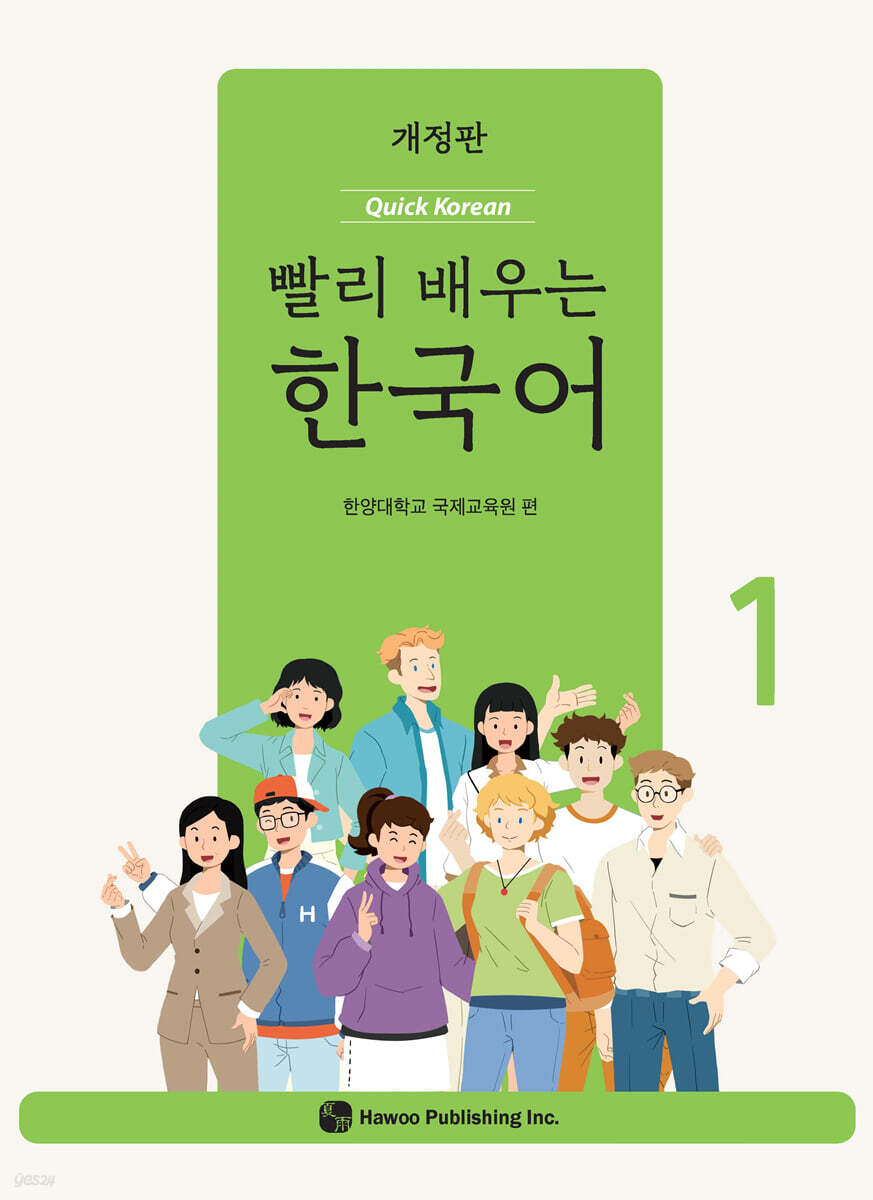
Learn Korean Quickly 1
 |
Description
Book Introduction
『Learn Korean Quickly』 consists of two volumes and aims to help beginners learn Korean by starting with learning the Korean alphabet and developing the Korean communication skills necessary for everyday life.
The textbook is structured around practical discourse functions, grammatical expressions, and vocabulary used in everyday Korean life, and makes ample use of media such as pictures and photographs to ensure that even learners who are new to the Korean language and culture can easily understand it.
Another unique feature is that it provides videos and text materials that colorfully display Korea's traditional and modern culture through QR codes, allowing users to build background knowledge about Korea.
The textbook is structured around practical discourse functions, grammatical expressions, and vocabulary used in everyday Korean life, and makes ample use of media such as pictures and photographs to ensure that even learners who are new to the Korean language and culture can easily understand it.
Another unique feature is that it provides videos and text materials that colorfully display Korea's traditional and modern culture through QR codes, allowing users to build background knowledge about Korea.
index
Preface
Preface
Note
How to Use This Book
Textbook composition table
Scope and Sequence
Character introduction
korean
Pronunciation rules
Studying Korean
Lesson 1 Hangeul 1
Lesson 2 Hangeul 2
Lesson 3 Hangeul 3
Lesson 4 Hangeul 4
Studying conversation
Lesson 5 I am Hannah
Lesson 5 I am Hanna
The office for the 6th class is on the 6th floor.
Lesson 6The office is on the 6th floor
Lesson 7: The ocean is famous
Lesson 8: Drink Coffee
Lesson 9: One Bibimbap please
Lesson 10: How many can I get?
Lesson 10 How many do you want
Lesson 11 Where do we go?
Lesson 12 I want to go to Sindang-dong
Listening Article
Listening Answers
Grammar Explanation and Translation
「Conversation」 Translation 「Conversation」 Translation
"Read and Write" Translation
"Read and Write" Answers
Vocabulary Index
Vocabulary
Preface
Note
How to Use This Book
Textbook composition table
Scope and Sequence
Character introduction
korean
Pronunciation rules
Studying Korean
Lesson 1 Hangeul 1
Lesson 2 Hangeul 2
Lesson 3 Hangeul 3
Lesson 4 Hangeul 4
Studying conversation
Lesson 5 I am Hannah
Lesson 5 I am Hanna
The office for the 6th class is on the 6th floor.
Lesson 6The office is on the 6th floor
Lesson 7: The ocean is famous
Lesson 8: Drink Coffee
Lesson 9: One Bibimbap please
Lesson 10: How many can I get?
Lesson 10 How many do you want
Lesson 11 Where do we go?
Lesson 12 I want to go to Sindang-dong
Listening Article
Listening Answers
Grammar Explanation and Translation
「Conversation」 Translation 「Conversation」 Translation
"Read and Write" Translation
"Read and Write" Answers
Vocabulary Index
Vocabulary
Publisher's Review
We hope that learners will find learning Korean easier and more enjoyable through "Learn Korean Quickly," written by Korea's top Korean language education experts.
Furthermore, I hope that this textbook will serve as a small stepping stone for a deeper understanding of Korean culture.
(Revised) “Learn Korean Quickly 1” is a short-term integrated textbook written to help foreigners and overseas Koreans who want to learn Korean in a short period of time learn easily and with interest.
This book aims to help beginners learn Korean learn the Korean alphabet and read and write Korean.
It also helped students develop Korean communication skills necessary for daily life, such as introducing themselves, ordering, buying things, and finding directions.
(Revised) 〈Learn Korean Quickly 1〉 is largely divided into two parts: “Studying Korean” and “Studying Conversation.”
“Korean Language Study” is divided into four units, and “Conversation Study” is divided into eight units.
To complete this textbook, it will take a total of 48 hours, including 16 hours of "Korean language study" and 32 hours of "conversation study" (4 hours per unit).
"Studying Hangul" consists of three sections for each unit, allowing students to learn the alphabet and syllable system step by step, enabling them to read, listen, and write Hangul easily and quickly.
In the latter part, word reading and sentence reading are included so that it can be naturally connected to “studying conversation.”
"Conversation Study" is organized around topics related to daily life: introduction, classroom, hometown, food, restaurants, shopping, holidays, and transportation.
Each unit is composed of 〈Introduction〉, 〈Vocabulary〉, 〈Grammar〉, 〈Conversation〉, 〈Speaking〉, 〈Advanced Learning - Listening〉, and 〈Advanced Learning - Reading and Writing〉, and the specific introductions are as follows.
ㆍIn the introduction , we presented pictures related to the topic of the unit to help with understanding the unit, and presented the communication skills, grammar, and vocabulary to be learned in the unit as learning objectives.
ㆍIn vocabulary , words related to the topic are grouped into meaning fields and presented, and pictures and illustrations are used to help beginner learners learn words easily and quickly.
ㆍIn grammar , two grammars related to the unit's topic and communication function were learned.
We show how the target grammar is used through examples, and provide morphological information.
In grammar practice, we learned grammar through conversations and included meaningful practice so that it did not stop at just practicing forms.
For learners who need more detailed grammar explanations, the Appendix provides grammar explanations in English, Chinese, and Japanese, and the pages are marked for easy reference.
ㆍIn the conversation, typical discourse related to the topic is presented to help students learn practical expressions and apply them to create various conversations.
Additionally, to help learners understand, new words, expressions, and pronunciation information were presented, while Korean cultural video and text materials related to conversation situations were presented in QR codes.
ㆍIn speaking, students are encouraged to learn the communication skills targeted in each unit by performing communication tasks related to the topic.
Additionally, the interconnectivity between learning stages was considered by utilizing previously learned vocabulary and grammar.
ㆍIn-depth Learning-Listening and In-depth Learning-Reading and Writing are components designed to support self-study and to satisfy the needs of learners who want to study more deeply by utilizing the knowledge learned in the classroom.
ㆍIn-depth learning - Listening presents listening passages and content-related questions based on previously learned vocabulary and grammar to improve the ability to understand spoken language.
In particular, the listening text was designed to reflect the characteristics of spoken language, allowing learners to experience natural spoken discourse.
ㆍIn-depth learning - Reading and Writing first presents reading texts related to the topic of the unit to develop written language comprehension skills, and then increases understanding of the text by answering questions related to the content of the reading text.
Next, writing activities were presented to develop writing skills, and guided questions were included to help students organize content by applying the reading text.
ㆍThe appendix includes “Listening Text,” “Listening Answers,” “Grammar Explanation,” “Conversation Translation,” “Reading and Writing Translation,” “Reading and Writing Answers,” “Vocabulary Index,” and “Word List” to assist in teaching and learning.
In particular, “Dialogue Translation” and “Reading and Writing Translation” are components designed for beginner-level learners, allowing learners to check the meaning of “dialogue” and “reading text” in English, Japanese, and Chinese, thereby easing the learning burden and lowering the entry barrier in the early stages of learning.
In addition, the correct answers to the problems in “Advanced Learning-Listening” and “Advanced Learning-Reading and Writing” are presented in “Listening Answers” and “Reading and Writing Answers” so that learners can check their own level of achievement.
〈Reading and Writing Answers〉 includes not only correct answers to content-related questions but also model answers for writing activities.
The <Vocabulary List> aims to support learners' self-study by presenting key vocabulary for each unit along with translations.
Furthermore, I hope that this textbook will serve as a small stepping stone for a deeper understanding of Korean culture.
(Revised) “Learn Korean Quickly 1” is a short-term integrated textbook written to help foreigners and overseas Koreans who want to learn Korean in a short period of time learn easily and with interest.
This book aims to help beginners learn Korean learn the Korean alphabet and read and write Korean.
It also helped students develop Korean communication skills necessary for daily life, such as introducing themselves, ordering, buying things, and finding directions.
(Revised) 〈Learn Korean Quickly 1〉 is largely divided into two parts: “Studying Korean” and “Studying Conversation.”
“Korean Language Study” is divided into four units, and “Conversation Study” is divided into eight units.
To complete this textbook, it will take a total of 48 hours, including 16 hours of "Korean language study" and 32 hours of "conversation study" (4 hours per unit).
"Studying Hangul" consists of three sections for each unit, allowing students to learn the alphabet and syllable system step by step, enabling them to read, listen, and write Hangul easily and quickly.
In the latter part, word reading and sentence reading are included so that it can be naturally connected to “studying conversation.”
"Conversation Study" is organized around topics related to daily life: introduction, classroom, hometown, food, restaurants, shopping, holidays, and transportation.
Each unit is composed of 〈Introduction〉, 〈Vocabulary〉, 〈Grammar〉, 〈Conversation〉, 〈Speaking〉, 〈Advanced Learning - Listening〉, and 〈Advanced Learning - Reading and Writing〉, and the specific introductions are as follows.
ㆍIn the introduction , we presented pictures related to the topic of the unit to help with understanding the unit, and presented the communication skills, grammar, and vocabulary to be learned in the unit as learning objectives.
ㆍIn vocabulary , words related to the topic are grouped into meaning fields and presented, and pictures and illustrations are used to help beginner learners learn words easily and quickly.
ㆍIn grammar , two grammars related to the unit's topic and communication function were learned.
We show how the target grammar is used through examples, and provide morphological information.
In grammar practice, we learned grammar through conversations and included meaningful practice so that it did not stop at just practicing forms.
For learners who need more detailed grammar explanations, the Appendix provides grammar explanations in English, Chinese, and Japanese, and the pages are marked for easy reference.
ㆍIn the conversation, typical discourse related to the topic is presented to help students learn practical expressions and apply them to create various conversations.
Additionally, to help learners understand, new words, expressions, and pronunciation information were presented, while Korean cultural video and text materials related to conversation situations were presented in QR codes.
ㆍIn speaking, students are encouraged to learn the communication skills targeted in each unit by performing communication tasks related to the topic.
Additionally, the interconnectivity between learning stages was considered by utilizing previously learned vocabulary and grammar.
ㆍIn-depth Learning-Listening and In-depth Learning-Reading and Writing are components designed to support self-study and to satisfy the needs of learners who want to study more deeply by utilizing the knowledge learned in the classroom.
ㆍIn-depth learning - Listening presents listening passages and content-related questions based on previously learned vocabulary and grammar to improve the ability to understand spoken language.
In particular, the listening text was designed to reflect the characteristics of spoken language, allowing learners to experience natural spoken discourse.
ㆍIn-depth learning - Reading and Writing first presents reading texts related to the topic of the unit to develop written language comprehension skills, and then increases understanding of the text by answering questions related to the content of the reading text.
Next, writing activities were presented to develop writing skills, and guided questions were included to help students organize content by applying the reading text.
ㆍThe appendix includes “Listening Text,” “Listening Answers,” “Grammar Explanation,” “Conversation Translation,” “Reading and Writing Translation,” “Reading and Writing Answers,” “Vocabulary Index,” and “Word List” to assist in teaching and learning.
In particular, “Dialogue Translation” and “Reading and Writing Translation” are components designed for beginner-level learners, allowing learners to check the meaning of “dialogue” and “reading text” in English, Japanese, and Chinese, thereby easing the learning burden and lowering the entry barrier in the early stages of learning.
In addition, the correct answers to the problems in “Advanced Learning-Listening” and “Advanced Learning-Reading and Writing” are presented in “Listening Answers” and “Reading and Writing Answers” so that learners can check their own level of achievement.
〈Reading and Writing Answers〉 includes not only correct answers to content-related questions but also model answers for writing activities.
The <Vocabulary List> aims to support learners' self-study by presenting key vocabulary for each unit along with translations.
GOODS SPECIFICS
- Date of issue: February 29, 2024
- Page count, weight, size: 176 pages | 188*227*20mm
- ISBN13: 9791167481214
- ISBN10: 1167481216
You may also like
카테고리
korean


korean

![GQ KOREA Mark (Monthly): December [2025]](http://librairie.coreenne.fr/cdn/shop/files/8ef265dbbfbf186523ed75ba7319009d.jpg?v=1765340328&width=3840)


