

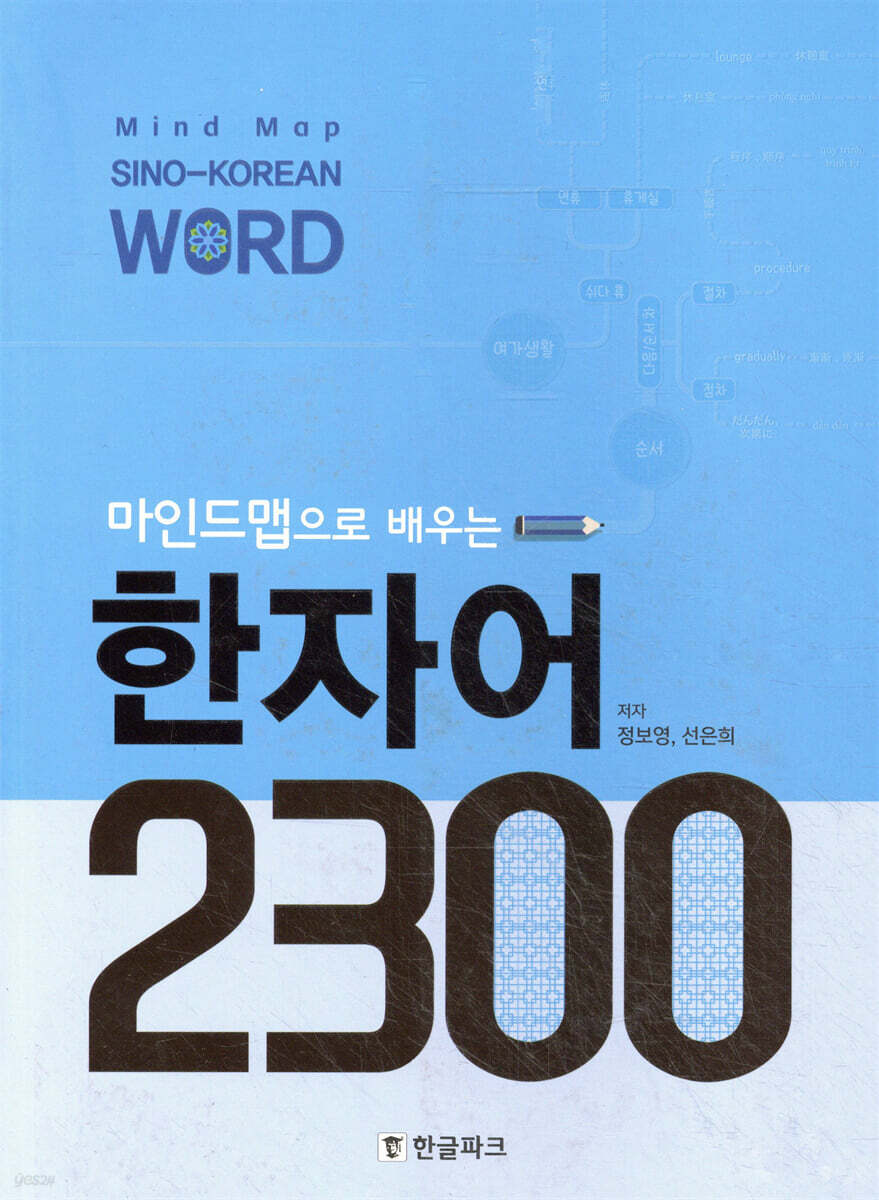
Learn 2300 Chinese Characters with Mind Maps
 |
Description
Book Introduction
In Korean language classes, intermediate and higher level learners often experience difficulties when learning new vocabulary, such as when learning native Korean words and Sino-Korean words that have similar meanings or when learning Sino-Korean words that have similar meanings but different forms.
Learners from non-Chinese character cultures, in particular, complain of these difficulties more frequently.
To this end, this textbook covers Chinese characters with high word-forming power among those included in intermediate and advanced vocabulary, but focuses on understanding the meaning of Chinese characters that make up the meaning of Chinese characters rather than learning the Chinese characters themselves, such as the principles of Chinese character formation, learning radicals, and writing Chinese characters.
By learning the meaning of the Chinese characters that contain the core meaning of the Chinese characters, learners will be able to understand the meaning of the Chinese characters more accurately, and it will help them guess, remember, and recall the meaning of unfamiliar vocabulary even when they encounter it.
In addition, through the process of learning the components of Chinese characters, you can also acquire vocabulary learning strategies that use word formation principles when learning vocabulary.
Learners from non-Chinese character cultures, in particular, complain of these difficulties more frequently.
To this end, this textbook covers Chinese characters with high word-forming power among those included in intermediate and advanced vocabulary, but focuses on understanding the meaning of Chinese characters that make up the meaning of Chinese characters rather than learning the Chinese characters themselves, such as the principles of Chinese character formation, learning radicals, and writing Chinese characters.
By learning the meaning of the Chinese characters that contain the core meaning of the Chinese characters, learners will be able to understand the meaning of the Chinese characters more accurately, and it will help them guess, remember, and recall the meaning of unfamiliar vocabulary even when they encounter it.
In addition, through the process of learning the components of Chinese characters, you can also acquire vocabulary learning strategies that use word formation principles when learning vocabulary.
- You can preview some of the book's contents.
Preview
index
- Preface
- Structure and features of this book
1.
Modern and traditional culture
Day 01 Arts and Culture
Day 02 Tradition and Heritage 1
Day 03 Tradition and Heritage 2
?
2.
nature and environment
Day 04 Nature 1
Day 05 Nature 2
Day 06 Nature 3
Day 07 Weather
Day 08 Environment
3.
Daily life and leisure life
Day 09 Food
Day 10 Fashion
Day 11 House
Day 12 Leisure
?
4.
Body and Health
Day 13 Face
Day 14 Body
Day 15 Bottle
Day 16 Treatment
5.
Time and place
Day 17 Hour 1
Day 18 2 hours
Day 19 Order
Day 20 Location 1
Day 21 Location 2
?
6.
traffic
Day 22 Move 1
Day 23 Move 2
Day 24 Location 1
Day 25 Location 2
Day 26 Scope
7.
Language and Education
Day 27 Language 1
Day 28 Language 2
Day 29 Language 3
Day 30 Training 1
Day 31 Training 2
?
8.
Emotions, sensations, thoughts, and judgments
Day 32 Mind and Emotions
Day 33 Sense 1
Day 34 Sense 2
Day 35 Thought 1
Day 36 Thought 2
Day 37 Judgment
9.
Problems and Solutions
Day 38 Problems and Solutions 1
Day 39 Problems and Solutions 2
Day 40 Problems and Solutions 3
Day 41 Problems and Solutions 4
?
10.
Relationship Ⅰ
Day 42 Person 1
Day 43 Person 2
Day 44 Attitude
Day 45 Life
11.
Relationship II
Day 46 Relationship 1
Day 47 Relationship 2
Day 48 Relationship 3
Day 49 Relationship 4
?
12.
Economy and Life
Day 50 Money 1
Day 51 Money 2
Day 52 Economy 1
Day 53 Economy 2
Day 54 Economy 3
Day 55 Work
Day 56 Occupation
13.
Law and System
Day 57 Law 1
Day 58 Law 2
Day 59 Law 3
Day 60 Crime
Day 61 Politics
?
14.
situation
Day 62 Status 1
Day 63 Status 2
Day 64 Status 3
15.
concept
Day 65 Shape and Appearance
Day 66 Concept 1
Day 67 Concept 2
Day 68 Concept 3
16.
Antonyms Ⅰ
Day 69 Antonyms 1
Day 70 Antonyms 2
Day 71 Antonyms 3
Day 72 Antonyms 4
Day 73 Antonyms 5
Day 74 Antonyms 6
17.
Antonyms II
Day 75 Antonyms 7
Day 76 Antonyms 8
Day 77 Antonyms 9
Day 78 Antonyms 10
?Day 79 Antonyms 11
18.
affix
Day 80 Prefix
Day 81 Suffixes
Day 82 Things
-Correct answer
-index
Detailed image

Publisher's Review
Structure and features of this book
◎ Units and subunits
The main Chinese characters and Chinese character words required for intermediate and advanced learning are categorized into 16 topics, and a total of 18 lessons are organized.
The 16 topics were further divided into several subtopics, making a total of 82 DAYs.
If you study consistently every day, you can complete learning the main intermediate and advanced Chinese characters and words in 82 days.
◎ Mind map
I presented the Chinese characters related to the topic and the Chinese characters that contain them in a mind map.
We have visualized the main meaning of Chinese characters and the meaning of Chinese words so that you can easily understand them.
◎ List of Chinese characters
The main meanings of the target Chinese characters and words presented in the mind map were translated into English, Japanese, Chinese, and Vietnamese.
◎Practice problems
This is the section where you practice target Chinese characters and Chinese words.
After reviewing the individual meanings of Chinese characters, you can use them in discourse units such as sentences, conversations, and reading texts.
◎Chinese character idioms
At the end of each unit, we introduce Chinese idioms that use the Chinese characters learned in that unit.
We have provided dialogue along with the meaning of Chinese character idioms to help you understand the context in which they are used more easily.
GOODS SPECIFICS
- Date of issue: September 1, 2022
- Page count, weight, size: 496 pages | 806g | 167*230*30mm
- ISBN13: 9791167340337
- ISBN10: 1167340337
You may also like
카테고리
korean


korean

![GQ KOREA Mark (Monthly): December [2025]](http://librairie.coreenne.fr/cdn/shop/files/8ef265dbbfbf186523ed75ba7319009d.jpg?v=1765340328&width=3840)


