

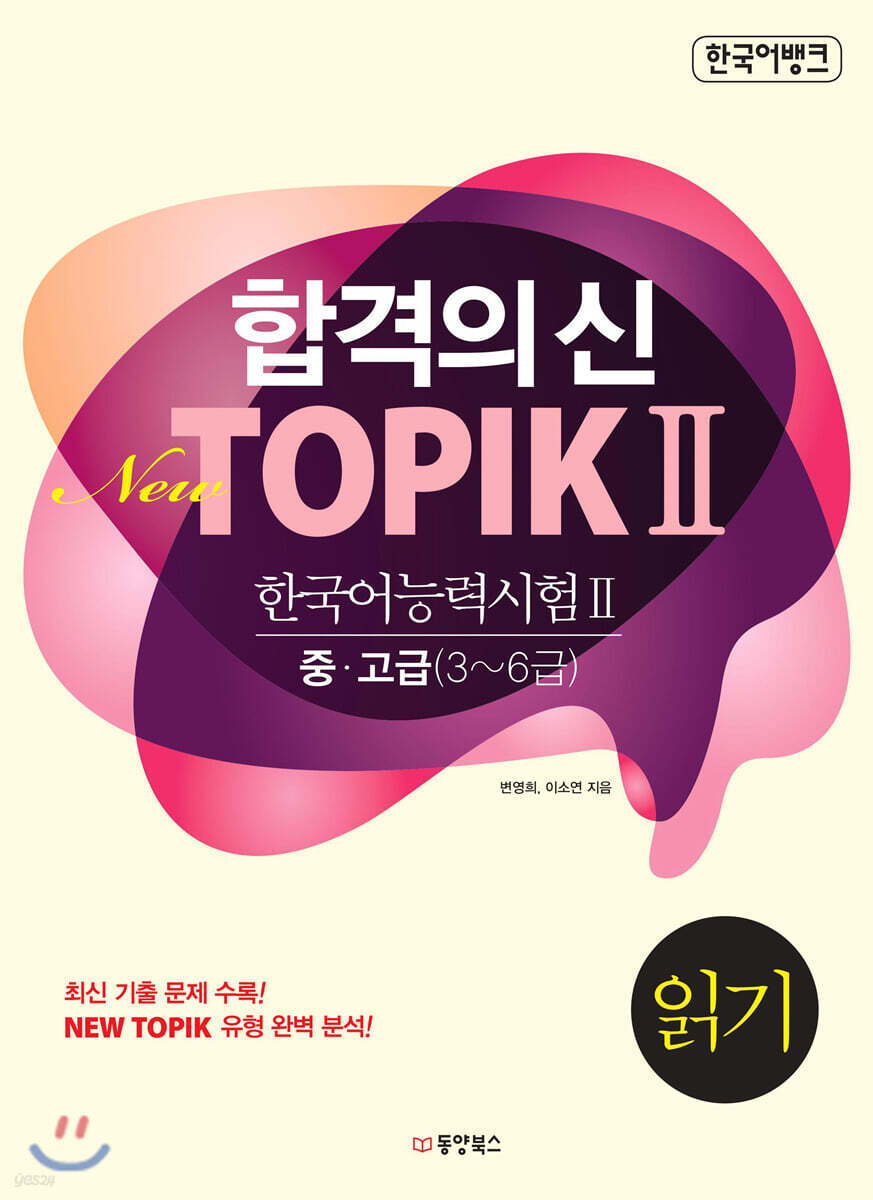
New TOPIK 2 Reading for Intermediate to Advanced Levels 3-6
 |
Description
Book Introduction
This is a study guide for the reading section of the TOPIK (Test of Proficiency in Korean), which was revised and implemented starting with the 35th test in July 2014.
Mastering the reading section will improve your vocabulary and naturally improve your listening and writing skills.
TOPIKⅡ Reading, the God of Passing, has meticulously analyzed the types of questions and has been designed to help test takers easily learn the reading section, which they find most difficult, through practice problems.
In addition, it includes the latest past exam questions and sample questions from the revised TOPIKⅡ to help you get a feel for the actual exam, and you can practice on the actual exam through various problems.
Mastering the reading section will improve your vocabulary and naturally improve your listening and writing skills.
TOPIKⅡ Reading, the God of Passing, has meticulously analyzed the types of questions and has been designed to help test takers easily learn the reading section, which they find most difficult, through practice problems.
In addition, it includes the latest past exam questions and sample questions from the revised TOPIKⅡ to help you get a feel for the actual exam, and you can practice on the actual exam through various problems.
- You can preview some of the book's contents.
Preview
index
Chapter 1 Intermediate
Type 1.
( ) Choose the right vocabulary and grammar New!
Type 2.
Choose an expression similar to the underlined sentence New!
Type 3.
Choose what to write about
Type 4.
Choose the one with the same content
Type 5.
List them in order
Type 6.
Select the content to be placed in ( )
Type 7.
( ) Choose the appropriate vocabulary + content New!
Type 8.
( ) Choose the appropriate idiomatic expression + central idea New!
Type 9.
Choose something with the same feeling + content
Chapter 2 Advanced
Type 1.
Read the newspaper article title and find the article content
Type 2.
Select the content to be placed in ( )
Type 3.
Choose the one with the same content
Type 4.
Choosing a topic for your essay
Type 5.
Select where the sentence "View" goes
Type 6.
Choose something that matches the tone of voice + content New!
Type 7.
Select the content to be included in the topic + ( ) New!
Type 8.
《View》 Choose the sentence that goes in + the same content New!
Type 9.
Purpose of writing + Content to be included in ( ) + Author's attitude New!
Chapter 3: Practice Exam
1 mock exam
2 mock exams
Correct answer
supplement
Analysis of past exam questions (16-32) and useful vocabulary
Text vocabulary list
Type 1.
( ) Choose the right vocabulary and grammar New!
Type 2.
Choose an expression similar to the underlined sentence New!
Type 3.
Choose what to write about
Type 4.
Choose the one with the same content
Type 5.
List them in order
Type 6.
Select the content to be placed in ( )
Type 7.
( ) Choose the appropriate vocabulary + content New!
Type 8.
( ) Choose the appropriate idiomatic expression + central idea New!
Type 9.
Choose something with the same feeling + content
Chapter 2 Advanced
Type 1.
Read the newspaper article title and find the article content
Type 2.
Select the content to be placed in ( )
Type 3.
Choose the one with the same content
Type 4.
Choosing a topic for your essay
Type 5.
Select where the sentence "View" goes
Type 6.
Choose something that matches the tone of voice + content New!
Type 7.
Select the content to be included in the topic + ( ) New!
Type 8.
《View》 Choose the sentence that goes in + the same content New!
Type 9.
Purpose of writing + Content to be included in ( ) + Author's attitude New!
Chapter 3: Practice Exam
1 mock exam
2 mock exams
Correct answer
supplement
Analysis of past exam questions (16-32) and useful vocabulary
Text vocabulary list
Publisher's Review
ㆍ A study guide for the New TOPIK Reading section, which will be implemented in 2014!
ㆍ Includes the latest past exam questions, complete analysis of new types!
ㆍ Includes practice problems, two mock exams, and a list of vocabulary words (translated into English, Chinese, and Japanese)!
This is a study guide for the reading section of the TOPIK (Test of Proficiency in Korean), which was revised and implemented starting with the 35th test in July 2014.
Mastering the reading section will improve your vocabulary and naturally improve your listening and writing skills.
TOPIKⅡ Reading, the God of Passing, has meticulously analyzed the types of questions and has been designed to help test takers easily learn the reading section, which they find most difficult, through practice problems.
In addition, it includes the latest past exam questions and sample questions from the revised TOPIKⅡ to help you get a feel for the actual exam, and you can practice on the actual exam through various problems.
*composition
1.
Preview of past exam questions
To examine each type of TOPIKⅡ, we have presented past exam questions and sample questions.
You can learn problem-solving techniques through the words of the God of Passing listed below.
2.
Practice problems
We have prepared practice problems with a difficulty level similar to that of the actual exam to help you become familiar with various types of questions.
3.
Practice exam
Two mock exams are included, prepared with the same structure and number of questions as the actual TOPIKⅡ.
By timing yourself and solving the problems, you can check your skills and perfectly finish the areas where you are lacking.
4.
Analysis table of past exam questions
A table analyzing past exam questions from the 16th to 32nd exams is included as an appendix.
This table shows you what content actually appears on the exam and provides the necessary information to prepare for new questions. It's helpful for both test takers and teachers, as it allows you to infer the content of the TOPIK.
5.
Text vocabulary list
Among the vocabulary words in the text, words that TOPIK intermediate and advanced (levels 3-6) test takers should know are included along with English, Chinese, and Japanese translations.
Additionally, synonyms are provided based on the contextual meaning used in the text.
ㆍ Includes the latest past exam questions, complete analysis of new types!
ㆍ Includes practice problems, two mock exams, and a list of vocabulary words (translated into English, Chinese, and Japanese)!
This is a study guide for the reading section of the TOPIK (Test of Proficiency in Korean), which was revised and implemented starting with the 35th test in July 2014.
Mastering the reading section will improve your vocabulary and naturally improve your listening and writing skills.
TOPIKⅡ Reading, the God of Passing, has meticulously analyzed the types of questions and has been designed to help test takers easily learn the reading section, which they find most difficult, through practice problems.
In addition, it includes the latest past exam questions and sample questions from the revised TOPIKⅡ to help you get a feel for the actual exam, and you can practice on the actual exam through various problems.
*composition
1.
Preview of past exam questions
To examine each type of TOPIKⅡ, we have presented past exam questions and sample questions.
You can learn problem-solving techniques through the words of the God of Passing listed below.
2.
Practice problems
We have prepared practice problems with a difficulty level similar to that of the actual exam to help you become familiar with various types of questions.
3.
Practice exam
Two mock exams are included, prepared with the same structure and number of questions as the actual TOPIKⅡ.
By timing yourself and solving the problems, you can check your skills and perfectly finish the areas where you are lacking.
4.
Analysis table of past exam questions
A table analyzing past exam questions from the 16th to 32nd exams is included as an appendix.
This table shows you what content actually appears on the exam and provides the necessary information to prepare for new questions. It's helpful for both test takers and teachers, as it allows you to infer the content of the TOPIK.
5.
Text vocabulary list
Among the vocabulary words in the text, words that TOPIK intermediate and advanced (levels 3-6) test takers should know are included along with English, Chinese, and Japanese translations.
Additionally, synonyms are provided based on the contextual meaning used in the text.
GOODS SPECIFICS
- Date of issue: April 5, 2014
- Page count, weight, size: 200 pages | 350g | 170*220*20mm
- ISBN13: 9788998914936
- ISBN10: 899891493X
You may also like
카테고리
korean


korean

![GQ KOREA Mark (Monthly): December [2025]](http://librairie.coreenne.fr/cdn/shop/files/8ef265dbbfbf186523ed75ba7319009d.jpg?v=1765340328&width=3840)


