

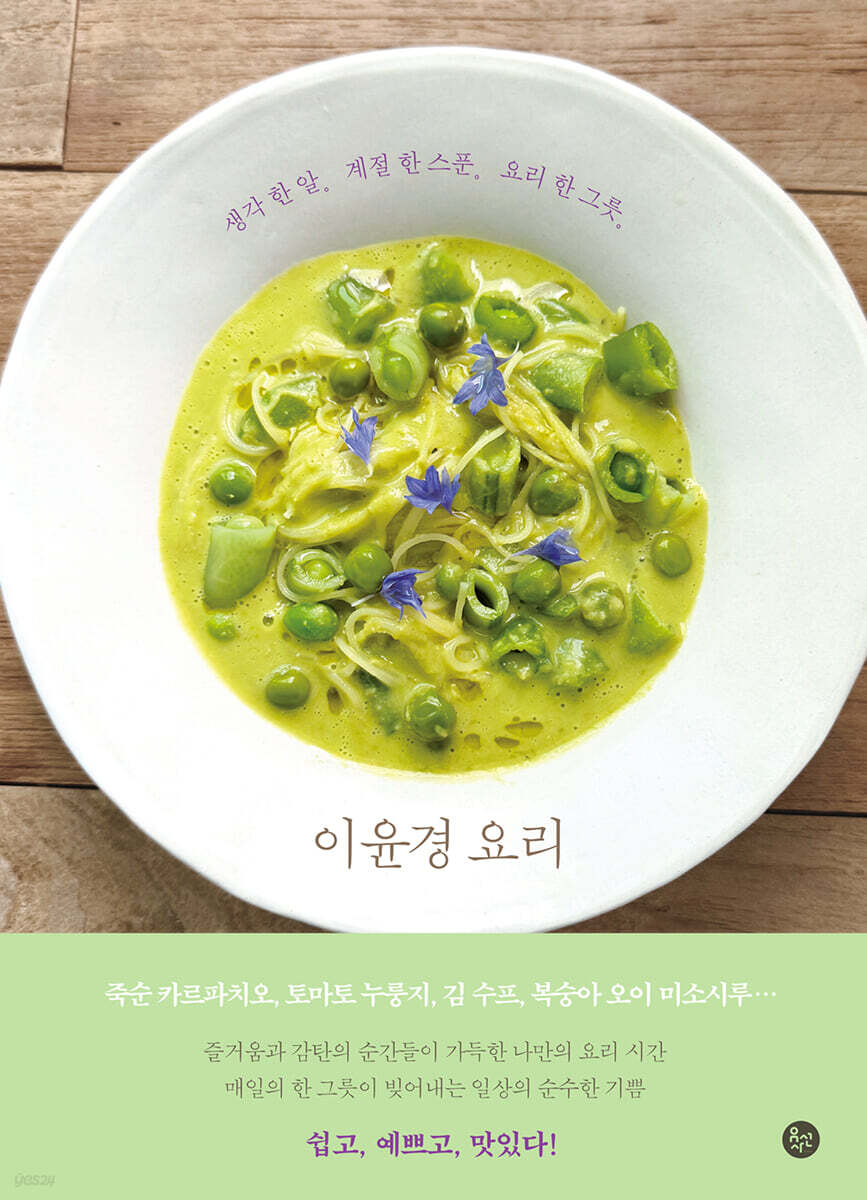
Lee Yoon-kyung's cooking
 |
Description
Book Introduction
Looking intently at the seasons
Use your time wisely
Everyday dishes with a little extra heart
My own time to cook freely, eat deliciously, and clean up happily.
The healthy joy and moments of admiration found within it
A recipe book by author Lee Yoon-kyung, who fell in love with the vibrant energy of natural wine at a Tokyo wine bar and now runs a wine bar in Hannam-dong, Seoul, introducing wine and creating dishes to complement it.
It introduces over 80 familiar yet unfamiliar dishes and recipes, including tomato tuna noodles, peach octopus potato salad, radish green soybean paste short pasta, soft tofu and seaweed soup, turnip kimchi watermelon noodles, and bamboo shoot carpaccio, and explains various tips, from how to make broth to how to enjoy cooking in a different way.
The author finds joy in communicating with people who find happiness in good wine and in cooking dishes that complement it, but he also says that preparing a delicious bowl of food by preparing seasonal ingredients just for himself, and the excitement of dreaming up another recipe while marveling at new flavors are also part of his everyday joys.
When I first started cooking in earnest, I, like many others, went through a lot of trial and error. However, as I approached it more lightly and comfortably, I began to enjoy the cooking time itself as much as the finished dish.
With the light heart of “I cook and eat the food, it doesn’t have to be perfect,” I try cooking rice in a pot, making pasta, and even smiling.
Time spent preparing seasonal vegetables and thinking about how to cook them to preserve their original flavors, time spent recreating the home-cooked meals your grandmother used to make, time spent adapting recipes from your favorite dramas in your own way, time spent drying and aging ingredients and anticipating their flavors… The author wrote this book in the hopes that readers will also feel their own healthy joys and moments of wonder during these times.
Use your time wisely
Everyday dishes with a little extra heart
My own time to cook freely, eat deliciously, and clean up happily.
The healthy joy and moments of admiration found within it
A recipe book by author Lee Yoon-kyung, who fell in love with the vibrant energy of natural wine at a Tokyo wine bar and now runs a wine bar in Hannam-dong, Seoul, introducing wine and creating dishes to complement it.
It introduces over 80 familiar yet unfamiliar dishes and recipes, including tomato tuna noodles, peach octopus potato salad, radish green soybean paste short pasta, soft tofu and seaweed soup, turnip kimchi watermelon noodles, and bamboo shoot carpaccio, and explains various tips, from how to make broth to how to enjoy cooking in a different way.
The author finds joy in communicating with people who find happiness in good wine and in cooking dishes that complement it, but he also says that preparing a delicious bowl of food by preparing seasonal ingredients just for himself, and the excitement of dreaming up another recipe while marveling at new flavors are also part of his everyday joys.
When I first started cooking in earnest, I, like many others, went through a lot of trial and error. However, as I approached it more lightly and comfortably, I began to enjoy the cooking time itself as much as the finished dish.
With the light heart of “I cook and eat the food, it doesn’t have to be perfect,” I try cooking rice in a pot, making pasta, and even smiling.
Time spent preparing seasonal vegetables and thinking about how to cook them to preserve their original flavors, time spent recreating the home-cooked meals your grandmother used to make, time spent adapting recipes from your favorite dramas in your own way, time spent drying and aging ingredients and anticipating their flavors… The author wrote this book in the hopes that readers will also feel their own healthy joys and moments of wonder during these times.
- You can preview some of the book's contents.
Preview
index
Author's Note 011
1 Asparagus: The Season of Green, the Taste of Green… 020
Olive Oil Rice with Asparagus… 026
Asparagus Pine Nut Noodles… 028
Asparagus Ham Sandwich… 030
Asparagus and Thai Soup… 032
2 Tomatoes: The Joy of a Red Fruit with Many Uses… 034
Three Ways to Eat Tomatoes… 038
? With salt, ripe tomatoes… 038
? Waterless Tomato Saffron Sauce… 040
A taste of summer in winter: dried tomatoes… 042
Tomato Nurungji… 044
Dehydrated Tomato Cheonggukjang Stew… 048
Makoto's Cherry Tomato Spaghetti… 050
Tomato Tuna Noodles… 052
3 Peas: A sweet, bright, green smile that bursts with color… 054
Pea Capellini… 060
Pea and Potato Croquettes… 062
Pea, Clam, and Potato Soup… 064
Soft tofu and pea angake… 066
Bean Rice … 068
4 Eggs: Anytime, Anywhere, Anyhow… 072
Half-boiled egg with smile… 078
Half-boiled Scotch Egg… 080
Egg Cheese Udon… 082
Egg and Anchovy Bibim Noodles… 084
Pickled Egg Yolk Miso… 086
5 Peaches: The Juicy Taste of Early Summer… 088
Peach Octopus Potato Salad… 092
Peach Barley Salad… 096
Peach Cucumber Miso Soup… 098
6 Cabbage: Every single one, in every dish… 102
Sauerkraut … 106
Salted Cabbage Old-Fashioned Toast… 108
Cabbage, Shiitake, and Chicken Soup… 110
Cabbage Egg Rice Bowl… 112
7. Radish and Radish Green: A Gentle Embrace of White and Green Flavors… 114
No… 116
? Dried radish rice… 120
? Radish Rice Bowl … 122
? No soup… 124
Mucheong… 126
? Radish Kimbap… 128
? Radish Soybean Pasta Short Pasta… 130
8 Vegetable Sketches: Paprika, Beet, Cucumber… 132
Paprika… 136
Ham and Cheese Sandwich with Roasted Paprika… 138
Beat… 140
Beet Tomato Salad… 142
Beet Vegetable Salsa… 144
Cucumber… 146
Cucumber, Tomato, and Natto Bibimbap… 148
Cucumber and Beef Sandwich… 150
Summer Vegetable Cheonggukjang Rice Bowl… 152
9 Tastes of Jeju Island: From Grandma to Mom, From Mom to Me… 154
Buckwheat pancakes… 158
Buckwheat porridge… 160
Jeju-style soybean paste stew… 162
10 Thoughts on Your Favorite Winter Flavors: Oysters, Udon, Spinach, Kimchi, Pot-au-Feu… 164
Cheonsuman River Cave… 168
Udon and Egg… 172
Spinach: Winter's Brilliant Green Vitality… 174
Spinach, Chicken Breast, and Egg Soup… 176
Spinach Shrimp Wontons… 178
Winter Kim… 180
? Gopchang Kimchi Cream Cheese Toast… 182
? Soft Tofu and Kimchi Soup… 184
Photo-Feu… 186
11 Rice and Soup: It's Okay If It's Not Perfect, It's Delicious Even If It's Not Perfect... 188
Enjoy a comfortable pot of rice… 190
? Cooking rice in a pot... 192
Spring Octopus Asparagus Rice in a Pot… 194
? Amdaeha pot rice… 196
? Cold rice in a pot… 198
Simply put… 202
? Clam Okra Miso Soup… 204
? Chicken cold noodle soup… 206
Lifestyle: Simple, Comfortable... 210
12 Noodles: Simple, but always delicious! … 214
Udon with fried vegetables… 218
Turnip Kimchi Watermelon Noodles… 220
Tomato Water Noodles… 222
Umeboshi Cucumber Soba Noodles… 224
13 Shiokoji, Miso, and Dried: A Taste That Waits for Time… 226
Shiokouji… 230
Making Shiokoji... 232
How to Make Onion Shiokoji… 234
? Shiokouji Bagna Cauda … 236
? Shiokoji Tofu… 238
…Oven-baked Shiokoji Tofu… 240
? Meat Aging Using Shiokoji… 243
… Shiokoji Aged Pork Tenderloin and Vegetable Stew … 244
…Oven-baked Shiokoji-aged chicken thighs… 246
… Shiokoji Aged Chicken Breast with Garlic Chives Cold Pasta… 248
Smile… 250
? Make a smile… 252
Spinach, Chicken Breast, and Miso Salad… 254
Dry… 256
Dried oyster mushroom rice… 258
Dried Cucumber and Beef Stir-fry… 260
14 With Wine: My Beloved Mana… 264
Mana, mana … 266
Lemon Snappea Cold Pasta… 272
Bamboo Shoot Carpaccio … 274
Arugula Salad with Korean Chili Peppers… 276
Anchovy Pie… 278
Savoy Cabbage Wrapped Leek Tomato Rice and Ragu… 280
How to Make Beef Ragu… 282
Zucchini Chocolate Terrine… 284
1 Asparagus: The Season of Green, the Taste of Green… 020
Olive Oil Rice with Asparagus… 026
Asparagus Pine Nut Noodles… 028
Asparagus Ham Sandwich… 030
Asparagus and Thai Soup… 032
2 Tomatoes: The Joy of a Red Fruit with Many Uses… 034
Three Ways to Eat Tomatoes… 038
? With salt, ripe tomatoes… 038
? Waterless Tomato Saffron Sauce… 040
A taste of summer in winter: dried tomatoes… 042
Tomato Nurungji… 044
Dehydrated Tomato Cheonggukjang Stew… 048
Makoto's Cherry Tomato Spaghetti… 050
Tomato Tuna Noodles… 052
3 Peas: A sweet, bright, green smile that bursts with color… 054
Pea Capellini… 060
Pea and Potato Croquettes… 062
Pea, Clam, and Potato Soup… 064
Soft tofu and pea angake… 066
Bean Rice … 068
4 Eggs: Anytime, Anywhere, Anyhow… 072
Half-boiled egg with smile… 078
Half-boiled Scotch Egg… 080
Egg Cheese Udon… 082
Egg and Anchovy Bibim Noodles… 084
Pickled Egg Yolk Miso… 086
5 Peaches: The Juicy Taste of Early Summer… 088
Peach Octopus Potato Salad… 092
Peach Barley Salad… 096
Peach Cucumber Miso Soup… 098
6 Cabbage: Every single one, in every dish… 102
Sauerkraut … 106
Salted Cabbage Old-Fashioned Toast… 108
Cabbage, Shiitake, and Chicken Soup… 110
Cabbage Egg Rice Bowl… 112
7. Radish and Radish Green: A Gentle Embrace of White and Green Flavors… 114
No… 116
? Dried radish rice… 120
? Radish Rice Bowl … 122
? No soup… 124
Mucheong… 126
? Radish Kimbap… 128
? Radish Soybean Pasta Short Pasta… 130
8 Vegetable Sketches: Paprika, Beet, Cucumber… 132
Paprika… 136
Ham and Cheese Sandwich with Roasted Paprika… 138
Beat… 140
Beet Tomato Salad… 142
Beet Vegetable Salsa… 144
Cucumber… 146
Cucumber, Tomato, and Natto Bibimbap… 148
Cucumber and Beef Sandwich… 150
Summer Vegetable Cheonggukjang Rice Bowl… 152
9 Tastes of Jeju Island: From Grandma to Mom, From Mom to Me… 154
Buckwheat pancakes… 158
Buckwheat porridge… 160
Jeju-style soybean paste stew… 162
10 Thoughts on Your Favorite Winter Flavors: Oysters, Udon, Spinach, Kimchi, Pot-au-Feu… 164
Cheonsuman River Cave… 168
Udon and Egg… 172
Spinach: Winter's Brilliant Green Vitality… 174
Spinach, Chicken Breast, and Egg Soup… 176
Spinach Shrimp Wontons… 178
Winter Kim… 180
? Gopchang Kimchi Cream Cheese Toast… 182
? Soft Tofu and Kimchi Soup… 184
Photo-Feu… 186
11 Rice and Soup: It's Okay If It's Not Perfect, It's Delicious Even If It's Not Perfect... 188
Enjoy a comfortable pot of rice… 190
? Cooking rice in a pot... 192
Spring Octopus Asparagus Rice in a Pot… 194
? Amdaeha pot rice… 196
? Cold rice in a pot… 198
Simply put… 202
? Clam Okra Miso Soup… 204
? Chicken cold noodle soup… 206
Lifestyle: Simple, Comfortable... 210
12 Noodles: Simple, but always delicious! … 214
Udon with fried vegetables… 218
Turnip Kimchi Watermelon Noodles… 220
Tomato Water Noodles… 222
Umeboshi Cucumber Soba Noodles… 224
13 Shiokoji, Miso, and Dried: A Taste That Waits for Time… 226
Shiokouji… 230
Making Shiokoji... 232
How to Make Onion Shiokoji… 234
? Shiokouji Bagna Cauda … 236
? Shiokoji Tofu… 238
…Oven-baked Shiokoji Tofu… 240
? Meat Aging Using Shiokoji… 243
… Shiokoji Aged Pork Tenderloin and Vegetable Stew … 244
…Oven-baked Shiokoji-aged chicken thighs… 246
… Shiokoji Aged Chicken Breast with Garlic Chives Cold Pasta… 248
Smile… 250
? Make a smile… 252
Spinach, Chicken Breast, and Miso Salad… 254
Dry… 256
Dried oyster mushroom rice… 258
Dried Cucumber and Beef Stir-fry… 260
14 With Wine: My Beloved Mana… 264
Mana, mana … 266
Lemon Snappea Cold Pasta… 272
Bamboo Shoot Carpaccio … 274
Arugula Salad with Korean Chili Peppers… 276
Anchovy Pie… 278
Savoy Cabbage Wrapped Leek Tomato Rice and Ragu… 280
How to Make Beef Ragu… 282
Zucchini Chocolate Terrine… 284
Detailed image

Into the book
It's not perfect, but that's why I think the freedom to cook on my own is like a nice extra bonus to a finished bowl of food.
I hope many people can enjoy the small sense of accomplishment and the joy that comes from simply cooking, tasting, and cleaning up at a brisk pace.
---From the author's note
The long-awaited asparagus has arrived.
When I opened the box, each thick green leaf peeked out.
How did they know that their season had come?
The sight of asparagus plants stretching their trunks and pushing their heads out of the soil makes me feel the arrival of spring and gives me a special feeling.
---From "Asparagus"
Freshly cooked rice with delicious rice
Gently mix the blanched soybeans in salt water.
Pinch the salt and crumble it and add generously.
The joy of eating with a generous amount of olive oil.
When you finish eating half of it, fill it with aged Reggiano cheese and sprinkle some lemon juice on it to create a nice variation of acidity.
At first glance, it might seem like a bit of a stretch to call it cooking, but the joy of combining good ingredients, tasting them, and experimenting with additions and subtractions is truly immense.
---From "Sweet Bean Rice"
I like peaches that are ripe enough that I can peel them with my fingers rather than a knife.
I want to enjoy the pleasure of gently peeling a juicy peach with my bare hands and taking a bite, savoring every last drop of juice dripping between my fingers.
---From "Peach"
I guess I like that time because I tend to concentrate and not do anything else when I'm cooking.
While the salted cabbage is wilting, the rice is soaking. I have some time, so I might as well make some scrambled eggs… It feels really good to spend my time thoughtfully, thinking about something fun.
I feel like I'm thinking, but my thoughts are organized, and I'm doing several things, but I'm not scattered, but rather focused.
It's similar to the feeling of using the right muscles when exercising.
---From "Cabbage"
I like the time when I can round off the edges of the radish, which has gained sweetness after surviving the early winter cold.
I love that time so much that I feel excited, sitting alone at the table and taking the time to prepare it.
After that, I feel happy and satisfied with the sight of the radishes arranged in a cute, round shape.
When you eat the round, cooked radish while it is still warm, it feels like eating a full moon.
---From "Nothing"
A day when I discover a new charm in a familiar vegetable makes me feel good all day long.
If you think about it, these moments mostly come when I'm cooking at home, thinking that I'm happy if it tastes good, but if it fails, that's okay.
A cooking sketch drawn with a relaxed mind.
If I pile them up in the library of my heart like this every year, I will be able to take them out and enjoy them with joy when the next season comes.
---From "Vegetable Sketches"
A light and elegant bean flavor, filled with winter radish and spring onion, with a beautiful, pure, nutty flavor.
Jeju-style bean soup with round, ripe beans that are soft and filling enough to be eaten alone like soup.
I'd like to find a word more white and transparent than "savory," but what could be better? Buckwheat pancakes, along with my mother's Jeju-style soybean soup, which my maternal grandmother taught me.
Another food that is a household word.
---From "Jeju-style Doksegi Kongguk"
An onsen egg, carefully cracked and placed on top of well-boiled udon noodles with steam rising from them.
The fluffy white shape is considered 'noodle' and the udon noodles are considered 'line'.
And when I look at the thick, light brown butter pieces seeping into the udon, I feel like time is visible.
The sight of beautiful white things gathered together is so lovely that I can't help but stare at it for a long time.
A time when the yellow that peeps through the ripened whites is so pretty that I somehow end up putting off making a fuss.
---From "Udon and Eggs"
The joy of pure white rice.
No matter how many ingredients are added to a pot or how convenient instant rice is, the joy that only well-cooked white rice brings is special.
Freshly cooked white rice, which retains the pure moisture of each grain, may not have a flashy taste that lingers in your mouth, but it is a soft, strong force that embraces everything with its subtle sweetness that spreads the more you chew.
---From "Cooking Rice in a Pot"
It is good to observe the process of fermentation, maturation, drying and condensation.
When I think of the glass bottles in the cupboard that have aged without being worn by time, I feel a sense of longing.
I like this narrative of fermentation, and I am interested in fermentation and maturation because I feel that eating fermented food is good for digestion and makes my body feel comfortable.
I hope many people can enjoy the small sense of accomplishment and the joy that comes from simply cooking, tasting, and cleaning up at a brisk pace.
---From the author's note
The long-awaited asparagus has arrived.
When I opened the box, each thick green leaf peeked out.
How did they know that their season had come?
The sight of asparagus plants stretching their trunks and pushing their heads out of the soil makes me feel the arrival of spring and gives me a special feeling.
---From "Asparagus"
Freshly cooked rice with delicious rice
Gently mix the blanched soybeans in salt water.
Pinch the salt and crumble it and add generously.
The joy of eating with a generous amount of olive oil.
When you finish eating half of it, fill it with aged Reggiano cheese and sprinkle some lemon juice on it to create a nice variation of acidity.
At first glance, it might seem like a bit of a stretch to call it cooking, but the joy of combining good ingredients, tasting them, and experimenting with additions and subtractions is truly immense.
---From "Sweet Bean Rice"
I like peaches that are ripe enough that I can peel them with my fingers rather than a knife.
I want to enjoy the pleasure of gently peeling a juicy peach with my bare hands and taking a bite, savoring every last drop of juice dripping between my fingers.
---From "Peach"
I guess I like that time because I tend to concentrate and not do anything else when I'm cooking.
While the salted cabbage is wilting, the rice is soaking. I have some time, so I might as well make some scrambled eggs… It feels really good to spend my time thoughtfully, thinking about something fun.
I feel like I'm thinking, but my thoughts are organized, and I'm doing several things, but I'm not scattered, but rather focused.
It's similar to the feeling of using the right muscles when exercising.
---From "Cabbage"
I like the time when I can round off the edges of the radish, which has gained sweetness after surviving the early winter cold.
I love that time so much that I feel excited, sitting alone at the table and taking the time to prepare it.
After that, I feel happy and satisfied with the sight of the radishes arranged in a cute, round shape.
When you eat the round, cooked radish while it is still warm, it feels like eating a full moon.
---From "Nothing"
A day when I discover a new charm in a familiar vegetable makes me feel good all day long.
If you think about it, these moments mostly come when I'm cooking at home, thinking that I'm happy if it tastes good, but if it fails, that's okay.
A cooking sketch drawn with a relaxed mind.
If I pile them up in the library of my heart like this every year, I will be able to take them out and enjoy them with joy when the next season comes.
---From "Vegetable Sketches"
A light and elegant bean flavor, filled with winter radish and spring onion, with a beautiful, pure, nutty flavor.
Jeju-style bean soup with round, ripe beans that are soft and filling enough to be eaten alone like soup.
I'd like to find a word more white and transparent than "savory," but what could be better? Buckwheat pancakes, along with my mother's Jeju-style soybean soup, which my maternal grandmother taught me.
Another food that is a household word.
---From "Jeju-style Doksegi Kongguk"
An onsen egg, carefully cracked and placed on top of well-boiled udon noodles with steam rising from them.
The fluffy white shape is considered 'noodle' and the udon noodles are considered 'line'.
And when I look at the thick, light brown butter pieces seeping into the udon, I feel like time is visible.
The sight of beautiful white things gathered together is so lovely that I can't help but stare at it for a long time.
A time when the yellow that peeps through the ripened whites is so pretty that I somehow end up putting off making a fuss.
---From "Udon and Eggs"
The joy of pure white rice.
No matter how many ingredients are added to a pot or how convenient instant rice is, the joy that only well-cooked white rice brings is special.
Freshly cooked white rice, which retains the pure moisture of each grain, may not have a flashy taste that lingers in your mouth, but it is a soft, strong force that embraces everything with its subtle sweetness that spreads the more you chew.
---From "Cooking Rice in a Pot"
It is good to observe the process of fermentation, maturation, drying and condensation.
When I think of the glass bottles in the cupboard that have aged without being worn by time, I feel a sense of longing.
I like this narrative of fermentation, and I am interested in fermentation and maturation because I feel that eating fermented food is good for digestion and makes my body feel comfortable.
---From "Shiokoji, Smile, Dryness"
Publisher's Review
“My cooking captures the flavors of summer and is enjoyed in the fall and winter.
“Savoring the taste of winter and waiting for spring and summer”
Asparagus, tomatoes, peas, peaches, cabbage, radishes, and radish greens… Discovering seasonal ingredients
The taste of Jeju Island passed down from my grandmother to my mother and then to me
Oysters, udon, spinach, seaweed, pot-au-feu… the flavors of winter that warm me.
Simple and easy, but always delicious rice, soup, and noodles
Shiokoji, miso, dried… A taste that has waited patiently for time.
Dishes that pair well with good wine and bring out new flavors with familiar ingredients.
What stands out most about this book is that it introduces dishes that allow you to enjoy the natural flavors of seasonal ingredients, as well as various ways to use them.
Asparagus, tomatoes, peas, peaches... Looking at recipes featuring a variety of vegetables and fruits, whose vivid descriptions evoke flavors, often leads me to exclaim, "Wow, what a combination! This is so interesting, it looks so delicious!"
Asparagus oil rice that faithfully preserves the original flavor of asparagus, tomato tuna noodles made with tomatoes that you can eat every day without feeling guilty, water-free tomato cheonggukjang stew, egg and anchovy bibim noodles made like soy sauce egg rice, pea capellini that you can't take your eyes off of for its beauty, peach octopus potato salad that gives you a surprising taste with the unexpected combination of peaches, octopus, and potatoes... Also, in the case of radish and radish greens that you can see at the beginning of winter, you can start by cleaning them well and grinding them, then adding them to rice to make radish rice, making kimbap with radish greens, grating radish and boiling it until soft to make radish soup that hugs your body, or making short pasta with radish greens that go well with soybean paste.
Look at the appearance of the ingredients, think about how to cook them to bring out their flavors, picture what other ingredients or seasonings would go well with them, and then freely make them without being bound by recipes or cooking methods, depending on your physical and mental state that day.
The unique Jeju foods introduced by the author, who was born on Jeju Island and spent his childhood summer vacations at his maternal grandparents' house on Jeju Island, are also unique.
“Mom, send me Grandma’s Bingtteok recipe on KakaoTalk,” I wrote after receiving the request, “Buckwheat Radish Pancake,” “Main Jobaegi,” which my maternal grandmother often made for my mother during her postpartum care, “Jeju-style Doksaegikongguk,” made with Jeju native beans… These are “spoken foods” that were passed down to me from my maternal grandmother through my mother, full of affectionate and warm memories.
“The season when outerwear and vegetables in pots get thicker” We’ve also organized foods that we especially crave in winter so that we can look for them when the wind gets cold.
The oysters that make you wait for winter, especially the shelled oysters caught near Cheonsuman and Ganwol Island, are delicious whether eaten raw or boiled with just radish and spinach.
And you can't miss out on warm udon.
A delicate egg and light brown butter layered carefully on freshly boiled noodles! Meanwhile, spinach grown in the cold wind has a wonderfully sweet flavor, making it perfect for making into dumplings or enjoying as a warm soup.
Crispy roasted seaweed or seasoned seaweed is also a favorite in the winter. If you mix it with cream cheese to make a paste, you can spread it on toasted bread and eat it. If you add soft tofu to make seaweed soup, you can enjoy a refreshing broth.
We also introduce pot-au-feu, which is made by simply boiling a lot of your favorite vegetables, sausages, or meat.
Rice, soup, and noodles, the most commonly eaten and enjoyed foods, are also covered in great detail in this book.
It presents methods for making seemingly complicated rice in a pot “without any worries,” freely cooking using ingredients you have at home or in season, and even enjoying savory nurungji.
While cooking rice, we also introduce soups that can be cooked “easily and without burden” with simple ingredients, as well as easy ways to make broth at home, such as kelp broth, vegetable broth, anchovy broth, and dried pollack broth.
Noodle dishes, which always pay off even when cooked in a short amount of time and without much thought, are a regular menu item for the author.
Whether it's udon, somen, buckwheat noodles, vegetables, or meat, they all go well together and are familiar, but always offer a special taste.
Fermentation and maturation, drying and condensation, which deepen the flavor over time, are also processes that the author puts effort into to achieve a deep flavor.
Shiokoji, which can be used as a salt substitute or applied to seafood, meat, or tofu to add umami and soften the ingredients, and miso, which is often used as a seasoning or condiment, are also introduced along with recipes using each, such as 'Shiokoji Aged Pork Tenderloin and Vegetable Stew' and 'Spinach Chicken Breast Miso Salad'.
You can also find vegetables such as radish, cucumber, and mushrooms that have a more concentrated flavor and a significantly different texture when dried, as well as various recipes using them.
The author, who has always been passionate about natural wines brimming with vitality and has always been concerned with dishes that complement them, introduces menus that harmonize with the essence of wine, using seasonal ingredients and fermented foods.
From refreshing lemon pasta to a pie with West Coast dried anchovies and a chocolate terrine with zucchini, the menu is ingenious, pretty, and, above all, delicious.
“It’s okay if it’s not perfect, and it’s delicious even if it’s not perfect.”
A bowl of delicious food cooked with care, carefully selecting the best ingredients, and enjoying the meal.
The happiness that comes from cooking energetically, simply, and freely.
The energy that permeates this book is vibrant and free.
Although the author presents a basic recipe, he emphasizes that it is perfectly acceptable to adjust it to suit your personal taste, your mood of the day, and your individual situation.
Following the recipes in the book, choosing your favorite ingredients, and adapting them to suit your mood each day, creating a fun meal will surely liven up your daily rhythm.
As the author wishes, may it be a time that doesn't have to be perfect, and therefore a pleasant time, a time to find small accomplishments and joys in it, and to enjoy not only the cooking but also the time itself!
“Savoring the taste of winter and waiting for spring and summer”
Asparagus, tomatoes, peas, peaches, cabbage, radishes, and radish greens… Discovering seasonal ingredients
The taste of Jeju Island passed down from my grandmother to my mother and then to me
Oysters, udon, spinach, seaweed, pot-au-feu… the flavors of winter that warm me.
Simple and easy, but always delicious rice, soup, and noodles
Shiokoji, miso, dried… A taste that has waited patiently for time.
Dishes that pair well with good wine and bring out new flavors with familiar ingredients.
What stands out most about this book is that it introduces dishes that allow you to enjoy the natural flavors of seasonal ingredients, as well as various ways to use them.
Asparagus, tomatoes, peas, peaches... Looking at recipes featuring a variety of vegetables and fruits, whose vivid descriptions evoke flavors, often leads me to exclaim, "Wow, what a combination! This is so interesting, it looks so delicious!"
Asparagus oil rice that faithfully preserves the original flavor of asparagus, tomato tuna noodles made with tomatoes that you can eat every day without feeling guilty, water-free tomato cheonggukjang stew, egg and anchovy bibim noodles made like soy sauce egg rice, pea capellini that you can't take your eyes off of for its beauty, peach octopus potato salad that gives you a surprising taste with the unexpected combination of peaches, octopus, and potatoes... Also, in the case of radish and radish greens that you can see at the beginning of winter, you can start by cleaning them well and grinding them, then adding them to rice to make radish rice, making kimbap with radish greens, grating radish and boiling it until soft to make radish soup that hugs your body, or making short pasta with radish greens that go well with soybean paste.
Look at the appearance of the ingredients, think about how to cook them to bring out their flavors, picture what other ingredients or seasonings would go well with them, and then freely make them without being bound by recipes or cooking methods, depending on your physical and mental state that day.
The unique Jeju foods introduced by the author, who was born on Jeju Island and spent his childhood summer vacations at his maternal grandparents' house on Jeju Island, are also unique.
“Mom, send me Grandma’s Bingtteok recipe on KakaoTalk,” I wrote after receiving the request, “Buckwheat Radish Pancake,” “Main Jobaegi,” which my maternal grandmother often made for my mother during her postpartum care, “Jeju-style Doksaegikongguk,” made with Jeju native beans… These are “spoken foods” that were passed down to me from my maternal grandmother through my mother, full of affectionate and warm memories.
“The season when outerwear and vegetables in pots get thicker” We’ve also organized foods that we especially crave in winter so that we can look for them when the wind gets cold.
The oysters that make you wait for winter, especially the shelled oysters caught near Cheonsuman and Ganwol Island, are delicious whether eaten raw or boiled with just radish and spinach.
And you can't miss out on warm udon.
A delicate egg and light brown butter layered carefully on freshly boiled noodles! Meanwhile, spinach grown in the cold wind has a wonderfully sweet flavor, making it perfect for making into dumplings or enjoying as a warm soup.
Crispy roasted seaweed or seasoned seaweed is also a favorite in the winter. If you mix it with cream cheese to make a paste, you can spread it on toasted bread and eat it. If you add soft tofu to make seaweed soup, you can enjoy a refreshing broth.
We also introduce pot-au-feu, which is made by simply boiling a lot of your favorite vegetables, sausages, or meat.
Rice, soup, and noodles, the most commonly eaten and enjoyed foods, are also covered in great detail in this book.
It presents methods for making seemingly complicated rice in a pot “without any worries,” freely cooking using ingredients you have at home or in season, and even enjoying savory nurungji.
While cooking rice, we also introduce soups that can be cooked “easily and without burden” with simple ingredients, as well as easy ways to make broth at home, such as kelp broth, vegetable broth, anchovy broth, and dried pollack broth.
Noodle dishes, which always pay off even when cooked in a short amount of time and without much thought, are a regular menu item for the author.
Whether it's udon, somen, buckwheat noodles, vegetables, or meat, they all go well together and are familiar, but always offer a special taste.
Fermentation and maturation, drying and condensation, which deepen the flavor over time, are also processes that the author puts effort into to achieve a deep flavor.
Shiokoji, which can be used as a salt substitute or applied to seafood, meat, or tofu to add umami and soften the ingredients, and miso, which is often used as a seasoning or condiment, are also introduced along with recipes using each, such as 'Shiokoji Aged Pork Tenderloin and Vegetable Stew' and 'Spinach Chicken Breast Miso Salad'.
You can also find vegetables such as radish, cucumber, and mushrooms that have a more concentrated flavor and a significantly different texture when dried, as well as various recipes using them.
The author, who has always been passionate about natural wines brimming with vitality and has always been concerned with dishes that complement them, introduces menus that harmonize with the essence of wine, using seasonal ingredients and fermented foods.
From refreshing lemon pasta to a pie with West Coast dried anchovies and a chocolate terrine with zucchini, the menu is ingenious, pretty, and, above all, delicious.
“It’s okay if it’s not perfect, and it’s delicious even if it’s not perfect.”
A bowl of delicious food cooked with care, carefully selecting the best ingredients, and enjoying the meal.
The happiness that comes from cooking energetically, simply, and freely.
The energy that permeates this book is vibrant and free.
Although the author presents a basic recipe, he emphasizes that it is perfectly acceptable to adjust it to suit your personal taste, your mood of the day, and your individual situation.
Following the recipes in the book, choosing your favorite ingredients, and adapting them to suit your mood each day, creating a fun meal will surely liven up your daily rhythm.
As the author wishes, may it be a time that doesn't have to be perfect, and therefore a pleasant time, a time to find small accomplishments and joys in it, and to enjoy not only the cooking but also the time itself!
GOODS SPECIFICS
- Date of issue: August 27, 2024
- Page count, weight, size: 292 pages | 602g | 152*210*20mm
- ISBN13: 9791198656865
- ISBN10: 1198656867
You may also like
카테고리
korean


korean

![ELLE 엘르 스페셜 에디션 A형 : 12월 [2025]](http://librairie.coreenne.fr/cdn/shop/files/b8e27a3de6c9538896439686c6b0e8fb.jpg?v=1766436872&width=3840)


