

Harvard Circle Parenting
 |
Description
Book Introduction
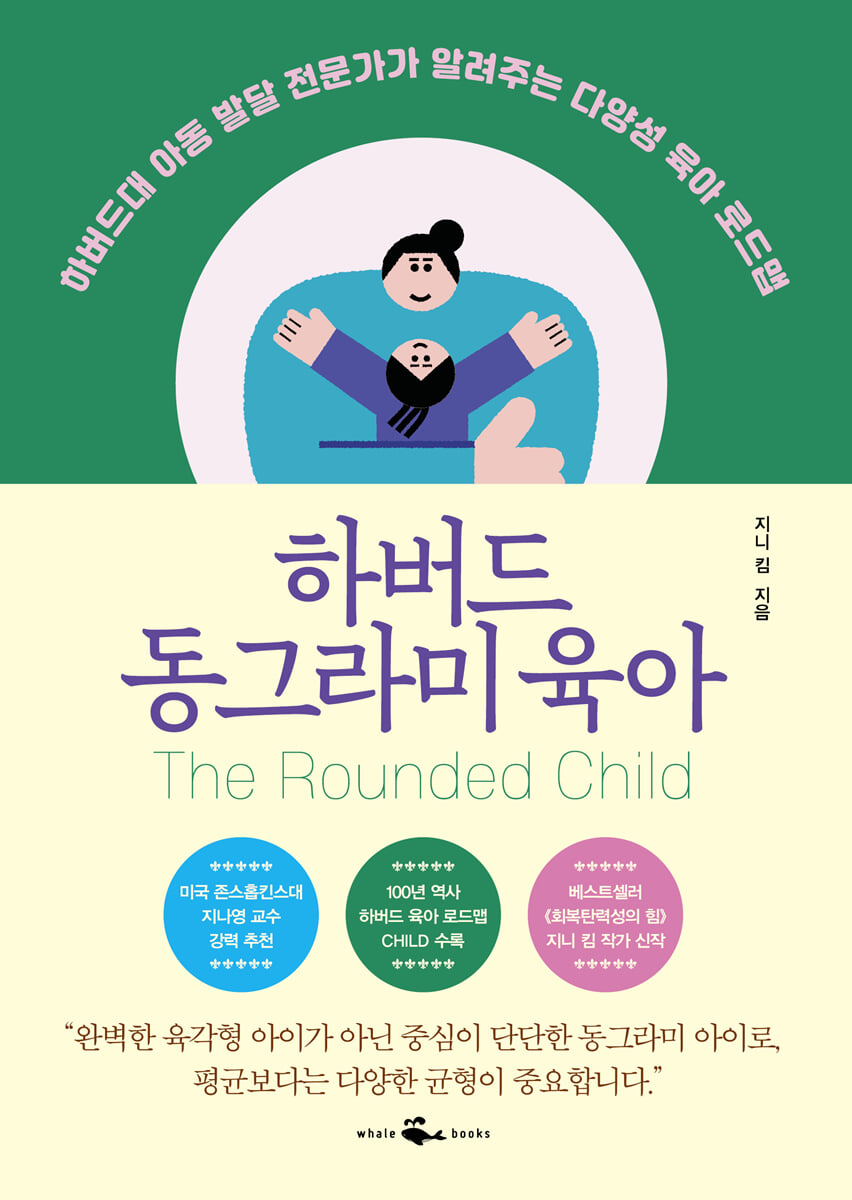
“Are you confining your child to a number called ‘a certain percentage’? “What’s more important than averages, standards, or development rates is diversity.” Raising a child with a strong center and the potential to move in various directions Harvard Circle Parenting ‘My child needs to be taller than the kid next door, speak faster, and learn Hangul faster…’ Dr. Jinny Kim, a child development expert and educator at Harvard University and author of ‘The Power of Resilience,’ points out the trap of averages and standards while raising children, and the parenting environment in Korea where parents are caught in the trap of comparison and competition, and argues that parents now need to broadly change their perspective on their children’s development. While it is true that averages and standards play an important and significant role in a child's development from birth to preschool age 7, it is important for parents to check whether they are missing out on something more important because of them. So, in his new book, “Harvard Circle Parenting,” the author clearly explains, with abundant examples, what factors Korean parents should consider most important in child development and what methods are most effective in raising children according to those values. When parents look at their children's development, the most important fundamental value the author thinks of is 'diversity.' If there are 100 children, that means there are 100 different developmental stages. Parents should put their children first, accept and respect the various developmental patterns their children exhibit, and respond appropriately. The author developed this method by combining everything he learned while studying and researching child development at Harvard University and his experience from over 20 years in the American educational field, and named it "Harvard Circle Parenting." As children grow, the size and shape of the worries parents have naturally change. But the moment that worry moves beyond my child and I compare them to other children, both the parents and the child will inevitably become unhappy. The way to break the cycle of unhappiness is not far away. You can raise your child by applying the Harvard Circle Parenting method, which fully understands the diversity of a child's development and fully embodies its value. This book will serve as a compass to help you raise your child to be a child, and thus happy as a child, and even act as a personal trainer. |
- You can preview some of the book's contents.
Preview
index
prolog
Harvard Circle Parenting: Raising Children Like Children
Chapter 1
Exploring the Diversity of Child Development
Harvard Circle Parenting Preparation
Parents' stereotypes about child development
· The true meaning of development you never knew before
What percentage is my child currently? Parents trapped in the "average" trap.
· The true face of the tests and examinations I absolutely trusted
· The Difference Between Theory and Practice That Parents Must Know
Diversity in child development
· Every child has their own pace and direction of development.
· The child's development is slow (X), fast (X), or varied (O).
· How to create a nurturing and childcare environment appropriate to the child's developmental stage
The interplay of a child's strengths and weaknesses
· How to view weaknesses as strengths
· A child's development varies depending on temperament
· What happens when you change your perspective on temperament
· Parents' wise attitude toward their children's temperament
Raising children while respecting their developmental diversity
Chapter 2
A Look at the Six Areas of Child Development
Harvard Circle Parenting Intensive Course
Why we need to look at development from multiple perspectives
Developmental Area ① Child's Cognitive Development
· Cognitive development and Howard Gardner's nine multiple intelligences
· Solutions based on children's cognitive development concerns and diversity
[Concern ①] I have no interest in numbers or letters.
[Concern ②] I'm only interested in numbers and letters.
[Concern ③] I can't answer the question properly.
[Concern ④] I keep asking questions but don't listen to the answers.
[Concern ⑤] I'm curious about how to distinguish between developmental delay and disability.
Developmental Area ② Child's Language Development
· The beginning and process of language development
· Expressive language, receptive language, pragmatic language
· Children's language development concerns and diversity-based solutions
[Concern ①] I only express my thoughts through gestures and body language.
[Concern ②] It's hard to understand because the pronunciation is inaccurate.
[Concern ③] I have trouble starting to speak and stutter.
[Concern ④] I want to raise my child to be bilingual.
[Concern ⑤] I'm worried about how to provide early English education.
Developmental Area ③ Child's Social and Emotional Development
· The meaning and four aspects of social-emotional development
· Social and emotional development concerns and diversity-based solutions for children
[Concern ①] I'm curious about the relationship between introversion, extroversion, and sociability.
[Concern ②] I always play alone.
[Concern ③] I have no sense of humor
[Concern ④] I have a hard time making friends.
[Concern ⑤] I have difficulty expressing and controlling my emotions.
Developmental Area ④ Child's Physical Development
· The foundation of all developmental areas, physical development
· Solutions based on children's physical development concerns and diversity
[Concern ①] I can't leave my body alone.
[Concern ②] I have difficulty writing or coloring.
[Concern ③] I don't want to move my body and just lie down.
[Concern ④] Walking with your heels up and your toes tiptoeing
[Concern ⑤] I use both hands without any standards.
Developmental Area ⑤ Development of the child's self-help ability
· The ability to cope with daily life and social life, and the ability to help oneself
· Concerns about developing children's self-help skills and solutions based on diversity
[Concern ①] I'm a very picky eater.
[Concern ②] I don't know how to do potty training.
[Concern ③] I have a hard time with repetitive daily routines.
[Concern ④] I'm worried that a lack of safety awareness could lead to an accident.
[Concern ⑤] I'm not good at following rules.
Developmental Area ⑥ Child's Behavioral Development
· Why behavioral development is important
· How to distinguish between problem behavior and non-problem behavior
· Solutions based on children's behavioral development concerns and diversity
[Concern ①] I can't stay still for even a moment and I'm always distracted.
[Concern ②] My friend keeps touching me with his hand.
[Concern ③] My obsession and compulsion are too severe.
[Concern ④] I wonder if it's just a habit or a tic.
[Concern ⑤] I don't hesitate to take risky actions.
Chapter 3
Putting the Harvard Parenting Roadmap CHILD into Practice
Harvard Circle Parenting Practice
Character personality
· The meaning and importance of character education
· Right choices create right character.
Habit
· Healthy lifestyle habits for growing children
· The Magical Harvard 3Rs to Turn Bad Habits into Good Habits
· The power to create good habits, diligence
Imagination
· The importance of free time
· The power that comes from creative activities
· Reading books that help expand your thinking through indirect experiences
· Group activities that generate new ideas
· A new challenge to try something you've never done before
· Why we need open dialogue
· Play, an absolutely essential resource for a child's development
Learning
· A learning environment that reflects the child's curiosity and inclinations
· Learning that respects the child's choices and takes their style into account
· Setting learning goals tailored to your child
· Growth mindset and fixed mindset
Diversity
· The beginning of diversity education, open dialogue
· The foundation of diversity education: fairness and equity
· How to break free from stereotypes
· Appreciating diversity
What Harvard and Parents Want Most for Their Children
· Banking Time, the magical time when happiness begins
Image source
Harvard Circle Parenting: Raising Children Like Children
Chapter 1
Exploring the Diversity of Child Development
Harvard Circle Parenting Preparation
Parents' stereotypes about child development
· The true meaning of development you never knew before
What percentage is my child currently? Parents trapped in the "average" trap.
· The true face of the tests and examinations I absolutely trusted
· The Difference Between Theory and Practice That Parents Must Know
Diversity in child development
· Every child has their own pace and direction of development.
· The child's development is slow (X), fast (X), or varied (O).
· How to create a nurturing and childcare environment appropriate to the child's developmental stage
The interplay of a child's strengths and weaknesses
· How to view weaknesses as strengths
· A child's development varies depending on temperament
· What happens when you change your perspective on temperament
· Parents' wise attitude toward their children's temperament
Raising children while respecting their developmental diversity
Chapter 2
A Look at the Six Areas of Child Development
Harvard Circle Parenting Intensive Course
Why we need to look at development from multiple perspectives
Developmental Area ① Child's Cognitive Development
· Cognitive development and Howard Gardner's nine multiple intelligences
· Solutions based on children's cognitive development concerns and diversity
[Concern ①] I have no interest in numbers or letters.
[Concern ②] I'm only interested in numbers and letters.
[Concern ③] I can't answer the question properly.
[Concern ④] I keep asking questions but don't listen to the answers.
[Concern ⑤] I'm curious about how to distinguish between developmental delay and disability.
Developmental Area ② Child's Language Development
· The beginning and process of language development
· Expressive language, receptive language, pragmatic language
· Children's language development concerns and diversity-based solutions
[Concern ①] I only express my thoughts through gestures and body language.
[Concern ②] It's hard to understand because the pronunciation is inaccurate.
[Concern ③] I have trouble starting to speak and stutter.
[Concern ④] I want to raise my child to be bilingual.
[Concern ⑤] I'm worried about how to provide early English education.
Developmental Area ③ Child's Social and Emotional Development
· The meaning and four aspects of social-emotional development
· Social and emotional development concerns and diversity-based solutions for children
[Concern ①] I'm curious about the relationship between introversion, extroversion, and sociability.
[Concern ②] I always play alone.
[Concern ③] I have no sense of humor
[Concern ④] I have a hard time making friends.
[Concern ⑤] I have difficulty expressing and controlling my emotions.
Developmental Area ④ Child's Physical Development
· The foundation of all developmental areas, physical development
· Solutions based on children's physical development concerns and diversity
[Concern ①] I can't leave my body alone.
[Concern ②] I have difficulty writing or coloring.
[Concern ③] I don't want to move my body and just lie down.
[Concern ④] Walking with your heels up and your toes tiptoeing
[Concern ⑤] I use both hands without any standards.
Developmental Area ⑤ Development of the child's self-help ability
· The ability to cope with daily life and social life, and the ability to help oneself
· Concerns about developing children's self-help skills and solutions based on diversity
[Concern ①] I'm a very picky eater.
[Concern ②] I don't know how to do potty training.
[Concern ③] I have a hard time with repetitive daily routines.
[Concern ④] I'm worried that a lack of safety awareness could lead to an accident.
[Concern ⑤] I'm not good at following rules.
Developmental Area ⑥ Child's Behavioral Development
· Why behavioral development is important
· How to distinguish between problem behavior and non-problem behavior
· Solutions based on children's behavioral development concerns and diversity
[Concern ①] I can't stay still for even a moment and I'm always distracted.
[Concern ②] My friend keeps touching me with his hand.
[Concern ③] My obsession and compulsion are too severe.
[Concern ④] I wonder if it's just a habit or a tic.
[Concern ⑤] I don't hesitate to take risky actions.
Chapter 3
Putting the Harvard Parenting Roadmap CHILD into Practice
Harvard Circle Parenting Practice
Character personality
· The meaning and importance of character education
· Right choices create right character.
Habit
· Healthy lifestyle habits for growing children
· The Magical Harvard 3Rs to Turn Bad Habits into Good Habits
· The power to create good habits, diligence
Imagination
· The importance of free time
· The power that comes from creative activities
· Reading books that help expand your thinking through indirect experiences
· Group activities that generate new ideas
· A new challenge to try something you've never done before
· Why we need open dialogue
· Play, an absolutely essential resource for a child's development
Learning
· A learning environment that reflects the child's curiosity and inclinations
· Learning that respects the child's choices and takes their style into account
· Setting learning goals tailored to your child
· Growth mindset and fixed mindset
Diversity
· The beginning of diversity education, open dialogue
· The foundation of diversity education: fairness and equity
· How to break free from stereotypes
· Appreciating diversity
What Harvard and Parents Want Most for Their Children
· Banking Time, the magical time when happiness begins
Image source
Detailed image

Into the book
All children are different.
At this time, instead of judging whether the difference is good or bad, parents should recognize the difference itself, accept their child as they are, and further, create the optimal parenting method that suits their child.
Sometimes, even when we have a good understanding of our child's developmental status, it can be difficult to accept our child as he or she is.
You may find yourself looking back at your family history, medications taken during pregnancy, or prenatal care to find the root of your child's developmental patterns.
However, if you get caught up in the unnecessary emotions that arise during that process, it becomes difficult to focus on parenting.
Let's think about building a house.
To build a good house, you must first choose good land.
Once you have chosen a good piece of land, you will need to remove any unnecessary rocks or weeds from the ground.
Only then can we build a strong and good house.
Choosing a good plot of land here means accurately recognizing where your child is in his or her development.
Removing rocks and weeds is about acknowledging your child as they are and clearing away any unnecessary emotions that arise.
After going through this process, parents will be able to truly acknowledge and accept their child.
---From "Chapter 1: Examining the Diversity of Child Development - Introduction"
Let's say your child has a low average percentage in the cognitive domain because he or she is not good at writing Korean or numbers.
Your child may be distracted or have high energy levels, making it difficult for them to sit still and write clearly.
Or, the child may not be able to write as well as his or her peers because his or her fine motor skills are not yet developed, or his or her hand-eye coordination may be underdeveloped.
If high energy levels are preventing you from sitting still and writing, getting plenty of outdoor activity or full-body exercise to burn off some of that energy can help.
If your child's fine motor skills are underdeveloped, it would be a good idea to develop them through play with blocks or clay that require hand manipulation.
If hand-eye coordination is a problem, beads, puzzles, and ball games can be helpful because they require the child to use their hands while recognizing the movement of the ball with their eyes.
A nurturing environment that respects the diversity of development is one that provides stimulation appropriate to the child's developmental stage by referring to the average percentage.
---From “Creating a Parenting and Childcare Environment Appropriate to a Child’s Developmental Stage”
For introverted children, you must first respect their tendencies.
So, to make the child feel comfortable, it is important to provide experiences where the child can play with a small group of friends rather than a large group of friends, and with children with whom the child is already familiar.
It's better to start at home, in a closed space where you can look each other in the eye and talk, rather than at a playground or kids' cafe.
It would be nice to hang out with a friend who also has similar interests and likes trains.
After that, you can gradually increase the repertoire of play at your child's pace.
It is also effective to introduce various situations through social stories.
A social story is a story that provides specific sentences and alternative actions to help children speak and act appropriately in various social situations.
Children learn through modeling of direct expressions rather than vague explanations.
Of course, just because a child has experienced these social stories once doesn't mean he or she will immediately put them into action.
You have to practice it repeatedly and take it slow.
The most important thing is for parents to praise their children, even if it is a small achievement or attempt.
---From "Social Emotional Development Concerns ② I Always Play Alone"
When you can't figure out why your child is behaving in a certain way, collecting data can be helpful.
It is a more detailed look into when, where, and what circumstances led to such behavior.
In American schools, the 'ABC chart' is sometimes used to closely observe and understand a child's behavior.
It's about recording every time your child exhibits a specific problem behavior.
By recording specific problem behaviors in this way and accumulating data, you can understand the patterns of problem behavior and help you modify them.
This is because we can use the data to modify the child's behavior by changing either A (premise) or C (consequence), or both, which will be explained later.
In the ABC chart, A (Antecedent) is the 'preceding event'.
Tell your child what happened or what happened just before the problem behavior occurred.
It is a record of the circumstances and background surrounding the child, such as where the behavior occurred, who was present, and what was being done.
At this time, it is a good idea to carefully record the time the behavior occurred, whether you slept well the previous night, and whether you took any medication such as cold medicine.
Any relatively major changes in the home (such as the birth of a sibling or moving) can also affect the child's behavior, so be sure to record them as well.
B (Behavior) is the ‘words or actions’ that the child did.
It is best to write down in as much detail as possible what the child said and did.
C(Consequences) is the 'result' of what the child said or did.
It's about recording what happened after a child's specific behavior.
---From "ABC Chart for Understanding Children's Problem Behavior"
Just as each child has their own unique developmental pattern, each child has a different learning style.
While some children learn better visually, others learn better auditorily.
Of course, some children learn better by touching with their hands or moving their bodies.
First, children with a visual learning style have excellent observation and memorization skills, so they are good at processing information conveyed through images or graphs or obtained by reading text.
Children with an auditory learning style excel at hearing and remembering sounds.
They listen carefully to others and remember well, so they carry out instructions accurately.
For children like this, it would be most effective to sing along to the information.
Children with a kinesthetic learning style learn best through physical movement.
When learning numbers, it is also appropriate to trace number models with your fingers.
Of course, children's learning styles are not divided into just these three.
However, I hope you will take a close look at what style of learning your child will feel more comfortable and enjoy.
At this time, instead of judging whether the difference is good or bad, parents should recognize the difference itself, accept their child as they are, and further, create the optimal parenting method that suits their child.
Sometimes, even when we have a good understanding of our child's developmental status, it can be difficult to accept our child as he or she is.
You may find yourself looking back at your family history, medications taken during pregnancy, or prenatal care to find the root of your child's developmental patterns.
However, if you get caught up in the unnecessary emotions that arise during that process, it becomes difficult to focus on parenting.
Let's think about building a house.
To build a good house, you must first choose good land.
Once you have chosen a good piece of land, you will need to remove any unnecessary rocks or weeds from the ground.
Only then can we build a strong and good house.
Choosing a good plot of land here means accurately recognizing where your child is in his or her development.
Removing rocks and weeds is about acknowledging your child as they are and clearing away any unnecessary emotions that arise.
After going through this process, parents will be able to truly acknowledge and accept their child.
---From "Chapter 1: Examining the Diversity of Child Development - Introduction"
Let's say your child has a low average percentage in the cognitive domain because he or she is not good at writing Korean or numbers.
Your child may be distracted or have high energy levels, making it difficult for them to sit still and write clearly.
Or, the child may not be able to write as well as his or her peers because his or her fine motor skills are not yet developed, or his or her hand-eye coordination may be underdeveloped.
If high energy levels are preventing you from sitting still and writing, getting plenty of outdoor activity or full-body exercise to burn off some of that energy can help.
If your child's fine motor skills are underdeveloped, it would be a good idea to develop them through play with blocks or clay that require hand manipulation.
If hand-eye coordination is a problem, beads, puzzles, and ball games can be helpful because they require the child to use their hands while recognizing the movement of the ball with their eyes.
A nurturing environment that respects the diversity of development is one that provides stimulation appropriate to the child's developmental stage by referring to the average percentage.
---From “Creating a Parenting and Childcare Environment Appropriate to a Child’s Developmental Stage”
For introverted children, you must first respect their tendencies.
So, to make the child feel comfortable, it is important to provide experiences where the child can play with a small group of friends rather than a large group of friends, and with children with whom the child is already familiar.
It's better to start at home, in a closed space where you can look each other in the eye and talk, rather than at a playground or kids' cafe.
It would be nice to hang out with a friend who also has similar interests and likes trains.
After that, you can gradually increase the repertoire of play at your child's pace.
It is also effective to introduce various situations through social stories.
A social story is a story that provides specific sentences and alternative actions to help children speak and act appropriately in various social situations.
Children learn through modeling of direct expressions rather than vague explanations.
Of course, just because a child has experienced these social stories once doesn't mean he or she will immediately put them into action.
You have to practice it repeatedly and take it slow.
The most important thing is for parents to praise their children, even if it is a small achievement or attempt.
---From "Social Emotional Development Concerns ② I Always Play Alone"
When you can't figure out why your child is behaving in a certain way, collecting data can be helpful.
It is a more detailed look into when, where, and what circumstances led to such behavior.
In American schools, the 'ABC chart' is sometimes used to closely observe and understand a child's behavior.
It's about recording every time your child exhibits a specific problem behavior.
By recording specific problem behaviors in this way and accumulating data, you can understand the patterns of problem behavior and help you modify them.
This is because we can use the data to modify the child's behavior by changing either A (premise) or C (consequence), or both, which will be explained later.
In the ABC chart, A (Antecedent) is the 'preceding event'.
Tell your child what happened or what happened just before the problem behavior occurred.
It is a record of the circumstances and background surrounding the child, such as where the behavior occurred, who was present, and what was being done.
At this time, it is a good idea to carefully record the time the behavior occurred, whether you slept well the previous night, and whether you took any medication such as cold medicine.
Any relatively major changes in the home (such as the birth of a sibling or moving) can also affect the child's behavior, so be sure to record them as well.
B (Behavior) is the ‘words or actions’ that the child did.
It is best to write down in as much detail as possible what the child said and did.
C(Consequences) is the 'result' of what the child said or did.
It's about recording what happened after a child's specific behavior.
---From "ABC Chart for Understanding Children's Problem Behavior"
Just as each child has their own unique developmental pattern, each child has a different learning style.
While some children learn better visually, others learn better auditorily.
Of course, some children learn better by touching with their hands or moving their bodies.
First, children with a visual learning style have excellent observation and memorization skills, so they are good at processing information conveyed through images or graphs or obtained by reading text.
Children with an auditory learning style excel at hearing and remembering sounds.
They listen carefully to others and remember well, so they carry out instructions accurately.
For children like this, it would be most effective to sing along to the information.
Children with a kinesthetic learning style learn best through physical movement.
When learning numbers, it is also appropriate to trace number models with your fingers.
Of course, children's learning styles are not divided into just these three.
However, I hope you will take a close look at what style of learning your child will feel more comfortable and enjoy.
---From "Learning that respects children's choices and considers their style"
Publisher's Review
“Fast is not good, and slow is not bad.
“We need to check the parents’ attitude and mindset toward their child’s development.”
Every day I worry about whether my child is growing well.
The best developmental parenting solution for parents of children aged 0-7.
Author Dr. Jinny Kim created this book by combining her theoretical foundation of over 20 years of intense study of child development and education with her vivid practical experience as a teacher and director in American educational settings.
Harvard Circle Parenting is a parenting method that promotes the healthy development of children.
· This is a method to raise a round child (The Rounded Child) who has a strong center and can successfully carve out his or her own life, rather than a perfectly hexagonal child as if measured by a ruler.
· This is a method of raising children in which parents comprehensively examine the child's various developmental aspects.
· This is a method of raising children in which parents observe their children as closely as possible from 360 degrees.
· This is a method to create a foundation and environment in which a child can grow in a balanced manner in various areas of development.
· This is a method of creating a parenting roadmap just for your child by carefully examining the child's development with the child at the center.
To effectively convey Harvard Circle parenting to Korean parents, this book is largely divided into three chapters.
Chapters 1 and 2 are a warm-up stage before applying Harvard Circle Parenting in earnest in real life, presenting a theoretical foundation for Harvard Circle Parenting along with various real-life examples.
Chapter 1 examines the diversity of child development through the Harvard Circle Parenting Preparation Stages.
The keyword that the author considers most important when looking at a child's development from a parent's perspective is 'diversity.'
The author studied child development and experienced educational settings in the United States, a country with a larger population and a diverse mix of races compared to Korea, which allowed him to delve deeper into the value of diversity.
Of course, the United States has something similar to our country's infant and toddler health checkups, but they don't pay as much attention to the results as we do.
This is because we tend to focus much more on our child's personality and the situation itself rather than comparing our child's development to that of other children.
In order to instill these values in Korean parents, the author points out parents' stereotypes about development, and then explains various concepts such as fast and slow children, early and just-in-time education, children's weaknesses and strengths, and temperaments with examples. He then provides specific practical methods for how to move toward parenting that respects the diversity of development, such as how to create a parenting and childcare environment that suits the child's developmental stage, and how parents should treat children with different temperaments.
Chapter 2 examines the six areas of a child's development through the advanced stages of the Harvard Circle Parenting Program.
For Korean parents who are always curious and worried about their children's growth and development, the author divides children's development into six areas (cognitive development, language development, social-emotional development, physical development, self-help ability development, and behavioral development) by adding his own research and clinical experience to the opinions of scholars such as Jean Piaget and Lev Vygotsky, and explains what each area is and what role it plays in a child's growth.
Then, we select the five most concerning factors for parents in each developmental area and present a total of 30 solutions based on the keyword “diversity.”
For example, for the concern in the area of language development, “I want to raise my child to be bilingual,” I propose a solution based on my experience studying in both Korea and the United States. For the concern in the area of social-emotional development, “My child is too tactless,” which is a Korean concern, I propose a solution based on “wholebody listening,” one of the American school programs.
Even for the same problem, the solution and the outcome can differ depending on who provides the solution and with what mindset. However, the author's solution, developed through over 20 years of experience in childcare and education, is bound to be clear.
“What if I want to raise my child to be a Harvard-caliber talent?”
Character, habits, imagination, learning, diversity…
Harvard University's 100-Year-Old Parenting Roadmap, "CHILD," Included
Finally, in Chapter 3, Harvard Circle Parenting Practice, the author fully utilizes his expertise in child development at Harvard University to organize and convey the child development and parenting roadmap that Harvard values in his own unique way.
The 100-year-old Harvard Parenting Roadmap that the author desperately wants to convey to parents in our country ultimately comes down to the word 'CHILD', which, if you look closely, means 'child'.
· Character
· Habit
· Imagination
· Learning
· Diversity
The author emphasizes that when raising children aged 0 to 7, parents should keep in mind the five keywords of 'character, habits, imagination, learning, and diversity' and help their children develop these one by one.
To do this, we explain what parents should do for their children, and what specific methods they should teach and guide them, using examples from both the United States and Korea, in an easy-to-understand way that can be put into practice right away.
It guides you on how to use the red choices and green choices programs to help you develop good character, and systematically organizes Harvard's 3Rs (Reminder, Routine, Reward) to help you change bad habits into good ones, and shows them with real-life examples.
In order to foster healthy 'imagination', it lays out the basic foundations such as the child's right to play, free time, creative activities, reading, group activities, and open conversation, and kindly tells parents how to have a learning environment, choices, style, and goals one by one so that the child can recognize 'learning' itself as a fun and happy act from an early age beyond studying and learning.
And finally, for children who will live in a global, hyper-connected society, we provide practical guidance on how to develop "diversity," a value and ability to harmoniously interact with people of all kinds while protecting oneself, along with abundant real-life examples.
Ultimately, the core message the author wants to convey to parents in our country through the Harvard Parenting Roadmap CHILD is simple.
This is a way to raise children to be the kind of people Harvard aspires to be while maintaining a healthy relationship between parents and children.
A child who shines brightly with his or her own unique light and has a strong center, that is, a round child, is the type of person Harvard aims for.
With this book, you can become a parent who respects your child as they are and encourages their growth and development as they grow.
“We need to check the parents’ attitude and mindset toward their child’s development.”
Every day I worry about whether my child is growing well.
The best developmental parenting solution for parents of children aged 0-7.
Author Dr. Jinny Kim created this book by combining her theoretical foundation of over 20 years of intense study of child development and education with her vivid practical experience as a teacher and director in American educational settings.
Harvard Circle Parenting is a parenting method that promotes the healthy development of children.
· This is a method to raise a round child (The Rounded Child) who has a strong center and can successfully carve out his or her own life, rather than a perfectly hexagonal child as if measured by a ruler.
· This is a method of raising children in which parents comprehensively examine the child's various developmental aspects.
· This is a method of raising children in which parents observe their children as closely as possible from 360 degrees.
· This is a method to create a foundation and environment in which a child can grow in a balanced manner in various areas of development.
· This is a method of creating a parenting roadmap just for your child by carefully examining the child's development with the child at the center.
To effectively convey Harvard Circle parenting to Korean parents, this book is largely divided into three chapters.
Chapters 1 and 2 are a warm-up stage before applying Harvard Circle Parenting in earnest in real life, presenting a theoretical foundation for Harvard Circle Parenting along with various real-life examples.
Chapter 1 examines the diversity of child development through the Harvard Circle Parenting Preparation Stages.
The keyword that the author considers most important when looking at a child's development from a parent's perspective is 'diversity.'
The author studied child development and experienced educational settings in the United States, a country with a larger population and a diverse mix of races compared to Korea, which allowed him to delve deeper into the value of diversity.
Of course, the United States has something similar to our country's infant and toddler health checkups, but they don't pay as much attention to the results as we do.
This is because we tend to focus much more on our child's personality and the situation itself rather than comparing our child's development to that of other children.
In order to instill these values in Korean parents, the author points out parents' stereotypes about development, and then explains various concepts such as fast and slow children, early and just-in-time education, children's weaknesses and strengths, and temperaments with examples. He then provides specific practical methods for how to move toward parenting that respects the diversity of development, such as how to create a parenting and childcare environment that suits the child's developmental stage, and how parents should treat children with different temperaments.
Chapter 2 examines the six areas of a child's development through the advanced stages of the Harvard Circle Parenting Program.
For Korean parents who are always curious and worried about their children's growth and development, the author divides children's development into six areas (cognitive development, language development, social-emotional development, physical development, self-help ability development, and behavioral development) by adding his own research and clinical experience to the opinions of scholars such as Jean Piaget and Lev Vygotsky, and explains what each area is and what role it plays in a child's growth.
Then, we select the five most concerning factors for parents in each developmental area and present a total of 30 solutions based on the keyword “diversity.”
For example, for the concern in the area of language development, “I want to raise my child to be bilingual,” I propose a solution based on my experience studying in both Korea and the United States. For the concern in the area of social-emotional development, “My child is too tactless,” which is a Korean concern, I propose a solution based on “wholebody listening,” one of the American school programs.
Even for the same problem, the solution and the outcome can differ depending on who provides the solution and with what mindset. However, the author's solution, developed through over 20 years of experience in childcare and education, is bound to be clear.
“What if I want to raise my child to be a Harvard-caliber talent?”
Character, habits, imagination, learning, diversity…
Harvard University's 100-Year-Old Parenting Roadmap, "CHILD," Included
Finally, in Chapter 3, Harvard Circle Parenting Practice, the author fully utilizes his expertise in child development at Harvard University to organize and convey the child development and parenting roadmap that Harvard values in his own unique way.
The 100-year-old Harvard Parenting Roadmap that the author desperately wants to convey to parents in our country ultimately comes down to the word 'CHILD', which, if you look closely, means 'child'.
· Character
· Habit
· Imagination
· Learning
· Diversity
The author emphasizes that when raising children aged 0 to 7, parents should keep in mind the five keywords of 'character, habits, imagination, learning, and diversity' and help their children develop these one by one.
To do this, we explain what parents should do for their children, and what specific methods they should teach and guide them, using examples from both the United States and Korea, in an easy-to-understand way that can be put into practice right away.
It guides you on how to use the red choices and green choices programs to help you develop good character, and systematically organizes Harvard's 3Rs (Reminder, Routine, Reward) to help you change bad habits into good ones, and shows them with real-life examples.
In order to foster healthy 'imagination', it lays out the basic foundations such as the child's right to play, free time, creative activities, reading, group activities, and open conversation, and kindly tells parents how to have a learning environment, choices, style, and goals one by one so that the child can recognize 'learning' itself as a fun and happy act from an early age beyond studying and learning.
And finally, for children who will live in a global, hyper-connected society, we provide practical guidance on how to develop "diversity," a value and ability to harmoniously interact with people of all kinds while protecting oneself, along with abundant real-life examples.
Ultimately, the core message the author wants to convey to parents in our country through the Harvard Parenting Roadmap CHILD is simple.
This is a way to raise children to be the kind of people Harvard aspires to be while maintaining a healthy relationship between parents and children.
A child who shines brightly with his or her own unique light and has a strong center, that is, a round child, is the type of person Harvard aims for.
With this book, you can become a parent who respects your child as they are and encourages their growth and development as they grow.
GOODS SPECIFICS
- Date of issue: July 5, 2024
- Page count, weight, size: 360 pages | 516g | 148*210*30mm
- ISBN13: 9791192097862
- ISBN10: 1192097866
You may also like
카테고리
korean


korean

![GQ KOREA Mark (Monthly): December [2025]](http://librairie.coreenne.fr/cdn/shop/files/8ef265dbbfbf186523ed75ba7319009d.jpg?v=1765340328&width=3840)


