

A child who is swayed by emotions A child who is good at managing emotions
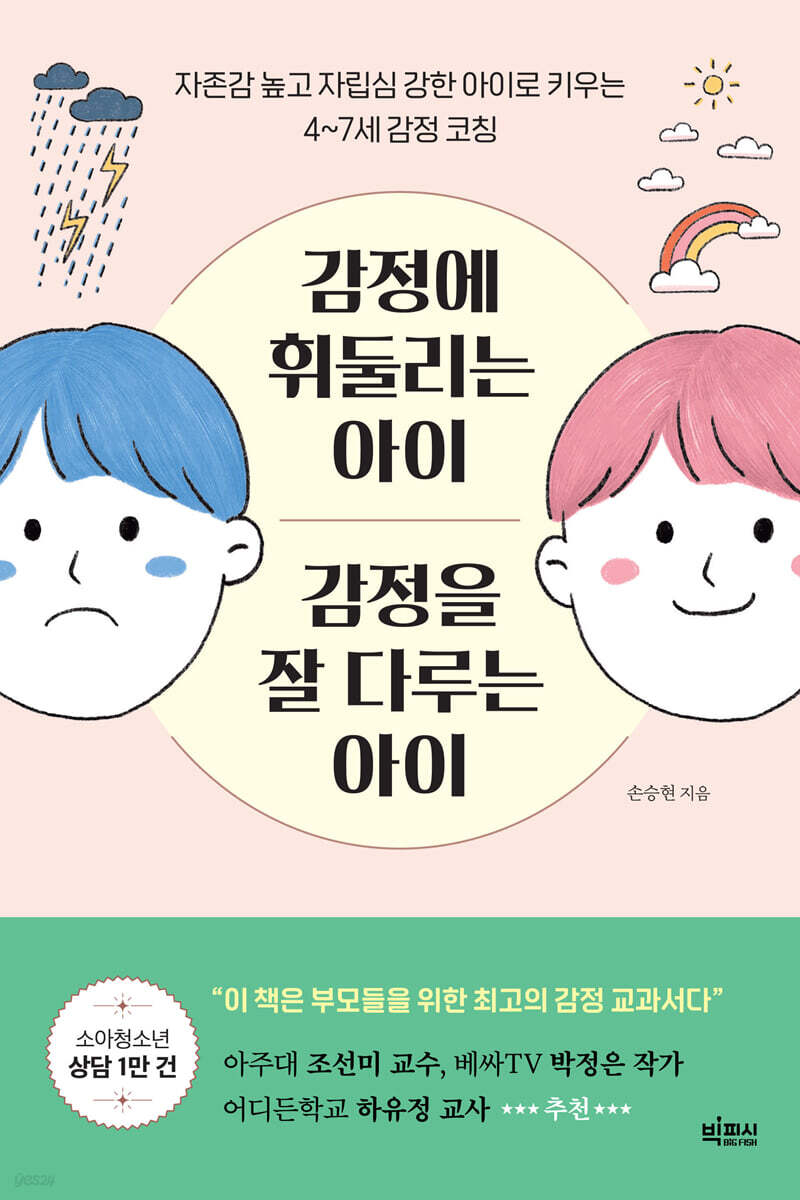 |
Description
Book Introduction
- A word from MD
-
Raise your child to be angry easilyParents want their children to experience only positive emotions, but throughout life, children encounter negative emotions more often.
To help children process negative emotions such as depression, frustration, injustice, and alienation, which can also serve as a stepping stone for growth, parents must become the best emotional coaches for their children.
April 14, 2023. Shin Eun-ji, PD of Home Life
Counseling 10,000 parents and children
Magical Parenting Techniques from a Child Psychiatrist
Parents want their children to experience only positive emotions.
However, as children go through life, they may encounter negative emotions more often.
Wouldn't it be more beneficial for children to learn how to deal with negative emotions by experiencing them in advance?
This book details the positive and negative emotions children experience every day, helping parents who don't even know how to handle their own emotions.
This guide will help children navigate the difficult world with a strong mind, covering emotions that are uncomfortable but must be experienced to better manage them in the future, negative emotions that serve as a stepping stone for children's growth, and positive emotions that must be passed on from parents.
Thanks to this, parents can escape the whirlwind of 'emotions' that make parenting difficult and move on to a comfortable and happy path of parenting.
Magical Parenting Techniques from a Child Psychiatrist
Parents want their children to experience only positive emotions.
However, as children go through life, they may encounter negative emotions more often.
Wouldn't it be more beneficial for children to learn how to deal with negative emotions by experiencing them in advance?
This book details the positive and negative emotions children experience every day, helping parents who don't even know how to handle their own emotions.
This guide will help children navigate the difficult world with a strong mind, covering emotions that are uncomfortable but must be experienced to better manage them in the future, negative emotions that serve as a stepping stone for children's growth, and positive emotions that must be passed on from parents.
Thanks to this, parents can escape the whirlwind of 'emotions' that make parenting difficult and move on to a comfortable and happy path of parenting.
- You can preview some of the book's contents.
Preview
index
Prologue: Raise a child who is 'good' at speaking
Chapter 1.
Understanding emotions makes parenting easier
Emotional regulation skills that determine a child's future
A child who is good at reading his own emotions is unshaken.
The reason parenting is difficult is because of emotions.
Mom and Dad's feelings are precious too
5 Ways to Better Read Your Parents' Emotions
Negative emotions also serve as a foundation for growth.
Chapter 2.
Uncomfortable feelings you have to experience at least once
Frustration: The experience of failure makes you stronger.
Anger: Teaches courage and wisdom to stand up to injustice.
Anxiety: A radar that helps us detect and avoid danger.
Injustice: Let me look deep into my heart.
Loss: Learning to Remember and Cherish the One You Love
Chapter 3.
Emotions that serve as a stepping stone for growth
Depression: Learn how to ride it out rather than overcome it.
Self-Regret: The Key to Building Your Child's Problem-Solving Skills
Betrayal: An Opportunity to Learn the Value of Honesty
Jealousy: A chance to overcome inferiority complex and develop initiative.
Alienation: Coping with it can lead to healthy relationships.
Chapter 4.
Positive emotions that should be passed on from parents
Affection: A core emotion that influences a child's entire life.
Trust: A shield that connects us and prevents temptation.
Comfort: The Secret of a Child Who Moves Steadily Without Getting Tired
Joy: The power that allows me to discover what I love to do
Pride: The driving force behind knowing my strengths and encouraging myself.
Chapter 5.
Traps Parents Can Fall Into
Aren't you evaluating it from an adult's perspective?
Aren't you analyzing when you should be empathizing?
Don't you ever say things that go beyond discipline and become more like venting your anger?
Aren't you trying to confine your child to what you want?
Are you looking at your child and talking to him?
Chapter 1.
Understanding emotions makes parenting easier
Emotional regulation skills that determine a child's future
A child who is good at reading his own emotions is unshaken.
The reason parenting is difficult is because of emotions.
Mom and Dad's feelings are precious too
5 Ways to Better Read Your Parents' Emotions
Negative emotions also serve as a foundation for growth.
Chapter 2.
Uncomfortable feelings you have to experience at least once
Frustration: The experience of failure makes you stronger.
Anger: Teaches courage and wisdom to stand up to injustice.
Anxiety: A radar that helps us detect and avoid danger.
Injustice: Let me look deep into my heart.
Loss: Learning to Remember and Cherish the One You Love
Chapter 3.
Emotions that serve as a stepping stone for growth
Depression: Learn how to ride it out rather than overcome it.
Self-Regret: The Key to Building Your Child's Problem-Solving Skills
Betrayal: An Opportunity to Learn the Value of Honesty
Jealousy: A chance to overcome inferiority complex and develop initiative.
Alienation: Coping with it can lead to healthy relationships.
Chapter 4.
Positive emotions that should be passed on from parents
Affection: A core emotion that influences a child's entire life.
Trust: A shield that connects us and prevents temptation.
Comfort: The Secret of a Child Who Moves Steadily Without Getting Tired
Joy: The power that allows me to discover what I love to do
Pride: The driving force behind knowing my strengths and encouraging myself.
Chapter 5.
Traps Parents Can Fall Into
Aren't you evaluating it from an adult's perspective?
Aren't you analyzing when you should be empathizing?
Don't you ever say things that go beyond discipline and become more like venting your anger?
Aren't you trying to confine your child to what you want?
Are you looking at your child and talking to him?
Detailed image

Into the book
Being able to better regulate your emotions can have a positive impact on your ability to resist negative emotions, persevere for the big rewards that will eventually come, and your memory and learning abilities.
In other words, it can be said that the experience of handling emotions well improves a child's learning ability and also develops problem-solving skills.
---From "Emotional Control Ability That Determines a Child's Future"
As parenting is no easy task, taking care of my own emotions as a parent is not an option but a necessity in order to care for my child in a stable manner.
As parents put off caring for themselves, saying, “As long as the child is okay, I don’t care,” they gradually become overwhelmed by emotions that interfere with parenting, such as depression, self-reproach, and helplessness.
Please remember that taking care of yourself as a parent is not just about you.
---From "5 Ways to Read Your Emotions as a Parent"
But it's important to recognize that a child's emotional crisis can sometimes be an opportunity for growth.
Children who overcome anxiety well become less afraid of new situations.
You have to learn to tolerate frustration so that you can enjoy a great sense of accomplishment after a long period of perseverance.
A child who is able to express anger when and as much as necessary is better able to protect himself and the things that are important to him than a child who cannot express anger at all.
---From "Negative emotions also become the foundation for growth"
Children who learn to tame their anxiety rather than being consumed by it will grow up to have the strength to overcome it on their own.
Just as there is always a crisis before a hero appears, there is always an element of anxiety before a problem is solved.
If a child can resolve the crisis of anxiety on his own, he can become a hero in his own life.
In other words, you will be able to actively resolve various crisis situations that you encounter in life, and this will have the effect of increasing your self-esteem.
---From "Radar that helps you detect and avoid anxiety and danger"
If a child is unable to properly handle jealousy and is swayed by this emotion, he or she may grow up to be an adult who cannot tolerate the achievements, growth, or popularity of others.
Furthermore, you may end up becoming someone who secretly belittles other people's achievements and cannot live without showing off.
If you are unable to overcome your jealousy, it can turn into an inferiority complex, as the shining appearances of others often stimulate your own inferiority complex.
---From "An Opportunity to Overcome Jealousy and Inferiority and Develop Proactivity"
The more children express their own joy, the more they learn about themselves.
It's important to frequently experience the feeling, 'Ah, I like this kind of thing.'
Additionally, even if your child experiences the same things as others, he or she will be able to discover more things to enjoy on his or her own.
A child who learns joy from others takes the first step toward becoming a child who teaches joy to others.
---From "Joy, the power that helps me discover what I love"
Emotions have great power.
Parents should think carefully about how to use the great power of emotions in parenting.
Otherwise, it can trigger negative emotions such as guilt, fear, and anxiety, which can lead to the child being trapped in a tower like Rapunzel.
Even if the parents' intentions were good.
Therefore, parents must always be vigilant against using emotions as a tool to manipulate their children.
In other words, it can be said that the experience of handling emotions well improves a child's learning ability and also develops problem-solving skills.
---From "Emotional Control Ability That Determines a Child's Future"
As parenting is no easy task, taking care of my own emotions as a parent is not an option but a necessity in order to care for my child in a stable manner.
As parents put off caring for themselves, saying, “As long as the child is okay, I don’t care,” they gradually become overwhelmed by emotions that interfere with parenting, such as depression, self-reproach, and helplessness.
Please remember that taking care of yourself as a parent is not just about you.
---From "5 Ways to Read Your Emotions as a Parent"
But it's important to recognize that a child's emotional crisis can sometimes be an opportunity for growth.
Children who overcome anxiety well become less afraid of new situations.
You have to learn to tolerate frustration so that you can enjoy a great sense of accomplishment after a long period of perseverance.
A child who is able to express anger when and as much as necessary is better able to protect himself and the things that are important to him than a child who cannot express anger at all.
---From "Negative emotions also become the foundation for growth"
Children who learn to tame their anxiety rather than being consumed by it will grow up to have the strength to overcome it on their own.
Just as there is always a crisis before a hero appears, there is always an element of anxiety before a problem is solved.
If a child can resolve the crisis of anxiety on his own, he can become a hero in his own life.
In other words, you will be able to actively resolve various crisis situations that you encounter in life, and this will have the effect of increasing your self-esteem.
---From "Radar that helps you detect and avoid anxiety and danger"
If a child is unable to properly handle jealousy and is swayed by this emotion, he or she may grow up to be an adult who cannot tolerate the achievements, growth, or popularity of others.
Furthermore, you may end up becoming someone who secretly belittles other people's achievements and cannot live without showing off.
If you are unable to overcome your jealousy, it can turn into an inferiority complex, as the shining appearances of others often stimulate your own inferiority complex.
---From "An Opportunity to Overcome Jealousy and Inferiority and Develop Proactivity"
The more children express their own joy, the more they learn about themselves.
It's important to frequently experience the feeling, 'Ah, I like this kind of thing.'
Additionally, even if your child experiences the same things as others, he or she will be able to discover more things to enjoy on his or her own.
A child who learns joy from others takes the first step toward becoming a child who teaches joy to others.
---From "Joy, the power that helps me discover what I love"
Emotions have great power.
Parents should think carefully about how to use the great power of emotions in parenting.
Otherwise, it can trigger negative emotions such as guilt, fear, and anxiety, which can lead to the child being trapped in a tower like Rapunzel.
Even if the parents' intentions were good.
Therefore, parents must always be vigilant against using emotions as a tool to manipulate their children.
---“Aren’t you trying to confine the child as I want?”
Publisher's Review
***Highly recommended by 3 child education experts***
"This book is the best emotional textbook for parents."
Understanding emotions doubles the happiness of parents and children.
Emotional Coaching for Children Ages 4-7: Raising Children with High Self-Esteem and Self-Reliance
The author, a psychiatrist with 13 years of experience, has met with approximately 10,000 children and their parents, and has felt sorry for children who are particularly picky about their emotions.
This is because the efforts of parents to avoid giving their children even the slightest negative emotions often end up being detrimental to their child's growth.
However, children grow stronger by experiencing appropriate frustrations and trials appropriate to their age.
This book tells the story of 15 emotions that are good for children to experience from a young age.
We will go over one by one the things parents must know to help their children manage their emotions well without being swayed by them.
The author strongly emphasizes that when children experience a balanced mix of uncomfortable emotions such as frustration, anger, anxiety, resentment, and loss; negative emotions such as depression, guilt, betrayal, jealousy, and alienation; and positive emotions such as affection, trust, comfort, joy, and pride, they can develop problem-solving skills and grow into individuals with high self-esteem and strong self-reliance.
"Raise your child to be able to express his anger well."
Anger, frustration, pride… Why we need to teach emotions too.
Most people think of anger itself as a bad emotion.
So, it is thought that it should not be shown outwardly and should be endured or controlled appropriately.
Children who grow up under this perception from adults cannot help but think that anger is an emotion that should not be expressed.
But to protect what is precious to me, I must be able to get angry appropriately when necessary.
To do this, parents should teach their children how to use anger, which is to get angry only when and as much as necessary, rather than getting angry easily or suppressing it.
This book talks about the unexpected positive functions of emotions that we consider negative and are reluctant to experience or express.
It is through experiencing frustration that we can find the courage to try again, and through loss that we learn to remember and cherish the things we love.
Therefore, the author reminds us that we must teach children how to handle their emotions just as we teach them how to handle scissors or pencils, and systematically explains the techniques of emotional coaching to raise children with strong minds.
“Mom and Dad’s feelings are precious too.”
How to understand, express, and control your emotions as a parent
The importance of understanding a child's emotions in parenting cannot be overemphasized.
But before that, parents must be able to read their children's emotions well.
The coping method of covering up my emotions for the sake of my child and saying, "Let's just endure it for now" actually has a negative impact on parenting.
If you say, “I’m teaching you manners, not angry,” even though your expression or tone of voice clearly indicates anger, the child will be confused because the mother’s emotions and actions do not match.
In such cases, it is effective to show your child that you are expressing your feelings honestly by saying, “I am a little upset because you were rude,” and then discipline them for their misbehavior.
This book also talks about how to first understand, express, and control your own feelings as a caregiver in order to better understand your child's emotions.
Furthermore, it points out the pitfalls that parents can easily fall into, such as not evaluating their child from an adult's perspective, not analyzing when empathy is needed, and not using words that go beyond discipline and become closer to venting anger, and guides both children and parents on the path to happy parenting.
"This book is the best emotional textbook for parents."
Understanding emotions doubles the happiness of parents and children.
Emotional Coaching for Children Ages 4-7: Raising Children with High Self-Esteem and Self-Reliance
The author, a psychiatrist with 13 years of experience, has met with approximately 10,000 children and their parents, and has felt sorry for children who are particularly picky about their emotions.
This is because the efforts of parents to avoid giving their children even the slightest negative emotions often end up being detrimental to their child's growth.
However, children grow stronger by experiencing appropriate frustrations and trials appropriate to their age.
This book tells the story of 15 emotions that are good for children to experience from a young age.
We will go over one by one the things parents must know to help their children manage their emotions well without being swayed by them.
The author strongly emphasizes that when children experience a balanced mix of uncomfortable emotions such as frustration, anger, anxiety, resentment, and loss; negative emotions such as depression, guilt, betrayal, jealousy, and alienation; and positive emotions such as affection, trust, comfort, joy, and pride, they can develop problem-solving skills and grow into individuals with high self-esteem and strong self-reliance.
"Raise your child to be able to express his anger well."
Anger, frustration, pride… Why we need to teach emotions too.
Most people think of anger itself as a bad emotion.
So, it is thought that it should not be shown outwardly and should be endured or controlled appropriately.
Children who grow up under this perception from adults cannot help but think that anger is an emotion that should not be expressed.
But to protect what is precious to me, I must be able to get angry appropriately when necessary.
To do this, parents should teach their children how to use anger, which is to get angry only when and as much as necessary, rather than getting angry easily or suppressing it.
This book talks about the unexpected positive functions of emotions that we consider negative and are reluctant to experience or express.
It is through experiencing frustration that we can find the courage to try again, and through loss that we learn to remember and cherish the things we love.
Therefore, the author reminds us that we must teach children how to handle their emotions just as we teach them how to handle scissors or pencils, and systematically explains the techniques of emotional coaching to raise children with strong minds.
“Mom and Dad’s feelings are precious too.”
How to understand, express, and control your emotions as a parent
The importance of understanding a child's emotions in parenting cannot be overemphasized.
But before that, parents must be able to read their children's emotions well.
The coping method of covering up my emotions for the sake of my child and saying, "Let's just endure it for now" actually has a negative impact on parenting.
If you say, “I’m teaching you manners, not angry,” even though your expression or tone of voice clearly indicates anger, the child will be confused because the mother’s emotions and actions do not match.
In such cases, it is effective to show your child that you are expressing your feelings honestly by saying, “I am a little upset because you were rude,” and then discipline them for their misbehavior.
This book also talks about how to first understand, express, and control your own feelings as a caregiver in order to better understand your child's emotions.
Furthermore, it points out the pitfalls that parents can easily fall into, such as not evaluating their child from an adult's perspective, not analyzing when empathy is needed, and not using words that go beyond discipline and become closer to venting anger, and guides both children and parents on the path to happy parenting.
GOODS SPECIFICS
- Date of issue: April 12, 2023
- Page count, weight, size: 272 pages | 438g | 140*210*16mm
- ISBN13: 9791191825817
- ISBN10: 1191825817
You may also like
카테고리
korean


korean

![ELLE 엘르 스페셜 에디션 A형 : 12월 [2025]](http://librairie.coreenne.fr/cdn/shop/files/b8e27a3de6c9538896439686c6b0e8fb.jpg?v=1766436872&width=3840)


