

Private dining table
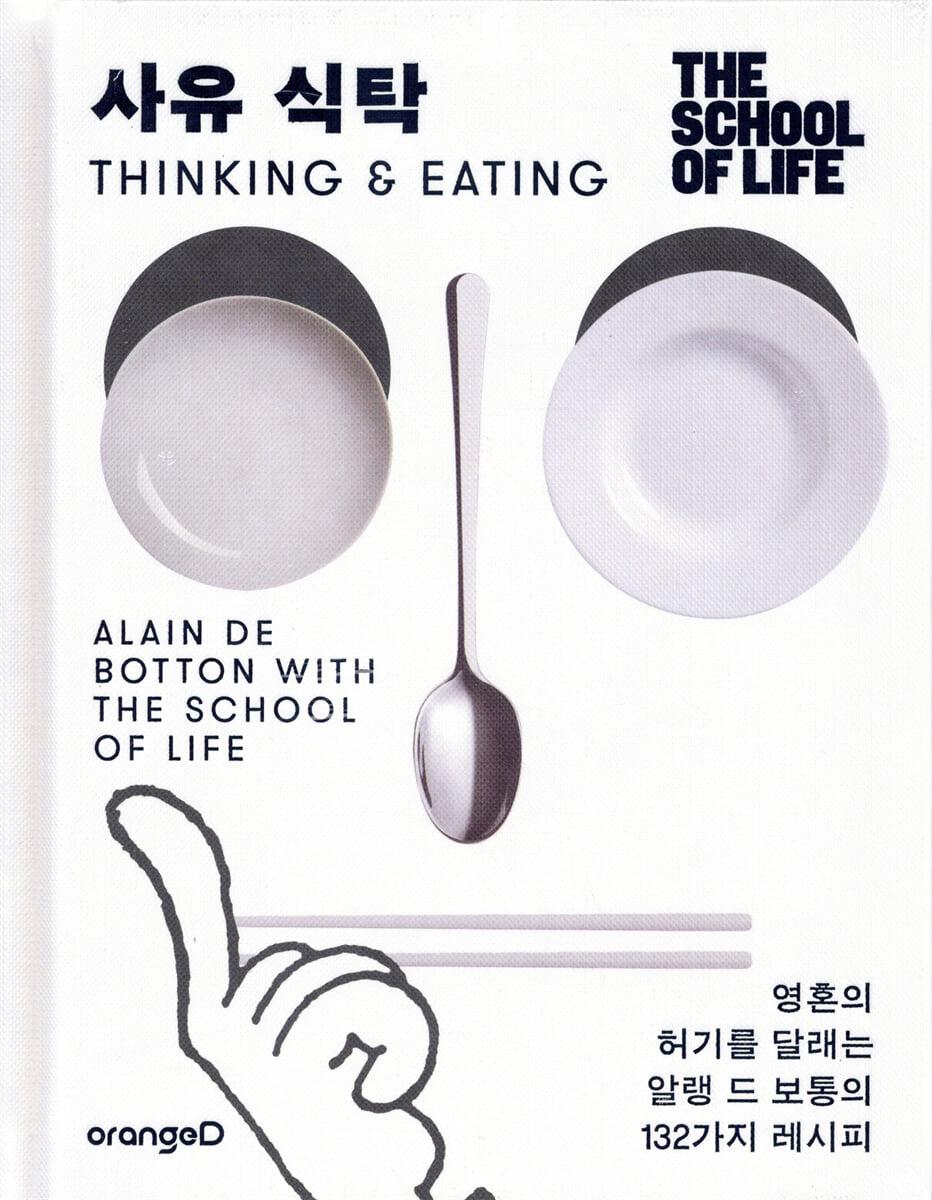 |
Description
Book Introduction
- A word from MD
-
Alain de Botton's Special Recipe BookAlain de Botton, the everyday philosopher who speaks of love and anxiety, writes 132 captivating recipes with his unique philosophical thinking and penmanship.
Cooking for someone and sharing a meal together is like a declaration of love.
We present a themed 'conversation menu' that you can share around the table.
November 8, 2022. Shin Eun-ji, PD of Home Life
A dinner of affectionate reflections with Alain de Botton, the everyday philosopher who speaks of love and anxiety.
A special recipe book that heals our weary lives with its own philosophical thinking and unique writing style.
Alain de Botton, who earned the nickname "Dr. Love" for his unique writing style that combines romance and philosophy, has come to Korean readers with an unexpected cookbook.
In this book, published in 2008 through the 'School of Life', which he founded, Alain de Botton considers cooking and eating as a philosophy.
By suggesting tangible and intangible recipes that go beyond food and conversation, it offers readers an opportunity for reflection and self-comfort.
"Cooking, in a broader sense, is a way to fill the heart and soul of a loved one."_Page 171
In this book, cooking does not simply mean the act of making food.
Alain de Botton says that cooking for someone and sharing a meal with them is like a declaration of love.
This book, "The Table of Thoughts," which contains 132 recipes recommended by him and his own passionate thoughts, expands the meaning of cooking and eating beyond existing frameworks, helping us discover new possibilities in cooking that soothe our anxious hearts.
A special recipe book that heals our weary lives with its own philosophical thinking and unique writing style.
Alain de Botton, who earned the nickname "Dr. Love" for his unique writing style that combines romance and philosophy, has come to Korean readers with an unexpected cookbook.
In this book, published in 2008 through the 'School of Life', which he founded, Alain de Botton considers cooking and eating as a philosophy.
By suggesting tangible and intangible recipes that go beyond food and conversation, it offers readers an opportunity for reflection and self-comfort.
"Cooking, in a broader sense, is a way to fill the heart and soul of a loved one."_Page 171
In this book, cooking does not simply mean the act of making food.
Alain de Botton says that cooking for someone and sharing a meal with them is like a declaration of love.
This book, "The Table of Thoughts," which contains 132 recipes recommended by him and his own passionate thoughts, expands the meaning of cooking and eating beyond existing frameworks, helping us discover new possibilities in cooking that soothe our anxious hearts.
- You can preview some of the book's contents.
Preview
index
ⅰ Food Declaration
ⅱ Recipe
Key ingredients
lemon
lime
fig
avocado
olive oil
Caper
egg plant
Mint
honey
pistachio
mushroom
walnut
chocolate
garlic
egg
rhubarb
Taking care of ourselves
With friends
relationship
Good enough
Food for Thought
ⅲ Conversation
Speak well and listen well
Dialogue menu
People who helped
Photo source
Search
ⅱ Recipe
Key ingredients
lemon
lime
fig
avocado
olive oil
Caper
egg plant
Mint
honey
pistachio
mushroom
walnut
chocolate
garlic
egg
rhubarb
Taking care of ourselves
With friends
relationship
Good enough
Food for Thought
ⅲ Conversation
Speak well and listen well
Dialogue menu
People who helped
Photo source
Search
Detailed image
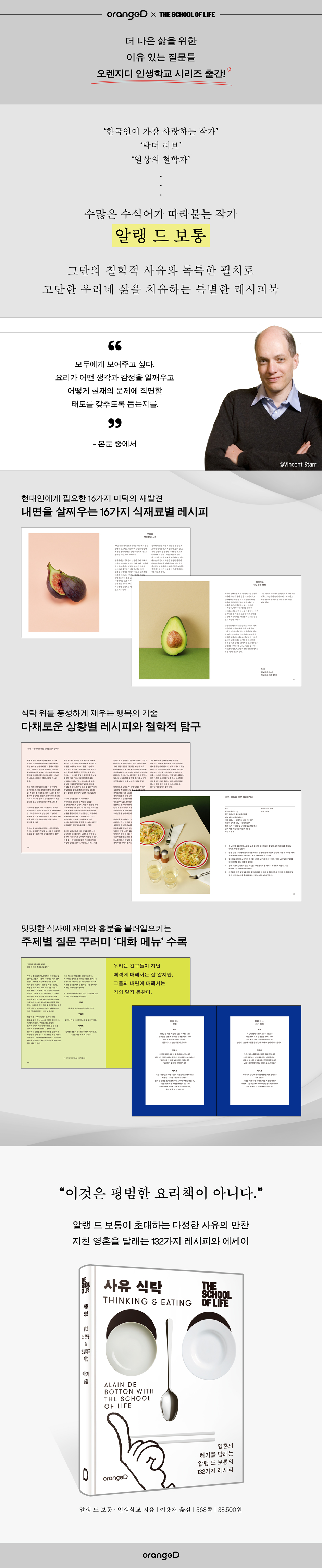
Into the book
I want to show it to everyone through a book.
How ingredients and dishes evoke thoughts and emotions, and how they help shape our attitudes toward current challenges.
I believe that food is an incredibly important part of our lives, as it is a way to recall, store, and convey memories.
---p.15
Cooking, in a broader sense, is a way to fill the heart and soul of a loved one.
---p.171
It's easy to think that in order to cook, you have to first learn it professionally.
But the satisfaction that food gives is not proportional to the sophistication of the technique, but to the depth of the conversation and friendship shared over the food.
---p.171
A grand meal is great, but complicated dishes don't always guarantee a good impression.
Sometimes simple is better.
Dishes that are lopsided or discolored can also add an important element of charm to the table.
It's the honest admission of anxiety, the willingness to admit failure, and the kindness to humorously express vanity and ambition.
---p.184
To become an adult in love, you have to know how to do something amazing.
For example, putting others before yourself and bringing a plate of delicious food to your bedside.
---p.235
In most cookbooks, delivery food doesn't even exist as a concept.
It's as if delivery food is something that barbarians or pagans eat after they've sacked a city.
---p.275
Aren't all foods drugs in some way? We often use the word "drug" to refer to prohibited substances.
However, most of the foods we consume are 'drugs' in the sense that they affect the mind and alter the state of consciousness.
They just don't document their influence in detail, and they don't care about the law.
---p.307
We've long felt that the menu is overly limited.
Now I feel the need to expand the scope of the menu to include the realm of conversation.
Going forward, we should approach meals with both a food menu and a conversation menu.
How ingredients and dishes evoke thoughts and emotions, and how they help shape our attitudes toward current challenges.
I believe that food is an incredibly important part of our lives, as it is a way to recall, store, and convey memories.
---p.15
Cooking, in a broader sense, is a way to fill the heart and soul of a loved one.
---p.171
It's easy to think that in order to cook, you have to first learn it professionally.
But the satisfaction that food gives is not proportional to the sophistication of the technique, but to the depth of the conversation and friendship shared over the food.
---p.171
A grand meal is great, but complicated dishes don't always guarantee a good impression.
Sometimes simple is better.
Dishes that are lopsided or discolored can also add an important element of charm to the table.
It's the honest admission of anxiety, the willingness to admit failure, and the kindness to humorously express vanity and ambition.
---p.184
To become an adult in love, you have to know how to do something amazing.
For example, putting others before yourself and bringing a plate of delicious food to your bedside.
---p.235
In most cookbooks, delivery food doesn't even exist as a concept.
It's as if delivery food is something that barbarians or pagans eat after they've sacked a city.
---p.275
Aren't all foods drugs in some way? We often use the word "drug" to refer to prohibited substances.
However, most of the foods we consume are 'drugs' in the sense that they affect the mind and alter the state of consciousness.
They just don't document their influence in detail, and they don't care about the law.
---p.307
We've long felt that the menu is overly limited.
Now I feel the need to expand the scope of the menu to include the realm of conversation.
Going forward, we should approach meals with both a food menu and a conversation menu.
---p.354
Publisher's Review
“This is no ordinary cookbook.”_Page 9
A unique recipe book by Alain de Botton, Korea's most beloved author.
132 Recommended Recipes and Food Essays to Soothe Your Weary Soul
‘The writer most loved by Koreans.’
'The Philosopher of Everyday Life'.
'Doctor Love', 'Modern Stendhal', etc...
Alain de Botton, who enjoys popularity not only in Korea but also around the world, is known by numerous nicknames.
What made him who he is today is the romance novel trilogy on love and human relationships, which includes 『Why Do I Love You』, 『Are We in Love』, and 『Kiss and Tell』.
But, surprisingly, 『The Table of Thought』 is not a romance novel or a philosophical essay, but a cookbook.
The book begins its first chapter with the declaration, “This is not your ordinary cookbook.”
The 132 food and conversation recipes personally selected by the author are seasoned with Alain de Botton's unique thoughts, creating a witty yet warm atmosphere and creating a familiar yet new flavor.
His recipe for rekindling our inner faith and hope for life is enough to provide new enjoyment and appeal to readers who love his novels.
“I want to show it to everyone through books.
How ingredients and dishes evoke thoughts and emotions, and how they help shape our attitudes toward current challenges.
I believe that food is an incredibly important part of our lives as a way to recall or store thoughts and convey memories.”_Page 15
It's clear why Alain de Botton wrote this cookbook.
He calls for expanding the meaning of cooking, saying that the existing definition of cooking is too narrow.
He believes that cooking is a medium for thought that awakens thoughts and emotions, a way to share them, and at the same time, a way to confess love.
Because cooking goes beyond simply preparing ingredients for consumption; it means a way to fill the hearts and souls of those we love.
Nowadays, mukbang, cooking shows, and food porn are overflowing.
A philosophical exploration of what and how to eat
'Eat well, live well.' The ultimate goal of life, then and now, can be summarized in this one sentence.
To live well, you must eat well.
Food is a necessary condition for health and happiness.
Diet trends change every day, and YouTube and various social media feeds are overflowing with restaurant reviews and mukbang content. This is a reflection of our desire to eat well and a result of the realization that we are not living well.
But people don't really think deeply about what and how to eat.
'Good food' remains in the narrowest definition.
In his book, Alain de Botton challenges the prevailing attitude that focuses solely on nutrition and ignores the impact of cooking on human emotional state and psychological well-being.
It presents the novel idea that ingredients evoke specific virtues, and instills the cheerful hope that cooking can solve the problems we face.
“If you use your imagination, some ingredients seem to have certain virtues.
Such ingredients also serve as symbols of thought that maintain our character.
Using symbolic ingredients with virtues in your cooking can be a spiritual treat not only for the body but also for the soul.
“It is a way to achieve sensory satisfaction while seeking mental change.”_Page 21
Alain de Botton finds the solution in rediscovering ingredients and menus.
Inspired by Aristotle's philosophy, we redefine the 12 virtues we need, and introduce the ingredients that serve as the source of these virtues and recipes that utilize them.
This recipe incorporates the intriguing idea that certain ingredients, such as lemons, which symbolize hope, and limes, which are full of playfulness, can change and control our moods.
Based on this, he asserts that the dishes that fill the table where we share with our lover, friends, family, or ourselves can bring us happiness.
Transforming dry meals, relationships, and thoughts into something lovely
The joy of everyday life: the art of cooking
People often treat cooking or eating as a chore that needs to be done.
It's because I only think about menus that suit other people's tastes, not my own, and I cook only for their satisfaction.
Alain de Botton expands the definition and possibilities of cooking, while also arguing that a radical change is needed in our attitude towards cooking.
The core of this book is that the purpose of cooking is nothing other than for us to enjoy cooking.
The book is full of stories and recipes you won't find in other cookbooks.
This book's unique content includes encouraging messages about how ordering delivery food is a skill, ways to utilize leftover food, and a "conversation menu" organized by topic that can be used at mealtimes.
Sometimes, all you need is a simple meal of a glass of water and an apple.
The author encourages us to break free from the compulsion to eat a lot at every meal, believing that the secret to a happy life lies not in the skill of following a recipe precisely, but in the courage to examine ourselves and our surroundings.
“It’s easy to think that to cook, you have to first learn it professionally.
However, the satisfaction that food gives is not proportional to the sophistication of the technique, but to the depth of the conversation and friendship shared over the food.”_Page 171
What and how should I eat?
Ultimately, this concern is connected to our earnest desire to improve our daily lives, which are as stuffy as eating rough food.
Can cooking truly become a way of life, a life skill that fosters a happy everyday life? I hope that by following Alain de Botton's path through this book, we can all glimpse this possibility.
Recommendation
“In an age where food porn fills our Instagram feeds and new diets and trends emerge weekly, if you’re struggling with what and how to eat, this is the book to trust.”
- Elle Decoration magazine
“This book is a unique recipe book.
A masterful blend of psychology and cooking, it guides us on how to put the food we need on our plates to calm and relax ourselves, be kind to others, and face everyday challenges with confidence.”
- The Mail (UK)
A unique recipe book by Alain de Botton, Korea's most beloved author.
132 Recommended Recipes and Food Essays to Soothe Your Weary Soul
‘The writer most loved by Koreans.’
'The Philosopher of Everyday Life'.
'Doctor Love', 'Modern Stendhal', etc...
Alain de Botton, who enjoys popularity not only in Korea but also around the world, is known by numerous nicknames.
What made him who he is today is the romance novel trilogy on love and human relationships, which includes 『Why Do I Love You』, 『Are We in Love』, and 『Kiss and Tell』.
But, surprisingly, 『The Table of Thought』 is not a romance novel or a philosophical essay, but a cookbook.
The book begins its first chapter with the declaration, “This is not your ordinary cookbook.”
The 132 food and conversation recipes personally selected by the author are seasoned with Alain de Botton's unique thoughts, creating a witty yet warm atmosphere and creating a familiar yet new flavor.
His recipe for rekindling our inner faith and hope for life is enough to provide new enjoyment and appeal to readers who love his novels.
“I want to show it to everyone through books.
How ingredients and dishes evoke thoughts and emotions, and how they help shape our attitudes toward current challenges.
I believe that food is an incredibly important part of our lives as a way to recall or store thoughts and convey memories.”_Page 15
It's clear why Alain de Botton wrote this cookbook.
He calls for expanding the meaning of cooking, saying that the existing definition of cooking is too narrow.
He believes that cooking is a medium for thought that awakens thoughts and emotions, a way to share them, and at the same time, a way to confess love.
Because cooking goes beyond simply preparing ingredients for consumption; it means a way to fill the hearts and souls of those we love.
Nowadays, mukbang, cooking shows, and food porn are overflowing.
A philosophical exploration of what and how to eat
'Eat well, live well.' The ultimate goal of life, then and now, can be summarized in this one sentence.
To live well, you must eat well.
Food is a necessary condition for health and happiness.
Diet trends change every day, and YouTube and various social media feeds are overflowing with restaurant reviews and mukbang content. This is a reflection of our desire to eat well and a result of the realization that we are not living well.
But people don't really think deeply about what and how to eat.
'Good food' remains in the narrowest definition.
In his book, Alain de Botton challenges the prevailing attitude that focuses solely on nutrition and ignores the impact of cooking on human emotional state and psychological well-being.
It presents the novel idea that ingredients evoke specific virtues, and instills the cheerful hope that cooking can solve the problems we face.
“If you use your imagination, some ingredients seem to have certain virtues.
Such ingredients also serve as symbols of thought that maintain our character.
Using symbolic ingredients with virtues in your cooking can be a spiritual treat not only for the body but also for the soul.
“It is a way to achieve sensory satisfaction while seeking mental change.”_Page 21
Alain de Botton finds the solution in rediscovering ingredients and menus.
Inspired by Aristotle's philosophy, we redefine the 12 virtues we need, and introduce the ingredients that serve as the source of these virtues and recipes that utilize them.
This recipe incorporates the intriguing idea that certain ingredients, such as lemons, which symbolize hope, and limes, which are full of playfulness, can change and control our moods.
Based on this, he asserts that the dishes that fill the table where we share with our lover, friends, family, or ourselves can bring us happiness.
Transforming dry meals, relationships, and thoughts into something lovely
The joy of everyday life: the art of cooking
People often treat cooking or eating as a chore that needs to be done.
It's because I only think about menus that suit other people's tastes, not my own, and I cook only for their satisfaction.
Alain de Botton expands the definition and possibilities of cooking, while also arguing that a radical change is needed in our attitude towards cooking.
The core of this book is that the purpose of cooking is nothing other than for us to enjoy cooking.
The book is full of stories and recipes you won't find in other cookbooks.
This book's unique content includes encouraging messages about how ordering delivery food is a skill, ways to utilize leftover food, and a "conversation menu" organized by topic that can be used at mealtimes.
Sometimes, all you need is a simple meal of a glass of water and an apple.
The author encourages us to break free from the compulsion to eat a lot at every meal, believing that the secret to a happy life lies not in the skill of following a recipe precisely, but in the courage to examine ourselves and our surroundings.
“It’s easy to think that to cook, you have to first learn it professionally.
However, the satisfaction that food gives is not proportional to the sophistication of the technique, but to the depth of the conversation and friendship shared over the food.”_Page 171
What and how should I eat?
Ultimately, this concern is connected to our earnest desire to improve our daily lives, which are as stuffy as eating rough food.
Can cooking truly become a way of life, a life skill that fosters a happy everyday life? I hope that by following Alain de Botton's path through this book, we can all glimpse this possibility.
Recommendation
“In an age where food porn fills our Instagram feeds and new diets and trends emerge weekly, if you’re struggling with what and how to eat, this is the book to trust.”
- Elle Decoration magazine
“This book is a unique recipe book.
A masterful blend of psychology and cooking, it guides us on how to put the food we need on our plates to calm and relax ourselves, be kind to others, and face everyday challenges with confidence.”
- The Mail (UK)
GOODS SPECIFICS
- Publication date: October 25, 2022
- Format: Hardcover book binding method guide
- Page count, weight, size: 368 pages | 960g | 165*215*28mm
- ISBN13: 9791192674155
- ISBN10: 1192674154
You may also like
카테고리
korean


korean

![ELLE 엘르 스페셜 에디션 A형 : 12월 [2025]](http://librairie.coreenne.fr/cdn/shop/files/b8e27a3de6c9538896439686c6b0e8fb.jpg?v=1766436872&width=3840)


