

English Conversation Answer Note
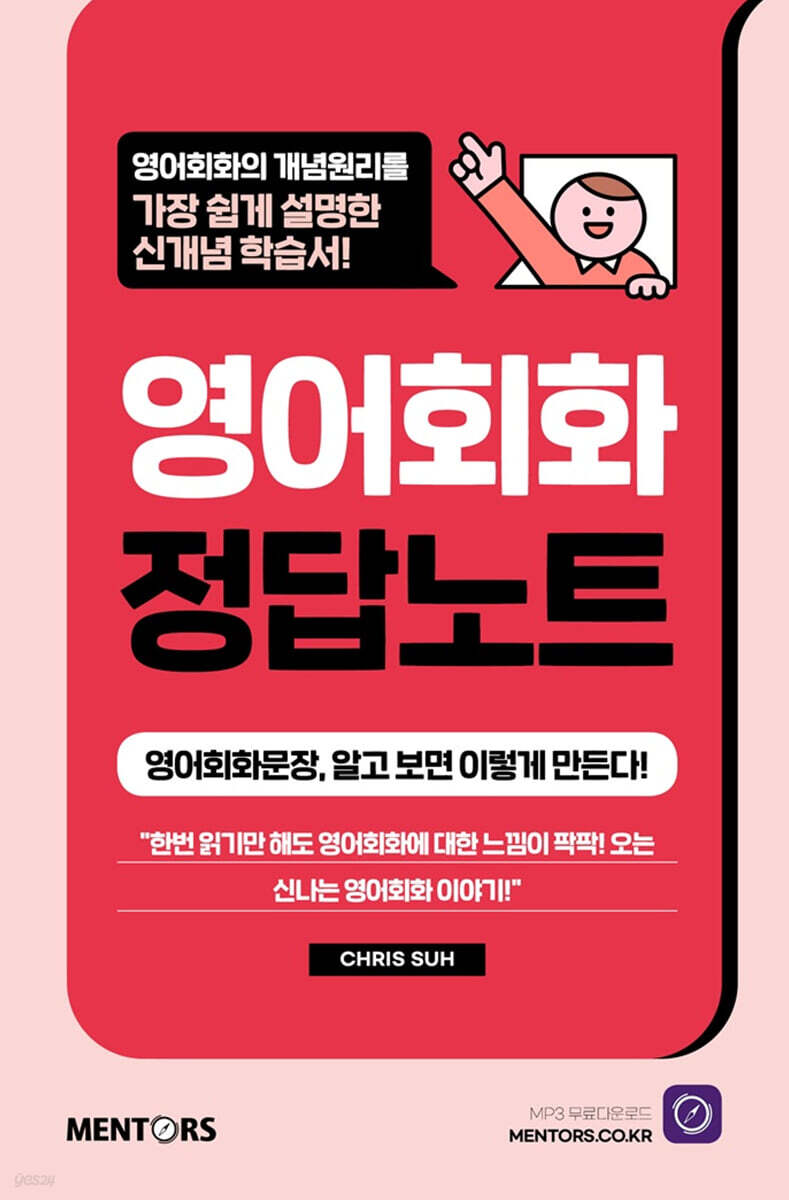 |
Description
Book Introduction
English conversation that can't be done no matter how hard you try!
English is so difficult, isn't it? No matter how much I try, it just doesn't work.
It's true that I feel envious when I see native speakers who speak English fluently.
But when we consider the time native speakers have invested in learning English to get to that level, we don't really need to feel discouraged if our English isn't as good as native speakers.
That's because, from the moment I was born, I invested almost all of my time, except for sleeping, in listening and speaking.
Of course, this is just to discourage people who can speak English to some extent, but it doesn't apply to people who, after speaking English for over 10 years, still can't say a word and, even after including awkward silences and writing time, can't even hold a single minute with a native speaker.
How to create English conversation sentences
So how can I open my mouth to the "English language" that seems impossible no matter what I do? Now that I'm an adult, I can't learn English like native speakers do, nor can I repeat the "bad resolution" of "I'll start with grammar"—the trademark of those who can't stick to their English studies for more than a month, or even a week.
So how should we speak English? How should we construct English conversational sentences? Since we're learning a foreign language late in life, we have no choice but to approach it logically and systematically, unlike native speakers who acquire it naturally.
Basic principles of English sentences
This means that you must theoretically understand the basic principles of English sentences.
The basic structure of an English sentence is “subject + verb + complement/object.” Depending on the verb, you should use a certain sentence structure, and in the “complement/object” position, you should understand and memorize that not only simple “nouns” or “adjectives,” but also “to-infinitives,” “gerunds,” “phrases,” and “clauses” come, and when and how to use tenses. After understanding and memorizing this as a framework, you should use your extensive vocabulary skills to flesh out that framework and create sentences.
We have to "assemble" English sentences one by one through understanding and memorization, just like we study math at a desk, while native speakers have learned it through countless repetitions in their daily lives.
Make the sentence I want
Let me be more specific.
For example, verbs that take a complement include be, get, and seem. In the case of seem, it means “it looks like…”, so you should know that an adjective or a noun can be used as a complement, but it can also be in the form of “to + verb” or a clause of “(that) subject + verb.”
Also, verbs that take objects include know, think, and like. Know and think take not only an object noun but also a clause of '(that) subject + verb', but like takes a noun or 'to + verb' form as an object, but cannot take a clause, etc. You need to memorize these things to some extent.
You should memorize this much so that you can use it as a basis to determine the tense of the verb and then create the sentence you want by adding 'to + verb' or clauses.
Over 30 minutes with a native speaker
This book, "English Conversation Answer Note," focuses on how to actually create English conversation sentences rather than grammar in the current situation where it is impossible to learn English like a native speaker.
Instead of feeling like you can't do English conversation, try challenging yourself with a strong self-suggestion: "I can do it too!"
And try to apply as many sentence patterns as possible, store them in your head, and then search for and use them right away when talking to native speakers.
Now, you will not only be able to start a conversation, but you will also be able to continue the conversation and carry on a conversation with a native speaker for not just 5 minutes, but 10 minutes, or even 30 minutes.
Now, the real battle in English lies in the ability to "actually speak and listen" English conversation, and this is what will determine your future.
English is so difficult, isn't it? No matter how much I try, it just doesn't work.
It's true that I feel envious when I see native speakers who speak English fluently.
But when we consider the time native speakers have invested in learning English to get to that level, we don't really need to feel discouraged if our English isn't as good as native speakers.
That's because, from the moment I was born, I invested almost all of my time, except for sleeping, in listening and speaking.
Of course, this is just to discourage people who can speak English to some extent, but it doesn't apply to people who, after speaking English for over 10 years, still can't say a word and, even after including awkward silences and writing time, can't even hold a single minute with a native speaker.
How to create English conversation sentences
So how can I open my mouth to the "English language" that seems impossible no matter what I do? Now that I'm an adult, I can't learn English like native speakers do, nor can I repeat the "bad resolution" of "I'll start with grammar"—the trademark of those who can't stick to their English studies for more than a month, or even a week.
So how should we speak English? How should we construct English conversational sentences? Since we're learning a foreign language late in life, we have no choice but to approach it logically and systematically, unlike native speakers who acquire it naturally.
Basic principles of English sentences
This means that you must theoretically understand the basic principles of English sentences.
The basic structure of an English sentence is “subject + verb + complement/object.” Depending on the verb, you should use a certain sentence structure, and in the “complement/object” position, you should understand and memorize that not only simple “nouns” or “adjectives,” but also “to-infinitives,” “gerunds,” “phrases,” and “clauses” come, and when and how to use tenses. After understanding and memorizing this as a framework, you should use your extensive vocabulary skills to flesh out that framework and create sentences.
We have to "assemble" English sentences one by one through understanding and memorization, just like we study math at a desk, while native speakers have learned it through countless repetitions in their daily lives.
Make the sentence I want
Let me be more specific.
For example, verbs that take a complement include be, get, and seem. In the case of seem, it means “it looks like…”, so you should know that an adjective or a noun can be used as a complement, but it can also be in the form of “to + verb” or a clause of “(that) subject + verb.”
Also, verbs that take objects include know, think, and like. Know and think take not only an object noun but also a clause of '(that) subject + verb', but like takes a noun or 'to + verb' form as an object, but cannot take a clause, etc. You need to memorize these things to some extent.
You should memorize this much so that you can use it as a basis to determine the tense of the verb and then create the sentence you want by adding 'to + verb' or clauses.
Over 30 minutes with a native speaker
This book, "English Conversation Answer Note," focuses on how to actually create English conversation sentences rather than grammar in the current situation where it is impossible to learn English like a native speaker.
Instead of feeling like you can't do English conversation, try challenging yourself with a strong self-suggestion: "I can do it too!"
And try to apply as many sentence patterns as possible, store them in your head, and then search for and use them right away when talking to native speakers.
Now, you will not only be able to start a conversation, but you will also be able to continue the conversation and carry on a conversation with a native speaker for not just 5 minutes, but 10 minutes, or even 30 minutes.
Now, the real battle in English lies in the ability to "actually speak and listen" English conversation, and this is what will determine your future.
- You can preview some of the book's contents.
Preview
index
1st Day................................
013
How do you make English sentences?
01.
You can speak English just by knowing the basic sentence structures! She is hot or I know her
02.
Then why are sentences so long? - Because of modifiers 1 - When an adjective modifies a noun - I met a hot girl
03.
Why are sentences so long? - Because of modifiers 2 - Adverbs modify verbs/adverbs/adjectives - I met a really hot girl last night
04.
So why do sentences get complicated? - Because of equivalent phrases 1 - Things used like nouns - I like to see a movie
05.
So what makes sentences complicated? - Because of equivalent phrases 2- Things used like adjectives - Would you like something to drink?
06.
So why do sentences get complicated? - Because of equivalent phrases 3 - Things used like adverbs - I'm here to pick up Mona
07.
After all, the core of the sentence is the verb 1 - there are various types of verbs - I will not let it happen again
08.
After all, the core of the sentence is verb 2 - the verb tells the time - I saw her yesterday
2nd Day ............................................
033
If you don't know be, do, have, and get, you can't speak English~
01.
be+noun[adjective] is used to describe the subject's status or state. She's amazing!
02.
Tell me more by adding a preposition + noun after be + adjective. I'm worried about you.
03.
An adverb (phrase) can also come right after the verb "be": I will be there in a moment
04.
This is~ Next, try adding a noun, adjective, or preposition + noun. This is my friend, Jim.
05.
That's~ Next time, just put in a noun or adjective. That's a good idea.
06.
After It's, try adding a noun, adjective, preposition + noun. It's okay.
07.
Let's change the verb to be and the subject slightly. Are you sure?
08.
It is not a be verb, so we ask by adding do~ at the beginning. Do you like that?
09.
When negating, add don't or doesn't before the verb. I don't think so.
10.
Although do is often used as an auxiliary verb, you should also know its meaning as a main verb… I'll do my best
11.
You can't just interpret have as 'having'. I have a little problem.
12.
The negative form don't have + noun means I don't have a choice
13.
To ask "Do you have a DVD player?", use "Do you have + noun?"
14.
Have got should be thought of as just have. I've got something for you.
15.
got it has it??? I got it
3rd Day............................................
065
Diversify your verbs with auxiliary verbs~
01.
The future is okay if you just have one will I'll call you later
02.
Will you~? to ask someone to do something Will you help me?
03.
To be more polite than Will you~?, say Would you ~? Would you do me a favor?
04.
Should is just a pattern, past content is present You should talk to me
05.
Can means you can do it. Can't means you shouldn't do it. I can do it.
06.
You can[can't]~ is used to give permission or prohibition to the other person. You can go now
07.
Can I~ ? is used when suggesting something to the other person or asking for permission from the other person. Can I get you something?
08.
Can[Could] you~ ? is used when asking someone for something. Can you come over here?
09.
must + verb means you must do something. I must go now.
10.
You must be tired
11.
I have to~ I have to ask you something
12.
You have to~ I'm thinking of you and giving you advice. You have to go there right now.
13.
When you are carefully asking someone for a favor, use May I + verb? May I help you?
14.
There are times when you have to talk about things you don't know well. In these cases, you can say "may" or "You might be right".
15.
When you say that you used to… you use used to. I used to go to church
4th Day............................................
099
Let's attach a complement to the subject + verb.
01.
Memorize the formula be+adjective+to+verb. She will not be able to do it.
02.
I'm afraid ~ I'm afraid you're wrong
03.
I'm glad~ I convey my joy with I'm glad you like it
04.
I'm sorry~ I'm sorry to hear that
05.
Let's talk confidently with "I'm sure~" I'm not sure what you mean
06.
When your appearance looks like… you seem a little nervous
07.
Verbs that feel with the whole body also take adjectives as their object. It sounds good to me
08.
get + adjective, get is everywhere. Don't get mad at me.
5th Day............................................
117
Let's add an object to the subject + verb~
01.
Let me tell you what I usually like with like. I like her a lot.
02.
When you want something right now, say I'd like~ I'd like a window seat
03.
When you want to do something right now, say I'd like to+V. I'd like to check out now.
04.
When you want to ask what the other person wants right now, use Would you like + noun? Would you like some juice?
05.
When asking what someone wants to do right now, use Would you like to + verb? Would you like to go to a movie?
06.
To be more direct, I want to talk to you
07.
When asking or wishing for someone to do something, use I want you to + verb I want you to come here
08.
To ask what someone wants to do, use Do you want + noun/to do? Do you want to go out with her?
09.
I'll figure it out first, Do you want me to+verb? Do you want me to quit?
10.
I need to do something, I need + noun/to + verb I need to talk to you
11.
You don't need to + verb You don't need to worry about it
12.
To have fun with enjoy, use enjoy+ noun[~ing] I really enjoyed it
13.
When I feel like having a drink, I feel like ~ing I feel like having a drink
14.
To ask or ask for permission carefully, use Do you mind~ing/if~ Do you mind picking me up tomorrow?
15.
When you want to keep kissing without stopping, you should say keep kissing. Why do you keep saying that?
16.
Let's try it today! I'll try to be more careful.
17.
…you'd better hurry, You'd better+V You'd better hurry
18.
You think go get~, two verbs right next to each other, is weird??? Let's go get some ice cream
19.
get AB, bring B to A or buy it and bring it to A Can I get you something?
20.
give AB, give B to A I'll give you a call
21.
ask AB, ask A about B. Let me ask you a question.
22.
call AB, call A as B Don't call me chicken
23.
…if you let me do it, I will make it, if you let me do it, I will keep it. He makes me happy
24.
I told you to + verb, … I told you to get out of here!
25.
Yes, no? (be allowed to+V) You're not allowed to smoke here
26.
When I want to tell someone to do something, I use have+person+verb I'll have him call you back
27.
When someone else did something for me, have+thing+pp I had my hair cut
28.
When making someone else do something, use make+person+verb What makes you say that?
29.
When I say I will do something voluntarily, I use Let me + verb Please let me go
30.
When helping, say it simply, without to. Can you help me get dressed?
31.
I like seeing and hearing verbs infinitively. I saw her kissing you.
32.
Try saying it with a verb + noun rather than just a verb 1 - make I made a big decision
33.
Say it with a verb + noun rather than just a verb 2 - take You have to take a look at it
6th Day............................................
185
Let's attach phrases and clauses to the subject + verb~
01.
Let's use a phrase, not a word, as the object 1 - know Let me know how to do it
02.
Let's use a phrase, not a word, as an object 2 - tell and show Can you tell me how to stop it?
03.
It seems~ Let's put a subject + verb clause next. It seems that we got lost.
04.
It looks like~ Let's add a subject + verb clause next. It looks like it's going to rain.
05.
I feel like~ Let's add a subject + verb clause next. I feel like it's my fault.
06.
Know likes to take clauses as objects 1 I know what you mean
07.
know likes to take clauses as objects 2 I don't know what I should do
08.
know likes to take clauses as objects 3 Do you know what I'm saying?
09.
I think I'd better be going now
10.
I don't think it's a good idea.
11.
think also likes to receive bows as objects 3 Do you think she likes me?
12.
I guess is similar to I think. I guess you're right.
13.
When you really don't know and are curious, say I wonder what[if] subject+verb I wonder what's going on
14.
When you say something incredible that you can't believe, use I can't believe subject + verb I can't believe you did that
7th Day............................................
215
Speaking the tense correctly
01.
Does the present tell the future? I'll come and get you when I'm done.
02.
I'm going to China
03.
I'm thinking about going on vacation
04.
Expressions that are used in the progressive tense: I'm having fun
05.
In be going to + verb, 'go' is not 'go'. I'm really going to miss you.
06.
it's going to~ means in the future... It's going to be okay
07.
Does "I go to a night club yesterday" make sense? I went to a party last night.
08.
The past tense took, made, and knew are also commonly used. I took her to a romantic restaurant.
09.
When denying the past, say didn't I didn't do it
10.
…I thought you were a good kisser
11.
Tell me a story you heard somewhere, I heard subject + verb I heard things are changing
12.
He said she wanted to marry me.
13.
From the past to the present, have+pp She has worked here for 3 years
14.
“Where did you go?” is also present perfect tense. I have been to the station.
8th Day............................................
245
Ask a lot of questions with interrogative words~
01.
What is this? (What is/are+noun?) What's the problem?
02.
What is/are+noun+like? is the same as How is/are+noun? What is the weather like in Korea?
03.
What's wrong?, What's wrong with you?
04.
What makes you think so? 1 What makes you think so?
05.
What happened? 2 What happened?
06.
What are you talking about?
07.
What are you going to do?
08.
What do you do?
09.
What do you mean you quit?
10.
…what do you say we take a break?
11.
…what do you think of that?
12.
What do you want to do?
13.
What did you say to her?
14.
Tell me what you want? What can I do for you?
15.
When's the wedding?
16.
When are you coming back?
17.
When do you want to go?
18.
Tell me where it is (Where is + noun?) Where is everybody?
19.
Where are you going? Where are you going?
20.
Where do you want to go?
21.
Where can I meet you?
22.
Who's next?
23.
Who wants to go first?
24.
Who do you work for?
25.
Now is the time to choose Which do you like better?
26.
…How about doing that? Why don't you come with me?
27.
Why didn't you tell me?
28.
… How's your family?
29.
How do you like the steak?
30.
…How would you like your steak?
31.
How can you say that?
32.
How many? How many~? How many women have you been with?
33.
How much? How much ~? How much is it?
34.
How long, how fast, how often? How long does it take to get there?
35.
… How about ? How about ~? How about tomorrow?
36.
Why? How come~? How come you're late?
37.
~ Right?, Isn't that right? You don't know her, do you?
38.
… isn't it amazing?
9th Day............................................
325
English conversation, try speaking in a unique way
01.
… As much as… I'm coming as quickly as I can
02.
as many/much as, as good/well as She's not as good as you
03.
… more than… She's doing it better than me!
04.
The most important thing is the highest level, the most ~ You're the most wonderful girl!
05.
... if I do ... I'll come at 11:30 if that's okay
06.
Let's assume that I am not the 'me' of now. If I were you, I would not go.
07.
If I were… I wish she was my wife
08.
Commands starting with Be Be careful!
09.
Take it easy! An imperative sentence that gives caution or advice to the other person.
10.
A command to encourage others: Keep going!
11.
An imperative sentence that asks the other person to give me a break!
12.
A real command statement: Get out of here!
13.
Directional command Get off at the second stop
14.
Greeting imperative Have a nice weekend!
15.
Help yourself: a command to advise others
16.
Let's say let's do that!
17.
Don't do that!
18.
Oh my, what a small world!
19.
You're such a good friend!
20.
Relative pronouns are adjectives! (Except for "what" which includes an antecedent) There's something you should know
21.
The relative pronoun what is often used in conversation. That's not what I want.
22.
…there is/are+noun Is there a problem?
23.
… It's hard to believe, It's + adjective to + verb
24.
Is it okay to come in? Is it okay to + verb? Is it okay to come in?
25.
It's time to go now. It's time to go.
26.
… I think so, It's like ~ It's like you don't believe it
27.
You said you wanted to talk about it
28.
I'll find out, I'll check to see if ~ I'll check to see if he's okay
29.
That's why, That's why subject+verb That's why we're here
10th Day .......................................
387
Can you say this English sentence too?
01.
Sure is a light Yes, Okay Sure
02.
In fact, in fact
03.
Can you give me a specific example? Like what?
04.
Just a little bit, it's a little bit different
05.
By the way, let's talk about something else. By the way, I like suits
06.
I mean, what about you?
07.
You mean, like this?
08.
then is then, then, and then I'll see you then
09.
What happened after that?
10.
Soon I’ll be back in a minute
11.
Can I talk to you for a second?
12.
I'm on my way
13.
Oh, you know, I think that's a good idea
14.
Arouse the other person's interest You know what?
15.
Let's agree with what the other person said. You did?
16.
What? I'm sorry?
17.
Okay, All right
18.
Actively agree with what the other person is saying You can say that again!
19.
Good for you! Celebrate the other person's happiness!
20.
Telling someone you're welcome that you're okay
21.
Don't worry about it when you are tolerant of the other person
22.
It doesn't matter to me
23.
I can't know everything, right? I have no idea.
24.
Don't get me wrong. Misunderstandings must be prevented before they are resolved.
25.
Comforting the poor person That's too bad
26.
Say thank you for the ride
013
How do you make English sentences?
01.
You can speak English just by knowing the basic sentence structures! She is hot or I know her
02.
Then why are sentences so long? - Because of modifiers 1 - When an adjective modifies a noun - I met a hot girl
03.
Why are sentences so long? - Because of modifiers 2 - Adverbs modify verbs/adverbs/adjectives - I met a really hot girl last night
04.
So why do sentences get complicated? - Because of equivalent phrases 1 - Things used like nouns - I like to see a movie
05.
So what makes sentences complicated? - Because of equivalent phrases 2- Things used like adjectives - Would you like something to drink?
06.
So why do sentences get complicated? - Because of equivalent phrases 3 - Things used like adverbs - I'm here to pick up Mona
07.
After all, the core of the sentence is the verb 1 - there are various types of verbs - I will not let it happen again
08.
After all, the core of the sentence is verb 2 - the verb tells the time - I saw her yesterday
2nd Day ............................................
033
If you don't know be, do, have, and get, you can't speak English~
01.
be+noun[adjective] is used to describe the subject's status or state. She's amazing!
02.
Tell me more by adding a preposition + noun after be + adjective. I'm worried about you.
03.
An adverb (phrase) can also come right after the verb "be": I will be there in a moment
04.
This is~ Next, try adding a noun, adjective, or preposition + noun. This is my friend, Jim.
05.
That's~ Next time, just put in a noun or adjective. That's a good idea.
06.
After It's, try adding a noun, adjective, preposition + noun. It's okay.
07.
Let's change the verb to be and the subject slightly. Are you sure?
08.
It is not a be verb, so we ask by adding do~ at the beginning. Do you like that?
09.
When negating, add don't or doesn't before the verb. I don't think so.
10.
Although do is often used as an auxiliary verb, you should also know its meaning as a main verb… I'll do my best
11.
You can't just interpret have as 'having'. I have a little problem.
12.
The negative form don't have + noun means I don't have a choice
13.
To ask "Do you have a DVD player?", use "Do you have + noun?"
14.
Have got should be thought of as just have. I've got something for you.
15.
got it has it??? I got it
3rd Day............................................
065
Diversify your verbs with auxiliary verbs~
01.
The future is okay if you just have one will I'll call you later
02.
Will you~? to ask someone to do something Will you help me?
03.
To be more polite than Will you~?, say Would you ~? Would you do me a favor?
04.
Should is just a pattern, past content is present You should talk to me
05.
Can means you can do it. Can't means you shouldn't do it. I can do it.
06.
You can[can't]~ is used to give permission or prohibition to the other person. You can go now
07.
Can I~ ? is used when suggesting something to the other person or asking for permission from the other person. Can I get you something?
08.
Can[Could] you~ ? is used when asking someone for something. Can you come over here?
09.
must + verb means you must do something. I must go now.
10.
You must be tired
11.
I have to~ I have to ask you something
12.
You have to~ I'm thinking of you and giving you advice. You have to go there right now.
13.
When you are carefully asking someone for a favor, use May I + verb? May I help you?
14.
There are times when you have to talk about things you don't know well. In these cases, you can say "may" or "You might be right".
15.
When you say that you used to… you use used to. I used to go to church
4th Day............................................
099
Let's attach a complement to the subject + verb.
01.
Memorize the formula be+adjective+to+verb. She will not be able to do it.
02.
I'm afraid ~ I'm afraid you're wrong
03.
I'm glad~ I convey my joy with I'm glad you like it
04.
I'm sorry~ I'm sorry to hear that
05.
Let's talk confidently with "I'm sure~" I'm not sure what you mean
06.
When your appearance looks like… you seem a little nervous
07.
Verbs that feel with the whole body also take adjectives as their object. It sounds good to me
08.
get + adjective, get is everywhere. Don't get mad at me.
5th Day............................................
117
Let's add an object to the subject + verb~
01.
Let me tell you what I usually like with like. I like her a lot.
02.
When you want something right now, say I'd like~ I'd like a window seat
03.
When you want to do something right now, say I'd like to+V. I'd like to check out now.
04.
When you want to ask what the other person wants right now, use Would you like + noun? Would you like some juice?
05.
When asking what someone wants to do right now, use Would you like to + verb? Would you like to go to a movie?
06.
To be more direct, I want to talk to you
07.
When asking or wishing for someone to do something, use I want you to + verb I want you to come here
08.
To ask what someone wants to do, use Do you want + noun/to do? Do you want to go out with her?
09.
I'll figure it out first, Do you want me to+verb? Do you want me to quit?
10.
I need to do something, I need + noun/to + verb I need to talk to you
11.
You don't need to + verb You don't need to worry about it
12.
To have fun with enjoy, use enjoy+ noun[~ing] I really enjoyed it
13.
When I feel like having a drink, I feel like ~ing I feel like having a drink
14.
To ask or ask for permission carefully, use Do you mind~ing/if~ Do you mind picking me up tomorrow?
15.
When you want to keep kissing without stopping, you should say keep kissing. Why do you keep saying that?
16.
Let's try it today! I'll try to be more careful.
17.
…you'd better hurry, You'd better+V You'd better hurry
18.
You think go get~, two verbs right next to each other, is weird??? Let's go get some ice cream
19.
get AB, bring B to A or buy it and bring it to A Can I get you something?
20.
give AB, give B to A I'll give you a call
21.
ask AB, ask A about B. Let me ask you a question.
22.
call AB, call A as B Don't call me chicken
23.
…if you let me do it, I will make it, if you let me do it, I will keep it. He makes me happy
24.
I told you to + verb, … I told you to get out of here!
25.
Yes, no? (be allowed to+V) You're not allowed to smoke here
26.
When I want to tell someone to do something, I use have+person+verb I'll have him call you back
27.
When someone else did something for me, have+thing+pp I had my hair cut
28.
When making someone else do something, use make+person+verb What makes you say that?
29.
When I say I will do something voluntarily, I use Let me + verb Please let me go
30.
When helping, say it simply, without to. Can you help me get dressed?
31.
I like seeing and hearing verbs infinitively. I saw her kissing you.
32.
Try saying it with a verb + noun rather than just a verb 1 - make I made a big decision
33.
Say it with a verb + noun rather than just a verb 2 - take You have to take a look at it
6th Day............................................
185
Let's attach phrases and clauses to the subject + verb~
01.
Let's use a phrase, not a word, as the object 1 - know Let me know how to do it
02.
Let's use a phrase, not a word, as an object 2 - tell and show Can you tell me how to stop it?
03.
It seems~ Let's put a subject + verb clause next. It seems that we got lost.
04.
It looks like~ Let's add a subject + verb clause next. It looks like it's going to rain.
05.
I feel like~ Let's add a subject + verb clause next. I feel like it's my fault.
06.
Know likes to take clauses as objects 1 I know what you mean
07.
know likes to take clauses as objects 2 I don't know what I should do
08.
know likes to take clauses as objects 3 Do you know what I'm saying?
09.
I think I'd better be going now
10.
I don't think it's a good idea.
11.
think also likes to receive bows as objects 3 Do you think she likes me?
12.
I guess is similar to I think. I guess you're right.
13.
When you really don't know and are curious, say I wonder what[if] subject+verb I wonder what's going on
14.
When you say something incredible that you can't believe, use I can't believe subject + verb I can't believe you did that
7th Day............................................
215
Speaking the tense correctly
01.
Does the present tell the future? I'll come and get you when I'm done.
02.
I'm going to China
03.
I'm thinking about going on vacation
04.
Expressions that are used in the progressive tense: I'm having fun
05.
In be going to + verb, 'go' is not 'go'. I'm really going to miss you.
06.
it's going to~ means in the future... It's going to be okay
07.
Does "I go to a night club yesterday" make sense? I went to a party last night.
08.
The past tense took, made, and knew are also commonly used. I took her to a romantic restaurant.
09.
When denying the past, say didn't I didn't do it
10.
…I thought you were a good kisser
11.
Tell me a story you heard somewhere, I heard subject + verb I heard things are changing
12.
He said she wanted to marry me.
13.
From the past to the present, have+pp She has worked here for 3 years
14.
“Where did you go?” is also present perfect tense. I have been to the station.
8th Day............................................
245
Ask a lot of questions with interrogative words~
01.
What is this? (What is/are+noun?) What's the problem?
02.
What is/are+noun+like? is the same as How is/are+noun? What is the weather like in Korea?
03.
What's wrong?, What's wrong with you?
04.
What makes you think so? 1 What makes you think so?
05.
What happened? 2 What happened?
06.
What are you talking about?
07.
What are you going to do?
08.
What do you do?
09.
What do you mean you quit?
10.
…what do you say we take a break?
11.
…what do you think of that?
12.
What do you want to do?
13.
What did you say to her?
14.
Tell me what you want? What can I do for you?
15.
When's the wedding?
16.
When are you coming back?
17.
When do you want to go?
18.
Tell me where it is (Where is + noun?) Where is everybody?
19.
Where are you going? Where are you going?
20.
Where do you want to go?
21.
Where can I meet you?
22.
Who's next?
23.
Who wants to go first?
24.
Who do you work for?
25.
Now is the time to choose Which do you like better?
26.
…How about doing that? Why don't you come with me?
27.
Why didn't you tell me?
28.
… How's your family?
29.
How do you like the steak?
30.
…How would you like your steak?
31.
How can you say that?
32.
How many? How many~? How many women have you been with?
33.
How much? How much ~? How much is it?
34.
How long, how fast, how often? How long does it take to get there?
35.
… How about ? How about ~? How about tomorrow?
36.
Why? How come~? How come you're late?
37.
~ Right?, Isn't that right? You don't know her, do you?
38.
… isn't it amazing?
9th Day............................................
325
English conversation, try speaking in a unique way
01.
… As much as… I'm coming as quickly as I can
02.
as many/much as, as good/well as She's not as good as you
03.
… more than… She's doing it better than me!
04.
The most important thing is the highest level, the most ~ You're the most wonderful girl!
05.
... if I do ... I'll come at 11:30 if that's okay
06.
Let's assume that I am not the 'me' of now. If I were you, I would not go.
07.
If I were… I wish she was my wife
08.
Commands starting with Be Be careful!
09.
Take it easy! An imperative sentence that gives caution or advice to the other person.
10.
A command to encourage others: Keep going!
11.
An imperative sentence that asks the other person to give me a break!
12.
A real command statement: Get out of here!
13.
Directional command Get off at the second stop
14.
Greeting imperative Have a nice weekend!
15.
Help yourself: a command to advise others
16.
Let's say let's do that!
17.
Don't do that!
18.
Oh my, what a small world!
19.
You're such a good friend!
20.
Relative pronouns are adjectives! (Except for "what" which includes an antecedent) There's something you should know
21.
The relative pronoun what is often used in conversation. That's not what I want.
22.
…there is/are+noun Is there a problem?
23.
… It's hard to believe, It's + adjective to + verb
24.
Is it okay to come in? Is it okay to + verb? Is it okay to come in?
25.
It's time to go now. It's time to go.
26.
… I think so, It's like ~ It's like you don't believe it
27.
You said you wanted to talk about it
28.
I'll find out, I'll check to see if ~ I'll check to see if he's okay
29.
That's why, That's why subject+verb That's why we're here
10th Day .......................................
387
Can you say this English sentence too?
01.
Sure is a light Yes, Okay Sure
02.
In fact, in fact
03.
Can you give me a specific example? Like what?
04.
Just a little bit, it's a little bit different
05.
By the way, let's talk about something else. By the way, I like suits
06.
I mean, what about you?
07.
You mean, like this?
08.
then is then, then, and then I'll see you then
09.
What happened after that?
10.
Soon I’ll be back in a minute
11.
Can I talk to you for a second?
12.
I'm on my way
13.
Oh, you know, I think that's a good idea
14.
Arouse the other person's interest You know what?
15.
Let's agree with what the other person said. You did?
16.
What? I'm sorry?
17.
Okay, All right
18.
Actively agree with what the other person is saying You can say that again!
19.
Good for you! Celebrate the other person's happiness!
20.
Telling someone you're welcome that you're okay
21.
Don't worry about it when you are tolerant of the other person
22.
It doesn't matter to me
23.
I can't know everything, right? I have no idea.
24.
Don't get me wrong. Misunderstandings must be prevented before they are resolved.
25.
Comforting the poor person That's too bad
26.
Say thank you for the ride
Publisher's Review
How do you create English conversation sentences?
1st Day
▶To create English conversation sentences, you only need the minimum rules necessary to create sentences.
We will learn about the cases where sentences become longer when modifiers such as adjectives and adverbs are added to the basic form of “subject + verb + complement/object”, and what types of phrases can take the place of adjectives, nouns, and adverbs.
2nd Day
▶How can you speak English without knowing the basic verbs of life | be, do, have, get?
The most important thing in “subject + verb + complement/object” is, without a doubt, the “verb.”
Among them, the verbs be, do, have, which function as auxiliary and main verbs, and the universal verb get are the top priority verbs without which you cannot speak English.
3rd Day
▶Verb Helper: The World of Auxiliary Verbs | Change the Meaning of Verbs with a Few Auxiliary Verbs
Auxiliary verbs are placed before a verb and add meanings such as "future" (will), "possibility" (can), "obligation" (must, should), and "guess" (may, might).
A few auxiliary verbs allow you to conjugate verbs in a variety of ways.
4th Day
▶Subject + Verb + Complement | Let's add a 'complement' to the subject + verb.
Let's get used to the expressions of 'verb + object' so that we can move beyond 'She is cool' and 'He's my boyfriend' and use more sophisticated expressions such as 'You look great', 'He seems to hate you' and 'Let's get ready for this'.
5th Day
▶Subject+Verb+Object | Let's add an object to the subject+verb.
This is the most commonly used 'verb + object' structure.
We will learn about verbs that take not only "nouns" but also "to-infinitives" or "gerunds" as objects, such as like, want, and try, which are essential in conversation.
And let's also learn about sentences with two objects (I'll give you a call) and 'object + complement' forms (Don't get her pregnant).
6th Day
▶Subject + Verb + Phrase/Clause | Don't be discouraged by the phrase/clause as the object (complement)!
This time it gets a bit complicated… .
This is when the object is a “phrase” or “clause.”
Of course, just because a sentence includes a “gu” or a “jeol” doesn’t mean it becomes more complex or longer.
There are many simple ones, such as "I don't know how to do it" or "I hope he's right."
Since it is simple and is used a lot in conversation, I will organize it by focusing on the frequently used ones.
7th Day
▶Verb Tense | How long will I go to a party yesterday!
This is something we often make mistakes in during real-life conversations.
I have a habit of speaking in the present tense, so I have to speak in the future tense and the past tense to some extent, otherwise the listener will get very confused.
Let's practice the past tense and the future tense, be going to, and if we're greedy, the present perfect.
8th Day
▶Interrogative sentences | I speak first with interrogative sentences
There is a saying that offense is the best defense.
Rather than passively answering native speakers' questions, let's focus on practicing expressions that will allow you to take the lead in conversations by actively asking questions.
9th Day
▶ Try rephrasing an English sentence | Try saying it in a unique way
Rather than monotonously saying "A is B," learn various expressions such as "A is better than B," "How nice it would be if ~ were," and "Do ~."
That way I can be more precise about what I want.
10th Day
▶ English Conversation Linking Phrases | Add Elasticity to Your Sentences and Naturalness to Your Conversations!
Lastly, let's organize expressions that are not the core content of communication, such as by the way, you know what, actually, but serve as a "lubricant" that naturally connects the content in the middle of conveying such core content, or expressions that help the conversation continue smoothly by receiving what the other person says, such as You did a good job!, You can say that again!, That's too bad.
It's also called 'linking expressions', so try to improve the sentences you speak with the same mindset as decorating your home.
1st Day
▶To create English conversation sentences, you only need the minimum rules necessary to create sentences.
We will learn about the cases where sentences become longer when modifiers such as adjectives and adverbs are added to the basic form of “subject + verb + complement/object”, and what types of phrases can take the place of adjectives, nouns, and adverbs.
2nd Day
▶How can you speak English without knowing the basic verbs of life | be, do, have, get?
The most important thing in “subject + verb + complement/object” is, without a doubt, the “verb.”
Among them, the verbs be, do, have, which function as auxiliary and main verbs, and the universal verb get are the top priority verbs without which you cannot speak English.
3rd Day
▶Verb Helper: The World of Auxiliary Verbs | Change the Meaning of Verbs with a Few Auxiliary Verbs
Auxiliary verbs are placed before a verb and add meanings such as "future" (will), "possibility" (can), "obligation" (must, should), and "guess" (may, might).
A few auxiliary verbs allow you to conjugate verbs in a variety of ways.
4th Day
▶Subject + Verb + Complement | Let's add a 'complement' to the subject + verb.
Let's get used to the expressions of 'verb + object' so that we can move beyond 'She is cool' and 'He's my boyfriend' and use more sophisticated expressions such as 'You look great', 'He seems to hate you' and 'Let's get ready for this'.
5th Day
▶Subject+Verb+Object | Let's add an object to the subject+verb.
This is the most commonly used 'verb + object' structure.
We will learn about verbs that take not only "nouns" but also "to-infinitives" or "gerunds" as objects, such as like, want, and try, which are essential in conversation.
And let's also learn about sentences with two objects (I'll give you a call) and 'object + complement' forms (Don't get her pregnant).
6th Day
▶Subject + Verb + Phrase/Clause | Don't be discouraged by the phrase/clause as the object (complement)!
This time it gets a bit complicated… .
This is when the object is a “phrase” or “clause.”
Of course, just because a sentence includes a “gu” or a “jeol” doesn’t mean it becomes more complex or longer.
There are many simple ones, such as "I don't know how to do it" or "I hope he's right."
Since it is simple and is used a lot in conversation, I will organize it by focusing on the frequently used ones.
7th Day
▶Verb Tense | How long will I go to a party yesterday!
This is something we often make mistakes in during real-life conversations.
I have a habit of speaking in the present tense, so I have to speak in the future tense and the past tense to some extent, otherwise the listener will get very confused.
Let's practice the past tense and the future tense, be going to, and if we're greedy, the present perfect.
8th Day
▶Interrogative sentences | I speak first with interrogative sentences
There is a saying that offense is the best defense.
Rather than passively answering native speakers' questions, let's focus on practicing expressions that will allow you to take the lead in conversations by actively asking questions.
9th Day
▶ Try rephrasing an English sentence | Try saying it in a unique way
Rather than monotonously saying "A is B," learn various expressions such as "A is better than B," "How nice it would be if ~ were," and "Do ~."
That way I can be more precise about what I want.
10th Day
▶ English Conversation Linking Phrases | Add Elasticity to Your Sentences and Naturalness to Your Conversations!
Lastly, let's organize expressions that are not the core content of communication, such as by the way, you know what, actually, but serve as a "lubricant" that naturally connects the content in the middle of conveying such core content, or expressions that help the conversation continue smoothly by receiving what the other person says, such as You did a good job!, You can say that again!, That's too bad.
It's also called 'linking expressions', so try to improve the sentences you speak with the same mindset as decorating your home.
GOODS SPECIFICS
- Date of issue: September 24, 2025
- Page count, weight, size: 444 pages | 628g | 146*222*18mm
- ISBN13: 9791194467939
- ISBN10: 1194467938
You may also like
카테고리
korean


korean

![GQ KOREA Mark (Monthly): December [2025]](http://librairie.coreenne.fr/cdn/shop/files/8ef265dbbfbf186523ed75ba7319009d.jpg?v=1765340328&width=3840)


