

Dan Ariely Miss Belief
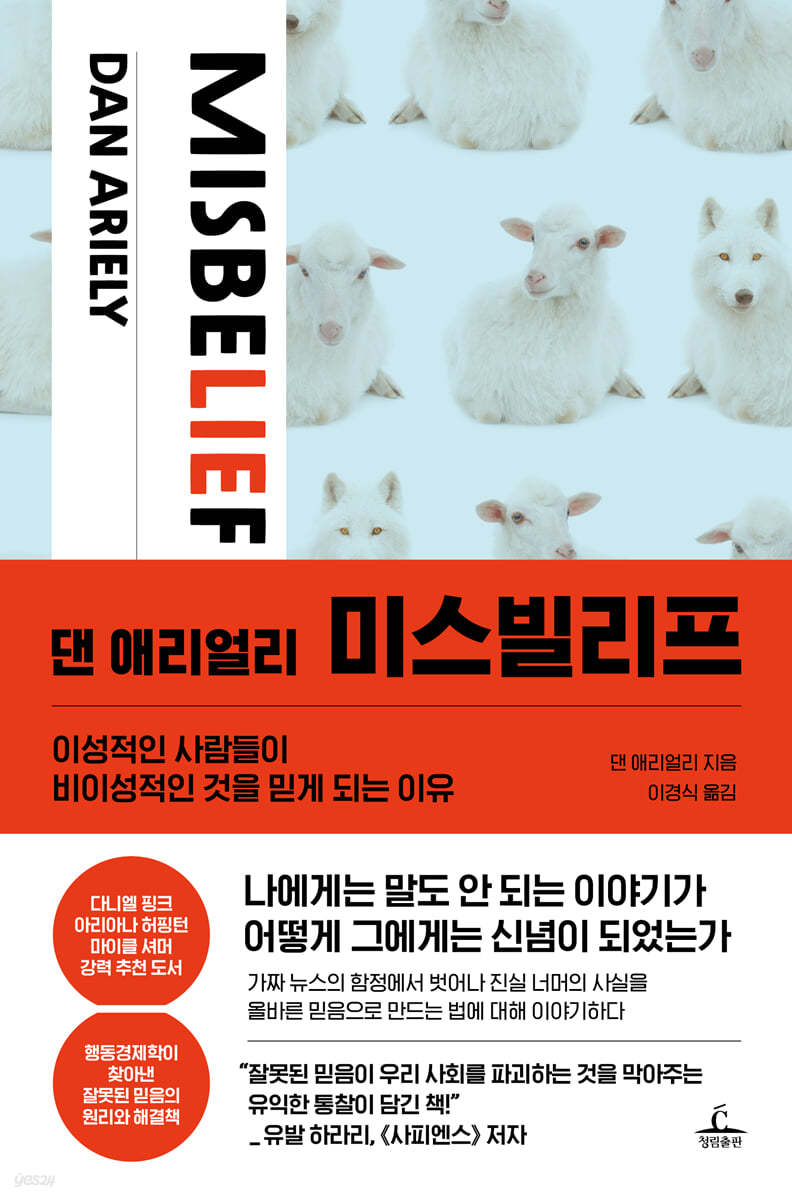 |
Description
Book Introduction
“We all have our own set of misconceptions.” Dan Ariely's Advice for Those Who Fail at the "I'm Right" Illusion ***** Yuval Harari, author of Sapiens, Daniel Pink, and Regret: The Secret to Regret Arianna Huffington, founder of The Huffington Post, strongly recommends Michael Shermer's book, "Why People Believe Weird Things." · COVID-19 was originally created as a biological weapon in a laboratory in China. · Governments around the world cover up evidence of extraterrestrial life. · The American moon landing was a fake staged by NASA in a movie studio. · Global warming was created for ideological and financial reasons. · The 9/11 terrorist attacks were not carried out by bin Laden, but by the U.S. government itself. Fake news like this is not a modern invention. From the rumor that the Roman Emperor Nero was not dead, to the rumor that Queen Elizabeth I of England was actually a man, to the absurd story that a robot Taekwon V is hidden in an underground bunker beneath the 63 Building… the world is overflowing with ridiculous stories. Why do people so readily believe fake news, transcending time and space, and act accordingly? In his new book, "Dan Ariely's Missbelief" (Cheonglim Publishing), world-renowned behavioral economist Dan Ariely details the reasons why people believe fake news and suggests ways to avoid falling prey to false beliefs. In today's world, where people are overflowing with the idea that only I am right and you are wrong, reading this book, which analyzes the psychology of false beliefs in a fascinating way by crossing cognitive psychology and behavioral economics, will give you the opportunity to see again that person right next to you who you once couldn't understand. |
- You can preview some of the book's contents.
Preview
index
Introduction: Becoming a Devil Without Realizing It
Part 01 How False Beliefs Are Created
Chapter 01 ‥ How can that person believe that?
Chapter 02 ‥ How the Funnel of False Beliefs Works
Part 02 People who go to extremes when they feel pain: Emotional factors and stress
Chapter 03 ‥ A Collapse Caused by Uncontrollable Stress
Chapter 04 ‥ A Means of Restoring Control: Setting Up the Villain
Part 03 The Algorithm of the Illusion of Already Knowing: Cognitive Factors and Dysfunctions of Information Processing Mechanisms
Chapter 05 ‥ A Quest to Seek the Truth You Want to Believe
Chapter 06 ‥ Trying to believe only what you already believe
Part 04 Characteristics of People Who Easily Fall into False Beliefs: Personality Factors and Individual Differences
Chapter 07 ‥ Commonalities of People Abducted by Aliens
Chapter 08 ‥ What Role Does Personality Play in the Funnel of False Beliefs?
Part 05 Why Our Tales Believe Them: Social Factors and Tribalism
Chapter 09 ‥ Bullying, Belonging, and False Beliefs
Chapter 10 ‥ The Social Accelerator of False Beliefs
Part 06 To break free from false beliefs and be together again
Chapter 11 ‥ The Room to Trust Each Other Again, the Room to Not Trust Each Other
Chapter 12 ‥ If we still find a reason to trust each other
Acknowledgements
References
Part 01 How False Beliefs Are Created
Chapter 01 ‥ How can that person believe that?
Chapter 02 ‥ How the Funnel of False Beliefs Works
Part 02 People who go to extremes when they feel pain: Emotional factors and stress
Chapter 03 ‥ A Collapse Caused by Uncontrollable Stress
Chapter 04 ‥ A Means of Restoring Control: Setting Up the Villain
Part 03 The Algorithm of the Illusion of Already Knowing: Cognitive Factors and Dysfunctions of Information Processing Mechanisms
Chapter 05 ‥ A Quest to Seek the Truth You Want to Believe
Chapter 06 ‥ Trying to believe only what you already believe
Part 04 Characteristics of People Who Easily Fall into False Beliefs: Personality Factors and Individual Differences
Chapter 07 ‥ Commonalities of People Abducted by Aliens
Chapter 08 ‥ What Role Does Personality Play in the Funnel of False Beliefs?
Part 05 Why Our Tales Believe Them: Social Factors and Tribalism
Chapter 09 ‥ Bullying, Belonging, and False Beliefs
Chapter 10 ‥ The Social Accelerator of False Beliefs
Part 06 To break free from false beliefs and be together again
Chapter 11 ‥ The Room to Trust Each Other Again, the Room to Not Trust Each Other
Chapter 12 ‥ If we still find a reason to trust each other
Acknowledgements
References
Detailed image

Into the book
We all have some degree of the characteristics of the Oshin.
Many of us don't believe everything pharmaceutical companies say, and we look outside the mainstream medical world for more beneficial health solutions and support.
I also question the way governments and public health authorities are approaching the COVID-19 pandemic and disagree with some of the decisions they are making.
Most of us recognize that media networks harbor biases and unspoken agendas, and that these aren't necessarily evil.
However, we generally approach information provided by governments, scientific institutions, and the media with the attitude that it is likely to be true.
That doesn't mean we don't check or verify that information.
Skepticism is healthy, and especially in an age of rampant misinformation, it's wise to ask questions, do your own research, or fact-check.
--- pp.50-51, from 「01_How can that person believe that?」
How could someone like Jenny—a capable and dedicated mother, a successful businesswoman, and a brilliant scientist—become a perpetrator of flawed beliefs? And why did she become so? Her story vividly illustrates several key elements in understanding the emotional conditions that initiate the process of developing flawed beliefs.
First, there is general stress.
This is precisely the case with the unprecedented level of stress that each of us has experienced to varying degrees during the COVID-19 pandemic.
Second, this stress creates a very difficult experience of being out of control and being controlled by forces that you do not fully understand.
Third, the desperate need to understand something acts as a turning point that pushes the person down a dangerous path.
Stress has a powerful influence on our lives.
However, it is important to note that stress does not play a decisive role in the development of false beliefs.
Simply experiencing stress does not mean you become a psychiatrist.
However, it is clear that stress is one of the most important emotional factors that, along with other factors, increases the likelihood that someone will become a victim.
--- pp.75-76, from 「03_Collapse Caused by Uncontrollable Stress」
Dangerous things can happen when there is a gap between what you actually know and what you think you know.
You could even lose your life.
One such example I've experienced in my life is confidence in my driving ability.
At one point in my life, I took a two-day driving course, and after completing it, I felt incredibly confident in my driving skills. Then, just two weeks later, I was involved in a car accident.
I am convinced that this accident was purely due to overconfidence.
When we make decisions based on our perceived knowledge or skill level rather than our actual knowledge or skill level, we inevitably create a dangerous gap—a gap that we can miss if we're not careful.
--- p.242, from “06_Trying to Only Believe What You Already Believe”
Many of the mechanisms that pull us down the funnel of false beliefs are common human traits.
However, not everyone is equally vulnerable.
It's natural that people are all different.
Individual differences—our individuality and personality—play a role in determining how vulnerable we are to all the biases we've explored here.
This means that a person's vulnerability is determined by his or her personality.
Differences between individuals and specific personality traits (such as patterning, the degree to which one trusts one's intuition, biases related to decision-making, and narcissism) determine these differences.
Many of us don't believe everything pharmaceutical companies say, and we look outside the mainstream medical world for more beneficial health solutions and support.
I also question the way governments and public health authorities are approaching the COVID-19 pandemic and disagree with some of the decisions they are making.
Most of us recognize that media networks harbor biases and unspoken agendas, and that these aren't necessarily evil.
However, we generally approach information provided by governments, scientific institutions, and the media with the attitude that it is likely to be true.
That doesn't mean we don't check or verify that information.
Skepticism is healthy, and especially in an age of rampant misinformation, it's wise to ask questions, do your own research, or fact-check.
--- pp.50-51, from 「01_How can that person believe that?」
How could someone like Jenny—a capable and dedicated mother, a successful businesswoman, and a brilliant scientist—become a perpetrator of flawed beliefs? And why did she become so? Her story vividly illustrates several key elements in understanding the emotional conditions that initiate the process of developing flawed beliefs.
First, there is general stress.
This is precisely the case with the unprecedented level of stress that each of us has experienced to varying degrees during the COVID-19 pandemic.
Second, this stress creates a very difficult experience of being out of control and being controlled by forces that you do not fully understand.
Third, the desperate need to understand something acts as a turning point that pushes the person down a dangerous path.
Stress has a powerful influence on our lives.
However, it is important to note that stress does not play a decisive role in the development of false beliefs.
Simply experiencing stress does not mean you become a psychiatrist.
However, it is clear that stress is one of the most important emotional factors that, along with other factors, increases the likelihood that someone will become a victim.
--- pp.75-76, from 「03_Collapse Caused by Uncontrollable Stress」
Dangerous things can happen when there is a gap between what you actually know and what you think you know.
You could even lose your life.
One such example I've experienced in my life is confidence in my driving ability.
At one point in my life, I took a two-day driving course, and after completing it, I felt incredibly confident in my driving skills. Then, just two weeks later, I was involved in a car accident.
I am convinced that this accident was purely due to overconfidence.
When we make decisions based on our perceived knowledge or skill level rather than our actual knowledge or skill level, we inevitably create a dangerous gap—a gap that we can miss if we're not careful.
--- p.242, from “06_Trying to Only Believe What You Already Believe”
Many of the mechanisms that pull us down the funnel of false beliefs are common human traits.
However, not everyone is equally vulnerable.
It's natural that people are all different.
Individual differences—our individuality and personality—play a role in determining how vulnerable we are to all the biases we've explored here.
This means that a person's vulnerability is determined by his or her personality.
Differences between individuals and specific personality traits (such as patterning, the degree to which one trusts one's intuition, biases related to decision-making, and narcissism) determine these differences.
--- p.325, from “08_What role does personality play in the funnel of false beliefs”
Publisher's Review
“Why does that person believe that ridiculous story?”
: Finding out why rational people believe irrational things
Dan Ariely one day becomes entangled in a conspiracy theory that COVID-19 was engineered to reduce the population.
He became a key figure in coronavirus pandemic conspiracy theories after a video he maliciously edited and spoofed spread across social media.
The problem is that many people believe this video to be true.
In an instant, Professor Ariel became the devil's vanguard.
Why on earth would seemingly rational, normal people believe such nonsense when they have turned behavioral economist and bestselling author Dan Ariely into the world's greatest villain?
We are all at risk of being swept away by false beliefs.
Dan Ariely, who has been analyzing the causes of fake news and false beliefs while being a victim of conspiracy theories during the coronavirus pandemic, says the crisis of belief we face today cannot be solved through a social-structural perspective.
While many countries are enacting regulations to control the spread of fake news, and social media platforms are struggling to develop technologies to filter out fake news, these measures are merely a drop in the bucket.
Just as swinging a bat at a mole doesn't end the game, if we don't consider how our human beliefs are formed, the problems of faith will rear their heads again.
Up until now, we have overcome many obstacles that have come before us in various ways.
When a new technology is invented, it may initially have side effects, but eventually, civilization has developed by solving the problems and devising better methods.
However, the spread of fake news and the resulting misconceptions have not disappeared over time; rather, they are worsening.
Why is this happening?
“How did we come to have these wrong beliefs?”
: Everything about 'false beliefs' analyzed through various cases and behavioral economics theory.
To understand the irrational allure of misinformation, including conspiracy theories, we must first understand the process by which “false beliefs” are created.
We need to understand the psychological and social journey that leads people who believe fake news to distrust established truths, to entertain alternative facts or stories, and to embrace full-blown conspiracy theories.
Disinformation appeals to something innate in people, regardless of whether they are politically left or right.
Professor Ariely, author of this book and a researcher who has studied the underlying principles of false beliefs, says that there is no other way to reduce the effect of fake news on people than to understand the psychology that works inside the human mind.
The false beliefs discussed in this book do not mean accepting false information about specific facts.
It is a perspective and psychological way of thinking that acts as a distorted lens through which we view the world, infer about the world, and explain the world to others.
The authors also argue that false beliefs are not a single state but a series of processes.
Ariely illuminates the psychological makeup of those who hold false beliefs through a variety of methods, including direct interviews with conspiracy theorists who have cast themselves as the axis of evil, anthropological experiments, and research in the behavioral science literature.
It introduces the process and reasons why we fall into wrong beliefs based on psychological, cognitive, personality, and social factors in a very easy and fun way.
Furthermore, it suggests ways to overcome this and helps us get out of the funnel of false beliefs.
Four Elements of False Belief
· Psychological factors: Emotions are the main drivers of behavior.
A strong emotional response comes first, and then a cognitive explanation is offered.
In the mistaken belief, emotional factors focus on stress and the need to manage this stress.
When stress is high, people tend to go to extremes and are easily swayed by misinformation and develop false beliefs.
· Cognitive factors: We have tremendous reasoning abilities, but that doesn't mean we're always rational.
Confirmation bias kicks in when we are motivated to move in one direction.
This makes the story more complex, as we create narratives to reach the conclusions we want to reach.
Conspiracy theories are complexly designed to exploit these cognitive biases.
· Personality factors: Not everyone is equally prone to false beliefs.
Some people are easily sucked into that funnel, while others are not, and this is where individual personality differences play a key role.
Some personalities are more susceptible to false beliefs than others.
People with certain personality traits are more likely to accept false narratives about the world.
· Social factors: Powerful social forces can change people's minds, lead them down certain paths, keep them around others who share the same false beliefs, and even push them to extremes in their false beliefs.
At this time, a sense of community and belonging is a powerful force.
In the funnel of false beliefs, social factors are the building blocks that make it very difficult to "blow it all away" and escape.
These four elements are not clearly distinct from each other, but are intertwined and prevent us from breaking free from false beliefs.
Why must we escape this inextricable swamp of false beliefs? Is it really such a bad thing to have your own beliefs and live by them?
“In a polarized society, can we truly restore trust?”
How to Break Free from 'False Beliefs' for a Better Life
What if you held these beliefs? What if you believed COVID-19 was actually a virus created by global pharmaceutical companies to sell vaccines? And what if you believed the government, which should regulate it, was mandating the vaccine? Wouldn't you believe this government and pharmaceutical companies are in cahoots? And you would believe this government is ready to commit other evil acts against vulnerable citizens.
What would happen if this happened?
Conspiracy theories arising from various social issues, such as the climate crisis and COVID-19, are spreading like wildfire, thanks to the internet, social media, and advanced AI technologies.
This kind of information, aided by algorithms, reinforces people's biases, and those who believe that only their own beliefs are correct are becoming more and more polarized.
Even beliefs that can serve as a solid guidepost for an individual can easily destroy the community if the number of people who believe that only they are right increases.
If we fall into the delusion that our own beliefs are the only correct ones, we will lose trust in one another, we will find ourselves in opposing camps, and ultimately, society will become divided.
Are we now left with only a hell of distrust and conflict?
Professor Ariely is not simply pessimistic about the society we live in.
With his characteristically optimistic attitude, he has studied human psychology and behavior, and he argues that even if technology advances and all kinds of plausible fake news surround us, if we correctly recognize the four elements of false beliefs, people will not fall for the temptation of false beliefs, either individually or as a society.
He further argues that combating false beliefs requires strategies rooted in empathy, not conflict.
His argument is that the sooner we recognize that distrust is a human problem, the sooner we can become part of the solution to it.
This book, which could be called a "report on false beliefs," offers concrete and practical ways to prevent false beliefs from destroying society and, furthermore, to bring us together again in a world where technology, politics, and economics drive and accelerate the spread of conspiracy theories and the scourge of misinformation.
Let's keep in mind the author's words, "We all already have the mistaken belief that only we are right," and dive into the most delightful stories about creating a society based on mutual understanding and empathy.
In this practical book, which the author has personally experienced and researched, you will find ways to solve the problems we face today.
: Finding out why rational people believe irrational things
Dan Ariely one day becomes entangled in a conspiracy theory that COVID-19 was engineered to reduce the population.
He became a key figure in coronavirus pandemic conspiracy theories after a video he maliciously edited and spoofed spread across social media.
The problem is that many people believe this video to be true.
In an instant, Professor Ariel became the devil's vanguard.
Why on earth would seemingly rational, normal people believe such nonsense when they have turned behavioral economist and bestselling author Dan Ariely into the world's greatest villain?
We are all at risk of being swept away by false beliefs.
Dan Ariely, who has been analyzing the causes of fake news and false beliefs while being a victim of conspiracy theories during the coronavirus pandemic, says the crisis of belief we face today cannot be solved through a social-structural perspective.
While many countries are enacting regulations to control the spread of fake news, and social media platforms are struggling to develop technologies to filter out fake news, these measures are merely a drop in the bucket.
Just as swinging a bat at a mole doesn't end the game, if we don't consider how our human beliefs are formed, the problems of faith will rear their heads again.
Up until now, we have overcome many obstacles that have come before us in various ways.
When a new technology is invented, it may initially have side effects, but eventually, civilization has developed by solving the problems and devising better methods.
However, the spread of fake news and the resulting misconceptions have not disappeared over time; rather, they are worsening.
Why is this happening?
“How did we come to have these wrong beliefs?”
: Everything about 'false beliefs' analyzed through various cases and behavioral economics theory.
To understand the irrational allure of misinformation, including conspiracy theories, we must first understand the process by which “false beliefs” are created.
We need to understand the psychological and social journey that leads people who believe fake news to distrust established truths, to entertain alternative facts or stories, and to embrace full-blown conspiracy theories.
Disinformation appeals to something innate in people, regardless of whether they are politically left or right.
Professor Ariely, author of this book and a researcher who has studied the underlying principles of false beliefs, says that there is no other way to reduce the effect of fake news on people than to understand the psychology that works inside the human mind.
The false beliefs discussed in this book do not mean accepting false information about specific facts.
It is a perspective and psychological way of thinking that acts as a distorted lens through which we view the world, infer about the world, and explain the world to others.
The authors also argue that false beliefs are not a single state but a series of processes.
Ariely illuminates the psychological makeup of those who hold false beliefs through a variety of methods, including direct interviews with conspiracy theorists who have cast themselves as the axis of evil, anthropological experiments, and research in the behavioral science literature.
It introduces the process and reasons why we fall into wrong beliefs based on psychological, cognitive, personality, and social factors in a very easy and fun way.
Furthermore, it suggests ways to overcome this and helps us get out of the funnel of false beliefs.
Four Elements of False Belief
· Psychological factors: Emotions are the main drivers of behavior.
A strong emotional response comes first, and then a cognitive explanation is offered.
In the mistaken belief, emotional factors focus on stress and the need to manage this stress.
When stress is high, people tend to go to extremes and are easily swayed by misinformation and develop false beliefs.
· Cognitive factors: We have tremendous reasoning abilities, but that doesn't mean we're always rational.
Confirmation bias kicks in when we are motivated to move in one direction.
This makes the story more complex, as we create narratives to reach the conclusions we want to reach.
Conspiracy theories are complexly designed to exploit these cognitive biases.
· Personality factors: Not everyone is equally prone to false beliefs.
Some people are easily sucked into that funnel, while others are not, and this is where individual personality differences play a key role.
Some personalities are more susceptible to false beliefs than others.
People with certain personality traits are more likely to accept false narratives about the world.
· Social factors: Powerful social forces can change people's minds, lead them down certain paths, keep them around others who share the same false beliefs, and even push them to extremes in their false beliefs.
At this time, a sense of community and belonging is a powerful force.
In the funnel of false beliefs, social factors are the building blocks that make it very difficult to "blow it all away" and escape.
These four elements are not clearly distinct from each other, but are intertwined and prevent us from breaking free from false beliefs.
Why must we escape this inextricable swamp of false beliefs? Is it really such a bad thing to have your own beliefs and live by them?
“In a polarized society, can we truly restore trust?”
How to Break Free from 'False Beliefs' for a Better Life
What if you held these beliefs? What if you believed COVID-19 was actually a virus created by global pharmaceutical companies to sell vaccines? And what if you believed the government, which should regulate it, was mandating the vaccine? Wouldn't you believe this government and pharmaceutical companies are in cahoots? And you would believe this government is ready to commit other evil acts against vulnerable citizens.
What would happen if this happened?
Conspiracy theories arising from various social issues, such as the climate crisis and COVID-19, are spreading like wildfire, thanks to the internet, social media, and advanced AI technologies.
This kind of information, aided by algorithms, reinforces people's biases, and those who believe that only their own beliefs are correct are becoming more and more polarized.
Even beliefs that can serve as a solid guidepost for an individual can easily destroy the community if the number of people who believe that only they are right increases.
If we fall into the delusion that our own beliefs are the only correct ones, we will lose trust in one another, we will find ourselves in opposing camps, and ultimately, society will become divided.
Are we now left with only a hell of distrust and conflict?
Professor Ariely is not simply pessimistic about the society we live in.
With his characteristically optimistic attitude, he has studied human psychology and behavior, and he argues that even if technology advances and all kinds of plausible fake news surround us, if we correctly recognize the four elements of false beliefs, people will not fall for the temptation of false beliefs, either individually or as a society.
He further argues that combating false beliefs requires strategies rooted in empathy, not conflict.
His argument is that the sooner we recognize that distrust is a human problem, the sooner we can become part of the solution to it.
This book, which could be called a "report on false beliefs," offers concrete and practical ways to prevent false beliefs from destroying society and, furthermore, to bring us together again in a world where technology, politics, and economics drive and accelerate the spread of conspiracy theories and the scourge of misinformation.
Let's keep in mind the author's words, "We all already have the mistaken belief that only we are right," and dive into the most delightful stories about creating a society based on mutual understanding and empathy.
In this practical book, which the author has personally experienced and researched, you will find ways to solve the problems we face today.
GOODS SPECIFICS
- Date of issue: October 31, 2024
- Page count, weight, size: 436 pages | 790g | 148*224*28mm
- ISBN13: 9788935214624
- ISBN10: 8935214620
You may also like
카테고리
korean


korean

![GQ KOREA Mark (Monthly): December [2025]](http://librairie.coreenne.fr/cdn/shop/files/8ef265dbbfbf186523ed75ba7319009d.jpg?v=1765340328&width=3840)


