

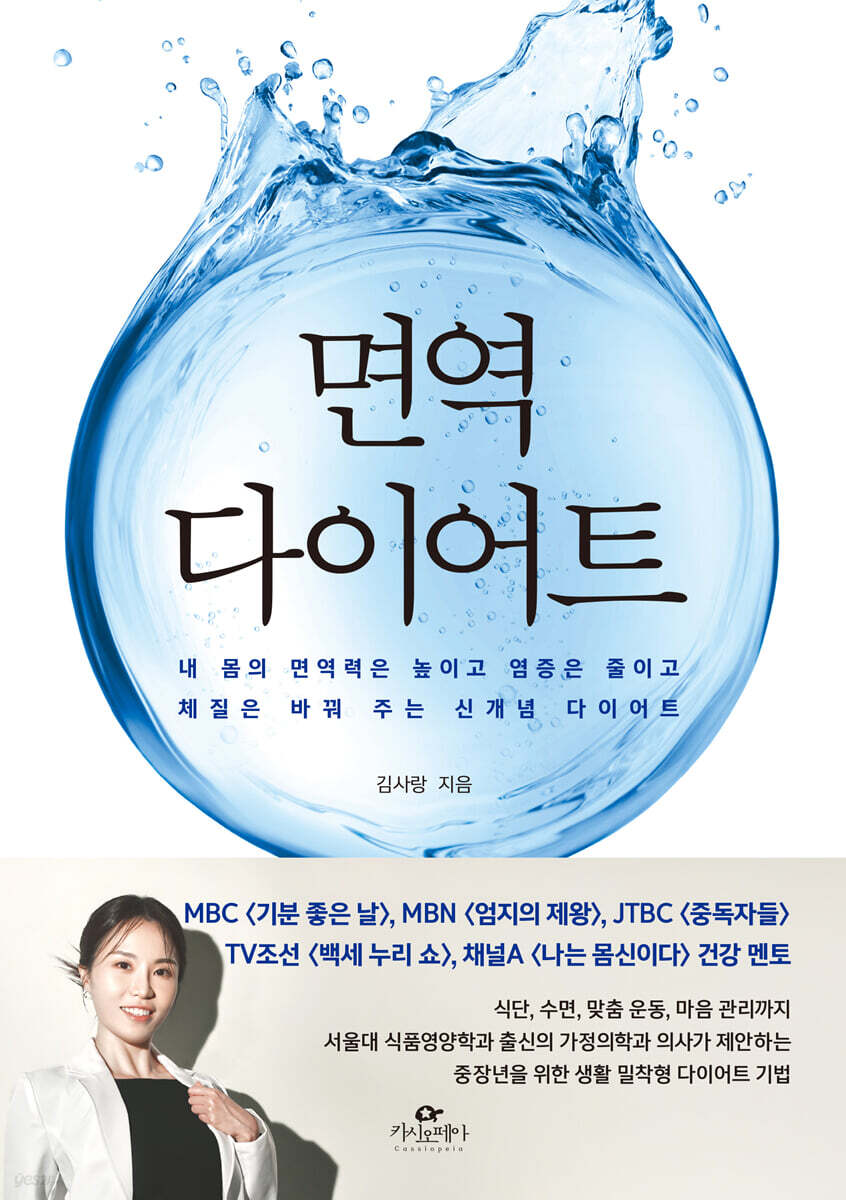
Immune Diet
 |
Description
Book Introduction
"High blood pressure, fatty liver disease, diabetes, cancer, osteoporosis, obesity, panic disorder… For middle-aged and older adults, dieting is a matter of survival."
Appearance on MBC's "Good Day," MBN's "The King of Thumbs," TV Chosun's "Baekse Nuri Show," and Channel A's "I Am a Body God"
A new, lifestyle-focused diet technique for middle-aged and older adults, proposed by Dr. Kim Sa-rang, Korea's leading health mentor.
Director Kim Sa-rang, considered one of Korea's leading health mentors, has published "Immune Diet" for middle-aged and older Koreans.
Director Kim Sa-rang received training at the Department of Family Medicine at Seoul National University Hospital, worked as a specialist in family medicine at a hospital specializing in cancer patients, and has been providing health knowledge and know-how that can become a part of one’s life to middle-aged and older people through numerous TV programs, including MBC’s “Good Day,” MBN’s “The King of Thumbs,” TV Chosun’s “Baekse Nuri Show,” Channel A’s “I Am a Body God,” and JTBC’s “Addicts.”
The author emphasizes that dieting is a matter of survival for middle-aged and older people suffering from high blood pressure, fatty liver, diabetes, cancer, osteoporosis, obesity, and panic disorder, and suggests an immune diet that increases the body's immunity, reduces inflammation, and changes the body's constitution.
For those who want to try a completely new diet method that is different from what they have tried before after experiencing repeated yo-yo dieting and diet pill addiction, we introduce diet techniques that are closely related to daily life, including diet, sleep, customized exercise, and mental management, in a friendly and detailed manner.
Appearance on MBC's "Good Day," MBN's "The King of Thumbs," TV Chosun's "Baekse Nuri Show," and Channel A's "I Am a Body God"
A new, lifestyle-focused diet technique for middle-aged and older adults, proposed by Dr. Kim Sa-rang, Korea's leading health mentor.
Director Kim Sa-rang, considered one of Korea's leading health mentors, has published "Immune Diet" for middle-aged and older Koreans.
Director Kim Sa-rang received training at the Department of Family Medicine at Seoul National University Hospital, worked as a specialist in family medicine at a hospital specializing in cancer patients, and has been providing health knowledge and know-how that can become a part of one’s life to middle-aged and older people through numerous TV programs, including MBC’s “Good Day,” MBN’s “The King of Thumbs,” TV Chosun’s “Baekse Nuri Show,” Channel A’s “I Am a Body God,” and JTBC’s “Addicts.”
The author emphasizes that dieting is a matter of survival for middle-aged and older people suffering from high blood pressure, fatty liver, diabetes, cancer, osteoporosis, obesity, and panic disorder, and suggests an immune diet that increases the body's immunity, reduces inflammation, and changes the body's constitution.
For those who want to try a completely new diet method that is different from what they have tried before after experiencing repeated yo-yo dieting and diet pill addiction, we introduce diet techniques that are closely related to daily life, including diet, sleep, customized exercise, and mental management, in a friendly and detailed manner.
- You can preview some of the book's contents.
Preview
index
Prologue - Why My Husband and I, Both Doctors, Started the "Immunity Diet"
[Chapter 1] - The 'Immune Diet' that Saves My Body
▶ Diet drug addiction and the dangers of poor dieting
▶ The close correlation between immunity, health, and diet
[Chapter 2] - These people need an 'immune diet'.
▶ People addicted to diet pills and repeated yo-yo dieting
▶ Patients with chronic diseases such as high blood pressure, hyperlipidemia, and hyperglycemia
▶ People with fatty liver and visceral fat
▶ Lean obesity, lean diabetes, lean hyperlipidemia, lean vascular disease
▶ Cancer patients, cancer survivors, family history of cancer
▶ Autonomic nervous system imbalance, panic disorder, insomnia
▶ People with sarcopenia, osteoporosis, and those who need to protect their muscles
▶ Patients with autoimmune diseases and those using steroids
[Chapter 3] - The 'Immunity Diet' that boosts your immune system and changes your constitution.
▶ 'Immunity Diet' to boost your body's immunity
▶ The 'Immune Diet' that Prevents Inflammation in Your Body
▶ The 'Immune Diet' that Prevents Cancer and Dementia
▶ The 'Immune Diet' that Balances Your Autonomic Nervous System
▶ The 'Immune Diet' that Changes Your Body's Constitution
Chapter 4 - Start the 'Immunity Diet' Right Now
▶ A diet that does not use drugs that harm the immune system
▶ Diet that boosts immunity
▶ Mental care that boosts immunity
▶ Customized exercise to boost immunity
▶ Type-specific immune diet approach
▶ Start with this
[Chapter 1] - The 'Immune Diet' that Saves My Body
▶ Diet drug addiction and the dangers of poor dieting
▶ The close correlation between immunity, health, and diet
[Chapter 2] - These people need an 'immune diet'.
▶ People addicted to diet pills and repeated yo-yo dieting
▶ Patients with chronic diseases such as high blood pressure, hyperlipidemia, and hyperglycemia
▶ People with fatty liver and visceral fat
▶ Lean obesity, lean diabetes, lean hyperlipidemia, lean vascular disease
▶ Cancer patients, cancer survivors, family history of cancer
▶ Autonomic nervous system imbalance, panic disorder, insomnia
▶ People with sarcopenia, osteoporosis, and those who need to protect their muscles
▶ Patients with autoimmune diseases and those using steroids
[Chapter 3] - The 'Immunity Diet' that boosts your immune system and changes your constitution.
▶ 'Immunity Diet' to boost your body's immunity
▶ The 'Immune Diet' that Prevents Inflammation in Your Body
▶ The 'Immune Diet' that Prevents Cancer and Dementia
▶ The 'Immune Diet' that Balances Your Autonomic Nervous System
▶ The 'Immune Diet' that Changes Your Body's Constitution
Chapter 4 - Start the 'Immunity Diet' Right Now
▶ A diet that does not use drugs that harm the immune system
▶ Diet that boosts immunity
▶ Mental care that boosts immunity
▶ Customized exercise to boost immunity
▶ Type-specific immune diet approach
▶ Start with this
Detailed image

Into the book
I had a difficult time during my internship, struggling with mental health issues such as panic attacks, anxiety disorder, depression, and insomnia, along with physical symptoms such as unexplained skin disease, bloody stools, and body aches. I found myself questioning whether I could continue working as a doctor, or rather, whether I could continue living.
It wasn't easy to get better with medication alone, and I went through some trial and error, but I was able to recover my physical and mental health through diet, mental management, exercise, and overall lifestyle improvements.
Looking back now, that was the beginning of the immune diet.
--- From pp.8-9 "Prologue"
As my health improved, a red flag went up for my husband's health.
I guess 'red flag' is not the right word because it is not at the level of a warning danger signal.
The five-year survival rate was only about 20-25 percent, so it was a serious condition, so it would be more accurate to say that a 'nuclear bomb' had gone off on his health.
My husband was diagnosed with 'non-compensated cirrhosis with massive ascites', commonly known as 'cirrhosis'.
A 5-year survival rate of 20 to 25 percent means that only 1 in 4 to 5 patients will be alive after 5 years.
My husband, a healthy 30-year-old emergency medicine doctor, became a terminally ill patient five years later.
(…) From then on, I started an immune diet to save my husband.
For over three years, including my residency when I barely had time to sleep, I packed lunches and devoted myself to comprehensive management and treatment to boost my immunity.
For people with chronic liver disease like my husband, managing their immune system is of utmost importance.
--- pp.9-11 From "Prologue"
Dieting isn't just for fat people.
If you look up the dictionary definition of 'diet', it has the broad meaning of 'meal, eating habits' as a noun.
Even when using the verb 'diet', the purpose of 'to lose weight' cannot be found.
Dieting isn't just about limiting the types and amounts of food you eat to lose weight.
If you manage your diet to gain weight, that too is a 'diet'.
All actions that involve managing one's diet and eating habits for health are included in the concept of 'diet'.
--- From "Prologue" pp.11-12
The immune diet is a process of finding the 'best body' to live a healthy life without getting scary diseases like cancer or dementia.
In order to express it in a short word, I had no choice but to use the term 'best body', but 'best body' is not limited to just 'body'.
The 'best body' is a state in which the overall condition of the body and mind, including immunity, disease and pain status, mental health and mood, fatigue and vitality, are at their optimal level.
--- From "Prologue" pp.13-14
Appetite suppressants make you lose weight because they make you lose your appetite and you don't eat.
However, if you stop taking the medication, your appetite will return and you will inevitably experience yo-yo weight gain.
Therefore, many people who are taking appetite suppressants are afraid of gaining weight again after stopping the medication and cannot stop taking them.
Additionally, there are too many people who are already addicted to drugs and cannot stop taking them, complaining of extreme fatigue, depression, and withdrawal symptoms without the drugs.
--- p.22 From “Diet Drug Addiction, the Dangers of Improper Dieting”
An unhealthy diet can cause inflammation and free radicals, weaken the immune system, and lead to serious diseases such as cancer and dementia.
While it may be tempting to lose weight quickly and easily, you should be aware that doing so can be detrimental to your health.
Dieting isn't just about being slim, looking good, or being seen.
(…) In conclusion, when dieting, it is important to keep your immunity from dropping, and for those who are obese or have abdominal obesity, have various underlying diseases, or are middle-aged or older, dieting to boost immunity is essential.
This is why we need an 'immunity diet' that lowers inflammation and boosts immunity, instead of a bad diet that lowers immunity and causes inflammation and cancer in our bodies.
--- pp.27-28 From “The Close Relationship Between Immunity, Health, and Diet”
When we are young, most people diet to look good.
To be pretty, to wear the clothes you want to wear.
However, as we age, the purpose of dieting often becomes 'health'.
Especially, if you are diagnosed with a metabolic disease such as high blood pressure, diabetes, or hyperlipidemia, dieting is necessary for the purpose of 'treatment'.
--- p.38 From “Patients with chronic diseases such as hypertension, hyperlipidemia, and hyperglycemia”
Belly fat is bad for your health, but what's especially problematic isn't the subcutaneous fat underneath the skin, but the visceral fat that resides much deeper.
Visceral fat is located between organs and secretes inflammatory substances that can impair organ function.
Liposuction surgery only removes subcutaneous fat and does not remove visceral fat.
In cases like fatty liver, fat cells are stuck between liver cells, so it cannot be resolved with methods like liposuction.
Ultimately, if you have a lot of visceral fat or fatty liver disease, you should focus on a healthy diet that reduces inflammation and liver cell damage.
As expected, these are people who need an immune diet.
--- pp.46-47 From “People with fatty liver and visceral fat”
Even if you weigh less for your height, you may actually have less muscle mass, so you may still have a high body fat percentage. Even skinny fat people need a diet that finds the right ratio of body fat and muscle.
And unlike the majority of hypertriglyceridemia patients who are obese and have high triglycerides due to their preference for a fatty Western diet, hyperlipidemia patients who are thin but have high LDL cholesterol are very common among middle-aged women in our country.
These people also need an immune diet.
The same goes for patients with dry vascular disease, which is a condition that goes beyond hyperlipidemia and has already developed atherosclerosis, a change in blood vessels that can lead to stroke or myocardial infarction.
Although you may think that you don't need to diet because you look thin, patients with arteriosclerosis, whose blood vessels are already narrow and elastic, making them prone to blockage or bursting, need an immune diet that reduces inflammation and boosts immunity.
--- pp.49-50 From “Dry obesity, dry diabetes, dry hyperlipidemia, dry vascular disease”
As the name suggests, the 'Immunity Diet' is, in a word, a 'diet that boosts immunity.'
An 'immune diet' is a diet that compensates for the decline in immunity caused by various reasons such as nutritional deficiency or deficiency while losing weight, use of harmful drugs and side effects, and increases the body's existing immune ability beyond the level of maintaining the previous immune ability.
To boost your immunity, you need to manage your overall lifestyle habits.
This is because all lifestyle habits, including diet, sleep, exercise, inflammation management, and stress management, affect immunity.
It wasn't easy to get better with medication alone, and I went through some trial and error, but I was able to recover my physical and mental health through diet, mental management, exercise, and overall lifestyle improvements.
Looking back now, that was the beginning of the immune diet.
--- From pp.8-9 "Prologue"
As my health improved, a red flag went up for my husband's health.
I guess 'red flag' is not the right word because it is not at the level of a warning danger signal.
The five-year survival rate was only about 20-25 percent, so it was a serious condition, so it would be more accurate to say that a 'nuclear bomb' had gone off on his health.
My husband was diagnosed with 'non-compensated cirrhosis with massive ascites', commonly known as 'cirrhosis'.
A 5-year survival rate of 20 to 25 percent means that only 1 in 4 to 5 patients will be alive after 5 years.
My husband, a healthy 30-year-old emergency medicine doctor, became a terminally ill patient five years later.
(…) From then on, I started an immune diet to save my husband.
For over three years, including my residency when I barely had time to sleep, I packed lunches and devoted myself to comprehensive management and treatment to boost my immunity.
For people with chronic liver disease like my husband, managing their immune system is of utmost importance.
--- pp.9-11 From "Prologue"
Dieting isn't just for fat people.
If you look up the dictionary definition of 'diet', it has the broad meaning of 'meal, eating habits' as a noun.
Even when using the verb 'diet', the purpose of 'to lose weight' cannot be found.
Dieting isn't just about limiting the types and amounts of food you eat to lose weight.
If you manage your diet to gain weight, that too is a 'diet'.
All actions that involve managing one's diet and eating habits for health are included in the concept of 'diet'.
--- From "Prologue" pp.11-12
The immune diet is a process of finding the 'best body' to live a healthy life without getting scary diseases like cancer or dementia.
In order to express it in a short word, I had no choice but to use the term 'best body', but 'best body' is not limited to just 'body'.
The 'best body' is a state in which the overall condition of the body and mind, including immunity, disease and pain status, mental health and mood, fatigue and vitality, are at their optimal level.
--- From "Prologue" pp.13-14
Appetite suppressants make you lose weight because they make you lose your appetite and you don't eat.
However, if you stop taking the medication, your appetite will return and you will inevitably experience yo-yo weight gain.
Therefore, many people who are taking appetite suppressants are afraid of gaining weight again after stopping the medication and cannot stop taking them.
Additionally, there are too many people who are already addicted to drugs and cannot stop taking them, complaining of extreme fatigue, depression, and withdrawal symptoms without the drugs.
--- p.22 From “Diet Drug Addiction, the Dangers of Improper Dieting”
An unhealthy diet can cause inflammation and free radicals, weaken the immune system, and lead to serious diseases such as cancer and dementia.
While it may be tempting to lose weight quickly and easily, you should be aware that doing so can be detrimental to your health.
Dieting isn't just about being slim, looking good, or being seen.
(…) In conclusion, when dieting, it is important to keep your immunity from dropping, and for those who are obese or have abdominal obesity, have various underlying diseases, or are middle-aged or older, dieting to boost immunity is essential.
This is why we need an 'immunity diet' that lowers inflammation and boosts immunity, instead of a bad diet that lowers immunity and causes inflammation and cancer in our bodies.
--- pp.27-28 From “The Close Relationship Between Immunity, Health, and Diet”
When we are young, most people diet to look good.
To be pretty, to wear the clothes you want to wear.
However, as we age, the purpose of dieting often becomes 'health'.
Especially, if you are diagnosed with a metabolic disease such as high blood pressure, diabetes, or hyperlipidemia, dieting is necessary for the purpose of 'treatment'.
--- p.38 From “Patients with chronic diseases such as hypertension, hyperlipidemia, and hyperglycemia”
Belly fat is bad for your health, but what's especially problematic isn't the subcutaneous fat underneath the skin, but the visceral fat that resides much deeper.
Visceral fat is located between organs and secretes inflammatory substances that can impair organ function.
Liposuction surgery only removes subcutaneous fat and does not remove visceral fat.
In cases like fatty liver, fat cells are stuck between liver cells, so it cannot be resolved with methods like liposuction.
Ultimately, if you have a lot of visceral fat or fatty liver disease, you should focus on a healthy diet that reduces inflammation and liver cell damage.
As expected, these are people who need an immune diet.
--- pp.46-47 From “People with fatty liver and visceral fat”
Even if you weigh less for your height, you may actually have less muscle mass, so you may still have a high body fat percentage. Even skinny fat people need a diet that finds the right ratio of body fat and muscle.
And unlike the majority of hypertriglyceridemia patients who are obese and have high triglycerides due to their preference for a fatty Western diet, hyperlipidemia patients who are thin but have high LDL cholesterol are very common among middle-aged women in our country.
These people also need an immune diet.
The same goes for patients with dry vascular disease, which is a condition that goes beyond hyperlipidemia and has already developed atherosclerosis, a change in blood vessels that can lead to stroke or myocardial infarction.
Although you may think that you don't need to diet because you look thin, patients with arteriosclerosis, whose blood vessels are already narrow and elastic, making them prone to blockage or bursting, need an immune diet that reduces inflammation and boosts immunity.
--- pp.49-50 From “Dry obesity, dry diabetes, dry hyperlipidemia, dry vascular disease”
As the name suggests, the 'Immunity Diet' is, in a word, a 'diet that boosts immunity.'
An 'immune diet' is a diet that compensates for the decline in immunity caused by various reasons such as nutritional deficiency or deficiency while losing weight, use of harmful drugs and side effects, and increases the body's existing immune ability beyond the level of maintaining the previous immune ability.
To boost your immunity, you need to manage your overall lifestyle habits.
This is because all lifestyle habits, including diet, sleep, exercise, inflammation management, and stress management, affect immunity.
--- pp.74-75 From "Immune Diet to Boost Your Body's Immunity"
Publisher's Review
Panic attacks and anxiety disorders that began during my internship, and my husband's liver cirrhosis... that was the beginning of the immune diet.
Director Kim Sa-rang is a nutritionist who graduated from the Department of Food and Nutrition at Seoul National University and a specialist who graduated from the Department of Family Medicine at Seoul National University Hospital.
He has experience in providing immunotherapy, anti-inflammatory and antioxidant treatments to cancer patients and currently runs an immune diet hospital.
He became interested in the immune diet when he began experiencing panic attacks, anxiety disorder, body aches, and bloody stools during his internship, which made him question whether he could continue living.
At this time, it was possible to restore the health of body and mind through diet, mental management, exercise, and overall improvement of life, and this became the beginning of the immune diet.
And then, when her husband, a healthy 30-year-old emergency medicine doctor, developed cirrhosis, she began a full-fledged immune diet to save him.
For patients with chronic liver disease, managing immunity is of utmost importance, so we focused on comprehensive management and treatment to boost immunity. Eventually, my husband regained his health and is now a fit bodybuilder with six-pack abs 24 hours a day, 365 days a year, living a more energetic life than anyone else.
High blood pressure, fatty liver disease, diabetes, cancer, osteoporosis, obesity, panic disorder… You need an "Immune Diet."
When we are young, most of us diet to look pretty and cool.
But as we age, health often becomes the goal of our diet.
Especially in middle age, when diagnosed with metabolic diseases such as high blood pressure, diabetes, or hyperlipidemia, people begin dieting for treatment purposes.
As you know, dieting isn't just for fat people.
The dictionary definition of diet also means eating and eating habits.
Dieting isn't just about limiting the types and amounts of food you eat to lose weight.
If you manage your diet to increase muscle mass and maintain a healthy weight, that too is a diet.
Any action taken to manage one's diet and eating habits for health is considered a diet.
Director Kim Sa-rang emphasizes that dieting is a matter of survival for middle-aged and older people suffering from high blood pressure, fatty liver, diabetes, cancer, osteoporosis, obesity, and panic disorder, and suggests an immune diet that increases the body's immunity, reduces inflammation, and changes the body's constitution.
A new diet technique that boosts your immune system, reduces inflammation, and transforms your constitution… the "Immunity Diet."
The immune diet is a process of finding the best physical condition to live a healthy life without getting scary diseases like cancer or dementia.
At this time, the best physical condition is not limited to the body.
It refers to a state in which the overall condition of the body and mind, including immunity, disease and pain status, mental health and mood, fatigue and vitality, are at their optimal level.
The immune diet is a diet that boosts immunity.
An immune diet is a diet that compensates for a decline in immunity caused by various reasons such as nutritional deficiency or deficiency while losing weight, use of harmful drugs and side effects, and increases the body's existing immune ability beyond the level of maintaining previous immune ability.
To boost your immunity, you need to manage your overall lifestyle habits.
This is because all lifestyle habits, including diet, sleep, exercise, inflammation management, and stress management, affect immunity.
With this book, you don't need expensive clinics or a primary care physician... Start your "Immune Diet" right now with this book.
Director Kim Sa-rang kindly and thoroughly introduces lifestyle-focused diet techniques, including diet, sleep, customized exercise, and mental management, to those who want to try a completely new diet method that is different from what they have tried so far after experiencing repeated yo-yo dieting and diet pill addiction.
For example, to pinpoint specific problems with your diet, I suggest taking pictures of everything that goes into your mouth.
And it helps you look back on your eating habits through a detailed diet checklist that includes drinking, emotional eating, dietary fiber intake, fasting period, water intake, grocery shopping, late-night snacks, company dinners, eating speed, eating habits, and nutritional supplements.
He also advises that we practice separating food from emotions and that while routine is important, we should let go of the obsession with perfect routines.
He also emphasizes that you should give up the hope of losing weight by eating something else, and that you should let go of the obsession with eating proper meals, especially rice.
In addition, I recommend developing at least three personal stress relief methods in terms of mental health, overcoming negative exercise experiences, and finding your own four-season exercise routine, starting with a light walk.
Lastly, we suggest a diet method tailored to each individual based on the balance of the autonomic nervous system, eating habits, planning, and exercise enjoyment, thereby helping each individual to proceed with a diet tailored to their needs.
With this one book, you don't need expensive clinics or a primary care physician.
Start your immune diet with this book right now.
Director Kim Sa-rang is a nutritionist who graduated from the Department of Food and Nutrition at Seoul National University and a specialist who graduated from the Department of Family Medicine at Seoul National University Hospital.
He has experience in providing immunotherapy, anti-inflammatory and antioxidant treatments to cancer patients and currently runs an immune diet hospital.
He became interested in the immune diet when he began experiencing panic attacks, anxiety disorder, body aches, and bloody stools during his internship, which made him question whether he could continue living.
At this time, it was possible to restore the health of body and mind through diet, mental management, exercise, and overall improvement of life, and this became the beginning of the immune diet.
And then, when her husband, a healthy 30-year-old emergency medicine doctor, developed cirrhosis, she began a full-fledged immune diet to save him.
For patients with chronic liver disease, managing immunity is of utmost importance, so we focused on comprehensive management and treatment to boost immunity. Eventually, my husband regained his health and is now a fit bodybuilder with six-pack abs 24 hours a day, 365 days a year, living a more energetic life than anyone else.
High blood pressure, fatty liver disease, diabetes, cancer, osteoporosis, obesity, panic disorder… You need an "Immune Diet."
When we are young, most of us diet to look pretty and cool.
But as we age, health often becomes the goal of our diet.
Especially in middle age, when diagnosed with metabolic diseases such as high blood pressure, diabetes, or hyperlipidemia, people begin dieting for treatment purposes.
As you know, dieting isn't just for fat people.
The dictionary definition of diet also means eating and eating habits.
Dieting isn't just about limiting the types and amounts of food you eat to lose weight.
If you manage your diet to increase muscle mass and maintain a healthy weight, that too is a diet.
Any action taken to manage one's diet and eating habits for health is considered a diet.
Director Kim Sa-rang emphasizes that dieting is a matter of survival for middle-aged and older people suffering from high blood pressure, fatty liver, diabetes, cancer, osteoporosis, obesity, and panic disorder, and suggests an immune diet that increases the body's immunity, reduces inflammation, and changes the body's constitution.
A new diet technique that boosts your immune system, reduces inflammation, and transforms your constitution… the "Immunity Diet."
The immune diet is a process of finding the best physical condition to live a healthy life without getting scary diseases like cancer or dementia.
At this time, the best physical condition is not limited to the body.
It refers to a state in which the overall condition of the body and mind, including immunity, disease and pain status, mental health and mood, fatigue and vitality, are at their optimal level.
The immune diet is a diet that boosts immunity.
An immune diet is a diet that compensates for a decline in immunity caused by various reasons such as nutritional deficiency or deficiency while losing weight, use of harmful drugs and side effects, and increases the body's existing immune ability beyond the level of maintaining previous immune ability.
To boost your immunity, you need to manage your overall lifestyle habits.
This is because all lifestyle habits, including diet, sleep, exercise, inflammation management, and stress management, affect immunity.
With this book, you don't need expensive clinics or a primary care physician... Start your "Immune Diet" right now with this book.
Director Kim Sa-rang kindly and thoroughly introduces lifestyle-focused diet techniques, including diet, sleep, customized exercise, and mental management, to those who want to try a completely new diet method that is different from what they have tried so far after experiencing repeated yo-yo dieting and diet pill addiction.
For example, to pinpoint specific problems with your diet, I suggest taking pictures of everything that goes into your mouth.
And it helps you look back on your eating habits through a detailed diet checklist that includes drinking, emotional eating, dietary fiber intake, fasting period, water intake, grocery shopping, late-night snacks, company dinners, eating speed, eating habits, and nutritional supplements.
He also advises that we practice separating food from emotions and that while routine is important, we should let go of the obsession with perfect routines.
He also emphasizes that you should give up the hope of losing weight by eating something else, and that you should let go of the obsession with eating proper meals, especially rice.
In addition, I recommend developing at least three personal stress relief methods in terms of mental health, overcoming negative exercise experiences, and finding your own four-season exercise routine, starting with a light walk.
Lastly, we suggest a diet method tailored to each individual based on the balance of the autonomic nervous system, eating habits, planning, and exercise enjoyment, thereby helping each individual to proceed with a diet tailored to their needs.
With this one book, you don't need expensive clinics or a primary care physician.
Start your immune diet with this book right now.
GOODS SPECIFICS
- Date of issue: February 20, 2025
- Page count, weight, size: 268 pages | 378g | 148*210*15mm
- ISBN13: 9791168272668
- ISBN10: 1168272661
You may also like
카테고리
korean


korean

![GQ KOREA Mark (Monthly): December [2025]](http://librairie.coreenne.fr/cdn/shop/files/8ef265dbbfbf186523ed75ba7319009d.jpg?v=1765340328&width=3840)


