

Dopamine balance
 |
Description
Book Introduction
- A word from MD
-
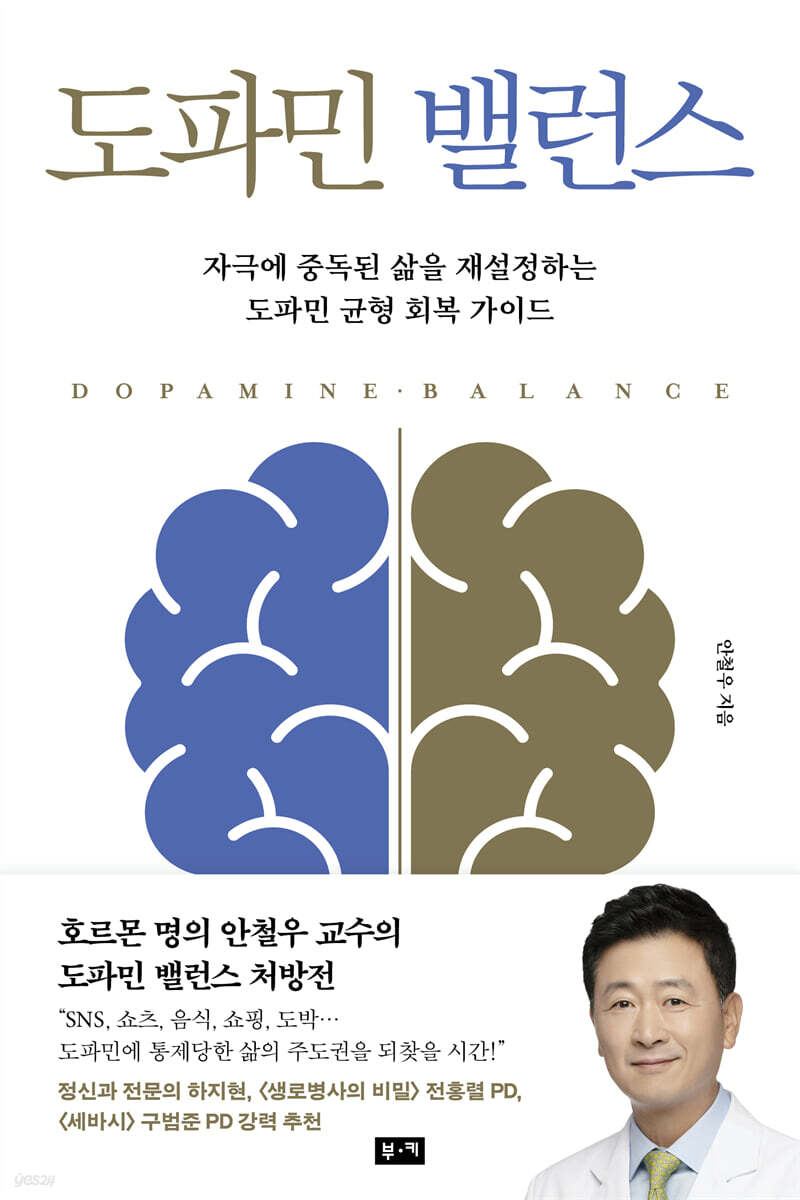
A Guide to Restoring Dopamine BalanceIn a dopamine-addicted society where easy pleasures are easily obtained through shorts, social media, food, and shopping, this book suggests ways to reset a life addicted to stimulation.
Hormone expert Professor Ahn Cheol-woo's three-step dopamine detox, titled "Recognize addiction, distance yourself, and receive rewards," helps you regain balance in your life and create a healthier daily life.
December 31, 2024. Health and Hobbies PD Ahn Hyun-jae
Psychiatrist Ha Ji-hyun, PD Jeon Hong-ryeol of “The Secret of Birth, Aging, Illness, and Death,”
PD Koo Beom-jun strongly recommends "Time to Change the World."
“SNS, shorts, food, shopping, gambling…
“It’s time to take back control of your dopamine-controlled life!”
On the way home from work, I exchange direct messages (DMs) with friends on social media and watch YouTube videos at full speed without stopping.
You order delivery food before you get home, and you blindly pay for things you don't really need on websites lured by advertisements.
You lie in bed before going to bed, trying to watch a short form for “just 5 minutes,” and before you know it, it’s already 2 AM.
I promise myself that I won't do this tomorrow, but it's still the same.
It's a life literally soaked in dopamine.
As the expressions “dopamine explosion” and “dopamine burst” suggest, dopamine is known as a hormone of pleasure that brings great joy to a tiring and boring daily life.
The problem is that if excessive dopamine secretion continues to repeat, our brain gradually falls into a vicious cycle of addiction in which it wants greater stimulation and greater amounts.
Professor Ahn Cheol-woo, a hormone expert, has included specific and practical methods for restoring dopamine balance in this book based on medical insight.
The three-step dopamine detox journey he suggests (Step 1: Recognize your addictive behavior - Step 2: Avoid distractions - Step 3: Reward yourself for your efforts) aims not simply to eliminate dopamine, but to restore dopamine balance and, ultimately, peace in life.
It helps readers take each step step by step through case studies of patients who have actually succeeded in dopamine detoxification.
If you want to take back control of your dopamine-controlled life, don't hesitate and follow this friendly guide.
PD Koo Beom-jun strongly recommends "Time to Change the World."
“SNS, shorts, food, shopping, gambling…
“It’s time to take back control of your dopamine-controlled life!”
On the way home from work, I exchange direct messages (DMs) with friends on social media and watch YouTube videos at full speed without stopping.
You order delivery food before you get home, and you blindly pay for things you don't really need on websites lured by advertisements.
You lie in bed before going to bed, trying to watch a short form for “just 5 minutes,” and before you know it, it’s already 2 AM.
I promise myself that I won't do this tomorrow, but it's still the same.
It's a life literally soaked in dopamine.
As the expressions “dopamine explosion” and “dopamine burst” suggest, dopamine is known as a hormone of pleasure that brings great joy to a tiring and boring daily life.
The problem is that if excessive dopamine secretion continues to repeat, our brain gradually falls into a vicious cycle of addiction in which it wants greater stimulation and greater amounts.
Professor Ahn Cheol-woo, a hormone expert, has included specific and practical methods for restoring dopamine balance in this book based on medical insight.
The three-step dopamine detox journey he suggests (Step 1: Recognize your addictive behavior - Step 2: Avoid distractions - Step 3: Reward yourself for your efforts) aims not simply to eliminate dopamine, but to restore dopamine balance and, ultimately, peace in life.
It helps readers take each step step by step through case studies of patients who have actually succeeded in dopamine detoxification.
If you want to take back control of your dopamine-controlled life, don't hesitate and follow this friendly guide.
- You can preview some of the book's contents.
Preview
index
Recommendation
Prologue: A Journey to Find Balance in Life
Part 1: Two Faces of Hormones
Chapter 1: The Invisible Powerful Commander
People who are imprisoned in their own hands _ Dopamine itself is not addictive _ Humans are slaves to hormones
Chapter 2: Motivation More Powerful Than Pleasure
The Trap of Dopamine Bursts _ The Brain's Reward Mechanism _ The End of the Powerless
Chapter 3: Where the Hands of Addiction Are Heading
Desire or Control? _Why Effortless Pleasure is Scary _More Amount, More Stimulation _The Dilemma of a Convenient Life _People Vulnerable to Addiction
Part 2: The Dopamine Detox Journey: Step 3
Chapter 4: Preparing to Recover from Addicted Brains
Time to Restore Balance _ The belief that any addiction can be overcome _ From slave to master of your hormones
Chapter 5, Step 1 | Recognizing Addictive Behaviors
Step 1: Exploring Dependencies What is ruining me? - Dopamine Detox Journal Writing ① _Step 2: Setting Goals What and how will I achieve it? - Dopamine Detox Journal Writing ② _Step 3: Image Training Imagination becomes reality!
Chapter 6, Step 2 | Avoid Distractions
Step 1: Intentional Distancing: When your body grows distant, your heart grows distant too. Step 2: Reset the Situation: If you can't avoid it, enjoy it. Step 3: Time for Patience: Endure discomfort and cultivate self-control. - Dopamine Detox Journal Writing ③
Chapter 7, Step 3 | Reward Your Efforts
Step 1 Type of reward What reward to choose _step 2 Set up a customized reward What I want to give myself _step 3 Adjust the reward size To the amount that fits the food bowl
Part 3: Habits for Finding Balance in Life
Chapter 8 Exercise | The First Step to a Healthy Life
Aerobic exercise to increase your heart rate _ Resistance exercise to strengthen your muscles using external resistance _ Meditation to organize your inner turmoil and relieve tension _ Breathing exercise to find peace of mind _ Consistency is the way to go!
Chapter 9: Food | What You Eat Today Determines Your Tomorrow
Protein-rich foods _ Foods rich in vitamin B6 _ Superfoods with omega-3 fatty acids _ Antioxidant foods that reduce stress _ Foods with probiotics for gut health _ Which foods should you avoid?
Chapter 10: Sleep | The Truth That Sleep Is the Best Medicine
Helps restore dopamine receptors _ Improves memory and productivity _ Regulates and processes emotions healthily _ Boosts immunity _ How to improve sleep quality
Chapter 11: Stress Management | A Requirement, Not an Optional Option
Enjoying the tranquility of nature _ Hobbies that enrich life _ Mindfulness using the five senses _ The value of time spent together rather than alone
Appendix: 10 Questions and Answers on Dopamine | Notes | References
Prologue: A Journey to Find Balance in Life
Part 1: Two Faces of Hormones
Chapter 1: The Invisible Powerful Commander
People who are imprisoned in their own hands _ Dopamine itself is not addictive _ Humans are slaves to hormones
Chapter 2: Motivation More Powerful Than Pleasure
The Trap of Dopamine Bursts _ The Brain's Reward Mechanism _ The End of the Powerless
Chapter 3: Where the Hands of Addiction Are Heading
Desire or Control? _Why Effortless Pleasure is Scary _More Amount, More Stimulation _The Dilemma of a Convenient Life _People Vulnerable to Addiction
Part 2: The Dopamine Detox Journey: Step 3
Chapter 4: Preparing to Recover from Addicted Brains
Time to Restore Balance _ The belief that any addiction can be overcome _ From slave to master of your hormones
Chapter 5, Step 1 | Recognizing Addictive Behaviors
Step 1: Exploring Dependencies What is ruining me? - Dopamine Detox Journal Writing ① _Step 2: Setting Goals What and how will I achieve it? - Dopamine Detox Journal Writing ② _Step 3: Image Training Imagination becomes reality!
Chapter 6, Step 2 | Avoid Distractions
Step 1: Intentional Distancing: When your body grows distant, your heart grows distant too. Step 2: Reset the Situation: If you can't avoid it, enjoy it. Step 3: Time for Patience: Endure discomfort and cultivate self-control. - Dopamine Detox Journal Writing ③
Chapter 7, Step 3 | Reward Your Efforts
Step 1 Type of reward What reward to choose _step 2 Set up a customized reward What I want to give myself _step 3 Adjust the reward size To the amount that fits the food bowl
Part 3: Habits for Finding Balance in Life
Chapter 8 Exercise | The First Step to a Healthy Life
Aerobic exercise to increase your heart rate _ Resistance exercise to strengthen your muscles using external resistance _ Meditation to organize your inner turmoil and relieve tension _ Breathing exercise to find peace of mind _ Consistency is the way to go!
Chapter 9: Food | What You Eat Today Determines Your Tomorrow
Protein-rich foods _ Foods rich in vitamin B6 _ Superfoods with omega-3 fatty acids _ Antioxidant foods that reduce stress _ Foods with probiotics for gut health _ Which foods should you avoid?
Chapter 10: Sleep | The Truth That Sleep Is the Best Medicine
Helps restore dopamine receptors _ Improves memory and productivity _ Regulates and processes emotions healthily _ Boosts immunity _ How to improve sleep quality
Chapter 11: Stress Management | A Requirement, Not an Optional Option
Enjoying the tranquility of nature _ Hobbies that enrich life _ Mindfulness using the five senses _ The value of time spent together rather than alone
Appendix: 10 Questions and Answers on Dopamine | Notes | References
Detailed image

Into the book
While this book focuses on dopamine, the most important thing is that the hormones in our bodies, including dopamine, are balanced, which is the key to a healthy life.
In other words, ‘balance’ is important.
If you focus too much on one thing, cracks will start to appear in your daily life, and an unbalanced life will eventually fall apart.
The ultimate goal of this book, and my hope, is to help you regain control of your life and lead a healthy daily life without being swayed by pleasure.
This journey to find balance in life will be difficult and sometimes frightening, but you will find yourself growing and developing along the way.
Those of you who have decided to start anew have already taken the first step toward a great change.
--- p.18 From the "Prologue"
If the smartphone addiction of patients who visited the hospital could be related to dopamine, which plays an important role in our brain's reward system, I thought that it would be a priority to improve the addiction symptoms related to dopamine secretion hidden behind the superficial disease.
So who, why, and how do people become addicted to dopamine? Medically speaking, the term "dopamine addiction" is actually a misnomer.
It is impossible for a person to become addicted to dopamine, because dopamine itself is not addictive.
The expression 'dopamine addiction' that we commonly know is more appropriate to mean addiction to activities, substances, or stimuli that cause the secretion of dopamine in the brain, rather than to dopamine itself.
For example, if you repeatedly find yourself eating late at night and find it difficult to control yourself even though you know it's bad for your health, you may be experiencing dopamine addiction.
--- pp.30-31 From "Chapter 1: The Invisible Powerful Commander"
After implanting small electrodes in the area of the monkey's brain where dopamine cells are distributed, light bulbs were installed on the left and right sides of the monkey's cage, and two boxes connected to the light bulbs were placed together.
The principle of this device is simpler than you might think.
When the left light was lit, it signaled that there was food in the right box, and when the right light was lit, it signaled that there was food in the left box.
At first, the monkey did not understand the rules of the device, so it opened any box to get food.
As a result, one out of two attempts succeeded in obtaining food.
As expected, dopamine was secreted in the monkey's brain as soon as food was discovered.
But what happened after the monkeys fully understood the rules of this signal? They were able to get food every time they tried.
But something has changed since then.
This is the point at which dopamine is secreted in the monkey brain.
Dopamine began to be released the moment the light bulb came on, not when food was found as before.
The monkeys who understood the link between light and food felt a thrill when the light came on, not when they found the food.
--- p.41-42 From “Chapter 2: Motivation More Powerful Than Pleasure”
There are more than a few people who are suffering because they cannot quit the fantastic combination of alcohol and cigarettes.
Why does drinking alcohol make the urge to smoke stronger? Ultimately, it's because the two substances stimulate dopamine in similar ways.
Alcohol can increase dopamine secretion, even in small amounts.
The same goes for cigarettes.
When nicotine in cigarettes enters our body, it travels through the blood vessels and reaches the brain.
At this time, nicotine stimulates the brain's reward circuit, causing the release of the neurotransmitter dopamine, which causes a feeling of pleasure.
The problem is that when dopamine is frequently secreted due to external factors such as alcohol and cigarettes, our brain learns how to obtain more pleasure.
So, when you drink alcohol, you end up reaching for cigarettes, and when you smoke, you end up reaching for alcohol.
For Jinseong, a diabetic, alcohol and cigarettes are the worst combination.
Diabetes alone increases the risk of developing life-threatening arteriosclerosis by 3-4 times, and adding alcohol and nicotine to the mix is like pouring gasoline on a fire.
--- pp.54-55 From “Chapter 3: Where the Hands of Addiction Are Heading”
When we become addicted to things like smartphone use, games, and eating sweet and salty foods, the repetitive and excessive stimulation causes changes in dopamine receptors.
Broadly speaking, two changes can be observed.
First, the sensitivity of dopamine receptors decreases.
This means that the receptors' ability to respond to dopamine is reduced, meaning that even if the same amount of dopamine is secreted, the dopamine receptors become less sensitive and do not respond as before.
Later on, sensitivity may be lost.
Next, the total number of receptors is reduced.
This phenomenon is part of the brain's defense mechanism to adapt to excessive dopamine secretion, as nerve cells reduce their dopamine receptors.
Even if the same amount of dopamine is secreted, the overall effect of dopamine is reduced because there are fewer receptors that can recognize it.
At first, you may feel great joy from a single social media notification, but over time, it becomes difficult to feel satisfaction from the same stimulus.
--- p.96 From “Chapter 4: Preparing to Recover from Addicted Brain”
This is the goal that Nari, a night snack addict and morbidly obese, revealed during her treatment.
But it is unclear how to lose weight and how much to lose.
To achieve your goal of dieting, you need to consider many aspects, including exercise, diet, and mental health.
Ultimately, if you don't have a concrete action plan for the goals you've set, your plans will likely fall through the cracks again.
If you find it difficult to specify your goals, it may be a good idea to apply the six W principles of 'who, what, when, where, how, and why.'
Especially when setting goals, the 'why' is very important.
It helps you clearly understand the benefits you will receive when you achieve your goal and the specific reasons why you set that goal.
--- p.119 From “Chapter 5, Step 1: Recognizing Addictive Behaviors”
While physical distancing is the literal use of physical devices or structures, such as fences or firewalls, to block specific targets, 'categorical blocking' is a concept mainly used in psychology and psychiatry, and is a method of restricting stimuli or actions by considering psychological and situational aspects.
For example, it goes beyond simply avoiding a specific food, but also avoiding everything associated with that food, including advertisements or situations that make you want to eat that food.
This is a very important step in blocking the triggers that lead to addictive behavior.
In reality, even when we put up physical barriers, there are so many unexpected factors around us that can trigger our temptation buttons.
--- p.145 From “Chapter 6, Step 2: Avoiding Distractions”
You need to distinguish between short-term and long-term goals and determine the size of the reward accordingly.
For example, if a person achieves a weekly goal, give them something small and insignificant, even if it's the same material reward, and if they achieve a long-term goal, give them a bigger gift like a trip.
To make it easier to understand, remember that there is a certain amount of rice that fits in a bowl.
The dopamine detox journey can be short-term or long-term.
If you've set long-term goals, it's important to create an environment that fosters continued growth through ongoing rewards.
Even if you set it for the short term, if you keep in mind small rewards followed by big rewards, you are more likely to successfully complete the dopamine detox in the long term.
During this process, it is recommended to periodically check the goals you have set and record your achievements in a dopamine detox journal to visually confirm the changes.
I hope that by setting rewards that are just right for me, I can improve my quality of life and encourage positive behavioral changes.
--- pp.180-181 From “Chapter 7, Step 3: Receiving Rewards for Your Efforts”
When I see patients, the thing that older people worry about the most is ‘muscle loss.’
In fact, when you lose muscle, you become uncomfortable with movement and many metabolic problems arise.
At this time, weight training using various resistances is necessary to strengthen and develop muscles.
To preserve muscle mass, it is recommended to train all major muscle groups (chest, back, arms, abs, legs, shoulders) evenly at least twice a week.
However, training each muscle group separately requires a lot of time and effort.
If you need to incorporate strength training into your daily routine without having to make time for a gym, I recommend strengthening your thighs, the largest muscle group in your body, above all else.
Even if you just work hard to build up your thigh muscles, you can help increase bone density and secrete growth hormones that prevent muscle loss due to aging.
--- p.199 From “Chapter 8 Exercise: The First Step to a Healthy Life”
Sometimes, diabetic patients avoid meat completely during the dopamine detox period to manage their insulin hormones.
However, I do not recommend eliminating meat from your diet outright.
Of course, there is no problem with consuming protein through a plant-based diet, as plant-based proteins such as soybeans and tofu are also rich in nutrients.
However, plant-based proteins may generally be less nutritious than animal-based proteins, so caution is advised.
Essential amino acids are amino acids that our bodies cannot produce, or that are produced in such small quantities that they must be consumed through food.
Animal proteins are rich in essential amino acids such as lysine and methionine, which play an important role in the synthesis of neurotransmitters and brain health.
The dopamine detox period varies from person to person, and if you only consume plant-based proteins during this period, your body may be lacking the nutrients it needs.
So, it is recommended to consume a balanced and even diet as much as possible.
When eating meat, choose high-quality lean meats with little fat, and consume high-quality protein through fish rich in unsaturated fatty acids, which will help maintain hormonal health and balance.
--- pp.228-229 From “Chapter 9 Food: What You Eat Today Determines Tomorrow”
Even if they sleep the same seven hours, which person would lead a healthier and more energetic life: someone who falls asleep at different times each night, or someone who sleeps at a consistent time? The latter, of course.
If you develop the habit of going to bed and waking up at the same time every day, your body's biological rhythm will adjust to that time.
If we fall asleep and wake up at different times each time, our bodies become stressed.
Let's set a regular sleeping schedule by referring to the time when melatonin is secreted.
--- p.245 From “Chapter 10 Sleep: The Truth That Sleep is Medicine”
In today's competitive society, our bodies are often overwhelmed by various stresses and anxieties.
But surprisingly, the secret weapon to calm this mental turmoil is nearby.
It is about utilizing our ‘five senses’: sight, hearing, smell, touch, and taste.
Let's soothe our hearts by looking at the beautiful scenery that nature has to offer and paint a picture with our favorite colors.
Let's calm our emotions by listening to relaxing music and find inner peace by listening to the sounds of nature.
Take your time savoring your favorite tea or healthy snack, fully savoring its flavors and aromas.
These activities will greatly help us calm our bodies and minds and find true peace.
In other words, ‘balance’ is important.
If you focus too much on one thing, cracks will start to appear in your daily life, and an unbalanced life will eventually fall apart.
The ultimate goal of this book, and my hope, is to help you regain control of your life and lead a healthy daily life without being swayed by pleasure.
This journey to find balance in life will be difficult and sometimes frightening, but you will find yourself growing and developing along the way.
Those of you who have decided to start anew have already taken the first step toward a great change.
--- p.18 From the "Prologue"
If the smartphone addiction of patients who visited the hospital could be related to dopamine, which plays an important role in our brain's reward system, I thought that it would be a priority to improve the addiction symptoms related to dopamine secretion hidden behind the superficial disease.
So who, why, and how do people become addicted to dopamine? Medically speaking, the term "dopamine addiction" is actually a misnomer.
It is impossible for a person to become addicted to dopamine, because dopamine itself is not addictive.
The expression 'dopamine addiction' that we commonly know is more appropriate to mean addiction to activities, substances, or stimuli that cause the secretion of dopamine in the brain, rather than to dopamine itself.
For example, if you repeatedly find yourself eating late at night and find it difficult to control yourself even though you know it's bad for your health, you may be experiencing dopamine addiction.
--- pp.30-31 From "Chapter 1: The Invisible Powerful Commander"
After implanting small electrodes in the area of the monkey's brain where dopamine cells are distributed, light bulbs were installed on the left and right sides of the monkey's cage, and two boxes connected to the light bulbs were placed together.
The principle of this device is simpler than you might think.
When the left light was lit, it signaled that there was food in the right box, and when the right light was lit, it signaled that there was food in the left box.
At first, the monkey did not understand the rules of the device, so it opened any box to get food.
As a result, one out of two attempts succeeded in obtaining food.
As expected, dopamine was secreted in the monkey's brain as soon as food was discovered.
But what happened after the monkeys fully understood the rules of this signal? They were able to get food every time they tried.
But something has changed since then.
This is the point at which dopamine is secreted in the monkey brain.
Dopamine began to be released the moment the light bulb came on, not when food was found as before.
The monkeys who understood the link between light and food felt a thrill when the light came on, not when they found the food.
--- p.41-42 From “Chapter 2: Motivation More Powerful Than Pleasure”
There are more than a few people who are suffering because they cannot quit the fantastic combination of alcohol and cigarettes.
Why does drinking alcohol make the urge to smoke stronger? Ultimately, it's because the two substances stimulate dopamine in similar ways.
Alcohol can increase dopamine secretion, even in small amounts.
The same goes for cigarettes.
When nicotine in cigarettes enters our body, it travels through the blood vessels and reaches the brain.
At this time, nicotine stimulates the brain's reward circuit, causing the release of the neurotransmitter dopamine, which causes a feeling of pleasure.
The problem is that when dopamine is frequently secreted due to external factors such as alcohol and cigarettes, our brain learns how to obtain more pleasure.
So, when you drink alcohol, you end up reaching for cigarettes, and when you smoke, you end up reaching for alcohol.
For Jinseong, a diabetic, alcohol and cigarettes are the worst combination.
Diabetes alone increases the risk of developing life-threatening arteriosclerosis by 3-4 times, and adding alcohol and nicotine to the mix is like pouring gasoline on a fire.
--- pp.54-55 From “Chapter 3: Where the Hands of Addiction Are Heading”
When we become addicted to things like smartphone use, games, and eating sweet and salty foods, the repetitive and excessive stimulation causes changes in dopamine receptors.
Broadly speaking, two changes can be observed.
First, the sensitivity of dopamine receptors decreases.
This means that the receptors' ability to respond to dopamine is reduced, meaning that even if the same amount of dopamine is secreted, the dopamine receptors become less sensitive and do not respond as before.
Later on, sensitivity may be lost.
Next, the total number of receptors is reduced.
This phenomenon is part of the brain's defense mechanism to adapt to excessive dopamine secretion, as nerve cells reduce their dopamine receptors.
Even if the same amount of dopamine is secreted, the overall effect of dopamine is reduced because there are fewer receptors that can recognize it.
At first, you may feel great joy from a single social media notification, but over time, it becomes difficult to feel satisfaction from the same stimulus.
--- p.96 From “Chapter 4: Preparing to Recover from Addicted Brain”
This is the goal that Nari, a night snack addict and morbidly obese, revealed during her treatment.
But it is unclear how to lose weight and how much to lose.
To achieve your goal of dieting, you need to consider many aspects, including exercise, diet, and mental health.
Ultimately, if you don't have a concrete action plan for the goals you've set, your plans will likely fall through the cracks again.
If you find it difficult to specify your goals, it may be a good idea to apply the six W principles of 'who, what, when, where, how, and why.'
Especially when setting goals, the 'why' is very important.
It helps you clearly understand the benefits you will receive when you achieve your goal and the specific reasons why you set that goal.
--- p.119 From “Chapter 5, Step 1: Recognizing Addictive Behaviors”
While physical distancing is the literal use of physical devices or structures, such as fences or firewalls, to block specific targets, 'categorical blocking' is a concept mainly used in psychology and psychiatry, and is a method of restricting stimuli or actions by considering psychological and situational aspects.
For example, it goes beyond simply avoiding a specific food, but also avoiding everything associated with that food, including advertisements or situations that make you want to eat that food.
This is a very important step in blocking the triggers that lead to addictive behavior.
In reality, even when we put up physical barriers, there are so many unexpected factors around us that can trigger our temptation buttons.
--- p.145 From “Chapter 6, Step 2: Avoiding Distractions”
You need to distinguish between short-term and long-term goals and determine the size of the reward accordingly.
For example, if a person achieves a weekly goal, give them something small and insignificant, even if it's the same material reward, and if they achieve a long-term goal, give them a bigger gift like a trip.
To make it easier to understand, remember that there is a certain amount of rice that fits in a bowl.
The dopamine detox journey can be short-term or long-term.
If you've set long-term goals, it's important to create an environment that fosters continued growth through ongoing rewards.
Even if you set it for the short term, if you keep in mind small rewards followed by big rewards, you are more likely to successfully complete the dopamine detox in the long term.
During this process, it is recommended to periodically check the goals you have set and record your achievements in a dopamine detox journal to visually confirm the changes.
I hope that by setting rewards that are just right for me, I can improve my quality of life and encourage positive behavioral changes.
--- pp.180-181 From “Chapter 7, Step 3: Receiving Rewards for Your Efforts”
When I see patients, the thing that older people worry about the most is ‘muscle loss.’
In fact, when you lose muscle, you become uncomfortable with movement and many metabolic problems arise.
At this time, weight training using various resistances is necessary to strengthen and develop muscles.
To preserve muscle mass, it is recommended to train all major muscle groups (chest, back, arms, abs, legs, shoulders) evenly at least twice a week.
However, training each muscle group separately requires a lot of time and effort.
If you need to incorporate strength training into your daily routine without having to make time for a gym, I recommend strengthening your thighs, the largest muscle group in your body, above all else.
Even if you just work hard to build up your thigh muscles, you can help increase bone density and secrete growth hormones that prevent muscle loss due to aging.
--- p.199 From “Chapter 8 Exercise: The First Step to a Healthy Life”
Sometimes, diabetic patients avoid meat completely during the dopamine detox period to manage their insulin hormones.
However, I do not recommend eliminating meat from your diet outright.
Of course, there is no problem with consuming protein through a plant-based diet, as plant-based proteins such as soybeans and tofu are also rich in nutrients.
However, plant-based proteins may generally be less nutritious than animal-based proteins, so caution is advised.
Essential amino acids are amino acids that our bodies cannot produce, or that are produced in such small quantities that they must be consumed through food.
Animal proteins are rich in essential amino acids such as lysine and methionine, which play an important role in the synthesis of neurotransmitters and brain health.
The dopamine detox period varies from person to person, and if you only consume plant-based proteins during this period, your body may be lacking the nutrients it needs.
So, it is recommended to consume a balanced and even diet as much as possible.
When eating meat, choose high-quality lean meats with little fat, and consume high-quality protein through fish rich in unsaturated fatty acids, which will help maintain hormonal health and balance.
--- pp.228-229 From “Chapter 9 Food: What You Eat Today Determines Tomorrow”
Even if they sleep the same seven hours, which person would lead a healthier and more energetic life: someone who falls asleep at different times each night, or someone who sleeps at a consistent time? The latter, of course.
If you develop the habit of going to bed and waking up at the same time every day, your body's biological rhythm will adjust to that time.
If we fall asleep and wake up at different times each time, our bodies become stressed.
Let's set a regular sleeping schedule by referring to the time when melatonin is secreted.
--- p.245 From “Chapter 10 Sleep: The Truth That Sleep is Medicine”
In today's competitive society, our bodies are often overwhelmed by various stresses and anxieties.
But surprisingly, the secret weapon to calm this mental turmoil is nearby.
It is about utilizing our ‘five senses’: sight, hearing, smell, touch, and taste.
Let's soothe our hearts by looking at the beautiful scenery that nature has to offer and paint a picture with our favorite colors.
Let's calm our emotions by listening to relaxing music and find inner peace by listening to the sounds of nature.
Take your time savoring your favorite tea or healthy snack, fully savoring its flavors and aromas.
These activities will greatly help us calm our bodies and minds and find true peace.
--- p.252 From “Chapter 11 Stress Management: A Necessity, Not an Option”
Publisher's Review
“What comforted me was
“It was actually ruining me.”
Hyunseon, who was diagnosed with diabetes in her late 20s, had improved to the point where she could stop taking her medication. However, she was suddenly scared when she started gaining weight rapidly and her blood sugar levels reached dangerous levels.
I went to the hospital because I was worried that I might suffer from diabetes complications again.
The problem of lifestyle was largely responsible for the situation getting worse in just one year.
Every night, I would watch interesting short-form content until 3 or 4 in the morning before falling asleep.
As these days continued, I became sleep deprived and couldn't concentrate on my work.
Of course, mistakes were frequent.
The problem of smartphone addiction has become a threat not only to work life but also to health.
This is not just Hyunseon's problem.
When we talk about addiction, we often think of extreme addictions like 'drugs', but the objects of addiction are truly endless.
Being completely absorbed in investing in stocks and coins and looking at your phone all day long, turning on a delivery app every night because you can't resist a late-night snack, drinking one or two cups of coffee a day but now increasing day by day, and constantly buying things to cheer yourself up even though you don't really need them are all considered addictions.
The author, a hormone specialist and professor of endocrinology, says that when he takes a closer look at patients who come to his clinic with hormone-related symptoms such as metabolic syndrome or diabetes, he often finds that the symptoms are related to addiction problems hidden behind the superficial symptoms.
Some people tell these patients that they are “lazy” and urge them to overcome it with mental strength.
Perhaps because they often hear such things, patients often say things that are full of self-reproach.
That's because your own efforts are lacking.
However, the author emphasizes that not all health problems can be solved through effort alone.
In the past, I myself experienced severe coffee addiction and compulsive hoarding.
Even I, who am fully aware of the various addiction problems and their consequences in the medical field, admit that quitting addictive behaviors has never been easy.
While effort is certainly important, it is more important to first identify the underlying problem that is masking the symptoms.
Then, you need to find specific ways to help solve that problem and work towards that goal.
So, we began to pay more attention to the hormone 'dopamine', which is most deeply related to addiction.
In order to treat patients' illnesses, it was essential to improve their bad lifestyle habits caused by dopamine addiction along with appropriate prescriptions.
Why pleasure without effort is scary
Why and how do people become addicted to dopamine? In fact, from a medical perspective, the term "dopamine addiction" is a misnomer.
It is impossible for a person to become addicted to dopamine, because dopamine itself is not addictive.
The expression 'dopamine addiction' that we commonly know is more appropriate to mean addiction to activities, substances, or stimuli that cause dopamine secretion, rather than to dopamine itself.
It's like smoking cigarettes constantly even though you know they're bad for you.
When nicotine in cigarettes enters our body, it travels through the blood vessels to the brain, where it stimulates the brain's reward circuit, causing the release of dopamine and a feeling of pleasure.
The same goes for alcohol.
The reason why drinking alcohol makes the urge to smoke stronger is also because the two substances have similar patterns of stimulating dopamine.
In the end, a vicious cycle continues where cigarettes lead to alcohol and alcohol leads to cigarettes.
When dopamine is released too frequently like this, our brain learns how to get more pleasure.
It is a shortcut to addiction.
Moreover, nicotine takes only about 10 seconds to reach the brain.
The faster an inhaled substance reaches the brain, the greater the risk of addiction.
But there are substances that are addictive even faster than this.
It is 'sugar'.
It takes 0.6 seconds for sugar on the tongue to activate the brain.
It is a whopping 20 times faster than nicotine.
Anyone can become addicted without even realizing it.
We get a much greater dose of dopamine when we drink alcohol, smoke cigarettes, or eat a sweet dessert than when we work toward a goal for a long time and finally achieve it.
Because it stimulates the brain's reward circuit by providing immediate pleasure, the dopamine secretion cycle becomes too fast and eventually becomes uncontrollable.
The brain, accustomed to the principles of addiction, wants more and more dopamine.
What makes addiction so scary is that it creates a 'tolerance'.
There comes a time when a bottle of wine, a pack of cigarettes, and a slice of cake just won't cut it.
Drugs and drug addiction follow the same principle.
If you repeat the pleasure you get without effort, your life will soon fall into the pit of addiction.
Dopamine is innocent
A stronger motivation than pleasure
As more and more people experience the problems caused by dopamine addiction, interest in dopamine detox has also increased.
Detox is a concept often used in dieting to remove toxins from the body and improve health.
That's why, when we talk about 'dopamine detox', we tend to think of dopamine as a 'toxin that needs to be eliminated'.
Is dopamine, the pleasure hormone, always bad? Let's look at an experiment conducted by a research team in the Department of Neurobiology at Stanford University.
When food was placed in front of rats whose dopamine neurons had been blocked and their reactions were observed, the rats did not wander around looking for food, and they showed no intention of eating even when food was right in front of them.
However, when I put food directly into the rat's mouth, it surprisingly chewed the food with relish.
The sense of taste was still alive.
However, the rats that did not take any action to eat more eventually met a sad ending of starving to death.
This experiment shows that if you suppress or block dopamine in the brain of mammals, they lose the motivational "drive" itself, the desire and effort to enjoy the pleasure that delicious food provides.
The role of dopamine can also be seen in the case of Minsu, an office worker in his early 40s.
Minsu went to the gym five days a week with the goal of taking body profile photos to overcome diabetes.
Any office worker can relate to how difficult it is to go to the gym after work.
Minsu also had his share of hardships.
There were times when I was tired and wanted to go home and rest, and times when I wanted to have a drink with my colleagues after work, but every time I did that, I would turn to the gym, imagining my belly fat gradually disappearing and my diabetes symptoms improving.
After working out hard for 8 months, I was able to take my body profile photo as I had hoped and regain my health.
Dopamine's lesser-known main function is to help us overcome reluctance to do something with the anticipation of future rewards and to generate the drive to achieve our goals despite immediate pain.
It serves as a compass that allows us to live with a will to live.
In addition, dopamine is deeply involved in memory, muscle movement, habit formation, and concentration.
Without dopamine, a number of problems arise, including motor and cognitive impairment.
So dopamine is not guilty.
It is not possible to completely remove it from the body, nor is it possible to do so.
The key to detox that the author talks about in this book is “balance.”
By correcting insufficient or excessive dopamine secretion, we can restore balance and enhance positive functions, allowing us to live a more fulfilling life.
When dopamine finds balance, life finds balance.
Step 3 of the Dopamine Detox Journey
So now is the time for change.
The longer the addiction lasts, the slower change may be, but there is still hope.
In fact, if you look at positron emission tomography (PET) images of methamphetamine addicts one month and one year after quitting the drug, you can see that more dopamine receptors have recovered as time passes.
If recovery is possible even from extreme addictions like drugs, it means that it is possible to improve addictive behaviors in everyday life as well.
Don't worry if you don't know how.
As a person who has experienced addiction and as an endocrinologist, the author provides specific instructions on the three stages of the dopamine detox journey based on meaningful methods of overcoming addiction that he has discovered through the process of recognizing and resolving addiction issues.
This process, which consists of step 1: recognizing the addictive behavior, step 2: avoiding distractions, and step 3: rewarding the effort, is not simply about removing dopamine, but rather restoring dopamine balance and ultimately achieving balance in life.
In fact, Nari, a hyperlipidemia patient, overcame her addiction to late-night snacking through this method.
I was able to overcome my habit of ordering late-night snacks whenever I felt stressed while working as a call center consultant and overcome my severe obesity by swimming and walking.
Beyond physically distancing yourself from addictive triggers like deleting delivery apps and not keeping food in your refrigerator, a particularly effective approach is "categorical blocking," which involves avoiding all situations that trigger addiction, such as avoiding advertisements that make you want to eat, deliberately taking detours away from streets lined with good restaurants, and cutting back on dinner plans.
A total of three cases, including Nari, who overcame smartphone addiction and shopping addiction, will be joining us as detox companions.
If we follow their specific examples and apply them to our own cases, we can take the first step on this seemingly difficult journey more easily.
The latter part of the book introduces several good habits for maintaining dopamine balance in four aspects: exercise, food, sleep, and stress management.
I recommend that you consistently develop habits that suit your individual circumstances and tendencies.
Albert Einstein said:
“Life is like riding a bicycle.
“You have to keep moving to maintain balance.”
Stability and growth come from balance.
This journey to find balance in life will be difficult and sometimes frightening, but you will surely grow and develop along the way.
“It was actually ruining me.”
Hyunseon, who was diagnosed with diabetes in her late 20s, had improved to the point where she could stop taking her medication. However, she was suddenly scared when she started gaining weight rapidly and her blood sugar levels reached dangerous levels.
I went to the hospital because I was worried that I might suffer from diabetes complications again.
The problem of lifestyle was largely responsible for the situation getting worse in just one year.
Every night, I would watch interesting short-form content until 3 or 4 in the morning before falling asleep.
As these days continued, I became sleep deprived and couldn't concentrate on my work.
Of course, mistakes were frequent.
The problem of smartphone addiction has become a threat not only to work life but also to health.
This is not just Hyunseon's problem.
When we talk about addiction, we often think of extreme addictions like 'drugs', but the objects of addiction are truly endless.
Being completely absorbed in investing in stocks and coins and looking at your phone all day long, turning on a delivery app every night because you can't resist a late-night snack, drinking one or two cups of coffee a day but now increasing day by day, and constantly buying things to cheer yourself up even though you don't really need them are all considered addictions.
The author, a hormone specialist and professor of endocrinology, says that when he takes a closer look at patients who come to his clinic with hormone-related symptoms such as metabolic syndrome or diabetes, he often finds that the symptoms are related to addiction problems hidden behind the superficial symptoms.
Some people tell these patients that they are “lazy” and urge them to overcome it with mental strength.
Perhaps because they often hear such things, patients often say things that are full of self-reproach.
That's because your own efforts are lacking.
However, the author emphasizes that not all health problems can be solved through effort alone.
In the past, I myself experienced severe coffee addiction and compulsive hoarding.
Even I, who am fully aware of the various addiction problems and their consequences in the medical field, admit that quitting addictive behaviors has never been easy.
While effort is certainly important, it is more important to first identify the underlying problem that is masking the symptoms.
Then, you need to find specific ways to help solve that problem and work towards that goal.
So, we began to pay more attention to the hormone 'dopamine', which is most deeply related to addiction.
In order to treat patients' illnesses, it was essential to improve their bad lifestyle habits caused by dopamine addiction along with appropriate prescriptions.
Why pleasure without effort is scary
Why and how do people become addicted to dopamine? In fact, from a medical perspective, the term "dopamine addiction" is a misnomer.
It is impossible for a person to become addicted to dopamine, because dopamine itself is not addictive.
The expression 'dopamine addiction' that we commonly know is more appropriate to mean addiction to activities, substances, or stimuli that cause dopamine secretion, rather than to dopamine itself.
It's like smoking cigarettes constantly even though you know they're bad for you.
When nicotine in cigarettes enters our body, it travels through the blood vessels to the brain, where it stimulates the brain's reward circuit, causing the release of dopamine and a feeling of pleasure.
The same goes for alcohol.
The reason why drinking alcohol makes the urge to smoke stronger is also because the two substances have similar patterns of stimulating dopamine.
In the end, a vicious cycle continues where cigarettes lead to alcohol and alcohol leads to cigarettes.
When dopamine is released too frequently like this, our brain learns how to get more pleasure.
It is a shortcut to addiction.
Moreover, nicotine takes only about 10 seconds to reach the brain.
The faster an inhaled substance reaches the brain, the greater the risk of addiction.
But there are substances that are addictive even faster than this.
It is 'sugar'.
It takes 0.6 seconds for sugar on the tongue to activate the brain.
It is a whopping 20 times faster than nicotine.
Anyone can become addicted without even realizing it.
We get a much greater dose of dopamine when we drink alcohol, smoke cigarettes, or eat a sweet dessert than when we work toward a goal for a long time and finally achieve it.
Because it stimulates the brain's reward circuit by providing immediate pleasure, the dopamine secretion cycle becomes too fast and eventually becomes uncontrollable.
The brain, accustomed to the principles of addiction, wants more and more dopamine.
What makes addiction so scary is that it creates a 'tolerance'.
There comes a time when a bottle of wine, a pack of cigarettes, and a slice of cake just won't cut it.
Drugs and drug addiction follow the same principle.
If you repeat the pleasure you get without effort, your life will soon fall into the pit of addiction.
Dopamine is innocent
A stronger motivation than pleasure
As more and more people experience the problems caused by dopamine addiction, interest in dopamine detox has also increased.
Detox is a concept often used in dieting to remove toxins from the body and improve health.
That's why, when we talk about 'dopamine detox', we tend to think of dopamine as a 'toxin that needs to be eliminated'.
Is dopamine, the pleasure hormone, always bad? Let's look at an experiment conducted by a research team in the Department of Neurobiology at Stanford University.
When food was placed in front of rats whose dopamine neurons had been blocked and their reactions were observed, the rats did not wander around looking for food, and they showed no intention of eating even when food was right in front of them.
However, when I put food directly into the rat's mouth, it surprisingly chewed the food with relish.
The sense of taste was still alive.
However, the rats that did not take any action to eat more eventually met a sad ending of starving to death.
This experiment shows that if you suppress or block dopamine in the brain of mammals, they lose the motivational "drive" itself, the desire and effort to enjoy the pleasure that delicious food provides.
The role of dopamine can also be seen in the case of Minsu, an office worker in his early 40s.
Minsu went to the gym five days a week with the goal of taking body profile photos to overcome diabetes.
Any office worker can relate to how difficult it is to go to the gym after work.
Minsu also had his share of hardships.
There were times when I was tired and wanted to go home and rest, and times when I wanted to have a drink with my colleagues after work, but every time I did that, I would turn to the gym, imagining my belly fat gradually disappearing and my diabetes symptoms improving.
After working out hard for 8 months, I was able to take my body profile photo as I had hoped and regain my health.
Dopamine's lesser-known main function is to help us overcome reluctance to do something with the anticipation of future rewards and to generate the drive to achieve our goals despite immediate pain.
It serves as a compass that allows us to live with a will to live.
In addition, dopamine is deeply involved in memory, muscle movement, habit formation, and concentration.
Without dopamine, a number of problems arise, including motor and cognitive impairment.
So dopamine is not guilty.
It is not possible to completely remove it from the body, nor is it possible to do so.
The key to detox that the author talks about in this book is “balance.”
By correcting insufficient or excessive dopamine secretion, we can restore balance and enhance positive functions, allowing us to live a more fulfilling life.
When dopamine finds balance, life finds balance.
Step 3 of the Dopamine Detox Journey
So now is the time for change.
The longer the addiction lasts, the slower change may be, but there is still hope.
In fact, if you look at positron emission tomography (PET) images of methamphetamine addicts one month and one year after quitting the drug, you can see that more dopamine receptors have recovered as time passes.
If recovery is possible even from extreme addictions like drugs, it means that it is possible to improve addictive behaviors in everyday life as well.
Don't worry if you don't know how.
As a person who has experienced addiction and as an endocrinologist, the author provides specific instructions on the three stages of the dopamine detox journey based on meaningful methods of overcoming addiction that he has discovered through the process of recognizing and resolving addiction issues.
This process, which consists of step 1: recognizing the addictive behavior, step 2: avoiding distractions, and step 3: rewarding the effort, is not simply about removing dopamine, but rather restoring dopamine balance and ultimately achieving balance in life.
In fact, Nari, a hyperlipidemia patient, overcame her addiction to late-night snacking through this method.
I was able to overcome my habit of ordering late-night snacks whenever I felt stressed while working as a call center consultant and overcome my severe obesity by swimming and walking.
Beyond physically distancing yourself from addictive triggers like deleting delivery apps and not keeping food in your refrigerator, a particularly effective approach is "categorical blocking," which involves avoiding all situations that trigger addiction, such as avoiding advertisements that make you want to eat, deliberately taking detours away from streets lined with good restaurants, and cutting back on dinner plans.
A total of three cases, including Nari, who overcame smartphone addiction and shopping addiction, will be joining us as detox companions.
If we follow their specific examples and apply them to our own cases, we can take the first step on this seemingly difficult journey more easily.
The latter part of the book introduces several good habits for maintaining dopamine balance in four aspects: exercise, food, sleep, and stress management.
I recommend that you consistently develop habits that suit your individual circumstances and tendencies.
Albert Einstein said:
“Life is like riding a bicycle.
“You have to keep moving to maintain balance.”
Stability and growth come from balance.
This journey to find balance in life will be difficult and sometimes frightening, but you will surely grow and develop along the way.
GOODS SPECIFICS
- Date of issue: December 23, 2024
- Page count, weight, size: 296 pages | 414g | 140*210*18mm
- ISBN13: 9791193528419
You may also like
카테고리
korean


korean

![ELLE 엘르 스페셜 에디션 A형 : 12월 [2025]](http://librairie.coreenne.fr/cdn/shop/files/b8e27a3de6c9538896439686c6b0e8fb.jpg?v=1766436872&width=3840)


