

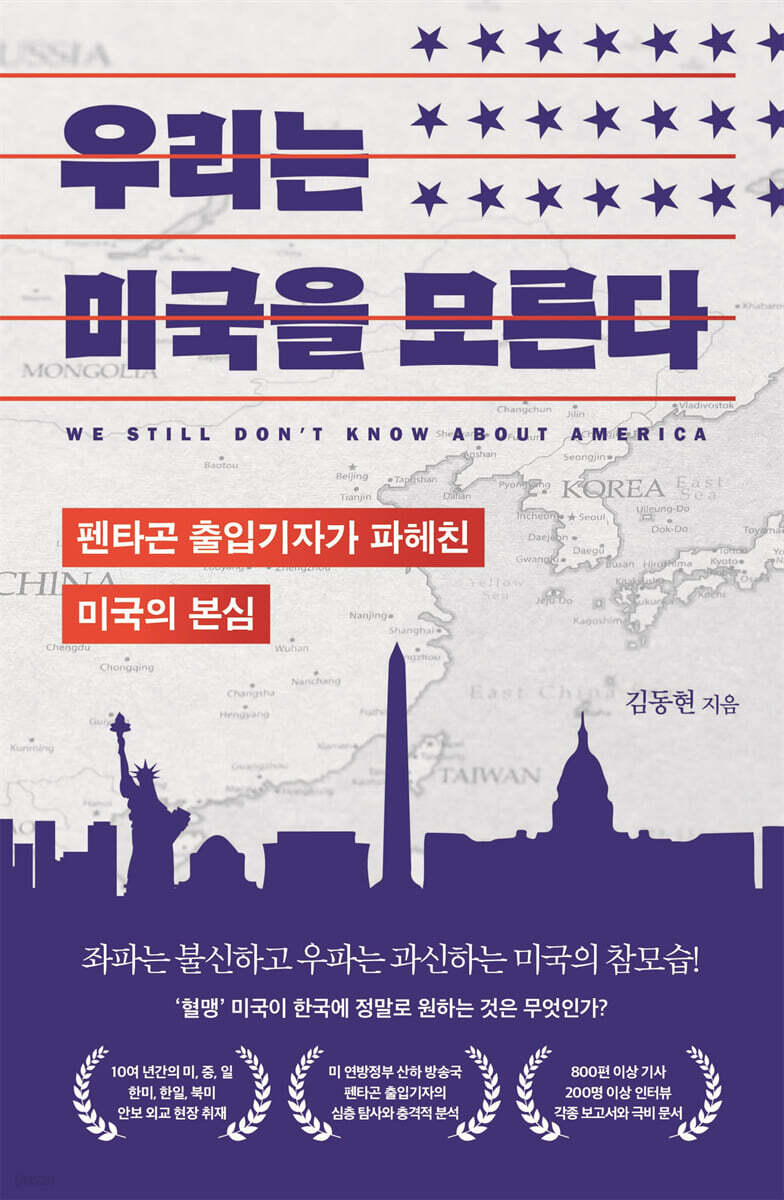
We don't know America
 |
Description
Book Introduction
“What does the blood ally America really want from Korea?” In the era of the new Cold War hegemony competition, insight into the changing future of the United States and security on the Korean Peninsula! “We are not the world’s policeman.” “The era of American military supremacy is over.” America has changed. The United States, which has long claimed to be the world's protector, is now weighing the "opportunity costs" of its involvement in conflicts and demanding a fair "burden sharing" from its allies and friends, claiming that there is no such thing as "free security." What are the fundamental factors driving America's transformation? How has America's global foreign policy and security strategy evolved? What should we prepare for and choose in response to these changes? The author, a Pentagon correspondent under the U.S. government, explores the changing nature of America through over 800 investigative articles, interviews with over 200 current and former officials, and various reports and top-secret documents from the U.S. government and think tanks. The author completely overturns the familiar Korean Peninsula-centric security logic, centered on the United States, and objectifies it, thereby presenting a refreshing reversal and shock that shatters the conventional wisdom and misconceptions we have held so far. Moreover, it allows us to understand Korea's security situation not only within the Korean Peninsula and Northeast Asia, but also within the larger picture of the Indo-Pacific and the world. It also provides a wealth of new and interesting information and knowledge about the military security strategies, military power, and weapon system evolution processes and realities of hostile countries such as the United States, China, Russia, and North Korea. Through this, the author gains keen insight into what the United States really wants from Korea. This book will serve as an essential guide to understanding the new paradigm of U.S. foreign and security policy and global management strategy in the era of the new Cold War hegemony competition, and to suggesting the path forward. |
- You can preview some of the book's contents.
Preview
index
Recommendation _ Bruce Bennett, Senior Research Fellow, RAND Corporation
Recommendation _ Go Myeong-hyeon, Senior Research Fellow, Asan Institute for Policy Studies
Entering
Chapter 1: America's Lost Twenty Years and the New Cold War
"I will no longer be the world's policeman alone."
Conflict over contribution payments settled? The pressure just begins!
China's Unrestricted War, the Chu-Han War
The 21st Century Maritime Great Wall: Anti-Access/Area Denial Strategies
From Kill Chain to Kill Web: America's Evolving Military Strategy
Chapter 2: The Increasing Burden on the United States in the Era of Northeast Asia's Nuclear 2.5
US Strategic Commander's Warning: "This is a reality we've never faced before."
The North Korean nuclear threat has been pushed to the back burner
The 'money-eating hippopotamus' nuclear weapons budget
The Fantasy and Reality of NATO-Style Nuclear Sharing
Will we really turn a blind eye to South Korea's nuclear armament?
Chapter 3: Implications for Korea-Japan Relations in the Hypersonic Missile Era
Yeouido Grammar School still haunted by the ghost of GSOMIA
The truth about GSOMIA, as told by the commander of US Forces Korea
Offensive deterrence in the spotlight: "You have to throw your fist first to win."
Indicators of Trump's "fire and fury"
Will Seoul be turned into a sea of fire by a missile from Tokyo?
The key to a fierce battle of wits is resilience.
Chapter 4 Ukraine, Taiwan, and the Korean Peninsula
North Korea's Latest Missile Launch and "Outside Assistance"
Why did the US remove range limits on South Korean missiles?
Why the Pentagon Mentioned South Korea in the Event of a Taiwanese Contingency
The US's calculations are actually welcoming the transfer of wartime operational control.
The plan to create a US-Japan Combined Forces Command that is gaining momentum
Chapter 5: The US-China Hegemony Competition and South Korea's Choices
America doesn't force choices on its allies?
South Korea trapped in the 'Geocentrism of the Korean Peninsula'
The media is a national prestige: Korea's information power is lagging behind even Japan's.
Excited to join Five Eyes
Zhuge Liang and Lu Bu in the corner of Banggu
In closing
Acknowledgements
Americas
Recommendation _ Go Myeong-hyeon, Senior Research Fellow, Asan Institute for Policy Studies
Entering
Chapter 1: America's Lost Twenty Years and the New Cold War
"I will no longer be the world's policeman alone."
Conflict over contribution payments settled? The pressure just begins!
China's Unrestricted War, the Chu-Han War
The 21st Century Maritime Great Wall: Anti-Access/Area Denial Strategies
From Kill Chain to Kill Web: America's Evolving Military Strategy
Chapter 2: The Increasing Burden on the United States in the Era of Northeast Asia's Nuclear 2.5
US Strategic Commander's Warning: "This is a reality we've never faced before."
The North Korean nuclear threat has been pushed to the back burner
The 'money-eating hippopotamus' nuclear weapons budget
The Fantasy and Reality of NATO-Style Nuclear Sharing
Will we really turn a blind eye to South Korea's nuclear armament?
Chapter 3: Implications for Korea-Japan Relations in the Hypersonic Missile Era
Yeouido Grammar School still haunted by the ghost of GSOMIA
The truth about GSOMIA, as told by the commander of US Forces Korea
Offensive deterrence in the spotlight: "You have to throw your fist first to win."
Indicators of Trump's "fire and fury"
Will Seoul be turned into a sea of fire by a missile from Tokyo?
The key to a fierce battle of wits is resilience.
Chapter 4 Ukraine, Taiwan, and the Korean Peninsula
North Korea's Latest Missile Launch and "Outside Assistance"
Why did the US remove range limits on South Korean missiles?
Why the Pentagon Mentioned South Korea in the Event of a Taiwanese Contingency
The US's calculations are actually welcoming the transfer of wartime operational control.
The plan to create a US-Japan Combined Forces Command that is gaining momentum
Chapter 5: The US-China Hegemony Competition and South Korea's Choices
America doesn't force choices on its allies?
South Korea trapped in the 'Geocentrism of the Korean Peninsula'
The media is a national prestige: Korea's information power is lagging behind even Japan's.
Excited to join Five Eyes
Zhuge Liang and Lu Bu in the corner of Banggu
In closing
Acknowledgements
Americas
Detailed image
.jpg)
Into the book
On August 1, 2027, the 100th anniversary of the founding of the Chinese People's Liberation Army, China will forcefully invade Taiwan to achieve its goal of reunification.
--- p.14
Two huge dark clouds and one small dark cloud hanging overhead.
These dark clouds are closely packed together.
A complex monsoon front has developed in Northeast Asia, where even a small spark can cause a chain reaction of thunder and lightning.
The two major nuclear powers, Russia and China (2).
North Korea (0.5), a small nuclear power that is smaller than that but can instantly turn the entire monsoon front into a huge cloud mass.
I define the situation (2+0.5) where these exist in the same space as the ‘nuclear 2.5 era’ in Northeast Asia.
--- p.17
Immediately after the death of Sergeant Yoon Jang-ho, calls for withdrawal from Afghanistan grew louder in Korea.
However, no media outlet showed interest in the news of the deaths of multinational forces, including the United States.
The countries with the most casualties during the war were the United States (2,465), the United Kingdom (455), Canada (158), France (86), and Germany (54).
These are all countries that sent combat troops.
Although only one South Korean soldier was killed in action, South Korea withdrew all non-combat troops from Afghanistan immediately after the death.
He had no interest in the burden America was carrying.
--- p.29
The premise of the 『Defense Strategy Book』 is clear.
To prepare for future competition with China and Russia, the US military is being called back from indiscriminate engagements around the world, reorganizing and rearming itself.
So, what about the troop vacuum left by the withdrawal of US troops? The idea is that allies and friends should fill it.
This means that in future involvement in global conflicts, the 'opportunity cost' will be considered accordingly.
The essence of President Donald Trump's claim that allies are being extorted stems from this awareness of the problem.
It also implies that the United States will not respond solely on its own to competition with China and Russia, the top threats.
This issue also emphasizes the need to pressure allies and friends to participate.
--- p.33
The Pentagon's proposed real defense budget increase to win the great power competition is 3 to 5 percent.
However, with the growth rate in the mid-1 percent range falling far short of this, the reality is that we are in a hurry to maintain the status quo, let alone rearmament.
--- p.39
In the National Defense Strategy published in 2022, the Biden administration added new threats that cross borders, such as climate change and the novel coronavirus, but the priority threat rankings remained unchanged.
China was identified as the most comprehensive and serious challenge to the United States, and Russia as an acute threat.
On the other hand, North Korea and Iran, which were previously ranked second, were reclassified as “other threats” along with terrorist groups, which were ranked third.
If we look at the nominal rankings alone, the North Korea issue seems to be given even less weight than under the previous Trump administration.
--- p.40
It is a delusion to think that South Korea can escape a conflict between the United States and China without intervening.
--- p.42
"Why on earth should we defend Korea? We're suffering enormous losses.
“Korea is a rich country.”
--- p.46
Burden sharing literally means sharing the burden that the United States is carrying.
The burden of stationing US troops can also be classified as cost sharing, a form of burden sharing.
But if you only pay the cost, the US military is just mercenaries.
This is also the context in which military veterans in Washington criticized President Trump's excessive demand for increased cost-sharing, saying, "We are not mercenaries."
However, the essence of burden sharing that the Pentagon emphasizes is different.
The alliance's 'strengthening of its own defense capabilities' and 'participation in the competition for great hegemony.'
--- p.52
“There is no longer any middle ground for South Korea to play both sides,” a Pentagon official told me on condition of anonymity.
He said that “alliances are reciprocal,” and that Korea needs to show it through action rather than just saying that it is a “blood alliance.”
He also said that if one were to claim neutrality between the United States, an ally, and China, a non-ally, it would be tantamount to siding with China from the United States' perspective.
--- p.56
Republican Leader Mike Kelly specifically pointed out that China and Russia's "gray zone" strategies were prevalent even before the novel coronavirus pandemic.
James Sullivan, a cyber officer at the Defense Intelligence Agency who also attended that day, testified that in the case of China, they are focusing on lowering the morale of the opposing country and expanding their influence on public opinion at home and abroad based on the so-called "three warfares" military doctrine, which consists of psychological warfare, public opinion warfare, and legal warfare.
--- p.64
The two authors presented 24 tactics for conducting the Chu-Han War.
In terms of conventional military tactics, it lists nuclear warfare, atomic warfare, conventional warfare, biochemical warfare, space warfare, electronic warfare, guerrilla warfare, terrorist warfare, and ecological warfare.
In addition, the non-military methods of waging war include financial warfare, trade warfare, resource warfare, economic aid warfare, legal warfare, sanctions warfare, media warfare, and ideological warfare.
Lastly, the methods of waging war in the field of super-military affairs that transcend the military domain include diplomatic warfare, internet warfare, information warfare, psychological warfare, technological warfare, smuggling warfare, drug warfare, and cyber warfare.
(…) The central premise of this book is that future wars should not be confined to any particular area.
--- p.67
With the advent of the doctrine of trans-boundary warfare, the United States must defend all domains: land, air, sea, space, and cyberspace.
However, building the Great Wall alone would cost an astronomical amount of money.
As the battlefields on which the enemy must fight expand because the enemy does not limit its territory, the costs to the defending side also increase exponentially.
All funded entirely by the American people's taxes.
This is why the United States is growing tired of its role as the world's policeman.
The reason the United States emphasizes burden-sharing among its allies is also a reflection of its determination to no longer build a fortress alone in a nearly infinite open space.
--- p.73
As the US-China hegemony competition intensifies, China's military strategy, "Anti-Access/Area Denial (A2/AD)," has become a household term in Washington, DC.
To put it simply, it means that I prevent them from entering my front yard, and even if they are lucky enough to enter, I prevent them from doing their job properly.
Imagine this.
If the UN reinforcements had been blocked at sea during the Korean War, it would have been difficult to overcome the Chinese and North Korean forces that were initially pushing forward with their numbers.
To achieve this, China created the concept of an 'island chain'.
It means a line that connects islands like a chain.
To block the access of US forces, China established three island chains in the Pacific.
--- p.76
The US military announced that it would strengthen its long-range, high-precision strike capabilities to counter anti-access/area denial strategies.
Hitting from a distance means that someone has to 'body punch' you from the front.
In the case of Korea, it is located in the middle of a saturation fire network between North Korea and China.
The United States is counting on South Korea to be able to hold its own within the first island chain until they advance.
So how should we interpret the emphasis on allies and partners expanding their role even against the primary threats (China and Russia)? It's noteworthy that the countries within the island chain are key US allies (South Korea, Japan, and the Philippines) or friends (Taiwan).
This is an order for these countries to cause chaos within the island chain so that the Great Wall of China on the sea will collapse in case of emergency.
This is because strengthening the armament of the countries inside the Great Wall of China has the opposite effect of confining China within the Great Wall.
--- p.80
Many South Koreans misunderstand that America's defense obligations are limited to an invasion of North Korea.
However, the scope of the ROK-US Mutual Defense Treaty encompasses the entire Pacific region as long as US forces are involved.
Even if an armed conflict breaks out in a place far from the Korean Peninsula, such as the South China Sea or Taiwan, South Korea automatically has an obligation to participate.
The Pentagon expects South Korea to act as a pair of scissors to cut through China's anti-access/area-denial network.
--- p.81
To confront China, which possesses both tangible and intangible spears and shields, a completely different strategy is needed.
It must be able to withstand cyberattacks and not be huddled together in a crossfire.
Even though they are dispersed, they must be able to move as one organism and attack and defend.
The US military found the solution in the 'Kill Web'.
To understand this concept, you must first understand the fundamental 'Kill Chain'.
--- p.83
The core of the kill web, a strike 'network' system, is the method of covering each military's individual kill chains like a net so that they can share each other's kill chains.
This allows for maximizing striking efficiency while significantly reducing the time required.
--- p.87
To make this capability a reality, the air force, which is in charge of the skies, must also be able to actively participate in battles on land and sea.
The Army must also have the ability to attack at sea, capable of destroying enemy destroyers that enter the coast, and the ability to shoot down enemy aircraft in the air.
Likewise, the Navy must secure air and ground combat capabilities.
This means that the boundaries between the land (Army/Marine Corps), sky (Air Force), sea (Navy), and space (Space Force), which have been divided into areas for each military branch, must be broken down.
The capability of each military branch to intervene in the battlefield divided into land, air, sea, space, and cyber is called 'Multi-Domain Operation (MDO)' in military terms.
--- p.89
In order to turn an army that was playing separately into a single organism, a structure is needed that can form the most efficient attack combination and issue commands at the right time.
To this end, the Pentagon is accelerating the establishment of a command and control network that unifies the information collection sensors and tactical control networks operated separately by each military branch.
The official name of this project is Joint All Domain Command & Control (JADC2), which literally means a command and control system that covers all domains.
--- p.91
Meanwhile, the US military's adoption of multi-domain operations also reflects the current state of affairs, with decades of pressure on the defense budget.
The Pentagon's top-ranked threats, China and Russia, its second-ranked threats, North Korea and Iran, and its third-ranked threat, terrorism, each have different capabilities.
According to the conventional calculation method, each enemy country must prepare a separate army appropriate to its capabilities.
But the United States, with its 'limited budget', has no room to spare.
The war doctrine of multi-domain operations aims to transform the military into one that can respond to all situations without being divided, whether it is a major hegemonic rival like China or a lesser threat like North Korea.
Transforming into a military capable of simultaneously dealing with both North Korea and China means that the potential use of US forces in Korea will shift from the Korean Peninsula to a force capable of encompassing the entire Indo-Pacific.
This is closely linked to the Pentagon's desire to avoid having US forces stationed in Korea as a 'permanent military force' on the Korean Peninsula.
It will be transformed into a military force that can be deployed at any time in the event of an emergency in the South China Sea or Taiwan Strait.
That doesn't mean we're leaving the Korean Peninsula.
Because he can reside on the Korean Peninsula, the innermost part of the Doryeon Line, and aim a dagger at China's neck.
The majority of the US forces stationed in Korea are Army personnel.
Pentagon officials' emphasis on the Army's acquisition of long-range, high-precision strike capabilities as a top priority for multi-domain operations is also likely a move with China in mind.
What is clear is that the Pentagon's vision is no longer limited to the Korean Peninsula.
--- p.93~94
If China continues its current pace of nuclear weapons expansion, it is likely to deploy around 1,500 weapons by 2035, the analysis found.
If you don't get a sense of how big a number 1,500 is, compare the world's nuclear warhead stockpiles.
According to the latest data from the Federation of American Scientists (FAS), as of 2023, the world's nuclear warhead stockpiles are 5,889 for Russia, 5,244 for the United States, and 410 for China, respectively.
1,500 means China will become the third country to have four-digit nuclear weapons, following Russia and the United States.
What is particularly noteworthy is that although the United States ranks second, its nuclear arsenal is declining due to aging and other factors, while Russia and China are both showing increases.
While there has always been disagreement among experts about the actual number of nuclear weapons North Korea possesses, the Federation of American Scientists estimates it at more than 40, and that it is also showing an upward trend.
--- p.101~102
China's shift to a "maximum deterrence" approach means it is likely to increase its nuclear threats against its neighbors.
This is because the numerical advantage in nuclear warheads increases options for economic extortion, alienation of allies, and diplomatic pressure even in peacetime.
China's recent deployment of strategic bombers to Taiwan's Air Defense Identification Zone (ADIZ) is in the same vein.
This is why the difference in the number of nuclear warheads is important even in peacetime, even if it does not reach a wartime situation.
Recently, there has even been analysis suggesting that China may abolish the principle of "no first use of nuclear weapons," which has been a symbol of minimum deterrence.
--- p.106
One thing to note is that the key agenda items raised by the Strategic Command did not specifically mention the North Korean nuclear issue.
From South Korea's perspective, North Korea's nuclear program, which is a threat to national existence, is perceived as only a 0.5 threat from the United States' perspective.
Is it because North Korea's nuclear arsenal is still in the double digits compared to Russia, which has a four-digit nuclear arsenal, and China, which will soon join them? Or is there a shift in America's threat perception calculations?
--- p.110
If you only read Korean media articles, it would seem that Washington, D.C. is extremely nervous about the missile launch from North Korea.
But the North Korea issue is no longer a major agenda item in the U.S. Congress.
Furthermore, there is an expectation that the role of the commander of the US Forces Korea will expand beyond the Korean Peninsula.
(…) Commander Abrams’ remarks are the first to suggest that US forces in Korea could also be involved in the event of an armed conflict with China over Taiwan or in the South China Sea.
This anecdote was quite shocking to Korean society, which had previously regarded the US military in Korea as a "permanent military force" to be used only in the event of an invasion of North Korea.
As a Korean, I cannot help but worry about a security vacuum on the Korean Peninsula if US troops are deployed to conflicts occurring in other regions.
--- p.115~116
As the North Korean nuclear threat intensifies, public opinion in South Korea in favor of nuclear armament has consistently exceeded 60 percent in recent years.
This figure has significant implications.
This is because it is a perspective that encompasses not only conservatives and progressives but also the middle class.
President Yoon Seok-yeol also said that South Korea could arm itself with nuclear weapons within a year if it wanted to.
Every time the issue of nuclear armament comes up, the US response is always the same.
“If you go that way, it’s not going to be fun,” he said, along with the usual promise that the extended deterrence (nuclear umbrella) provided by the United States would be secure in lieu of the nuclear armament option.
--- p.124
Deputy Assistant Secretary of State Panta said that bringing back tactical nuclear weapons, which once numbered 200, to the Korean Peninsula would likely cause friction with South Korea's political circles, which oppose nuclear weapons.
On the other hand, he said that sea-launched cruise missiles are always on the enemy's guard because it is difficult to detect whether they have entered the coast without being within the territory of an ally.
However, the Trump administration's calculations were not limited to the Korean Peninsula.
Rather, from the US perspective, it was aimed at simultaneously deterring the nuclear weapons of China and Russia, which were greater threats.
This is because of the characteristic of being able to move freely through the open seas via submarine.
--- p.131
If we spend a lot of money on modernizing nuclear weapons, other pressing issues such as expanding social infrastructure and stimulating the economy will come into focus.
If we don't invest in nuclear weapons, we will be concerned about our allies who are beginning to doubt our extended deterrence.
For the United States, the time it has to compete with multiple nuclear-armed adversaries is bound to be a burden.
South Korea welcomed the arrival of the US Ohio-class ballistic missile submarine (SSBN) in Busan on July 20, 2023, calling it part of its efforts to strengthen its extended deterrence.
On the other hand, North Korea strongly opposed this, saying that it met the conditions for using their nuclear weapons.
However, the United States' feelings toward fulfilling its extended deterrence commitments are complex.
--- p.134
For example, Peter Fanta, the Deputy Assistant Secretary of Defense for Nuclear Affairs during the Trump administration, emphasized at a May 2019 press conference that “only America’s nuclear deterrent is an effective alternative.”
He pointed out that if South Korea and Japan acquire nuclear weapons, it could affect other countries such as Indonesia, Thailand, and the Philippines, leading to a chain reaction of nuclear proliferation.
The so-called 'nuclear domino effect' has now become a cliché.
Without persuading these current and former officials, no matter how much you try to influence public opinion in Korea by riding on minority opinions in the United States, you will not achieve your goals.
--- p.155
Meanwhile, what does it mean that the number of US nuclear warheads immediately available for deployment in a crisis is limited to 1,288? It's highly likely that the US has a nuclear strategy in place that allocates each enemy country a predetermined number of nuclear warheads it can deploy in a crisis.
It is a natural inference that the allocation is set in the order of Russia, which has the largest nuclear arsenal, and China, which is likely to deploy more than 1,500 nuclear weapons in the future.
In that case, the number of nuclear warheads to respond to North Korea's nuclear weapons must be either non-existent or very small.
Even if there were surpluses, they could not be used up entirely on North Korea to simultaneously deter China and Russia.
However, the United States has not disclosed the amount of nuclear weapons it could use in the event of an emergency on the Korean Peninsula.
This ambiguous attitude has led some in Korean society to question whether the United States would provide extended deterrence in the event of an emergency.
South Korea should focus its efforts on this issue and pursue the United States.
This is because the number of nuclear weapons allocated to the Korean Peninsula may be less than expected due to China and Russia.
--- p.163
What is the fundamental reason behind the US's push for rapid information sharing among its allies? It's the evolving threat from adversaries.
The missile launch capabilities of adversaries, who are cleverly avoiding early warning detection and focusing on surprise strikes, have created an environment where we can no longer sit idly by and just tap away at our calculators.
This is not limited to the doctrine of the North Korean military.
As discussed earlier, China has deployed various types of missiles near the island chain.
Moreover, in times of emergency, non-military means such as cyber warfare and information warfare can now be mobilized.
They are borrowing doctrine to create confusion in the command and control network of friendly forces.
The evolving attack methods of enemy nations also played a role in the US military's decision to transform each branch of the military into a multi-domain operational force, empowering it to handle various types of attacks on its own.
--- p.195
Hypersonic vehicles are considered threatening not only because they are fast but also because their flight trajectories are irregular (irregular maneuvers).
An intercontinental ballistic missile follows a fixed parabolic trajectory after launch.
During ascent, it flies in a predictable trajectory, breaking through the atmosphere into space and then re-entering the atmosphere.
If the trajectory and timing are right, it can be intercepted by a missile defense detection network.
However, because hypersonic aircraft change their trajectory mid-flight, interception itself is nearly impossible with current technology.
In baseball terms, it's like a fastball plus a changeup.
--- p.204
The report stated that the 'left of launch' options could include both kinetic and non-kinetic means.
In military science, a kinetic weapon is a weapon that is propelled by the force of a propellant, such as a missile or bullet.
Conversely, non-kinetic means refer to weapons that are delivered without force, such as lasers, electronic warfare (cyber warfare), and hacking.
It is clear that 'left of launch' includes aggressive options such as physical point-of-effect strikes.
A point to note is that the 'length of response time' is emphasized as an important factor in determining that an enemy attack is imminent.
This is because the limited windows of opportunity may be missed, making it difficult to prevent the damage from spreading.
To put it simply, the more likely it is that a target with a short launch decision cycle and the possibility of a surprise attack, such as a hypersonic missile or solid-fuel missile, will consider the 'left side of the launch'.
Moreover, North Korea is making every effort to actively secure this type of attack capability.
Coincidentally, the year the report was submitted to Congress, 2017, was also the year when North Korean leader Kim Jong-un openly suggested a missile strike on Guam.
As previously mentioned, the Pentagon has made clear that it will no longer rely on a passive defensive posture of waiting for missiles to arrive.
With the introduction of the concept of offensive defense, the very concepts of attack and defense became ambiguous.
The emergence of hypersonic missiles, which travel faster than the speed of sound, was a decisive factor.
This is because the response time is shortened as it only takes about 20 minutes to reach the target.
--- p.214
The United States, South Korea, and Japan are beginning to put more weight on a "preemptive strike," but there are also many concerns.
The biggest problem is the risk of misjudgment.
To neutralize a missile before it is launched, early warning must be rapid and accurate to determine the launch origin.
However, it is obvious that the opponent will have a shorter firing cycle.
In 2018, Vice Chairman of the Joint Chiefs of Staff Paul Selva assessed that North Korea had the capability to launch a ballistic missile within 12 minutes.
Tracking becomes more difficult when the enemy deploys multiple mobile launchers.
In fact, during the first Iraq War, the US military failed to hit the origin of the mobile launcher.
If nuclear-armed missiles are also among these, the selection of priority targets could become even more confusing.
--- p.233
The Pentagon's intentions regarding this are different.
The view is that 'left of launch' is a sovereign decision of a country and can be exercised as a self-defense measure when the country's collective security is threatened.
Japan's position is that if it is attacked by North Korea or an attack is imminent, it is entirely within Japan's sole right to launch an attack against North Korea.
The problem is North Korea's expected retaliation after a preemptive strike.
If North Korea's guns are pointed at Seoul rather than Tokyo, the secondary damage will be borne entirely by South Korea.
--- p.238
At this point, it is necessary to look back on the original meaning of the Korea-Japan General Security of Military Information Agreement (GSOMIA).
It is widely known that GSOMIA is centered on sharing information about missiles incoming from North Korea.
In other words, it is understood as a concept applied to passive missile defense.
However, as we have seen above, the scope of GSOMIA is much broader, encompassing “all defense-related information necessary to protect the national security and interests of each party.”
--- p.239
The application of dynamic force deployment also indicates that the era of US forces stationed on the Korean Peninsula is coming to an end.
Even if we are in Korea today, we can flexibly deploy our units to Taiwan, Japan, etc. tomorrow depending on the needs within the region.
Conversely, it also means that in the event of an emergency on the Korean Peninsula, US troops deployed around the world will be involved.
--- p.247
The United States expected South Korea to play a role in targeting China.
In fact, Gary Samore, former White House Coordinator for Weapons of Mass Destruction, who was deeply involved in the negotiations with South Korea on the first and second missile guidelines revisions during the Clinton and Obama administrations, stated that the fourth revised guidelines alone are sufficient to deter North Korea.
He also said that even if South Korea perceives Japan as a potential enemy, 800 kilometers is sufficient.
In other words, the analysis is that the termination of missile range guidelines is not for North Korea, but for the public.
--- p.275
Two years have passed since the commander of the Indo-Pacific Command mentioned the possibility of an invasion of Taiwan, but there is a difference in attitude between the South Korean and Japanese media on the issue.
In Korean society, the Taiwan issue seems to be perceived as a distant problem, like the Middle East conflict or the invasion of Ukraine.
However, unlike India, Thailand, and Vietnam, South Korea is in a bilateral relationship where it must intervene if either side is attacked.
The Philippines also has this obligation, but South Korea has a permanent US military presence that can deploy troops.
--- p.282
I feel that the domestic debate does not properly penetrate the American mind.
Some argue that the reason the United States is holding on to wartime operational control is because it serves as a chain to drag South Korea into battlefields outside the Korean Peninsula.
There are also arguments that the United States, which needs a permanent military base in Asia, has no reason to cede wartime operational control to South Korea.
But as the competition for hegemony with China intensifies, Washington DC
Within the country, there are more and more voices welcoming the transfer of wartime operational control.
--- p.289
The modification of the existing mission implies a modification of the unique mission assigned to the US Forces Korea, namely the mission of defending the Korean Peninsula.
The 'flexibility' that Congressman Holley also emphasized means 'strategic flexibility.'
Simply put, this means that the US troops stationed in Korea, which were used only for the defense of the Korean Peninsula, can be withdrawn at any time in case of an emergency in other regions.
It was a moment when the correlation between wartime operational control and the strategic flexibility of US forces in Korea was revealed.
--- p.291
Once the transfer of wartime operational control to the ROK military is complete, the report suggests that US forces stationed in Korea, including armored forces for large-scale combat, should be adjusted so that they can be deployed in more critical areas.
It is emphasized that after the transfer of wartime operational control, the organization of US forces in Korea should shift to auxiliary roles such as information, cyber, and missile defense.
In other words, the story is that the Korean military is responsible for the 'body work' and the US military in Korea plays a supporting role, minimizing the bleeding.
--- p.294
We focus our resources on addressing our top priority threats: China and Russia.
The US leaves the involvement of 'other problems' that may arise to its allies and friends, and steps back.
Meanwhile, the top threat is one that the United States cannot confront alone, so it is increasing the burden-sharing among its allies and friends to encourage their participation in the great hegemonic competition.
If we connect this logic to the issue of transferring wartime operational control, it means that the defense of the Korean Peninsula is now something the United States cannot fully focus on, so it will leave the detailed issues to South Korea.
If strategic flexibility is a mechanism to withdraw actual US troops stationed in Korea to other regions to counter China, the transfer of wartime operational control is a means to have South Korea take charge of the North Korean issue.
--- p.299
One thing is clear: the United States will continue to encourage Japan to expand its role in the region, whether South Korea wants it or not.
This is also in line with the perspective of expanding the burden-sharing role of allies as stated in the U.S. National Defense Strategy.
The calculation that Japan must contribute to dealing with not only the second-priority threat (North Korea) but also the first-priority threat (China and Russia) is no exception.
The pressure for the United States to expand its role in the region will inevitably be linked to the issue of Japan's involvement in the event of a crisis on the Korean Peninsula.
--- p.308
Jake Sullivan, National Security Advisor, and Kurt Campbell, National Security Council Indo-Pacific Coordinator, are the Biden administration's most influential figures.
In 2019, when they were still in the military, the two explained in the foreign affairs journal Foreign Affairs why the United States must use indirect methods.
The two men pointed out that the Cold War calculus that forced a "choice" between the United States and the former Soviet Union was not an approach that would work in a China that was an authoritarian state fused with capitalism.
He pointed out that if the United States forces anti-China solidarity, it could give the impression that it is only interested in third countries when it is "competing with China."
He emphasized that rather than overt 'anti-China solidarity,' values and principles such as 'liberalism' should be put forward.
The explanation is that it is advantageous for China to be able to make its own judgments, as it is taking actions that run counter to these values.
--- p.318
Shotaro Yachi served as the first Secretary-General of the National Security Council under Prime Minister Shinzo Abe's cabinet.
He entered the Japanese Ministry of Foreign Affairs in 1969 and held key positions, including Director of the Personnel Division, Director of the Treaty Bureau Regulations Division, and Director of the Treaty Bureau.
He is a pure and orthodox diplomat who has not been through politics.
Prime Minister Abe's presentation of the Indo-Pacific strategy to President Barack Obama was also a concept that came from his head.
Considering that the Indo-Pacific strategy is currently being promoted as the top priority of U.S. foreign and security policy, it is noteworthy that this shift in thinking came from a Japanese diplomat.
--- p.353
The current staff size of the Japanese Ministry of Foreign Affairs is 6,604.
Looking at the diplomatic personnel of other advanced countries, the United States has about 30,000, Russia 12,000, France 9,000, the United Kingdom 8,000, and Germany 7,000.
Local Japanese media outlets cite the increased demand for a foreign policy focused on containing China as the reason for this increase in troops.
In particular, the plan is to establish new overseas missions in Southeast Asian and Pacific Island countries, which are located in security-critical locations, while also expanding the number of highly specialized diplomatic positions in areas such as cyber, information, and economic security.
This is a story about placing the right people in the right positions to respond to China's 'Chu-Han War' doctrine.
What is the state of Korea's diplomatic personnel? I filed a disclosure request directly with the Ministry of Foreign Affairs and the Ministry of National Defense.
As of June 2023, the total number of personnel in the Ministry of Foreign Affairs is 2,501.
Of these, 2,194 are diplomats and 273 are general staff.
In the case of the military, there are 77 people stationed in 53 countries.
Including the unarmed, the total is 2,578 people.
This is less than half, or about 40 percent, of the current Japanese gardens.
--- p.356
Many current and former Pentagon officials featured in the book, including former Deputy Assistant Secretary Elbridge Colby, equated South Korea's "neutrality" with "hostility."
On the other hand, China is taking a hard-line foreign policy that seems to be reminiscent of a tributary relationship for the first time in half a century, saying, "How can a small country go against the will of a big country?"
It brings to mind the international situation of the Sino-Japanese War and the Russo-Japanese War in the final years of the Korean Empire, which declared a flimsy 'neutrality' and then entered the path of national ruin.
However, this moment of choice is quite different from the past.
Taking America's side no longer automatically leads to a win-win situation.
This is because the logic of “sharing the burden of alliances” put forward by the United States presupposes that participation in containing China is an “obligation,” not a “choice.”
The "blood alliance between Korea and the United States," which we have long advocated as the basis for America's protection of Korea, is now being put forward by the United States as the basis for its just demand for compensation for the blood shed for Korea by young Americans over 70 years ago.
If we go to the negotiating table without understanding this American calculation, we could end up taking on an excessive burden that we cannot handle.
Even if we side with the United States, it must be a 'fair' burden commensurate with our national power.
In this regard, we need to strengthen our negotiation capabilities with the United States and be thoroughly prepared.
I don't have any proper solution either.
However, I believe that the first step to establishing a proper strategy is to first break the 'geocentric theory of the Korean Peninsula.'
We must not get caught up in the grand narrative of 'What' and neglect to prepare the implementation plan of 'How.'
“The devil is in the details,” they say.
I propose that the first step in shifting the focus from 'what' to 'how' is to begin by reading America's true intentions.
--- p.14
Two huge dark clouds and one small dark cloud hanging overhead.
These dark clouds are closely packed together.
A complex monsoon front has developed in Northeast Asia, where even a small spark can cause a chain reaction of thunder and lightning.
The two major nuclear powers, Russia and China (2).
North Korea (0.5), a small nuclear power that is smaller than that but can instantly turn the entire monsoon front into a huge cloud mass.
I define the situation (2+0.5) where these exist in the same space as the ‘nuclear 2.5 era’ in Northeast Asia.
--- p.17
Immediately after the death of Sergeant Yoon Jang-ho, calls for withdrawal from Afghanistan grew louder in Korea.
However, no media outlet showed interest in the news of the deaths of multinational forces, including the United States.
The countries with the most casualties during the war were the United States (2,465), the United Kingdom (455), Canada (158), France (86), and Germany (54).
These are all countries that sent combat troops.
Although only one South Korean soldier was killed in action, South Korea withdrew all non-combat troops from Afghanistan immediately after the death.
He had no interest in the burden America was carrying.
--- p.29
The premise of the 『Defense Strategy Book』 is clear.
To prepare for future competition with China and Russia, the US military is being called back from indiscriminate engagements around the world, reorganizing and rearming itself.
So, what about the troop vacuum left by the withdrawal of US troops? The idea is that allies and friends should fill it.
This means that in future involvement in global conflicts, the 'opportunity cost' will be considered accordingly.
The essence of President Donald Trump's claim that allies are being extorted stems from this awareness of the problem.
It also implies that the United States will not respond solely on its own to competition with China and Russia, the top threats.
This issue also emphasizes the need to pressure allies and friends to participate.
--- p.33
The Pentagon's proposed real defense budget increase to win the great power competition is 3 to 5 percent.
However, with the growth rate in the mid-1 percent range falling far short of this, the reality is that we are in a hurry to maintain the status quo, let alone rearmament.
--- p.39
In the National Defense Strategy published in 2022, the Biden administration added new threats that cross borders, such as climate change and the novel coronavirus, but the priority threat rankings remained unchanged.
China was identified as the most comprehensive and serious challenge to the United States, and Russia as an acute threat.
On the other hand, North Korea and Iran, which were previously ranked second, were reclassified as “other threats” along with terrorist groups, which were ranked third.
If we look at the nominal rankings alone, the North Korea issue seems to be given even less weight than under the previous Trump administration.
--- p.40
It is a delusion to think that South Korea can escape a conflict between the United States and China without intervening.
--- p.42
"Why on earth should we defend Korea? We're suffering enormous losses.
“Korea is a rich country.”
--- p.46
Burden sharing literally means sharing the burden that the United States is carrying.
The burden of stationing US troops can also be classified as cost sharing, a form of burden sharing.
But if you only pay the cost, the US military is just mercenaries.
This is also the context in which military veterans in Washington criticized President Trump's excessive demand for increased cost-sharing, saying, "We are not mercenaries."
However, the essence of burden sharing that the Pentagon emphasizes is different.
The alliance's 'strengthening of its own defense capabilities' and 'participation in the competition for great hegemony.'
--- p.52
“There is no longer any middle ground for South Korea to play both sides,” a Pentagon official told me on condition of anonymity.
He said that “alliances are reciprocal,” and that Korea needs to show it through action rather than just saying that it is a “blood alliance.”
He also said that if one were to claim neutrality between the United States, an ally, and China, a non-ally, it would be tantamount to siding with China from the United States' perspective.
--- p.56
Republican Leader Mike Kelly specifically pointed out that China and Russia's "gray zone" strategies were prevalent even before the novel coronavirus pandemic.
James Sullivan, a cyber officer at the Defense Intelligence Agency who also attended that day, testified that in the case of China, they are focusing on lowering the morale of the opposing country and expanding their influence on public opinion at home and abroad based on the so-called "three warfares" military doctrine, which consists of psychological warfare, public opinion warfare, and legal warfare.
--- p.64
The two authors presented 24 tactics for conducting the Chu-Han War.
In terms of conventional military tactics, it lists nuclear warfare, atomic warfare, conventional warfare, biochemical warfare, space warfare, electronic warfare, guerrilla warfare, terrorist warfare, and ecological warfare.
In addition, the non-military methods of waging war include financial warfare, trade warfare, resource warfare, economic aid warfare, legal warfare, sanctions warfare, media warfare, and ideological warfare.
Lastly, the methods of waging war in the field of super-military affairs that transcend the military domain include diplomatic warfare, internet warfare, information warfare, psychological warfare, technological warfare, smuggling warfare, drug warfare, and cyber warfare.
(…) The central premise of this book is that future wars should not be confined to any particular area.
--- p.67
With the advent of the doctrine of trans-boundary warfare, the United States must defend all domains: land, air, sea, space, and cyberspace.
However, building the Great Wall alone would cost an astronomical amount of money.
As the battlefields on which the enemy must fight expand because the enemy does not limit its territory, the costs to the defending side also increase exponentially.
All funded entirely by the American people's taxes.
This is why the United States is growing tired of its role as the world's policeman.
The reason the United States emphasizes burden-sharing among its allies is also a reflection of its determination to no longer build a fortress alone in a nearly infinite open space.
--- p.73
As the US-China hegemony competition intensifies, China's military strategy, "Anti-Access/Area Denial (A2/AD)," has become a household term in Washington, DC.
To put it simply, it means that I prevent them from entering my front yard, and even if they are lucky enough to enter, I prevent them from doing their job properly.
Imagine this.
If the UN reinforcements had been blocked at sea during the Korean War, it would have been difficult to overcome the Chinese and North Korean forces that were initially pushing forward with their numbers.
To achieve this, China created the concept of an 'island chain'.
It means a line that connects islands like a chain.
To block the access of US forces, China established three island chains in the Pacific.
--- p.76
The US military announced that it would strengthen its long-range, high-precision strike capabilities to counter anti-access/area denial strategies.
Hitting from a distance means that someone has to 'body punch' you from the front.
In the case of Korea, it is located in the middle of a saturation fire network between North Korea and China.
The United States is counting on South Korea to be able to hold its own within the first island chain until they advance.
So how should we interpret the emphasis on allies and partners expanding their role even against the primary threats (China and Russia)? It's noteworthy that the countries within the island chain are key US allies (South Korea, Japan, and the Philippines) or friends (Taiwan).
This is an order for these countries to cause chaos within the island chain so that the Great Wall of China on the sea will collapse in case of emergency.
This is because strengthening the armament of the countries inside the Great Wall of China has the opposite effect of confining China within the Great Wall.
--- p.80
Many South Koreans misunderstand that America's defense obligations are limited to an invasion of North Korea.
However, the scope of the ROK-US Mutual Defense Treaty encompasses the entire Pacific region as long as US forces are involved.
Even if an armed conflict breaks out in a place far from the Korean Peninsula, such as the South China Sea or Taiwan, South Korea automatically has an obligation to participate.
The Pentagon expects South Korea to act as a pair of scissors to cut through China's anti-access/area-denial network.
--- p.81
To confront China, which possesses both tangible and intangible spears and shields, a completely different strategy is needed.
It must be able to withstand cyberattacks and not be huddled together in a crossfire.
Even though they are dispersed, they must be able to move as one organism and attack and defend.
The US military found the solution in the 'Kill Web'.
To understand this concept, you must first understand the fundamental 'Kill Chain'.
--- p.83
The core of the kill web, a strike 'network' system, is the method of covering each military's individual kill chains like a net so that they can share each other's kill chains.
This allows for maximizing striking efficiency while significantly reducing the time required.
--- p.87
To make this capability a reality, the air force, which is in charge of the skies, must also be able to actively participate in battles on land and sea.
The Army must also have the ability to attack at sea, capable of destroying enemy destroyers that enter the coast, and the ability to shoot down enemy aircraft in the air.
Likewise, the Navy must secure air and ground combat capabilities.
This means that the boundaries between the land (Army/Marine Corps), sky (Air Force), sea (Navy), and space (Space Force), which have been divided into areas for each military branch, must be broken down.
The capability of each military branch to intervene in the battlefield divided into land, air, sea, space, and cyber is called 'Multi-Domain Operation (MDO)' in military terms.
--- p.89
In order to turn an army that was playing separately into a single organism, a structure is needed that can form the most efficient attack combination and issue commands at the right time.
To this end, the Pentagon is accelerating the establishment of a command and control network that unifies the information collection sensors and tactical control networks operated separately by each military branch.
The official name of this project is Joint All Domain Command & Control (JADC2), which literally means a command and control system that covers all domains.
--- p.91
Meanwhile, the US military's adoption of multi-domain operations also reflects the current state of affairs, with decades of pressure on the defense budget.
The Pentagon's top-ranked threats, China and Russia, its second-ranked threats, North Korea and Iran, and its third-ranked threat, terrorism, each have different capabilities.
According to the conventional calculation method, each enemy country must prepare a separate army appropriate to its capabilities.
But the United States, with its 'limited budget', has no room to spare.
The war doctrine of multi-domain operations aims to transform the military into one that can respond to all situations without being divided, whether it is a major hegemonic rival like China or a lesser threat like North Korea.
Transforming into a military capable of simultaneously dealing with both North Korea and China means that the potential use of US forces in Korea will shift from the Korean Peninsula to a force capable of encompassing the entire Indo-Pacific.
This is closely linked to the Pentagon's desire to avoid having US forces stationed in Korea as a 'permanent military force' on the Korean Peninsula.
It will be transformed into a military force that can be deployed at any time in the event of an emergency in the South China Sea or Taiwan Strait.
That doesn't mean we're leaving the Korean Peninsula.
Because he can reside on the Korean Peninsula, the innermost part of the Doryeon Line, and aim a dagger at China's neck.
The majority of the US forces stationed in Korea are Army personnel.
Pentagon officials' emphasis on the Army's acquisition of long-range, high-precision strike capabilities as a top priority for multi-domain operations is also likely a move with China in mind.
What is clear is that the Pentagon's vision is no longer limited to the Korean Peninsula.
--- p.93~94
If China continues its current pace of nuclear weapons expansion, it is likely to deploy around 1,500 weapons by 2035, the analysis found.
If you don't get a sense of how big a number 1,500 is, compare the world's nuclear warhead stockpiles.
According to the latest data from the Federation of American Scientists (FAS), as of 2023, the world's nuclear warhead stockpiles are 5,889 for Russia, 5,244 for the United States, and 410 for China, respectively.
1,500 means China will become the third country to have four-digit nuclear weapons, following Russia and the United States.
What is particularly noteworthy is that although the United States ranks second, its nuclear arsenal is declining due to aging and other factors, while Russia and China are both showing increases.
While there has always been disagreement among experts about the actual number of nuclear weapons North Korea possesses, the Federation of American Scientists estimates it at more than 40, and that it is also showing an upward trend.
--- p.101~102
China's shift to a "maximum deterrence" approach means it is likely to increase its nuclear threats against its neighbors.
This is because the numerical advantage in nuclear warheads increases options for economic extortion, alienation of allies, and diplomatic pressure even in peacetime.
China's recent deployment of strategic bombers to Taiwan's Air Defense Identification Zone (ADIZ) is in the same vein.
This is why the difference in the number of nuclear warheads is important even in peacetime, even if it does not reach a wartime situation.
Recently, there has even been analysis suggesting that China may abolish the principle of "no first use of nuclear weapons," which has been a symbol of minimum deterrence.
--- p.106
One thing to note is that the key agenda items raised by the Strategic Command did not specifically mention the North Korean nuclear issue.
From South Korea's perspective, North Korea's nuclear program, which is a threat to national existence, is perceived as only a 0.5 threat from the United States' perspective.
Is it because North Korea's nuclear arsenal is still in the double digits compared to Russia, which has a four-digit nuclear arsenal, and China, which will soon join them? Or is there a shift in America's threat perception calculations?
--- p.110
If you only read Korean media articles, it would seem that Washington, D.C. is extremely nervous about the missile launch from North Korea.
But the North Korea issue is no longer a major agenda item in the U.S. Congress.
Furthermore, there is an expectation that the role of the commander of the US Forces Korea will expand beyond the Korean Peninsula.
(…) Commander Abrams’ remarks are the first to suggest that US forces in Korea could also be involved in the event of an armed conflict with China over Taiwan or in the South China Sea.
This anecdote was quite shocking to Korean society, which had previously regarded the US military in Korea as a "permanent military force" to be used only in the event of an invasion of North Korea.
As a Korean, I cannot help but worry about a security vacuum on the Korean Peninsula if US troops are deployed to conflicts occurring in other regions.
--- p.115~116
As the North Korean nuclear threat intensifies, public opinion in South Korea in favor of nuclear armament has consistently exceeded 60 percent in recent years.
This figure has significant implications.
This is because it is a perspective that encompasses not only conservatives and progressives but also the middle class.
President Yoon Seok-yeol also said that South Korea could arm itself with nuclear weapons within a year if it wanted to.
Every time the issue of nuclear armament comes up, the US response is always the same.
“If you go that way, it’s not going to be fun,” he said, along with the usual promise that the extended deterrence (nuclear umbrella) provided by the United States would be secure in lieu of the nuclear armament option.
--- p.124
Deputy Assistant Secretary of State Panta said that bringing back tactical nuclear weapons, which once numbered 200, to the Korean Peninsula would likely cause friction with South Korea's political circles, which oppose nuclear weapons.
On the other hand, he said that sea-launched cruise missiles are always on the enemy's guard because it is difficult to detect whether they have entered the coast without being within the territory of an ally.
However, the Trump administration's calculations were not limited to the Korean Peninsula.
Rather, from the US perspective, it was aimed at simultaneously deterring the nuclear weapons of China and Russia, which were greater threats.
This is because of the characteristic of being able to move freely through the open seas via submarine.
--- p.131
If we spend a lot of money on modernizing nuclear weapons, other pressing issues such as expanding social infrastructure and stimulating the economy will come into focus.
If we don't invest in nuclear weapons, we will be concerned about our allies who are beginning to doubt our extended deterrence.
For the United States, the time it has to compete with multiple nuclear-armed adversaries is bound to be a burden.
South Korea welcomed the arrival of the US Ohio-class ballistic missile submarine (SSBN) in Busan on July 20, 2023, calling it part of its efforts to strengthen its extended deterrence.
On the other hand, North Korea strongly opposed this, saying that it met the conditions for using their nuclear weapons.
However, the United States' feelings toward fulfilling its extended deterrence commitments are complex.
--- p.134
For example, Peter Fanta, the Deputy Assistant Secretary of Defense for Nuclear Affairs during the Trump administration, emphasized at a May 2019 press conference that “only America’s nuclear deterrent is an effective alternative.”
He pointed out that if South Korea and Japan acquire nuclear weapons, it could affect other countries such as Indonesia, Thailand, and the Philippines, leading to a chain reaction of nuclear proliferation.
The so-called 'nuclear domino effect' has now become a cliché.
Without persuading these current and former officials, no matter how much you try to influence public opinion in Korea by riding on minority opinions in the United States, you will not achieve your goals.
--- p.155
Meanwhile, what does it mean that the number of US nuclear warheads immediately available for deployment in a crisis is limited to 1,288? It's highly likely that the US has a nuclear strategy in place that allocates each enemy country a predetermined number of nuclear warheads it can deploy in a crisis.
It is a natural inference that the allocation is set in the order of Russia, which has the largest nuclear arsenal, and China, which is likely to deploy more than 1,500 nuclear weapons in the future.
In that case, the number of nuclear warheads to respond to North Korea's nuclear weapons must be either non-existent or very small.
Even if there were surpluses, they could not be used up entirely on North Korea to simultaneously deter China and Russia.
However, the United States has not disclosed the amount of nuclear weapons it could use in the event of an emergency on the Korean Peninsula.
This ambiguous attitude has led some in Korean society to question whether the United States would provide extended deterrence in the event of an emergency.
South Korea should focus its efforts on this issue and pursue the United States.
This is because the number of nuclear weapons allocated to the Korean Peninsula may be less than expected due to China and Russia.
--- p.163
What is the fundamental reason behind the US's push for rapid information sharing among its allies? It's the evolving threat from adversaries.
The missile launch capabilities of adversaries, who are cleverly avoiding early warning detection and focusing on surprise strikes, have created an environment where we can no longer sit idly by and just tap away at our calculators.
This is not limited to the doctrine of the North Korean military.
As discussed earlier, China has deployed various types of missiles near the island chain.
Moreover, in times of emergency, non-military means such as cyber warfare and information warfare can now be mobilized.
They are borrowing doctrine to create confusion in the command and control network of friendly forces.
The evolving attack methods of enemy nations also played a role in the US military's decision to transform each branch of the military into a multi-domain operational force, empowering it to handle various types of attacks on its own.
--- p.195
Hypersonic vehicles are considered threatening not only because they are fast but also because their flight trajectories are irregular (irregular maneuvers).
An intercontinental ballistic missile follows a fixed parabolic trajectory after launch.
During ascent, it flies in a predictable trajectory, breaking through the atmosphere into space and then re-entering the atmosphere.
If the trajectory and timing are right, it can be intercepted by a missile defense detection network.
However, because hypersonic aircraft change their trajectory mid-flight, interception itself is nearly impossible with current technology.
In baseball terms, it's like a fastball plus a changeup.
--- p.204
The report stated that the 'left of launch' options could include both kinetic and non-kinetic means.
In military science, a kinetic weapon is a weapon that is propelled by the force of a propellant, such as a missile or bullet.
Conversely, non-kinetic means refer to weapons that are delivered without force, such as lasers, electronic warfare (cyber warfare), and hacking.
It is clear that 'left of launch' includes aggressive options such as physical point-of-effect strikes.
A point to note is that the 'length of response time' is emphasized as an important factor in determining that an enemy attack is imminent.
This is because the limited windows of opportunity may be missed, making it difficult to prevent the damage from spreading.
To put it simply, the more likely it is that a target with a short launch decision cycle and the possibility of a surprise attack, such as a hypersonic missile or solid-fuel missile, will consider the 'left side of the launch'.
Moreover, North Korea is making every effort to actively secure this type of attack capability.
Coincidentally, the year the report was submitted to Congress, 2017, was also the year when North Korean leader Kim Jong-un openly suggested a missile strike on Guam.
As previously mentioned, the Pentagon has made clear that it will no longer rely on a passive defensive posture of waiting for missiles to arrive.
With the introduction of the concept of offensive defense, the very concepts of attack and defense became ambiguous.
The emergence of hypersonic missiles, which travel faster than the speed of sound, was a decisive factor.
This is because the response time is shortened as it only takes about 20 minutes to reach the target.
--- p.214
The United States, South Korea, and Japan are beginning to put more weight on a "preemptive strike," but there are also many concerns.
The biggest problem is the risk of misjudgment.
To neutralize a missile before it is launched, early warning must be rapid and accurate to determine the launch origin.
However, it is obvious that the opponent will have a shorter firing cycle.
In 2018, Vice Chairman of the Joint Chiefs of Staff Paul Selva assessed that North Korea had the capability to launch a ballistic missile within 12 minutes.
Tracking becomes more difficult when the enemy deploys multiple mobile launchers.
In fact, during the first Iraq War, the US military failed to hit the origin of the mobile launcher.
If nuclear-armed missiles are also among these, the selection of priority targets could become even more confusing.
--- p.233
The Pentagon's intentions regarding this are different.
The view is that 'left of launch' is a sovereign decision of a country and can be exercised as a self-defense measure when the country's collective security is threatened.
Japan's position is that if it is attacked by North Korea or an attack is imminent, it is entirely within Japan's sole right to launch an attack against North Korea.
The problem is North Korea's expected retaliation after a preemptive strike.
If North Korea's guns are pointed at Seoul rather than Tokyo, the secondary damage will be borne entirely by South Korea.
--- p.238
At this point, it is necessary to look back on the original meaning of the Korea-Japan General Security of Military Information Agreement (GSOMIA).
It is widely known that GSOMIA is centered on sharing information about missiles incoming from North Korea.
In other words, it is understood as a concept applied to passive missile defense.
However, as we have seen above, the scope of GSOMIA is much broader, encompassing “all defense-related information necessary to protect the national security and interests of each party.”
--- p.239
The application of dynamic force deployment also indicates that the era of US forces stationed on the Korean Peninsula is coming to an end.
Even if we are in Korea today, we can flexibly deploy our units to Taiwan, Japan, etc. tomorrow depending on the needs within the region.
Conversely, it also means that in the event of an emergency on the Korean Peninsula, US troops deployed around the world will be involved.
--- p.247
The United States expected South Korea to play a role in targeting China.
In fact, Gary Samore, former White House Coordinator for Weapons of Mass Destruction, who was deeply involved in the negotiations with South Korea on the first and second missile guidelines revisions during the Clinton and Obama administrations, stated that the fourth revised guidelines alone are sufficient to deter North Korea.
He also said that even if South Korea perceives Japan as a potential enemy, 800 kilometers is sufficient.
In other words, the analysis is that the termination of missile range guidelines is not for North Korea, but for the public.
--- p.275
Two years have passed since the commander of the Indo-Pacific Command mentioned the possibility of an invasion of Taiwan, but there is a difference in attitude between the South Korean and Japanese media on the issue.
In Korean society, the Taiwan issue seems to be perceived as a distant problem, like the Middle East conflict or the invasion of Ukraine.
However, unlike India, Thailand, and Vietnam, South Korea is in a bilateral relationship where it must intervene if either side is attacked.
The Philippines also has this obligation, but South Korea has a permanent US military presence that can deploy troops.
--- p.282
I feel that the domestic debate does not properly penetrate the American mind.
Some argue that the reason the United States is holding on to wartime operational control is because it serves as a chain to drag South Korea into battlefields outside the Korean Peninsula.
There are also arguments that the United States, which needs a permanent military base in Asia, has no reason to cede wartime operational control to South Korea.
But as the competition for hegemony with China intensifies, Washington DC
Within the country, there are more and more voices welcoming the transfer of wartime operational control.
--- p.289
The modification of the existing mission implies a modification of the unique mission assigned to the US Forces Korea, namely the mission of defending the Korean Peninsula.
The 'flexibility' that Congressman Holley also emphasized means 'strategic flexibility.'
Simply put, this means that the US troops stationed in Korea, which were used only for the defense of the Korean Peninsula, can be withdrawn at any time in case of an emergency in other regions.
It was a moment when the correlation between wartime operational control and the strategic flexibility of US forces in Korea was revealed.
--- p.291
Once the transfer of wartime operational control to the ROK military is complete, the report suggests that US forces stationed in Korea, including armored forces for large-scale combat, should be adjusted so that they can be deployed in more critical areas.
It is emphasized that after the transfer of wartime operational control, the organization of US forces in Korea should shift to auxiliary roles such as information, cyber, and missile defense.
In other words, the story is that the Korean military is responsible for the 'body work' and the US military in Korea plays a supporting role, minimizing the bleeding.
--- p.294
We focus our resources on addressing our top priority threats: China and Russia.
The US leaves the involvement of 'other problems' that may arise to its allies and friends, and steps back.
Meanwhile, the top threat is one that the United States cannot confront alone, so it is increasing the burden-sharing among its allies and friends to encourage their participation in the great hegemonic competition.
If we connect this logic to the issue of transferring wartime operational control, it means that the defense of the Korean Peninsula is now something the United States cannot fully focus on, so it will leave the detailed issues to South Korea.
If strategic flexibility is a mechanism to withdraw actual US troops stationed in Korea to other regions to counter China, the transfer of wartime operational control is a means to have South Korea take charge of the North Korean issue.
--- p.299
One thing is clear: the United States will continue to encourage Japan to expand its role in the region, whether South Korea wants it or not.
This is also in line with the perspective of expanding the burden-sharing role of allies as stated in the U.S. National Defense Strategy.
The calculation that Japan must contribute to dealing with not only the second-priority threat (North Korea) but also the first-priority threat (China and Russia) is no exception.
The pressure for the United States to expand its role in the region will inevitably be linked to the issue of Japan's involvement in the event of a crisis on the Korean Peninsula.
--- p.308
Jake Sullivan, National Security Advisor, and Kurt Campbell, National Security Council Indo-Pacific Coordinator, are the Biden administration's most influential figures.
In 2019, when they were still in the military, the two explained in the foreign affairs journal Foreign Affairs why the United States must use indirect methods.
The two men pointed out that the Cold War calculus that forced a "choice" between the United States and the former Soviet Union was not an approach that would work in a China that was an authoritarian state fused with capitalism.
He pointed out that if the United States forces anti-China solidarity, it could give the impression that it is only interested in third countries when it is "competing with China."
He emphasized that rather than overt 'anti-China solidarity,' values and principles such as 'liberalism' should be put forward.
The explanation is that it is advantageous for China to be able to make its own judgments, as it is taking actions that run counter to these values.
--- p.318
Shotaro Yachi served as the first Secretary-General of the National Security Council under Prime Minister Shinzo Abe's cabinet.
He entered the Japanese Ministry of Foreign Affairs in 1969 and held key positions, including Director of the Personnel Division, Director of the Treaty Bureau Regulations Division, and Director of the Treaty Bureau.
He is a pure and orthodox diplomat who has not been through politics.
Prime Minister Abe's presentation of the Indo-Pacific strategy to President Barack Obama was also a concept that came from his head.
Considering that the Indo-Pacific strategy is currently being promoted as the top priority of U.S. foreign and security policy, it is noteworthy that this shift in thinking came from a Japanese diplomat.
--- p.353
The current staff size of the Japanese Ministry of Foreign Affairs is 6,604.
Looking at the diplomatic personnel of other advanced countries, the United States has about 30,000, Russia 12,000, France 9,000, the United Kingdom 8,000, and Germany 7,000.
Local Japanese media outlets cite the increased demand for a foreign policy focused on containing China as the reason for this increase in troops.
In particular, the plan is to establish new overseas missions in Southeast Asian and Pacific Island countries, which are located in security-critical locations, while also expanding the number of highly specialized diplomatic positions in areas such as cyber, information, and economic security.
This is a story about placing the right people in the right positions to respond to China's 'Chu-Han War' doctrine.
What is the state of Korea's diplomatic personnel? I filed a disclosure request directly with the Ministry of Foreign Affairs and the Ministry of National Defense.
As of June 2023, the total number of personnel in the Ministry of Foreign Affairs is 2,501.
Of these, 2,194 are diplomats and 273 are general staff.
In the case of the military, there are 77 people stationed in 53 countries.
Including the unarmed, the total is 2,578 people.
This is less than half, or about 40 percent, of the current Japanese gardens.
--- p.356
Many current and former Pentagon officials featured in the book, including former Deputy Assistant Secretary Elbridge Colby, equated South Korea's "neutrality" with "hostility."
On the other hand, China is taking a hard-line foreign policy that seems to be reminiscent of a tributary relationship for the first time in half a century, saying, "How can a small country go against the will of a big country?"
It brings to mind the international situation of the Sino-Japanese War and the Russo-Japanese War in the final years of the Korean Empire, which declared a flimsy 'neutrality' and then entered the path of national ruin.
However, this moment of choice is quite different from the past.
Taking America's side no longer automatically leads to a win-win situation.
This is because the logic of “sharing the burden of alliances” put forward by the United States presupposes that participation in containing China is an “obligation,” not a “choice.”
The "blood alliance between Korea and the United States," which we have long advocated as the basis for America's protection of Korea, is now being put forward by the United States as the basis for its just demand for compensation for the blood shed for Korea by young Americans over 70 years ago.
If we go to the negotiating table without understanding this American calculation, we could end up taking on an excessive burden that we cannot handle.
Even if we side with the United States, it must be a 'fair' burden commensurate with our national power.
In this regard, we need to strengthen our negotiation capabilities with the United States and be thoroughly prepared.
I don't have any proper solution either.
However, I believe that the first step to establishing a proper strategy is to first break the 'geocentric theory of the Korean Peninsula.'
We must not get caught up in the grand narrative of 'What' and neglect to prepare the implementation plan of 'How.'
“The devil is in the details,” they say.
I propose that the first step in shifting the focus from 'what' to 'how' is to begin by reading America's true intentions.
---From "In Closing"
Publisher's Review
“Why on earth should we protect Korea?”
The death of a soldier foreshadows pressure on the US to share the burden.
Bagram Air Base, Afghanistan, February 27, 2007.
A loud siren echoed throughout the base, accompanied by an ear-piercing explosion.
Sergeant Yoon Jang-ho of the South Korean Army's Dasan Unit lost his life at the age of 26 in this Taliban suicide bombing.
He was the first overseas death since the Vietnam War.
However, at the time, a US military official asked the author, who was a member of the deployed unit, this question:
They only shouted that they would fight together, but are the allies really getting their fair share? “Aren’t most of the allies just making a fuss in the rear while we are dying on the battlefield?”
In fact, the number of casualties during the Afghanistan War was 2,465 in the United States, 455 in the United Kingdom, 158 in Canada, 86 in France, 54 in Germany, and 1 in South Korea.
The perception of "free riding" on security issues by America's allies and partners and the logic of "fair burden sharing" reached a peak in the ROK-US defense cost-sharing negotiations.
The United States demanded an increase in its contribution to $5 billion (approximately 6 trillion won).
"Why on earth should we defend Korea? We're suffering enormous losses.
"South Korea is a rich country." Is this just Donald Trump's claim? No.
Since the Biden administration took power, the United States has been seeking to expand its burden-sharing beyond simply covering the cost of stationing U.S. troops, encompassing defense, the economy, and diplomacy.
Today, the policy of pressuring allies and partners to "share the burden" is creating bipartisan consensus in the United States.
“We are no longer the world’s police!”
Understanding the New Paradigm That Will Shape the Fate of the United States and the Korean Peninsula
“We are not the world’s policeman.” (Donald Trump) “The era of American military superiority is over.” (Elbridge Colby, Deputy Assistant Secretary of Defense for Strategic Military Affairs) “The U.S. military is weak.” (Heritage Foundation) Stories that were previously unimaginable are now being spoken of without restraint, and even within the United States.
America has changed.
The United States, which had claimed to be the world's sole superpower and the world's leading military power and the protector of the world, began to pressure its allies and friends to share the burden of security and to consider the "opportunity cost" of involvement in conflicts, saying it would no longer shoulder the burden alone.
Why has the United States changed? How has its global diplomatic and security strategy shifted? How has the security landscape in Northeast Asia surrounding the Korean Peninsula changed as a result? What does the changing United States truly want from Korea, and what preparations and choices should we make to respond to this fundamental shift?
In this book, the author seeks to answer this urgent question, which is directly related to our survival.
Above all, the author seeks to understand the reality of our diplomatic and security situation from an American perspective, moving beyond the Korean Peninsula-centric logic.
The author provides extensive data, in-depth analysis, compelling stories, shocking information, and vivid testimonies based on his four years of experience as a reporter covering the Pentagon, a broadcasting station affiliated with the U.S. federal government, over 800 investigative articles written during that time, interviews with over 200 current and former officials, and various reports including defense white papers, as well as top-secret documents.
Through this, the author transcends the extremes of left-wing distrust and right-wing overconfidence, or nationalism and servility, and delves into the true nature of the changed United States through the most neutral and objective perspective, offering insight into the path forward for Korea's foreign policy and security.
Additionally, the author provides a wealth of information on the military power, military strategies, and weapons systems of the United States and its adversaries: China, Russia, and North Korea.
This includes China's 'Three Warfare Doctrine', 'Super-Limited Warfare', and 'Anti-Access/Area Denial' strategies, the US's 'Kill Chain', 'Kill Web', 'Multi-Domain Operations', 'Joint All-Domain Command and Control', 'Left of Launch', and 'Dynamic Force Deployment' strategies, the US nuclear umbrella (extended deterrence) and the reality of each country's nuclear forces, the three-axis nuclear delivery system (intercontinental ballistic missiles, strategic bombers, and nuclear submarines) for strategic nuclear weapons, tactical nuclear weapons, hypersonic missiles, and various new weapons including high-precision, long-range strike weapons.
Through this comprehensive analysis, the author raises urgent questions that are directly related to our survival.
“Is the Korean Peninsula the center of the US’s Northeast Asian security strategy?” “Is nuclear armament possible for South Korea?” “Is denuclearization of North Korea possible?” “Will strengthening our national defense force lead the US to withdraw?” “Can South Korea maintain neutrality between the US, China, and Russia?” “Is the South Korea-Japan GSOMIA an agreement that only benefits Japan?” “Is the US nuclear umbrella truly safe in the face of nuclear threats from North Korea, China, and Russia?” “Is the scope of the South Korea-US Mutual Defense Treaty limited to the Korean Peninsula?” “Are the US Forces Korea an army that exists solely for the defense of South Korea?” By answering these questions, the author shatters the illusions and misunderstandings we have long believed to be true, and presents a refreshing shock and enlightenment that allows us to face the reality of our diplomatic and security.
The death of a soldier foreshadows pressure on the US to share the burden.
Bagram Air Base, Afghanistan, February 27, 2007.
A loud siren echoed throughout the base, accompanied by an ear-piercing explosion.
Sergeant Yoon Jang-ho of the South Korean Army's Dasan Unit lost his life at the age of 26 in this Taliban suicide bombing.
He was the first overseas death since the Vietnam War.
However, at the time, a US military official asked the author, who was a member of the deployed unit, this question:
They only shouted that they would fight together, but are the allies really getting their fair share? “Aren’t most of the allies just making a fuss in the rear while we are dying on the battlefield?”
In fact, the number of casualties during the Afghanistan War was 2,465 in the United States, 455 in the United Kingdom, 158 in Canada, 86 in France, 54 in Germany, and 1 in South Korea.
The perception of "free riding" on security issues by America's allies and partners and the logic of "fair burden sharing" reached a peak in the ROK-US defense cost-sharing negotiations.
The United States demanded an increase in its contribution to $5 billion (approximately 6 trillion won).
"Why on earth should we defend Korea? We're suffering enormous losses.
"South Korea is a rich country." Is this just Donald Trump's claim? No.
Since the Biden administration took power, the United States has been seeking to expand its burden-sharing beyond simply covering the cost of stationing U.S. troops, encompassing defense, the economy, and diplomacy.
Today, the policy of pressuring allies and partners to "share the burden" is creating bipartisan consensus in the United States.
“We are no longer the world’s police!”
Understanding the New Paradigm That Will Shape the Fate of the United States and the Korean Peninsula
“We are not the world’s policeman.” (Donald Trump) “The era of American military superiority is over.” (Elbridge Colby, Deputy Assistant Secretary of Defense for Strategic Military Affairs) “The U.S. military is weak.” (Heritage Foundation) Stories that were previously unimaginable are now being spoken of without restraint, and even within the United States.
America has changed.
The United States, which had claimed to be the world's sole superpower and the world's leading military power and the protector of the world, began to pressure its allies and friends to share the burden of security and to consider the "opportunity cost" of involvement in conflicts, saying it would no longer shoulder the burden alone.
Why has the United States changed? How has its global diplomatic and security strategy shifted? How has the security landscape in Northeast Asia surrounding the Korean Peninsula changed as a result? What does the changing United States truly want from Korea, and what preparations and choices should we make to respond to this fundamental shift?
In this book, the author seeks to answer this urgent question, which is directly related to our survival.
Above all, the author seeks to understand the reality of our diplomatic and security situation from an American perspective, moving beyond the Korean Peninsula-centric logic.
The author provides extensive data, in-depth analysis, compelling stories, shocking information, and vivid testimonies based on his four years of experience as a reporter covering the Pentagon, a broadcasting station affiliated with the U.S. federal government, over 800 investigative articles written during that time, interviews with over 200 current and former officials, and various reports including defense white papers, as well as top-secret documents.
Through this, the author transcends the extremes of left-wing distrust and right-wing overconfidence, or nationalism and servility, and delves into the true nature of the changed United States through the most neutral and objective perspective, offering insight into the path forward for Korea's foreign policy and security.
Additionally, the author provides a wealth of information on the military power, military strategies, and weapons systems of the United States and its adversaries: China, Russia, and North Korea.
This includes China's 'Three Warfare Doctrine', 'Super-Limited Warfare', and 'Anti-Access/Area Denial' strategies, the US's 'Kill Chain', 'Kill Web', 'Multi-Domain Operations', 'Joint All-Domain Command and Control', 'Left of Launch', and 'Dynamic Force Deployment' strategies, the US nuclear umbrella (extended deterrence) and the reality of each country's nuclear forces, the three-axis nuclear delivery system (intercontinental ballistic missiles, strategic bombers, and nuclear submarines) for strategic nuclear weapons, tactical nuclear weapons, hypersonic missiles, and various new weapons including high-precision, long-range strike weapons.
Through this comprehensive analysis, the author raises urgent questions that are directly related to our survival.
“Is the Korean Peninsula the center of the US’s Northeast Asian security strategy?” “Is nuclear armament possible for South Korea?” “Is denuclearization of North Korea possible?” “Will strengthening our national defense force lead the US to withdraw?” “Can South Korea maintain neutrality between the US, China, and Russia?” “Is the South Korea-Japan GSOMIA an agreement that only benefits Japan?” “Is the US nuclear umbrella truly safe in the face of nuclear threats from North Korea, China, and Russia?” “Is the scope of the South Korea-US Mutual Defense Treaty limited to the Korean Peninsula?” “Are the US Forces Korea an army that exists solely for the defense of South Korea?” By answering these questions, the author shatters the illusions and misunderstandings we have long believed to be true, and presents a refreshing shock and enlightenment that allows us to face the reality of our diplomatic and security.
GOODS SPECIFICS
- Date of issue: December 15, 2023
- Page count, weight, size: 376 pages | 532g | 147*225*17mm
- ISBN13: 9791193528013
You may also like
카테고리
korean


korean

![GQ KOREA Mark (Monthly): December [2025]](http://librairie.coreenne.fr/cdn/shop/files/8ef265dbbfbf186523ed75ba7319009d.jpg?v=1765340328&width=3840)


