

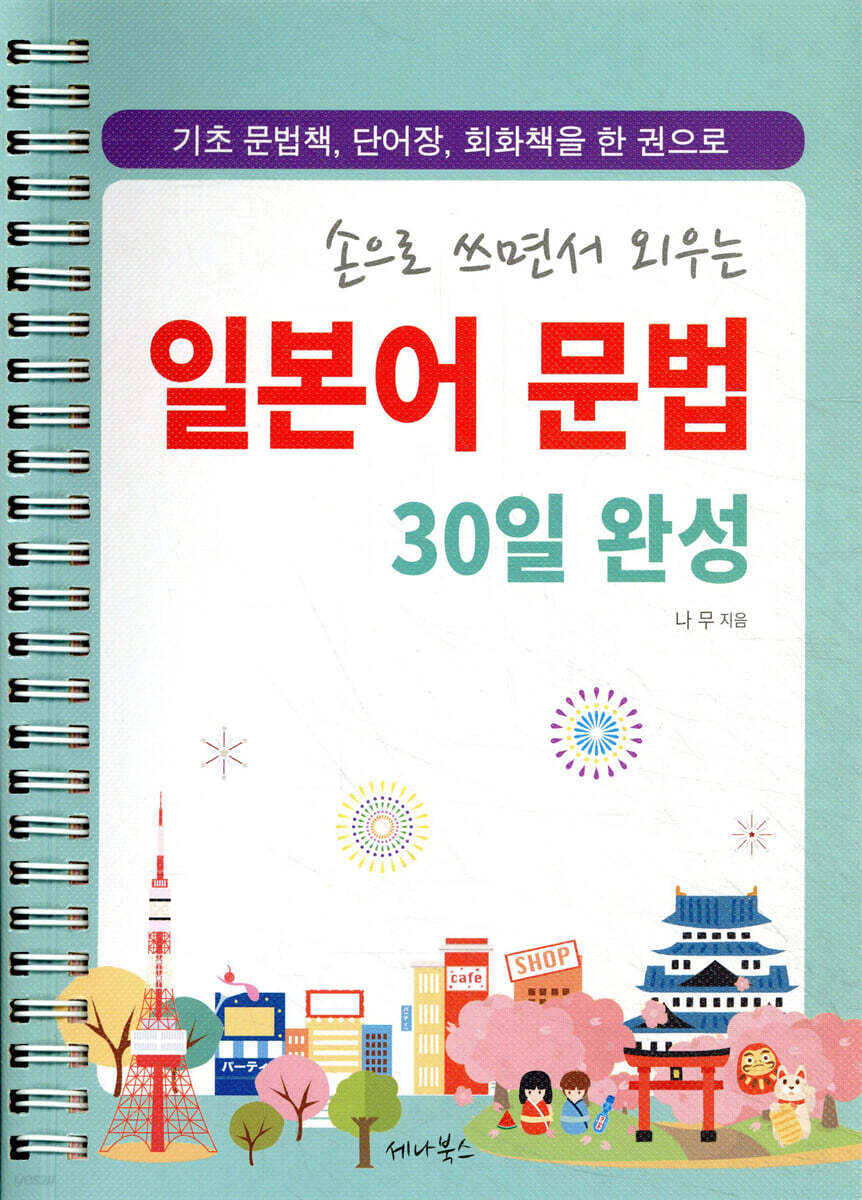
Complete Japanese Grammar in 30 Days by Memorizing It by Hand
 |
Description
index
Entering / 003
Effective Use of Textbooks / 006
Chapter 1.
Conjugation of nouns and adjectives
Day 1: Conjugation of Nouns / 014
Day 2: Conjugation of I-adjectives / 018
Day 3: Conjugation of the Adjective "Na" / 022
Day 4: Various Expressions Using "い?" Adjectives / 026
Day 5 Review: Conjugating Nouns and Adjectives / 032
Vocabulary Worksheet - Nouns & Adjectives / 036
Chapter 2.
Types of verbs and their basic conjugation
Day 6: Types and Classification of Verbs / 042
Day 7: Group 3 Verb Conjugation / 046
Day 8 Group 2 Verb Conjugation / 050
Day 9 Group 1 Verb Conjugation - Honorifics / 054
Day 10 Group 1 Verb Conjugation - Indefinite Form / 058
Day 11 Group 1 Verb Conjugation - Past Tense / 062
Day 12: Conjugation of Group 1 Verbs / 066
Day 13 Review: Verb Types and Basic Conjugation / 070
Vocabulary Worksheet - Verbs / 076
Chapter 3.
Various expressions using verbs
Day 14: Expressions Using the た and ます Forms of Verbs / 082
Day 15: Expressions Using the Nai Form of Verbs / 086
Day 16: Expressions Using the て Form of Verbs / 090
Day 17: Verb Potential Forms and Conjugation Expressions / 094
Day 18: Verb Conjugation and Volitional Forms / 098
Day 19: Various Expressions Using Review Verbs / 102
Vocabulary Worksheet - Adverbs & Conjunctions / 108
Chapter 4.
Passive & Causative & Causative Passive of Verbs
Day 20: Passive Verbs and Conjugation / 112
Day 21: Causative Forms and Conjugations of Verbs / 116
Day 22: Causative Passive Verbs and Conjugation / 120
Day 23 Review: Passive Verbs? Causative Verbs? Causative Passive Verbs / 124
Vocabulary Worksheet - Idioms / 128
Chapter 5.
Japanese-specific expressions
Day 24: The Meaning and Use of ∼ている, ∼てある / 132
Day 25: The Meaning and Use of ∼てくる, ∼ていく / 136
Day 26 Meaning and use of くれる?もらう?あげる / 140
Day 27: Conditional & Assumption Expressions and Usage / 144
Day 28: Expression and Use of Guessing & Metaphors / 148
Day 29: Types and Uses of Honorifics / 154
Day 30 Review: Japanese Expressions / 160
Effective Use of Textbooks / 006
Chapter 1.
Conjugation of nouns and adjectives
Day 1: Conjugation of Nouns / 014
Day 2: Conjugation of I-adjectives / 018
Day 3: Conjugation of the Adjective "Na" / 022
Day 4: Various Expressions Using "い?" Adjectives / 026
Day 5 Review: Conjugating Nouns and Adjectives / 032
Vocabulary Worksheet - Nouns & Adjectives / 036
Chapter 2.
Types of verbs and their basic conjugation
Day 6: Types and Classification of Verbs / 042
Day 7: Group 3 Verb Conjugation / 046
Day 8 Group 2 Verb Conjugation / 050
Day 9 Group 1 Verb Conjugation - Honorifics / 054
Day 10 Group 1 Verb Conjugation - Indefinite Form / 058
Day 11 Group 1 Verb Conjugation - Past Tense / 062
Day 12: Conjugation of Group 1 Verbs / 066
Day 13 Review: Verb Types and Basic Conjugation / 070
Vocabulary Worksheet - Verbs / 076
Chapter 3.
Various expressions using verbs
Day 14: Expressions Using the た and ます Forms of Verbs / 082
Day 15: Expressions Using the Nai Form of Verbs / 086
Day 16: Expressions Using the て Form of Verbs / 090
Day 17: Verb Potential Forms and Conjugation Expressions / 094
Day 18: Verb Conjugation and Volitional Forms / 098
Day 19: Various Expressions Using Review Verbs / 102
Vocabulary Worksheet - Adverbs & Conjunctions / 108
Chapter 4.
Passive & Causative & Causative Passive of Verbs
Day 20: Passive Verbs and Conjugation / 112
Day 21: Causative Forms and Conjugations of Verbs / 116
Day 22: Causative Passive Verbs and Conjugation / 120
Day 23 Review: Passive Verbs? Causative Verbs? Causative Passive Verbs / 124
Vocabulary Worksheet - Idioms / 128
Chapter 5.
Japanese-specific expressions
Day 24: The Meaning and Use of ∼ている, ∼てある / 132
Day 25: The Meaning and Use of ∼てくる, ∼ていく / 136
Day 26 Meaning and use of くれる?もらう?あげる / 140
Day 27: Conditional & Assumption Expressions and Usage / 144
Day 28: Expression and Use of Guessing & Metaphors / 148
Day 29: Types and Uses of Honorifics / 154
Day 30 Review: Japanese Expressions / 160
Into the book
Let's go crazy about Japanese for just one month!
Basic grammar book, vocabulary book, and conversation book all neatly in one book
Conquer Japanese grammar with the 'copy-study method' that utilizes all five senses!
While consistency is important when studying a foreign language, the more important point for improving your skills is 'studying with focus.'
It is much more effective to focus on studying for a short period of time, especially when you are first starting out.
Focus on Japanese for just one month, 30 days, with this book.
It is structured so that you can finish it in a month by studying 4 pages a day, writing it down by hand as if you were solving a quiz.
Basic grammar, a vocabulary list for beginners, and conversations that incorporate what you've learned are also included, allowing you to naturally learn grammar, vocabulary, and conversation together.
The 'transcription method' of studying by writing by hand is one of the best ways to improve a person's memory.
This method of studying by seeing with your eyes, writing with your hands, and feeling is even more effective if you read each sentence out loud and copy it.
Why not immerse yourself in Japanese study for the next month, feeling the feel of a pencil? Discover a new way to study Japanese that makes difficult Japanese grammar easy to grasp!
Basic grammar book, vocabulary book, and conversation book all neatly in one book
Conquer Japanese grammar with the 'copy-study method' that utilizes all five senses!
While consistency is important when studying a foreign language, the more important point for improving your skills is 'studying with focus.'
It is much more effective to focus on studying for a short period of time, especially when you are first starting out.
Focus on Japanese for just one month, 30 days, with this book.
It is structured so that you can finish it in a month by studying 4 pages a day, writing it down by hand as if you were solving a quiz.
Basic grammar, a vocabulary list for beginners, and conversations that incorporate what you've learned are also included, allowing you to naturally learn grammar, vocabulary, and conversation together.
The 'transcription method' of studying by writing by hand is one of the best ways to improve a person's memory.
This method of studying by seeing with your eyes, writing with your hands, and feeling is even more effective if you read each sentence out loud and copy it.
Why not immerse yourself in Japanese study for the next month, feeling the feel of a pencil? Discover a new way to study Japanese that makes difficult Japanese grammar easy to grasp!
--- From the text
Publisher's Review
Japanese is considered an easy foreign language for Koreans to learn because it has the same basic word order as Korean.
However, no matter how similar the language is, it is by no means easy to study as it is a foreign language.
At first, grammar may seem easy, but when it comes to studying the types of verbs and their conjugation, the content is often complicated and difficult, leading many to give up.
Studying Chinese characters is not easy either.
It is difficult to follow and write, and even the same Chinese character has many ways to be read, so it takes a lot of time and effort to learn and memorize them all.
In this way, the best way to achieve the desired level of skill in studying Japanese, where both grammar and kanji are not easy, is 'consistency.'
How about studying consistently every day for just a month? With consistent study, even the material that once seemed difficult will gradually become easier to understand and even become more enjoyable.
This book is structured so that you can finish it in one month by studying it as if you were solving a quiz, 4 pages a day.
In addition to basic grammar, it also includes vocabulary lists necessary for beginners and conversations that incorporate the content learned, so you can naturally learn grammar, vocabulary, and conversation together.
Also, since studying a foreign language requires as much exposure as possible, we've made the textbook simple and lightweight so you can carry it around and refer to it whenever you want.
The 'transcription method' of studying by writing by hand is one of the best ways to improve a person's memory.
Why not immerse yourself in Japanese study, experiencing the feel of a pencil for the next month? I hope this book will be helpful to those seeking new experiences and challenges in life through Japanese.
- In the middle of entering
However, no matter how similar the language is, it is by no means easy to study as it is a foreign language.
At first, grammar may seem easy, but when it comes to studying the types of verbs and their conjugation, the content is often complicated and difficult, leading many to give up.
Studying Chinese characters is not easy either.
It is difficult to follow and write, and even the same Chinese character has many ways to be read, so it takes a lot of time and effort to learn and memorize them all.
In this way, the best way to achieve the desired level of skill in studying Japanese, where both grammar and kanji are not easy, is 'consistency.'
How about studying consistently every day for just a month? With consistent study, even the material that once seemed difficult will gradually become easier to understand and even become more enjoyable.
This book is structured so that you can finish it in one month by studying it as if you were solving a quiz, 4 pages a day.
In addition to basic grammar, it also includes vocabulary lists necessary for beginners and conversations that incorporate the content learned, so you can naturally learn grammar, vocabulary, and conversation together.
Also, since studying a foreign language requires as much exposure as possible, we've made the textbook simple and lightweight so you can carry it around and refer to it whenever you want.
The 'transcription method' of studying by writing by hand is one of the best ways to improve a person's memory.
Why not immerse yourself in Japanese study, experiencing the feel of a pencil for the next month? I hope this book will be helpful to those seeking new experiences and challenges in life through Japanese.
- In the middle of entering
GOODS SPECIFICS
- Date of issue: October 1, 2019
- Format: Springbook book binding method guide
- Page count, weight, size: 168 pages | 334g | 150*215*20mm
- ISBN13: 9791187316510
- ISBN10: 1187316512
You may also like
카테고리
korean


korean

![GQ KOREA Mark (Monthly): December [2025]](http://librairie.coreenne.fr/cdn/shop/files/8ef265dbbfbf186523ed75ba7319009d.jpg?v=1765340328&width=3840)


