

The world is going to end anyway
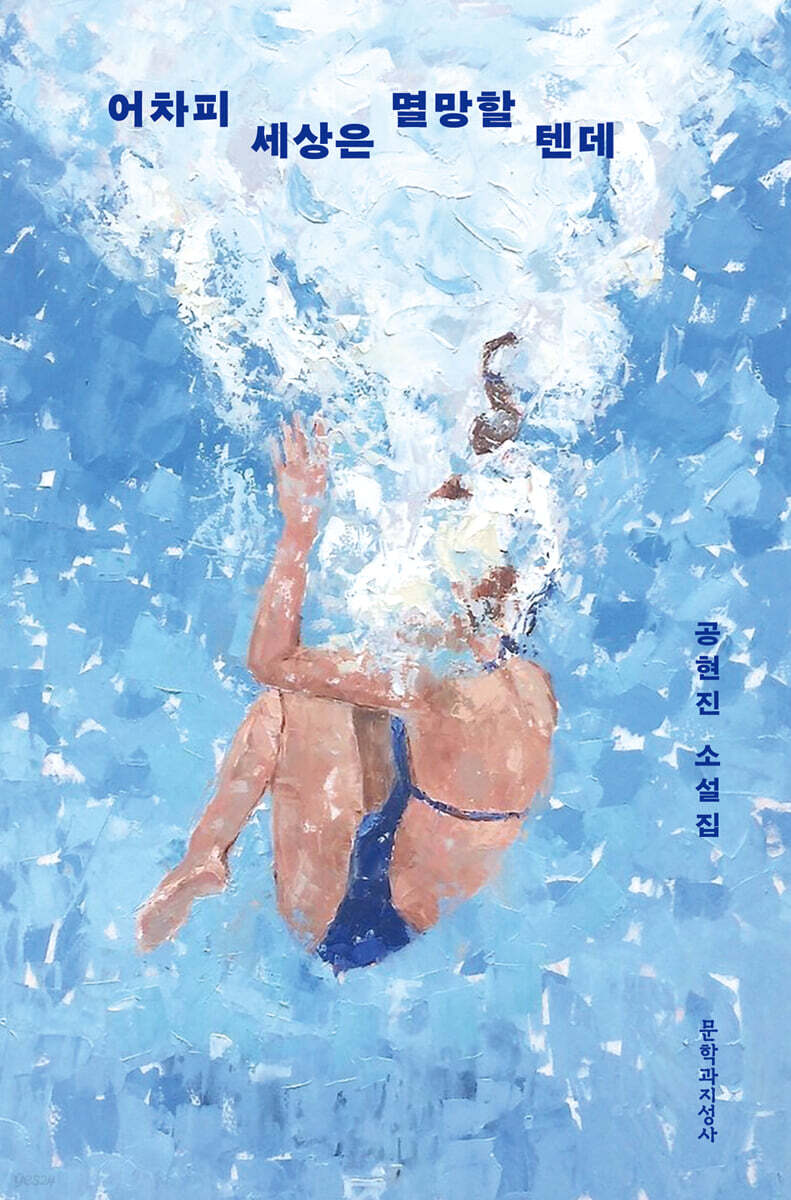 |
Description
Book Introduction
- A word from MD
-
"This world is going to end anyway, so let's live together!"A solid first collection of short stories from a young novelist.
Even in this cruel world, there are many stories of people asking for each other's well-being "with all their heart and soul."
A warm gaze towards the unprotected, and even the heart to embrace one another that we have forgotten.
Even in this world facing its end, it silently portrays those who love it.
The world is going to be ruined anyway, so let's read this novel.
July 15, 2025. Novel/Poetry PD Kim Yu-ri
“Drifting together.
Locking together and disappearing together.
“Couldn’t that also be called love?”
Without knowing where, how, or for what you are swimming
A warm heart that sincerely and wholeheartedly wishes each other well-being
A story born from boundless love for living things
The first novel collection by Gong Hyeon-jin, winner of the 15th Young Writer's Award!
In a world nearing destruction, the first novel collection of author Gong Hyeon-jin, who speaks of hope for tomorrow, has been published by Munhak-kwa-Jiseongsa.
When she was selected for the 2023 Dong-A Ilbo New Year's Literary Contest, Gong Hyeon-jin received favorable reviews for "a problematic work that is hard to find" (judges Oh Jeong-hee and Seong Seok-je) that "by revealing the ills of this era 'as they are', it seeks to make contemporaries living together reflect on ways to overcome contradictions and pain." As if to repay that trust, since her debut, she has consistently published works that do not ignore the 'reality' we live in but look closely at it.
The characters in Gong Hyun-jin's novels are 'left behind' who have suffered emotional wounds due to family expectations, neighbors' coldness, and society's lack of understanding. They struggle with their whole being to live a more humane and reasonable life.
From irregular workers working in various industries to those who can no longer return to their original groups.
In her first novel collection, Gong Hyun-jin warmly captures the diverse aspects of our lives with precise sentences, a tight narrative style, and boundless love for all living things.
The Dong-A Ilbo debut novel "Green," which received the attention of both critics and readers, juxtaposes the married immigrant woman "Green" and the narrator, a university part-time lecturer, to show the pain of a mother who lost her child and the guilt of a mother who had to leave her child behind on different levels.
The unique theme that we can never live alone and must pay attention to the lives of others is the firm conviction of Gong Hyeon-jin, who has always maintained the pledge to “not write novels that erase someone from reality” (Dong-A Ilbo acceptance speech).
His works reveal the compassionate hearts of people who pray for the well-being of others, not themselves, even though they do not know where, how, or for what they live.
Even in the midst of dire crises like war, disaster, climate crisis, environmental pollution, and ecological destruction, Gong Hyun-jin's novel shows that the only remaining ray of hope comes from a heart that wholeheartedly supports those living with us.
His first work will most clearly provide readers with the joy and comfort of life they expect from literature.
Joo-ho found it strange that he was overcome with a strong urge to live.
Wouldn't such an impulse be paired with an impulse toward death?
If life, if being alive, were natural, we would not be able to feel the urge to live.
But lately, Joo-ho has been suffering from a desperate urge to live, even without any urge or longing for death.
I want to live.
I want to live more.
―“The world is going to end anyway” (p.
54) in
The title work, "The World is Going to End Anyway," which was selected for Munhak-kwa-Jiseongsa's "Novel of the Season" and won the 15th Young Writer's Award, shows the process in which Hee-ju and Ju-ho, who witnessed the death of others in their own community, meet in a beginner swimming class and open their hearts to others and become closer to the world.
This work, which speaks of the destruction of the Earth while also expressing the human desire to live a healthier and more beneficial life, garnered enthusiastic support and sympathy from readers at the time of its publication, marking the emergence of the writer Gong Hyeon-jin in the Korean literary world.
After Kasha, whom I met while working at night, got caught in an injection molding machine and died, I wondered, “How responsible am I?” (p.
45) Joo-ho's monologue reflects the helpless reality that nothing has changed since the death of the irregular worker.
Joo-ho, who had never thought about death even once, was “desperately tormented by the urge to live” for the first time in his life (p.
54) The novel also shows the clear fact that humans can never live as individuals from the moment they are born, as it is after looking back on the lives and dreams of their colleagues, not just their own.
To borrow the words of literary critic Lee So, who commented on this collection of short stories, “Gong Hyeon-jin’s novels, instead of hastily assuming that only cynicism and resignation will remain in this world, give specific texture and warmth to the people who sustain this place.”
Gong Hyeon-jin's novel, which says, "If the world is going to end anyway, let's end it together. This is like saying to me, 'Let's live together, let's survive.'" (Author's Note), with good concern and kindness toward others, will give us the courage to rise again in a helpless world.
Locking together and disappearing together.
“Couldn’t that also be called love?”
Without knowing where, how, or for what you are swimming
A warm heart that sincerely and wholeheartedly wishes each other well-being
A story born from boundless love for living things
The first novel collection by Gong Hyeon-jin, winner of the 15th Young Writer's Award!
In a world nearing destruction, the first novel collection of author Gong Hyeon-jin, who speaks of hope for tomorrow, has been published by Munhak-kwa-Jiseongsa.
When she was selected for the 2023 Dong-A Ilbo New Year's Literary Contest, Gong Hyeon-jin received favorable reviews for "a problematic work that is hard to find" (judges Oh Jeong-hee and Seong Seok-je) that "by revealing the ills of this era 'as they are', it seeks to make contemporaries living together reflect on ways to overcome contradictions and pain." As if to repay that trust, since her debut, she has consistently published works that do not ignore the 'reality' we live in but look closely at it.
The characters in Gong Hyun-jin's novels are 'left behind' who have suffered emotional wounds due to family expectations, neighbors' coldness, and society's lack of understanding. They struggle with their whole being to live a more humane and reasonable life.
From irregular workers working in various industries to those who can no longer return to their original groups.
In her first novel collection, Gong Hyun-jin warmly captures the diverse aspects of our lives with precise sentences, a tight narrative style, and boundless love for all living things.
The Dong-A Ilbo debut novel "Green," which received the attention of both critics and readers, juxtaposes the married immigrant woman "Green" and the narrator, a university part-time lecturer, to show the pain of a mother who lost her child and the guilt of a mother who had to leave her child behind on different levels.
The unique theme that we can never live alone and must pay attention to the lives of others is the firm conviction of Gong Hyeon-jin, who has always maintained the pledge to “not write novels that erase someone from reality” (Dong-A Ilbo acceptance speech).
His works reveal the compassionate hearts of people who pray for the well-being of others, not themselves, even though they do not know where, how, or for what they live.
Even in the midst of dire crises like war, disaster, climate crisis, environmental pollution, and ecological destruction, Gong Hyun-jin's novel shows that the only remaining ray of hope comes from a heart that wholeheartedly supports those living with us.
His first work will most clearly provide readers with the joy and comfort of life they expect from literature.
Joo-ho found it strange that he was overcome with a strong urge to live.
Wouldn't such an impulse be paired with an impulse toward death?
If life, if being alive, were natural, we would not be able to feel the urge to live.
But lately, Joo-ho has been suffering from a desperate urge to live, even without any urge or longing for death.
I want to live.
I want to live more.
―“The world is going to end anyway” (p.
54) in
The title work, "The World is Going to End Anyway," which was selected for Munhak-kwa-Jiseongsa's "Novel of the Season" and won the 15th Young Writer's Award, shows the process in which Hee-ju and Ju-ho, who witnessed the death of others in their own community, meet in a beginner swimming class and open their hearts to others and become closer to the world.
This work, which speaks of the destruction of the Earth while also expressing the human desire to live a healthier and more beneficial life, garnered enthusiastic support and sympathy from readers at the time of its publication, marking the emergence of the writer Gong Hyeon-jin in the Korean literary world.
After Kasha, whom I met while working at night, got caught in an injection molding machine and died, I wondered, “How responsible am I?” (p.
45) Joo-ho's monologue reflects the helpless reality that nothing has changed since the death of the irregular worker.
Joo-ho, who had never thought about death even once, was “desperately tormented by the urge to live” for the first time in his life (p.
54) The novel also shows the clear fact that humans can never live as individuals from the moment they are born, as it is after looking back on the lives and dreams of their colleagues, not just their own.
To borrow the words of literary critic Lee So, who commented on this collection of short stories, “Gong Hyeon-jin’s novels, instead of hastily assuming that only cynicism and resignation will remain in this world, give specific texture and warmth to the people who sustain this place.”
Gong Hyeon-jin's novel, which says, "If the world is going to end anyway, let's end it together. This is like saying to me, 'Let's live together, let's survive.'" (Author's Note), with good concern and kindness toward others, will give us the courage to rise again in a helpless world.
- You can preview some of the book's contents.
Preview
index
rust
The world is going to end anyway
A returning heart
Just before naming
Seonja's Miracle Study Method
warrant
We are the forest
After Everyone Disappears - Third-Person World
Commentary│In the world of anyway - Iso
Author's Note
The world is going to end anyway
A returning heart
Just before naming
Seonja's Miracle Study Method
warrant
We are the forest
After Everyone Disappears - Third-Person World
Commentary│In the world of anyway - Iso
Author's Note
Into the book
- Professor Noh, why didn't you let my child come?
Then I was startled.
Exact sentence.
But it was a lie.
I never replied to the emails that kept coming in.
I didn't even know who was sending it, and responding hastily could have made things worse.
I clicked reply for the first time.
This is a correction as it contains information that is not factual.
I wrote the title.
--- From "Green"
What was important was that the conversation between the two people was about unimportant words.
Words you won't regret even if you think about them when you get home.
Words that scatter and evaporate in that place.
As such words were exchanged, there came a moment when I wanted to say anything.
At times like that, I end up blurting out something really deep.
Heejoo thought that she had to be careful at that moment.
Because people don't like depressing stories, and because gloomy people are not attractive.
Heeju was careful not to reveal her intimate details without realizing it.
--- From "The world is going to end anyway"
My parents were shocked.
I got mad at my sister for making such a decision on her own.
My mother especially couldn't stand my older sister who worked at the local supermarket.
“You dropped out of that great university to do something like that?”
“What’s going on? Mom, don’t go around saying things like that.”
“You always say things like that.
You're the only one who's good.
“You’re the only one who’s smart.”
--- From "The Returning Heart"
One day I asked Seok-ju why he wasn't working.
Seok-ju asked me why I was working.
"You have to work, so why don't you?" I replied nervously.
Seok-ju asked me again why I was doing that.
I asked if that mattered.
Seok-ju said it was important.
--- From "Just Before Naming"
Jin-ah thought that she hoped Seon-ja would be happy.
When Jin-ah felt that she truly wished for Seon-ja's happiness, she was embarrassed.
Am I in a situation where I can hope and wish for someone's happiness?
But does that mean I'm not qualified? Does that mean I'm not worthy? I asked myself, almost as if shouting.
And I thought wholeheartedly and sincerely about Seonja's well-being.
May Mr. Seonja rest in peace.
May the courage of the brave Seonja continue.
I hoped and hoped again.
--- From "Mr. Seonja's Miraculous Study Method"
Every morning, as I watched my mother and aunt go to pray, I felt sorry for them, but then, without realizing it, I got angry.
I was a person who wanted to leave, but in the end couldn't.
I was more troubled by the feeling of being left behind than by the feeling of not having left.
I feel like a withered flowerpot that has not been cared for.
Whenever I felt that way, I would get so jealous of the plants that would die from being watered too much.
For example, something like the blind love of an aunt who is obsessed with Sol-i's safety.
I was sometimes jealous.
--- From "Power"
We were not wrong.
Miyoung and I looked at the people hanging from the tips of ten fingers and said.
We could fold our fingers if we wanted.
If we wanted, we could fold our fingers and reap our forest.
The forest spoke to us.
It's here.
It's okay to be there.
So there we were.
We got hurt in the forest, but the forest was our home.
The forest could not ruin us.
The forest we created.
The forest we built.
The forest was soon us.
--- From "We Are the Forest"
Humanity has now decided to end its existence.
To be beautiful.
Choosing the end for yourself was a display of intelligence.
The climax of history, led by humanity, was also an aesthetic practice that only humans could perform.
So humanity decided to step down from the stage with pride and self-esteem.
There was a need to come up with a concrete plan.
A representative meeting for the end of humanity was held, and experts were convened.
Then I was startled.
Exact sentence.
But it was a lie.
I never replied to the emails that kept coming in.
I didn't even know who was sending it, and responding hastily could have made things worse.
I clicked reply for the first time.
This is a correction as it contains information that is not factual.
I wrote the title.
--- From "Green"
What was important was that the conversation between the two people was about unimportant words.
Words you won't regret even if you think about them when you get home.
Words that scatter and evaporate in that place.
As such words were exchanged, there came a moment when I wanted to say anything.
At times like that, I end up blurting out something really deep.
Heejoo thought that she had to be careful at that moment.
Because people don't like depressing stories, and because gloomy people are not attractive.
Heeju was careful not to reveal her intimate details without realizing it.
--- From "The world is going to end anyway"
My parents were shocked.
I got mad at my sister for making such a decision on her own.
My mother especially couldn't stand my older sister who worked at the local supermarket.
“You dropped out of that great university to do something like that?”
“What’s going on? Mom, don’t go around saying things like that.”
“You always say things like that.
You're the only one who's good.
“You’re the only one who’s smart.”
--- From "The Returning Heart"
One day I asked Seok-ju why he wasn't working.
Seok-ju asked me why I was working.
"You have to work, so why don't you?" I replied nervously.
Seok-ju asked me again why I was doing that.
I asked if that mattered.
Seok-ju said it was important.
--- From "Just Before Naming"
Jin-ah thought that she hoped Seon-ja would be happy.
When Jin-ah felt that she truly wished for Seon-ja's happiness, she was embarrassed.
Am I in a situation where I can hope and wish for someone's happiness?
But does that mean I'm not qualified? Does that mean I'm not worthy? I asked myself, almost as if shouting.
And I thought wholeheartedly and sincerely about Seonja's well-being.
May Mr. Seonja rest in peace.
May the courage of the brave Seonja continue.
I hoped and hoped again.
--- From "Mr. Seonja's Miraculous Study Method"
Every morning, as I watched my mother and aunt go to pray, I felt sorry for them, but then, without realizing it, I got angry.
I was a person who wanted to leave, but in the end couldn't.
I was more troubled by the feeling of being left behind than by the feeling of not having left.
I feel like a withered flowerpot that has not been cared for.
Whenever I felt that way, I would get so jealous of the plants that would die from being watered too much.
For example, something like the blind love of an aunt who is obsessed with Sol-i's safety.
I was sometimes jealous.
--- From "Power"
We were not wrong.
Miyoung and I looked at the people hanging from the tips of ten fingers and said.
We could fold our fingers if we wanted.
If we wanted, we could fold our fingers and reap our forest.
The forest spoke to us.
It's here.
It's okay to be there.
So there we were.
We got hurt in the forest, but the forest was our home.
The forest could not ruin us.
The forest we created.
The forest we built.
The forest was soon us.
--- From "We Are the Forest"
Humanity has now decided to end its existence.
To be beautiful.
Choosing the end for yourself was a display of intelligence.
The climax of history, led by humanity, was also an aesthetic practice that only humans could perform.
So humanity decided to step down from the stage with pride and self-esteem.
There was a need to come up with a concrete plan.
A representative meeting for the end of humanity was held, and experts were convened.
--- From "After Everyone Disappeared - The Third-Person World"
Publisher's Review
We again misunderstand each other and think we know each other well.
Even a small misunderstanding can ruin a relationship.
In Gong Hyun-jin's novel, the family of origin is not a safe haven to which one can return at any time, but rather a trigger that makes the individual more anxious.
A family community that seeks to be united solely by religion, without any effort to build mutual faith or trust, alienates the individual and enslaves him relentlessly and cruelly.
When my older sister, who had returned home after five years, suddenly announced her intention to get married, the first thing my mother asked was, “Are you a believer?” (「Returning Heart」, p.
78) The image of Aunt Cho-hee, who lost her daughter, interfering with everything about her niece, ‘Na’, and obsessed with her religious life (「Power」) symbolizes an abnormal family that prays to God every day but does not communicate with each other.
That doesn't mean my sister and aunt were treated as hopeless by their family from the beginning.
Until she left home, 'Sister' was the pride of her parents and siblings, and 'Aunt Cho-hee' was the only person who could save the narrator from nightmares in place of her busy mother.
The novel ends with each speaker wishing for their blood relatives, who were like one body, to settle into their original families, but also feeling anxious that they will never be able to return to their peaceful daily lives.
In "We Are the Forest," the main thread of the family narrative connects with the previous two works, but it shows a clear difference in that the original family breaks down and a new family is born.
Left alone by their parents' suicide, the two sisters have no adults to protect them.
The neighbors keep quiet about the death of their parents, and the aunt who came from Haenam to visit the sisters disappears without being able to fulfill her role as guardian.
The younger sister, Miyoung, is getting thinner by the day, and the sisters are even tormented by objects that constantly talk to them.
But the young sisters, who were left without anyone to protect them, grew up in a house full of trash and opened a dumpling shop that they had long dreamed of.
With this, the Polly Pocket that she stole from her childhood friend, the light bulb that made her feel worthless, and the traces of her dead parents are all crushed and reshaped into something warm and soft, becoming the past.
The two become each other's protectors and become a new type of family, not just blood-related sisters, with a strong bond.
Gong Hyun-jin's novel, which questions the form and meaning of family today, shows how the false belief that we know each other well can lead individuals to ruin, and asks us what relationships truly matter in life.
Because I don't know you well
A heart that can believe, rely on, and support with all its might
The wounds inflicted by family members who believed they knew each other well can sometimes be healed by the unconditional support they show others.
In “Just Before Naming,” Seok-ju’s father says that Seok-ju “doesn’t have a job, isn’t manly, postpones military service, is a vegetarian, and has absolutely nothing to like about him” (p.
100) Commit violence.
Unlike Seok-ju, I, who eats meat and works as a temporary telemarketer for a travel agency, do not understand Seok-ju, who was cut even from the amateur band I created.
It's not just Seok-ju that the speaker doesn't understand.
From managers protesting in pink vests in front of companies that have halted operations since the pandemic, to students shaving their heads in protest against the commercialization of universities.
The speaker does not understand people who do not hesitate to act on what they believe is right even in situations where it seems like nothing will change.
But “Do you need to be qualified to have sincerity?” (p.
131) Seok-ju's innocent question makes me think that I should just completely support all of his actions without adding any more reasons.
If the speaker of "Just Before Naming" cheered on a friend he couldn't understand with only his feelings of love, "Mr. Seonja's Miracle Study Method" shows that even strangers can sincerely cheer and support each other.
Seonja and Jinah, who met in a nursing assistant certification preparation class, live in different worlds, but they study together, share their lives, and support and help each other with kind hearts.
The two people, who each have to support their father and husband, become friends who carefully watch over each other's daily lives and fill in each other's shortcomings.
When the water meter froze in Jin-ah's house in the middle of the night, the first person to come running was Seon-ja, and when Seon-ja was the only one to obtain a caregiver's license, Jin-ah asked herself, "Am I in a situation where I should be wishing and praying for someone's happiness?" and yet, "I wholeheartedly and sincerely wished Seon-ja well" (p.
171) We hope and support each other and move forward toward a brighter tomorrow.
The final work, "After Everyone Disappears - The Third-Person World," depicts the destruction of humanity through the last moments of humanity and the only remaining character, "Hana," while also showing the splendidly beautiful moments of human life.
While depicting humanity facing a situation from which there is no recovery, he asks questions such as “how can one love the world even knowing its end? How can one accept the destruction of the world and not be indifferent to the disappearance of others? How can one not deny the changed world and not be cynical?” (Lee So, commentary on “In the World Anyway,” p.
291) Gong Hyeon-jin's story of passing on the world tells us that we must look back on the world of the third person in a broader category, not just our own first-person world, until the moment we disappear.
Beauty exists in a world outside the mirror, and we live with countless others, so Gong Hyeon-jin's novels still have so many stories to tell us.
This is why the actions of a new writer who tries to convey love and courage with all his heart even at the moment of sinking deep into the water feel even more admirable.
Author's Note
Like the characters in my novels, I learned to swim in the back row of the beginner swimming class.
Standing at the back of the pool, I watched people moving forward.
The sentence, “The world is going to end anyway,” which became the title of the novel collection, suddenly came to me.
In the noise of the pool.
After that sentence suddenly popped out, I felt strangely better.
Fear and fear disappeared (a little) and courage (a little) emerged.
To be honest, when I was young, I was the type of kid who liked to be in front.
But now, I've grown into an adult who feels secure in what's behind him whenever possible.
The back was fine too.
I also made friends.
There was a time when I was wary of and hated the thought of carelessly using the word 'we'.
How are you and I us, why are we us, are we just us?
I used to go home hiding my harsh feelings towards someone who suddenly grabbed my hand.
But in the end, after going around and around, I end up saying the word "we."
Even though it's easy to say, I think there's nothing I can do.
Without finding any other words.
There are moments when I feel so fortunate and blessed to be alive that I am scared.
I want to convey that feeling to someone other than myself and call them “us.”
Letting go of the layers of barriers I've built around myself, the arrogance I might have.
I just want to hold someone's hand across the broken boundaries.
I want to speak with the hand I'm holding.
If the world is going to perish anyway, let's perish together.
These words are like telling me to live together, to live.
I'm putting together my first collection of short stories.
There are novels that I write with joy and novels that I write with pain.
As I was putting the novel together, I was tormenting myself with the question of whether it was possible to tie these things together.
But they are all novels that have passed through my mind.
I'm glad I can publish these novels.
Although I am very anxious and fearful, I try my best to show my joy.
There are many people to be thankful for.
I would like to express my deepest gratitude to editor Yoon So-jin, who polished the novel with such a caring and detailed eye, and to critic Lee So, who wrote such a wonderful commentary.
As much as possible, I intend to swim backwards.
I hope we can go as far as we can and meet again.
Thank you for reading.
Summer 2025
Gong Hyun-jin
Even a small misunderstanding can ruin a relationship.
In Gong Hyun-jin's novel, the family of origin is not a safe haven to which one can return at any time, but rather a trigger that makes the individual more anxious.
A family community that seeks to be united solely by religion, without any effort to build mutual faith or trust, alienates the individual and enslaves him relentlessly and cruelly.
When my older sister, who had returned home after five years, suddenly announced her intention to get married, the first thing my mother asked was, “Are you a believer?” (「Returning Heart」, p.
78) The image of Aunt Cho-hee, who lost her daughter, interfering with everything about her niece, ‘Na’, and obsessed with her religious life (「Power」) symbolizes an abnormal family that prays to God every day but does not communicate with each other.
That doesn't mean my sister and aunt were treated as hopeless by their family from the beginning.
Until she left home, 'Sister' was the pride of her parents and siblings, and 'Aunt Cho-hee' was the only person who could save the narrator from nightmares in place of her busy mother.
The novel ends with each speaker wishing for their blood relatives, who were like one body, to settle into their original families, but also feeling anxious that they will never be able to return to their peaceful daily lives.
In "We Are the Forest," the main thread of the family narrative connects with the previous two works, but it shows a clear difference in that the original family breaks down and a new family is born.
Left alone by their parents' suicide, the two sisters have no adults to protect them.
The neighbors keep quiet about the death of their parents, and the aunt who came from Haenam to visit the sisters disappears without being able to fulfill her role as guardian.
The younger sister, Miyoung, is getting thinner by the day, and the sisters are even tormented by objects that constantly talk to them.
But the young sisters, who were left without anyone to protect them, grew up in a house full of trash and opened a dumpling shop that they had long dreamed of.
With this, the Polly Pocket that she stole from her childhood friend, the light bulb that made her feel worthless, and the traces of her dead parents are all crushed and reshaped into something warm and soft, becoming the past.
The two become each other's protectors and become a new type of family, not just blood-related sisters, with a strong bond.
Gong Hyun-jin's novel, which questions the form and meaning of family today, shows how the false belief that we know each other well can lead individuals to ruin, and asks us what relationships truly matter in life.
Because I don't know you well
A heart that can believe, rely on, and support with all its might
The wounds inflicted by family members who believed they knew each other well can sometimes be healed by the unconditional support they show others.
In “Just Before Naming,” Seok-ju’s father says that Seok-ju “doesn’t have a job, isn’t manly, postpones military service, is a vegetarian, and has absolutely nothing to like about him” (p.
100) Commit violence.
Unlike Seok-ju, I, who eats meat and works as a temporary telemarketer for a travel agency, do not understand Seok-ju, who was cut even from the amateur band I created.
It's not just Seok-ju that the speaker doesn't understand.
From managers protesting in pink vests in front of companies that have halted operations since the pandemic, to students shaving their heads in protest against the commercialization of universities.
The speaker does not understand people who do not hesitate to act on what they believe is right even in situations where it seems like nothing will change.
But “Do you need to be qualified to have sincerity?” (p.
131) Seok-ju's innocent question makes me think that I should just completely support all of his actions without adding any more reasons.
If the speaker of "Just Before Naming" cheered on a friend he couldn't understand with only his feelings of love, "Mr. Seonja's Miracle Study Method" shows that even strangers can sincerely cheer and support each other.
Seonja and Jinah, who met in a nursing assistant certification preparation class, live in different worlds, but they study together, share their lives, and support and help each other with kind hearts.
The two people, who each have to support their father and husband, become friends who carefully watch over each other's daily lives and fill in each other's shortcomings.
When the water meter froze in Jin-ah's house in the middle of the night, the first person to come running was Seon-ja, and when Seon-ja was the only one to obtain a caregiver's license, Jin-ah asked herself, "Am I in a situation where I should be wishing and praying for someone's happiness?" and yet, "I wholeheartedly and sincerely wished Seon-ja well" (p.
171) We hope and support each other and move forward toward a brighter tomorrow.
The final work, "After Everyone Disappears - The Third-Person World," depicts the destruction of humanity through the last moments of humanity and the only remaining character, "Hana," while also showing the splendidly beautiful moments of human life.
While depicting humanity facing a situation from which there is no recovery, he asks questions such as “how can one love the world even knowing its end? How can one accept the destruction of the world and not be indifferent to the disappearance of others? How can one not deny the changed world and not be cynical?” (Lee So, commentary on “In the World Anyway,” p.
291) Gong Hyeon-jin's story of passing on the world tells us that we must look back on the world of the third person in a broader category, not just our own first-person world, until the moment we disappear.
Beauty exists in a world outside the mirror, and we live with countless others, so Gong Hyeon-jin's novels still have so many stories to tell us.
This is why the actions of a new writer who tries to convey love and courage with all his heart even at the moment of sinking deep into the water feel even more admirable.
Author's Note
Like the characters in my novels, I learned to swim in the back row of the beginner swimming class.
Standing at the back of the pool, I watched people moving forward.
The sentence, “The world is going to end anyway,” which became the title of the novel collection, suddenly came to me.
In the noise of the pool.
After that sentence suddenly popped out, I felt strangely better.
Fear and fear disappeared (a little) and courage (a little) emerged.
To be honest, when I was young, I was the type of kid who liked to be in front.
But now, I've grown into an adult who feels secure in what's behind him whenever possible.
The back was fine too.
I also made friends.
There was a time when I was wary of and hated the thought of carelessly using the word 'we'.
How are you and I us, why are we us, are we just us?
I used to go home hiding my harsh feelings towards someone who suddenly grabbed my hand.
But in the end, after going around and around, I end up saying the word "we."
Even though it's easy to say, I think there's nothing I can do.
Without finding any other words.
There are moments when I feel so fortunate and blessed to be alive that I am scared.
I want to convey that feeling to someone other than myself and call them “us.”
Letting go of the layers of barriers I've built around myself, the arrogance I might have.
I just want to hold someone's hand across the broken boundaries.
I want to speak with the hand I'm holding.
If the world is going to perish anyway, let's perish together.
These words are like telling me to live together, to live.
I'm putting together my first collection of short stories.
There are novels that I write with joy and novels that I write with pain.
As I was putting the novel together, I was tormenting myself with the question of whether it was possible to tie these things together.
But they are all novels that have passed through my mind.
I'm glad I can publish these novels.
Although I am very anxious and fearful, I try my best to show my joy.
There are many people to be thankful for.
I would like to express my deepest gratitude to editor Yoon So-jin, who polished the novel with such a caring and detailed eye, and to critic Lee So, who wrote such a wonderful commentary.
As much as possible, I intend to swim backwards.
I hope we can go as far as we can and meet again.
Thank you for reading.
Summer 2025
Gong Hyun-jin
GOODS SPECIFICS
- Date of issue: June 24, 2025
- Page count, weight, size: 296 pages | 124*188*20mm
- ISBN13: 9788932044071
- ISBN10: 8932044074
You may also like
카테고리
korean


korean

![GQ KOREA Mark (Monthly): December [2025]](http://librairie.coreenne.fr/cdn/shop/files/8ef265dbbfbf186523ed75ba7319009d.jpg?v=1765340328&width=3840)


