

Third Crisis, Third Opportunity
 |
Description
Book Introduction
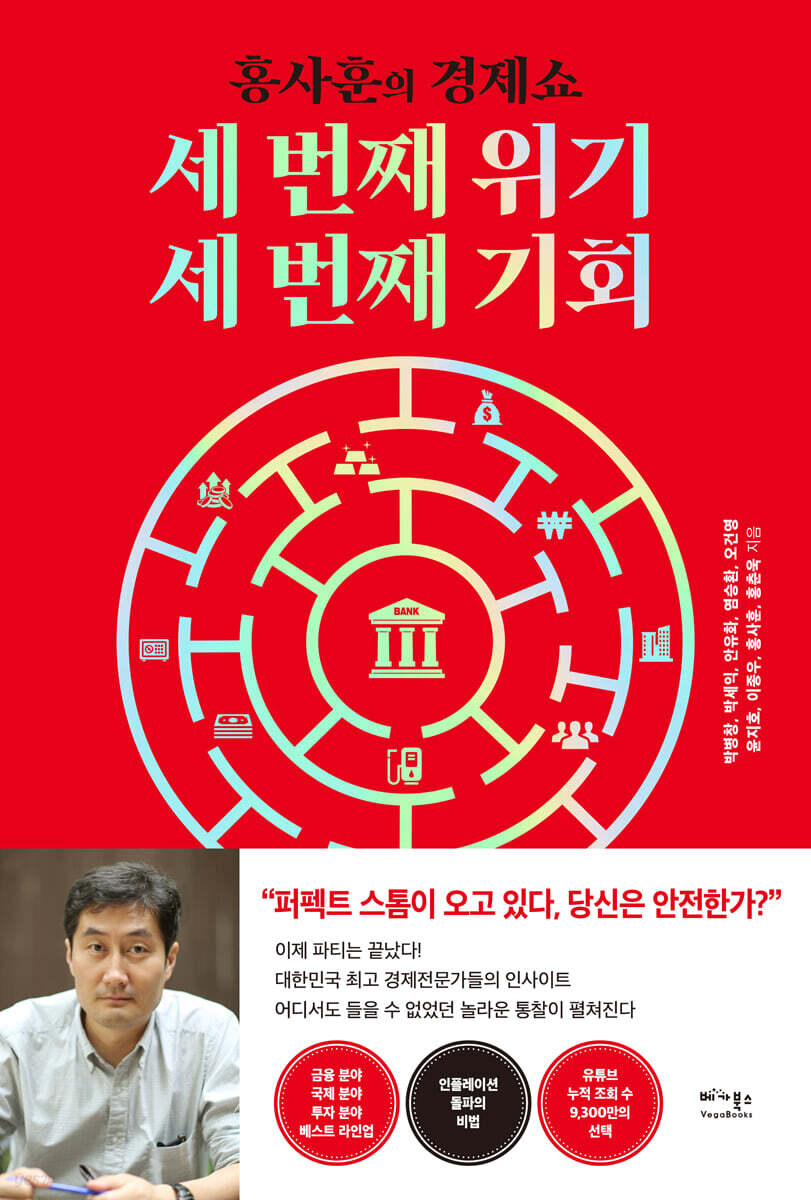
The perfect storm is coming. Are your assets safe? The year 2022, created by the 1998 foreign exchange crisis, the 2008 financial crisis, and the COVID-19 pandemic. The largest interest rate hike in 30 years The Third Crisis, the Third Opportunity Coming to Us Are you ready to seize the opportunity and the future? A perfect economics class you won't find anywhere else! The Wealth Formula from 8 Economic Experts: Past Patterns + Current Signals = Future Wealth Our economy is now navigating the storms of crisis. Following the 1998 foreign exchange crisis and the 2008 global financial crisis, we are now facing the aftermath of inflation following the COVID-19 pandemic in 2020. The Ukraine war and the new Cold War between China, Russia and the West are making future predictions more difficult and pushing the economy to unprecedented crisis. "The Third Crisis, the Third Opportunity" is a book in which reporter Hong Sa-hoon, with his unique sense of problem-solving and sharp, sharp criticism, asks eight experts who best understand the current economic situation about the path we should take and seeks direction. Oh Geon-young, deputy head of Shinhan Bank WM Group, recognized as the best financial expert by experts; Ahn Yu-hwa, professor at Sungkyunkwan University Graduate School of Chinese Studies with an unrivaled doctorate in Chinese economics; Lee Jong-woo, economist with cool-headed fact bombing; Hong Chun-wook, CEO of Richgo Investment, an economist who sees the future from history; and Yoon Ji-ho, head of the Research Center at IBK Investment & Securities, a master of investment strategies for investors, present where we stand today based on abundant data, commonalities between past economic crises, and excellent analysis of the international situation. And the best trader in Yeouido, Park Byeong-chang, head of the sales department at Kyobo Securities; the best mentor for stock investors, Yeom Seung-hwan, director at IBK Investment & Securities; and Park Se-ik, CEO of Chesley Investment Consulting, an unwavering investment strategist with 30 years of experience, will show promising sectors that will advance with the economic rebound, and the principles and tips for asset investment that should not be forgotten even in difficult times, with various examples. There is no royal road to investing or financial management. But there is definitely a smart way to go about it without going around in circles. "The Third Crisis, the Third Opportunity" will serve as a guide to understanding the global economic trends and leading the way toward wealth. |
- You can preview some of the book's contents.
Preview
index
prolog
Part 1: Knowing the Economy Shows the Flow
Putin, who pushed the world economy into crisis_Hong Chun-wook
Population Decline: Why It's a Serious Problem_Lee Jong-woo
America is no longer the America of old_An Yu-hwa
Decision of the Chinese National People's Congress_An Yu-hwa
The ripples left by Big Step_Lee Jong-woo
The problem is inflation expectations_Oh Geon-young
A crisis predicted is powerless_Yoon Ji-ho
Column - The End of Globalization: The World Changes Again_Hong Sa-hoon
Part 2: There is always a chance of wealth.
Stock Investing: Stick to the Basics, Even When Times Are Tough_Yeom Seung-hwan
Finding Stocks That Can Beat the Bear Market_Yeom Seung-hwan
The Best Stock Trading Timing_Byungchang Park
How to Achieve Your Target Income_Park Se-ik
Ride the Economic Cycle_Park Se-ik
Catch the Money Flow_Oh Geon-yeong
The Korean stock market isn't on the decline yet_Hong Chun-wook
Stocks: Now's the Best Time to Buy_Hong Chun-wook
The endless run of the delivery service industry_Lee Jong-woo
Fundamentals and Diversification: The Master Key to Portfolios_Oh Geon-young
Part 1: Knowing the Economy Shows the Flow
Putin, who pushed the world economy into crisis_Hong Chun-wook
Population Decline: Why It's a Serious Problem_Lee Jong-woo
America is no longer the America of old_An Yu-hwa
Decision of the Chinese National People's Congress_An Yu-hwa
The ripples left by Big Step_Lee Jong-woo
The problem is inflation expectations_Oh Geon-young
A crisis predicted is powerless_Yoon Ji-ho
Column - The End of Globalization: The World Changes Again_Hong Sa-hoon
Part 2: There is always a chance of wealth.
Stock Investing: Stick to the Basics, Even When Times Are Tough_Yeom Seung-hwan
Finding Stocks That Can Beat the Bear Market_Yeom Seung-hwan
The Best Stock Trading Timing_Byungchang Park
How to Achieve Your Target Income_Park Se-ik
Ride the Economic Cycle_Park Se-ik
Catch the Money Flow_Oh Geon-yeong
The Korean stock market isn't on the decline yet_Hong Chun-wook
Stocks: Now's the Best Time to Buy_Hong Chun-wook
The endless run of the delivery service industry_Lee Jong-woo
Fundamentals and Diversification: The Master Key to Portfolios_Oh Geon-young
Detailed image

Into the book
The era when we only had to think about the logic of globalization and money has changed a lot since Russia's invasion of Crimea.
With China surrounding Russia, we must carefully consider what will happen to the global economy, what will happen to investors' perspectives, and what will happen to our economy.
--- p.26
Korea also has a large baby boomer population.
From the late 1950s to the 1960s, the population increased by 700,000 people every year.
But they are entering a period of economic downturn.
Predicting the exact timing is a matter of the divine, but at some point, when a lot of properties come up for sale, the number and purchasing power of young and middle-aged people, who will act as a support group, are smaller than that of the baby boomers.
Although the Seoul metropolitan area is said to be undefeated, considering that the population structure of the metropolitan area is no different, it is necessary to prepare for a sharp drop in transaction prices and confusion.
--- p.42
What if electricity or other renewable energy sources replace oil? While it's impossible to completely eliminate oil, a decline in demand could trigger the collapse of the petrodollar system.
--- p.54
Investors and individuals alike need to wake up from the dream of unlimited liquidity and face reality. They need to recognize that the euphoria of a bull market like 2020 and the "invincible real estate market" will not last forever. Only then can they enjoy a happy and secure economic life.
--- p.81
For a major financial crisis to occur, many things must collapse at once.
And now we have a lot of buffers.
If a real crisis were to occur, businesses and financial institutions would need to ensure they had cash reserves.
--- p.104
For over 30 years, the world has lived without the concept of shortages, but in the future, there is a high possibility that unexpected goods, raw materials, and grains will suddenly be banned from export, resulting in shortages.
The era in which the world's nations shared scarce resources and lived in an awkward balance is over, and we may never see it again.
--- p.125
The rise of Chosun Ilbo reminds us that even amidst global adversity, stocks that are meant to rise will rise.
Take a look around to see if there are any investment opportunities that can turn bad news into opportunities, and wisely apply a diversified investment strategy that will ensure your investment stability remains intact.
You may be a winner even in a prolonged bear market.
--- p.160
It is said that 'buy stocks in fear'.
However, it is not easy for ordinary investors to put this into practice.
So, it's important to have strict principles when investing in stocks, and to stick to those principles without being influenced by psychology.
--- p.166
When others think that the industry has completely failed due to harsh restructuring and most of the industry's leading companies have entered the 'very cheap value zone', investment experts buy 'representative stocks of the industry that will never fail'.
Those who don't hesitate to invest in key, blue-chip companies that are trading cheaply during a sluggish business cycle end up achieving great success.
--- p.187
I think it's important for beginners to increase their investment experience.
And as I gain experience, I believe that the best way to do this is through a diversified investment strategy.
I know you might think this is too textbook, but I'd like to say this.
Diversification is similar to the saying that going to bed early and waking up early is good for your health.
It's something everyone knows and can't argue with, but it's something we're reluctant to try.
With China surrounding Russia, we must carefully consider what will happen to the global economy, what will happen to investors' perspectives, and what will happen to our economy.
--- p.26
Korea also has a large baby boomer population.
From the late 1950s to the 1960s, the population increased by 700,000 people every year.
But they are entering a period of economic downturn.
Predicting the exact timing is a matter of the divine, but at some point, when a lot of properties come up for sale, the number and purchasing power of young and middle-aged people, who will act as a support group, are smaller than that of the baby boomers.
Although the Seoul metropolitan area is said to be undefeated, considering that the population structure of the metropolitan area is no different, it is necessary to prepare for a sharp drop in transaction prices and confusion.
--- p.42
What if electricity or other renewable energy sources replace oil? While it's impossible to completely eliminate oil, a decline in demand could trigger the collapse of the petrodollar system.
--- p.54
Investors and individuals alike need to wake up from the dream of unlimited liquidity and face reality. They need to recognize that the euphoria of a bull market like 2020 and the "invincible real estate market" will not last forever. Only then can they enjoy a happy and secure economic life.
--- p.81
For a major financial crisis to occur, many things must collapse at once.
And now we have a lot of buffers.
If a real crisis were to occur, businesses and financial institutions would need to ensure they had cash reserves.
--- p.104
For over 30 years, the world has lived without the concept of shortages, but in the future, there is a high possibility that unexpected goods, raw materials, and grains will suddenly be banned from export, resulting in shortages.
The era in which the world's nations shared scarce resources and lived in an awkward balance is over, and we may never see it again.
--- p.125
The rise of Chosun Ilbo reminds us that even amidst global adversity, stocks that are meant to rise will rise.
Take a look around to see if there are any investment opportunities that can turn bad news into opportunities, and wisely apply a diversified investment strategy that will ensure your investment stability remains intact.
You may be a winner even in a prolonged bear market.
--- p.160
It is said that 'buy stocks in fear'.
However, it is not easy for ordinary investors to put this into practice.
So, it's important to have strict principles when investing in stocks, and to stick to those principles without being influenced by psychology.
--- p.166
When others think that the industry has completely failed due to harsh restructuring and most of the industry's leading companies have entered the 'very cheap value zone', investment experts buy 'representative stocks of the industry that will never fail'.
Those who don't hesitate to invest in key, blue-chip companies that are trading cheaply during a sluggish business cycle end up achieving great success.
--- p.187
I think it's important for beginners to increase their investment experience.
And as I gain experience, I believe that the best way to do this is through a diversified investment strategy.
I know you might think this is too textbook, but I'd like to say this.
Diversification is similar to the saying that going to bed early and waking up early is good for your health.
It's something everyone knows and can't argue with, but it's something we're reluctant to try.
--- p.267
Publisher's Review
An expert's eye for finding light in the darkest times
The best lineup in finance, international affairs, and investment.
Investment techniques and stock analysis alone won't help you survive in this challenging market.
At the crossroads of global economic recovery and recession, pay attention to global movements.
For the past 30 years, the world has been in a symbiotic relationship, complementing each other's shortcomings under the name of 'globalization.'
However, the deepening political and economic divide between the West, centered around the United States and Europe, and Russia and China is disintegrating supply chains and exacerbating the crisis of the Korean economy, which is caught between the two blocs.
With raw materials and food becoming weapons and the burden of inflation adding to the burden, "The Third Crisis, the Third Opportunity" cultivates the strength to adapt to change and the vision to find opportunities for wealth in the international news we often overlook.
This book meticulously explains which indicators and global news deserve special attention and attention, and the impact they have on Korea, a country highly dependent on exports and sensitive to international changes.
For example, you can understand how a single statement from the U.S. Federal Reserve can have a significant impact on exchange rates, interest rates, and even individual bank accounts.
And it doesn't stop there. Eight leading experts in international politics, finance, and investment offer easy-to-understand advice on how to survive even in the face of economic downturns and major crises, including whether to invest aggressively in key issues, increase safe-haven investments, and focus on specific sectors to maximize returns.
Despite repeated economic crises, new rich people are born.
Insights and survival strategies to turn the crisis that has returned into an opportunity!
Today's world can seem complex and unpredictable, but the message from eight experts is ultimately clear.
The point is that wealth is granted not to everyone but to a prepared few, and that the prepared few are those who have passed the test of money represented by high prices, high exchange rates, and high interest rates.
The path to passing the money test begins with overcoming fear and understanding previous 'past question patterns.'
Part 1 of the book shows what signs preceded past upheavals, focusing on the IMF and the 2008 global financial crisis.
In particular, the events that led to severe inflation, the economic growth rates of major countries a year after the inflation, and the global economy as measured by the Brazilian real-dollar exchange rate can provide excellent hints about the economic problems we will soon face in 2022-2023.
Part 2 features a "daily lecture" from top investment mentors on how they overcame previous crises and what preparations can be made now.
We have redefined the concept of investment, which we have vaguely or incorrectly understood, and provided solutions on how to construct a portfolio.
The mentor's simple yet effective techniques, such as following the "crowd," "shopping investment," and "smart money," provide stimulation and inspiration.
We also provide detailed information on sectors and companies that are growing rapidly, driven by innovation and technological convergence.
For beginners who are at a loss as to how to judge and prevent losses when there is no good news in sight, and for those with experience but are confused about whether their existing economic knowledge and investment methods are correct, I hope this book will serve as a standard and a beacon for overcoming crises and achieving successful investment.
The best lineup in finance, international affairs, and investment.
Investment techniques and stock analysis alone won't help you survive in this challenging market.
At the crossroads of global economic recovery and recession, pay attention to global movements.
For the past 30 years, the world has been in a symbiotic relationship, complementing each other's shortcomings under the name of 'globalization.'
However, the deepening political and economic divide between the West, centered around the United States and Europe, and Russia and China is disintegrating supply chains and exacerbating the crisis of the Korean economy, which is caught between the two blocs.
With raw materials and food becoming weapons and the burden of inflation adding to the burden, "The Third Crisis, the Third Opportunity" cultivates the strength to adapt to change and the vision to find opportunities for wealth in the international news we often overlook.
This book meticulously explains which indicators and global news deserve special attention and attention, and the impact they have on Korea, a country highly dependent on exports and sensitive to international changes.
For example, you can understand how a single statement from the U.S. Federal Reserve can have a significant impact on exchange rates, interest rates, and even individual bank accounts.
And it doesn't stop there. Eight leading experts in international politics, finance, and investment offer easy-to-understand advice on how to survive even in the face of economic downturns and major crises, including whether to invest aggressively in key issues, increase safe-haven investments, and focus on specific sectors to maximize returns.
Despite repeated economic crises, new rich people are born.
Insights and survival strategies to turn the crisis that has returned into an opportunity!
Today's world can seem complex and unpredictable, but the message from eight experts is ultimately clear.
The point is that wealth is granted not to everyone but to a prepared few, and that the prepared few are those who have passed the test of money represented by high prices, high exchange rates, and high interest rates.
The path to passing the money test begins with overcoming fear and understanding previous 'past question patterns.'
Part 1 of the book shows what signs preceded past upheavals, focusing on the IMF and the 2008 global financial crisis.
In particular, the events that led to severe inflation, the economic growth rates of major countries a year after the inflation, and the global economy as measured by the Brazilian real-dollar exchange rate can provide excellent hints about the economic problems we will soon face in 2022-2023.
Part 2 features a "daily lecture" from top investment mentors on how they overcame previous crises and what preparations can be made now.
We have redefined the concept of investment, which we have vaguely or incorrectly understood, and provided solutions on how to construct a portfolio.
The mentor's simple yet effective techniques, such as following the "crowd," "shopping investment," and "smart money," provide stimulation and inspiration.
We also provide detailed information on sectors and companies that are growing rapidly, driven by innovation and technological convergence.
For beginners who are at a loss as to how to judge and prevent losses when there is no good news in sight, and for those with experience but are confused about whether their existing economic knowledge and investment methods are correct, I hope this book will serve as a standard and a beacon for overcoming crises and achieving successful investment.
GOODS SPECIFICS
- Publication date: July 22, 2022
- Page count, weight, size: 272 pages | 504g | 152*225*18mm
- ISBN13: 9791192488073
- ISBN10: 1192488075
You may also like
카테고리
korean


korean

![ELLE 엘르 스페셜 에디션 A형 : 12월 [2025]](http://librairie.coreenne.fr/cdn/shop/files/b8e27a3de6c9538896439686c6b0e8fb.jpg?v=1766436872&width=3840)


