

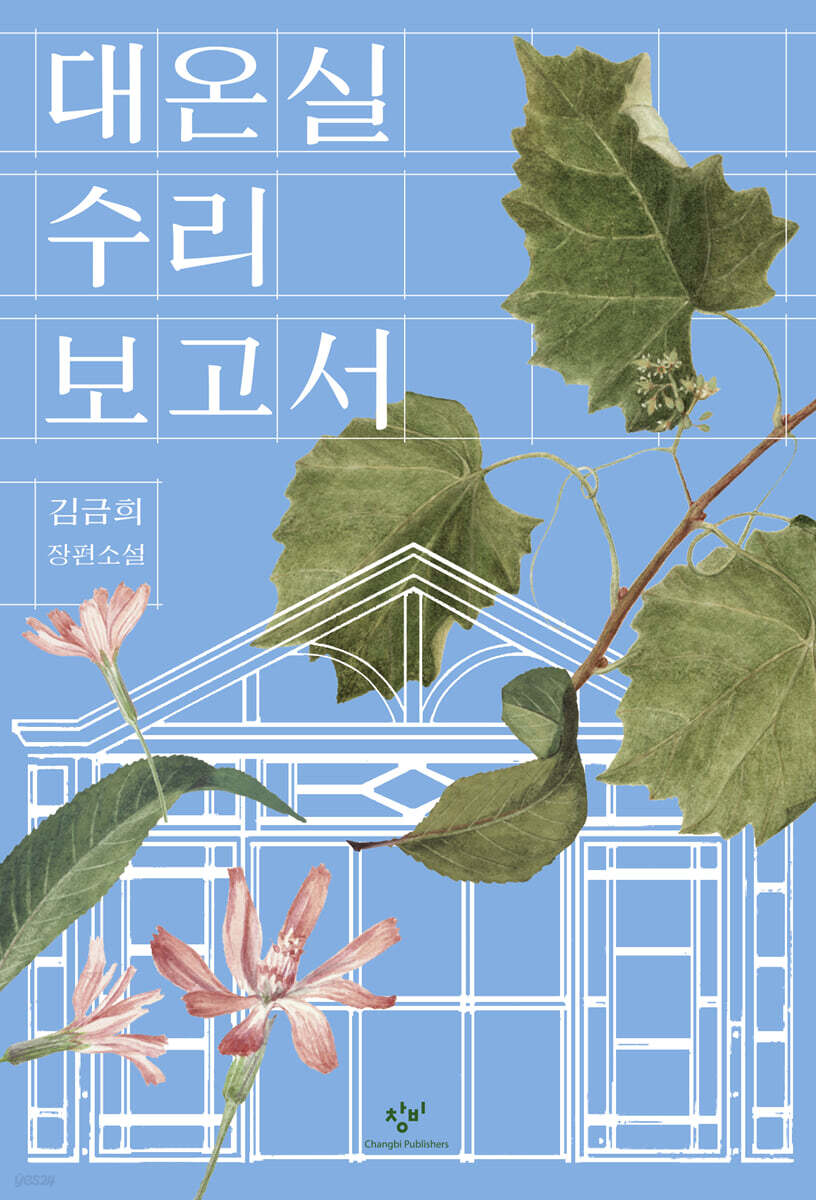
Greenhouse Repair Report
 |
Description
Book Introduction
- A word from MD
-
The story surrounding the secrets of Changgyeonggung Palace's Grand GreenhouseA new novel by novelist Kim Geum-hee.
Set against the backdrop of Changgyeonggung Palace's Grand Greenhouse, the secrets and personal history hidden within are reconstructed.
The author's writing skills, which go back and forth between actual history and fiction, and build up the layers of the story in greater detail, are amazing.
A warm work in which wounds that seemed like they would never heal are eventually healed by love.
September 30, 2024. Novel/Poetry PD Kim Yu-ri
A majestic narrative surrounding the secrets of Changgyeonggung Palace's Grand Greenhouse.
Experience the ultimate in fun and excitement that a novel can offer.
Kim Geum-hee's masterpiece is finally born!
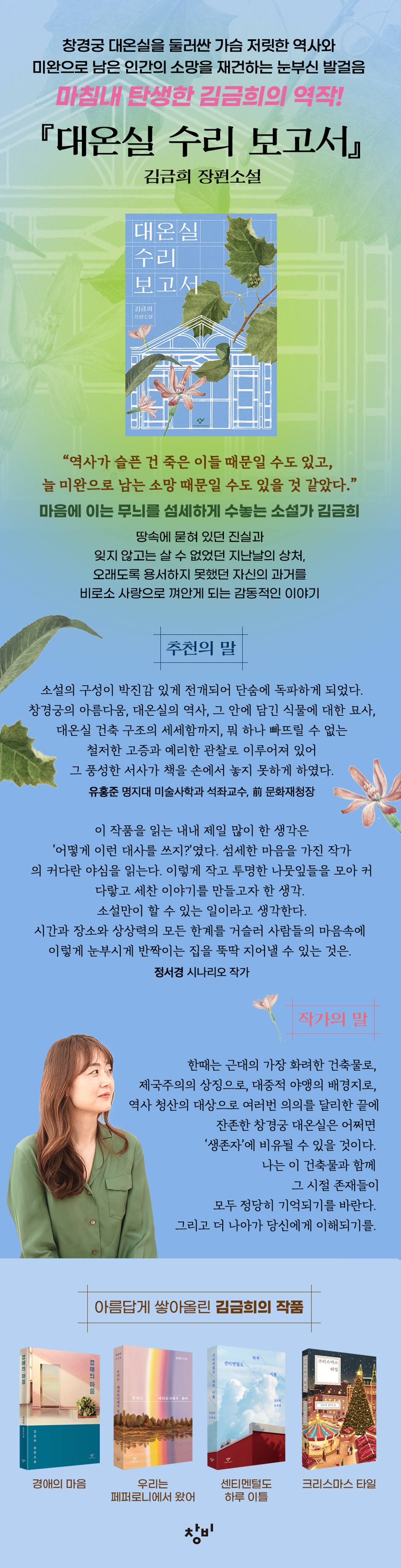
Novelist Kim Geum-hee, who has demonstrated the beauty of stories by delicately embroidering patterns that touch the heart, presents the full-length novel 『Report on the Great Greenhouse Repair』.
Set in the Changgyeonggung Grand Greenhouse, the largest glass greenhouse in the East, this work movingly depicts the heartbreaking secrets hidden within and the conviction not to betray faith in humanity.
This is the author's first historical novel in 15 years since she began her career, and it is a masterpiece that opens up a new dimension to Kim Geum-hee's world of fiction and shows the true face of a rich, long novel rarely seen these days.
This work, which vividly depicts the nature surrounding Changgyeonggung and Changdeokgung Palaces, the history of the construction of Daeonsil, Korea's first glass greenhouse, the secrets hidden in Changgyeongwon during the Japanese colonial period, the atmosphere of Wonseo-dong, an old Seoul neighborhood, and the hearts of the people living there through big and small incidents, is no exaggeration in offering readers the maximum fun and emotion that a novel can offer.
The 'repair report' written by the protagonist of this work is a document that contains the process of repairing a building, but it is also a record of repairing and rebuilding a painful moment in our history and wounded lives.
The author seems to be saying that certain emotional wounds that everyone inevitably experiences are essential elements of a building, just as doorknobs and window frames are essential materials for building a house, and are essential elements for creating life.
When the protagonist, who has been forced to confront the past that he had forgotten and buried out of fear, is able to put an end to his report, readers who have followed this extensive story will feel a deep emotional growth, as if they have become a different person than before reading this work, and will also feel deeply moved.
Experience the ultimate in fun and excitement that a novel can offer.
Kim Geum-hee's masterpiece is finally born!
Novelist Kim Geum-hee, who has demonstrated the beauty of stories by delicately embroidering patterns that touch the heart, presents the full-length novel 『Report on the Great Greenhouse Repair』.
Set in the Changgyeonggung Grand Greenhouse, the largest glass greenhouse in the East, this work movingly depicts the heartbreaking secrets hidden within and the conviction not to betray faith in humanity.
This is the author's first historical novel in 15 years since she began her career, and it is a masterpiece that opens up a new dimension to Kim Geum-hee's world of fiction and shows the true face of a rich, long novel rarely seen these days.
This work, which vividly depicts the nature surrounding Changgyeonggung and Changdeokgung Palaces, the history of the construction of Daeonsil, Korea's first glass greenhouse, the secrets hidden in Changgyeongwon during the Japanese colonial period, the atmosphere of Wonseo-dong, an old Seoul neighborhood, and the hearts of the people living there through big and small incidents, is no exaggeration in offering readers the maximum fun and emotion that a novel can offer.
The 'repair report' written by the protagonist of this work is a document that contains the process of repairing a building, but it is also a record of repairing and rebuilding a painful moment in our history and wounded lives.
The author seems to be saying that certain emotional wounds that everyone inevitably experiences are essential elements of a building, just as doorknobs and window frames are essential materials for building a house, and are essential elements for creating life.
When the protagonist, who has been forced to confront the past that he had forgotten and buried out of fear, is able to put an end to his report, readers who have followed this extensive story will feel a deep emotional growth, as if they have become a different person than before reading this work, and will also feel deeply moved.
- You can preview some of the book's contents.
Preview
index
Chapter 1.
Wonseo-dong
Chapter 2.
Under the transplanted palm tree
Chapter 3.
Night cherry blossoms
Chapter 4.
Burning Vortex
Chapter 5.
You are hungry Kuma Sensei
Chapter 6.
large water bird pen
Chapter 7.
Wooden fish and birds
Chapter 8.
Hey guys, listen to my story
Chapter 9.
Greenhouse Repair Report
Note | Author's Note | References
Wonseo-dong
Chapter 2.
Under the transplanted palm tree
Chapter 3.
Night cherry blossoms
Chapter 4.
Burning Vortex
Chapter 5.
You are hungry Kuma Sensei
Chapter 6.
large water bird pen
Chapter 7.
Wooden fish and birds
Chapter 8.
Hey guys, listen to my story
Chapter 9.
Greenhouse Repair Report
Note | Author's Note | References
Detailed image
Into the book
Looking back, I feel like I've always endured life by erasing certain places.
I've tried my best to forget places I want to forget by simply avoiding them, but taking on this task would make me think about them and learn more about them.
There was my temporary job for a little over a year, a palace built 600 years ago, and a paradise boarding house that I decided to forget because I felt I couldn't live if I didn't forget it.
--- p.17
“The greenhouse is a nationally registered cultural property, but I don’t see it with a good heart.
They say it's a remnant of Japanese imperialism.
It barely survived when all other facilities were demolished during the restoration project of Changgyeonggung Palace.
It's a survival building.
The agency asked me to write about that aspect.”
“Did you survive?”
“Yes, and the actual survey is in progress, and an underground space has been discovered.
“It’s gotten a little interesting.”
--- p.33
“What can we do about the rainy season? We’ll have to wait for the next one.
That doesn't mean the sea salt will go anywhere.
Life is like that, Youngdu.
Since it's a road with lots of cars, there's bound to be a U-turn at some point.
“That’s what the lady learned to drive recently.”
“A U-turn?”
“Yeah, so as long as you keep your wits about you and know where to return, you don’t have to worry.
Got it? Welcome, welcome.”
--- p.66
“There’s nothing wrong with trusting people.
If you were that alone, as you said, you would have to trust to survive.
Some people believe in someone because of that.”
--- p.102
I understand the desire to throw away entire periods of time, unable to keep the good parts.
People who have given up their precious time to misfortune and have to fight to the death with the longing that reminds them of those times.
Those who wake up every morning and have to shadowbox with that heavy feeling of helplessness.
The process of loving and breaking up with him taught me about the loss that slowly kills my heart, my love, as if strangling a living thing.
--- pp.156~157
When you're a child, whether you have legs or not, you still can't go anywhere.
Because there is a wall surrounding us called adults.
There was no adult among us who did not have cracks.
So there was no child who was not anxious.
I was nervous that the storms of life I was witnessing now would become mine, but I was also afraid that the caregivers would eventually lose and disappear.
Wouldn't it be an unbearable moment if you ran wildly and couldn't turn your eyes away from your own heart?
I guessed that maybe that's why San-A-Do came riding her bike.
--- p.179
As Jang Jang-jang said, it would be okay to just pass by.
After all, what people want is the beauty of a glass-enclosed greenhouse, not what's underneath.
Because the ground is not subject to repair or restoration.
But it would be against the order.
It would be difficult to know the whole story in that state.
The collapse and subsidence will continue.
As with personal wounds.
If you bury one side like that, wouldn't that be a sloppy repair?
--- pp.209~210
San-ah said that she didn't know why old stories ended so sadly, and that whenever she read a history book, there was never a happy ending.
It was so true that I couldn't answer again.
I thought history might be sad because of the dead, or because of the hopes that always remain unfulfilled.
I've tried my best to forget places I want to forget by simply avoiding them, but taking on this task would make me think about them and learn more about them.
There was my temporary job for a little over a year, a palace built 600 years ago, and a paradise boarding house that I decided to forget because I felt I couldn't live if I didn't forget it.
--- p.17
“The greenhouse is a nationally registered cultural property, but I don’t see it with a good heart.
They say it's a remnant of Japanese imperialism.
It barely survived when all other facilities were demolished during the restoration project of Changgyeonggung Palace.
It's a survival building.
The agency asked me to write about that aspect.”
“Did you survive?”
“Yes, and the actual survey is in progress, and an underground space has been discovered.
“It’s gotten a little interesting.”
--- p.33
“What can we do about the rainy season? We’ll have to wait for the next one.
That doesn't mean the sea salt will go anywhere.
Life is like that, Youngdu.
Since it's a road with lots of cars, there's bound to be a U-turn at some point.
“That’s what the lady learned to drive recently.”
“A U-turn?”
“Yeah, so as long as you keep your wits about you and know where to return, you don’t have to worry.
Got it? Welcome, welcome.”
--- p.66
“There’s nothing wrong with trusting people.
If you were that alone, as you said, you would have to trust to survive.
Some people believe in someone because of that.”
--- p.102
I understand the desire to throw away entire periods of time, unable to keep the good parts.
People who have given up their precious time to misfortune and have to fight to the death with the longing that reminds them of those times.
Those who wake up every morning and have to shadowbox with that heavy feeling of helplessness.
The process of loving and breaking up with him taught me about the loss that slowly kills my heart, my love, as if strangling a living thing.
--- pp.156~157
When you're a child, whether you have legs or not, you still can't go anywhere.
Because there is a wall surrounding us called adults.
There was no adult among us who did not have cracks.
So there was no child who was not anxious.
I was nervous that the storms of life I was witnessing now would become mine, but I was also afraid that the caregivers would eventually lose and disappear.
Wouldn't it be an unbearable moment if you ran wildly and couldn't turn your eyes away from your own heart?
I guessed that maybe that's why San-A-Do came riding her bike.
--- p.179
As Jang Jang-jang said, it would be okay to just pass by.
After all, what people want is the beauty of a glass-enclosed greenhouse, not what's underneath.
Because the ground is not subject to repair or restoration.
But it would be against the order.
It would be difficult to know the whole story in that state.
The collapse and subsidence will continue.
As with personal wounds.
If you bury one side like that, wouldn't that be a sloppy repair?
--- pp.209~210
San-ah said that she didn't know why old stories ended so sadly, and that whenever she read a history book, there was never a happy ending.
It was so true that I couldn't answer again.
I thought history might be sad because of the dead, or because of the hopes that always remain unfulfilled.
--- p.267
Publisher's Review
A captivating story spanning 100 years
The story begins when a woman in her 30s named 'Yeongdu' is given the task of writing a white paper on the renovation of the Grand Greenhouse in Changgyeonggung Palace.
Yeongdu is from Seokmodo Island, and in 2003, when he was a middle school student, he studied abroad in Wonseo-dong, a neighborhood in Seoul formed along the wall of Changdeokgung Palace.
For some reason, when he hears the words 'Changgyeonggung Palace', he feels a chill run down his spine and is initially reluctant to take on the task.
As if there had been a time when my life had been greatly turned upside down there.
Then, he painfully recalls the past when he lived with the grandmother 'Moonja', the owner of 'Paradise Boarding House' where he was staying at the time, and her granddaughter 'Lisa'.
Meanwhile, along with the current renovation of the large greenhouse, the story of Noboru Fukuda, a Japanese man who built the greenhouse during the Japanese colonial period, intertwines like warp and weft.
Through these two axes of narrative, the author increases the immersion in the work while providing various fun elements.
Fukuda's story takes readers on a long journey, following a man who has devoted his life to something.
This is based on the actual person in charge of the construction of the Grand Greenhouse of Changgyeonggung Palace, Hayato Fukuba, and his memoirs, but many parts are fictionalized by the author.
The author adds to the overall interest and depth of the novel by vividly portraying various characters associated with Changgyeonggung Palace, including this one, and by linking them to modern historical scenes.
The story takes a twist when a surprising secret is discovered underground during the current renovations.
Yeongdu has a hunch that the traces found there are related to the letters and begins to dig into the matter.
Then, we learn about the events that Moonja experienced during her childhood... Moonja is a person who has lived her entire life in the midst of the rough waves of modern history, harboring a secret that she could not tell anyone.
Yeongdu uncovers the old secrets that the text has kept and is forced to confront his own wounds.
Just as Grandma Moonja gave her “love that coldly awakens the spirit” long ago, she was finally able to embrace her past, which she had been unable to forgive for a long time.
In this way, the 'Greenhouse Repair Report' remains as Youngdu's record of rebuilding his life while repairing the sorrow caused by the wounds.
An overwhelming scale built through thorough research and meticulous reporting.
The brilliant voices of the people living and breathing within it
Screenwriter Jeong Seo-kyung, who wrote the recommendation, wrote, “This is a grand story where big and small events converge in one place.” 『Greenhouse Repair Report』 contains a diverse group of people like the tiny veins spread across a leaf.
In particular, the part where Eunhye, a friend who grew up together in Ganghwa, and her daughter Sanah spend their daily lives with Yeongdu seems to suggest the author's new family image.
After his father passed away, Yeong-du was left alone; Eun-hye worked as a real estate agent and raised her child alone; and San-ah, who grew up early and was able to understand others despite her young age, had meals together and shared their daily worries. These scenes are inserted throughout the story, sometimes making us laugh and sometimes making us think about the importance of the people around us.
As it is a vast story that shows Young-du's growth, it also contains a love story.
The anecdote about Yeongdu's first love, Yi Sun-sin, whom he met in Wonseo-dong, adds another vitality to this work and increases the enjoyment of reading it.
The episode with his first love, which he lost and hurt because of the shame of his childhood, makes us feel the thrill of revealing his feelings honestly to the person he loves for the first time in his life, and the pity of revealing his true feelings to others because he doesn't know his own feelings, and closely follows Young-du's growth.
In addition, 『The Greenhouse Repair Report』 is filled with elements that enrich and add fun to the story, such as the unique people of the architectural firm, detailed descriptions of the buildings they work on, and their beauty.
This is also the power of an outstanding novel that shows a multi-layered world while embracing various voices.
The long list of references at the end of the novel provides a glimpse into the author's meticulousness in constructing the story in such a multi-layered manner.
The author delved into this vast amount of material and, based on it, fully demonstrated his abilities as a writer, using his imagination to bring to life the faces and vivid voices of the people hidden between the lines.
Although it was not welcomed as a remnant of Japanese colonial rule, the Grand Greenhouse of Changgyeonggung Palace survived through many twists and turns, and can be compared to the noble lives of those who survived through the turbulent history.
This moving story of overcoming past wounds that could not be forgotten and finally facing them, rebuilds the lives of those who have been hurt, like a greenhouse being reinforced through renovations.
The wounds of the past that were buried because we didn't have the confidence to look into them will eventually remain as a huge, unresolved void.
Just as a carpenter builds a house by stacking wood layer by layer, if we look into and console the sadness of each moment, a sturdy house may shine before our eyes.
It is time to encounter the power of Kim Geum-hee's novels, which will establish her as a precious writer of our time, through this overwhelming story that towers over the splendid secret house called life.
It occurred to me that love, life, and, to put it more seriously, even our history, could be overcome in this way.
Could this be the case with a novel?
It was an unforgettable experience.
soso24***
It's a novel that makes you want to read it again right away even though you've finished reading it and put it down.
raccoon***
I didn't realize how much time had passed while reading.
How long has it been since I've had something this fun?
nunij***
A masterpiece delicately carved by artist Kim Geum-hee.
reali***
This novel is as beautiful as the Grand Greenhouse of Changgyeonggung Palace, perfect for reading in the soon-to-be-cool weather.
dearda***
If you like novels set in history, I highly recommend you read this.
le_sie***
The story begins when a woman in her 30s named 'Yeongdu' is given the task of writing a white paper on the renovation of the Grand Greenhouse in Changgyeonggung Palace.
Yeongdu is from Seokmodo Island, and in 2003, when he was a middle school student, he studied abroad in Wonseo-dong, a neighborhood in Seoul formed along the wall of Changdeokgung Palace.
For some reason, when he hears the words 'Changgyeonggung Palace', he feels a chill run down his spine and is initially reluctant to take on the task.
As if there had been a time when my life had been greatly turned upside down there.
Then, he painfully recalls the past when he lived with the grandmother 'Moonja', the owner of 'Paradise Boarding House' where he was staying at the time, and her granddaughter 'Lisa'.
Meanwhile, along with the current renovation of the large greenhouse, the story of Noboru Fukuda, a Japanese man who built the greenhouse during the Japanese colonial period, intertwines like warp and weft.
Through these two axes of narrative, the author increases the immersion in the work while providing various fun elements.
Fukuda's story takes readers on a long journey, following a man who has devoted his life to something.
This is based on the actual person in charge of the construction of the Grand Greenhouse of Changgyeonggung Palace, Hayato Fukuba, and his memoirs, but many parts are fictionalized by the author.
The author adds to the overall interest and depth of the novel by vividly portraying various characters associated with Changgyeonggung Palace, including this one, and by linking them to modern historical scenes.
The story takes a twist when a surprising secret is discovered underground during the current renovations.
Yeongdu has a hunch that the traces found there are related to the letters and begins to dig into the matter.
Then, we learn about the events that Moonja experienced during her childhood... Moonja is a person who has lived her entire life in the midst of the rough waves of modern history, harboring a secret that she could not tell anyone.
Yeongdu uncovers the old secrets that the text has kept and is forced to confront his own wounds.
Just as Grandma Moonja gave her “love that coldly awakens the spirit” long ago, she was finally able to embrace her past, which she had been unable to forgive for a long time.
In this way, the 'Greenhouse Repair Report' remains as Youngdu's record of rebuilding his life while repairing the sorrow caused by the wounds.
An overwhelming scale built through thorough research and meticulous reporting.
The brilliant voices of the people living and breathing within it
Screenwriter Jeong Seo-kyung, who wrote the recommendation, wrote, “This is a grand story where big and small events converge in one place.” 『Greenhouse Repair Report』 contains a diverse group of people like the tiny veins spread across a leaf.
In particular, the part where Eunhye, a friend who grew up together in Ganghwa, and her daughter Sanah spend their daily lives with Yeongdu seems to suggest the author's new family image.
After his father passed away, Yeong-du was left alone; Eun-hye worked as a real estate agent and raised her child alone; and San-ah, who grew up early and was able to understand others despite her young age, had meals together and shared their daily worries. These scenes are inserted throughout the story, sometimes making us laugh and sometimes making us think about the importance of the people around us.
As it is a vast story that shows Young-du's growth, it also contains a love story.
The anecdote about Yeongdu's first love, Yi Sun-sin, whom he met in Wonseo-dong, adds another vitality to this work and increases the enjoyment of reading it.
The episode with his first love, which he lost and hurt because of the shame of his childhood, makes us feel the thrill of revealing his feelings honestly to the person he loves for the first time in his life, and the pity of revealing his true feelings to others because he doesn't know his own feelings, and closely follows Young-du's growth.
In addition, 『The Greenhouse Repair Report』 is filled with elements that enrich and add fun to the story, such as the unique people of the architectural firm, detailed descriptions of the buildings they work on, and their beauty.
This is also the power of an outstanding novel that shows a multi-layered world while embracing various voices.
The long list of references at the end of the novel provides a glimpse into the author's meticulousness in constructing the story in such a multi-layered manner.
The author delved into this vast amount of material and, based on it, fully demonstrated his abilities as a writer, using his imagination to bring to life the faces and vivid voices of the people hidden between the lines.
Although it was not welcomed as a remnant of Japanese colonial rule, the Grand Greenhouse of Changgyeonggung Palace survived through many twists and turns, and can be compared to the noble lives of those who survived through the turbulent history.
This moving story of overcoming past wounds that could not be forgotten and finally facing them, rebuilds the lives of those who have been hurt, like a greenhouse being reinforced through renovations.
The wounds of the past that were buried because we didn't have the confidence to look into them will eventually remain as a huge, unresolved void.
Just as a carpenter builds a house by stacking wood layer by layer, if we look into and console the sadness of each moment, a sturdy house may shine before our eyes.
It is time to encounter the power of Kim Geum-hee's novels, which will establish her as a precious writer of our time, through this overwhelming story that towers over the splendid secret house called life.
It occurred to me that love, life, and, to put it more seriously, even our history, could be overcome in this way.
Could this be the case with a novel?
It was an unforgettable experience.
soso24***
It's a novel that makes you want to read it again right away even though you've finished reading it and put it down.
raccoon***
I didn't realize how much time had passed while reading.
How long has it been since I've had something this fun?
nunij***
A masterpiece delicately carved by artist Kim Geum-hee.
reali***
This novel is as beautiful as the Grand Greenhouse of Changgyeonggung Palace, perfect for reading in the soon-to-be-cool weather.
dearda***
If you like novels set in history, I highly recommend you read this.
le_sie***
GOODS SPECIFICS
- Date of issue: October 4, 2024
- Page count, weight, size: 416 pages | 448g | 128*188*26mm
- ISBN13: 9788936439651
- ISBN10: 8936439650
You may also like
카테고리
korean


korean

![GQ KOREA Mark (Monthly): December [2025]](http://librairie.coreenne.fr/cdn/shop/files/8ef265dbbfbf186523ed75ba7319009d.jpg?v=1765340328&width=3840)


