

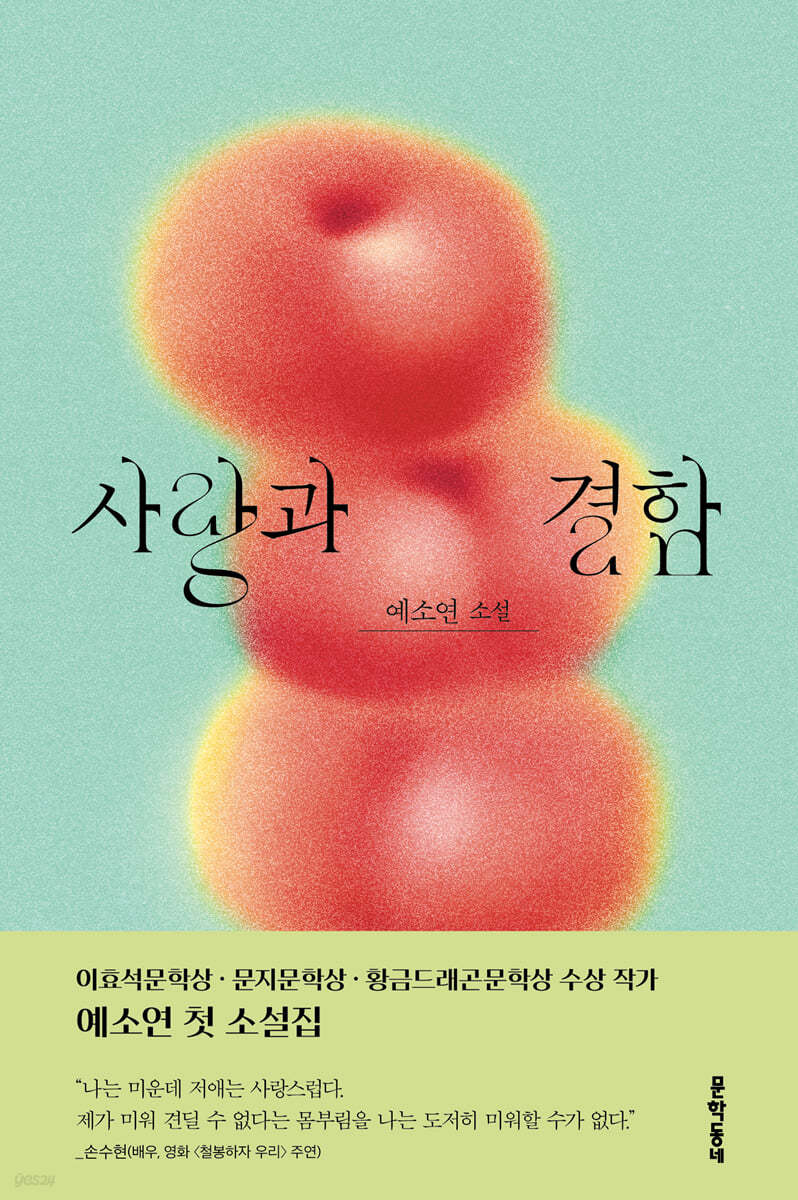
Love and Flaws
 |
Description
Book Introduction
“I hate her, but she’s lovable. “I can never hate the struggle that I cannot bear.” _Son Soo-hyun (actress, lead role in the film “Let’s Do the Horizontal Bar”) “So the person who is closest to me and yet farthest from me “A story about facing the truth about myself.” _Lee Ju-ran (novelist) Winner of the Lee Hyo-seok Literary Award, Munji Literary Award, and Golden Dragon Literary Award Yesoyeon's first novel collection The first short story collection, “Love and Defects,” by Ye So-yeon, who has established herself as a rising star in Korean literature by winning the Lee Hyo-seok Literary Award, the Munji Literary Award, and the Golden Dragon Literary Award in just three years since her debut, has been published. Ye So-yeon, who began her career as a writer through the 2021 『Modern Literature』 New Writer Recommendation, has been testifying to the ever-changing sensibilities of the contemporary era by publishing works that show things as they are rather than trying to prove something, living up to the premonition that “this is not a novel that tries to tell the truth, but a novel that talks about what one senses” (Pyeon Hye-young). This collection of short stories, which feels like a passionate force announcing the beginning of a new writer, includes a total of ten works, including the 2023 Munji Literary Award winner “Love and Defects,” and Munhak-kwa-Jiseongsa’s “Novel of the Season” selections “We Are Every Season” and “The Dog and the Revolution.” "The Dog and the Revolution" is once again garnering attention as it has been nominated for the 2023 Lee Hyo-seok Literary Award, which is scheduled to be announced in early August. In an age overflowing with sweet love stories, what is the determination to place 'love' and 'flaw' side by side? The characters in this collection of novels destroy and harm each other because they love each other, and then, as if nothing had happened, they pledge to love each other again. This novel, which came to us in the middle of midsummer, may be closer to a “damp and musty” (Love and Defects, p. 188) story than a fresh and invigorating one. Still, if you choose to step into this swamp, this 'ugly love story' will pop up again and again. You'll want to keep saying, "This is true love, this is the true face of love, let's love like this." The courage to not turn away from the ugly and mean feelings that lie deep within, and the determination to live a life of full enjoyment rather than enduring or overcoming sadness and unhappiness. That is the shape of love that Yesoyeon will unfold before us. |
- You can preview some of the book's contents.
Preview
index
Let's do the horizontal bar _007
A Very Trivial Time _035
We have _075 every season
Facing that face _111
Love and Flaws _147
Palm _189
The Dog and the Revolution _217
Bonsai _251
Doble _283
The Place I Stayed _309
Commentary | Oh Eun-kyo (literary critic)
Scanning the Incomprehensible Love _339
Author's Note _359
A Very Trivial Time _035
We have _075 every season
Facing that face _111
Love and Flaws _147
Palm _189
The Dog and the Revolution _217
Bonsai _251
Doble _283
The Place I Stayed _309
Commentary | Oh Eun-kyo (literary critic)
Scanning the Incomprehensible Love _339
Author's Note _359
Into the book
Other people's lives seemed to be getting better little by little, but strangely, mine didn't seem to get any better.
I've had one-night stands with a few guys and, as always, I'm not satisfied at all, but I couldn't stand not doing it.
So, the most unbearable thing was the unbearable feeling.
I was blocking out my unbearable feelings with another unbearable feeling.
I put my life on the line to survive.
--- p.25 From "Let's do the horizontal bar"
The kids don't hate me.
It is something to be afraid of.
They are afraid that I will destroy and destroy something they have, something that is still young and tender, although I don't know exactly what it is.
At some point, adults too easily forget what they once had, and live their lives as if it were just something that was given to them.
A life that is no different from being ruined.
I realized that this was the world's clever way of making me an 'outsider'.
--- pp.71~72 From “A Very Trivial Time”
Now that I think about it, I've always been easily angered by that kind of behavior.
A typical behavior of people who pretend not to know that there is a lot of friction between them.
So, we can connect, break off, and continue relationships in as many ways as possible, but I get angry at people who act as if there's only one way for them to do so.
Because I knew all too well that the most excluded and alienated person in that situation was myself.
--- p.85 From “We Are Every Season”
Back then, I wanted to build a huge waterway in the playground by carrying water on my back, and I thought it was really possible.
It was a time when everything seemed possible.
But now I was stuck and couldn't do anything.
Although no one was holding me captive, I couldn't shake the feeling that somehow this world was holding me captive in a strange way.
--- p.130 From “Facing That Face”
“Why do we meet if I don’t like it?”
“It’s not that I hate it.”
“It was annoying.
are you okay.
“I’ve been annoyed too, my whole life.”
“I did that because I thought you were lonely.”
“You can’t be responsible for that loneliness your whole life.”
“Can only someone who can bear the responsibility for a lifetime of loneliness take care of that person?”
--- p.180 From “Love and Defects”
Well, actually, Hannah just thought she was lucky.
But, it was a stroke of luck that seemed like it would never come, but it did come.
Very suddenly.
Even in my fortune telling, it said to just stay healthy this year.
The more Hannah thought about the moment she first heard the news of her award, the more she realized that the world was encouraging her to live just enough to keep her from dying.
--- pp.194~195 From "Palm"
Then, the topic of Sangju came up, and Taesu said that he was very dissatisfied with the system that prevented me from becoming Sangju.
“I can do it, Sangju.”
“Is that how it is?”
“These days, all women do it.”
When I spoke to Taesu while glaring at him, Taesu laughed and said that I was narrow-minded.
I was worried that Taesu's regretful words might sound like a joke to others.
So, even when Taesu was writhing in pain, I turned on the recorder and held his hand and asked him several times.
Taesu, am I the resident? Yes.
Am I a resident? Yes.
Who? Sumin, our Sumin… …
--- pp.245~246 From "The Dog and the Revolution"
“Godmother.”
“Maria.
“A phone call at this late hour??”
“Are we the ones who are going to die soon?”
"huh?"
“Are you going to die soon?
we."
There was no answer on the other end of the phone.
“I’m just living.
So, please don't say things like that, Godmother."
The godmother remained silent for a while and then answered in a weak voice.
“I’m sorry, Maria.
But other people don't think that way."
--- p.273 From "Bunjae"
The lover did not die even after breaking up with Jin-kyung.
We knew that wouldn't happen, and we were glad we did, but somehow we felt betrayed.
And I thought that we were such bad people that we were sick of thinking like that.
Jin-kyung often reminisced about her older sister back then.
The expression on Seunghye's face as she spoke those words was full of confidence.
The conviction that we must not allow ourselves to be ruined by our own will.
To us, my sister was that kind of person.
But it was truly helpless to see each person's life change.
I muttered out loud.
Helpless… …
--- p.301 From "Double"
I enjoyed watching misery porn and wishing for the people I hated to be wronged.
But then again, I didn't really want to see people I hated go wrong.
Why? Because it's detrimental to my feelings.
So, consuming other people's misfortune was as much about belittling my own heart as it was about despising the other person.
I've had one-night stands with a few guys and, as always, I'm not satisfied at all, but I couldn't stand not doing it.
So, the most unbearable thing was the unbearable feeling.
I was blocking out my unbearable feelings with another unbearable feeling.
I put my life on the line to survive.
--- p.25 From "Let's do the horizontal bar"
The kids don't hate me.
It is something to be afraid of.
They are afraid that I will destroy and destroy something they have, something that is still young and tender, although I don't know exactly what it is.
At some point, adults too easily forget what they once had, and live their lives as if it were just something that was given to them.
A life that is no different from being ruined.
I realized that this was the world's clever way of making me an 'outsider'.
--- pp.71~72 From “A Very Trivial Time”
Now that I think about it, I've always been easily angered by that kind of behavior.
A typical behavior of people who pretend not to know that there is a lot of friction between them.
So, we can connect, break off, and continue relationships in as many ways as possible, but I get angry at people who act as if there's only one way for them to do so.
Because I knew all too well that the most excluded and alienated person in that situation was myself.
--- p.85 From “We Are Every Season”
Back then, I wanted to build a huge waterway in the playground by carrying water on my back, and I thought it was really possible.
It was a time when everything seemed possible.
But now I was stuck and couldn't do anything.
Although no one was holding me captive, I couldn't shake the feeling that somehow this world was holding me captive in a strange way.
--- p.130 From “Facing That Face”
“Why do we meet if I don’t like it?”
“It’s not that I hate it.”
“It was annoying.
are you okay.
“I’ve been annoyed too, my whole life.”
“I did that because I thought you were lonely.”
“You can’t be responsible for that loneliness your whole life.”
“Can only someone who can bear the responsibility for a lifetime of loneliness take care of that person?”
--- p.180 From “Love and Defects”
Well, actually, Hannah just thought she was lucky.
But, it was a stroke of luck that seemed like it would never come, but it did come.
Very suddenly.
Even in my fortune telling, it said to just stay healthy this year.
The more Hannah thought about the moment she first heard the news of her award, the more she realized that the world was encouraging her to live just enough to keep her from dying.
--- pp.194~195 From "Palm"
Then, the topic of Sangju came up, and Taesu said that he was very dissatisfied with the system that prevented me from becoming Sangju.
“I can do it, Sangju.”
“Is that how it is?”
“These days, all women do it.”
When I spoke to Taesu while glaring at him, Taesu laughed and said that I was narrow-minded.
I was worried that Taesu's regretful words might sound like a joke to others.
So, even when Taesu was writhing in pain, I turned on the recorder and held his hand and asked him several times.
Taesu, am I the resident? Yes.
Am I a resident? Yes.
Who? Sumin, our Sumin… …
--- pp.245~246 From "The Dog and the Revolution"
“Godmother.”
“Maria.
“A phone call at this late hour??”
“Are we the ones who are going to die soon?”
"huh?"
“Are you going to die soon?
we."
There was no answer on the other end of the phone.
“I’m just living.
So, please don't say things like that, Godmother."
The godmother remained silent for a while and then answered in a weak voice.
“I’m sorry, Maria.
But other people don't think that way."
--- p.273 From "Bunjae"
The lover did not die even after breaking up with Jin-kyung.
We knew that wouldn't happen, and we were glad we did, but somehow we felt betrayed.
And I thought that we were such bad people that we were sick of thinking like that.
Jin-kyung often reminisced about her older sister back then.
The expression on Seunghye's face as she spoke those words was full of confidence.
The conviction that we must not allow ourselves to be ruined by our own will.
To us, my sister was that kind of person.
But it was truly helpless to see each person's life change.
I muttered out loud.
Helpless… …
--- p.301 From "Double"
I enjoyed watching misery porn and wishing for the people I hated to be wronged.
But then again, I didn't really want to see people I hated go wrong.
Why? Because it's detrimental to my feelings.
So, consuming other people's misfortune was as much about belittling my own heart as it was about despising the other person.
--- p.331 From “The Place I Stayed”
Publisher's Review
Why do I always end up giving my heart so carelessly?
A heartbreaking struggle that cannot be endured without love
"Let's Do the Horizontal Bar," which opens "Love and Defects," is a work that makes us imagine the countless possibilities that can be placed in the position of "us."
Seok-ju and Maeng-ji, who met at the CrossFit center, become “exchangers of all sorts of trivial stories” (page 11) while “eating, drinking, and going to PC rooms.”
The way two people grow closer, sometimes by scratching each other's hearts and sometimes by invading each other's lives, resembles the process of practicing on the horizontal bar while standing on each other's shoulders.
Our journey of strengthening our mental muscles and fostering strong relationships is also evident in the nine novels that follow.
The coming-of-age trilogy, "A Very Trivial Time," "Us in Each Season," and "Facing That Face," delicately depicts the sensitivity and violence of teenage years, based on Hee-jo's elementary, middle, and high school years.
In “A Very Trivial Time,” fifth grader Heejo has a bite of her ice cream stolen by a passing neighborhood girl, and on her way home with a “dirty feeling” (p. 39), she witnesses the death of her friend Mijung’s father.
At that moment, Heejo realizes that life will never go the way she wants it to.
Hee-jo, who was suffering from “the fear that the life given to her would be ruined and collapsed because of something very small” (p. 71), leaks the secret he shared with Mi-jeong, which leads to the destruction of their relationship.
"We Are Every Season" depicts the process by which Heejo, a middle school student, becomes entangled in such an incomprehensible life.
The story begins with Mi-jeong returning from a transfer school after her father's death, hinting at the inevitability that a moment from the past that she tried to ignore will one day shake up her life.
The final installment of the trilogy, "Facing That Face," shows Heejo as she leaves the confines of school and steps into society.
The sight of his back reflects the sadness of someone who has discovered that the secrets he once knew were nothing more than trivial matters.
Yesoyeon's coming-of-age trilogy is a story of passing through a period of time, hoping that grace will be bestowed upon such a strange and twisted life.
The grace we blindly long for without even knowing what it is sometimes manifests as death, a friend, a sense of belonging, or violence.
It would all have been different faces of “our passionate desires” (p. 105).
The title piece, “Love and Defects,” looks into the abyss of life through the aunt, “Sunjeong,” who gave “terrible love” (p. 183) to her niece, “I.”
The innocent youth, who lost his parents at an early age and was consumed with caring for his younger brother, ends up being treated like a plaything by his younger brother's family.
The process in which 'I (Seonghye)' hates and loves her aunt at the same time and eventually reaches a certain level of understanding shows that even a small amount of love is enough to care for each other.
"Palm" and "The Dog and the Revolution" are novels that revolve around the relationship between a father and a daughter.
Daejin in "Palm" talks about preparing for the climate crisis for the sake of future generations, but is indifferent to the big and small matters of the family, and Taesu in "The Dog and the Revolution" criticizes labor issues, but is silent about housework that has become the exclusive domain of women.
The following work, "Bunjae," begins with the death of a seventy-year-old woman, "Chayeon," and examines the relationships between three generations of women, including her daughter, "Sujin," and her granddaughter, "Yunjae."
These characters, caught up in the incomprehensible world order, do not turn a blind eye to what is happening in their own lives.
Even at the age of nearly eighty, some say, “I’ve lived a long time, but I can’t seem to get used to life” (“Bunjae,” p. 254), while others remember him as “a person who ends up interfering with everything” (“The Dog and the Revolution,” p. 238).
Naming characters who are not easily compromised, even if they are at odds with life, by their true names instead of titles like "father" or "aunt" successfully replaces the conflict between them with the difference between "us" rather than a problem of generation or gender.
While the previous four works focus on relationships that are inherently or socially given, "Double" and "The Place I Stayed" in the latter half of the collection show the choices of relationships that one chooses for oneself.
The three friends of "Dobble" plan a trip to Ganghwa Island to rekindle their crumbling friendship.
Those who once gave everything to each other gradually grow apart as their lives take different directions, and 'I' spends time with strangers at the pension while waiting for two friends who never come.
In "The Place I Stayed," Siyeon goes to Gunsan to find her friend Jeongseon, who has disappeared after borrowing money from her.
Living with three people, ‘Son’, ‘Jin’, and ‘Young’, Jeong Seon’s appearance, “without excuses or explanations, affirming her current self” (literary critic Oh Eun-kyo), seems quite different from the image I knew or wanted to misunderstand.
The community they create is reminiscent of an alternative family, but the novel doesn't offer an easy solution.
There comes a time when you have to “hold and then let go” of the hand of the person you were with (“Dobble,” p. 305), and after you have all gone out to play, you have to return to reality (“The Place I Stayed”).
However, the possibility that the empty space in the fans' hearts may be given to someone else due to past relationships inevitably touches the heart.
Then, someone might stay there a little longer.
In this age where it is right not to love
A parade of love that invades at will
Yesoyeon has stated that she wrote the title piece of this collection of short stories with the thought that “I hate the person I love the most, and I love the person I hate the most” (acceptance speech for the Munji Literary Award).
This still holds true in other works.
In "Palm," Hannah hopes that her father will be as damaged as she was, and in "Where I Stayed," Siyeon hopes that Jeong-seon will be as hurt and humiliated as she was because of Jeong-seon.
Although feelings of hatred are usually magnified and exaggerated, they say that it is just “that much” (p. 319).
The emotional shackles of someone I hate loving someone, and someone I love hating someone else.
As we struggle to understand each other's circumstances, we come to the realization that life is ultimately flawed and bound to go on.
Interfering in the lives of others requires both affection and courage.
Regarding the numerous rules that must be observed in the shared housing where she lives, Siyeon thinks, “Isn’t it okay to infringe on that much? We live together” (“The Place I Stayed,” p. 334).
Seok-ju wants to “invade” Maeng-ji’s life so that “we can be happier” (“Let’s Do the Horizontal Bar,” p. 27).
Meanwhile, Jeongmi says, “Getting involved in any life is a truly frightening thing” (Bunjae, p. 277).
In Yesoyeon's novels, there are people who invade, interfere, and interfere freely.
Watching such people gives me the courage to willingly join their ranks.
It seems safe to believe that it is not only those who can bear the responsibility for a lifetime of loneliness (Love and Defects, p. 180) who can embrace others.
In this era where it is right not to love, Yesoyeon is drawing a new map of love from where she is.
A heartbreaking struggle that cannot be endured without love
"Let's Do the Horizontal Bar," which opens "Love and Defects," is a work that makes us imagine the countless possibilities that can be placed in the position of "us."
Seok-ju and Maeng-ji, who met at the CrossFit center, become “exchangers of all sorts of trivial stories” (page 11) while “eating, drinking, and going to PC rooms.”
The way two people grow closer, sometimes by scratching each other's hearts and sometimes by invading each other's lives, resembles the process of practicing on the horizontal bar while standing on each other's shoulders.
Our journey of strengthening our mental muscles and fostering strong relationships is also evident in the nine novels that follow.
The coming-of-age trilogy, "A Very Trivial Time," "Us in Each Season," and "Facing That Face," delicately depicts the sensitivity and violence of teenage years, based on Hee-jo's elementary, middle, and high school years.
In “A Very Trivial Time,” fifth grader Heejo has a bite of her ice cream stolen by a passing neighborhood girl, and on her way home with a “dirty feeling” (p. 39), she witnesses the death of her friend Mijung’s father.
At that moment, Heejo realizes that life will never go the way she wants it to.
Hee-jo, who was suffering from “the fear that the life given to her would be ruined and collapsed because of something very small” (p. 71), leaks the secret he shared with Mi-jeong, which leads to the destruction of their relationship.
"We Are Every Season" depicts the process by which Heejo, a middle school student, becomes entangled in such an incomprehensible life.
The story begins with Mi-jeong returning from a transfer school after her father's death, hinting at the inevitability that a moment from the past that she tried to ignore will one day shake up her life.
The final installment of the trilogy, "Facing That Face," shows Heejo as she leaves the confines of school and steps into society.
The sight of his back reflects the sadness of someone who has discovered that the secrets he once knew were nothing more than trivial matters.
Yesoyeon's coming-of-age trilogy is a story of passing through a period of time, hoping that grace will be bestowed upon such a strange and twisted life.
The grace we blindly long for without even knowing what it is sometimes manifests as death, a friend, a sense of belonging, or violence.
It would all have been different faces of “our passionate desires” (p. 105).
The title piece, “Love and Defects,” looks into the abyss of life through the aunt, “Sunjeong,” who gave “terrible love” (p. 183) to her niece, “I.”
The innocent youth, who lost his parents at an early age and was consumed with caring for his younger brother, ends up being treated like a plaything by his younger brother's family.
The process in which 'I (Seonghye)' hates and loves her aunt at the same time and eventually reaches a certain level of understanding shows that even a small amount of love is enough to care for each other.
"Palm" and "The Dog and the Revolution" are novels that revolve around the relationship between a father and a daughter.
Daejin in "Palm" talks about preparing for the climate crisis for the sake of future generations, but is indifferent to the big and small matters of the family, and Taesu in "The Dog and the Revolution" criticizes labor issues, but is silent about housework that has become the exclusive domain of women.
The following work, "Bunjae," begins with the death of a seventy-year-old woman, "Chayeon," and examines the relationships between three generations of women, including her daughter, "Sujin," and her granddaughter, "Yunjae."
These characters, caught up in the incomprehensible world order, do not turn a blind eye to what is happening in their own lives.
Even at the age of nearly eighty, some say, “I’ve lived a long time, but I can’t seem to get used to life” (“Bunjae,” p. 254), while others remember him as “a person who ends up interfering with everything” (“The Dog and the Revolution,” p. 238).
Naming characters who are not easily compromised, even if they are at odds with life, by their true names instead of titles like "father" or "aunt" successfully replaces the conflict between them with the difference between "us" rather than a problem of generation or gender.
While the previous four works focus on relationships that are inherently or socially given, "Double" and "The Place I Stayed" in the latter half of the collection show the choices of relationships that one chooses for oneself.
The three friends of "Dobble" plan a trip to Ganghwa Island to rekindle their crumbling friendship.
Those who once gave everything to each other gradually grow apart as their lives take different directions, and 'I' spends time with strangers at the pension while waiting for two friends who never come.
In "The Place I Stayed," Siyeon goes to Gunsan to find her friend Jeongseon, who has disappeared after borrowing money from her.
Living with three people, ‘Son’, ‘Jin’, and ‘Young’, Jeong Seon’s appearance, “without excuses or explanations, affirming her current self” (literary critic Oh Eun-kyo), seems quite different from the image I knew or wanted to misunderstand.
The community they create is reminiscent of an alternative family, but the novel doesn't offer an easy solution.
There comes a time when you have to “hold and then let go” of the hand of the person you were with (“Dobble,” p. 305), and after you have all gone out to play, you have to return to reality (“The Place I Stayed”).
However, the possibility that the empty space in the fans' hearts may be given to someone else due to past relationships inevitably touches the heart.
Then, someone might stay there a little longer.
In this age where it is right not to love
A parade of love that invades at will
Yesoyeon has stated that she wrote the title piece of this collection of short stories with the thought that “I hate the person I love the most, and I love the person I hate the most” (acceptance speech for the Munji Literary Award).
This still holds true in other works.
In "Palm," Hannah hopes that her father will be as damaged as she was, and in "Where I Stayed," Siyeon hopes that Jeong-seon will be as hurt and humiliated as she was because of Jeong-seon.
Although feelings of hatred are usually magnified and exaggerated, they say that it is just “that much” (p. 319).
The emotional shackles of someone I hate loving someone, and someone I love hating someone else.
As we struggle to understand each other's circumstances, we come to the realization that life is ultimately flawed and bound to go on.
Interfering in the lives of others requires both affection and courage.
Regarding the numerous rules that must be observed in the shared housing where she lives, Siyeon thinks, “Isn’t it okay to infringe on that much? We live together” (“The Place I Stayed,” p. 334).
Seok-ju wants to “invade” Maeng-ji’s life so that “we can be happier” (“Let’s Do the Horizontal Bar,” p. 27).
Meanwhile, Jeongmi says, “Getting involved in any life is a truly frightening thing” (Bunjae, p. 277).
In Yesoyeon's novels, there are people who invade, interfere, and interfere freely.
Watching such people gives me the courage to willingly join their ranks.
It seems safe to believe that it is not only those who can bear the responsibility for a lifetime of loneliness (Love and Defects, p. 180) who can embrace others.
In this era where it is right not to love, Yesoyeon is drawing a new map of love from where she is.
GOODS SPECIFICS
- Date of issue: July 26, 2024
- Page count, weight, size: 364 pages | 436g | 133*200*22mm
- ISBN13: 9791141601102
- ISBN10: 1141601109
You may also like
카테고리
korean


korean

![GQ KOREA Mark (Monthly): December [2025]](http://librairie.coreenne.fr/cdn/shop/files/8ef265dbbfbf186523ed75ba7319009d.jpg?v=1765340328&width=3840)


