

Judge's regret
 |
Description
Book Introduction
Why are judges unhappy?
Why do citizens distrust the judicial system?
Faces Surrounding the Korean Courts as Seen by Chief Judge Moon Yoo-seok
Revised and expanded edition of 『Judge's Regret』 published!
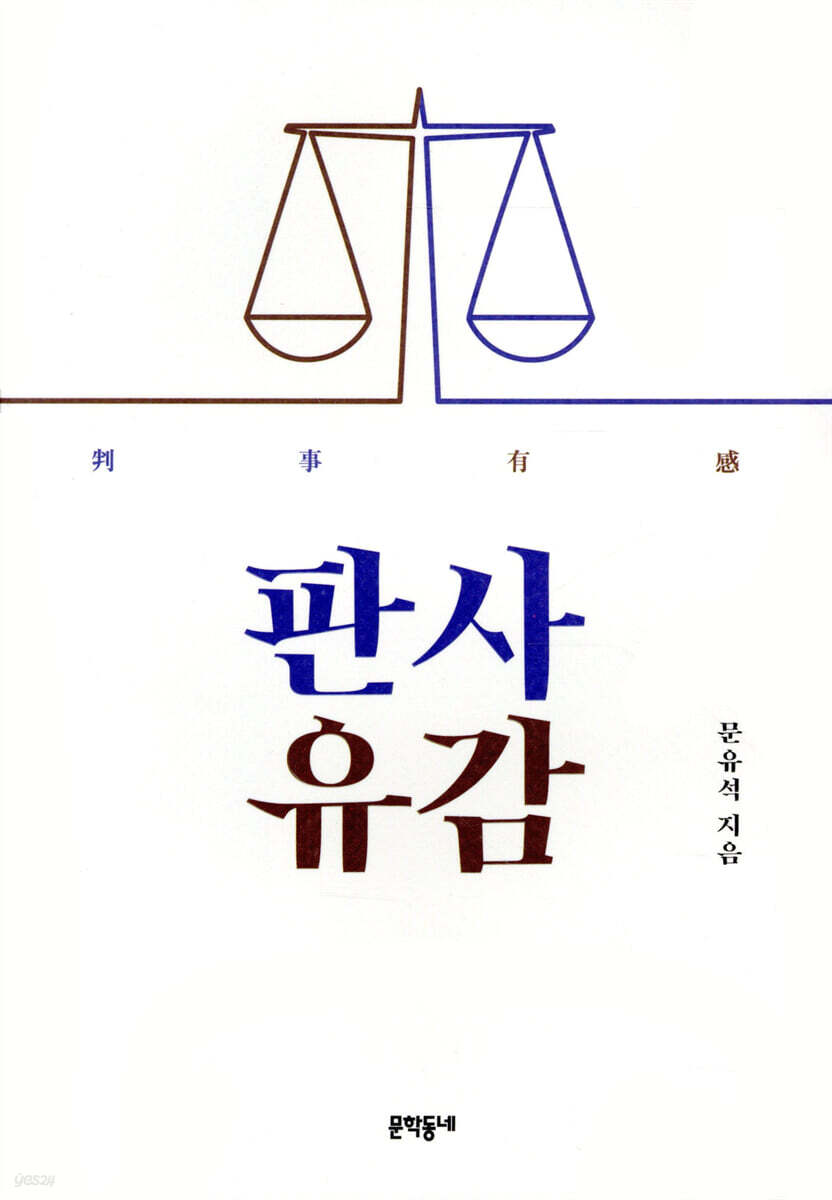
This book is a revised and expanded edition of Judge Moon Yu-seok's first book, "Judge's Regret."
"Judge's Regret" is a steady seller that has gained a reputation as a book that easily and enjoyably tells the story of various people surrounding the court, the problems of our society and the judiciary, and the process of judgment and sentencing, as revealed through trials.
Judge Moon Yoo-seok has delivered sharp yet balanced views on our society and legal culture through works such as “Declaration of an Individualist,” “Miss Hammurabi,” and “Pleasure Reading.”
The revised and expanded edition of 『Judge's Regret』, newly published by Munhakdongne, reflects changes made since its publication in 2014 due to legal revisions, such as the strengthening of drunk driving crackdown standards, and adds a third part titled 'Court's Regret'.
In particular, it fully captures the scenes and controversies within the courts, from the incident in March 2017 when the Court Administration Office attempted to control the International Human Rights Law Research Association's academic conference, to the judicial corruption scandal triggered by a 'document' discovered on the Court Administration Office's computer, and the dismal state of mind regarding the current state of the courts in South Korea.
Why do citizens distrust the judicial system?
Faces Surrounding the Korean Courts as Seen by Chief Judge Moon Yoo-seok
Revised and expanded edition of 『Judge's Regret』 published!
This book is a revised and expanded edition of Judge Moon Yu-seok's first book, "Judge's Regret."
"Judge's Regret" is a steady seller that has gained a reputation as a book that easily and enjoyably tells the story of various people surrounding the court, the problems of our society and the judiciary, and the process of judgment and sentencing, as revealed through trials.
Judge Moon Yoo-seok has delivered sharp yet balanced views on our society and legal culture through works such as “Declaration of an Individualist,” “Miss Hammurabi,” and “Pleasure Reading.”
The revised and expanded edition of 『Judge's Regret』, newly published by Munhakdongne, reflects changes made since its publication in 2014 due to legal revisions, such as the strengthening of drunk driving crackdown standards, and adds a third part titled 'Court's Regret'.
In particular, it fully captures the scenes and controversies within the courts, from the incident in March 2017 when the Court Administration Office attempted to control the International Human Rights Law Research Association's academic conference, to the judicial corruption scandal triggered by a 'document' discovered on the Court Administration Office's computer, and the dismal state of mind regarding the current state of the courts in South Korea.
- You can preview some of the book's contents.
Preview
index
Preface to the Revised Edition
Preface to the first edition
Part 1.
Judge's work
Confessions of a foul-mouthed judge
What is bankruptcy?
Calm and innocent heart
A person who has never been forgiven
Vietnamese daughter-in-law's attempted murder
Drunk driving, what should I do?
The weight of one year in prison
The value of human life
Hope tortures humans
God said that man cannot survive on bread alone.
It is not the body that is trampled, but the mind
A rape case verdict
Judges who interfere with business, judges who yell, judges who repeat slogans
Intelligence and anti-intellect
Seoul National University Law School and Harvard Law School 1
Seoul National University Law School and Harvard Law School 2
Seoul National University Law School and Harvard Law School 3
Seoul National University Law School and Harvard Law School 4
So are you happy?
Part 2.
Judges' Bamboo Forest
The horror of silence
An inconvenient truth
Love and War
Regrettable Korean-style seminar
For reasons that don't seem to make sense
Court nurse
There is no time to work overtime to judge.
There is a desire before the system
I was born to play
Part 3.
Court regrets
We need to talk
Why are judges unhappy?
The Happiness Judges Can Enjoy, and the Factors That Stand in the Way of It
Why the Court Administration Office is a Problem
Just like this is your first time as a dad, this is also your first time doing something like this, right?
The political nature of judges
Epilogue
Preface to the first edition
Part 1.
Judge's work
Confessions of a foul-mouthed judge
What is bankruptcy?
Calm and innocent heart
A person who has never been forgiven
Vietnamese daughter-in-law's attempted murder
Drunk driving, what should I do?
The weight of one year in prison
The value of human life
Hope tortures humans
God said that man cannot survive on bread alone.
It is not the body that is trampled, but the mind
A rape case verdict
Judges who interfere with business, judges who yell, judges who repeat slogans
Intelligence and anti-intellect
Seoul National University Law School and Harvard Law School 1
Seoul National University Law School and Harvard Law School 2
Seoul National University Law School and Harvard Law School 3
Seoul National University Law School and Harvard Law School 4
So are you happy?
Part 2.
Judges' Bamboo Forest
The horror of silence
An inconvenient truth
Love and War
Regrettable Korean-style seminar
For reasons that don't seem to make sense
Court nurse
There is no time to work overtime to judge.
There is a desire before the system
I was born to play
Part 3.
Court regrets
We need to talk
Why are judges unhappy?
The Happiness Judges Can Enjoy, and the Factors That Stand in the Way of It
Why the Court Administration Office is a Problem
Just like this is your first time as a dad, this is also your first time doing something like this, right?
The political nature of judges
Epilogue
Into the book
In my view, there are still three main types of bankrupts in our country.
As I said before, people who barely managed to make ends meet for their families but were unable to do so due to unemployment, illness, etc.; people who struggled to earn money in the hopes of living a little better but ended up ruined; people who, while barely able to take care of themselves, had no choice but to stand as guarantors for the debts of their parents, siblings, and relatives due to the sin of being born as a Korean bound by that damned "affection" and "bloodline" and ended up ruined along with them.
Where on earth can we find the people who worry about 'moral hazard' and talk about borrowing other people's money, spending it recklessly, and then hiding everything they need for themselves before filing for bankruptcy?
Are you hiding in a golf course hazard? --- p.48-49
A bankrupt company is liquidated and disappears, but the bankrupt person must continue to live.
Those who fall while trying should be given a second chance instead of a grave.
This is what I learned from people, not from print.
--- p.50
Just as it is difficult to speak lightly about the suffering that crime inflicts on its victims, it is also difficult to say whether a one-year prison sentence for a criminal is a severe punishment or not.
Moreover, as a judge, I cannot take lightly the weight of a one-year prison sentence.
--- p.89
As time goes by, I'm becoming more and more afraid of going to trial.
As a human being, I am well aware of my own shortcomings, so there is nothing I can be 100% sure of. However, my calling is to judge within the given evidence, and if I judge that something has been proven, I must not avoid it and clearly declare justice.
--- p.97
Rather than a safe verdict that hides behind a shield of cryptic legal jargon and formal phrases and fails to answer the truly important questions, perhaps we need a verdict that honestly reveals the court's concerns and conclusions, even if it is subject to criticism.
--- p.132
It would also be an intelligent attitude to recognize that what you think you know may not be absolute truth but relative, and to be able to admit the possibility that you are wrong and adopt a reserved attitude.
On the other hand, isn't confusing what one believes or what one desires with knowledge, and furthermore, unconditionally rejecting facts that conflict with what one believes or desires, the very anti-intellect that brought Galileo to trial?
--- p.148~149
Given that judges are expected to be not only fair but also possess the appearance of fairness, the perception that the judicial culture is based on a vertical hierarchy undermines trust in the judiciary.
--- p.204
Even if the chief doesn't take care of their cultural life, the judges have money, families, lovers, and friends.
There's just no time.
--- p.214
In any area, whether political or social, I believe that to truly change the world, you need to present your argument in a way that wins the approval of those who disagree with you, rather than simply garnering the enthusiasm of those who agree with you.
The same goes for judgments.
--- p.225
If the basis of the judgment of the court is wrong, it is right that it should be overturned in the higher court. It is not something that can be enjoyed just because it was successfully passed over.
For judges, trials are a profession, but for the parties, their freedom, property, and even their lives are at stake.
--- p.230
Could it be that we're becoming an organization that appears peaceful on the outside, but is actually dominated by a cartel of silence, a fear of being left behind, and cynical passive-aggression, in an atmosphere where silent overtime is the only virtue? --- p.276
Courts should not be run solely on the basis of efficiency and performance.
Because we must not infringe on the more important value of judicial independence.
--- p.286
Is there such a thing as a free lunch? It's only natural that outsiders who have listened to the judges' complaints understand this as a kind of implicit agreement that they, too, have gained the "free pass" to voice their concerns.
As I said before, people who barely managed to make ends meet for their families but were unable to do so due to unemployment, illness, etc.; people who struggled to earn money in the hopes of living a little better but ended up ruined; people who, while barely able to take care of themselves, had no choice but to stand as guarantors for the debts of their parents, siblings, and relatives due to the sin of being born as a Korean bound by that damned "affection" and "bloodline" and ended up ruined along with them.
Where on earth can we find the people who worry about 'moral hazard' and talk about borrowing other people's money, spending it recklessly, and then hiding everything they need for themselves before filing for bankruptcy?
Are you hiding in a golf course hazard? --- p.48-49
A bankrupt company is liquidated and disappears, but the bankrupt person must continue to live.
Those who fall while trying should be given a second chance instead of a grave.
This is what I learned from people, not from print.
--- p.50
Just as it is difficult to speak lightly about the suffering that crime inflicts on its victims, it is also difficult to say whether a one-year prison sentence for a criminal is a severe punishment or not.
Moreover, as a judge, I cannot take lightly the weight of a one-year prison sentence.
--- p.89
As time goes by, I'm becoming more and more afraid of going to trial.
As a human being, I am well aware of my own shortcomings, so there is nothing I can be 100% sure of. However, my calling is to judge within the given evidence, and if I judge that something has been proven, I must not avoid it and clearly declare justice.
--- p.97
Rather than a safe verdict that hides behind a shield of cryptic legal jargon and formal phrases and fails to answer the truly important questions, perhaps we need a verdict that honestly reveals the court's concerns and conclusions, even if it is subject to criticism.
--- p.132
It would also be an intelligent attitude to recognize that what you think you know may not be absolute truth but relative, and to be able to admit the possibility that you are wrong and adopt a reserved attitude.
On the other hand, isn't confusing what one believes or what one desires with knowledge, and furthermore, unconditionally rejecting facts that conflict with what one believes or desires, the very anti-intellect that brought Galileo to trial?
--- p.148~149
Given that judges are expected to be not only fair but also possess the appearance of fairness, the perception that the judicial culture is based on a vertical hierarchy undermines trust in the judiciary.
--- p.204
Even if the chief doesn't take care of their cultural life, the judges have money, families, lovers, and friends.
There's just no time.
--- p.214
In any area, whether political or social, I believe that to truly change the world, you need to present your argument in a way that wins the approval of those who disagree with you, rather than simply garnering the enthusiasm of those who agree with you.
The same goes for judgments.
--- p.225
If the basis of the judgment of the court is wrong, it is right that it should be overturned in the higher court. It is not something that can be enjoyed just because it was successfully passed over.
For judges, trials are a profession, but for the parties, their freedom, property, and even their lives are at stake.
--- p.230
Could it be that we're becoming an organization that appears peaceful on the outside, but is actually dominated by a cartel of silence, a fear of being left behind, and cynical passive-aggression, in an atmosphere where silent overtime is the only virtue? --- p.276
Courts should not be run solely on the basis of efficiency and performance.
Because we must not infringe on the more important value of judicial independence.
--- p.286
Is there such a thing as a free lunch? It's only natural that outsiders who have listened to the judges' complaints understand this as a kind of implicit agreement that they, too, have gained the "free pass" to voice their concerns.
--- p.295
Publisher's Review
Why are judges unhappy?
Why do citizens distrust the judicial system?
Faces Surrounding the Korean Courts as Seen by Chief Judge Moon Yoo-seok
Revised and expanded edition of 『Judge's Regret』 published!
This book is a revised and expanded edition of Judge Moon Yu-seok's first book, "Judge's Regret."
"Judge's Regret" is a steady seller that has gained a reputation as a book that easily and enjoyably tells the story of various people surrounding the court, the problems of our society and the judiciary, and the process of judgment and sentencing, as revealed through trials.
Judge Moon Yoo-seok has delivered sharp yet balanced views on our society and legal culture through works such as “Declaration of an Individualist,” “Miss Hammurabi,” and “Pleasure Reading.”
The revised and expanded edition of 『Judge's Regret』, newly published by Munhakdongne, reflects changes made since its publication in 2014 due to legal revisions, such as the strengthening of drunk driving crackdown standards, and adds a third part titled 'Court's Regret'.
In particular, it fully captures the scenes and controversies within the courts, from the incident in March 2017 when the Court Administration Office attempted to control the International Human Rights Law Research Association's academic conference, to the judicial corruption scandal triggered by a 'document' discovered on the Court Administration Office's computer, and the dismal state of mind regarding the current state of the courts in South Korea.
I came across an article that said our country's citizens' level of trust in the judicial system is at 27 percent, the lowest among OECD countries.
Of course, the judicial system here includes the police and prosecutors, but that is not an excuse.
The tone of the media reporting the story and the public's reaction to it were heartbreakingly cynical toward the court.
(…) It seems that the reality is that we still have not been able to overcome the public’s distrust and cynicism.
In the face of that reality, it is foolish to complain about how hard we have worked and how much overtime and overwork we have endured.
The answer that will come back is that there is no one in this society who has it easier than you guys, so if you don't want to do it, just quit.
Being a professional is not just about working hard.
You have to 'do well'.
We've tried, but we're still not doing well enough.
What the court needs most now is to reflect on what we are still failing to do well and what is still breeding public distrust and cynicism.
Not through detailed systems, regulations, or theories, but through honest self-confession, reflection, and dialogue.
_Pages 267-268 (from "We Need to Talk")
Containing the concerns and efforts of frontline judges and their experiences in the courtroom.
We don't really know what judges do, and what conflicts and struggles they face.
When a trial for a politically or socially controversial case attracts public attention, or when the name of a judge whose decision sparked controversy appears on the real-time search rankings of an internet portal, debates and discussions about the rightness or wrongness of the decision erupt here and there. However, this alone is limited in providing insight into the thoughts of frontline judges and the specific decision-making process.
The public's deep-rooted distrust of the judiciary, which cannot be said to be without basis, also contributes to the negative perception of court decisions.
What on earth is going on inside that tall, cold-looking, square building?
Are the courts really places for the powerless citizens?
A refreshing triumph of good over evil is only possible in dramas, but isn't it true that in reality, the rule of "guilty until proven innocent" is the norm?
Through this book, “Judge’s Regret,” Judge Moon Yoo-seok seeks to stop, even if only a little, the vicious cycle of ignorance that leads to even greater distrust.
By showing the actual trials that take place and the conflicts and struggles that judges actually experience on the front lines, it shows that there are judges hiding here and there in the field who are quietly trying to fulfill their duties.
This book aims to demonstrate that the Korean judiciary is moving forward, albeit difficult, step by step, thanks to those who strive to render fair and just judgments, and those who challenge outdated and conservative precedents and attempt new judgments that fit the spirit of the times.
Our courts may seem conservative, but when they do, they take big strides.
The pioneer was Judge Ko Jong-ju, the head of the Busan District Court's Family Support Division, who handles cases of family register correction.
After conducting extensive and in-depth research on this issue, he published an excellent paper and, in July 2002, became the first person in Korea to allow transgender people to change their gender on their family register.
Afterwards, courts across the country made decisions of the same intent, and finally, in 2006, the Supreme Court ruled in 2006.
6. 22. The historic Supreme Court decision allowing correction of family registers for transgender people was made by the 2004S42 full bench decision.
And in 2009, the issue was finally settled when Judge Ko Jong-ju, for the first time, found a transgender person guilty of rape, and this ruling was confirmed by the Supreme Court.
In 2012, the target of rape was changed from 'woman' to 'person'.
A change that was thought to be a distant future event in 2001 has come about faster than expected.
Just remembering that I was part of that wave of change fills my heart with pride.
_Page 124 (from "It is not the body that is trampled, but the mind")
Between the calling of an independent constitutional body and the logic of the judicial organization
However, it is not possible for a book to only contain good stories.
Part 2 of the book, "The Bamboo Forest of Judges," sharply criticizes the strict culture of seniority and loyalty in the judicial system, excessive competition for promotion, and excessive judicial workload.
Although judges are, in principle, independent constitutional bodies, they are also real-life workers who must compete for promotion within the organization.
Although judges are legally equal in their status to ensure fair judgments, it is also true that in reality they are part of a pyramid of organizational social relations, and therefore are forced to engage in fierce competition for promotion based on case handling performance.
There are bound to be lower courts that fear that a higher court will overturn the case and send it back for retrial, and creating a new precedent also requires courage.
The fact that we have no choice but to be more sensitive to judicial administration than to trials is also due to organizational logic.
Judge Moon Yoo-seok believes that the contradiction between the independence of the judiciary and the realistic situation of judges creates a unique and rigid legal culture.
Basically, the Jangyuyuseo, the basic order of Confucian culture, can be said to be a value that is deeply rooted in the core of the collective unconscious.
Moreover, in the courts, the hierarchy centered on the number of trainees has long served as an important criterion for personnel matters, division of labor, and even daily protocol.
Although there are side effects, I think there are inevitable aspects, such as the fact that personnel appointments are predictable, so they do not hinder the independence of judges, and they function as a uniform standard that is acceptable among judges who are all excellent and have strong self-esteem.
And it is important to note that the judiciary is a very special group, with people of varying ages and experiences, from their thirties to their sixties, all sharing the same status as equal judges.
In general groups, including companies, each person's position is vertically divided according to age, career, and seniority.
There is a concept of superiors and subordinates, and a command-and-supervision relationship exists.
However, judges are basically equal in power and status.
A judge in his thirties is a judge, and a judge in his sixties nearing retirement is also a judge.
Neither the Chief Justice nor the Chief Justice can interfere with the content of the trial, which is not an administrative matter.
Paradoxically, I hypothesize that these particularities have led to the development of stricter legal etiquette and hierarchy in everyday life.
In Korean society, where the seniority system is strict, groups with large age and experience gaps are all placed on equal footing, which creates an implicit order in which differences are differentiated within the group and respect is given according to position.
_Pages 200-201 (from "An Inconvenient Truth")
Can judges and citizens escape the swamp of cynicism and embrace optimism for the future?
The third part, "Court Regrets," newly added in the revised book, consists of articles on serious incidents that occurred inside and outside the court and the conflicts among judges related to them.
In particular, the article titled “Why is the Court Administration Office a Problem?” was written in March 2017, when the Court Administration Office’s attempt to scale back the International Human Rights Law Research Association’s academic conference on strengthening judge independence and improving the personnel system was made public following the resignation of Judge Lee Tan-hee, causing controversy.
Although the more serious problems that were later revealed (such as the Court Administration's alleged intervention in trials) were not yet known because the Court Administration had not yet conducted an investigation into the computer case, the fact that the Court Administration was attempting to suppress the autonomous academic activities of judges and control them was shocking in itself.
Afterwards, a nationwide conference of judges condemned this and called for the truth to be revealed, and the trial of former Supreme Court Justice Yang Seung-tae and others related to judicial corruption is still ongoing.
The fairness of trials is the reason why courts exist in a country governed by the rule of law, and the independence of judges is an essential condition for the mission of judges.
What makes the judicial corruption scandal so serious is that it shows that these fundamental principles have been collapsing.
Can trust in the courts be restored?
The questions Judge Moon Yoo-seok raises in this book are by no means light.
Why do citizens distrust the judicial system?
Faces Surrounding the Korean Courts as Seen by Chief Judge Moon Yoo-seok
Revised and expanded edition of 『Judge's Regret』 published!
This book is a revised and expanded edition of Judge Moon Yu-seok's first book, "Judge's Regret."
"Judge's Regret" is a steady seller that has gained a reputation as a book that easily and enjoyably tells the story of various people surrounding the court, the problems of our society and the judiciary, and the process of judgment and sentencing, as revealed through trials.
Judge Moon Yoo-seok has delivered sharp yet balanced views on our society and legal culture through works such as “Declaration of an Individualist,” “Miss Hammurabi,” and “Pleasure Reading.”
The revised and expanded edition of 『Judge's Regret』, newly published by Munhakdongne, reflects changes made since its publication in 2014 due to legal revisions, such as the strengthening of drunk driving crackdown standards, and adds a third part titled 'Court's Regret'.
In particular, it fully captures the scenes and controversies within the courts, from the incident in March 2017 when the Court Administration Office attempted to control the International Human Rights Law Research Association's academic conference, to the judicial corruption scandal triggered by a 'document' discovered on the Court Administration Office's computer, and the dismal state of mind regarding the current state of the courts in South Korea.
I came across an article that said our country's citizens' level of trust in the judicial system is at 27 percent, the lowest among OECD countries.
Of course, the judicial system here includes the police and prosecutors, but that is not an excuse.
The tone of the media reporting the story and the public's reaction to it were heartbreakingly cynical toward the court.
(…) It seems that the reality is that we still have not been able to overcome the public’s distrust and cynicism.
In the face of that reality, it is foolish to complain about how hard we have worked and how much overtime and overwork we have endured.
The answer that will come back is that there is no one in this society who has it easier than you guys, so if you don't want to do it, just quit.
Being a professional is not just about working hard.
You have to 'do well'.
We've tried, but we're still not doing well enough.
What the court needs most now is to reflect on what we are still failing to do well and what is still breeding public distrust and cynicism.
Not through detailed systems, regulations, or theories, but through honest self-confession, reflection, and dialogue.
_Pages 267-268 (from "We Need to Talk")
Containing the concerns and efforts of frontline judges and their experiences in the courtroom.
We don't really know what judges do, and what conflicts and struggles they face.
When a trial for a politically or socially controversial case attracts public attention, or when the name of a judge whose decision sparked controversy appears on the real-time search rankings of an internet portal, debates and discussions about the rightness or wrongness of the decision erupt here and there. However, this alone is limited in providing insight into the thoughts of frontline judges and the specific decision-making process.
The public's deep-rooted distrust of the judiciary, which cannot be said to be without basis, also contributes to the negative perception of court decisions.
What on earth is going on inside that tall, cold-looking, square building?
Are the courts really places for the powerless citizens?
A refreshing triumph of good over evil is only possible in dramas, but isn't it true that in reality, the rule of "guilty until proven innocent" is the norm?
Through this book, “Judge’s Regret,” Judge Moon Yoo-seok seeks to stop, even if only a little, the vicious cycle of ignorance that leads to even greater distrust.
By showing the actual trials that take place and the conflicts and struggles that judges actually experience on the front lines, it shows that there are judges hiding here and there in the field who are quietly trying to fulfill their duties.
This book aims to demonstrate that the Korean judiciary is moving forward, albeit difficult, step by step, thanks to those who strive to render fair and just judgments, and those who challenge outdated and conservative precedents and attempt new judgments that fit the spirit of the times.
Our courts may seem conservative, but when they do, they take big strides.
The pioneer was Judge Ko Jong-ju, the head of the Busan District Court's Family Support Division, who handles cases of family register correction.
After conducting extensive and in-depth research on this issue, he published an excellent paper and, in July 2002, became the first person in Korea to allow transgender people to change their gender on their family register.
Afterwards, courts across the country made decisions of the same intent, and finally, in 2006, the Supreme Court ruled in 2006.
6. 22. The historic Supreme Court decision allowing correction of family registers for transgender people was made by the 2004S42 full bench decision.
And in 2009, the issue was finally settled when Judge Ko Jong-ju, for the first time, found a transgender person guilty of rape, and this ruling was confirmed by the Supreme Court.
In 2012, the target of rape was changed from 'woman' to 'person'.
A change that was thought to be a distant future event in 2001 has come about faster than expected.
Just remembering that I was part of that wave of change fills my heart with pride.
_Page 124 (from "It is not the body that is trampled, but the mind")
Between the calling of an independent constitutional body and the logic of the judicial organization
However, it is not possible for a book to only contain good stories.
Part 2 of the book, "The Bamboo Forest of Judges," sharply criticizes the strict culture of seniority and loyalty in the judicial system, excessive competition for promotion, and excessive judicial workload.
Although judges are, in principle, independent constitutional bodies, they are also real-life workers who must compete for promotion within the organization.
Although judges are legally equal in their status to ensure fair judgments, it is also true that in reality they are part of a pyramid of organizational social relations, and therefore are forced to engage in fierce competition for promotion based on case handling performance.
There are bound to be lower courts that fear that a higher court will overturn the case and send it back for retrial, and creating a new precedent also requires courage.
The fact that we have no choice but to be more sensitive to judicial administration than to trials is also due to organizational logic.
Judge Moon Yoo-seok believes that the contradiction between the independence of the judiciary and the realistic situation of judges creates a unique and rigid legal culture.
Basically, the Jangyuyuseo, the basic order of Confucian culture, can be said to be a value that is deeply rooted in the core of the collective unconscious.
Moreover, in the courts, the hierarchy centered on the number of trainees has long served as an important criterion for personnel matters, division of labor, and even daily protocol.
Although there are side effects, I think there are inevitable aspects, such as the fact that personnel appointments are predictable, so they do not hinder the independence of judges, and they function as a uniform standard that is acceptable among judges who are all excellent and have strong self-esteem.
And it is important to note that the judiciary is a very special group, with people of varying ages and experiences, from their thirties to their sixties, all sharing the same status as equal judges.
In general groups, including companies, each person's position is vertically divided according to age, career, and seniority.
There is a concept of superiors and subordinates, and a command-and-supervision relationship exists.
However, judges are basically equal in power and status.
A judge in his thirties is a judge, and a judge in his sixties nearing retirement is also a judge.
Neither the Chief Justice nor the Chief Justice can interfere with the content of the trial, which is not an administrative matter.
Paradoxically, I hypothesize that these particularities have led to the development of stricter legal etiquette and hierarchy in everyday life.
In Korean society, where the seniority system is strict, groups with large age and experience gaps are all placed on equal footing, which creates an implicit order in which differences are differentiated within the group and respect is given according to position.
_Pages 200-201 (from "An Inconvenient Truth")
Can judges and citizens escape the swamp of cynicism and embrace optimism for the future?
The third part, "Court Regrets," newly added in the revised book, consists of articles on serious incidents that occurred inside and outside the court and the conflicts among judges related to them.
In particular, the article titled “Why is the Court Administration Office a Problem?” was written in March 2017, when the Court Administration Office’s attempt to scale back the International Human Rights Law Research Association’s academic conference on strengthening judge independence and improving the personnel system was made public following the resignation of Judge Lee Tan-hee, causing controversy.
Although the more serious problems that were later revealed (such as the Court Administration's alleged intervention in trials) were not yet known because the Court Administration had not yet conducted an investigation into the computer case, the fact that the Court Administration was attempting to suppress the autonomous academic activities of judges and control them was shocking in itself.
Afterwards, a nationwide conference of judges condemned this and called for the truth to be revealed, and the trial of former Supreme Court Justice Yang Seung-tae and others related to judicial corruption is still ongoing.
The fairness of trials is the reason why courts exist in a country governed by the rule of law, and the independence of judges is an essential condition for the mission of judges.
What makes the judicial corruption scandal so serious is that it shows that these fundamental principles have been collapsing.
Can trust in the courts be restored?
The questions Judge Moon Yoo-seok raises in this book are by no means light.
GOODS SPECIFICS
- Publication date: October 14, 2019
- Page count, weight, size: 316 pages | 436g | 145*210*19mm
- ISBN13: 9788954658133
- ISBN10: 895465813X
You may also like
카테고리
korean


korean

![GQ KOREA Mark (Monthly): December [2025]](http://librairie.coreenne.fr/cdn/shop/files/8ef265dbbfbf186523ed75ba7319009d.jpg?v=1765340328&width=3840)


