

Voices
 |
Description
Book Introduction
- A word from MD
-
The voice of author Lee Seung-woo, who understands the earnestnessNovelist Seungwoo Lee, who has explored the inner world of human beings and their anxieties for the past 42 years, expands his horizons with eight novels.
The voices of those who have lost themselves in the midst of the rifts of relationships, such as death and separation, and are crushed by guilt, are depicted in detailed and flowing sentences.
A collection of novels that makes you look forward to the master's next work.
December 12, 2023. Novel/Poetry PD Kim Yu-ri
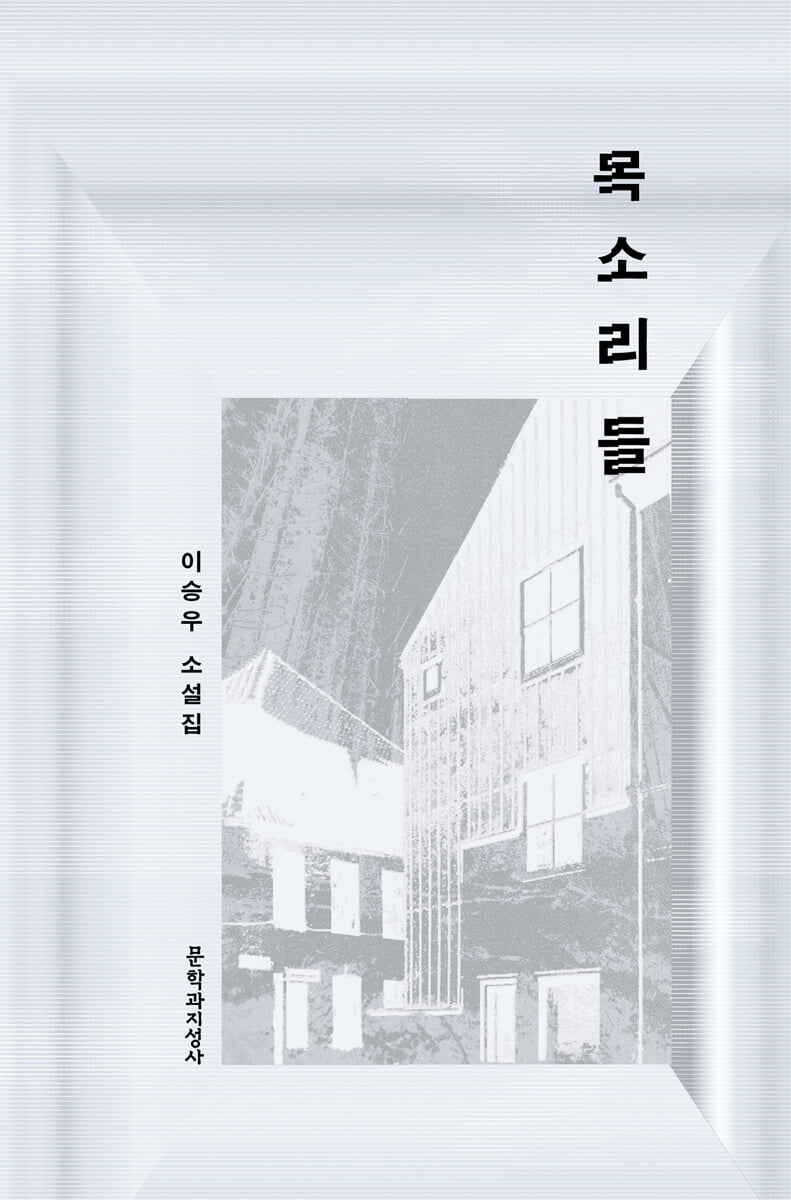
The twelfth collection of short stories, "Voices," by Lee Seung-woo, who has established a unique niche in the Korean literary world over the past 42 years since beginning his literary career in 1981, has been published by Munhak-kwa-Jiseongsa.
Lee Seung-woo, who is greatly loved both domestically and internationally and was mentioned as “Korea’s most promising candidate for the Nobel Prize in Literature” (Le Clézio, in an interview), is actively working as one of Korea’s representative writers, with two of his works, “The Private Lives of Plants” and “Wherever That Place Is,” being included in the Folio series, a collection of world-famous works published by the French publisher Gallimard.
The basis of human anxiety and desire, guilt, and the relationship with a transcendent being were the main themes of Lee Seung-woo's work.
In this way, the author, who has “explored the fundamental questions of human existence in the form of ideological reflection” (Hwang Sun-won Literary Award judges’ comments), has built up “home,” which symbolizes the dark inner self of the speakers and family, from various perspectives and with delicate language in this collection of short stories.
The characters in the eight stories all lose their families or experience rifts in their relationships, leading to conflict and crisis, and gradually lose their direction in life.
Each work, designed like a building, contains the individual “voices” of each person wandering around, trying to escape from home, and eventually remembering home again, and contains thoughts on the absurd reality, the path of those who have lost their home, and relationships.
Ultimately, it can be said that this collection of short stories embraces the problematic awareness shown in the author's previous works while subtly suggesting a direction beyond them, as it is a story about returning home, where it all began.
Lee Seung-woo, who is greatly loved both domestically and internationally and was mentioned as “Korea’s most promising candidate for the Nobel Prize in Literature” (Le Clézio, in an interview), is actively working as one of Korea’s representative writers, with two of his works, “The Private Lives of Plants” and “Wherever That Place Is,” being included in the Folio series, a collection of world-famous works published by the French publisher Gallimard.
The basis of human anxiety and desire, guilt, and the relationship with a transcendent being were the main themes of Lee Seung-woo's work.
In this way, the author, who has “explored the fundamental questions of human existence in the form of ideological reflection” (Hwang Sun-won Literary Award judges’ comments), has built up “home,” which symbolizes the dark inner self of the speakers and family, from various perspectives and with delicate language in this collection of short stories.
The characters in the eight stories all lose their families or experience rifts in their relationships, leading to conflict and crisis, and gradually lose their direction in life.
Each work, designed like a building, contains the individual “voices” of each person wandering around, trying to escape from home, and eventually remembering home again, and contains thoughts on the absurd reality, the path of those who have lost their home, and relationships.
Ultimately, it can be said that this collection of short stories embraces the problematic awareness shown in the author's previous works while subtly suggesting a direction beyond them, as it is a story about returning home, where it all began.
- You can preview some of the book's contents.
Preview
index
When I turned the valve on the fire hydrant, water poured out.
empty house
Buoyancy of the mind
I shouldn't have answered that call.
homecoming
Voices
Sleep on water
When the Siren Sounds - For the Stuffed Genius
Author's Note
empty house
Buoyancy of the mind
I shouldn't have answered that call.
homecoming
Voices
Sleep on water
When the Siren Sounds - For the Stuffed Genius
Author's Note
Into the book
Yes, we tried to make it like a place where people live.
It's about filling the empty space with something.
Things are things, but if people live in a place, it's not empty.
If there are no people, the house becomes empty.
If a house is full of things but no one is there, it's just an empty house.
It's true that I was unconsciously thinking that the vacancy was being filled by her.
I don't know why, but it didn't feel awkward at all for her to come home.
---From "Empty House"
I couldn't open my mouth.
Why did I run away? I tried to find the reason, but I couldn't find it, so I couldn't say anything.
Why did I run away? Did I know the reason then? Is it that I don't know now what I knew then? How do we come to know something we didn't know, and how do we come to not know something we knew? How does something that is bent straighten out, and how does something that is straighten out bend out?
---From "I Shouldn't Have Answered the Phone"
Her eyes do not look at people's faces.
Her eyes look beyond the human face into the void.
Her gaze stretches out infinitely, making the physical objects before her transparent.
What she sees is invisible.
What is visible is not seen, and what is invisible is seen.
This is not correct.
Since there is nothing in the void, and since there is nothing visible or invisible, he sees nothing.
I do not see what is visible, nor do I see what is invisible.
---From "Sleep on Water"
"Hey, are you in there? Where are you? I don't know how you found out, but you're not allowed in here.
You're not the owner of this house.
“Come out quickly.” His voice traveled from the sofa, the ceiling, the refrigerator, the television, and the dining table, and then returned to him.
It seemed like no one else could hear his voice.
[… … ] But the silence and stillness that remained only spread an eerie atmosphere.
“I’m going crazy, really.” Old Man Hwang leaned forward several times as if to go inside, then glared at the closed door, then turned around, unable to go in because of some energy.
His shadow grew longer as he left the house, leaving behind a feeling of unease.
---From "Returning Home"
… … I am afraid of sleeping.
When I fall asleep, I keep dreaming.
I wish I hadn't dreamed, but just because you want something doesn't mean it will happen.
How do you deal with this? Mom said you couldn't help but have thoughts that invaded your mind when you were awake and couldn't sleep.
That's what a dream is to me.
My dreams are like occupying forces waiting for me to fall asleep and then coming in.
So I tried not to sleep.
If you hold on and somehow fall asleep, it's always... difficult.
I think I know why my mom does this to me.
It must be hard.
That's unacceptable.
---From "Voices"
A skinny man in an old corduroy suit, standing on the rooftop railing and making strange, comical movements, and a skinny man in a corduroy suit standing frozen in front of him, would not have been an exaggeration to imagine a character from Beckett's Theatre of the Absurd.
Moreover, I only just found out that he and I were wearing the same clothes, just in different colors, and had similar builds.
It wouldn't be strange if the audience thought the two looked exactly like twins.
Even if the roles were reversed, the audience probably wouldn't notice...
It's about filling the empty space with something.
Things are things, but if people live in a place, it's not empty.
If there are no people, the house becomes empty.
If a house is full of things but no one is there, it's just an empty house.
It's true that I was unconsciously thinking that the vacancy was being filled by her.
I don't know why, but it didn't feel awkward at all for her to come home.
---From "Empty House"
I couldn't open my mouth.
Why did I run away? I tried to find the reason, but I couldn't find it, so I couldn't say anything.
Why did I run away? Did I know the reason then? Is it that I don't know now what I knew then? How do we come to know something we didn't know, and how do we come to not know something we knew? How does something that is bent straighten out, and how does something that is straighten out bend out?
---From "I Shouldn't Have Answered the Phone"
Her eyes do not look at people's faces.
Her eyes look beyond the human face into the void.
Her gaze stretches out infinitely, making the physical objects before her transparent.
What she sees is invisible.
What is visible is not seen, and what is invisible is seen.
This is not correct.
Since there is nothing in the void, and since there is nothing visible or invisible, he sees nothing.
I do not see what is visible, nor do I see what is invisible.
---From "Sleep on Water"
"Hey, are you in there? Where are you? I don't know how you found out, but you're not allowed in here.
You're not the owner of this house.
“Come out quickly.” His voice traveled from the sofa, the ceiling, the refrigerator, the television, and the dining table, and then returned to him.
It seemed like no one else could hear his voice.
[… … ] But the silence and stillness that remained only spread an eerie atmosphere.
“I’m going crazy, really.” Old Man Hwang leaned forward several times as if to go inside, then glared at the closed door, then turned around, unable to go in because of some energy.
His shadow grew longer as he left the house, leaving behind a feeling of unease.
---From "Returning Home"
… … I am afraid of sleeping.
When I fall asleep, I keep dreaming.
I wish I hadn't dreamed, but just because you want something doesn't mean it will happen.
How do you deal with this? Mom said you couldn't help but have thoughts that invaded your mind when you were awake and couldn't sleep.
That's what a dream is to me.
My dreams are like occupying forces waiting for me to fall asleep and then coming in.
So I tried not to sleep.
If you hold on and somehow fall asleep, it's always... difficult.
I think I know why my mom does this to me.
It must be hard.
That's unacceptable.
---From "Voices"
A skinny man in an old corduroy suit, standing on the rooftop railing and making strange, comical movements, and a skinny man in a corduroy suit standing frozen in front of him, would not have been an exaggeration to imagine a character from Beckett's Theatre of the Absurd.
Moreover, I only just found out that he and I were wearing the same clothes, just in different colors, and had similar builds.
It wouldn't be strange if the audience thought the two looked exactly like twins.
Even if the roles were reversed, the audience probably wouldn't notice...
---From "When the Siren Sounds - For the Stuffed Genius"
Publisher's Review
“There was no house.
No, there was a house.
But I couldn't say I had a house."
Includes the 2021 Yi Sang Literary Award winner, "The Buoyancy of the Heart."
Winner of the Daesan Literary Award, the Contemporary Literary Award, the Dong-in Literary Award, and the Yi Sang Literary Award
Lee Seung-woo publishes new short story collection after three years.
“It may not be easy, but I want to become someone who grieves without sighs and mourns without excuses.
“I hope I can become an author who ‘understands longing’ rather than ‘desperately seeking to be understood.’”
―From the author's note
The twelfth collection of short stories, "Voices," by Lee Seung-woo, who has established a unique niche in the Korean literary world over the past 42 years since beginning his literary career in 1981, has been published by Munhak-kwa-Jiseongsa.
Lee Seung-woo, who is greatly loved both domestically and internationally and was mentioned as “Korea’s most promising candidate for the Nobel Prize in Literature” (Le Clézio, in an interview), is actively working as one of Korea’s representative writers, with two of his works, “The Private Lives of Plants” and “Wherever That Place Is,” being included in the Folio series, a collection of world-famous works published by the French publisher Gallimard.
The basis of human anxiety and desire, guilt, and the relationship with a transcendent being were the main themes of Lee Seung-woo's work.
In this way, the author, who has “explored the fundamental questions of human existence in the form of ideological reflection” (Hwang Sun-won Literary Award judges’ comments), has built up “home,” which symbolizes the dark inner self of the speakers and family, from various perspectives and with delicate language in this collection of short stories.
The characters in the eight stories all lose their families or experience rifts in their relationships, leading to conflict and crisis, and gradually lose their direction in life.
Each work, designed like a building, contains the individual “voices” of each person wandering around, trying to escape from home, and eventually remembering home again, and contains thoughts on the absurd reality, the path of those who have lost their home, and relationships.
Ultimately, it can be said that this collection of short stories embraces the problematic awareness shown in the author's previous works while subtly suggesting a direction beyond them, as it is a story about returning home, where it all began.
Outside of anxiety and the emptiness at its end
Desperate voices uttered after a long wandering
As the title of this book suggests, the ‘voices’ of the speakers in the eight works play a major role.
In "When I turned the fire hydrant valve, water poured out," we can hear a bold voice opposing the absurdity of the world.
A skinny woman suddenly appears on the road, as if “a long pole was sticking out of the mouth of her backpack,” and cleans.
By turning the valve on the fire hydrant, you catch the water that "runs wild like an untamed beast" in a bucket and spray it onto the center lane, then scrub it with a cleaning brush.
The police arrive after receiving the report and they try to forcibly take the woman away as if this is not the first or second time she has done this.
“Her body was crumpled and stretched out like tissue paper as the police tried to force her into the back seat of the police car.”
Then a man appears.
“You don’t know what he’s doing or why he’s doing it.
So that's what I did.
But you must not think that ignorance justifies your rudeness.
What you don't know is because you don't want to know.
If ignorance is what makes you behave rudely, then ignorance is the real problem.
“It’s worse than being rude.” _From “When I turned the valve on the fire hydrant, water poured out.”
She is represented by a man who appears to be a transcendent being, enough to make even the police freeze.
The man overwhelms the police and bystanders with just words, without showing any action.
The work of developing the story by adding the narrator's voice over the structure of the circumstances of the incident continues in "Voices."
In this work, where the mother and son 'I' each express their innermost feelings in a monologue format, the two speakers are not only "unable to sleep" but also "afraid of sleeping."
Because he is suffering from the same pain after the death of his youngest son, Jun-ho.
The mother shifts the responsibility for her dead son to her surviving child, saying, “Don’t you think that if you had met him, if you had met him and listened to his story, […] he might not have done that?”
I am punishing myself in my mother's way.
“Blaming others to torment yourself, holding others accountable for things that cannot be attributed to them, and pointing fingers at yourself,” he said, raising his voice.
The voice on the other end of the phone in “I Shouldn’t Have Picked Up the Phone” leaves a strong trauma within the protagonist.
Next to me is my coworker, Hyungbae, who goes to 'there', a place like a sanctuary after work, and we have a drink together.
One day, Hyungbae gets involved in an unpleasant incident at work.
Rumors are circulating that a business partner has been abusing his power and sexually harassing someone, and an internal disciplinary committee will soon be convened.
'I' am also summoned together with him because I am close to him.
The night before the disciplinary committee meeting, 'I' don't answer his calls.
One day, a long time after Hyung-bae, who was suffering, passed away, his voice was heard on the phone.
“Brother, how could you do that……”
The world, built up layer upon layer of voices, persistently pursues and touches upon human nature.
There are people who say, “I didn’t want to say this,” but they have no choice and “I’ll definitely regret it,” but they still end up saying hurtful things.
The wounded person now hurts others by saying that it was “so hard” that he “wanted to get away from the voices” (“Voices”).
"Voices" gently pushes us into the hamster wheel of suffering created by these voices, and makes us wonder if there is any way to stop the suffering.
To escape from “the past that suddenly comes back to life and overwhelms the present” (“When I turned the fire hydrant valve, water poured out”).
Designed in the deepest, darkest place of the heart
Family is an inseparable home
A home is a shelter where family members live and an important area where they sustain life.
How do humans behave when a home, which should be a place of rest, loses its function?
The author's various experimental perspectives on this question are reflected in 『Voices』.
The male speaker of "Empty House" was abused by his stepfather in the past.
If you didn't listen to your stepfather, you were locked in a place called the "prayer room," which was "a very small room with no windows and white walls" where "the words of the 'seer' were played over and over again through a speaker."
Unable to sleep or eat in that room, he had to flee the place, and only after holding out until he had no choice but to return did he find his way home again.
The house was at the end.
The end is the end.
The end refers to the final result of a task, and is an area beyond what people can do.
Who can control the end?
You can do something until you reach the end.
But in the end, it is impossible to do anything.
The end is when there is nothing left to do.
Because there is no next end.
Because the end is when there is no next.
I was tired of denying and brainwashing myself that there was no next time, and I was so tired that I failed to recite the spell that I wouldn't go home yet.
_From "Empty House"
In "The Buoyancy of the Heart," the protagonist, 'I', feels himself growing increasingly distant from his family due to an irresistible force.
My mother, who confuses the voices of her brother and me, calls me by my brother's name every time we talk on the phone.
“My brother, who used to tell me that I was worthless and “shameless,” has disappeared from this world, but I am still looking for him.
The mother continues to call her wife to ask her to lend her money for her brother's expenses, and her memory gradually fades, completely forgetting the date her son and daughter-in-law promised to visit.
'I' am once again faced with the threat of losing my family.
In "Sleep on Water," a mother appears who cannot distinguish between the voices of the protagonist and his brother.
Young-soo goes to a nursing home to meet his mother, who keeps looking for his older brother Young-sik.
His mother's voice, whose condition is worsening, "echoes inside him."
Unlike him, who had a stable job and a family, Young-sik wandered the world in pursuit of his passion, and met a mysterious death in a foreign land.
After refusing his brother's last request and hearing the news of his death, Yeongsu "raises his voice of self-reproach to torment himself."
The speakers in the work suffered unforgettable wounds in the space they shared with their families, the home.
Nevertheless, he says that, like a homing instinct, “when the world turns away from my will or my will diverges from the world, I almost automatically think of home.”
In this way, 『Voices』 invites us into the interiors of eight houses designed like a maze, posing metaphysical and conceptual questions.
If you follow the path that the author has revealed, you will suddenly “find a sense of reality” (“Empty House”) and “only then will you realize” (“I (shouldn’t have) answered the phone”).
I find myself listening to the desperate “voices” of the protagonists who return to their source to break free from the days of anxiety and pain.
The fact that I have been ignoring the questions that are essential in life.
Author's Note
I once wrote, referring to one of the novels included in this book, that “sorrow is mixed with lamentation, and some mourning is often indistinguishable from self-defense.”
I think I thought back then that there was no sorrow that wasn't a sigh, no mourning that wasn't self-defense.
So, you could say that I wrote it 'with a desperate effort not to remember'.
A person who is desperate to protect love is pitiful, but not shameful.
I didn't get very far with that idea.
As a poet confessed, there are always many things that “we cannot return to the dead.”
There are just as many things that we 'couldn't tell you' as there are things that we 'couldn't return.'
However, those lists were created after his death.
In a sense, suddenly, or for the first time.
The desperate desire to be understood will suddenly, or for the first time, bring into being things that could not be returned or heard.
So, although it may not be easy, I want to become someone who grieves without sighs and mourns without excuses.
I hope to become an author who 'understands longing' rather than 'desires to be understood'.
Fall 2023
Lee Seung-woo
No, there was a house.
But I couldn't say I had a house."
Includes the 2021 Yi Sang Literary Award winner, "The Buoyancy of the Heart."
Winner of the Daesan Literary Award, the Contemporary Literary Award, the Dong-in Literary Award, and the Yi Sang Literary Award
Lee Seung-woo publishes new short story collection after three years.
“It may not be easy, but I want to become someone who grieves without sighs and mourns without excuses.
“I hope I can become an author who ‘understands longing’ rather than ‘desperately seeking to be understood.’”
―From the author's note
The twelfth collection of short stories, "Voices," by Lee Seung-woo, who has established a unique niche in the Korean literary world over the past 42 years since beginning his literary career in 1981, has been published by Munhak-kwa-Jiseongsa.
Lee Seung-woo, who is greatly loved both domestically and internationally and was mentioned as “Korea’s most promising candidate for the Nobel Prize in Literature” (Le Clézio, in an interview), is actively working as one of Korea’s representative writers, with two of his works, “The Private Lives of Plants” and “Wherever That Place Is,” being included in the Folio series, a collection of world-famous works published by the French publisher Gallimard.
The basis of human anxiety and desire, guilt, and the relationship with a transcendent being were the main themes of Lee Seung-woo's work.
In this way, the author, who has “explored the fundamental questions of human existence in the form of ideological reflection” (Hwang Sun-won Literary Award judges’ comments), has built up “home,” which symbolizes the dark inner self of the speakers and family, from various perspectives and with delicate language in this collection of short stories.
The characters in the eight stories all lose their families or experience rifts in their relationships, leading to conflict and crisis, and gradually lose their direction in life.
Each work, designed like a building, contains the individual “voices” of each person wandering around, trying to escape from home, and eventually remembering home again, and contains thoughts on the absurd reality, the path of those who have lost their home, and relationships.
Ultimately, it can be said that this collection of short stories embraces the problematic awareness shown in the author's previous works while subtly suggesting a direction beyond them, as it is a story about returning home, where it all began.
Outside of anxiety and the emptiness at its end
Desperate voices uttered after a long wandering
As the title of this book suggests, the ‘voices’ of the speakers in the eight works play a major role.
In "When I turned the fire hydrant valve, water poured out," we can hear a bold voice opposing the absurdity of the world.
A skinny woman suddenly appears on the road, as if “a long pole was sticking out of the mouth of her backpack,” and cleans.
By turning the valve on the fire hydrant, you catch the water that "runs wild like an untamed beast" in a bucket and spray it onto the center lane, then scrub it with a cleaning brush.
The police arrive after receiving the report and they try to forcibly take the woman away as if this is not the first or second time she has done this.
“Her body was crumpled and stretched out like tissue paper as the police tried to force her into the back seat of the police car.”
Then a man appears.
“You don’t know what he’s doing or why he’s doing it.
So that's what I did.
But you must not think that ignorance justifies your rudeness.
What you don't know is because you don't want to know.
If ignorance is what makes you behave rudely, then ignorance is the real problem.
“It’s worse than being rude.” _From “When I turned the valve on the fire hydrant, water poured out.”
She is represented by a man who appears to be a transcendent being, enough to make even the police freeze.
The man overwhelms the police and bystanders with just words, without showing any action.
The work of developing the story by adding the narrator's voice over the structure of the circumstances of the incident continues in "Voices."
In this work, where the mother and son 'I' each express their innermost feelings in a monologue format, the two speakers are not only "unable to sleep" but also "afraid of sleeping."
Because he is suffering from the same pain after the death of his youngest son, Jun-ho.
The mother shifts the responsibility for her dead son to her surviving child, saying, “Don’t you think that if you had met him, if you had met him and listened to his story, […] he might not have done that?”
I am punishing myself in my mother's way.
“Blaming others to torment yourself, holding others accountable for things that cannot be attributed to them, and pointing fingers at yourself,” he said, raising his voice.
The voice on the other end of the phone in “I Shouldn’t Have Picked Up the Phone” leaves a strong trauma within the protagonist.
Next to me is my coworker, Hyungbae, who goes to 'there', a place like a sanctuary after work, and we have a drink together.
One day, Hyungbae gets involved in an unpleasant incident at work.
Rumors are circulating that a business partner has been abusing his power and sexually harassing someone, and an internal disciplinary committee will soon be convened.
'I' am also summoned together with him because I am close to him.
The night before the disciplinary committee meeting, 'I' don't answer his calls.
One day, a long time after Hyung-bae, who was suffering, passed away, his voice was heard on the phone.
“Brother, how could you do that……”
The world, built up layer upon layer of voices, persistently pursues and touches upon human nature.
There are people who say, “I didn’t want to say this,” but they have no choice and “I’ll definitely regret it,” but they still end up saying hurtful things.
The wounded person now hurts others by saying that it was “so hard” that he “wanted to get away from the voices” (“Voices”).
"Voices" gently pushes us into the hamster wheel of suffering created by these voices, and makes us wonder if there is any way to stop the suffering.
To escape from “the past that suddenly comes back to life and overwhelms the present” (“When I turned the fire hydrant valve, water poured out”).
Designed in the deepest, darkest place of the heart
Family is an inseparable home
A home is a shelter where family members live and an important area where they sustain life.
How do humans behave when a home, which should be a place of rest, loses its function?
The author's various experimental perspectives on this question are reflected in 『Voices』.
The male speaker of "Empty House" was abused by his stepfather in the past.
If you didn't listen to your stepfather, you were locked in a place called the "prayer room," which was "a very small room with no windows and white walls" where "the words of the 'seer' were played over and over again through a speaker."
Unable to sleep or eat in that room, he had to flee the place, and only after holding out until he had no choice but to return did he find his way home again.
The house was at the end.
The end is the end.
The end refers to the final result of a task, and is an area beyond what people can do.
Who can control the end?
You can do something until you reach the end.
But in the end, it is impossible to do anything.
The end is when there is nothing left to do.
Because there is no next end.
Because the end is when there is no next.
I was tired of denying and brainwashing myself that there was no next time, and I was so tired that I failed to recite the spell that I wouldn't go home yet.
_From "Empty House"
In "The Buoyancy of the Heart," the protagonist, 'I', feels himself growing increasingly distant from his family due to an irresistible force.
My mother, who confuses the voices of her brother and me, calls me by my brother's name every time we talk on the phone.
“My brother, who used to tell me that I was worthless and “shameless,” has disappeared from this world, but I am still looking for him.
The mother continues to call her wife to ask her to lend her money for her brother's expenses, and her memory gradually fades, completely forgetting the date her son and daughter-in-law promised to visit.
'I' am once again faced with the threat of losing my family.
In "Sleep on Water," a mother appears who cannot distinguish between the voices of the protagonist and his brother.
Young-soo goes to a nursing home to meet his mother, who keeps looking for his older brother Young-sik.
His mother's voice, whose condition is worsening, "echoes inside him."
Unlike him, who had a stable job and a family, Young-sik wandered the world in pursuit of his passion, and met a mysterious death in a foreign land.
After refusing his brother's last request and hearing the news of his death, Yeongsu "raises his voice of self-reproach to torment himself."
The speakers in the work suffered unforgettable wounds in the space they shared with their families, the home.
Nevertheless, he says that, like a homing instinct, “when the world turns away from my will or my will diverges from the world, I almost automatically think of home.”
In this way, 『Voices』 invites us into the interiors of eight houses designed like a maze, posing metaphysical and conceptual questions.
If you follow the path that the author has revealed, you will suddenly “find a sense of reality” (“Empty House”) and “only then will you realize” (“I (shouldn’t have) answered the phone”).
I find myself listening to the desperate “voices” of the protagonists who return to their source to break free from the days of anxiety and pain.
The fact that I have been ignoring the questions that are essential in life.
Author's Note
I once wrote, referring to one of the novels included in this book, that “sorrow is mixed with lamentation, and some mourning is often indistinguishable from self-defense.”
I think I thought back then that there was no sorrow that wasn't a sigh, no mourning that wasn't self-defense.
So, you could say that I wrote it 'with a desperate effort not to remember'.
A person who is desperate to protect love is pitiful, but not shameful.
I didn't get very far with that idea.
As a poet confessed, there are always many things that “we cannot return to the dead.”
There are just as many things that we 'couldn't tell you' as there are things that we 'couldn't return.'
However, those lists were created after his death.
In a sense, suddenly, or for the first time.
The desperate desire to be understood will suddenly, or for the first time, bring into being things that could not be returned or heard.
So, although it may not be easy, I want to become someone who grieves without sighs and mourns without excuses.
I hope to become an author who 'understands longing' rather than 'desires to be understood'.
Fall 2023
Lee Seung-woo
GOODS SPECIFICS
- Date of issue: November 30, 2023
- Page count, weight, size: 240 pages | 256g | 128*188mm
- ISBN13: 9788932042350
You may also like
카테고리
korean


korean

![GQ KOREA Mark (Monthly): December [2025]](http://librairie.coreenne.fr/cdn/shop/files/8ef265dbbfbf186523ed75ba7319009d.jpg?v=1765340328&width=3840)


