

Roman Story
 |
Description
Book Introduction
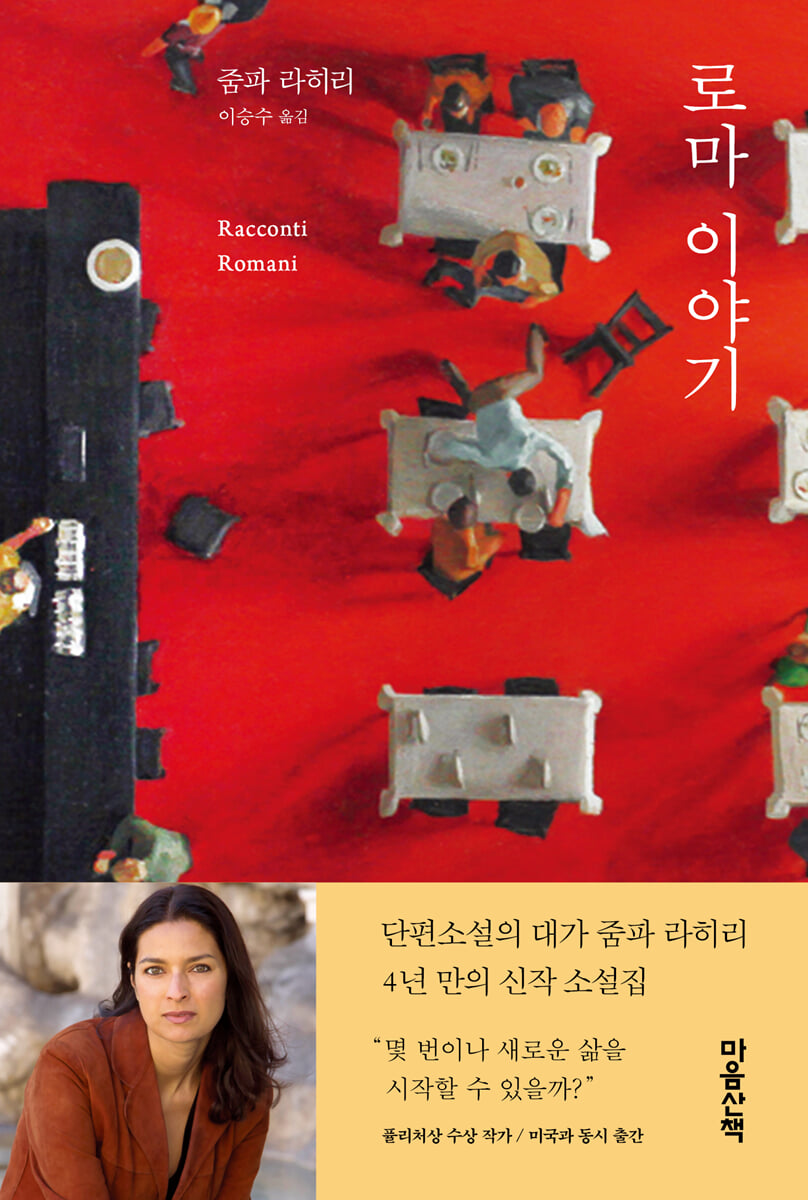
Jhumpa Lahiri's new novel collection, her first in four years Name, nationality, age, gender… Can we escape our given identity? Jhumpa Lahiri, who received attention by winning the Pulitzer Prize for her first collection of short stories, has published her new collection of short stories, 『Roman Stories』, four years after her debut. Jhumpa Lahiri's latest collection, written in Italian, contains nine short stories set in Rome. Jhumpa Lahiri, who wrote the prose collection "This Little Book is Always Bigger Than Me", "The Clothes the Book Wears", and the short story collection "Where I Am" in Italian, deepens her understanding of the Italian language through "Rome Stories" and persistently questions her identity as a person living on the border, a subject she has struggled with for a long time. Jhumpa Lahiri also participated directly in the English translation of 『Roman Stories』, and the American edition was published simultaneously with the domestic translation on October 10th. For Indian-American writer Jhumpa Lahiri, the sense of being an outsider is a central theme in her fiction. Since his first novel collection, “Blessed House,” he has depicted the subtle anxiety felt by those who do not belong anywhere. In "The Story of Rome," the exploration of foreignness continues, and the experience of inventing an identity in a new language, Italian, rather than English, leads to rich insights into foreignness. In "The Roman Story," Jhumpa Lahiri describes the fluidity of human identity, which is given to us from birth, and how we are all strangers wandering in an incomprehensible world. The novel is set in Rome, where Jhumpa Lahiri lived for many years. Rome, with its long history, is a city full of ruins. Just as a vivid 'present' life unfolds even in a place built on a thick history, the characters in the novel struggle to find a new identity beyond the names, nationalities, and genders they were born with. How long do you have to live to learn how to survive? How many times can you start a new life? I'm planning to have dinner with my girlfriends. A clear sky spreads over the square. “What a shitty city,” one of us says, breaking the silence. “But it’s so beautiful.” _From "Roman Stories", "Dante Alighieri" |
- You can preview some of the book's contents.
Preview
index
Ⅰ
boundary
reunion
P's party
Bright house
Ⅱ
stairs
Ⅲ
Pick up the parcel
procession
note
Dante Alighieri
Translator's Note
boundary
reunion
P's party
Bright house
Ⅱ
stairs
Ⅲ
Pick up the parcel
procession
note
Dante Alighieri
Translator's Note
Detailed image
.jpg)
Into the book
They left behind a few things they no longer needed, whether they forgot or intended, and I keep them.
Pictures drawn by girls, seashells collected from the beach, and a few bottles of fragrant body wash left over.
The notebook the girls' mother left behind contained a shopping list written in small, blurry handwriting, and everything about us.
--- p.30
Anyway, she thinks it's great to live in a city that, despite being so well known to the world, still has many secrets and discoveries to be discovered, by chance and slowly.
--- p.41
They were so different from the group I belonged to.
That is, they were different from those who were born and raised in Rome, who lamented the worrying decline of Rome, but could never leave it.
For those of us for whom simply changing neighborhoods, going to a new pharmacy, buying a newspaper at a new newsstand, sitting at a table at a new bar at the age of thirty represents a departure, a major move, a departure.
--- p.50
I was afraid that my son was not mature enough, that he was sad inside, that he might get into some kind of trouble.
But it was not my son who was immature and weak, but I.
It was another side of me that I could not realize, another side of me that I ignored and blocked, another side of me that did not exist but defeated me.
--- p.69~70
We each recalled our previous lives in our own way.
A life with more to accomplish, a ridiculous life, a tidy life, a glamorous life.
I quietly observed women who danced without being pretentious, women who took good care of themselves.
But we were no longer young, and now we were full of cracks, health problems, and disappointments.
--- p.78
The underpass looked like a long, narrow, large building with huge windows always open in front and back.
--- p.114
The brothers carefully reconstruct that Sunday when they climbed the stairs to the park with their father, who was still young, younger and thinner than the two of them now.
At that time, another father from the school my brother attended was coming down the stairs to run along the river.
The two fathers met each other as they went up and down the stairs, recognized each other, chatted, and made plans for coffee.
The brothers hurried to go to the park.
After the funeral, F said, “It was the most dazzling moment of my life.”
Through a brief conversation on the stairs, the two men realized clearly what was about to happen, though they still didn't know how or when.
--- p.161
I stay there until the sun goes down and the skin of everyone on the beach turns the same golden color.
--- p.187
As we walk, yearn, and make decisions, flashing memories or painful memories we don't want to wake up from arise.
But today, hidden memories reign in the cathedral.
That memory waits under the rock.
When I recall the memories, vivid, anxious pieces of myself jump up and down.
--- p.261
How long do I have to live to learn how to survive? How many times can I start a new life? I'm planning to have dinner with my girlfriends.
A bright sky spreads out over the square.
“What a shitty city,” one of us says, breaking the silence.
“But it’s so beautiful.”
Pictures drawn by girls, seashells collected from the beach, and a few bottles of fragrant body wash left over.
The notebook the girls' mother left behind contained a shopping list written in small, blurry handwriting, and everything about us.
--- p.30
Anyway, she thinks it's great to live in a city that, despite being so well known to the world, still has many secrets and discoveries to be discovered, by chance and slowly.
--- p.41
They were so different from the group I belonged to.
That is, they were different from those who were born and raised in Rome, who lamented the worrying decline of Rome, but could never leave it.
For those of us for whom simply changing neighborhoods, going to a new pharmacy, buying a newspaper at a new newsstand, sitting at a table at a new bar at the age of thirty represents a departure, a major move, a departure.
--- p.50
I was afraid that my son was not mature enough, that he was sad inside, that he might get into some kind of trouble.
But it was not my son who was immature and weak, but I.
It was another side of me that I could not realize, another side of me that I ignored and blocked, another side of me that did not exist but defeated me.
--- p.69~70
We each recalled our previous lives in our own way.
A life with more to accomplish, a ridiculous life, a tidy life, a glamorous life.
I quietly observed women who danced without being pretentious, women who took good care of themselves.
But we were no longer young, and now we were full of cracks, health problems, and disappointments.
--- p.78
The underpass looked like a long, narrow, large building with huge windows always open in front and back.
--- p.114
The brothers carefully reconstruct that Sunday when they climbed the stairs to the park with their father, who was still young, younger and thinner than the two of them now.
At that time, another father from the school my brother attended was coming down the stairs to run along the river.
The two fathers met each other as they went up and down the stairs, recognized each other, chatted, and made plans for coffee.
The brothers hurried to go to the park.
After the funeral, F said, “It was the most dazzling moment of my life.”
Through a brief conversation on the stairs, the two men realized clearly what was about to happen, though they still didn't know how or when.
--- p.161
I stay there until the sun goes down and the skin of everyone on the beach turns the same golden color.
--- p.187
As we walk, yearn, and make decisions, flashing memories or painful memories we don't want to wake up from arise.
But today, hidden memories reign in the cathedral.
That memory waits under the rock.
When I recall the memories, vivid, anxious pieces of myself jump up and down.
--- p.261
How long do I have to live to learn how to survive? How many times can I start a new life? I'm planning to have dinner with my girlfriends.
A bright sky spreads out over the square.
“What a shitty city,” one of us says, breaking the silence.
“But it’s so beautiful.”
--- p.279
Publisher's Review
All humans are strangers
A landscape of subtle discrimination and people standing on the border
Jhumpa Lahiri's characters feel uneasy because of their fluid identities.
Faced with anxiety, people either strengthen their in-group by excluding others or wander outside the world.
"Roman Stories" captures the inner and outer aspects of the feeling of being a foreigner in a three-dimensional way.
The novel's narrators are mainly immigrants who have moved to Rome.
Through their eyes, a landscape of discrimination that is carried out subtly and persistently is depicted.
When an immigrant woman of different skin color tries to use the restroom in a restaurant, a girl sits with her legs stretched out and blocks her path ("Reunion"), and an immigrant woman working as an elementary school assistant is given a piece of paper that says, "Go back to your country" ("Note").
Refugees who fled war in their homeland are forced out of their homes and families due to persecution from their neighbors as they try to protect their hard-won homes ("Bright House").
The novel expands the narrative in a complex way by portraying not only the victims of discrimination but also the perpetrators.
The middle-aged male author of "P's Party" is a Roman who was born and has lived in Rome ever since.
He is a prejudiced character who simply objectifies and views foreigners, but he is treated as an outsider by the foreign woman he is interested in.
Jhumpa Lahiri explores the human condition beyond named identities, suggesting that ultimately, every human being is a stranger.
They were so different from the group I belonged to.
That is, they were different from those who were born and raised in Rome, who lamented the worrying decline of Rome, but could never leave it.
For those of us for whom simply changing neighborhoods, going to a new pharmacy, buying a newspaper at a new newsstand, sitting at a table at a new bar at the age of thirty represents a departure, a major move, a departure.
_From "Roman Stories", "P's Party"
Rome Reimagined Through Jhumpa Lahiri's Eyes
A story unfolding like a fresco
The nine novels in 『Roman Stories』 are set in Rome and share the heartbeat of the city.
Stories set in the same city make us imagine that characters appearing in one work also pass through other works.
The mother of the family in "Border" could be on the bus that the immigrant woman in "Parcel Receiver" is riding, and the elementary school student who gives a piece of paper with violent content to the foreign woman in "Note" could be hanging out with the delinquent youth in "Stairs."
Above all, the reason why such imagination is possible is because specific information such as place names, characters' names, nationalities, and ages are intentionally excluded from the novel.
The places that serve as the story's setting are not actual Roman place names, but are expressed as 'stairs', 'square', and 'street'.
Characters are referred to by common nouns such as 'mother', 'foreigner', and 'brother' rather than by proper nouns such as names.
As specific details fade, the lines between places and people blur, and the nine short stories reconstruct the city of Rome like a fresco.
Moreover, the stories of the characters in the novel soon become the stories of us all.
Lahiri knows the weight and importance of a name.
A name defines and concretizes.
Names are imposed on us like our birth or native language.
Lahiri is interested in another essence of the individual beyond the identity that a name gives.
For Lahiri, removing the name means freeing herself from a certain weight.
Without names, boundaries collapse and meaning expands.
_From the translator's note
『Roman Stories』 is composed of extremely clear and beautiful works worthy of Jhumpa Lahiri, who has earned the title of ‘master of short stories.’
It is a blessing to be able to read the world presented by a writer who explores his own language while crossing boundaries in our contemporary times.
“Resembling the city of Rome, full of fascinating ruins and vibrant life (Vogue),” this collection of short stories is welcome news to readers who have been waiting for Jhumpa Lahiri’s next work.
A landscape of subtle discrimination and people standing on the border
Jhumpa Lahiri's characters feel uneasy because of their fluid identities.
Faced with anxiety, people either strengthen their in-group by excluding others or wander outside the world.
"Roman Stories" captures the inner and outer aspects of the feeling of being a foreigner in a three-dimensional way.
The novel's narrators are mainly immigrants who have moved to Rome.
Through their eyes, a landscape of discrimination that is carried out subtly and persistently is depicted.
When an immigrant woman of different skin color tries to use the restroom in a restaurant, a girl sits with her legs stretched out and blocks her path ("Reunion"), and an immigrant woman working as an elementary school assistant is given a piece of paper that says, "Go back to your country" ("Note").
Refugees who fled war in their homeland are forced out of their homes and families due to persecution from their neighbors as they try to protect their hard-won homes ("Bright House").
The novel expands the narrative in a complex way by portraying not only the victims of discrimination but also the perpetrators.
The middle-aged male author of "P's Party" is a Roman who was born and has lived in Rome ever since.
He is a prejudiced character who simply objectifies and views foreigners, but he is treated as an outsider by the foreign woman he is interested in.
Jhumpa Lahiri explores the human condition beyond named identities, suggesting that ultimately, every human being is a stranger.
They were so different from the group I belonged to.
That is, they were different from those who were born and raised in Rome, who lamented the worrying decline of Rome, but could never leave it.
For those of us for whom simply changing neighborhoods, going to a new pharmacy, buying a newspaper at a new newsstand, sitting at a table at a new bar at the age of thirty represents a departure, a major move, a departure.
_From "Roman Stories", "P's Party"
Rome Reimagined Through Jhumpa Lahiri's Eyes
A story unfolding like a fresco
The nine novels in 『Roman Stories』 are set in Rome and share the heartbeat of the city.
Stories set in the same city make us imagine that characters appearing in one work also pass through other works.
The mother of the family in "Border" could be on the bus that the immigrant woman in "Parcel Receiver" is riding, and the elementary school student who gives a piece of paper with violent content to the foreign woman in "Note" could be hanging out with the delinquent youth in "Stairs."
Above all, the reason why such imagination is possible is because specific information such as place names, characters' names, nationalities, and ages are intentionally excluded from the novel.
The places that serve as the story's setting are not actual Roman place names, but are expressed as 'stairs', 'square', and 'street'.
Characters are referred to by common nouns such as 'mother', 'foreigner', and 'brother' rather than by proper nouns such as names.
As specific details fade, the lines between places and people blur, and the nine short stories reconstruct the city of Rome like a fresco.
Moreover, the stories of the characters in the novel soon become the stories of us all.
Lahiri knows the weight and importance of a name.
A name defines and concretizes.
Names are imposed on us like our birth or native language.
Lahiri is interested in another essence of the individual beyond the identity that a name gives.
For Lahiri, removing the name means freeing herself from a certain weight.
Without names, boundaries collapse and meaning expands.
_From the translator's note
『Roman Stories』 is composed of extremely clear and beautiful works worthy of Jhumpa Lahiri, who has earned the title of ‘master of short stories.’
It is a blessing to be able to read the world presented by a writer who explores his own language while crossing boundaries in our contemporary times.
“Resembling the city of Rome, full of fascinating ruins and vibrant life (Vogue),” this collection of short stories is welcome news to readers who have been waiting for Jhumpa Lahiri’s next work.
GOODS SPECIFICS
- Date of issue: October 10, 2023
- Format: Hardcover book binding method guide
- Page count, weight, size: 288 pages | 448g | 128*188*16mm
- ISBN13: 9788960908444
You may also like
카테고리
korean


korean

![GQ KOREA Mark (Monthly): December [2025]](http://librairie.coreenne.fr/cdn/shop/files/8ef265dbbfbf186523ed75ba7319009d.jpg?v=1765340328&width=3840)


