

English for almost all descriptive expressions
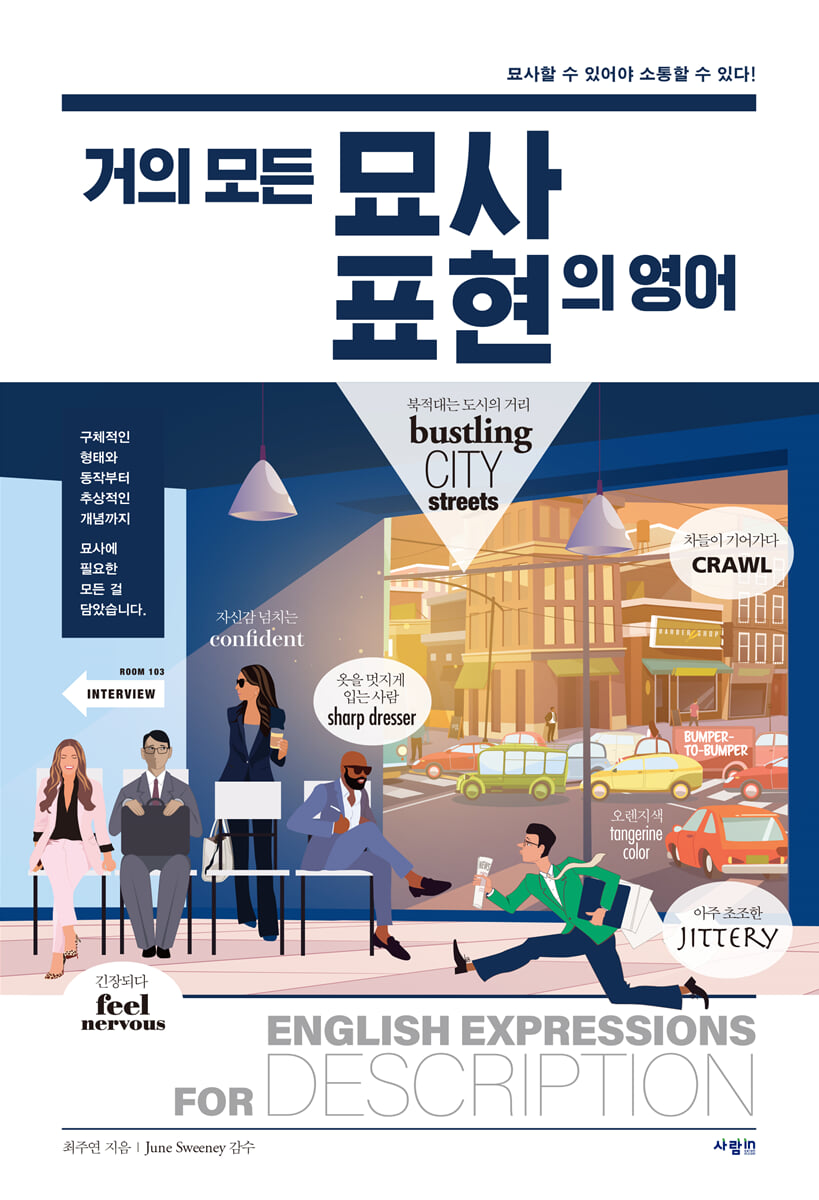 |
Description
Book Introduction
Now I can describe it in English!
People who can describe things also communicate well! A exclaims "delicious" about every dish.
B says of each individual food, "It's spicy, tangy, savory, and addictive."
Whose words would make you want to try their food? Obviously, B.
In fact, it is no exaggeration to say that our daily lives begin and end with description.
This kind of description (explanation) extends beyond the linguistic aspect of communication to the external aspects of empathy and trust.
So, wouldn't one way to take your English skills to the next level be to know the English descriptive expressions we use most often? "Almost Every Descriptive Expression in English" is packed with the expressions we need to describe a wide range of situations and topics around us.
"Almost All Descriptive Expressions in English" will transform learners who were unable to describe something because they didn't know how to describe it and were therefore taciturn and reserved in English into witty chatterboxes.
From the moment you realize the importance of description, your English skills will improve.
People who can describe things also communicate well! A exclaims "delicious" about every dish.
B says of each individual food, "It's spicy, tangy, savory, and addictive."
Whose words would make you want to try their food? Obviously, B.
In fact, it is no exaggeration to say that our daily lives begin and end with description.
This kind of description (explanation) extends beyond the linguistic aspect of communication to the external aspects of empathy and trust.
So, wouldn't one way to take your English skills to the next level be to know the English descriptive expressions we use most often? "Almost Every Descriptive Expression in English" is packed with the expressions we need to describe a wide range of situations and topics around us.
"Almost All Descriptive Expressions in English" will transform learners who were unable to describe something because they didn't know how to describe it and were therefore taciturn and reserved in English into witty chatterboxes.
From the moment you realize the importance of description, your English skills will improve.
- You can preview some of the book's contents.
Preview
index
introduction
Structure and Use of This Book
CHAPTER 1 PERSON
UNIT 1 Body, figure
HOW TO USE
UNIT 2 Hair, Hairstyles
-hair
HOW TO USE
-Hairstyle
HOW TO USE
UNIT 3 Face, Skin, Complexion
HOW TO USE
UNIT 4 Facial Features
HOW TO USE
UNIT 5 Facial Expressions
-laugh
-weep
HOW TO USE
UNIT 6 Height, Weight, Age
HOW TO USE
UNIT 7 Clothing
HOW TO USE
UNIT 8 Appearance
HOW TO USE
UNIT 9 BEHAVIOR
-walk
-pulsate
-eye
-nose
HOW TO USE
-mouth, tongue, teeth
-ear
-breathing
-Shoulders, hands, fingers
-legs, feet
-action
HOW TO USE
CHAPTER 2 DESCRIPTION OF THINGS
UNIT 1 Form
-Various shapes
HOW TO USE
UNIT 2 Color
HOW TO USE
-Various colors
UNIT 3 Texture
HOW TO USE
UNIT 4 Fragrance, Smell 87
HOW TO USE
UNIT 5 Price
HOW TO USE
UNIT 6 size
HOW TO USE
UNIT 7 MATERIALS 1 - CLOTHES, METALS
-cloth
-metal
HOW TO USE
UNIT 8 MATERIALS 2 - LEATHER, WOOD
-Leather
-wood
HOW TO USE
UNIT 9 MATERIALS 3 - SOIL, STONE, GLASS
-soil, sand
-stone
-glass
HOW TO USE
UNIT 10 MATERIALS 4 - PAPER, RUBBER
-paper
-rubber
HOW TO USE
CHAPTER 3 PERSONALITY DESCRIPTION
UNIT 1 Impression, Attitude, and Mood
HOW TO USE
UNIT 2 Tendency, Preference
HOW TO USE
UNIT 3 Personality
HOW TO USE
UNIT 4 Personality
HOW TO USE
CHAPTER 4 FOOD, FOOD DESCRIPTION
UNIT 1 Taste
HOW TO USE
UNIT 2 Texture, Condition
HOW TO USE
UNIT 3 FOOD AND NUTRITION
-Classification of food
HOW TO USE
UNIT 4 FOOD INGREDIENTS 1 - GRAIN, VEGETABLES, FRUITS
- Grains, beans, nuts
HOW TO USE
-vegetable
-fruit
HOW TO USE
UNIT 5 FOOD INGREDIENTS 2 - SEAFOOD, MEAT, DAIRY PRODUCTS, AND SEASONINGS
-seafood
HOW TO USE
-meat
HOW TO USE
-Dairy products
-seasoning
HOW TO USE
UNIT 6 Eating
HOW TO USE
CHAPTER 5 Describing Emotions and Feelings EMOTION & FEELING
UNIT 1 Positive Emotions and Feelings
HOW TO USE
UNIT 2 Negative Emotions and Feelings
HOW TO USE
UNIT 3 Joy and Sorrow
-delight
-fury
-sorrow
-joy
HOW TO USE
CHAPTER 6 PHYSICAL CONDITION, SYMPTOM & PAIN
UNIT 1 Body Conditions and Symptoms
HOW TO USE
UNIT 2 Symptoms by Body Part
HOW TO USE
UNIT 3 Pain
HOW TO USE
CHAPTER 7 FAMILY & RELATIONSHIPS
UNIT 1 Family, Relatives, and Degrees of Relationship
HOW TO USE
UNIT 2 Human Relationships
HOW TO USE
CHAPTER 8 WEATHER & CLIMATE
UNIT 1 General Weather and Climate Expressions
HOW TO USE
UNIT 2 Everyday Weather
-heat
-cold
HOW TO USE
UNIT 3 Temperature and Humidity
-Temperature, temperature
-humidity
HOW TO USE
CHAPTER 9: INCIDENT & ACCIDENT
UNIT 1 Various accidents
-Traffic-related accidents
HOW TO USE
-fire
-Other accidents 254
HOW TO USE
UNIT 2 Criminal Cases
HOW TO USE
CHAPTER 10 NATURAL DISASTER DESCRIPTION
UNIT 1 Floods, Typhoons, and Heavy Snow
-flood
-Tropical depression
-Heavy snow
HOW TO USE
UNIT 2 Drought, Wildfires
-drought
-forest fires
HOW TO USE
UNIT 3 Earthquakes, Tsunamis, Landslides, and Volcanic Eruptions [Explosions]
-earthquake
-Tsunami
-landslide
-Volcanic eruption [explosion]
HOW TO USE
CHAPTER 11 TIME, FREQUENCY & COMPARATIVE
UNIT 1 HOUR
-clock
UNIT 2 Frequency, Expressions, and Comparative Expressions
-Frequency
- Expressions using comparative degree
HOW TO USE
CHAPTER 12 LANDSCAPE & ATMOSPHERE
UNIT 1 CITY
HOW TO USE
UNIT 2 Sea, Lake
HOW TO USE
UNIT 3 Countryside, Forest
HOW TO USE
UNIT 4 Mountains, Valleys, and Waterfalls
HOW TO USE
UNIT 5 Atmosphere
HOW TO USE
CHAPTER 13 VARIOUS SITUATIONS
UNIT 1 Traffic Conditions
HOW TO USE
UNIT 2 Weather Conditions
HOW TO USE
UNIT 3 Economic Situation
HOW TO USE
CHAPTER 14 SOUND & MUSIC
UNIT 1 Sound
HOW TO USE
UNIT 2 Music
HOW TO USE
UNIT 3 Voice
-Human voice
-Animal sounds
-Onomatopoeia
HOW TO USE
CHAPTER 15 LIFE CYCLE DESCRIPTION
UNIT 1 Childhood and Adolescence
HOW TO USE
UNIT 2 Adulthood, Old Age
HOW TO USE
CHAPTER 16 ADVANCED VOCABULARY FOR DESCRIPTION
UNIT 1 Describing in a sophisticated way with advanced adjectives
UNIT 2 Describing in one word without using very
UNIT 3 Expressions using two words or phrases in pairs 3
UNIT 4 Useful 'Adverb + Adjective' Collocations
HOW TO USE
INDEX
Structure and Use of This Book
CHAPTER 1 PERSON
UNIT 1 Body, figure
HOW TO USE
UNIT 2 Hair, Hairstyles
-hair
HOW TO USE
-Hairstyle
HOW TO USE
UNIT 3 Face, Skin, Complexion
HOW TO USE
UNIT 4 Facial Features
HOW TO USE
UNIT 5 Facial Expressions
-laugh
-weep
HOW TO USE
UNIT 6 Height, Weight, Age
HOW TO USE
UNIT 7 Clothing
HOW TO USE
UNIT 8 Appearance
HOW TO USE
UNIT 9 BEHAVIOR
-walk
-pulsate
-eye
-nose
HOW TO USE
-mouth, tongue, teeth
-ear
-breathing
-Shoulders, hands, fingers
-legs, feet
-action
HOW TO USE
CHAPTER 2 DESCRIPTION OF THINGS
UNIT 1 Form
-Various shapes
HOW TO USE
UNIT 2 Color
HOW TO USE
-Various colors
UNIT 3 Texture
HOW TO USE
UNIT 4 Fragrance, Smell 87
HOW TO USE
UNIT 5 Price
HOW TO USE
UNIT 6 size
HOW TO USE
UNIT 7 MATERIALS 1 - CLOTHES, METALS
-cloth
-metal
HOW TO USE
UNIT 8 MATERIALS 2 - LEATHER, WOOD
-Leather
-wood
HOW TO USE
UNIT 9 MATERIALS 3 - SOIL, STONE, GLASS
-soil, sand
-stone
-glass
HOW TO USE
UNIT 10 MATERIALS 4 - PAPER, RUBBER
-paper
-rubber
HOW TO USE
CHAPTER 3 PERSONALITY DESCRIPTION
UNIT 1 Impression, Attitude, and Mood
HOW TO USE
UNIT 2 Tendency, Preference
HOW TO USE
UNIT 3 Personality
HOW TO USE
UNIT 4 Personality
HOW TO USE
CHAPTER 4 FOOD, FOOD DESCRIPTION
UNIT 1 Taste
HOW TO USE
UNIT 2 Texture, Condition
HOW TO USE
UNIT 3 FOOD AND NUTRITION
-Classification of food
HOW TO USE
UNIT 4 FOOD INGREDIENTS 1 - GRAIN, VEGETABLES, FRUITS
- Grains, beans, nuts
HOW TO USE
-vegetable
-fruit
HOW TO USE
UNIT 5 FOOD INGREDIENTS 2 - SEAFOOD, MEAT, DAIRY PRODUCTS, AND SEASONINGS
-seafood
HOW TO USE
-meat
HOW TO USE
-Dairy products
-seasoning
HOW TO USE
UNIT 6 Eating
HOW TO USE
CHAPTER 5 Describing Emotions and Feelings EMOTION & FEELING
UNIT 1 Positive Emotions and Feelings
HOW TO USE
UNIT 2 Negative Emotions and Feelings
HOW TO USE
UNIT 3 Joy and Sorrow
-delight
-fury
-sorrow
-joy
HOW TO USE
CHAPTER 6 PHYSICAL CONDITION, SYMPTOM & PAIN
UNIT 1 Body Conditions and Symptoms
HOW TO USE
UNIT 2 Symptoms by Body Part
HOW TO USE
UNIT 3 Pain
HOW TO USE
CHAPTER 7 FAMILY & RELATIONSHIPS
UNIT 1 Family, Relatives, and Degrees of Relationship
HOW TO USE
UNIT 2 Human Relationships
HOW TO USE
CHAPTER 8 WEATHER & CLIMATE
UNIT 1 General Weather and Climate Expressions
HOW TO USE
UNIT 2 Everyday Weather
-heat
-cold
HOW TO USE
UNIT 3 Temperature and Humidity
-Temperature, temperature
-humidity
HOW TO USE
CHAPTER 9: INCIDENT & ACCIDENT
UNIT 1 Various accidents
-Traffic-related accidents
HOW TO USE
-fire
-Other accidents 254
HOW TO USE
UNIT 2 Criminal Cases
HOW TO USE
CHAPTER 10 NATURAL DISASTER DESCRIPTION
UNIT 1 Floods, Typhoons, and Heavy Snow
-flood
-Tropical depression
-Heavy snow
HOW TO USE
UNIT 2 Drought, Wildfires
-drought
-forest fires
HOW TO USE
UNIT 3 Earthquakes, Tsunamis, Landslides, and Volcanic Eruptions [Explosions]
-earthquake
-Tsunami
-landslide
-Volcanic eruption [explosion]
HOW TO USE
CHAPTER 11 TIME, FREQUENCY & COMPARATIVE
UNIT 1 HOUR
-clock
UNIT 2 Frequency, Expressions, and Comparative Expressions
-Frequency
- Expressions using comparative degree
HOW TO USE
CHAPTER 12 LANDSCAPE & ATMOSPHERE
UNIT 1 CITY
HOW TO USE
UNIT 2 Sea, Lake
HOW TO USE
UNIT 3 Countryside, Forest
HOW TO USE
UNIT 4 Mountains, Valleys, and Waterfalls
HOW TO USE
UNIT 5 Atmosphere
HOW TO USE
CHAPTER 13 VARIOUS SITUATIONS
UNIT 1 Traffic Conditions
HOW TO USE
UNIT 2 Weather Conditions
HOW TO USE
UNIT 3 Economic Situation
HOW TO USE
CHAPTER 14 SOUND & MUSIC
UNIT 1 Sound
HOW TO USE
UNIT 2 Music
HOW TO USE
UNIT 3 Voice
-Human voice
-Animal sounds
-Onomatopoeia
HOW TO USE
CHAPTER 15 LIFE CYCLE DESCRIPTION
UNIT 1 Childhood and Adolescence
HOW TO USE
UNIT 2 Adulthood, Old Age
HOW TO USE
CHAPTER 16 ADVANCED VOCABULARY FOR DESCRIPTION
UNIT 1 Describing in a sophisticated way with advanced adjectives
UNIT 2 Describing in one word without using very
UNIT 3 Expressions using two words or phrases in pairs 3
UNIT 4 Useful 'Adverb + Adjective' Collocations
HOW TO USE
INDEX
Detailed image

Publisher's Review
Studying descriptive expressions is the pinnacle of comprehensive vocabulary learning.
The English word for 'description' is 'description', and in Chinese characters it is 'to draw, to copy'.
In short, it is a detailed explanation as if copying a picture.
You might ask, 'How many times in life do we have to explain things like that?' But the truth is, most of our communication is description.
“I couldn’t sleep last night, I’m so tired I could die.”
Explain to your colleague why you look unwell.
“The food was spicy and bursting with flavor.”
I'm describing the taste of the food at the restaurant I went to yesterday to a friend who asks what it was like.
“The trim keeps coming out and it’s working well.
“If I only eat dairy products, my stomach gets bloated.”
When the doctor asks what brought you here, explain your symptoms.
All of this is description.
There are countless others besides these.
So, the standard for being good at English is whether you are good at describing things like this, and one of the ways to be good at English is to study the expressions that help you describe things like this.
〈Almost All Descriptive Expressions in English〉 is a book that contains expressions that are helpful for such descriptions.
Select essential topics and expressions to customize your description
To describe well, you need to know a wide range of expressions, from nouns that refer to objects and concepts, to adjectives that indicate their states, to verb phrases that indicate actions.
That's why studying descriptive expressions is said to be the pinnacle of comprehensive vocabulary learning.
But the scope is so vast and the number of expressions to know is so numerous that it can be overwhelming to know where to start.
〈Almost All Descriptive Expressions in English〉 presents the most frequently used descriptive topics and situations in people's daily lives, along with the necessary expressions.
If you know this much for sure, the symptoms of being speechless and suffering from cold heart will disappear.
A perfect image that reduces burden and adds visual interest.
"Almost All Descriptive Expressions in English" includes images that help you remember expressions you might be wondering, "How do you explain this in English?" by reducing the learning burden and adding visual interest.
Rather than feeling pressured to memorize everything, just reading and skimming through the pictures and expressions is already half the job.
How To Use provides an explanation of nuances and how to use them right away.
〈Almost Every Descriptive Expression in English〉 explains the nuances of individual expressions in detail.
In Korean, they all mean 'charismatic', but the nuances are subtly different: charismatic means 'having a charm that attracts others and inspires them', talismanic means 'having a feeling of not only being charismatic but also of giving good luck and warding off bad luck', and magnetic means 'having a charm that strongly attracts people like a magnet'.
If necessary, we provide these nuanced explanations so that you can choose the one that best suits your situation.
It also shows you how individual expressions are used in short sentences, conversations, and texts, so you can learn how to use them correctly.
The English word for 'description' is 'description', and in Chinese characters it is 'to draw, to copy'.
In short, it is a detailed explanation as if copying a picture.
You might ask, 'How many times in life do we have to explain things like that?' But the truth is, most of our communication is description.
“I couldn’t sleep last night, I’m so tired I could die.”
Explain to your colleague why you look unwell.
“The food was spicy and bursting with flavor.”
I'm describing the taste of the food at the restaurant I went to yesterday to a friend who asks what it was like.
“The trim keeps coming out and it’s working well.
“If I only eat dairy products, my stomach gets bloated.”
When the doctor asks what brought you here, explain your symptoms.
All of this is description.
There are countless others besides these.
So, the standard for being good at English is whether you are good at describing things like this, and one of the ways to be good at English is to study the expressions that help you describe things like this.
〈Almost All Descriptive Expressions in English〉 is a book that contains expressions that are helpful for such descriptions.
Select essential topics and expressions to customize your description
To describe well, you need to know a wide range of expressions, from nouns that refer to objects and concepts, to adjectives that indicate their states, to verb phrases that indicate actions.
That's why studying descriptive expressions is said to be the pinnacle of comprehensive vocabulary learning.
But the scope is so vast and the number of expressions to know is so numerous that it can be overwhelming to know where to start.
〈Almost All Descriptive Expressions in English〉 presents the most frequently used descriptive topics and situations in people's daily lives, along with the necessary expressions.
If you know this much for sure, the symptoms of being speechless and suffering from cold heart will disappear.
A perfect image that reduces burden and adds visual interest.
"Almost All Descriptive Expressions in English" includes images that help you remember expressions you might be wondering, "How do you explain this in English?" by reducing the learning burden and adding visual interest.
Rather than feeling pressured to memorize everything, just reading and skimming through the pictures and expressions is already half the job.
How To Use provides an explanation of nuances and how to use them right away.
〈Almost Every Descriptive Expression in English〉 explains the nuances of individual expressions in detail.
In Korean, they all mean 'charismatic', but the nuances are subtly different: charismatic means 'having a charm that attracts others and inspires them', talismanic means 'having a feeling of not only being charismatic but also of giving good luck and warding off bad luck', and magnetic means 'having a charm that strongly attracts people like a magnet'.
If necessary, we provide these nuanced explanations so that you can choose the one that best suits your situation.
It also shows you how individual expressions are used in short sentences, conversations, and texts, so you can learn how to use them correctly.
GOODS SPECIFICS
- Date of issue: January 26, 2024
- Page count, weight, size: 386 pages | 880g | 170*250*21mm
- ISBN13: 9791171010523
- ISBN10: 1171010524
You may also like
카테고리
korean


korean

![GQ KOREA Mark (Monthly): December [2025]](http://librairie.coreenne.fr/cdn/shop/files/8ef265dbbfbf186523ed75ba7319009d.jpg?v=1765340328&width=3840)


