

A pronoun for nothing
 |
Description
Book Introduction
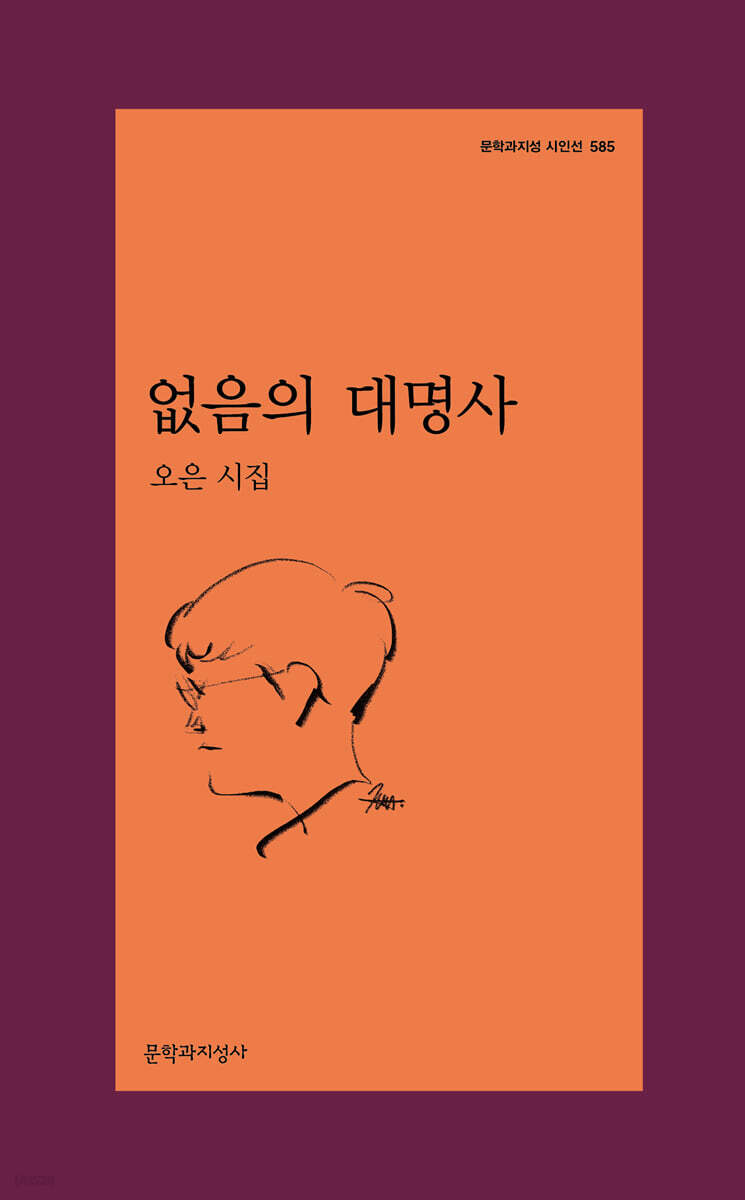
“Nothingness will constantly knock on the door of existence.” 'Laughter' and 'crying' are placed side by side When making an 'expression' with a 'blank expression' The place of 'lost' that arises between 'nothing' and 'was' Poet Oh Eun's sixth poetry collection, "A Noun for Nothing," was published as the 585th collection of poems in the Munhak-kwa-Jiseongsa poet series. I am very happy to see this poetry collection being published five years after my previous work, “I Had a Name.” Although it has been a while since the poet published a new poetry collection, the poet has not only published various anthologies, prose collections, and poetry collections for young adults, but has also hosted 'Oh Eun's Onggi Jonggi' on the online bookstore Yes24's book podcast Book Read Out from April 2018 to the present, so he has never been lazy about reading, writing, and sharing about it. In April 2002, at the age of twenty, he became a poet. This year marks the 20th anniversary of my debut and I am now entering my 21st year. His first poetry collection, “Pigs of the Hotel Tassel,” was published in 2009, so as the poet wrote in his biography, “I believe that the moment you debut and the moment you become a poet are different,” he debuted early and slowly became a poet. The first poetry collection, which was subtitled 'Wordplay Ad-lib' from the first part and was lighthearted and subversive, showed off its wordplay without hesitation, and received a lot of attention. Oh Eun did not let this end as a passing syndrome, but published six books of poetry over the next 14 years. There were times when the time interval was short and times when it was long, but it came out about once every two to three years. As the poet wrote in his bio in another collection of poems, “I think being a poet is a state, not a profession,” Oh Eun has consistently maintained the ‘state of being a poet.’ It goes without saying that in the process, the unique world of poetry became more solid. Since becoming a poet, Oh Eun has never been far from poetry. Oh Eun is orange. A color between red and yellow. For him, red is “the destination of all ripe things” (You, Me, and Yellow, p. 16) and yellow is an innocent color that makes things “infinitely bright” (same book, p. 11). There is a bold and passionate young man and a bright and cheerful child together. So his poetry never leaned towards red, and never let go of yellow. Oh Eun liked primary colors, but she was never primary. The poet who said, “I had a name,” now speaks of “nothing.” That too, as a “pronoun” that obscures the “name”. On the path from ‘was’ to ‘nothing’ lies ‘lost’ (“In the place of ‘lost’ there was ‘was’” - ‘Poet’s Words’). “The life of ‘suffering’ has ended, and the life of ‘not suffering’ is being lived” (「Not suffering」, 『I had a name』, p. The poet who said, “97”) went through “lost” and arrived at “nothing.” Even though he can easily guess the sadness, the poet opens the door to ‘nothingness.’ For him, “writing poetry begins by thinking of the expression on the face of a person opening something” (“Speaking of My Poetry,” 『Modern Poetry』, May 2023 issue). And the pronouns pouring in. |
- You can preview some of the book's contents.
Preview
Into the book
He was called the epitome of laughter. Was it because he laughed so well, or because he was so funny? At some point, he seemed to become one with laughter. Laughter was ready to flow from the pores of his sad face. It was fortunate when it did. Once the laughter burst out, it overwhelmed the crowd in an instant. If you laugh together without knowing why, it was not the right time. It was the wrong place. It was not the right situation. There were times when a funeral hall suddenly became a festival site. He entered as the epitome of laughter, but he always left as the epitome of nuisance.
People are nouns, you are pronouns
There were people who said things that were obvious.
He ended up chuckling
Even though he was not a great noun but just a substitute noun, people were jealous of him and criticized him. Because he laughed regardless of whether it was water or fire, because he laughed regardless of whether he was pissed or not, he became a proper noun. Whenever they found someone laughing without a second thought, people immediately summoned him. As usual, when he laughed, words like these would fly in. Do you like it? Is life worth living? Are you satisfied? When he was funny, words like these would stick in his face. Is it funny? Are you laughing? Are you satisfied? Unlike usual, satisfaction did not melt in water. Even in fire, satisfaction did not burn. Even in urine or in shit, satisfaction did not give off a smell.
People are born with proper nouns and live with common nouns.
I need to use a noun to replace my name.
He laughed out loud, angry at himself.
His name became a common noun for someone who laughs without knowing. Like rice, like the Daeil Band, like Choco Pie, he could be found everywhere. If he wanted to, he could have it in his hand. Like Seoul, like a Jeep, like Scrooge, even if he wasn't close, it sounded familiar. Even if he couldn't go, he couldn't have it or meet it.
Even so, I wasn't sad. Just being able to recall it was a relief. Since nouns were not replaced, his name grew old without end. He became an abstract noun from a common noun. Common as love, precious as hope, but vague like life. Like a pronoun for nothing.
He could laugh even in the face of death because he was not afraid of water or fire.
Because I couldn't control my bowel movements, I was naturally calm like a baby.
There was just one moment when the smile vanished from his face. At that moment, he believed he understood the smile. He was so busy laughing that he didn't even realize that his words were causing a commotion.
---Among "them"
Open parentheses
Write down the secret
Close the parentheses
The secret is potentially sealed
Actually, we
stood outside the parentheses
Secretive but not secret
I don't want to get caught, but
I want to be recognized
Parentheses hug the inside
Parentheses turn their backs to the outside
They try to somehow come together and form a circle
The things in parentheses
I can't breathe
The shadow outside the parentheses is
After wandering around
While wiggling
It was swaying
It seeps into the parentheses one by one
we are
But it became a secret on its own
To hide each other
It was too close
---Among "us"
Although you were born a proper noun, you were often called a pronoun.
Those who draw the line by saying "you", those who pretend to be "us", and those who pull others in by saying "you" were all originally proper nouns.
The more you try to discard the nouns within you, the more unique you become.
When you were born, you were a person close to an adjective.
A bright and cute person.
A wonderful and beautiful person.
A flexible and lively person.
People said they felt good when they saw you.
He said that he felt a new energy come back.
Your nature was like water, more like a surging current than a still one.
I was close with Su-sa during my childhood.
There were many instances where people raised their hands to be the first to do something.
It was also common to see people running down the alley shouting one, two, three.
As my friends grew, the frequency with which I used pronouns also increased.
Among the countless you, the one you like the most immediately became your best friend.
Being with your best friend makes you a verb.
I decided to get out of the situation and move.
From here to there, from there to another there.
After becoming a verb, the number of commands increased.
Stay still.
Don't be sick! Smile a little.
don't cry.
love you?
You were focused on the investigation, and your best friend was focused on the adjective.
When you confessed that you were the only one, your best friend took it as a single person's meaning.
It was good until then.
That was it.
Adjectives do not originally have particles attached to them.
Your best friend, who had turned away coldly, instantly became that person.
From then on, you started to indulge in adverbs.
I've put a lot of energy into blowing you up and blowing you down.
There were many times when I was very tired, very sick, and very hungry.
As your opinion became clearer, you yourself became more and more vague.
I was finally embarrassed.
When it became an exclamation, you realized.
Oh, that wasn't the sentence!
---Among "you"
When you want to be alone
I went to the bathroom
Alone
I was lonely because I was alone
In front of people
I felt embarrassed for some reason
It's okay to be alone
in the end
Being alone has become comfortable
The bathroom mirror was well cleaned.
It's not like it's dirty
It wasn't easy to look up
I looked in the mirror and smiled brightly.
Even though no one is watching
The corners of my mouth didn't go up very much.
As if I saw something I shouldn't have seen
As if the face is fierce
Laughter erupted
Like a story that I can't even laugh at
Like an expression that suddenly becomes funny after laughing
Funny world
Like the best comedian
I'm alone
It's a bathroom
In front of me too
I couldn't smile without trying
People are nouns, you are pronouns
There were people who said things that were obvious.
He ended up chuckling
Even though he was not a great noun but just a substitute noun, people were jealous of him and criticized him. Because he laughed regardless of whether it was water or fire, because he laughed regardless of whether he was pissed or not, he became a proper noun. Whenever they found someone laughing without a second thought, people immediately summoned him. As usual, when he laughed, words like these would fly in. Do you like it? Is life worth living? Are you satisfied? When he was funny, words like these would stick in his face. Is it funny? Are you laughing? Are you satisfied? Unlike usual, satisfaction did not melt in water. Even in fire, satisfaction did not burn. Even in urine or in shit, satisfaction did not give off a smell.
People are born with proper nouns and live with common nouns.
I need to use a noun to replace my name.
He laughed out loud, angry at himself.
His name became a common noun for someone who laughs without knowing. Like rice, like the Daeil Band, like Choco Pie, he could be found everywhere. If he wanted to, he could have it in his hand. Like Seoul, like a Jeep, like Scrooge, even if he wasn't close, it sounded familiar. Even if he couldn't go, he couldn't have it or meet it.
Even so, I wasn't sad. Just being able to recall it was a relief. Since nouns were not replaced, his name grew old without end. He became an abstract noun from a common noun. Common as love, precious as hope, but vague like life. Like a pronoun for nothing.
He could laugh even in the face of death because he was not afraid of water or fire.
Because I couldn't control my bowel movements, I was naturally calm like a baby.
There was just one moment when the smile vanished from his face. At that moment, he believed he understood the smile. He was so busy laughing that he didn't even realize that his words were causing a commotion.
---Among "them"
Open parentheses
Write down the secret
Close the parentheses
The secret is potentially sealed
Actually, we
stood outside the parentheses
Secretive but not secret
I don't want to get caught, but
I want to be recognized
Parentheses hug the inside
Parentheses turn their backs to the outside
They try to somehow come together and form a circle
The things in parentheses
I can't breathe
The shadow outside the parentheses is
After wandering around
While wiggling
It was swaying
It seeps into the parentheses one by one
we are
But it became a secret on its own
To hide each other
It was too close
---Among "us"
Although you were born a proper noun, you were often called a pronoun.
Those who draw the line by saying "you", those who pretend to be "us", and those who pull others in by saying "you" were all originally proper nouns.
The more you try to discard the nouns within you, the more unique you become.
When you were born, you were a person close to an adjective.
A bright and cute person.
A wonderful and beautiful person.
A flexible and lively person.
People said they felt good when they saw you.
He said that he felt a new energy come back.
Your nature was like water, more like a surging current than a still one.
I was close with Su-sa during my childhood.
There were many instances where people raised their hands to be the first to do something.
It was also common to see people running down the alley shouting one, two, three.
As my friends grew, the frequency with which I used pronouns also increased.
Among the countless you, the one you like the most immediately became your best friend.
Being with your best friend makes you a verb.
I decided to get out of the situation and move.
From here to there, from there to another there.
After becoming a verb, the number of commands increased.
Stay still.
Don't be sick! Smile a little.
don't cry.
love you?
You were focused on the investigation, and your best friend was focused on the adjective.
When you confessed that you were the only one, your best friend took it as a single person's meaning.
It was good until then.
That was it.
Adjectives do not originally have particles attached to them.
Your best friend, who had turned away coldly, instantly became that person.
From then on, you started to indulge in adverbs.
I've put a lot of energy into blowing you up and blowing you down.
There were many times when I was very tired, very sick, and very hungry.
As your opinion became clearer, you yourself became more and more vague.
I was finally embarrassed.
When it became an exclamation, you realized.
Oh, that wasn't the sentence!
---Among "you"
When you want to be alone
I went to the bathroom
Alone
I was lonely because I was alone
In front of people
I felt embarrassed for some reason
It's okay to be alone
in the end
Being alone has become comfortable
The bathroom mirror was well cleaned.
It's not like it's dirty
It wasn't easy to look up
I looked in the mirror and smiled brightly.
Even though no one is watching
The corners of my mouth didn't go up very much.
As if I saw something I shouldn't have seen
As if the face is fierce
Laughter erupted
Like a story that I can't even laugh at
Like an expression that suddenly becomes funny after laughing
Funny world
Like the best comedian
I'm alone
It's a bathroom
In front of me too
I couldn't smile without trying
---Among "me"
Publisher's Review
A Special Story in an Empty Pronoun
A pronoun is a word that represents the name of a person or thing, or a part of speech that refers to such words, and is divided into demonstrative pronouns and personal pronouns.
『The Pronoun of Nothingness』 is divided into two parts. In Part 1, ‘Overflowing Cheerfulness,’ there are poems titled with demonstrative pronouns, and in Part 2, ‘Even Expressionless Expression,’ there are poems titled with personal pronouns.
It contains three poems titled “There,” six “Them,” sixteen “Its,” one “This,” nine “Them,” nine “That,” nine “Us,” four “You,” and one “Me.”
Critic Oh Yeon-kyung, who wrote the commentary for this collection of poems, said that for Oh Eun, who “has developed her own unique writing style by being more interested in the materiality and self-referentiality of language than anyone else,” “pronouns are a perfect fit for the world where words refer to words, the kingdom where words about words form a forest.”
It's like "throwing out an empty pronoun like 'it' and making us fish out the full meaning by playing the flute," and then "taking us to 'there.'"
This is why, in this collection of poems, where pronouns are “placed in the title’s place without being able to tell what they are referring to,” readers “witness the scene where words come together to create a special story without any specific object in mind.”
When I opened it, they were there.
As expected.
As if I could forget it, as if I could never forget it.
But I opened it to forget.
Because I think of it, because it appears, because it suffocates me.
Because I can't forget.
It won't be there, it might not be there, how nice it would be if it wasn't there.
They were there.
I won't forget, I might never forget, I wish I could.
It was there without fail.
They were outside.
Inside, in an unknown place.
It was so warm, so flat, so similar that I couldn't tell.
The inside story is that he doesn't go out unless it's really easy.
The body just curls up and becomes denser.
It will be there for a lifetime.
If only we had an open heart and open hands.
Even if it's gone, I'll still think of it.
It will appear in your mind.
It will be heartbreaking.
The absence will constantly knock on the door to what was there.
When I closed them, they disappeared.
Perfectly.
Just because you can't see it doesn't mean it doesn't exist.
I felt bad about closing my eyes.
Between the unseen and the unseen.
If you keep thinking about it, those things will keep coming up.
Open or close.
Even if you don't open it.
Because I can't close it.
there is.
―「Those」, p.
16
When reading 『The Pronoun of Nothingness』, the reader's gaze follows the poet's gaze and lingers on the place where 'it' 'was'.
Even if there is nothing 'there', the poet says, "just because you can't see it doesn't mean it's not there."
The scene that catches your eye, the emotion that comes unexpectedly, the atmosphere created by the imagination soaked in ignorance may not last long and may fade away, but “nothingness will constantly knock on the door that it was.”
The stories that fill the poet's gaze are mainly the "inner stories" of those who have lost and been hurt.
Oh Eun's poetry writing is a bold step into the situation where "going out is not easy."
Here is the 'him' who was called "the epitome of laughter" and has been broken and worn away by people's mouths, or the 'him' whose "throat is swollen even though no one said anything."
He was bad at spelling. Until he started working for his first company, he thought 'do this and that' meant 'work hard and bow down.' One time, he sent a message to a colleague through the company messenger. 'Manager Kim always tells me to work hard and bow down.'
"I'm doing fine on my own." His colleague didn't reply for a while. He might have seemed stiff using honorifics and formal language on Messenger. He didn't know how to joke or tolerate silence. After a while, his colleague sent him a message saying, "Do this and that." He searched the Internet and couldn't say or do anything for a while. I was so embarrassed that I was doing poorly on my own. It felt like a system that I had believed in deeply for 26 years was being shaken. I thought I would never be able to use that expression again.
Just then, Manager Kim came into the office. He jumped up from his seat and bowed deeply to greet me. Manager Kim looked flustered. His colleagues also looked at him strangely. He didn't know how to joke or tolerate silence, and he was also bad at improvising. He scratched his head and sat down. The chair was deep. He quickly closed the messenger window, but a call came in from a business partner. "Yes, I will place the order without a hitch." He held the receiver and kept bowing his head. It was something that no one saw or noticed. It was the work he put the most effort into. No one asked, "What's going on?" No one scolded him, "We're not placing orders, we're accepting orders." He couldn't think of anything else but, "Work and bow." Wasn't he supposed to work hard and bow when his boss passed by, stand up from his seat and bow politely? He knew that. He worked and bowed every day.
Around the time he was leaving work, Manager Kim suggested we have a company dinner. “Tomorrow is your day off, right? How about having a drink and pouring yourself some more?” Everyone froze at his bold words. It was because they didn’t want to have a company dinner. Some confidently said, “So suddenly? I have a date,” while others politely declined, saying, “I have a health checkup appointment tomorrow.” Everyone in the office thought it would be better to work and bow than have a company dinner. He thought Manager Kim’s words were teasing him for being obsessed with ‘work and bow,’ Work, bow, pour yourself some more, drink… … Is the person who orders A the person who receives the order B? It seemed like he would never be able to escape the status of B for the rest of his life. If he kept working, bowing, pouring himself some more, and drinking, he might even become the company’s host.
His throat was swelling without anyone saying anything. It was something no one could see or notice. He wanted to do it well.
―「That」, p.
94
The story of spelling mistakes, which used to be passed around like a joke while raising the issue of literacy among the younger generation, became a special story with a hidden story that was not funny in Oh Eun's poetry.
A misunderstanding that comes from a life of “working and bowing every day.”
So when he realized that it was his own ignorance, he felt a sense of despair as if his life had been completely denied.
And the desire to “do well” the “work that no one can see or know” that was left there.
Oh Eun once said that becoming an old pig, “too old to grunt” but “only giggling”, was “such an ugly and frightening thing” (“The Pigs of the Hotel Tassel”).
And as time goes by, instead of laughing out loud, I keep a blank expression on my face, and cry next to laughter.
The place of things that are 'not' here and now
The poet confesses, “If you look closely, laughter is often a decisive aspect of crying” (“Speaking of My Poetry”).
The reason why this collection of poems still has the warmth of orange, yet also has a profound sadness within it, is because of the “overflowing cheerfulness” encountered in the preface.
“Dad, I’m home!” I greet him as cheerfully as possible when I enter the shrine.
That night, my father appeared in my dream.
“Eun-ah, your dad came today.” There was something that came out when the maximum burst.
Cheerfulness overflowing at full speed toward that distant day.
―「There」, p.
9
Although the reality is that “even in front of me/you can’t smile without trying” (“I”), “what comes out when you burst to the max” is “cheerfulness.”
The poet places the sadness that bursts like a flood in the same place as “cheerfulness that overflows at full speed,” confirming that something was there but is now gone.
Critic Oh Yeon-kyung's commentary, "Our sorrow is what fills the gap and time difference between 'nothing' and 'was,'" accurately captures this collection of poems.
The poet calls out with pronouns the things that are lost and not here and now.
In this way, the poet's pronoun does not 'replace' what has been lost, but makes it 'again' here and now.
This is how Oh Eun-i buys poetry.
This is why poet Oh Eun stands in the position of a person who ‘represents’ ‘nothingness’ through poetry.
So this is not a play on words.
Oh Eun is synonymous with wordplay, but it is not a signifier of any method of introduction known as wordplay.
He strives to live in every moment where the state of speech and the state of being converge.
That moment is not achieved by chance or artificiality, but only by the persistent will to live, to live existence through words and to measure words through existence.
―Oh Yeon-kyung, commentary from “All-round Sorrow, Full-Speed Cheerfulness”
■ Poet's Note
In place of 'lost' there was 'was'.
Spring 2023
Oh Eun
■ Back cover text
Two people are walking.
The hand holding the phone begins to read.
For people to live like humans······
The ear that hears that speaks.
Is that possible? Hahaha.
It was the first time I had seen such a sad smile.
“Wahaha” is a time bomb.
Words that could explode at any moment.
Words that have already been shattered into pieces and scattered in all directions.
There are things that disappear no matter how much you pray for them.
There are words that can be heard even if you close your ears.
It keeps coming back as a ghost, as an echo.
It was there.
A pronoun is a word that represents the name of a person or thing, or a part of speech that refers to such words, and is divided into demonstrative pronouns and personal pronouns.
『The Pronoun of Nothingness』 is divided into two parts. In Part 1, ‘Overflowing Cheerfulness,’ there are poems titled with demonstrative pronouns, and in Part 2, ‘Even Expressionless Expression,’ there are poems titled with personal pronouns.
It contains three poems titled “There,” six “Them,” sixteen “Its,” one “This,” nine “Them,” nine “That,” nine “Us,” four “You,” and one “Me.”
Critic Oh Yeon-kyung, who wrote the commentary for this collection of poems, said that for Oh Eun, who “has developed her own unique writing style by being more interested in the materiality and self-referentiality of language than anyone else,” “pronouns are a perfect fit for the world where words refer to words, the kingdom where words about words form a forest.”
It's like "throwing out an empty pronoun like 'it' and making us fish out the full meaning by playing the flute," and then "taking us to 'there.'"
This is why, in this collection of poems, where pronouns are “placed in the title’s place without being able to tell what they are referring to,” readers “witness the scene where words come together to create a special story without any specific object in mind.”
When I opened it, they were there.
As expected.
As if I could forget it, as if I could never forget it.
But I opened it to forget.
Because I think of it, because it appears, because it suffocates me.
Because I can't forget.
It won't be there, it might not be there, how nice it would be if it wasn't there.
They were there.
I won't forget, I might never forget, I wish I could.
It was there without fail.
They were outside.
Inside, in an unknown place.
It was so warm, so flat, so similar that I couldn't tell.
The inside story is that he doesn't go out unless it's really easy.
The body just curls up and becomes denser.
It will be there for a lifetime.
If only we had an open heart and open hands.
Even if it's gone, I'll still think of it.
It will appear in your mind.
It will be heartbreaking.
The absence will constantly knock on the door to what was there.
When I closed them, they disappeared.
Perfectly.
Just because you can't see it doesn't mean it doesn't exist.
I felt bad about closing my eyes.
Between the unseen and the unseen.
If you keep thinking about it, those things will keep coming up.
Open or close.
Even if you don't open it.
Because I can't close it.
there is.
―「Those」, p.
16
When reading 『The Pronoun of Nothingness』, the reader's gaze follows the poet's gaze and lingers on the place where 'it' 'was'.
Even if there is nothing 'there', the poet says, "just because you can't see it doesn't mean it's not there."
The scene that catches your eye, the emotion that comes unexpectedly, the atmosphere created by the imagination soaked in ignorance may not last long and may fade away, but “nothingness will constantly knock on the door that it was.”
The stories that fill the poet's gaze are mainly the "inner stories" of those who have lost and been hurt.
Oh Eun's poetry writing is a bold step into the situation where "going out is not easy."
Here is the 'him' who was called "the epitome of laughter" and has been broken and worn away by people's mouths, or the 'him' whose "throat is swollen even though no one said anything."
He was bad at spelling. Until he started working for his first company, he thought 'do this and that' meant 'work hard and bow down.' One time, he sent a message to a colleague through the company messenger. 'Manager Kim always tells me to work hard and bow down.'
"I'm doing fine on my own." His colleague didn't reply for a while. He might have seemed stiff using honorifics and formal language on Messenger. He didn't know how to joke or tolerate silence. After a while, his colleague sent him a message saying, "Do this and that." He searched the Internet and couldn't say or do anything for a while. I was so embarrassed that I was doing poorly on my own. It felt like a system that I had believed in deeply for 26 years was being shaken. I thought I would never be able to use that expression again.
Just then, Manager Kim came into the office. He jumped up from his seat and bowed deeply to greet me. Manager Kim looked flustered. His colleagues also looked at him strangely. He didn't know how to joke or tolerate silence, and he was also bad at improvising. He scratched his head and sat down. The chair was deep. He quickly closed the messenger window, but a call came in from a business partner. "Yes, I will place the order without a hitch." He held the receiver and kept bowing his head. It was something that no one saw or noticed. It was the work he put the most effort into. No one asked, "What's going on?" No one scolded him, "We're not placing orders, we're accepting orders." He couldn't think of anything else but, "Work and bow." Wasn't he supposed to work hard and bow when his boss passed by, stand up from his seat and bow politely? He knew that. He worked and bowed every day.
Around the time he was leaving work, Manager Kim suggested we have a company dinner. “Tomorrow is your day off, right? How about having a drink and pouring yourself some more?” Everyone froze at his bold words. It was because they didn’t want to have a company dinner. Some confidently said, “So suddenly? I have a date,” while others politely declined, saying, “I have a health checkup appointment tomorrow.” Everyone in the office thought it would be better to work and bow than have a company dinner. He thought Manager Kim’s words were teasing him for being obsessed with ‘work and bow,’ Work, bow, pour yourself some more, drink… … Is the person who orders A the person who receives the order B? It seemed like he would never be able to escape the status of B for the rest of his life. If he kept working, bowing, pouring himself some more, and drinking, he might even become the company’s host.
His throat was swelling without anyone saying anything. It was something no one could see or notice. He wanted to do it well.
―「That」, p.
94
The story of spelling mistakes, which used to be passed around like a joke while raising the issue of literacy among the younger generation, became a special story with a hidden story that was not funny in Oh Eun's poetry.
A misunderstanding that comes from a life of “working and bowing every day.”
So when he realized that it was his own ignorance, he felt a sense of despair as if his life had been completely denied.
And the desire to “do well” the “work that no one can see or know” that was left there.
Oh Eun once said that becoming an old pig, “too old to grunt” but “only giggling”, was “such an ugly and frightening thing” (“The Pigs of the Hotel Tassel”).
And as time goes by, instead of laughing out loud, I keep a blank expression on my face, and cry next to laughter.
The place of things that are 'not' here and now
The poet confesses, “If you look closely, laughter is often a decisive aspect of crying” (“Speaking of My Poetry”).
The reason why this collection of poems still has the warmth of orange, yet also has a profound sadness within it, is because of the “overflowing cheerfulness” encountered in the preface.
“Dad, I’m home!” I greet him as cheerfully as possible when I enter the shrine.
That night, my father appeared in my dream.
“Eun-ah, your dad came today.” There was something that came out when the maximum burst.
Cheerfulness overflowing at full speed toward that distant day.
―「There」, p.
9
Although the reality is that “even in front of me/you can’t smile without trying” (“I”), “what comes out when you burst to the max” is “cheerfulness.”
The poet places the sadness that bursts like a flood in the same place as “cheerfulness that overflows at full speed,” confirming that something was there but is now gone.
Critic Oh Yeon-kyung's commentary, "Our sorrow is what fills the gap and time difference between 'nothing' and 'was,'" accurately captures this collection of poems.
The poet calls out with pronouns the things that are lost and not here and now.
In this way, the poet's pronoun does not 'replace' what has been lost, but makes it 'again' here and now.
This is how Oh Eun-i buys poetry.
This is why poet Oh Eun stands in the position of a person who ‘represents’ ‘nothingness’ through poetry.
So this is not a play on words.
Oh Eun is synonymous with wordplay, but it is not a signifier of any method of introduction known as wordplay.
He strives to live in every moment where the state of speech and the state of being converge.
That moment is not achieved by chance or artificiality, but only by the persistent will to live, to live existence through words and to measure words through existence.
―Oh Yeon-kyung, commentary from “All-round Sorrow, Full-Speed Cheerfulness”
■ Poet's Note
In place of 'lost' there was 'was'.
Spring 2023
Oh Eun
■ Back cover text
Two people are walking.
The hand holding the phone begins to read.
For people to live like humans······
The ear that hears that speaks.
Is that possible? Hahaha.
It was the first time I had seen such a sad smile.
“Wahaha” is a time bomb.
Words that could explode at any moment.
Words that have already been shattered into pieces and scattered in all directions.
There are things that disappear no matter how much you pray for them.
There are words that can be heard even if you close your ears.
It keeps coming back as a ghost, as an echo.
It was there.
GOODS SPECIFICS
- Date of issue: May 5, 2023
- Page count, weight, size: 156 pages | 228g | 125*205*20mm
- ISBN13: 9788932041520
- ISBN10: 8932041520
You may also like
카테고리
korean


korean

![GQ KOREA Mark (Monthly): December [2025]](http://librairie.coreenne.fr/cdn/shop/files/8ef265dbbfbf186523ed75ba7319009d.jpg?v=1765340328&width=3840)


