

Poor things
 |
Description
Book Introduction
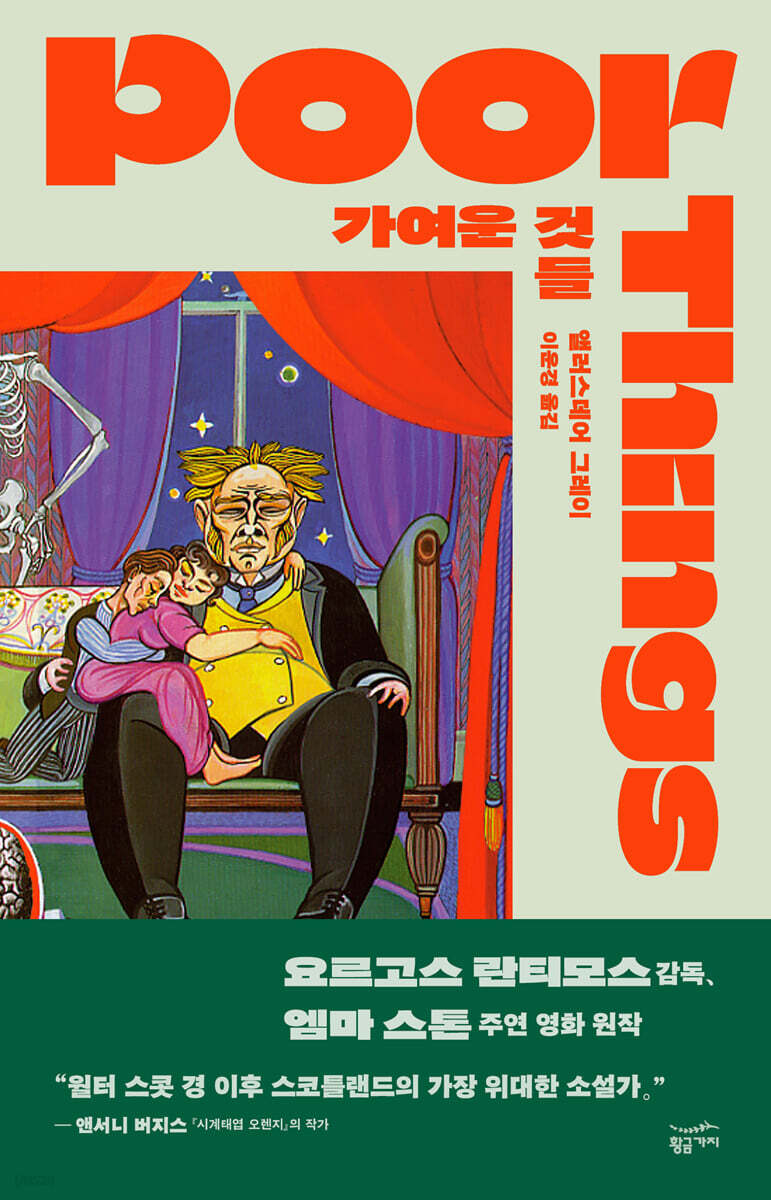
A book found in a pile of discarded documents, Is the story of a woman who rose from the dead really true? Directed by Yorgos Lanthimos, the film will star Emma Stone. Winner of the Whitbread Award and the Guardian Fiction Award Alasdair Gray, a representative Scottish author, published the novel 'Poor Things' by Golden Bough. Gray's first published work, Lanark, completed after 20 years of writing, is another masterpiece that has put him in the ranks of writers who cannot be left out when discussing Scottish literature, comparable to literary giants such as Dante, Joyce, Orwell, and Kafka. It has received acclaim from the press and critics, winning the Whitbread Prize and the Guardian Fiction Prize, and is also known as the most commercially successful of his works. The story begins with a preface explaining the accidental acquisition and republication of a Victorian-era document, and continues with a fascinating memoir of a woman brought back from the dead by a genius doctor, filled with bizarre anecdotes and a troupe of characters, and a letter refuting these. Alasdair Gray, who excels in the technique of fantastical realism, intervenes as an 'editor' and mixes fictional stories with actual history to critically and satirically portray issues such as imperialism, the gap between the rich and the poor, and gender discrimination. Illustrations collected from past records and prints drawn by Gray himself, who was also a renowned painter, also add to the immersive experience. A film based on this work, directed by Yorgos Lanthimos ("The Killing of a Sacred Deer," "The Favourite"), is scheduled for release later this year, starring Emma Stone, Willem Dafoe, and Mark Ruffalo. I also told Donnelly that I had written enough works of fiction that I knew they were history when I read them. He then said that he had written enough history books to know that it was fiction. There was only one answer to this: I myself had to become a historian. _From the text |
- You can preview some of the book's contents.
Preview
index
Introduction 11
Anecdotes from the Early Life of Dr. Archibald McCandless, Public Health Officer for Scotland 29
Chapter 1: Making Me 35
Chapter 2: Making Godwin Baxter 40
Chapter 3: Quarrel 53
Chapter 4: The Fascinating Stranger 62
Chapter 5: Creating Bella Baxter 73
Chapter 6: Baxter's Dream 83
Chapter 7: By the Fountain 91
Chapter 8: Engagement 108
Chapter 9: At the Window 121
Chapter 10: The Lost Bella 131
Chapter 11 Park Circus 18 142
Chapter 12: Making a Madman 149
Chapter 13 Interlude 179
Chapter 14 From Glasgow to Odessa: The Gamblers 188
Chapter 15 From Odessa to Alexandria: Missionaries 218
Chapter 16: From Alexandria to Gibraltar: Astley's Bitter Wisdom 248
Chapter 17 From Gibraltar to Paris: Wedderburn's Final Escape 267
Chapter 18 From Paris to Glasgow: The Return 281
Chapter 19: The Shortest Chapter 295
Chapter 20: God's Answer 298
Chapter 21, Interruption 309
Chapter 22: The Truth: The Longest Chapter 319
Chapter 23: Blessington's Last Struggle 363
Chapter 24: Farewell 373
Letter from Dr. Victoria McCandless to her grandchildren and great-grandchildren about this book, 385
Critical and Historical Notes 419
Acknowledgements 473
Anecdotes from the Early Life of Dr. Archibald McCandless, Public Health Officer for Scotland 29
Chapter 1: Making Me 35
Chapter 2: Making Godwin Baxter 40
Chapter 3: Quarrel 53
Chapter 4: The Fascinating Stranger 62
Chapter 5: Creating Bella Baxter 73
Chapter 6: Baxter's Dream 83
Chapter 7: By the Fountain 91
Chapter 8: Engagement 108
Chapter 9: At the Window 121
Chapter 10: The Lost Bella 131
Chapter 11 Park Circus 18 142
Chapter 12: Making a Madman 149
Chapter 13 Interlude 179
Chapter 14 From Glasgow to Odessa: The Gamblers 188
Chapter 15 From Odessa to Alexandria: Missionaries 218
Chapter 16: From Alexandria to Gibraltar: Astley's Bitter Wisdom 248
Chapter 17 From Gibraltar to Paris: Wedderburn's Final Escape 267
Chapter 18 From Paris to Glasgow: The Return 281
Chapter 19: The Shortest Chapter 295
Chapter 20: God's Answer 298
Chapter 21, Interruption 309
Chapter 22: The Truth: The Longest Chapter 319
Chapter 23: Blessington's Last Struggle 363
Chapter 24: Farewell 373
Letter from Dr. Victoria McCandless to her grandchildren and great-grandchildren about this book, 385
Critical and Historical Notes 419
Acknowledgements 473
Publisher's Review
The corpse of an adult woman who committed suicide was combined with the brain of a fetus.
Bella Baxter, the one and only creature born
Alasdair Gray receives a manuscript that a museum employee stumbles upon in a pile of discarded documents.
Recognizing the value of these documents, museum staff commissioned Gray to edit and publish them, and thus the memoirs of the Victorian physician McCandless and the letters from his wife came to light under the title "Poor Things."
In the late 19th century, Archibald McCandless, a young man from a farming family who entered medical school to pursue his dream, often became friends with Godwin Baxter, the illegitimate son of a prominent doctor and a man of extraordinary appearance.
Baxter, who had been assisting his father in his work from an early age and continued his research on his own after his death, introduces McCandless to Bella, a woman he had 'saved'.
To McCandless's surprise, she was created by combining the body of a woman who drowned herself in a river with the brain of a fetus! After traveling the world with Baxter, McCandless reunited with Bella, who had grown to the mental capacity of a young teenager, after a year of traveling around the world. He was completely captivated by her.
However, just as she is about to marry McCandless, Bella runs away after falling in love with Wedderburn, the lawyer who was supposed to review Baxter's will.
Although she was unable to speak proper sentences at birth, Bella quickly learned the language and, even while living on the run, met people with a free spirit and absorbed the world like a sponge.
The characters she meets on her long journey from Glasgow to Paris, across Europe and the Middle East, stimulate Bella's intellectual curiosity as they debate contemporary international affairs, social conditions, politics, and culture.
However, as knowledge accumulates and the mind grows, questions and contradictions that were not considered in the innocent days begin to appear.
I left the dining table immediately.
I needed to quietly think about all the new and strange things I was hearing.
Perhaps it's my cracked brain, but I've been feeling less happy since Dr. H explained that there's nothing wrong with a world where the Anglo-Saxons didn't heal with fire and sword.
Before, I thought of everyone I met as part of the same loving family.
Even when the injured person came rushing at us like our bitch with a lot of bone in her throat.
God, why didn't you teach me politics?_From the text
Meanwhile, Weatherburn, who impulsively ran away from love, is unable to satisfy Bella's intense desires and gradually begins to avoid her and becomes addicted to gambling.
After her breakup with Weatherburn, Bella, who has been experiencing the lowest point in Paris, is shaken by the dark reality unfolding there and finally decides to return home.
But in Glasgow, not only Baxter and McCandless await her, but also a devastating scandal from her previous life.
“Dear reader,
You can now choose between two stories:
There is no doubt which is more probable.”
McCandless's shocking memoir about Bella Baxter, a medical miracle ahead of its time, is completely contradicted in a revealing letter from his wife, Victoria, also a doctor.
Victoria, who played many roles as an activist, socialist, and philanthropist, unlike her introverted and romantic husband, raises these questions in a letter addressed to her future descendants.
Why did McCandless craft this fabrication, skillfully blending settings from contemporary novels like Mary Shelley and Edgar Allan Poe with actual facts? He then criticizes his fantasy as reeking of "everything morbid about the 19th century—by far the most morbid of all times," and dismisses it as a "vicious parody" of his own life.
So whose words should we trust? Gray provides a basis for our judgment, skillfully supplementing his detailed critical and historical commentary (which also blends fiction and fact).
Whether the reader is a "reader who just wants a good story told without embellishment" or a "professional skeptic," "Poor Things" is sure to be an engaging read.
Bella Baxter, the one and only creature born
Alasdair Gray receives a manuscript that a museum employee stumbles upon in a pile of discarded documents.
Recognizing the value of these documents, museum staff commissioned Gray to edit and publish them, and thus the memoirs of the Victorian physician McCandless and the letters from his wife came to light under the title "Poor Things."
In the late 19th century, Archibald McCandless, a young man from a farming family who entered medical school to pursue his dream, often became friends with Godwin Baxter, the illegitimate son of a prominent doctor and a man of extraordinary appearance.
Baxter, who had been assisting his father in his work from an early age and continued his research on his own after his death, introduces McCandless to Bella, a woman he had 'saved'.
To McCandless's surprise, she was created by combining the body of a woman who drowned herself in a river with the brain of a fetus! After traveling the world with Baxter, McCandless reunited with Bella, who had grown to the mental capacity of a young teenager, after a year of traveling around the world. He was completely captivated by her.
However, just as she is about to marry McCandless, Bella runs away after falling in love with Wedderburn, the lawyer who was supposed to review Baxter's will.
Although she was unable to speak proper sentences at birth, Bella quickly learned the language and, even while living on the run, met people with a free spirit and absorbed the world like a sponge.
The characters she meets on her long journey from Glasgow to Paris, across Europe and the Middle East, stimulate Bella's intellectual curiosity as they debate contemporary international affairs, social conditions, politics, and culture.
However, as knowledge accumulates and the mind grows, questions and contradictions that were not considered in the innocent days begin to appear.
I left the dining table immediately.
I needed to quietly think about all the new and strange things I was hearing.
Perhaps it's my cracked brain, but I've been feeling less happy since Dr. H explained that there's nothing wrong with a world where the Anglo-Saxons didn't heal with fire and sword.
Before, I thought of everyone I met as part of the same loving family.
Even when the injured person came rushing at us like our bitch with a lot of bone in her throat.
God, why didn't you teach me politics?_From the text
Meanwhile, Weatherburn, who impulsively ran away from love, is unable to satisfy Bella's intense desires and gradually begins to avoid her and becomes addicted to gambling.
After her breakup with Weatherburn, Bella, who has been experiencing the lowest point in Paris, is shaken by the dark reality unfolding there and finally decides to return home.
But in Glasgow, not only Baxter and McCandless await her, but also a devastating scandal from her previous life.
“Dear reader,
You can now choose between two stories:
There is no doubt which is more probable.”
McCandless's shocking memoir about Bella Baxter, a medical miracle ahead of its time, is completely contradicted in a revealing letter from his wife, Victoria, also a doctor.
Victoria, who played many roles as an activist, socialist, and philanthropist, unlike her introverted and romantic husband, raises these questions in a letter addressed to her future descendants.
Why did McCandless craft this fabrication, skillfully blending settings from contemporary novels like Mary Shelley and Edgar Allan Poe with actual facts? He then criticizes his fantasy as reeking of "everything morbid about the 19th century—by far the most morbid of all times," and dismisses it as a "vicious parody" of his own life.
So whose words should we trust? Gray provides a basis for our judgment, skillfully supplementing his detailed critical and historical commentary (which also blends fiction and fact).
Whether the reader is a "reader who just wants a good story told without embellishment" or a "professional skeptic," "Poor Things" is sure to be an engaging read.
GOODS SPECIFICS
- Date of issue: April 21, 2023
- Page count, weight, size: 476 pages | 470g | 128*200*30mm
- ISBN13: 9791170522690
- ISBN10: 1170522696
You may also like
카테고리
korean


korean

![GQ KOREA Mark (Monthly): December [2025]](http://librairie.coreenne.fr/cdn/shop/files/8ef265dbbfbf186523ed75ba7319009d.jpg?v=1765340328&width=3840)


