

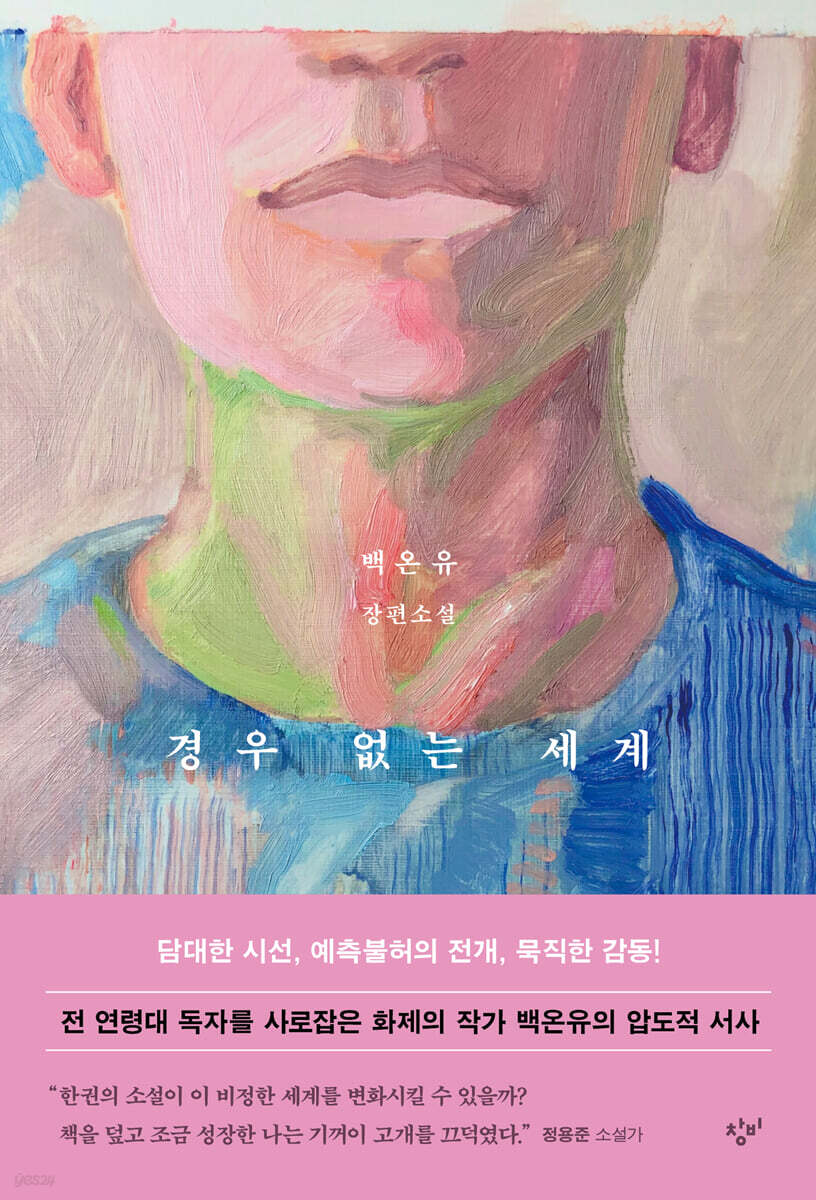
A world without cases
 |
Description
Book Introduction
- A word from MD
-
A coming-of-age novel for everyone with a shadow in their heart.Author Baek On-yu has returned with a new coming-of-age story.
After wandering through his teenage years, the protagonist, now an adult, happens to take care of a runaway teenager.
We witness that the children's situation has not improved at all, and that the same tragedy is repeated...
A novel that reminds us that understanding and love are essential for everyone, no matter what.
April 11, 2023. Novel/Poetry PD Kim Yu-ri
A bold perspective, unpredictable development, and a lingering aftertaste!
Baek On-yu's overwhelming narrative captivates readers of all ages.
An irreplaceable emotion that has arrived in a world in need of empathy.
The full-length novel 『A World Without Cases』 by Baek On-yu, winner of the Changbi Youth Literature Award and Today's Writer Award, has been published.
After presenting his previous works, 『Yuwon』 and 『Peppermint』, Baek On-yu received praise such as “a work that comes one step closer to the truth that literature should have” and “bold novelistic skill” for his sharp prose that examines weighty topics such as forgiveness and reconciliation, death and care, and his sincere growth narrative.
Baek On-yu, who has established himself as a "trusted and read" writer in the field of young adult fiction, maintains his existing literary world of powerfully confronting urgent literary themes of interest in and solidarity with dark places in this work, "A World Without Cases," while presenting a moving story that will reach readers of all generations with a deeper and broader perspective on individuals and society.
The protagonist, In-su, who suffers from memories of his teenage years even as an adult, takes a closer look at his own past of running away from home and wandering while taking care of a runaway teenager he meets by chance.
The story unfolds through the eyes of In-su, exploring his past experiences as a 'runaway family' and his present growth through those memories. It is colorful and engaging, with elaborate depictions of his inner self, vivid episodes, and unique characters.
In particular, Baek On-yu's delicate psychological descriptions and dense narratives dealing with street children stand out with a thoughtful respect and empathy that is difficult to find among writers of his generation.
The artist's insight into exploring the countless conflicts and wanderings that occur within the human mind is also outstanding.
With smooth writing and solid depth, he closely traces the psychology of self-loathing and self-denial, and deeply unfolds a heart-wrenching narrative of growth.
This heartbreaking story evokes empathy as you turn the pages, as if you are seeing the ugly 'me' of the past and the rough 'me' of the present.
In this way, it allows me to truly understand and save myself, the 'me' that I thought I could never forgive.
Baek On-yu's overwhelming narrative captivates readers of all ages.
An irreplaceable emotion that has arrived in a world in need of empathy.
The full-length novel 『A World Without Cases』 by Baek On-yu, winner of the Changbi Youth Literature Award and Today's Writer Award, has been published.
After presenting his previous works, 『Yuwon』 and 『Peppermint』, Baek On-yu received praise such as “a work that comes one step closer to the truth that literature should have” and “bold novelistic skill” for his sharp prose that examines weighty topics such as forgiveness and reconciliation, death and care, and his sincere growth narrative.
Baek On-yu, who has established himself as a "trusted and read" writer in the field of young adult fiction, maintains his existing literary world of powerfully confronting urgent literary themes of interest in and solidarity with dark places in this work, "A World Without Cases," while presenting a moving story that will reach readers of all generations with a deeper and broader perspective on individuals and society.
The protagonist, In-su, who suffers from memories of his teenage years even as an adult, takes a closer look at his own past of running away from home and wandering while taking care of a runaway teenager he meets by chance.
The story unfolds through the eyes of In-su, exploring his past experiences as a 'runaway family' and his present growth through those memories. It is colorful and engaging, with elaborate depictions of his inner self, vivid episodes, and unique characters.
In particular, Baek On-yu's delicate psychological descriptions and dense narratives dealing with street children stand out with a thoughtful respect and empathy that is difficult to find among writers of his generation.
The artist's insight into exploring the countless conflicts and wanderings that occur within the human mind is also outstanding.
With smooth writing and solid depth, he closely traces the psychology of self-loathing and self-denial, and deeply unfolds a heart-wrenching narrative of growth.
This heartbreaking story evokes empathy as you turn the pages, as if you are seeing the ugly 'me' of the past and the rough 'me' of the present.
In this way, it allows me to truly understand and save myself, the 'me' that I thought I could never forgive.
- You can preview some of the book's contents.
Preview
index
A world without cases
commentary
Author's Note
commentary
Author's Note
Detailed image
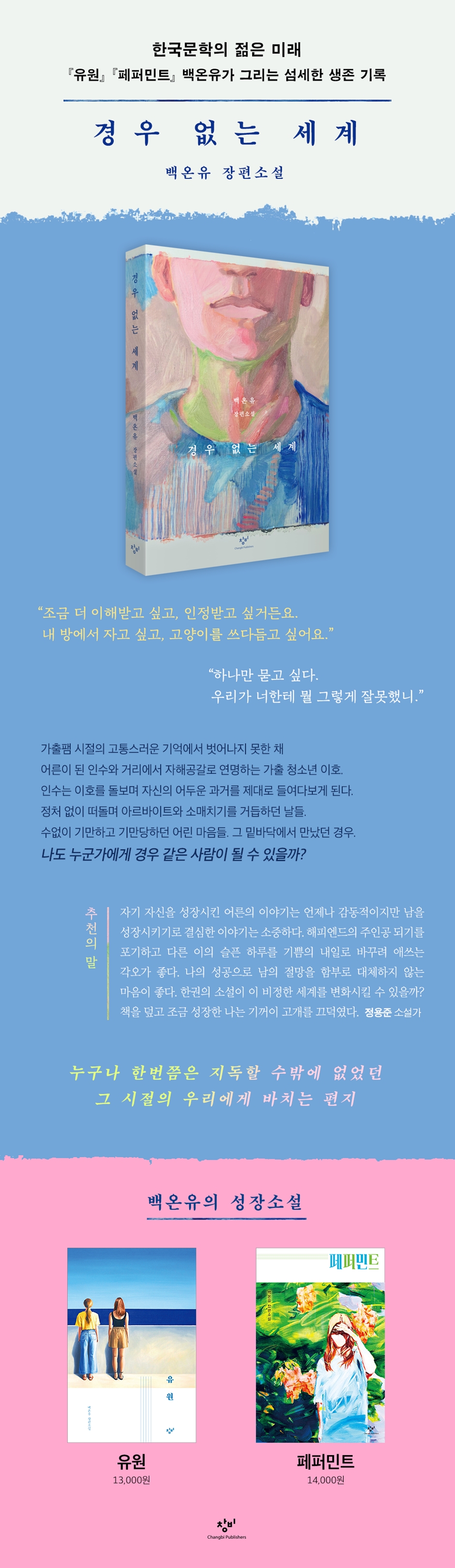
Into the book
“Do you think it’s easy to fool people? Especially people like me, who don’t trust you easily.
Then what should I do?
I need to hurt enough for the other person to understand. I need to be so broken that they can't doubt or refute me.
If it breaks and tears properly, people will be scared and do what I ask them to do, thinking, 'I caused an accident.'
So honestly, I don't really feel guilty.
I don't pretend to be sick to fool people.
At that moment, I was really hurt.
“I’m in so much pain I think I’m going to die.”
---p.27
At night, when I was sleeping curled up in the building's bathroom or on the stairs with Seongyeon, I would worry about what I would do when I woke up the next morning.
Soon we realized that such worries were a luxury for us and were the thoughts of people living very ordinary lives.
---p.61
In this case, the child was in a safe space and received the affection of adults.
The more I spent time with the case, the more curious I became.
From whom did he learn his unique caution and courtesy towards others?
The attitude was so complex and sophisticated that he said he had learned it himself.
If it meant becoming a noble person as much as I received love, then I could understand.
Because it becomes clear why I am like this.
But for some reason, the existence of such cases felt unfair.
---p.101
I believed I was out of the house by choice, but the thought occurred to me that maybe I wasn't, that maybe I was the only one who didn't know I had been kicked out earlier.
I stood there in the living room, feeling a strange sense of relief as I engraved that moment in my mind.
The sunlight pouring in through the living room's glass windows, the cat hair floating with dust, the photo of my father hanging on the wall, the warmth felt on the soles of my feet.
Even after a long time had passed, when I thought back on that moment, I still felt an eerie feeling.
---p.107~108
How do we all live without doing bad things?
Who can teach us how to create peace without abandoning the repetitive routine?
Are people who can acquire such things born with different genes?
As dawn broke, I followed the shadow of a cat swaying by the window, muttering to myself that we were doomed.
---p.198
Naturally, I thought I was in a position to give.
But I couldn't escape from that time and was still trying to depend on others.
If Lee Ho returns, I won't have to dream of being abandoned on a desolate street, wandering around looking for sunlight.
I tried to close my eyes with that hope.
But it seemed like my soul had already died a long time ago.
---p.204~205
It was only after my vision started to blur that I realized I was crying.
My face was a mess from tears and snot.
Even though I wiped my tears until they were damp, the tears did not stop.
Then someone grabbed my shoulder.
It was a case.
“What are you doing here?
“Let’s go home.”
“Where is our house?”
I asked again.
“Where we live.
“That’s our home now.”
---p.221~222
If I were to sift my heart towards the case through a sieve, what would be left?
There were so many impurities mixed in that even I had a hard time properly explaining my feelings.
---p.228
I just want to ask one thing.
What did we do to you so wrong?
we.
A word that ties father and mother together too simply.
The mother looked somewhat aggrieved and sorrowful.
What was my parents' critical mistake?
I thought hard for a moment and then blocked my mother.
There was nothing connecting us now.
---p.247
Lee Ho's shoelaces were untied.
I crouched down and tied my shoelaces.
“It’s my first time since I was born.”
"what."
“Who will tie my shoelaces?”
I paused.
“When I was young.
Someone must have tied it up.
You just don't remember."
---p.259
For a long time, I was not interested in caring for or loving anyone, and instead devoted myself to brooding over regrets.
I wanted to relieve my guilt by not craving anything.
I wanted to apologize in a timid way that didn't feel attached to life.
But this is probably not the way to go about it.
No matter how much I insist that my life is no different from that of the dead, I am still alive.
No matter how much I shiver, my body temperature remains at 36.5 degrees.
I will continue to live with this body that lacks reflection.
---p.261
A warm breeze blew from somewhere.
The wind whirled in my abyss, slowly melting my body.
I've been dreaming of this kind of warmth for a long time, but when I actually felt it, I felt miserable because I felt like I didn't deserve this kind of comfort.
But I hoped I would get used to it.
Please give me another chance.
May the sunlight purify you.
Even in a world without cases.
Then what should I do?
I need to hurt enough for the other person to understand. I need to be so broken that they can't doubt or refute me.
If it breaks and tears properly, people will be scared and do what I ask them to do, thinking, 'I caused an accident.'
So honestly, I don't really feel guilty.
I don't pretend to be sick to fool people.
At that moment, I was really hurt.
“I’m in so much pain I think I’m going to die.”
---p.27
At night, when I was sleeping curled up in the building's bathroom or on the stairs with Seongyeon, I would worry about what I would do when I woke up the next morning.
Soon we realized that such worries were a luxury for us and were the thoughts of people living very ordinary lives.
---p.61
In this case, the child was in a safe space and received the affection of adults.
The more I spent time with the case, the more curious I became.
From whom did he learn his unique caution and courtesy towards others?
The attitude was so complex and sophisticated that he said he had learned it himself.
If it meant becoming a noble person as much as I received love, then I could understand.
Because it becomes clear why I am like this.
But for some reason, the existence of such cases felt unfair.
---p.101
I believed I was out of the house by choice, but the thought occurred to me that maybe I wasn't, that maybe I was the only one who didn't know I had been kicked out earlier.
I stood there in the living room, feeling a strange sense of relief as I engraved that moment in my mind.
The sunlight pouring in through the living room's glass windows, the cat hair floating with dust, the photo of my father hanging on the wall, the warmth felt on the soles of my feet.
Even after a long time had passed, when I thought back on that moment, I still felt an eerie feeling.
---p.107~108
How do we all live without doing bad things?
Who can teach us how to create peace without abandoning the repetitive routine?
Are people who can acquire such things born with different genes?
As dawn broke, I followed the shadow of a cat swaying by the window, muttering to myself that we were doomed.
---p.198
Naturally, I thought I was in a position to give.
But I couldn't escape from that time and was still trying to depend on others.
If Lee Ho returns, I won't have to dream of being abandoned on a desolate street, wandering around looking for sunlight.
I tried to close my eyes with that hope.
But it seemed like my soul had already died a long time ago.
---p.204~205
It was only after my vision started to blur that I realized I was crying.
My face was a mess from tears and snot.
Even though I wiped my tears until they were damp, the tears did not stop.
Then someone grabbed my shoulder.
It was a case.
“What are you doing here?
“Let’s go home.”
“Where is our house?”
I asked again.
“Where we live.
“That’s our home now.”
---p.221~222
If I were to sift my heart towards the case through a sieve, what would be left?
There were so many impurities mixed in that even I had a hard time properly explaining my feelings.
---p.228
I just want to ask one thing.
What did we do to you so wrong?
we.
A word that ties father and mother together too simply.
The mother looked somewhat aggrieved and sorrowful.
What was my parents' critical mistake?
I thought hard for a moment and then blocked my mother.
There was nothing connecting us now.
---p.247
Lee Ho's shoelaces were untied.
I crouched down and tied my shoelaces.
“It’s my first time since I was born.”
"what."
“Who will tie my shoelaces?”
I paused.
“When I was young.
Someone must have tied it up.
You just don't remember."
---p.259
For a long time, I was not interested in caring for or loving anyone, and instead devoted myself to brooding over regrets.
I wanted to relieve my guilt by not craving anything.
I wanted to apologize in a timid way that didn't feel attached to life.
But this is probably not the way to go about it.
No matter how much I insist that my life is no different from that of the dead, I am still alive.
No matter how much I shiver, my body temperature remains at 36.5 degrees.
I will continue to live with this body that lacks reflection.
---p.261
A warm breeze blew from somewhere.
The wind whirled in my abyss, slowly melting my body.
I've been dreaming of this kind of warmth for a long time, but when I actually felt it, I felt miserable because I felt like I didn't deserve this kind of comfort.
But I hoped I would get used to it.
Please give me another chance.
May the sunlight purify you.
Even in a world without cases.
---p.261~262
Publisher's Review
Everyone has had to go through something terrible at least once.
A letter to us from that time
Even today, ghosts can be seen wandering like shadows all over the attic.
Even though it is midsummer, a biting cold is hitting us.
Insu still suffers from hallucinations and tactile hallucinations due to the runaway he attempted 12 years ago, the runaways he met then, and the incident that occurred while he was with them.
One day, In-su meets Lee Ho, a boy who throws himself in front of a passing car, pretends to cause an accident, and demands money from the driver.
As In-su watches Lee-ho repeatedly commit dangerous self-harm threats without being able to eat, wash, or sleep properly, he is reminded of his own dark past.
In-su, who grew up under a father who was self-made but often violent and a mother who seemed affectionate but ultimately failed to understand her child's feelings, is a boy with no presence, no outstanding talent, and always timid.
In-su, who impulsively runs away from home, exhausted from his parents' indifference and abuse, gets entangled with Seong-yeon, a runaway teenager of the same age, at a PC room.
Seongyeon, who has been stealing other people's wallets since their first meeting, takes care of Insoo with his unique charisma and action, and the two continue their runaway life together.
These people spend their days in hardship, stealing necessities, sleeping in the bathroom, and being kicked out. 'Gyu-woo', who ran away from the orphanage, joins them, and In-su, Seong-yeon, and Gyu-woo settle down in 'Our House', a semi-basement apartment where children who have run away from home come and go.
The reality they face is not easy.
Finding a job is an ordeal, and even if you are fooled by sweet favors and work yourself to the bone, what you get in return is clever labor exploitation, suspicion of stealing, and contempt and finger pointing as “you guys” (p. 130).
The novel vividly portrays the harsh reality that so-called runaways and juvenile delinquents face as minors.
From the harsh reality of labor where people are exploited and engage in dangerous work without hesitation, to the harsh living conditions of semi-basement apartments where children who used to live in bathrooms and abandoned buildings gather, the film constantly brings to mind the dire reality of survival for those who are left in a blind spot of human rights.
The daily lives of children who are defenselessly exposed to the world's violence are becoming increasingly dire.
Pickpocketing, theft, hookups, self-harm blackmail… The children's precarious run, sinking to the bottom, reaches dangerous levels.
This is also the reality that young people face, so Baek On-yu's writing is both literary and social.
This realistic vividness is also why readers are drawn into 『A World Without Cases』.
The shaky and precarious past
To all of us, the 'case' that finally created 'me'
Although he grew up in an underprivileged environment, he is a good and honest boy who “doesn’t have a wrinkle” (page 95) wherever he goes.
The acquisition becomes increasingly dependent on those who appear to be “like a child who has been loved” (p. 256).
At the same time, the existence of the case constantly disturbs the mind of the acquirer.
The case is one that does not get along with the children of 'our house' at all.
If you clean up your messy 'house' that no one cares about and pay your utility bills.
When caring for the young and weak.
If you do odd jobs, don't touch other people's money.
If you're saving up money to find your missing mother, who left you in an orphanage, and live with her, or if you're not lending her even a thousand won to go to a PC room, but instead taking In-su to the dentist and paying for his treatment.
The existence of a good and upright case is infinitely alien and even somewhat suspicious.
The novel sharply captures the duality of In-su's desire to infinitely trust and rely on the case, and at the same time, to belittle and push away the case's uprightness.
The character of Case in the novel reminds us of someone we have or wish we had at some point in our lives when we are most struggling and lonely, but his true feelings are not simple.
He is someone you want to be like by imitating his actions, but he is also an uncomfortable character who immediately reminds you of a past you want to forget.
Through these three-dimensional characters who cannot be defined in a single word, Baek On-yu summons his own 'case' that anyone reading the novel will likely recall.
The fun of reading while imagining each person's 'case' that stood by my side during my most miserable times is also an unmissable part of this novel.
The overwhelming story of you and me in the past
The shadows and lights in our hearts, caressed by Baek On-yu
In the case of Insu and Insa, the life of 'Our House', where children with nowhere to go gather and live together according to their own order, is about to reach a stable stage, but a crisis suddenly comes.
One winter night, runaway youth A, who was hit and run while attempting to commit suicide and was left with a lot of injuries, knocks on the door of 'Our House'.
Soon, a shocking incident unfolds that is on a completely different level from the disorder and misconduct the children have experienced so far, and the children's solidarity is shattered in an instant.
When everyone is in a panic over an unmanageable reality, any argument that advocates rational and correct choices is ignored by the terrified majority of children.
In-su and the children, who turned a blind eye to being trampled and made “an irrational choice, as if to prove the world’s opinion” (page 190).
Insu's body and mind are ruined by guilt and regret.
Horrific hallucinations of bugs crawling on your skin, visions of ghosts wandering around, and an unidentified chill that seeps into your bones drive you to the edge of a cliff.
In the end, it is the hand of the case that holds on to the weak and dependent mind.
After the incident is resolved, Insu runs away, completely ignoring both his parents and the children of 'Our House'.
He avoids even meeting the case and decides to start anew in loneliness, afraid of accidentally encountering traces of his past.
However, his once broken heart has not been properly healed, and the hallucinations and coldness that still plague him have been for over a decade.
Lee Ho is a ray of hope for In Soo, who is an adult but has not become one.
In-su, who has lived without even being able to forgive himself, cares for Lee-ho, worried that he might follow the same path as him. In the process, he confronts the past that he had tried hard to forget and discovers a path to atonement and hope.
I deeply accept the existence of the case that I had pushed far away.
Guilt, shame, disgust and anxiety begin to wash away.
In Baek On-yu's novels, which "warn against clumsy resolution of conflict or easy-going, schematic endings" (commentary, Baek Ji-yeon), the characters' suffering is not hastily beautified or dismissed as minor growing pains.
The pain still hurts and the wounds leave scars, but the silent ending that confronts that pain leaves an unforgettable aftertaste.
"A World Without Cases" is also a story that goes beyond a personal growth story to one that makes us care for others around us and reflect on our society as a whole.
In the “time of deep reverberations” following a social incident, he agonizes and “poses sharp questions about the world of mentality that community members should have” (commentary).
The answer to that question is open, but one thing is clear: an uncomfortable but honest confrontation with the past, a slow recovery from a broken routine, and the consideration and sacrifice of changing oneself for someone else are sure to lead to a moving growth.
The novel asks:
For In-su, who has just begun to live in the present, and for us who are living under the weight of reality, where is 'Gyeong-woo' now?
Can we be a 'case' for someone?
To all who are wandering now or have wandered at any time, 『A World Without Cases』 will be read as a deep comfort that only Baek On-yu can convey.
You will gain the courage to face the past you want to forget, and you will have hope to live on, even if it is a bleak life.
Finally, to the question, “Can one novel change this cruel world?”, I will gladly nod my head, saying, “I closed the book and grew a little” (Recommendation, Jeong Yong-jun).
Author's Note
The more I try and struggle not to get caught, the more easily my immaturity is exposed.
I now know that growing older doesn't automatically make you a mature adult.
The road to becoming a proper adult is still far away, but time has given me the perspective to stop and observe scenery I had not seen before.
A saying that only those who have received love can give love.
In the past, I took such things for granted and didn't question them.
For someone who has never experienced the love and trust of a parent but struggles to show it, would the words, "You seem to have been raised with love," be a compliment or would it leave a scar?
I pondered the answer to this question I asked myself for a long time.
It would be very difficult for a boy who grew up without any consideration or experience with good adults to grow up and become a mature adult.
But it is not impossible.
Meeting interviewees who had run away from home or been to juvenile detention centers as teenagers and listening to their stories, I had to admit that I, too, am a person full of prejudice.
I was worried that my questions might be rude, that they might feel aggressive, or that they might not give me honest answers because they were against me. But when I received the interview request, they answered my questions I had prepared in advance with sincerity.
And then, he looked embarrassed as he explained his actions from his younger days, saying, "Oh, this is uncomfortable to say. You may not understand, and I know it's hard to believe, but I know it's an excuse."
I said, "No, I completely understand. I think I would have done the same thing. Thank you for being honest. It's really helpful to me." I encouraged them and tried to draw them out for a more intimate conversation.
But did I really understand, and if so, how much? Did I frown unconsciously while listening to what they said? On the way back from the interview, instead of feeling relieved, I felt suffocated and ended up blaming myself.
Now that I've finished writing the novel, I'm trying to think carefully about whether I've made any mistakes or handled things carelessly, but I can't find any right now.
You will regret it and realize it after a long time has passed.
(…)
March 2023
Baek On-yu
A letter to us from that time
Even today, ghosts can be seen wandering like shadows all over the attic.
Even though it is midsummer, a biting cold is hitting us.
Insu still suffers from hallucinations and tactile hallucinations due to the runaway he attempted 12 years ago, the runaways he met then, and the incident that occurred while he was with them.
One day, In-su meets Lee Ho, a boy who throws himself in front of a passing car, pretends to cause an accident, and demands money from the driver.
As In-su watches Lee-ho repeatedly commit dangerous self-harm threats without being able to eat, wash, or sleep properly, he is reminded of his own dark past.
In-su, who grew up under a father who was self-made but often violent and a mother who seemed affectionate but ultimately failed to understand her child's feelings, is a boy with no presence, no outstanding talent, and always timid.
In-su, who impulsively runs away from home, exhausted from his parents' indifference and abuse, gets entangled with Seong-yeon, a runaway teenager of the same age, at a PC room.
Seongyeon, who has been stealing other people's wallets since their first meeting, takes care of Insoo with his unique charisma and action, and the two continue their runaway life together.
These people spend their days in hardship, stealing necessities, sleeping in the bathroom, and being kicked out. 'Gyu-woo', who ran away from the orphanage, joins them, and In-su, Seong-yeon, and Gyu-woo settle down in 'Our House', a semi-basement apartment where children who have run away from home come and go.
The reality they face is not easy.
Finding a job is an ordeal, and even if you are fooled by sweet favors and work yourself to the bone, what you get in return is clever labor exploitation, suspicion of stealing, and contempt and finger pointing as “you guys” (p. 130).
The novel vividly portrays the harsh reality that so-called runaways and juvenile delinquents face as minors.
From the harsh reality of labor where people are exploited and engage in dangerous work without hesitation, to the harsh living conditions of semi-basement apartments where children who used to live in bathrooms and abandoned buildings gather, the film constantly brings to mind the dire reality of survival for those who are left in a blind spot of human rights.
The daily lives of children who are defenselessly exposed to the world's violence are becoming increasingly dire.
Pickpocketing, theft, hookups, self-harm blackmail… The children's precarious run, sinking to the bottom, reaches dangerous levels.
This is also the reality that young people face, so Baek On-yu's writing is both literary and social.
This realistic vividness is also why readers are drawn into 『A World Without Cases』.
The shaky and precarious past
To all of us, the 'case' that finally created 'me'
Although he grew up in an underprivileged environment, he is a good and honest boy who “doesn’t have a wrinkle” (page 95) wherever he goes.
The acquisition becomes increasingly dependent on those who appear to be “like a child who has been loved” (p. 256).
At the same time, the existence of the case constantly disturbs the mind of the acquirer.
The case is one that does not get along with the children of 'our house' at all.
If you clean up your messy 'house' that no one cares about and pay your utility bills.
When caring for the young and weak.
If you do odd jobs, don't touch other people's money.
If you're saving up money to find your missing mother, who left you in an orphanage, and live with her, or if you're not lending her even a thousand won to go to a PC room, but instead taking In-su to the dentist and paying for his treatment.
The existence of a good and upright case is infinitely alien and even somewhat suspicious.
The novel sharply captures the duality of In-su's desire to infinitely trust and rely on the case, and at the same time, to belittle and push away the case's uprightness.
The character of Case in the novel reminds us of someone we have or wish we had at some point in our lives when we are most struggling and lonely, but his true feelings are not simple.
He is someone you want to be like by imitating his actions, but he is also an uncomfortable character who immediately reminds you of a past you want to forget.
Through these three-dimensional characters who cannot be defined in a single word, Baek On-yu summons his own 'case' that anyone reading the novel will likely recall.
The fun of reading while imagining each person's 'case' that stood by my side during my most miserable times is also an unmissable part of this novel.
The overwhelming story of you and me in the past
The shadows and lights in our hearts, caressed by Baek On-yu
In the case of Insu and Insa, the life of 'Our House', where children with nowhere to go gather and live together according to their own order, is about to reach a stable stage, but a crisis suddenly comes.
One winter night, runaway youth A, who was hit and run while attempting to commit suicide and was left with a lot of injuries, knocks on the door of 'Our House'.
Soon, a shocking incident unfolds that is on a completely different level from the disorder and misconduct the children have experienced so far, and the children's solidarity is shattered in an instant.
When everyone is in a panic over an unmanageable reality, any argument that advocates rational and correct choices is ignored by the terrified majority of children.
In-su and the children, who turned a blind eye to being trampled and made “an irrational choice, as if to prove the world’s opinion” (page 190).
Insu's body and mind are ruined by guilt and regret.
Horrific hallucinations of bugs crawling on your skin, visions of ghosts wandering around, and an unidentified chill that seeps into your bones drive you to the edge of a cliff.
In the end, it is the hand of the case that holds on to the weak and dependent mind.
After the incident is resolved, Insu runs away, completely ignoring both his parents and the children of 'Our House'.
He avoids even meeting the case and decides to start anew in loneliness, afraid of accidentally encountering traces of his past.
However, his once broken heart has not been properly healed, and the hallucinations and coldness that still plague him have been for over a decade.
Lee Ho is a ray of hope for In Soo, who is an adult but has not become one.
In-su, who has lived without even being able to forgive himself, cares for Lee-ho, worried that he might follow the same path as him. In the process, he confronts the past that he had tried hard to forget and discovers a path to atonement and hope.
I deeply accept the existence of the case that I had pushed far away.
Guilt, shame, disgust and anxiety begin to wash away.
In Baek On-yu's novels, which "warn against clumsy resolution of conflict or easy-going, schematic endings" (commentary, Baek Ji-yeon), the characters' suffering is not hastily beautified or dismissed as minor growing pains.
The pain still hurts and the wounds leave scars, but the silent ending that confronts that pain leaves an unforgettable aftertaste.
"A World Without Cases" is also a story that goes beyond a personal growth story to one that makes us care for others around us and reflect on our society as a whole.
In the “time of deep reverberations” following a social incident, he agonizes and “poses sharp questions about the world of mentality that community members should have” (commentary).
The answer to that question is open, but one thing is clear: an uncomfortable but honest confrontation with the past, a slow recovery from a broken routine, and the consideration and sacrifice of changing oneself for someone else are sure to lead to a moving growth.
The novel asks:
For In-su, who has just begun to live in the present, and for us who are living under the weight of reality, where is 'Gyeong-woo' now?
Can we be a 'case' for someone?
To all who are wandering now or have wandered at any time, 『A World Without Cases』 will be read as a deep comfort that only Baek On-yu can convey.
You will gain the courage to face the past you want to forget, and you will have hope to live on, even if it is a bleak life.
Finally, to the question, “Can one novel change this cruel world?”, I will gladly nod my head, saying, “I closed the book and grew a little” (Recommendation, Jeong Yong-jun).
Author's Note
The more I try and struggle not to get caught, the more easily my immaturity is exposed.
I now know that growing older doesn't automatically make you a mature adult.
The road to becoming a proper adult is still far away, but time has given me the perspective to stop and observe scenery I had not seen before.
A saying that only those who have received love can give love.
In the past, I took such things for granted and didn't question them.
For someone who has never experienced the love and trust of a parent but struggles to show it, would the words, "You seem to have been raised with love," be a compliment or would it leave a scar?
I pondered the answer to this question I asked myself for a long time.
It would be very difficult for a boy who grew up without any consideration or experience with good adults to grow up and become a mature adult.
But it is not impossible.
Meeting interviewees who had run away from home or been to juvenile detention centers as teenagers and listening to their stories, I had to admit that I, too, am a person full of prejudice.
I was worried that my questions might be rude, that they might feel aggressive, or that they might not give me honest answers because they were against me. But when I received the interview request, they answered my questions I had prepared in advance with sincerity.
And then, he looked embarrassed as he explained his actions from his younger days, saying, "Oh, this is uncomfortable to say. You may not understand, and I know it's hard to believe, but I know it's an excuse."
I said, "No, I completely understand. I think I would have done the same thing. Thank you for being honest. It's really helpful to me." I encouraged them and tried to draw them out for a more intimate conversation.
But did I really understand, and if so, how much? Did I frown unconsciously while listening to what they said? On the way back from the interview, instead of feeling relieved, I felt suffocated and ended up blaming myself.
Now that I've finished writing the novel, I'm trying to think carefully about whether I've made any mistakes or handled things carelessly, but I can't find any right now.
You will regret it and realize it after a long time has passed.
(…)
March 2023
Baek On-yu
GOODS SPECIFICS
- Date of issue: March 30, 2023
- Page count, weight, size: 280 pages | 324g | 128*188*20mm
- ISBN13: 9788936439026
- ISBN10: 8936439022
You may also like
카테고리
korean


korean

![GQ KOREA Mark (Monthly): December [2025]](http://librairie.coreenne.fr/cdn/shop/files/8ef265dbbfbf186523ed75ba7319009d.jpg?v=1765340328&width=3840)


