

The life of the Joseon kings
 |
Description
Book Introduction
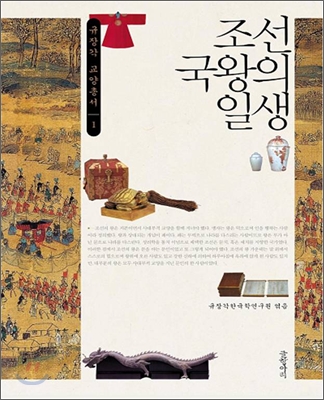
What did the king think, and how did he live? This book attempts to answer these questions by reconstructing the lives of Joseon kings from various perspectives, revealing the key characteristics of their lives and careers.
Joseon, which adopted Neo-Confucianism as its ruling ideology, was a country that pursued civil rule or rite rule.
Therefore, the kings of Joseon were men of letters who knew the literature, and most kings were men of letters with the education of aristocrats.
We delve into the life of the king of Joseon, the supreme ruler of the literary world.
It reconstructs and unfolds the king's life from birth to death.
The birthplace of the king, the educational process, the selection of the queen, the reality of the work, the types of education a king should have, the evolution of royal studies in the Joseon Dynasty, various aspects of the palace where the king lived, the lives of the court ladies who served the king, the royal family responsible for the king's health, royal banquets and processions outside the palace, the king's death and the royal shrine Jongmyo, all the way to history, literature, Korean traditional music, and geomancy.
Through this book, you can hear the story of the Joseon kings told by Korean studies experts.
Joseon, which adopted Neo-Confucianism as its ruling ideology, was a country that pursued civil rule or rite rule.
Therefore, the kings of Joseon were men of letters who knew the literature, and most kings were men of letters with the education of aristocrats.
We delve into the life of the king of Joseon, the supreme ruler of the literary world.
It reconstructs and unfolds the king's life from birth to death.
The birthplace of the king, the educational process, the selection of the queen, the reality of the work, the types of education a king should have, the evolution of royal studies in the Joseon Dynasty, various aspects of the palace where the king lived, the lives of the court ladies who served the king, the royal family responsible for the king's health, royal banquets and processions outside the palace, the king's death and the royal shrine Jongmyo, all the way to history, literature, Korean traditional music, and geomancy.
Through this book, you can hear the story of the Joseon kings told by Korean studies experts.
- You can preview some of the book's contents.
Preview
index
Publishing the Kyujanggak Cultural Collection
Preface: The King of Joseon, the Supreme Being and the Greatest Man of Letters
How was the king educated? From prenatal education to the general teachings of Buddhism.
The Birth of a Queen, the King's Half - A Peek into Joseon Dynasty Royal Weddings
How the King Usually Worked - Exercising Legislative, Judicial, and Executive Powers
The meaning of the king's writing poetry - the king's literary activities
The study of kings, the study of kingship - from 『Jeonggwanjeongyo』 to 『Seonghakjipyo』
The King's House, the Palace—a Neo-Confucian Training Center, Expressed in Architecture
"Never Let Me Live in the Palace Again" - The Lives of Court Ladies
How to satisfy the king's picky palate: The Joseon royal family's health rules, food therapy
Feeling the King from a Distance, the Royal Procession - The Royal Family Experienced in the Late Joseon Dynasty, the Rebirth of the Royal Family
The King's Official Drinking Day - A Peek at Joseon Palace Banquets
A very political event, the king's death - the king's funeral and royal tomb
When a king dies, he goes to Jongmyo Shrine - Everything about Jongmyo, the royal shrine of the Joseon Dynasty.
Preface: The King of Joseon, the Supreme Being and the Greatest Man of Letters
How was the king educated? From prenatal education to the general teachings of Buddhism.
The Birth of a Queen, the King's Half - A Peek into Joseon Dynasty Royal Weddings
How the King Usually Worked - Exercising Legislative, Judicial, and Executive Powers
The meaning of the king's writing poetry - the king's literary activities
The study of kings, the study of kingship - from 『Jeonggwanjeongyo』 to 『Seonghakjipyo』
The King's House, the Palace—a Neo-Confucian Training Center, Expressed in Architecture
"Never Let Me Live in the Palace Again" - The Lives of Court Ladies
How to satisfy the king's picky palate: The Joseon royal family's health rules, food therapy
Feeling the King from a Distance, the Royal Procession - The Royal Family Experienced in the Late Joseon Dynasty, the Rebirth of the Royal Family
The King's Official Drinking Day - A Peek at Joseon Palace Banquets
A very political event, the king's death - the king's funeral and royal tomb
When a king dies, he goes to Jongmyo Shrine - Everything about Jongmyo, the royal shrine of the Joseon Dynasty.
Publisher's Review
The true nature of the king, the supreme power of the Joseon Dynasty for 600 years, is revealed.
“The death of a king meant the accession of the next king!
“A symbolic space for the King that must never be empty”
Seoul National University's Kyujanggak Institute for Korean Studies, together with Korean studies experts
We looked at 'everything about the king' from birth to death.
This book is an attempt to reveal the main characteristics of the king's life and career by reconstructing the life of the Joseon king from various perspectives.
The birthplace of the king, the educational process, the selection of the queen, the reality of the king's duties, the types of education a king should have, the evolution of royal studies in the Joseon Dynasty, various aspects of the palace where the king lived, the lives of the court ladies who served the king, the food that was responsible for the king's health, royal banquets and processions outside the palace, the king's death, and even the royal shrine Jongmyo are described in detail by Korean studies experts who specialize in history, literature, Korean traditional music, and geomancy.
This book is the first volume of the Kyujanggak Cultural Series, published by the Kyujanggak Institute for Korean Studies to share historical knowledge with the general public. It also contains an attempt to visually and coherently present the lives of the Joseon kings by utilizing various illustrations of royal court-related artifacts.
The Joseon king who ruled with literature, not with hegemony
When we think of a king, we tend to think of an absolute monarch who wields unlimited power.
The king is the owner and manager of the country.
For this reason, the king is called the Most High, meaning that he is more honorable than all people.
Sunja said that the emperor is the supreme ruler of the world and commands his subjects.
However, the king of Joseon had to be a supreme being and also possess the education of a nobleman.
Mencius defined a king as a person who practices benevolence through virtue.
The concept that is opposite to the king is defeat?
A loser is someone who rules a country by force, so a king rules a country by literature, not by martial arts.
Joseon, which adopted Neo-Confucianism as its ruling ideology, was a country that pursued civil rule or rite rule.
In this respect, the king of Joseon was and had to be a man of letters who knew the literature.
Among the kings of Joseon, there were some who ascended to the throne on horseback by their own strength, and others who were placed on the throne overnight by powerful officials, but most kings were men of letters with the education of aristocrats.
This book deals with the kings of Joseon as the supreme rulers of the literary world.
People think they know a lot about the king.
Most of them portray a plausible picture of the king through historical dramas in which the king appears wearing a gonryongpo.
This book seeks to paint this picture more clearly.
To paint a clear picture, the book reconstructs the king's life from birth to death.
As a king, his life itself would be no different, but each and every aspect of his life has different rituals and procedures than those of ordinary noblemen.
This book follows the life of a king and attempts to explain how it differs from the lives of aristocrats.
Chapter 1, “How was the King Educated?” (Kim Moon-sik), details the basic education the king received from birth to his growing up years.
The king and queen had a wedding in the queen's bedroom, Gyo Tae-jeon or Dae Jo-jeon.
'Gyo-tae' means the meeting of heaven and earth, and 'Dae-jo' refers to a great creation.
It is a wish that the king, who symbolizes the sky, and the queen, who symbolizes the earth, will meet and give birth to a great person who will rule the country.
The prince born in this way becomes the Grand Prince, and the eldest son among the Grand Princes is appointed Crown Prince.
Of course, there are cases where a prince who is not the eldest son becomes king, and if there is no prince, there are also cases where a prince born from a concubine rather than the queen becomes king.
The prince who was appointed crown prince received strict education to become a wise king.
In order to pursue civility, the education of the crown prince focused on academics and literature, but more importantly, it consisted of cultivating virtue.
It is also the realization of Mencius's words that a king is a person who practices benevolence through virtue.
In addition, Joseon was oriented towards etiquette, and the crown prince was expected to personally acquire etiquette by undergoing numerous ceremonies during his growth process.
A striking example is the practice of filial piety by King Yeongjo, who practiced filial piety for over ten years while treating the illnesses of his father, King Sukjong, and his older brother, King Gyeongjong, before becoming king.
This book clearly shows the specific examples that the king had to learn by explaining the process of the crown prince entering Sungkyunkwan, including the process of making a royal concubine, returning to the palace, receiving a royal concubine, entering the palace, and receiving a royal escort, with illustrations.
Moreover, his calligraphy and archery skills were so outstanding that they could be considered hereditary traits of the Joseon kings, and he also received continuous education.
To achieve this, before becoming king, the crown prince had to take an evaluation test every month, equivalent to today's midterm or final exams, and also take a daily note test to check what he had learned the previous day.
During the lectures held twice a month, all 20 or so teachers who taught the crown prince participated and took a test. The highest teacher would flash a wooden plaque inscribed with the words "Tong" (通) if the answer was excellent, "Rak" (略) if it was average, "Jo" (粗) if it was insufficient, and "Bul" (不) if it was failing.
Chapter 2, 'The Birth of the Queen, the Half of the King' (Shin Byeong-ju), details the birth of the queen, the other half of the king and the mother of the nation.
The crown prince, like other noblemen, gets married around the age of 15.
The queen presided over the wedding ceremony, selecting young ladies of similar age.
Of course, there are times when a man gets married while still in the king's position, even if the queen passes away first.
Another such example is that King Yeongjo married Queen Jeongsun, who was 15 years old, when he was 66 years old.
When the king or crown prince was choosing a bride, he issued a nationwide ban on marriage and made the selection based on factors such as family background, appearance, and conduct.
The author emphasizes that the queen's appearance was not considered beautiful by today's standards, and that she had an overall upright and solid image.
The grand wedding ceremony is organized under the name of the Garye Dogam Uigwe.
It is Joseon's record-keeping culture to always organize the ceremony into a document after it is over.
In this book, the author examines various aspects of the recorded wedding ceremony of King Yeongjo and Queen Jeongsun, including the six rites of royal marriage, the "Six Rites," the list of items and people who participated in the ceremony, and the king personally welcoming the queen.
Even if a woman is chosen as the wife of a king or crown prince and becomes a queen or crown princess, her life is not filled with only splendor.
Chapter 7, “Please Don’t Let Me Live in the Palace Anymore,” is a book that Professor Jeong Byeong-seol has compiled into one book the lives of court women revealed in the “Hanjungnok” that he has been researching.
In addition to the stress of having to give birth to a son and succeed to the throne, the queen also had to constantly worry about the ups and downs of her family, which was a political power.
This chapter describes in detail the lives of Joseon royal women, which are relatively unknown, including the sad and difficult lives of court women rather than their glamorous lives, and the prevalence of Buddhism in the palace to alleviate this.
A peek into the heart of the Joseon Dynasty's overworked king.
Among the crown princes, there were many who unfortunately died young before ascending to the throne, and some were even dethroned due to their conduct.
Of course, if there is no such special reason, he becomes king.
There were instances of a regent acting for a short time before becoming king, but most of them succeeded to the throne and ran the government immediately after the king passed away.
Chapter 3, “How the King Usually Worked” (Jeong Ho-hoon), delves into the king’s duties as he governs both the sacred and secular worlds.
There is a saying, "Eat a cow's snack."
It means that the king gets dressed at dawn, starts work, and eats at midnight to carry out state affairs.
As the saying goes, the king had to lead a busy daily life to carry out state affairs.
As a being that mediates between heaven and humanity, he frequently offered sacrifices to the mountains and rivers, and directly supervised important ceremonies.
The Sajikdan ritual held in the 4th year of King Jeongjo's reign (1780) was a long journey of over 17 hours, with the king going to Sajikdan at 10:00 AM and returning after performing the ritual at 3:00 AM.
He discussed important matters within the country with his subjects and decided on them, passed judgments on major incidents, and handled diplomatic issues with China and Japan.
The king's duties included administrative, judicial, and diplomatic affairs.
And although most state affairs were conducted within the palace, in the late Joseon Dynasty, as the father of all the people, he often had to go outside the palace to stabilize the public sentiment.
In particular, King Yeongjo and King Jeongjo frequently used grand processions as a means of strengthening royal authority by announcing the king's dignity to all the people.
The author examines the aspects of royal ancestral rites in the Joseon Dynasty, which were divided into three levels: Ambassador, Jungsa, and Sosa, and examines in detail the rites at Sajik and Jongmyo Shrine, which have important meaning in relation to the exercise of royal authority.
Next, we examined in detail the process by which the king's duties were carried out within a centralized political system that governed the entire country through two axes: the central political system based on the State Council and the Six Ministries, and the local political system led by the governor and magistrate.
The king held frequent meetings with his subjects every day to discuss important national issues.
There were various types of meetings, such as the regular morning meeting called Jocham, the simple meeting held with the subjects every morning called Sangcham, and the regular meeting called Yundae, which received reports from departments that did not participate in the Sangcham.
Even in the midst of such a busy daily life, an important meeting that could not be missed was the Gyeongyeon.
The competition was a lifelong educational program for the king, and also provided discussions on important issues.
After reading important scriptures and historical books with his subjects, he also discussed current issues.
The competition itself was held three times a day, and was called morning competition, afternoon competition, and evening competition.
The king's busy official routine didn't end until after 9 p.m.
The day of the king we call a saint did not end here.
?I read books and documents and thought about national affairs.
Because of this, the great kings of the past did not live long because their health was damaged.
The study of kingship, a space where royal power and divine power collide and are checked
The king of Joseon had to have a level of learning that was comparable to that of ordinary scholars, despite suffering from heavy workload, in order to become a great ruler.
In reality, great kings like Sejong and Jeongjo had a depth of scholarship that overwhelmed their subjects.
From the time they were crown princes, all kings of the past took in outstanding scholars as their teachers and learned from them.
The learning of the kings of the Joseon Dynasty can be said to be, in a word, sage learning.
Since Joseon adopted Neo-Confucianism as its ruling ideology, it chose books containing Neo-Confucian ideology such as 『Daehakyeonui』, 『Seonghakjipyo』, and 『Daehakyuui』 as textbooks for the study of kingship.
These textbooks emphasized the cultivation of the mind rather than the governance of the country.
Seonghak, which means the study of becoming an adult, is filled only with the theory of Seongri (nature).
There was an intention here to limit royal authority by confining the king within the framework of Neo-Confucianism, so some sage kings armed themselves with a higher level of Neo-Confucianism than their subjects and sought to become military teachers who taught their subjects while also being kings.
During the Joseon Dynasty, the names of the various palace buildings were also connected to Seonghak.
The king's bedroom, Gangnyeongjeon, the main hall, Geunjeongjeon, and the side hall, Sajeongjeon, are also spaces that symbolize 'cultivating oneself, regulating one's family, governing the state, and bringing peace to the world' as described in the Great Learning.
In Gangnyeongjeon, one must calm one's mind and focus on self-cultivation while sleeping or awake. Based on this, one must diligently carry out state affairs in Geunjeongjeon, and not forget to think about state affairs even when resting in Sajeongjeon.
Joseon kings as artists and writers
The king, who was at the top of the aristocracy, possessed both academic and literary skills, as did most aristocrats.
Literature of the Joseon Dynasty was not simply about expressing personal feelings.
Because literature was an essential ability for carrying out state affairs, it was given a large weight in the civil service examination.
In particular, for smooth diplomatic relations with China, scholars with outstanding literary abilities were needed, and in order to show off the country's civilized status to the world, brilliant poetry and prose were needed.
Although the Sarim, who held Neo-Confucianism as their primary mission, were criticized for their illicit activities, literature was a practical ability for running the state, so the king took the lead in writing poetry to promote poetics.
In this book, Professor Lee Jong-muk highlights the aspect of ‘Chinese poetry as a method of governance.’
The exchange of poetry between a king and his subjects was a sophisticated form of governmental art. The ruler would hold a banquet and, in addition, give a 'literary gift' filled with sincerity, thereby establishing emotional communication.
Taejong and Sejo, who ascended to the throne through their own power, often practiced literary politics by composing poems to honor their meritorious subjects.
On the other hand, the king had his subjects compose poems to gauge their intentions and used this to give them official positions or send them into exile.
Therefore, the king's banquets and poetry with his subjects were not simply for entertainment purposes.
Rather, it was a sophisticated ruling technique for solidarity and communication between the king, his subjects, and the people.
The official banquets held by the king and civil and military officials for the purpose of harmony, such as the Hoeryeyeon, and the Yangroyeon, which were held for the general public as well as officials to spread the practice of filial piety to the people, also had such purposes.
While the king strictly maintained the hierarchy between superiors and subordinates through rites and ceremonies, he did not forget to consider how to communicate between superiors and subordinates through music.
The death of the king and the royal family were so political.
Usually, a king's coronation coincides with his funeral.
The first thing a crown prince does after ascending to the throne is to hold the funeral of the former king.
The National Funeral Office was established, and mourning was held for five months. A large royal tomb was built on a good site to bury the deceased.
And the ancestral tablet was enshrined in the Jongmyo Shrine.
After four generations, the ancestral tablet was moved to Yeongnyeongjeon Hall and enshrined there.
Since this was the most important royal ceremony of the Joseon Dynasty, it was performed with great solemnity and grandeur.
And the process was detailed and produced as a manual, including the National Funeral Service Protocol, the Royal Tomb Service Protocol, and the Royal Shrine Protocol.
In this book, Professor Kim Ki-duk examines the death of the king, which was a huge political event, in an interesting way, including the funeral procedures, the political movements behind the scenes, the feng shui related to the king's tomb, and the feng shui debate among the aristocrats.
When a king dies, he goes to the royal shrine.
Jongmyo Shrine was the royal shrine of the Joseon Dynasty and was a place where Confucian culture was fully concentrated.
The author, Dr. Lee Hyeon-jin, described in detail the overall structure of Jongmyo Shrine's Jeongjeon and Yeongnyeongjeon, the purpose of each building, the types of ancestral tablets enshrined there, the process of Jongmyo's expansion, the types of wood used for the ancestral tablets, and the content of the text written on them, making it feel as if you were hearing and seeing the history and reality of Jongmyo up close.
Since Gyujanggak originally started as a library to store the king's poetry, it houses numerous documents that clearly show the lives of the Joseon Dynasty's royal officials.
In order to communicate with citizens, a citizen lecture was held in the first half of 2008, and the first topic was 'The Life of the Joseon Dynasty Kings'.
And these lectures were planned as a series so that they could be read as general education books by more citizens.
In the future, the lives of the nobility, women, and minorities will be explored in more detail.
“The death of a king meant the accession of the next king!
“A symbolic space for the King that must never be empty”
Seoul National University's Kyujanggak Institute for Korean Studies, together with Korean studies experts
We looked at 'everything about the king' from birth to death.
This book is an attempt to reveal the main characteristics of the king's life and career by reconstructing the life of the Joseon king from various perspectives.
The birthplace of the king, the educational process, the selection of the queen, the reality of the king's duties, the types of education a king should have, the evolution of royal studies in the Joseon Dynasty, various aspects of the palace where the king lived, the lives of the court ladies who served the king, the food that was responsible for the king's health, royal banquets and processions outside the palace, the king's death, and even the royal shrine Jongmyo are described in detail by Korean studies experts who specialize in history, literature, Korean traditional music, and geomancy.
This book is the first volume of the Kyujanggak Cultural Series, published by the Kyujanggak Institute for Korean Studies to share historical knowledge with the general public. It also contains an attempt to visually and coherently present the lives of the Joseon kings by utilizing various illustrations of royal court-related artifacts.
The Joseon king who ruled with literature, not with hegemony
When we think of a king, we tend to think of an absolute monarch who wields unlimited power.
The king is the owner and manager of the country.
For this reason, the king is called the Most High, meaning that he is more honorable than all people.
Sunja said that the emperor is the supreme ruler of the world and commands his subjects.
However, the king of Joseon had to be a supreme being and also possess the education of a nobleman.
Mencius defined a king as a person who practices benevolence through virtue.
The concept that is opposite to the king is defeat?
A loser is someone who rules a country by force, so a king rules a country by literature, not by martial arts.
Joseon, which adopted Neo-Confucianism as its ruling ideology, was a country that pursued civil rule or rite rule.
In this respect, the king of Joseon was and had to be a man of letters who knew the literature.
Among the kings of Joseon, there were some who ascended to the throne on horseback by their own strength, and others who were placed on the throne overnight by powerful officials, but most kings were men of letters with the education of aristocrats.
This book deals with the kings of Joseon as the supreme rulers of the literary world.
People think they know a lot about the king.
Most of them portray a plausible picture of the king through historical dramas in which the king appears wearing a gonryongpo.
This book seeks to paint this picture more clearly.
To paint a clear picture, the book reconstructs the king's life from birth to death.
As a king, his life itself would be no different, but each and every aspect of his life has different rituals and procedures than those of ordinary noblemen.
This book follows the life of a king and attempts to explain how it differs from the lives of aristocrats.
Chapter 1, “How was the King Educated?” (Kim Moon-sik), details the basic education the king received from birth to his growing up years.
The king and queen had a wedding in the queen's bedroom, Gyo Tae-jeon or Dae Jo-jeon.
'Gyo-tae' means the meeting of heaven and earth, and 'Dae-jo' refers to a great creation.
It is a wish that the king, who symbolizes the sky, and the queen, who symbolizes the earth, will meet and give birth to a great person who will rule the country.
The prince born in this way becomes the Grand Prince, and the eldest son among the Grand Princes is appointed Crown Prince.
Of course, there are cases where a prince who is not the eldest son becomes king, and if there is no prince, there are also cases where a prince born from a concubine rather than the queen becomes king.
The prince who was appointed crown prince received strict education to become a wise king.
In order to pursue civility, the education of the crown prince focused on academics and literature, but more importantly, it consisted of cultivating virtue.
It is also the realization of Mencius's words that a king is a person who practices benevolence through virtue.
In addition, Joseon was oriented towards etiquette, and the crown prince was expected to personally acquire etiquette by undergoing numerous ceremonies during his growth process.
A striking example is the practice of filial piety by King Yeongjo, who practiced filial piety for over ten years while treating the illnesses of his father, King Sukjong, and his older brother, King Gyeongjong, before becoming king.
This book clearly shows the specific examples that the king had to learn by explaining the process of the crown prince entering Sungkyunkwan, including the process of making a royal concubine, returning to the palace, receiving a royal concubine, entering the palace, and receiving a royal escort, with illustrations.
Moreover, his calligraphy and archery skills were so outstanding that they could be considered hereditary traits of the Joseon kings, and he also received continuous education.
To achieve this, before becoming king, the crown prince had to take an evaluation test every month, equivalent to today's midterm or final exams, and also take a daily note test to check what he had learned the previous day.
During the lectures held twice a month, all 20 or so teachers who taught the crown prince participated and took a test. The highest teacher would flash a wooden plaque inscribed with the words "Tong" (通) if the answer was excellent, "Rak" (略) if it was average, "Jo" (粗) if it was insufficient, and "Bul" (不) if it was failing.
Chapter 2, 'The Birth of the Queen, the Half of the King' (Shin Byeong-ju), details the birth of the queen, the other half of the king and the mother of the nation.
The crown prince, like other noblemen, gets married around the age of 15.
The queen presided over the wedding ceremony, selecting young ladies of similar age.
Of course, there are times when a man gets married while still in the king's position, even if the queen passes away first.
Another such example is that King Yeongjo married Queen Jeongsun, who was 15 years old, when he was 66 years old.
When the king or crown prince was choosing a bride, he issued a nationwide ban on marriage and made the selection based on factors such as family background, appearance, and conduct.
The author emphasizes that the queen's appearance was not considered beautiful by today's standards, and that she had an overall upright and solid image.
The grand wedding ceremony is organized under the name of the Garye Dogam Uigwe.
It is Joseon's record-keeping culture to always organize the ceremony into a document after it is over.
In this book, the author examines various aspects of the recorded wedding ceremony of King Yeongjo and Queen Jeongsun, including the six rites of royal marriage, the "Six Rites," the list of items and people who participated in the ceremony, and the king personally welcoming the queen.
Even if a woman is chosen as the wife of a king or crown prince and becomes a queen or crown princess, her life is not filled with only splendor.
Chapter 7, “Please Don’t Let Me Live in the Palace Anymore,” is a book that Professor Jeong Byeong-seol has compiled into one book the lives of court women revealed in the “Hanjungnok” that he has been researching.
In addition to the stress of having to give birth to a son and succeed to the throne, the queen also had to constantly worry about the ups and downs of her family, which was a political power.
This chapter describes in detail the lives of Joseon royal women, which are relatively unknown, including the sad and difficult lives of court women rather than their glamorous lives, and the prevalence of Buddhism in the palace to alleviate this.
A peek into the heart of the Joseon Dynasty's overworked king.
Among the crown princes, there were many who unfortunately died young before ascending to the throne, and some were even dethroned due to their conduct.
Of course, if there is no such special reason, he becomes king.
There were instances of a regent acting for a short time before becoming king, but most of them succeeded to the throne and ran the government immediately after the king passed away.
Chapter 3, “How the King Usually Worked” (Jeong Ho-hoon), delves into the king’s duties as he governs both the sacred and secular worlds.
There is a saying, "Eat a cow's snack."
It means that the king gets dressed at dawn, starts work, and eats at midnight to carry out state affairs.
As the saying goes, the king had to lead a busy daily life to carry out state affairs.
As a being that mediates between heaven and humanity, he frequently offered sacrifices to the mountains and rivers, and directly supervised important ceremonies.
The Sajikdan ritual held in the 4th year of King Jeongjo's reign (1780) was a long journey of over 17 hours, with the king going to Sajikdan at 10:00 AM and returning after performing the ritual at 3:00 AM.
He discussed important matters within the country with his subjects and decided on them, passed judgments on major incidents, and handled diplomatic issues with China and Japan.
The king's duties included administrative, judicial, and diplomatic affairs.
And although most state affairs were conducted within the palace, in the late Joseon Dynasty, as the father of all the people, he often had to go outside the palace to stabilize the public sentiment.
In particular, King Yeongjo and King Jeongjo frequently used grand processions as a means of strengthening royal authority by announcing the king's dignity to all the people.
The author examines the aspects of royal ancestral rites in the Joseon Dynasty, which were divided into three levels: Ambassador, Jungsa, and Sosa, and examines in detail the rites at Sajik and Jongmyo Shrine, which have important meaning in relation to the exercise of royal authority.
Next, we examined in detail the process by which the king's duties were carried out within a centralized political system that governed the entire country through two axes: the central political system based on the State Council and the Six Ministries, and the local political system led by the governor and magistrate.
The king held frequent meetings with his subjects every day to discuss important national issues.
There were various types of meetings, such as the regular morning meeting called Jocham, the simple meeting held with the subjects every morning called Sangcham, and the regular meeting called Yundae, which received reports from departments that did not participate in the Sangcham.
Even in the midst of such a busy daily life, an important meeting that could not be missed was the Gyeongyeon.
The competition was a lifelong educational program for the king, and also provided discussions on important issues.
After reading important scriptures and historical books with his subjects, he also discussed current issues.
The competition itself was held three times a day, and was called morning competition, afternoon competition, and evening competition.
The king's busy official routine didn't end until after 9 p.m.
The day of the king we call a saint did not end here.
?I read books and documents and thought about national affairs.
Because of this, the great kings of the past did not live long because their health was damaged.
The study of kingship, a space where royal power and divine power collide and are checked
The king of Joseon had to have a level of learning that was comparable to that of ordinary scholars, despite suffering from heavy workload, in order to become a great ruler.
In reality, great kings like Sejong and Jeongjo had a depth of scholarship that overwhelmed their subjects.
From the time they were crown princes, all kings of the past took in outstanding scholars as their teachers and learned from them.
The learning of the kings of the Joseon Dynasty can be said to be, in a word, sage learning.
Since Joseon adopted Neo-Confucianism as its ruling ideology, it chose books containing Neo-Confucian ideology such as 『Daehakyeonui』, 『Seonghakjipyo』, and 『Daehakyuui』 as textbooks for the study of kingship.
These textbooks emphasized the cultivation of the mind rather than the governance of the country.
Seonghak, which means the study of becoming an adult, is filled only with the theory of Seongri (nature).
There was an intention here to limit royal authority by confining the king within the framework of Neo-Confucianism, so some sage kings armed themselves with a higher level of Neo-Confucianism than their subjects and sought to become military teachers who taught their subjects while also being kings.
During the Joseon Dynasty, the names of the various palace buildings were also connected to Seonghak.
The king's bedroom, Gangnyeongjeon, the main hall, Geunjeongjeon, and the side hall, Sajeongjeon, are also spaces that symbolize 'cultivating oneself, regulating one's family, governing the state, and bringing peace to the world' as described in the Great Learning.
In Gangnyeongjeon, one must calm one's mind and focus on self-cultivation while sleeping or awake. Based on this, one must diligently carry out state affairs in Geunjeongjeon, and not forget to think about state affairs even when resting in Sajeongjeon.
Joseon kings as artists and writers
The king, who was at the top of the aristocracy, possessed both academic and literary skills, as did most aristocrats.
Literature of the Joseon Dynasty was not simply about expressing personal feelings.
Because literature was an essential ability for carrying out state affairs, it was given a large weight in the civil service examination.
In particular, for smooth diplomatic relations with China, scholars with outstanding literary abilities were needed, and in order to show off the country's civilized status to the world, brilliant poetry and prose were needed.
Although the Sarim, who held Neo-Confucianism as their primary mission, were criticized for their illicit activities, literature was a practical ability for running the state, so the king took the lead in writing poetry to promote poetics.
In this book, Professor Lee Jong-muk highlights the aspect of ‘Chinese poetry as a method of governance.’
The exchange of poetry between a king and his subjects was a sophisticated form of governmental art. The ruler would hold a banquet and, in addition, give a 'literary gift' filled with sincerity, thereby establishing emotional communication.
Taejong and Sejo, who ascended to the throne through their own power, often practiced literary politics by composing poems to honor their meritorious subjects.
On the other hand, the king had his subjects compose poems to gauge their intentions and used this to give them official positions or send them into exile.
Therefore, the king's banquets and poetry with his subjects were not simply for entertainment purposes.
Rather, it was a sophisticated ruling technique for solidarity and communication between the king, his subjects, and the people.
The official banquets held by the king and civil and military officials for the purpose of harmony, such as the Hoeryeyeon, and the Yangroyeon, which were held for the general public as well as officials to spread the practice of filial piety to the people, also had such purposes.
While the king strictly maintained the hierarchy between superiors and subordinates through rites and ceremonies, he did not forget to consider how to communicate between superiors and subordinates through music.
The death of the king and the royal family were so political.
Usually, a king's coronation coincides with his funeral.
The first thing a crown prince does after ascending to the throne is to hold the funeral of the former king.
The National Funeral Office was established, and mourning was held for five months. A large royal tomb was built on a good site to bury the deceased.
And the ancestral tablet was enshrined in the Jongmyo Shrine.
After four generations, the ancestral tablet was moved to Yeongnyeongjeon Hall and enshrined there.
Since this was the most important royal ceremony of the Joseon Dynasty, it was performed with great solemnity and grandeur.
And the process was detailed and produced as a manual, including the National Funeral Service Protocol, the Royal Tomb Service Protocol, and the Royal Shrine Protocol.
In this book, Professor Kim Ki-duk examines the death of the king, which was a huge political event, in an interesting way, including the funeral procedures, the political movements behind the scenes, the feng shui related to the king's tomb, and the feng shui debate among the aristocrats.
When a king dies, he goes to the royal shrine.
Jongmyo Shrine was the royal shrine of the Joseon Dynasty and was a place where Confucian culture was fully concentrated.
The author, Dr. Lee Hyeon-jin, described in detail the overall structure of Jongmyo Shrine's Jeongjeon and Yeongnyeongjeon, the purpose of each building, the types of ancestral tablets enshrined there, the process of Jongmyo's expansion, the types of wood used for the ancestral tablets, and the content of the text written on them, making it feel as if you were hearing and seeing the history and reality of Jongmyo up close.
Since Gyujanggak originally started as a library to store the king's poetry, it houses numerous documents that clearly show the lives of the Joseon Dynasty's royal officials.
In order to communicate with citizens, a citizen lecture was held in the first half of 2008, and the first topic was 'The Life of the Joseon Dynasty Kings'.
And these lectures were planned as a series so that they could be read as general education books by more citizens.
In the future, the lives of the nobility, women, and minorities will be explored in more detail.
GOODS SPECIFICS
- Date of issue: August 17, 2009
- Page count, weight, size: 288 pages | 570g | 188*254*20mm
- ISBN13: 9788993905052
- ISBN10: 8993905053
You may also like
카테고리
korean


korean

![GQ KOREA Mark (Monthly): December [2025]](http://librairie.coreenne.fr/cdn/shop/files/8ef265dbbfbf186523ed75ba7319009d.jpg?v=1765340328&width=3840)


