

Spring and Autumn Annals
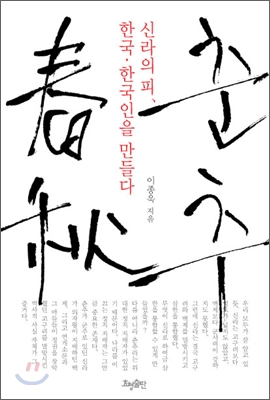 |
Description
Book Introduction
The historical research and roots of the KBS historical drama "The King's Dream": The Spring and Autumn Annals
There has been a steady stream of popular culture content set in the Silla Dynasty for a long time.
A few years ago, the story of Misil, which did not exist in the official history, was made into a novel and was talked about by many people, and a TV drama that dealt with the story of Queen Seondeok, Misil, and the people around them attracted public attention.
And in 2012, the story of the real Silla and the real Kim Chun-chu unfolds once again.
The 80-episode historical drama "The King's Dream" produced by KBS has been a hot topic since its production began.
This is because it sheds new light on the real Kim Chun-chu and Silla story, not the Kim Chun-chu we have learned and become accustomed to.
And at the foundation of this work is the Spring and Autumn Annals, published by Professor Lee Jong-wook. KBS is happy to invite President Lee Jong-wook to serve as an advisory professor.
"Chunqiu: The Blood of Silla, Creating Korea and the Korean People" is a new and accurate study of Silla history and Kim Chun-chu, culminating in Professor Lee Jong-wook's 30-plus years of research on Silla history. Drawing on the Samguk Sagi (History of the Three Kingdoms) and Samguk Yusa (Memorabilia of the Three Kingdoms), as well as the Hwarang Segi (Hwarang Segi), it offers readers seeking the true story of King Taejong Muyeol Kim Chun-chu, the monarch responsible for the revival of Silla, and his planned unification of the Three Han Kingdoms.
It can be called the canon of modern Silla history.
There has been a steady stream of popular culture content set in the Silla Dynasty for a long time.
A few years ago, the story of Misil, which did not exist in the official history, was made into a novel and was talked about by many people, and a TV drama that dealt with the story of Queen Seondeok, Misil, and the people around them attracted public attention.
And in 2012, the story of the real Silla and the real Kim Chun-chu unfolds once again.
The 80-episode historical drama "The King's Dream" produced by KBS has been a hot topic since its production began.
This is because it sheds new light on the real Kim Chun-chu and Silla story, not the Kim Chun-chu we have learned and become accustomed to.
And at the foundation of this work is the Spring and Autumn Annals, published by Professor Lee Jong-wook. KBS is happy to invite President Lee Jong-wook to serve as an advisory professor.
"Chunqiu: The Blood of Silla, Creating Korea and the Korean People" is a new and accurate study of Silla history and Kim Chun-chu, culminating in Professor Lee Jong-wook's 30-plus years of research on Silla history. Drawing on the Samguk Sagi (History of the Three Kingdoms) and Samguk Yusa (Memorabilia of the Three Kingdoms), as well as the Hwarang Segi (Hwarang Segi), it offers readers seeking the true story of King Taejong Muyeol Kim Chun-chu, the monarch responsible for the revival of Silla, and his planned unification of the Three Han Kingdoms.
It can be called the canon of modern Silla history.
- You can preview some of the book's contents.
Preview
index
At the beginning of the book
Introduction: Preparation for Reconstructing the Spring and Autumn Annals
Ⅰ.
The Birth of a Great Monarch
1.
Born with the destiny of succession to the throne
2.
The people who decided the fate of the Spring and Autumn Period: King Jinji and his sons Yongsu and Yongchun
Conclusion: Chun-chu had three opportunities to ascend to the throne.
Ⅱ.
The royal palace that nurtured the will of the world (603-612, birth to age ten)
1.
Yongsu, chosen as the successor to the throne, and Chun-chu, who grew up as his son.
2.
International situation as seen by the young Chunqiu
3.
Changes in the lives of Silla people
4.
Buddhism and Confucianism as Seen in the Spring and Autumn Annals
Conclusion: During the Spring and Autumn Period, acquire the qualities of a prince while learning his native language.
Ⅲ.
Leaving the palace and moving to a larger vessel (Jinpyeong King, 612-632, ages 10-30)
1.
The Spring and Autumn Period, which lost its second chance to succeed to the throne
2.
Four years as a sub-deacon (612-616)
3.
Eleven Years of Mystery (616–626)
4.
Spring and Autumn, Meet the Seven Stars
5.
Prepare diligently to become king
6.
Four years of serving as Pungwolju (626-629)
7.
4 years as a merchant ship during the reign of King Jinpyeong (629-632)
Sogeol: Chunqiu, becoming a Hwarang, gaining dignity and leading the Chilseongwoo, a lifelong following.
Ⅳ.
Dreaming at the Queen's Side (Queen Seondeok, 632-647, ages 30-45)
1.
The queen's ascension to the throne by King Jinpyeong's choice
2.
Queen Seondeok, Yongsu, Yongchun, and Chunchu
3.
The death of Kota So and the Chunqiu who risked their lives to go to the enemy country of Goguryeo
4.
Chilseongwoo and Pungwolju during the reign of Queen Seondeok, and their activities
5.
Crossing the Rubicon River to suppress Bidam's rebellion
6.
Acceptance and conflict with Chinese civilization
7.
Changes in the international situation
Conclusion: The political genius shown by Chunchu during the reign of Queen Seondeok
V.
Restless preparation, concrete practice (Queen Jindeok, 647-654, ages 45-52)
1.
The accession of Queen Jindeok, which became the prelude to the succession to the throne during the Spring and Autumn Period
2.
The Spring and Autumn Annals of Queen Jindeok
3.
Chilseongwoo takes control of the monarchy
4.
What did the Spring and Autumn Annals accomplish and plan when they went to Tang?
5.
Sinicization of Silla led by the Spring and Autumn Period
6.
Carry out institutional reforms to establish Chunqiu as king
7.
The Great Will of the Ripening Spring and Autumn Period
Conclusion: The Spring and Autumn Annals, the reign of Queen Jindeok, and the conquest of the monarchy
Ⅵ.
Finally, the ascension to the throne and the conquest of Baekje (King Taejong Muyeol, 654-661, 52-59 years old)
1.
The monarch of Je-se ascends to the throne
2.
King Muyeol's heroic activities
3.
The starting point of the unification of the Three Kingdoms, the conquest of Baekje
4.
Conquest of Baekje and Aftermath
Conclusion: King Muyeol becomes a monarch and demonstrates his qualities as a political genius.
Ⅶ.
Silla's revival, a feat accomplished (King Munmu and King Sinmun)
1.
The death of King Taejong Muyeol
2.
King Munmu, who completed the legacy of his predecessors
3.
The newspaper king calls for peace through reform.
4.
Silla will remember him forever
Conclusion: Characteristics of the eras of King Muyeol, King Munmu, and King Sinmun
Going out: The blood of Silla that created Korea and Koreans
1.
Determine a new direction for history
2.
How was the Spring and Autumn Annals evaluated?
3.
Things you shouldn't force on Chunqiu
4.
We must abandon the perspective of looking at the nation and its history.
Epilogue
References
Search
Introduction: Preparation for Reconstructing the Spring and Autumn Annals
Ⅰ.
The Birth of a Great Monarch
1.
Born with the destiny of succession to the throne
2.
The people who decided the fate of the Spring and Autumn Period: King Jinji and his sons Yongsu and Yongchun
Conclusion: Chun-chu had three opportunities to ascend to the throne.
Ⅱ.
The royal palace that nurtured the will of the world (603-612, birth to age ten)
1.
Yongsu, chosen as the successor to the throne, and Chun-chu, who grew up as his son.
2.
International situation as seen by the young Chunqiu
3.
Changes in the lives of Silla people
4.
Buddhism and Confucianism as Seen in the Spring and Autumn Annals
Conclusion: During the Spring and Autumn Period, acquire the qualities of a prince while learning his native language.
Ⅲ.
Leaving the palace and moving to a larger vessel (Jinpyeong King, 612-632, ages 10-30)
1.
The Spring and Autumn Period, which lost its second chance to succeed to the throne
2.
Four years as a sub-deacon (612-616)
3.
Eleven Years of Mystery (616–626)
4.
Spring and Autumn, Meet the Seven Stars
5.
Prepare diligently to become king
6.
Four years of serving as Pungwolju (626-629)
7.
4 years as a merchant ship during the reign of King Jinpyeong (629-632)
Sogeol: Chunqiu, becoming a Hwarang, gaining dignity and leading the Chilseongwoo, a lifelong following.
Ⅳ.
Dreaming at the Queen's Side (Queen Seondeok, 632-647, ages 30-45)
1.
The queen's ascension to the throne by King Jinpyeong's choice
2.
Queen Seondeok, Yongsu, Yongchun, and Chunchu
3.
The death of Kota So and the Chunqiu who risked their lives to go to the enemy country of Goguryeo
4.
Chilseongwoo and Pungwolju during the reign of Queen Seondeok, and their activities
5.
Crossing the Rubicon River to suppress Bidam's rebellion
6.
Acceptance and conflict with Chinese civilization
7.
Changes in the international situation
Conclusion: The political genius shown by Chunchu during the reign of Queen Seondeok
V.
Restless preparation, concrete practice (Queen Jindeok, 647-654, ages 45-52)
1.
The accession of Queen Jindeok, which became the prelude to the succession to the throne during the Spring and Autumn Period
2.
The Spring and Autumn Annals of Queen Jindeok
3.
Chilseongwoo takes control of the monarchy
4.
What did the Spring and Autumn Annals accomplish and plan when they went to Tang?
5.
Sinicization of Silla led by the Spring and Autumn Period
6.
Carry out institutional reforms to establish Chunqiu as king
7.
The Great Will of the Ripening Spring and Autumn Period
Conclusion: The Spring and Autumn Annals, the reign of Queen Jindeok, and the conquest of the monarchy
Ⅵ.
Finally, the ascension to the throne and the conquest of Baekje (King Taejong Muyeol, 654-661, 52-59 years old)
1.
The monarch of Je-se ascends to the throne
2.
King Muyeol's heroic activities
3.
The starting point of the unification of the Three Kingdoms, the conquest of Baekje
4.
Conquest of Baekje and Aftermath
Conclusion: King Muyeol becomes a monarch and demonstrates his qualities as a political genius.
Ⅶ.
Silla's revival, a feat accomplished (King Munmu and King Sinmun)
1.
The death of King Taejong Muyeol
2.
King Munmu, who completed the legacy of his predecessors
3.
The newspaper king calls for peace through reform.
4.
Silla will remember him forever
Conclusion: Characteristics of the eras of King Muyeol, King Munmu, and King Sinmun
Going out: The blood of Silla that created Korea and Koreans
1.
Determine a new direction for history
2.
How was the Spring and Autumn Annals evaluated?
3.
Things you shouldn't force on Chunqiu
4.
We must abandon the perspective of looking at the nation and its history.
Epilogue
References
Search
Publisher's Review
Are you curious about the real Silla, the real Kim Chun-chu's story?
These days, Korean popular culture is abuzz with stories about Silla like never before.
A few years ago, the story of Misil, which does not exist in the official history, was made into a novel and was talked about by many people, and recently, a TV drama that tells the story of Queen Seondeok, Misil, and the people around them has been attracting public attention.
It was thanks to 『Hwarang Segi』 that popular culture content set in the Silla Dynasty could be created.
As is well known, 『Hwarang Segi』 is a book written by Kim Dae-mun of Silla to commemorate his ancestors and to compile the biographies of 32 Pungwolju (leaders of Hwarang).
Professor Lee Jong-wook, the author, took the lead in excavating a manuscript of this book, which was translated and published in 1999.
Considering that most of the stories about Silla that have been circulated among the public recently are based on the records of the Hwarang Segi, it is clear that a significant portion of today's discourse on Silla originates from his research.
『Chunqiu: The Blood of Silla, Creating Korea and the Korean People』 is a new and accurate study of Silla history and Kim Chunqiu, compiled from the core of Professor Lee Jong-wook's research on Silla history spanning over the past 30 years.
Based on the Samguk Sagi and Samguk Yusa, as well as the Hwarang Segi, it provides the best knowledge to readers who want to know the true story of King Taejong Muyeol Kim Chun-chu, the monarch who revived Silla, and the unification of the Three Kingdoms planned by Silla.
It can be called the canon of modern Silla history.
Silla, Kim Chun-chu, you vile creatures!
Open the history books.
As you read through Korean history from prehistoric times to ancient society, you will come across this passage.
“Spring and Autumn Annals.”
King Muyeol.
The Nadang Union.
Silla’s unification of the Three Kingdoms… … .”
How do we feel about these characters and events? Six or seven out of ten will feel a sense of inexplicable rejection.
This is only a primary reaction.
Some people frown and click their tongues, while others are indignant and say, “Silla, you filthy things!”
Yes, that's right.
Until now, Silla and Kim Chun-chu have been the first targets of ‘liquidation of past history’ in ancient history, the so-called ‘history of national formation.’
Kim Chun-chu's Silla, Kim Chun-chu of Silla is the person who achieved the great dream of unifying the Three Kingdoms and made today's Koreans what they are.
However, they are still considered to be a shameless and immoral force that trampled on the proud history and culture of their fellow countrymen, Baekje and Goguryeo, by bowing to the great foreign power, Tang.
Even among researchers, many acknowledge the significance of Silla's unification of the Three Han Kingdoms (the so-called unification of the Three Kingdoms), but the reality is that there were problems with the methods used to achieve it.
The Spring and Autumn Period and the Great Silla Dynasty (Unified Silla) were, to put it bluntly, devalued to the point of being called ‘public enemies.’
What exactly happened in Korean academic circles and educational settings to lead to this assessment?
The Gwanhak faction's national history, a "dead power," terrorizes Kim Chun-chu and Silla.
In the academic world of the liberated space after 1945, Kim Chun-chu and the Daeshinra he built became the first sacrificial offering in the construction of a ‘national history’, a project to ‘elevate the majestic spirit of the Korean people.’
Why them of all people?
The author focuses on the so-called 'national history' school of Korean history.
The 'Gwanhakpa (官學派)' introduced and applied the concept of 'nation' to ancient Korean history, replacing the core of the discussion with the issue of 'nation'.
By clearly stating that “the people are the nation” and “Korean history is the history of the nation,” he defined all the countries in Korean history and all the people who lived there as the descendants of Dangun, the Korean people.
The targets of those who seized academic power were Kim Chun-chu and Silla.
They colluded with the great foreign power of Tang to attack Baekje, their own people, and even overthrew the "magnificent national spirit" of Goguryeo, which had "ran across the Manchurian plains," and then packaged it as the completion of the great task of unification.
This view has been fully reflected in the national history textbook for high schools, which has been produced by the state since 1974, and Silla's unification of the Three Kingdoms is still defined as a so-called 'incomplete unification' to this day.
Afterwards, Kim Chun-chu became a symbol of anti-nationalism, comparable to the Eulsa Five Traitors.
The author begins and ends by making this point clear.
Ignoring the fact that the concept of 'nation' was introduced and used in this land after the Japanese colonial period, the government-affiliated school of thought has been conducting a farce of studying ancient history by retroactively applying the concept of 'nation' to history from over a dozen centuries ago.
The historical narrative of those who invented and forced upon the people the ideology of a “single ethnic group that inherited the pure bloodline of Dangun” ultimately provided the starting point for the distorted historical consciousness of Koreans today.
By correctly reconstructing the history of that era, including Kim Chun-chu and Daeshin-ra, the author begins to correct distorted history.
Chunqiu, who is he?
King Taejong Muyeol, the 29th king of Silla, who was the first true bone to ascend to the throne, was the direct grandson of King Jinji, the maternal grandson of King Jinpyeong, the nephew of Queen Seondeok, and the son of King Yongsu Galmun and Princess Cheonmyeong.
Originally, Chun-chu was born with holy bones and had the qualifications to ascend to the throne.
However, with his grandfather King Jinji's dethronement, his clan was demoted to Jingol, leaving him in a position where he had to carve out his own great destiny.
He lived with the royal family in the palace for 10 years during his childhood, developing the basic qualities of a prince.
As the son-in-law of King Jinpyeong, he was in a position to succeed to the throne, but he followed his father, King Yongsu Galmun, who left the palace to give up his position to Princess Seondeok, and faced a new fate.
At the recommendation of Kim Yu-sin, with whom he had been close all his life, he entered Hwarangdo and worked as a pungwolju (a Korean martial artist). He also led a lifelong group of followers called Chilseong-u and, by understanding the international situation of the time, set the unification of the Three Kingdoms as a personal and national goal.
He held a key position close to Queen Seondeok, and together with the Yushin and Chilseongwoo forces, he suppressed a rebellion that attempted to usurp the throne, and made all preparations to become king by enthroning Queen Jindeok.
And in 660, he finally ascended to the throne as King Taejong Muyeol, the 29th king of Silla.
He destroyed Baekje through a military alliance with the Tang Dynasty, and ended his eventful life with the grand goal of unifying the Three Kingdoms just around the corner.
Kim Chun-chu's Phytol from Silla is etched into Korean genes.
The author condenses the above-mentioned detailed explanation of his achievements into the phrase, “the origin of Korea and Koreans.”
There is clear historical basis for viewing Kim Chun-chu and Silla (or Daeshin-ra) as the origin of Korea and the Korean people.
Even without mentioning the simple and clear reality that the majority of Koreans belong to clans with surnames such as Kim, Lee, Park, Jeong, Choi, and Son, who have Silla as their progenitors or secondary progenitors, this is self-evident.
In a word, the existence of King Taejong Muyeol of the Spring and Autumn Annals represents this.
He planned and promoted the great undertaking of unifying the Three Kingdoms, and reached the halfway point of that undertaking by personally subduing Baekje during his lifetime.
His son, King Munmu, succeeded in subduing Goguryeo, inheriting the legacy of his predecessor, and completed the great task of unifying the Three Kingdoms by repelling the Tang Dynasty, a former ally that had revealed its ambition to annex the unified Three Kingdoms.
After that, Silla brought together the former territories and people of Baekje and Goguryeo and operated Daeshinra (Unified Silla).
In the process, the bloodlines of Baekje and Goguryeo were eliminated, and various social fields, including culture, were absorbed into Silla's social system.
The three kingdoms of the Three Hans fought bloodily, each with a desperate fate of conquering or being conquered, and fought for their own survival and prosperity without even knowing the feeling of kinship.
The result was the unification of the Three Kingdoms by Silla.
In the powerful flow of Korean history, from Goryeo to Joseon, and on to the present, only the bloodline and historical legacy of Silla were inherited, while the existence of Baekje and Goguryeo was quietly buried somewhere on the other side of history.
If we go back through the stream of all this history, we find the Spring and Autumn Annals sitting proudly at its source.
The author vividly reconstructed the life of this Chunqiu and the process of unification of the Three Kingdoms achieved through his activities through the intersection of various collected historical materials.
For readers who want to know the true nature of Silla history, this will be like rain in a drought.
A Year in Gyeongju - Reuniting with Chunqiu
The author has dedicated himself to establishing a proper culture of studying ancient history, transcending the nationalistic research practices of the government-led school that dominated Korean history academia in the 20th century.
In 2007, during my sabbatical year, I went down to Gyeongju, the ancient capital of Silla, and spent the year reflecting on the history of Silla that I had been studying.
In it, I took a fresh look at Kim Chun-chu's true nature and decided to organize it.
I dug up the dusty records one by one and reconstructed them into this book.
The author says:
“Let’s not devalue or mythologize Silla, but face it as it was.”
And he adds:
“Let us be wary of the historical content that is being provided to us today, with only plausible stories covered in the guise of history.”
In order to overcome the crisis in Korean (ancient) history caused by the distortion of history in national history, and to promote and mass-produce new, accurate, and interesting historical cultural content, we have unfolded 'The Spring and Autumn Annals and the Story of Silla's Unification of the Three Kingdoms'.
These days, Korean popular culture is abuzz with stories about Silla like never before.
A few years ago, the story of Misil, which does not exist in the official history, was made into a novel and was talked about by many people, and recently, a TV drama that tells the story of Queen Seondeok, Misil, and the people around them has been attracting public attention.
It was thanks to 『Hwarang Segi』 that popular culture content set in the Silla Dynasty could be created.
As is well known, 『Hwarang Segi』 is a book written by Kim Dae-mun of Silla to commemorate his ancestors and to compile the biographies of 32 Pungwolju (leaders of Hwarang).
Professor Lee Jong-wook, the author, took the lead in excavating a manuscript of this book, which was translated and published in 1999.
Considering that most of the stories about Silla that have been circulated among the public recently are based on the records of the Hwarang Segi, it is clear that a significant portion of today's discourse on Silla originates from his research.
『Chunqiu: The Blood of Silla, Creating Korea and the Korean People』 is a new and accurate study of Silla history and Kim Chunqiu, compiled from the core of Professor Lee Jong-wook's research on Silla history spanning over the past 30 years.
Based on the Samguk Sagi and Samguk Yusa, as well as the Hwarang Segi, it provides the best knowledge to readers who want to know the true story of King Taejong Muyeol Kim Chun-chu, the monarch who revived Silla, and the unification of the Three Kingdoms planned by Silla.
It can be called the canon of modern Silla history.
Silla, Kim Chun-chu, you vile creatures!
Open the history books.
As you read through Korean history from prehistoric times to ancient society, you will come across this passage.
“Spring and Autumn Annals.”
King Muyeol.
The Nadang Union.
Silla’s unification of the Three Kingdoms… … .”
How do we feel about these characters and events? Six or seven out of ten will feel a sense of inexplicable rejection.
This is only a primary reaction.
Some people frown and click their tongues, while others are indignant and say, “Silla, you filthy things!”
Yes, that's right.
Until now, Silla and Kim Chun-chu have been the first targets of ‘liquidation of past history’ in ancient history, the so-called ‘history of national formation.’
Kim Chun-chu's Silla, Kim Chun-chu of Silla is the person who achieved the great dream of unifying the Three Kingdoms and made today's Koreans what they are.
However, they are still considered to be a shameless and immoral force that trampled on the proud history and culture of their fellow countrymen, Baekje and Goguryeo, by bowing to the great foreign power, Tang.
Even among researchers, many acknowledge the significance of Silla's unification of the Three Han Kingdoms (the so-called unification of the Three Kingdoms), but the reality is that there were problems with the methods used to achieve it.
The Spring and Autumn Period and the Great Silla Dynasty (Unified Silla) were, to put it bluntly, devalued to the point of being called ‘public enemies.’
What exactly happened in Korean academic circles and educational settings to lead to this assessment?
The Gwanhak faction's national history, a "dead power," terrorizes Kim Chun-chu and Silla.
In the academic world of the liberated space after 1945, Kim Chun-chu and the Daeshinra he built became the first sacrificial offering in the construction of a ‘national history’, a project to ‘elevate the majestic spirit of the Korean people.’
Why them of all people?
The author focuses on the so-called 'national history' school of Korean history.
The 'Gwanhakpa (官學派)' introduced and applied the concept of 'nation' to ancient Korean history, replacing the core of the discussion with the issue of 'nation'.
By clearly stating that “the people are the nation” and “Korean history is the history of the nation,” he defined all the countries in Korean history and all the people who lived there as the descendants of Dangun, the Korean people.
The targets of those who seized academic power were Kim Chun-chu and Silla.
They colluded with the great foreign power of Tang to attack Baekje, their own people, and even overthrew the "magnificent national spirit" of Goguryeo, which had "ran across the Manchurian plains," and then packaged it as the completion of the great task of unification.
This view has been fully reflected in the national history textbook for high schools, which has been produced by the state since 1974, and Silla's unification of the Three Kingdoms is still defined as a so-called 'incomplete unification' to this day.
Afterwards, Kim Chun-chu became a symbol of anti-nationalism, comparable to the Eulsa Five Traitors.
The author begins and ends by making this point clear.
Ignoring the fact that the concept of 'nation' was introduced and used in this land after the Japanese colonial period, the government-affiliated school of thought has been conducting a farce of studying ancient history by retroactively applying the concept of 'nation' to history from over a dozen centuries ago.
The historical narrative of those who invented and forced upon the people the ideology of a “single ethnic group that inherited the pure bloodline of Dangun” ultimately provided the starting point for the distorted historical consciousness of Koreans today.
By correctly reconstructing the history of that era, including Kim Chun-chu and Daeshin-ra, the author begins to correct distorted history.
Chunqiu, who is he?
King Taejong Muyeol, the 29th king of Silla, who was the first true bone to ascend to the throne, was the direct grandson of King Jinji, the maternal grandson of King Jinpyeong, the nephew of Queen Seondeok, and the son of King Yongsu Galmun and Princess Cheonmyeong.
Originally, Chun-chu was born with holy bones and had the qualifications to ascend to the throne.
However, with his grandfather King Jinji's dethronement, his clan was demoted to Jingol, leaving him in a position where he had to carve out his own great destiny.
He lived with the royal family in the palace for 10 years during his childhood, developing the basic qualities of a prince.
As the son-in-law of King Jinpyeong, he was in a position to succeed to the throne, but he followed his father, King Yongsu Galmun, who left the palace to give up his position to Princess Seondeok, and faced a new fate.
At the recommendation of Kim Yu-sin, with whom he had been close all his life, he entered Hwarangdo and worked as a pungwolju (a Korean martial artist). He also led a lifelong group of followers called Chilseong-u and, by understanding the international situation of the time, set the unification of the Three Kingdoms as a personal and national goal.
He held a key position close to Queen Seondeok, and together with the Yushin and Chilseongwoo forces, he suppressed a rebellion that attempted to usurp the throne, and made all preparations to become king by enthroning Queen Jindeok.
And in 660, he finally ascended to the throne as King Taejong Muyeol, the 29th king of Silla.
He destroyed Baekje through a military alliance with the Tang Dynasty, and ended his eventful life with the grand goal of unifying the Three Kingdoms just around the corner.
Kim Chun-chu's Phytol from Silla is etched into Korean genes.
The author condenses the above-mentioned detailed explanation of his achievements into the phrase, “the origin of Korea and Koreans.”
There is clear historical basis for viewing Kim Chun-chu and Silla (or Daeshin-ra) as the origin of Korea and the Korean people.
Even without mentioning the simple and clear reality that the majority of Koreans belong to clans with surnames such as Kim, Lee, Park, Jeong, Choi, and Son, who have Silla as their progenitors or secondary progenitors, this is self-evident.
In a word, the existence of King Taejong Muyeol of the Spring and Autumn Annals represents this.
He planned and promoted the great undertaking of unifying the Three Kingdoms, and reached the halfway point of that undertaking by personally subduing Baekje during his lifetime.
His son, King Munmu, succeeded in subduing Goguryeo, inheriting the legacy of his predecessor, and completed the great task of unifying the Three Kingdoms by repelling the Tang Dynasty, a former ally that had revealed its ambition to annex the unified Three Kingdoms.
After that, Silla brought together the former territories and people of Baekje and Goguryeo and operated Daeshinra (Unified Silla).
In the process, the bloodlines of Baekje and Goguryeo were eliminated, and various social fields, including culture, were absorbed into Silla's social system.
The three kingdoms of the Three Hans fought bloodily, each with a desperate fate of conquering or being conquered, and fought for their own survival and prosperity without even knowing the feeling of kinship.
The result was the unification of the Three Kingdoms by Silla.
In the powerful flow of Korean history, from Goryeo to Joseon, and on to the present, only the bloodline and historical legacy of Silla were inherited, while the existence of Baekje and Goguryeo was quietly buried somewhere on the other side of history.
If we go back through the stream of all this history, we find the Spring and Autumn Annals sitting proudly at its source.
The author vividly reconstructed the life of this Chunqiu and the process of unification of the Three Kingdoms achieved through his activities through the intersection of various collected historical materials.
For readers who want to know the true nature of Silla history, this will be like rain in a drought.
A Year in Gyeongju - Reuniting with Chunqiu
The author has dedicated himself to establishing a proper culture of studying ancient history, transcending the nationalistic research practices of the government-led school that dominated Korean history academia in the 20th century.
In 2007, during my sabbatical year, I went down to Gyeongju, the ancient capital of Silla, and spent the year reflecting on the history of Silla that I had been studying.
In it, I took a fresh look at Kim Chun-chu's true nature and decided to organize it.
I dug up the dusty records one by one and reconstructed them into this book.
The author says:
“Let’s not devalue or mythologize Silla, but face it as it was.”
And he adds:
“Let us be wary of the historical content that is being provided to us today, with only plausible stories covered in the guise of history.”
In order to overcome the crisis in Korean (ancient) history caused by the distortion of history in national history, and to promote and mass-produce new, accurate, and interesting historical cultural content, we have unfolded 'The Spring and Autumn Annals and the Story of Silla's Unification of the Three Kingdoms'.
GOODS SPECIFICS
- Date of issue: June 30, 2009
- Format: Hardcover book binding method guide
- Page count, weight, size: 448 pages | 732g | 143*210*30mm
- ISBN13: 9788958720799
- ISBN10: 8958720794
You may also like
카테고리
korean


korean

![ELLE 엘르 스페셜 에디션 A형 : 12월 [2025]](http://librairie.coreenne.fr/cdn/shop/files/b8e27a3de6c9538896439686c6b0e8fb.jpg?v=1766436872&width=3840)


