

Forest of Lost Girls
 |
Description
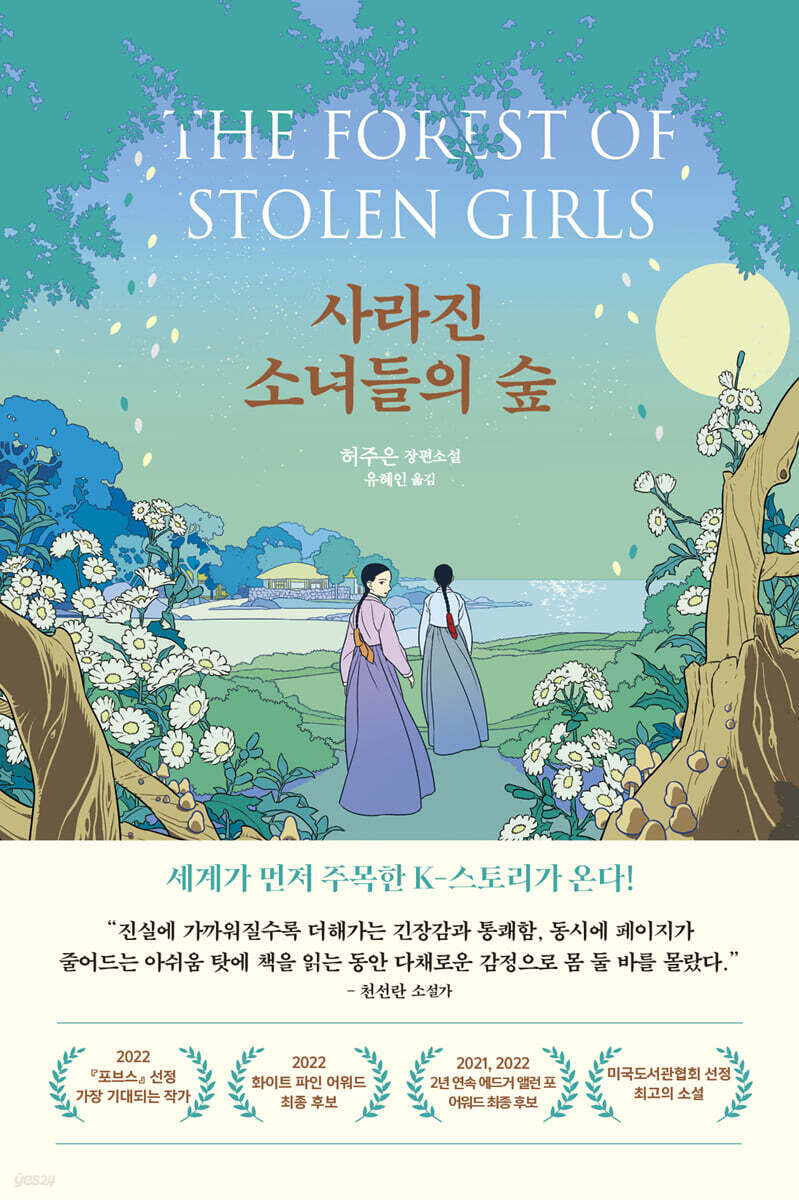
Book Introduction
- A word from MD
-
A mystery investigation drama about a detective with a ponytailA historical mystery set in Joseon in the early 15th century.
When thirteen girls disappear from a village in Jeju and the investigator sent to investigate goes missing, his daughters set out to find their father and pursue the truth.
A vivid and engaging story based on the princess system.December 27, 2022. Novel/Poetry PD Park Hyung-wook
A thrilling and captivating Korean narrative that captivated people around the world.
An immersive experience that will have you reading until the very end!
“As I got closer to the truth, the tension and exhilaration increased, and at the same time, the regret of seeing the pages running out made me feel overwhelmed with a variety of emotions while reading.”
- Recommended by novelist Cheon Seon-ran
*** The most anticipated author of 2022 selected by the American business magazine 『Forbes』 ***
*** 2022 White Pine Awards Finalist ***
*** Finalist for the Edgar Allan Poe Award for two consecutive years ***
*** American Library Association Best Novels ***
The novel 『Forest of Lost Girls』 by author Heo Ju-eun, who first became known in the world, not just in Korea, for her work's atmosphere grounded in Korean history and culture, and her writing style that incorporates intricate mystery devices into a solid narrative, has been published by Media Changbi.
The author places the Gongnyeo (貢女) system, a history unfamiliar to even Koreans, in the background of this work, which existed until the reign of King Sejong of the Joseon Dynasty.
This story draws readers into the center of a mysterious incident by weaving together the tragedy of a Jeju village, the family history urgently connected to that tragedy, and the lives of Joseon women in the patriarchal era in a multi-layered manner.
First, overseas readers were drawn to this unfamiliar story set in medieval Korea.
The Forest of Stolen Girls, first published in North America in 2021, was a finalist for the 2022 Forest of Reading White Pine Award, Canada's largest reading program, and a finalist for the 2021 and 2022 Edgar Allan Poe Awards.
In addition, it has been receiving a lot of attention from both adult and young adult readers even before its domestic publication, as it has been consecutively selected as the Best Novel for Young Adults by the Young Adult Library Association (YALSA) and as a recommended book by the Young Adult Library Guild (JLG).
As befitting his background as a history and literature major at the University of Toronto, his works are characterized by their use of history, especially Korean history, as subject matter.
All of his subsequent novels, including The Silence of Bones and The Red Palace, were written based on a deep understanding of Korean history.
The author, who declares that “all the books I am writing now are love letters to Korean history,” is solidifying his position as a bestselling Korean author by captivating all those unfamiliar with the word “Korea” with “the most Korean story.”
An immersive experience that will have you reading until the very end!
“As I got closer to the truth, the tension and exhilaration increased, and at the same time, the regret of seeing the pages running out made me feel overwhelmed with a variety of emotions while reading.”
- Recommended by novelist Cheon Seon-ran
*** The most anticipated author of 2022 selected by the American business magazine 『Forbes』 ***
*** 2022 White Pine Awards Finalist ***
*** Finalist for the Edgar Allan Poe Award for two consecutive years ***
*** American Library Association Best Novels ***
The novel 『Forest of Lost Girls』 by author Heo Ju-eun, who first became known in the world, not just in Korea, for her work's atmosphere grounded in Korean history and culture, and her writing style that incorporates intricate mystery devices into a solid narrative, has been published by Media Changbi.
The author places the Gongnyeo (貢女) system, a history unfamiliar to even Koreans, in the background of this work, which existed until the reign of King Sejong of the Joseon Dynasty.
This story draws readers into the center of a mysterious incident by weaving together the tragedy of a Jeju village, the family history urgently connected to that tragedy, and the lives of Joseon women in the patriarchal era in a multi-layered manner.
First, overseas readers were drawn to this unfamiliar story set in medieval Korea.
The Forest of Stolen Girls, first published in North America in 2021, was a finalist for the 2022 Forest of Reading White Pine Award, Canada's largest reading program, and a finalist for the 2021 and 2022 Edgar Allan Poe Awards.
In addition, it has been receiving a lot of attention from both adult and young adult readers even before its domestic publication, as it has been consecutively selected as the Best Novel for Young Adults by the Young Adult Library Association (YALSA) and as a recommended book by the Young Adult Library Guild (JLG).
As befitting his background as a history and literature major at the University of Toronto, his works are characterized by their use of history, especially Korean history, as subject matter.
All of his subsequent novels, including The Silence of Bones and The Red Palace, were written based on a deep understanding of Korean history.
The author, who declares that “all the books I am writing now are love letters to Korean history,” is solidifying his position as a bestselling Korean author by captivating all those unfamiliar with the word “Korea” with “the most Korean story.”
- You can preview some of the book's contents.
Preview
index
To Korean readers
Forest of Lost Girls
Historical background
Acknowledgements
Translator's Note
Forest of Lost Girls
Historical background
Acknowledgements
Translator's Note
Detailed image
.jpg)
Into the book
A thick fog enveloped the red pine boat.
As if there were secrets hidden beyond the land that was not permitted to my eyes.
But I clearly remember the land of the winds a thousand miles south of the port.
There is a jagged coastline, scattered black basalt houses, vast meadows, and mountains shrouded in layers of fog.
Somewhere on Jeju Island, the island of stone and wind, between Gotjawal, a forest steeped in history, and Hallasan Mountain, its peaks covered in clouds, my father disappeared.
--- p.17
If she were young Hwan, if she were the girl who had solved countless small problems like the theft of a jade ring or the dead falcon case at the request of many people, she would not have given up hope and would never have succumbed to the fear that arose in our family's old home.
Fear spoke to me.
That my father might really have passed away.
Now, no house, no room will be filled with my father's laughter.
Daughter, my daughter.
I would never hear my father's voice calling me again.
--- p.89
But what Maewol said was right.
We are sisters.
It's like a knot in a rope that's tied together until this investigation is over.
Shoulders slumped forward.
I wanted to fall to the ground and curl up.
It was embarrassing to even feel this way.
How could you be jealous? Maewol was abandoned as a child and lived without parents for five years.
How dare you feel jealous of such a person?
“Do you still want to investigate with me?”
All the anger and strength seemed to drain from my voice.
The blade disappeared from the eyes of each month.
"huh."
“Do you want to know the truth? No matter how horrible it may be?”
--- p.216
The moment I heard the whistle again, I followed it.
The sound kept stopping and starting again.
As if every month, after taking a deep breath, he blew his father's patrol whistle.
I felt cold beads of sweat on my forehead and ran here and there to find where the sound was coming from.
Several times I walked across the shady backyard of the annex and passed a large, thick, round wooden plank weighed down by a stone block.
It was like a well was covered.
But it was too big to be called a well.
The third time I returned to this spot, my heart sank with fear.
There's no way it could be down here...
I heard it again then.
A faint whistle sound.
He put down his bamboo sword, crouched down, and pushed the wooden cover with all his remaining strength.
Pushed and pushed again.
Every time I applied force, the cover moved as much as my fingertips.
Clothes stuck to my sweaty back and my wet hair dangled before my eyes.
The stabbing pain from the poison I ate last night became worse the more I tried.
But I had to keep trying.
“Maewol, I will look for you.”
As if there were secrets hidden beyond the land that was not permitted to my eyes.
But I clearly remember the land of the winds a thousand miles south of the port.
There is a jagged coastline, scattered black basalt houses, vast meadows, and mountains shrouded in layers of fog.
Somewhere on Jeju Island, the island of stone and wind, between Gotjawal, a forest steeped in history, and Hallasan Mountain, its peaks covered in clouds, my father disappeared.
--- p.17
If she were young Hwan, if she were the girl who had solved countless small problems like the theft of a jade ring or the dead falcon case at the request of many people, she would not have given up hope and would never have succumbed to the fear that arose in our family's old home.
Fear spoke to me.
That my father might really have passed away.
Now, no house, no room will be filled with my father's laughter.
Daughter, my daughter.
I would never hear my father's voice calling me again.
--- p.89
But what Maewol said was right.
We are sisters.
It's like a knot in a rope that's tied together until this investigation is over.
Shoulders slumped forward.
I wanted to fall to the ground and curl up.
It was embarrassing to even feel this way.
How could you be jealous? Maewol was abandoned as a child and lived without parents for five years.
How dare you feel jealous of such a person?
“Do you still want to investigate with me?”
All the anger and strength seemed to drain from my voice.
The blade disappeared from the eyes of each month.
"huh."
“Do you want to know the truth? No matter how horrible it may be?”
--- p.216
The moment I heard the whistle again, I followed it.
The sound kept stopping and starting again.
As if every month, after taking a deep breath, he blew his father's patrol whistle.
I felt cold beads of sweat on my forehead and ran here and there to find where the sound was coming from.
Several times I walked across the shady backyard of the annex and passed a large, thick, round wooden plank weighed down by a stone block.
It was like a well was covered.
But it was too big to be called a well.
The third time I returned to this spot, my heart sank with fear.
There's no way it could be down here...
I heard it again then.
A faint whistle sound.
He put down his bamboo sword, crouched down, and pushed the wooden cover with all his remaining strength.
Pushed and pushed again.
Every time I applied force, the cover moved as much as my fingertips.
Clothes stuck to my sweaty back and my wet hair dangled before my eyes.
The stabbing pain from the poison I ate last night became worse the more I tried.
But I had to keep trying.
“Maewol, I will look for you.”
--- p.373
Publisher's Review
In 1426, Joseon, thirteen girls disappeared!
A mystery epic set in Joseon,
The painful truth of history that has reached its end
Despite its weighty story background of the still-existing court lady system in Joseon in 1426, this book fully displays the charm of a mystery novel.
The main characters of the novel are sisters Min-hwan and Min-mae-wol.
The sisters' father, Min Je-woo, a renowned detective, leaves for Jeju, the sisters' hometown, to investigate the disappearance of thirteen girls from a village, but soon goes missing.
The novel begins with Min Mae-wol disguised as a man and crossing the sea to find her missing father.
The clue is the 60 volumes of investigation journals left behind by his father, and his helper is his younger sister Min Mae-wol, who was left in Jeju after an unexpected breakup that led to a rift between them.
The novel unfolds from the moment it is launched on a ship bound for Jeju Island, with twists and turns.
The hidden witnesses to the missing persons case, the investigation of the Min sisters, the suspects' elaborate alibis, the clues that conflict with the investigation log left behind by their father, and the truths that each person has kept hidden for their own reasons are all intertwined, making it impossible to take your eyes off the page for even a moment.
Meanwhile, the protagonist Min-hwan, who sets out to find his missing father, the love-hate relationship between the Min Mae-wol sisters, and the heartbreaking family history hidden within them touch the emotions of readers.
The truth that is revealed at the end is not the story of one individual, but remains in our hearts as a heartbreaking part of our history.
The motif of the novel was an actual letter written by Yi Gok (1298-1351), a scholar of the Goryeo Dynasty, to the Yuan emperor requesting the abolition of the gongnyeo system.
The author, “as a history buff, was interested in the background of this tragic incident” and “decided to write a book highlighting these women” (see “To Korean Readers,” pp. 9-11).
What makes this work stand out is that it finds in these women a life of trying to break through even the smallest cracks in reality, rather than a life of conformity.
This is true from the charming protagonists, Min-hwan and Min Mae-wol, who bravely follow in the footsteps of their father and thirteen girls without being discouraged by limitations such as gender or status.
The supporting characters, who do not hesitate to sacrifice their families for the honor of their family and who resist the nobles in their own way, unwilling to give up even a small amount of power, are all unique.
The adventure of two protagonists with different personalities and tastes as they journey toward the truth, tackling the complex web of interests portrayed by a diverse cast of characters, heralds the birth of a new page-turner in historical mystery novels.
Bringing vivid life to stuffed history
A fantasy world where history lives and breathes
The current state of K-story, which arrived in Korea in reverse
The reason this novel first gained acclaim overseas is because, beyond dealing with a special event in Korean history, it is a coming-of-age story in which the two main characters actively resolve the incident, heal past wounds, and save each other, and because contemporaries sympathized with the author's intention to loudly voice the voices of the weak who had been forced to live in silence.
In a situation where no one pays attention to the disappearance of thirteen girls in a row, the only ones who step forward are Min-hwan and Min Mae-wol.
And the ones who helped them were other women of similar age.
Of course, it is Bolseon who braves her fears and delivers the investigation log that could be a clue to solving the case, Gahee who barely musters up the courage to do the right thing despite deep physical and emotional wounds, and Chaewon who belatedly opens her eyes to the strange reality where violence in the name of family is rationalized. These young and powerless people are the first to open their hearts to the intensity of the Min sisters.
The sisters, who have reached the truth of the disappearance, question “who decides who should be sacrificed and who should not” (page 393), and cry out, “Because of monsters like you, being born a woman has become a curse” (page 394), and the beings who have been obscured under patriarchy leap out from history.
The “fantasy world where history lives and breathes” that the author sought to portray shows that the inhumane and irrational systems that oppressed the lives of contemporary people did not disappear from history books one day, but were the result of the constant resistance of living and breathing beings outside of history books.
K-Story has now expanded beyond Korea to overseas, and is now taking on a local form in other countries.
If the popularity of the video and novel 『Pachinko』 is a recent phenomenon, Heo Ju-eun's 『The Forest of Lost Girls』 is evidence that it has already established a solid territory in that area.
Even if a novel is set in the history of an unfamiliar country, if it contains universal values of our time, we can be sure that readers around the world will always be open to it.
For domestic readers, this novel breaks the stereotype that historical novels are always serious, and shows new possibilities for historical novels with an exciting and engaging story about a Joseon detective with a bob cut.
Across the blue sea of Jeju Island over 600 years ago, a fun and beautiful work of art that connects eras and generations has arrived with us.
※ Characters
Min-hwan said , “I crossed a thousand miles of sea to come here.
So we have to find some answer.”
A detective with curly hair who is usually gentle but knows how to fight bravely in dangerous situations.
Min Mae-wol : “The dead end is only in your head.
“You can always find another exit if you want.”
Min-hwan's younger brother.
Even in the worst situations, he does not give in and acts without regard for consequences.
Min Je-woo: "Can humans undo their mistakes? Can they atone for their sins?"
Min sisters' father.
(In Min-hwan's opinion) the best investigator in Joseon.
Yu Seonbi: “If not me, who will protect the young master?”
A drunkard who knows nothing but gambling and sleeping.
And his hidden, surprising identity.
Noh Kyung Simbang “Min-hwan.
“I knew you’d cause trouble from the moment you came.”
A shaman from Nowon-ri village, Jeju.
A person who takes care of Min Mae-wol like a mother and is the prime suspect in the disappearance of the thirteen girls chosen by Min-hwan.
Pastor Hong: “Corruption always wins.”
Jeju Island.
A character who was once righteous, but grew tired of the world where injustice triumphed, lost his faith, and became a tyrant.
Aunt: “Min-hwan, even if you’re crazy, you’re really crazy.”
Min Je-woo's older sister.
He goes to Jeju to take Min-hwan and marry him off to a noble family.
Chief Moon: “Go and find your father, Detective with Bangs.”
The village chief who represents the voice of the villagers.
A person deeply involved in the beginning and end of the disappearance of thirteen girls.
Sinner Baek: "Do you want to find your father? Then solve this riddle."
A man with a ferocious temperament who stabbed his daughter's face with a knife.
The prime suspect in the disappearance of thirteen girls chosen by Min Mae-wol.
Gahee: “I’ll greet you here.
“Please… please don’t let me regret my decision.”
The daughter of the sinner Baek.
There is a big scar on his face.
He helps the Min sisters even though he is afraid of his father.
A mystery epic set in Joseon,
The painful truth of history that has reached its end
Despite its weighty story background of the still-existing court lady system in Joseon in 1426, this book fully displays the charm of a mystery novel.
The main characters of the novel are sisters Min-hwan and Min-mae-wol.
The sisters' father, Min Je-woo, a renowned detective, leaves for Jeju, the sisters' hometown, to investigate the disappearance of thirteen girls from a village, but soon goes missing.
The novel begins with Min Mae-wol disguised as a man and crossing the sea to find her missing father.
The clue is the 60 volumes of investigation journals left behind by his father, and his helper is his younger sister Min Mae-wol, who was left in Jeju after an unexpected breakup that led to a rift between them.
The novel unfolds from the moment it is launched on a ship bound for Jeju Island, with twists and turns.
The hidden witnesses to the missing persons case, the investigation of the Min sisters, the suspects' elaborate alibis, the clues that conflict with the investigation log left behind by their father, and the truths that each person has kept hidden for their own reasons are all intertwined, making it impossible to take your eyes off the page for even a moment.
Meanwhile, the protagonist Min-hwan, who sets out to find his missing father, the love-hate relationship between the Min Mae-wol sisters, and the heartbreaking family history hidden within them touch the emotions of readers.
The truth that is revealed at the end is not the story of one individual, but remains in our hearts as a heartbreaking part of our history.
The motif of the novel was an actual letter written by Yi Gok (1298-1351), a scholar of the Goryeo Dynasty, to the Yuan emperor requesting the abolition of the gongnyeo system.
The author, “as a history buff, was interested in the background of this tragic incident” and “decided to write a book highlighting these women” (see “To Korean Readers,” pp. 9-11).
What makes this work stand out is that it finds in these women a life of trying to break through even the smallest cracks in reality, rather than a life of conformity.
This is true from the charming protagonists, Min-hwan and Min Mae-wol, who bravely follow in the footsteps of their father and thirteen girls without being discouraged by limitations such as gender or status.
The supporting characters, who do not hesitate to sacrifice their families for the honor of their family and who resist the nobles in their own way, unwilling to give up even a small amount of power, are all unique.
The adventure of two protagonists with different personalities and tastes as they journey toward the truth, tackling the complex web of interests portrayed by a diverse cast of characters, heralds the birth of a new page-turner in historical mystery novels.
Bringing vivid life to stuffed history
A fantasy world where history lives and breathes
The current state of K-story, which arrived in Korea in reverse
The reason this novel first gained acclaim overseas is because, beyond dealing with a special event in Korean history, it is a coming-of-age story in which the two main characters actively resolve the incident, heal past wounds, and save each other, and because contemporaries sympathized with the author's intention to loudly voice the voices of the weak who had been forced to live in silence.
In a situation where no one pays attention to the disappearance of thirteen girls in a row, the only ones who step forward are Min-hwan and Min Mae-wol.
And the ones who helped them were other women of similar age.
Of course, it is Bolseon who braves her fears and delivers the investigation log that could be a clue to solving the case, Gahee who barely musters up the courage to do the right thing despite deep physical and emotional wounds, and Chaewon who belatedly opens her eyes to the strange reality where violence in the name of family is rationalized. These young and powerless people are the first to open their hearts to the intensity of the Min sisters.
The sisters, who have reached the truth of the disappearance, question “who decides who should be sacrificed and who should not” (page 393), and cry out, “Because of monsters like you, being born a woman has become a curse” (page 394), and the beings who have been obscured under patriarchy leap out from history.
The “fantasy world where history lives and breathes” that the author sought to portray shows that the inhumane and irrational systems that oppressed the lives of contemporary people did not disappear from history books one day, but were the result of the constant resistance of living and breathing beings outside of history books.
K-Story has now expanded beyond Korea to overseas, and is now taking on a local form in other countries.
If the popularity of the video and novel 『Pachinko』 is a recent phenomenon, Heo Ju-eun's 『The Forest of Lost Girls』 is evidence that it has already established a solid territory in that area.
Even if a novel is set in the history of an unfamiliar country, if it contains universal values of our time, we can be sure that readers around the world will always be open to it.
For domestic readers, this novel breaks the stereotype that historical novels are always serious, and shows new possibilities for historical novels with an exciting and engaging story about a Joseon detective with a bob cut.
Across the blue sea of Jeju Island over 600 years ago, a fun and beautiful work of art that connects eras and generations has arrived with us.
※ Characters
Min-hwan said , “I crossed a thousand miles of sea to come here.
So we have to find some answer.”
A detective with curly hair who is usually gentle but knows how to fight bravely in dangerous situations.
Min Mae-wol : “The dead end is only in your head.
“You can always find another exit if you want.”
Min-hwan's younger brother.
Even in the worst situations, he does not give in and acts without regard for consequences.
Min Je-woo: "Can humans undo their mistakes? Can they atone for their sins?"
Min sisters' father.
(In Min-hwan's opinion) the best investigator in Joseon.
Yu Seonbi: “If not me, who will protect the young master?”
A drunkard who knows nothing but gambling and sleeping.
And his hidden, surprising identity.
Noh Kyung Simbang “Min-hwan.
“I knew you’d cause trouble from the moment you came.”
A shaman from Nowon-ri village, Jeju.
A person who takes care of Min Mae-wol like a mother and is the prime suspect in the disappearance of the thirteen girls chosen by Min-hwan.
Pastor Hong: “Corruption always wins.”
Jeju Island.
A character who was once righteous, but grew tired of the world where injustice triumphed, lost his faith, and became a tyrant.
Aunt: “Min-hwan, even if you’re crazy, you’re really crazy.”
Min Je-woo's older sister.
He goes to Jeju to take Min-hwan and marry him off to a noble family.
Chief Moon: “Go and find your father, Detective with Bangs.”
The village chief who represents the voice of the villagers.
A person deeply involved in the beginning and end of the disappearance of thirteen girls.
Sinner Baek: "Do you want to find your father? Then solve this riddle."
A man with a ferocious temperament who stabbed his daughter's face with a knife.
The prime suspect in the disappearance of thirteen girls chosen by Min Mae-wol.
Gahee: “I’ll greet you here.
“Please… please don’t let me regret my decision.”
The daughter of the sinner Baek.
There is a big scar on his face.
He helps the Min sisters even though he is afraid of his father.
GOODS SPECIFICS
- Publication date: December 14, 2022
- Page count, weight, size: 432 pages | 578g | 140*210*30mm
- ISBN13: 9791191248913
- ISBN10: 1191248917
You may also like
카테고리
korean


korean

![GQ KOREA Mark (Monthly): December [2025]](http://librairie.coreenne.fr/cdn/shop/files/8ef265dbbfbf186523ed75ba7319009d.jpg?v=1765340328&width=3840)


