

Welcome the Sun
 |
Description
Book Introduction
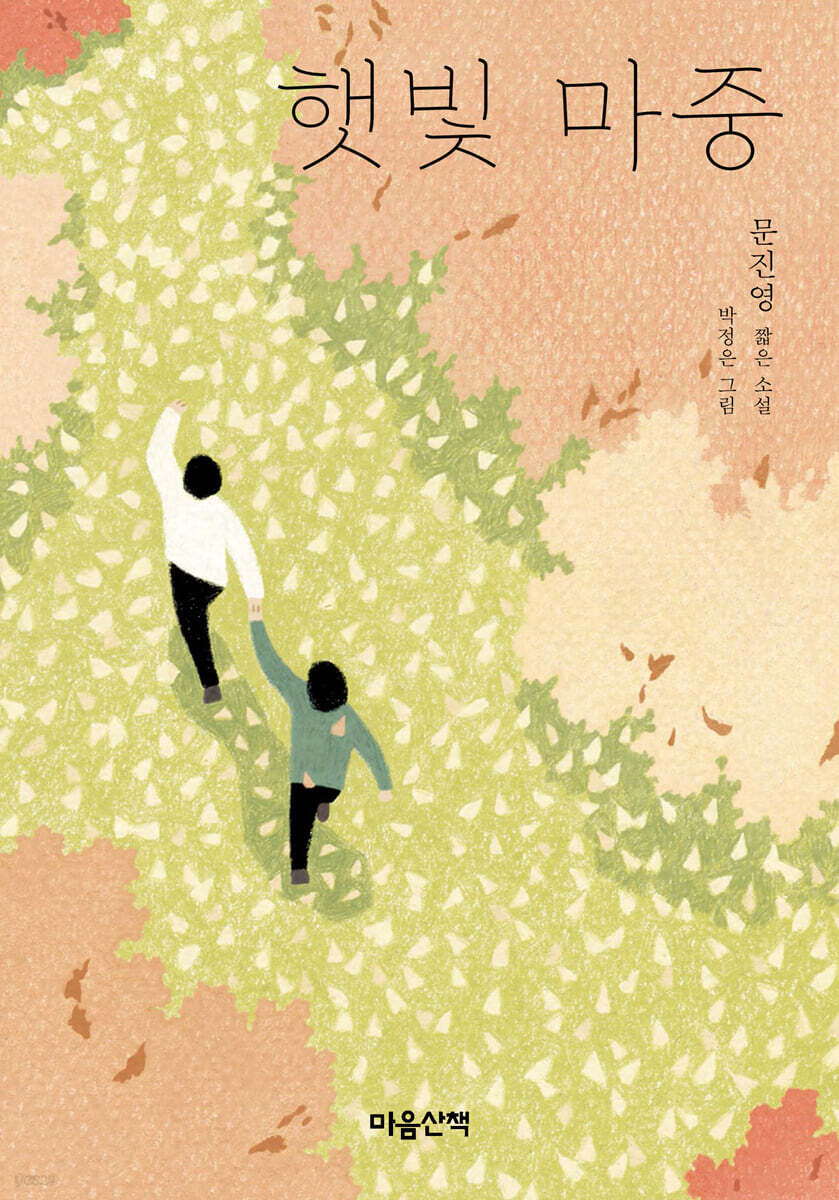
“What season are you in now?” Beyond the night time towards the sunlight Moon Jin-young's first short story, which delicately examines the faces of everyday life. With the comment that “this result was a refreshing shock even to the judges,” the first short story collection, “Welcoming the Sunlight,” by author Jinyoung Moon, winner of the 2021 Kim Seung-ok Literary Award, has been published. This is the third book after 『Time of a Cigarette』 and 『Winter in the Snow』, and contains 30 short stories that have been sculpted over a long period of time. Moon Jin-young's novels, which "know how to embrace both darkness and sunlight and create patterns for one's own life" (Lim Gyu-chan, literary critic), cross the boundaries between reality and imagination and create their own shadows. This is also a movement to recognize another being in a silhouette that appears as a single shadow, perfectly overlapping. According to the author, this novel, dyed in various colors, is looking into each and every one of us. “Because every human being is strange in his own way. The seasons pass through each person and become strangely beautiful. “Like light passing through a prism, in countless colorful colors with no boundaries.” Furthermore, 『Welcoming the Sunshine』 is unique from the start, as it stems from a 13-year friendship with the artist who drew the picture, Park Jeong-eun. Park Jeong-eun, who designed all of Moon Jin-young's previous book covers, worked even more actively on this collection of short stories. When writer Moon Jin-young writes, writer Park Jeong-eun reads the text and adds her interpretation to complete the picture. When you open the book, you will see a beautiful landscape where the imaginations of the two authors meet. What season are you in now? Is it okay? Asking quietly. And listening. Meanwhile, I feel as if I am going to greet the sunlight. If you listen closely for a long time, you can finally begin to vaguely see the shape of someone's heart. As the night sky gradually brightens. -From the author's note |
- You can preview some of the book's contents.
Preview
index
Author's Note
Such a nice person
Tomatoes and cacti
Waiting for a smile
Ex-girlfriend Club
Jimin and I
Cherry Blossom Ending
To the west
At the yoga studio
Turn around twice and come back to the same place
Just a person, foolishly
The disappearance of spring
For one summer
The road to Eun-gak-sa
Women of the Arctic
Nemi
Whale cry
Elephant
The seasons have nothing to do with us
It's dawn here now.
Love in the Vacant Lot
hey
birthday party
Shell Tomb
Elephant's Ecstasy
Spring days are passing by
We follow our own path
Welcome the Sunshine
At the zoo
Chief Jeong of the Round Table
Peter Pan
What holiday
Meteorite hunting
Problem solver
Eyebrow moon
Such a nice person
Tomatoes and cacti
Waiting for a smile
Ex-girlfriend Club
Jimin and I
Cherry Blossom Ending
To the west
At the yoga studio
Turn around twice and come back to the same place
Just a person, foolishly
The disappearance of spring
For one summer
The road to Eun-gak-sa
Women of the Arctic
Nemi
Whale cry
Elephant
The seasons have nothing to do with us
It's dawn here now.
Love in the Vacant Lot
hey
birthday party
Shell Tomb
Elephant's Ecstasy
Spring days are passing by
We follow our own path
Welcome the Sunshine
At the zoo
Chief Jeong of the Round Table
Peter Pan
What holiday
Meteorite hunting
Problem solver
Eyebrow moon
Detailed image

Into the book
The seasons pass through each human being in different ways.
Because every human being is strange in their own way.
The seasons pass through each person and become strangely beautiful.
Like light passing through a prism, in countless colorful colors with no boundaries.
I think that's why I read and write novels.
I like looking into the mind of a person in a certain space and time.
Whether in life or in writing, it's a difficult task for me, as I'm dull and impatient, but that's why it's worth trying.
---From the author's note
She said.
The reason why he is called 'Tomato' is because 'Tomato' is 'Tomato' whether read forward or backward.
He said he wanted to become a person who is always the same.
He also said that just as it is ambiguous whether a tomato is a vegetable or a fruit, he wants to be someone who cannot be defined by just one thing.
It seemed nice to hear someone with gray hair say that they wanted to be like that.
Everyone, including me, said that we were like this and this kind of person, that we lived like this and that's why we became like this, so we no longer dreamed of becoming something else.
---From "Tomato and Cactus"
Just as there are moments when we discover a sparkle in a child's diary, we always end up finding something wonderful in each other's poetry.
And I'm more pleased with myself for discovering it than with whoever wrote it.
Was that some kind of therapy?
---From "Tomato and Cactus"
At that moment, a corner of my heart felt a pang, because I had the contradictory thought that someone's harmlessness could hurt someone else.
And it's no one's fault.
That made me sad somehow.
---From "Waiting for a Smile"
Oh, we wanted to rise up.
We were pointing guns at each other without even knowing how to shoot.
---From "Jimin and I"
Florigen.
The name of the hormone that causes flowers to bloom.
You once told me that it had a name long ago, but it took 70 years to reveal its existence.
But it didn't tell me what makes the flowers bloom.
---From "The Disappearance of Spring"
Why does something that was once so clearly in full bloom disappear as if it never existed?
Who decides the ending?
If the end is not a point like a period, but a line with another beginning and end hanging on either end, then if the end doesn't end, is it really the end?
---From "The Disappearance of Spring"
When this rain stops, winter will come.
As I endure these difficult times, I will have to recall more faces.
Summer is still far away.
---From "For One Summer"
The clouds passed quickly, very quickly.
One season was passing the next at a rapid pace, and we were left alone.
Without overtaking anything, and without being overtaken by anything.
I often felt depressed when we were together.
The world shook and sparkled as if looking up from underwater.
We sank deeper and deeper, and eventually the clouds and sunlight were nothing but particles of light that drifted over us in a hazy haze.
---From "Whale Cry"
Suddenly, I looked down and saw only one shadow.
I was so scared because I felt so alone for a moment, because I felt like you had disappeared.
I quickly turned around and you were there, and I realized that our shadows were just overlapping.
The relief I felt at that moment was so solid and certain that I could almost touch it.
---From "It's Dawn Here"
Yoon attacked Mi-kyung as if he was going to fight despite both praise and criticism, and so he ended up holding something similar to a grudge against her, who ended up not saying anything.
In fact, it might have been a grudge against oneself.
---From "The Shell Grave"
Now that I think about it, my grandmother was the youngest at that time.
In just a little while, I will be the same age as the grandmother who took care of her young granddaughter alone.
Of course, I don't have children or grandchildren, but I can vaguely imagine how difficult it is to feed, clothe, and raise another being.
Being a mature adult to someone is something that is difficult to achieve no matter how old you get.
---From "Spring Days Are Passing"
In the darkness, everyone continued to circle their own orbits, over and over again.
I thought that this almost boring, recurring cycle of orbits was the way of the universe.
So, there's no need to be so puzzled or unhappy that our days repeat similar patterns.
I thought we could just circle this universe endlessly, following our own orbit, until we met a satellite like the moon and went with it until the very end.
Because every human being is strange in their own way.
The seasons pass through each person and become strangely beautiful.
Like light passing through a prism, in countless colorful colors with no boundaries.
I think that's why I read and write novels.
I like looking into the mind of a person in a certain space and time.
Whether in life or in writing, it's a difficult task for me, as I'm dull and impatient, but that's why it's worth trying.
---From the author's note
She said.
The reason why he is called 'Tomato' is because 'Tomato' is 'Tomato' whether read forward or backward.
He said he wanted to become a person who is always the same.
He also said that just as it is ambiguous whether a tomato is a vegetable or a fruit, he wants to be someone who cannot be defined by just one thing.
It seemed nice to hear someone with gray hair say that they wanted to be like that.
Everyone, including me, said that we were like this and this kind of person, that we lived like this and that's why we became like this, so we no longer dreamed of becoming something else.
---From "Tomato and Cactus"
Just as there are moments when we discover a sparkle in a child's diary, we always end up finding something wonderful in each other's poetry.
And I'm more pleased with myself for discovering it than with whoever wrote it.
Was that some kind of therapy?
---From "Tomato and Cactus"
At that moment, a corner of my heart felt a pang, because I had the contradictory thought that someone's harmlessness could hurt someone else.
And it's no one's fault.
That made me sad somehow.
---From "Waiting for a Smile"
Oh, we wanted to rise up.
We were pointing guns at each other without even knowing how to shoot.
---From "Jimin and I"
Florigen.
The name of the hormone that causes flowers to bloom.
You once told me that it had a name long ago, but it took 70 years to reveal its existence.
But it didn't tell me what makes the flowers bloom.
---From "The Disappearance of Spring"
Why does something that was once so clearly in full bloom disappear as if it never existed?
Who decides the ending?
If the end is not a point like a period, but a line with another beginning and end hanging on either end, then if the end doesn't end, is it really the end?
---From "The Disappearance of Spring"
When this rain stops, winter will come.
As I endure these difficult times, I will have to recall more faces.
Summer is still far away.
---From "For One Summer"
The clouds passed quickly, very quickly.
One season was passing the next at a rapid pace, and we were left alone.
Without overtaking anything, and without being overtaken by anything.
I often felt depressed when we were together.
The world shook and sparkled as if looking up from underwater.
We sank deeper and deeper, and eventually the clouds and sunlight were nothing but particles of light that drifted over us in a hazy haze.
---From "Whale Cry"
Suddenly, I looked down and saw only one shadow.
I was so scared because I felt so alone for a moment, because I felt like you had disappeared.
I quickly turned around and you were there, and I realized that our shadows were just overlapping.
The relief I felt at that moment was so solid and certain that I could almost touch it.
---From "It's Dawn Here"
Yoon attacked Mi-kyung as if he was going to fight despite both praise and criticism, and so he ended up holding something similar to a grudge against her, who ended up not saying anything.
In fact, it might have been a grudge against oneself.
---From "The Shell Grave"
Now that I think about it, my grandmother was the youngest at that time.
In just a little while, I will be the same age as the grandmother who took care of her young granddaughter alone.
Of course, I don't have children or grandchildren, but I can vaguely imagine how difficult it is to feed, clothe, and raise another being.
Being a mature adult to someone is something that is difficult to achieve no matter how old you get.
---From "Spring Days Are Passing"
In the darkness, everyone continued to circle their own orbits, over and over again.
I thought that this almost boring, recurring cycle of orbits was the way of the universe.
So, there's no need to be so puzzled or unhappy that our days repeat similar patterns.
I thought we could just circle this universe endlessly, following our own orbit, until we met a satellite like the moon and went with it until the very end.
---From "Eyebrow Moon"
Publisher's Review
The colorful aspects of relationships and
A story told through an unusual time and space
The book is divided into four chapters, and the theme that runs through the stories in the first chapter is 'relationships.'
The first novel, "The Tomato and the Cactus," depicts two people who meet at a poetry class held at the local library.
After retirement, 'I' (Cactus) takes a poetry class that he had always dreamed of, and there he meets Tomato.
He is the type of person who says, "I want to be like that," while most middle-aged students, during self-introduction time, say, "That's how it has been," explaining their own lives.
The two share a feeling of sympathy while drinking coffee or eating sundae soup.
In the novels that follow, the following themes unfold:
The contradictory idea that the harmlessness of a 'too nice person' can hurt someone ("Waiting for a Smile"), the strange feelings I, Ki-hoon's ex-girlfriend, have for his other ex-girlfriend ("Ex-Girlfriends Club"), the timing that goes wrong between long-time lovers ("Cherry Blossom Ending"), and the lives of two same-age friends who have lived as each other's 'daughters-in-law' ("Jimin and I").
Among those series of relationships, the particularly cheerful gaze stops at ‘the yoga studio.’
Two friends who met again at a yoga studio after a long time confess to each other that they thought they knew how to live 'a little differently'.
A scene from their college days where they fell into a dirty pond and burst into laughter flashes past the confession ("At the Yoga Center").
She said.
The reason why he is called 'Tomato' is because 'Tomato' is 'Tomato' whether read forward or backward.
He said he wanted to become a person who is always the same.
He also said that just as it is ambiguous whether a tomato is a vegetable or a fruit, he wants to be someone who cannot be defined by just one thing.
It seemed nice to hear someone with gray hair say that they wanted to be like that.
Everyone, including me, said that we were like this and this kind of person, that we lived like this and that's why we became like this, so we no longer dreamed of becoming something else.
―From "Tomatoes and Cacti," page 20
The second chapter's time and space move from familiar alleys to the beach, travel destinations, and the stairs of a central station in a foreign country.
These are stories written “about things that clearly exist and sway in the streets at night where there is no one and everything seems to have stopped.”
The rich and beautiful sentences revealed among them present us with a sight we have never seen before.
Especially after reading the three consecutive chapters in the latter half, you can fully enjoy the feeling of “thick clouds” “rising from above and spreading across the entire village” (Nemi).
We perceive all the tender movements, as if “resisting the speed of time” (“Elephant”), like a herd of elephants slowly walking across a meadow at dusk, rippling and scattering, “as if looking up from underwater” (“Whale Cry”).
You suddenly stopped crying, got up from your seat, and slowly walked into the streetlight as if swimming.
You looked up at the streetlight, your shadow stretching out, its tip gently resting on mine, and I looked up at you.
I unconsciously reached out my hand to grasp the tip of the shadow that was touching my body.
―From "Whale Cry," p. 112
The loneliness of all living beings
And, our possible world
The stories that unfold in the third and fourth chapters contain the reality of youth that author Moon Jin-young has shown in his previous books, while also giving a glimpse of romantic loneliness.
In the title piece, "Welcoming the Sunlight," Seong-eon, who cannot sleep at night, rides his bicycle along the river every morning to get some more sleep.
“It’s to feel like something is not broken by repeatedly running the same course and falling asleep and waking up at the same time.”
Then one day, he encounters a crying man at a nearby convenience store. After a short conversation, the man gets up and starts walking, and Seong-eon follows him.
The two people sharing a cigarette look together at the brightly shining lights on the bridge.
Seong-eon, who broke up with her boyfriend, runs again.
Hehehe, I see you laughing without any reason.
The sun rises behind him as if he is going out to meet the sunlight.
Sometimes, scenes that seem like they came straight out of a fairy tale unfold.
If you follow the author's meticulous design, you will soon find yourself exploring an unknown world.
When you imagine floating in the air, you are transported to a world of 'me' where your body feels light as if you are in a state of weightlessness ("Peter Pan"), or to a village where diamond ore is falling ("Meteorite Hunting").
Doesn't it feel like Christmas?
The man said, blowing out cigarette smoke, and then laughed, "Hehehe."
“That’s right,” Seong-eon nodded.
It really was like that.
Even though I ran here every night, using that light as my destination, I felt indifferent.
I've never done it even once.
I thought it was beautiful, like a festival, or something like that.
The man took out a cigarette and handed it to Seong-eon.
Although he had quit smoking a long time ago, Seong-eon took it and put it in his mouth.
The man lit the fire.
The man who had been waiting beside Seong-eon until he finished smoking his cigarette said.
Thank you.
―From "Welcoming the Sunlight," p. 179
Following the relationships shown in previous novels, the author reveals other relationships in detail, especially those between plants and animals.
The author talks about moments that have been with us all along but we have not noticed, such as the feeling of loss and unending affection for a lost stray cat ("The Disappearance of Spring"), a story of life on the road, full of adversity and illness, written from the perspective of a stray dog ("Hey"), and memories of a polar bear seen at an old zoo.
This would be a natural movement and capture within his own unique perspective of looking into everyday scenes.
It was about a month ago that I started losing my sight.
It might have been about a year.
Mr. Kim's two legs, walking ahead, became more and more blurred as the days passed.
Finally, I ended up hitting my head on the cart.
After doing this several times, Kim finally stopped walking and came towards me.
He put both hands under my armpits and lifted me up.
He looked into my eyes for a long time.
I could only see the faint outline of his face, but I could clearly feel his warm breath touching my face in a circular motion.
He put me on the cart.
―From "Hey," page 143
A story told through an unusual time and space
The book is divided into four chapters, and the theme that runs through the stories in the first chapter is 'relationships.'
The first novel, "The Tomato and the Cactus," depicts two people who meet at a poetry class held at the local library.
After retirement, 'I' (Cactus) takes a poetry class that he had always dreamed of, and there he meets Tomato.
He is the type of person who says, "I want to be like that," while most middle-aged students, during self-introduction time, say, "That's how it has been," explaining their own lives.
The two share a feeling of sympathy while drinking coffee or eating sundae soup.
In the novels that follow, the following themes unfold:
The contradictory idea that the harmlessness of a 'too nice person' can hurt someone ("Waiting for a Smile"), the strange feelings I, Ki-hoon's ex-girlfriend, have for his other ex-girlfriend ("Ex-Girlfriends Club"), the timing that goes wrong between long-time lovers ("Cherry Blossom Ending"), and the lives of two same-age friends who have lived as each other's 'daughters-in-law' ("Jimin and I").
Among those series of relationships, the particularly cheerful gaze stops at ‘the yoga studio.’
Two friends who met again at a yoga studio after a long time confess to each other that they thought they knew how to live 'a little differently'.
A scene from their college days where they fell into a dirty pond and burst into laughter flashes past the confession ("At the Yoga Center").
She said.
The reason why he is called 'Tomato' is because 'Tomato' is 'Tomato' whether read forward or backward.
He said he wanted to become a person who is always the same.
He also said that just as it is ambiguous whether a tomato is a vegetable or a fruit, he wants to be someone who cannot be defined by just one thing.
It seemed nice to hear someone with gray hair say that they wanted to be like that.
Everyone, including me, said that we were like this and this kind of person, that we lived like this and that's why we became like this, so we no longer dreamed of becoming something else.
―From "Tomatoes and Cacti," page 20
The second chapter's time and space move from familiar alleys to the beach, travel destinations, and the stairs of a central station in a foreign country.
These are stories written “about things that clearly exist and sway in the streets at night where there is no one and everything seems to have stopped.”
The rich and beautiful sentences revealed among them present us with a sight we have never seen before.
Especially after reading the three consecutive chapters in the latter half, you can fully enjoy the feeling of “thick clouds” “rising from above and spreading across the entire village” (Nemi).
We perceive all the tender movements, as if “resisting the speed of time” (“Elephant”), like a herd of elephants slowly walking across a meadow at dusk, rippling and scattering, “as if looking up from underwater” (“Whale Cry”).
You suddenly stopped crying, got up from your seat, and slowly walked into the streetlight as if swimming.
You looked up at the streetlight, your shadow stretching out, its tip gently resting on mine, and I looked up at you.
I unconsciously reached out my hand to grasp the tip of the shadow that was touching my body.
―From "Whale Cry," p. 112
The loneliness of all living beings
And, our possible world
The stories that unfold in the third and fourth chapters contain the reality of youth that author Moon Jin-young has shown in his previous books, while also giving a glimpse of romantic loneliness.
In the title piece, "Welcoming the Sunlight," Seong-eon, who cannot sleep at night, rides his bicycle along the river every morning to get some more sleep.
“It’s to feel like something is not broken by repeatedly running the same course and falling asleep and waking up at the same time.”
Then one day, he encounters a crying man at a nearby convenience store. After a short conversation, the man gets up and starts walking, and Seong-eon follows him.
The two people sharing a cigarette look together at the brightly shining lights on the bridge.
Seong-eon, who broke up with her boyfriend, runs again.
Hehehe, I see you laughing without any reason.
The sun rises behind him as if he is going out to meet the sunlight.
Sometimes, scenes that seem like they came straight out of a fairy tale unfold.
If you follow the author's meticulous design, you will soon find yourself exploring an unknown world.
When you imagine floating in the air, you are transported to a world of 'me' where your body feels light as if you are in a state of weightlessness ("Peter Pan"), or to a village where diamond ore is falling ("Meteorite Hunting").
Doesn't it feel like Christmas?
The man said, blowing out cigarette smoke, and then laughed, "Hehehe."
“That’s right,” Seong-eon nodded.
It really was like that.
Even though I ran here every night, using that light as my destination, I felt indifferent.
I've never done it even once.
I thought it was beautiful, like a festival, or something like that.
The man took out a cigarette and handed it to Seong-eon.
Although he had quit smoking a long time ago, Seong-eon took it and put it in his mouth.
The man lit the fire.
The man who had been waiting beside Seong-eon until he finished smoking his cigarette said.
Thank you.
―From "Welcoming the Sunlight," p. 179
Following the relationships shown in previous novels, the author reveals other relationships in detail, especially those between plants and animals.
The author talks about moments that have been with us all along but we have not noticed, such as the feeling of loss and unending affection for a lost stray cat ("The Disappearance of Spring"), a story of life on the road, full of adversity and illness, written from the perspective of a stray dog ("Hey"), and memories of a polar bear seen at an old zoo.
This would be a natural movement and capture within his own unique perspective of looking into everyday scenes.
It was about a month ago that I started losing my sight.
It might have been about a year.
Mr. Kim's two legs, walking ahead, became more and more blurred as the days passed.
Finally, I ended up hitting my head on the cart.
After doing this several times, Kim finally stopped walking and came towards me.
He put both hands under my armpits and lifted me up.
He looked into my eyes for a long time.
I could only see the faint outline of his face, but I could clearly feel his warm breath touching my face in a circular motion.
He put me on the cart.
―From "Hey," page 143
GOODS SPECIFICS
- Publication date: November 5, 2022
- Format: Hardcover book binding method guide
- Page count, weight, size: 236 pages | 380g | 128*185*20mm
- ISBN13: 9788960907782
- ISBN10: 8960907782
You may also like
카테고리
korean


korean

![GQ KOREA Mark (Monthly): December [2025]](http://librairie.coreenne.fr/cdn/shop/files/8ef265dbbfbf186523ed75ba7319009d.jpg?v=1765340328&width=3840)


