

About Naju
 |
Description
Book Introduction
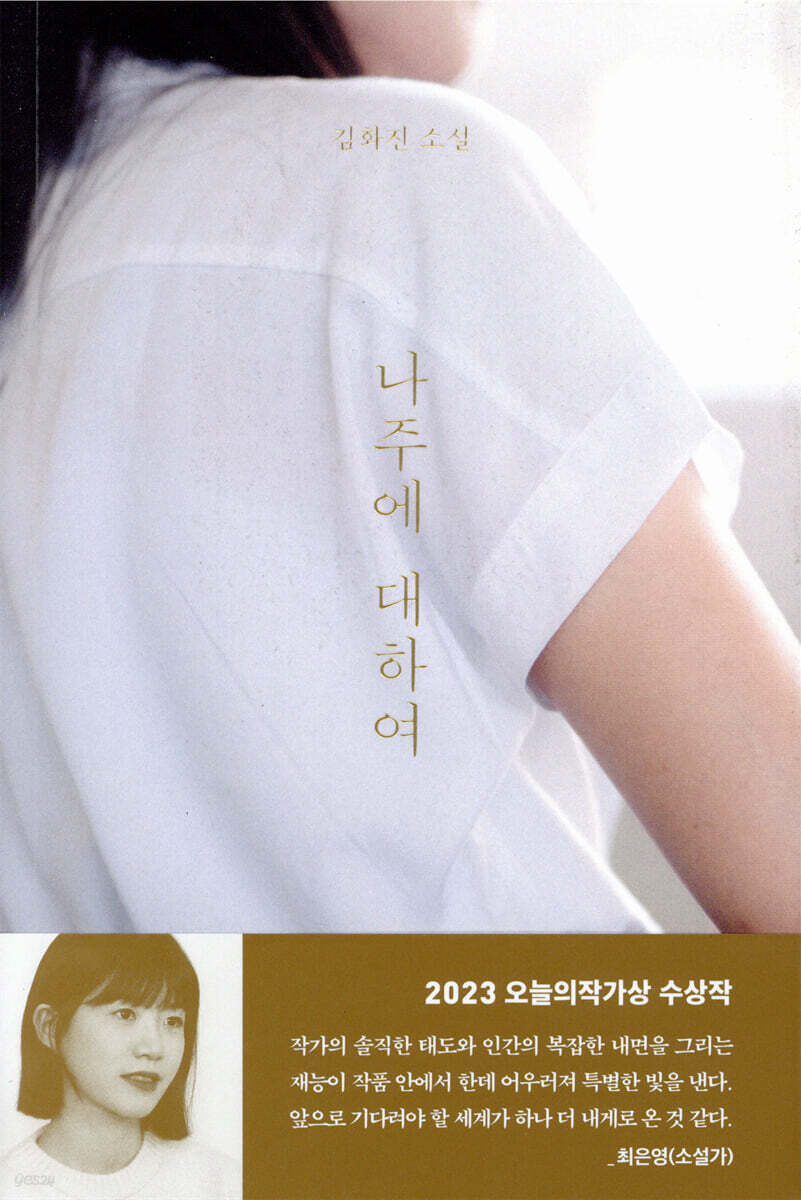
Novelist Kim Hwa-jin's first collection of short stories was published by Munhakdongne. Kim Hwa-jin, who appeared before us after being selected for the 2021 Munhwa Ilbo New Year’s Literary Contest, received the judges’ comment, “The sentences that described a person in detail and followed the emotional changes that followed without missing them were accurate and sometimes sharp” (Gu Hyo-seo, Jo Kyung-ran, Lee Gi-ho). As critic So Yoo-jeong commented, “The core of Kim Hwa-jin’s novels is, as expected, the heart and love,” he has consistently explored the unknown of “other people’s hearts” with passion since his debut, and has compiled eight works he has written without rest in less than two years. While reading 『About Naju』, I came across the acceptance speech that said, “It’s about being next to something you love. I understand his words anew, “That is all I want.” If loving something or someone is a skill, then who else does it as wholeheartedly as Kim Hwa-jin? The eight stories in "About Naju" are filled with a curiosity about others, a desire to understand them, and a desire to become like them. It all starts with liking someone. And the story goes on without stopping, by vividly depicting the sometimes ugly, often confused, sometimes crazy, sometimes heartbreaking, and mostly sad feelings that come from loving someone, without leaving anything out. In a way, these stories are a record of eight unrequited loves, but they are also a journey to discover the various forms of oneself. There are aspects of myself I didn't know I had that I could only discover by passionately loving something. So, ‘About Naju’ might be ‘About Me’. What can the heart do? No, what can the heart become? Having worked as a literary editor for many years, he has dedicated himself to the "love of literature," and now he has come closer to us to share his "love of the heart." |
- You can preview some of the book's contents.
Preview
index
New story
About Naju
Dreams and Cooking
Muscle shape
Extractor
stagnation
Easy mind
Lion of Silence
Commentary | Theory of Mind
Park Hye-jin (literary critic)
Author's Note
About Naju
Dreams and Cooking
Muscle shape
Extractor
stagnation
Easy mind
Lion of Silence
Commentary | Theory of Mind
Park Hye-jin (literary critic)
Author's Note
Into the book
I liked stories that were never finished.
It has to be completed somehow.
It should be unfinished, but it looks finished.
I liked the unfinished stories.
Because things that are not connected are not broken.
I believed that perhaps things that are unfinished last longer than those that are completed.
I'm happier when things that haven't ended revolve around me like planets.
---From "New Story"
It's really weird when you cry.
If you think about it later, you'll feel so wronged.
Cheonhee doesn't have any particular thoughts, but crying alone is really hurtful to her pride.
I thought about it again on the way home, as if I was rapping, when I broke up with Cheonhee and headed back home (I didn't go straight home, but stopped by Daiso and bought a watering can for a green onion planter).
Cheonhee wouldn't have done that.
Even if I cried, you wouldn't have found it funny or... ... you wouldn't have been offended.
And I just focused on the fact that Cheonhee was leaving.
I am sad that Cheonhee is leaving.
I could simply feel sad just thinking about that sentence.
It was the first time I realized how liberating it was to simply be able to grieve.
---From "New Story"
That people can be brought down by loving and careful words.
That was amazing.
---From "New Story"
Every time he thought, “How did it end up like this?”, Jaein would recite the words that stood out in his “Things I’ve Tried” list.
A record of independence, severance of ties, broken engagements, and broken relationships.
And I thought.
That list is about muscles, not scars.
It's not a trace left by someone harming me, it's a trace left by me using it.
---From "The Shape of Muscles"
Stamping the coupon in my heart was easier than I thought.
It's been a long time since this happened, but yeah, it always happens.
Meeting someone you like at first sight.
---From "The Exorcist"
Isn't it sometimes so scary, since one person is a world in itself? That's what Heejae said one day.
A word that is almost like a muttering.
Although she habitually agreed, Yeong-eun didn't know what it meant at the time.
It's only now, while looking at Joohyun's texts, that I realized a little bit that I didn't know.
It's really scary, Heejae.
Still, it's strange.
I wanted to keep listening to Joohyun's story and asking questions.
Still, I wanted to go out when called.
---From "The Exorcist"
If you go to Gyeongju, be sure to go inside the tomb.
In the grave?
Eun-ju added to me, who made my eyes widen.
It's Cheonmachong.
When you go in, it's amazing for a moment... ... but when you come out, it feels like nothing special.
The present's hands are trying to preserve the past, so in the end, only the present remains.
I found that really comforting.
In the end, it's now.
That shallow thing.
---From "Stagnation"
Senior, I... ...actually like people.
I like the people I like, and I like that they like me.
Even though I know that liking this kind of thing makes me feel so old-fashioned, dependent, and empty.
So, even though I try hard not to let it be known, sometimes I feel like confessing it.
It's very important to me that I like someone and that someone likes me.
I know that if I focus too much on it, it won't be good, so I keep on guard and try to balance it out with other things... But that thought stubbornly clings to me at the bottom of everything I do.
Just like the original.
---From "Easy Mind"
We can hide when we want to hide and appear when we want to appear.
I can love anytime, anywhere.
It was so easy, and at the same time, I thought, how could something so easy be so difficult?
---From "Easy Mind"
I've always been unable to predict the future.
Why are you staying in front of me instead of leaving?
When I asked Seseon, who was wiping my tears, with a worried heart, "Are you crying?", Seseon shook her head and spoke with an incomprehensible expression.
You don't cry.
It has to be completed somehow.
It should be unfinished, but it looks finished.
I liked the unfinished stories.
Because things that are not connected are not broken.
I believed that perhaps things that are unfinished last longer than those that are completed.
I'm happier when things that haven't ended revolve around me like planets.
---From "New Story"
It's really weird when you cry.
If you think about it later, you'll feel so wronged.
Cheonhee doesn't have any particular thoughts, but crying alone is really hurtful to her pride.
I thought about it again on the way home, as if I was rapping, when I broke up with Cheonhee and headed back home (I didn't go straight home, but stopped by Daiso and bought a watering can for a green onion planter).
Cheonhee wouldn't have done that.
Even if I cried, you wouldn't have found it funny or... ... you wouldn't have been offended.
And I just focused on the fact that Cheonhee was leaving.
I am sad that Cheonhee is leaving.
I could simply feel sad just thinking about that sentence.
It was the first time I realized how liberating it was to simply be able to grieve.
---From "New Story"
That people can be brought down by loving and careful words.
That was amazing.
---From "New Story"
Every time he thought, “How did it end up like this?”, Jaein would recite the words that stood out in his “Things I’ve Tried” list.
A record of independence, severance of ties, broken engagements, and broken relationships.
And I thought.
That list is about muscles, not scars.
It's not a trace left by someone harming me, it's a trace left by me using it.
---From "The Shape of Muscles"
Stamping the coupon in my heart was easier than I thought.
It's been a long time since this happened, but yeah, it always happens.
Meeting someone you like at first sight.
---From "The Exorcist"
Isn't it sometimes so scary, since one person is a world in itself? That's what Heejae said one day.
A word that is almost like a muttering.
Although she habitually agreed, Yeong-eun didn't know what it meant at the time.
It's only now, while looking at Joohyun's texts, that I realized a little bit that I didn't know.
It's really scary, Heejae.
Still, it's strange.
I wanted to keep listening to Joohyun's story and asking questions.
Still, I wanted to go out when called.
---From "The Exorcist"
If you go to Gyeongju, be sure to go inside the tomb.
In the grave?
Eun-ju added to me, who made my eyes widen.
It's Cheonmachong.
When you go in, it's amazing for a moment... ... but when you come out, it feels like nothing special.
The present's hands are trying to preserve the past, so in the end, only the present remains.
I found that really comforting.
In the end, it's now.
That shallow thing.
---From "Stagnation"
Senior, I... ...actually like people.
I like the people I like, and I like that they like me.
Even though I know that liking this kind of thing makes me feel so old-fashioned, dependent, and empty.
So, even though I try hard not to let it be known, sometimes I feel like confessing it.
It's very important to me that I like someone and that someone likes me.
I know that if I focus too much on it, it won't be good, so I keep on guard and try to balance it out with other things... But that thought stubbornly clings to me at the bottom of everything I do.
Just like the original.
---From "Easy Mind"
We can hide when we want to hide and appear when we want to appear.
I can love anytime, anywhere.
It was so easy, and at the same time, I thought, how could something so easy be so difficult?
---From "Easy Mind"
I've always been unable to predict the future.
Why are you staying in front of me instead of leaving?
When I asked Seseon, who was wiping my tears, with a worried heart, "Are you crying?", Seseon shook her head and spoke with an incomprehensible expression.
You don't cry.
---From "Easy Mind"
Publisher's Review
“Senior, I… actually like people.”
A whole heart that heads toward the unknown called others
The strange and beautiful traces left by that journey
Love is the innumerable back-and-forth movement between minds, the arduous failure to read the minds of others.
Mind reading is possible only in the vagueness of not knowing and the failure of not knowing at all.
We only love when we are in failure.
What author Kim Hwa-jin has written through eight failed novels is an unwavering passion for understanding the minds of others.
That passion takes us to a place hotter and deeper than the temperature of our yearning hearts.
_Park Hye-jin, in the commentary
“I liked that I didn’t know that person at all.
Something I don't know and something I don't know.
Even if you know one thing, the next one doesn't accumulate.
It was a pleasure to know such a person.
No, I enjoyed not knowing.”
"New Story," which opens the book, presents us with a rare and fantastical imagination among Kim Hwa-jin's novels, showing us specifically what "loving heart" can become.
Jin-ah, who draws cartoons, likes Cheon-hee, whom she met at a movie screening at a vintage clothing store.
Jin-ah gradually begins to like Cheon-hee, who is somewhat suspicious and “a mysterious person,” but “even his decibel level matches mine.”
However, Jin-ah suffers the “most stylish heartbreak of her life” when Cheon-hee leaves for Tokyo, leaving behind only a pot of green onions as a gift, saying she will open a clothing store.
But the wave that Cheon-hee left behind suddenly starts talking to Jin-ah.
Jin-ah often talks to Pa and gradually learns how to live with him.
Then one day, Cheon-hee, who is selling, reveals the unexpected truth that he is not a human but a mallard that became human because he loves Jin-ah. Jin-ah goes to Bulkwangcheon where Cheon-hee is to meet him again.
"Bird Story," a somewhat cute short story, seems to be laying the groundwork for the stories that will unfold from now on, depicting a duck that becomes human just by longing to see it, and the irony of a person falling apart with affectionate and careful words, showing us how far love can reach.
In "About Naju," Kim Dan observes Naju, the ex-girlfriend of his deceased lover Gyuhee, while working at the same company.
Kim Dan gets to know Naju inside and out through social media such as blogs, Instagram, and Twitter.
If you like someone, does their heart become similar to yours? Or do you end up liking someone because you have a similar heart?
The two of them are getting closer and closer and “Why do I keep wanting to like you so much?
Kim Dan becomes so attached to Naju that he asks himself, “What is this childish feeling that makes me unable to learn without bragging that I know you?”
However, for Kim Dan, his relationship with Naju is a constant reminder of his relationship with Gyuhee, and it is also a matter of accepting the pain that comes from that.
In this way, the mourning and longing for Gyu-hee, the unknown curiosity, hatred, and affection for Na-ju are mixed together to form a heart that takes on an unfamiliar color and shape.
So when Naju learns of Gyuhee's death and disappears, Kim Dan's heart finally turns completely to Naju's well-being.
"About Naju" depicts the new relationship customs of the present age by capturing the diverse relationships that arise from one relationship and the various ties of one person that unfold in various directions through different media of expression.
This sensibility in portraying the current generation is another characteristic that can be seen in Kim Hwa-jin's work, which closely corresponds to the times.
“Why is that fun?
“It’s about looking closely at people who are different from me.”
‘Liking’ is not one heart.
The burning desire for someone is like a kaleidoscope that generates a spectrum of countless emotions.
In the heart of love, there is a heart of longing, a heart of affection, and a heart of hate.
Jealousy, fear, sadness, and regret.
Kim Hwa-jin, the “genius of unrequited love” (Park Hye-jin, commentary), unfolds various stories with the main theme of “heart directed toward the other person.”
In "Dreams and Cooking," Su-eon and Sol-ji, who had treated each other with a mixture of longing, jealousy, and affection from afar and close at the same time during their college years, meet again in society and confess their unspoken feelings, hurting each other and growing at the same time. In "The Discharge Machine," Yeong-eun, who is about to have surgery for a cholesteatoma in her ear, shares her feelings with Joo-hyun, who has become a man through sex reassignment surgery, but realizes that they cannot be completely responsible for each other and painfully changes her heart.
The story of Eun-ju, who is hurt after seeing her lover's text messages about herself and her ex-lover, and Eugene, who looks at her longingly ("Stagnation"), and the story of "I", a lesbian with a prejudice against "normal people," who is torn between admiration and jealousy for the "elegant" Hyeon-jeong who carries a Chanel bag, and then realizes that the easiest feeling is love ("Easy Heart") vividly depict the "chaotic hearts" (Park Hye-jin, commentary) created by passion for someone.
The heart is not always round and soft, so sometimes the sharp edges of the heart collide with each other, leaving scars.
But such scars do not only leave behind pain and scars.
In "The Shape of Muscles," Jae-in, who wrote "broken engagement" on her "things I've done" list after breaking up with her boyfriend with whom she had talked about marriage, does not distinguish between good and bad things.
For her, everything from fighting illness and surgery, to breaking up with someone or breaking up a relationship, to becoming independent or breaking up an engagement all fall into the category of 'experienced'.
And through Pilates, which Jaein started to recover her body that had somehow become worn out, she comes to the discovery that even the experiences that had hurt her were not things she had lost but things she had gained, and that what they left behind were not wounds but muscles of the heart.
The ending, where growth ultimately comes through wounds, can also be found in "The Silent Lion," which features a fantastical being, as a pair with "The New Story," which opened the first chapter of "About Naju."
One day, a 'lion', who is both friendly and fearful, appears in front of Suyeon, who is living with a hurt heart due to malicious comments.
The scene where the lion, who had been silently circling around Suyeon at every moment of her daily life, says, “I’m not coming anymore,” only after Suyeon has gathered her strength to pull herself together and stand up again, and Suyeon responds, “It’s okay,” conveys quiet comfort and courage to us.
An honest gaze that sincerely considers the hearts of others and myself
The virtues of Kim Hwa-jin's novels include vivid characters, a sense of connection with the times, and heartwarming, endearing stories, but above all, they are honesty.
But what is honesty in a novel?
Couldn't it be said that it is a gaze that looks at oneself honestly and without prejudice?
Honesty is not a way of expression, but a way of observation.
A sincere and unadorned heart that wants to reach the hearts of others, a slightly cold heart that looks at myself accurately.
Reading Kim Hwa-jin's novels, you will encounter not only warm comfort but also sharp reflections.
Kim Hwa-jin's speaker ultimately looks at himself through others.
As the saying goes, “The question, ‘Who was I?’ was always followed by the question, ‘Who was I with?’” (from “Easy Heart”), the desire to reach out to others ultimately leads to reaching out to oneself.
Kim Hwa-jin writes novels while looking into himself, “because I am the most curious.”
The various shapes of hearts we encounter while reading 『About Naju』 may ultimately be the shapes of our own hearts.
I feel strangely happy when I write about ugly thoughts.
It's nice to be able to write about it honestly and not avoid it.
I usually live my life without confidence or courage, but when I write a novel, I feel courageous.
You can feel this way.
Confidence also arises.
I'm going to write it like this.
Novels give me that.
It makes possible things that were previously given up on.
I've always hated my soft texture that changes depending on the situation, but when I write a novel, I seem to become a little more solid.
I love this solidity that the novel has brought me. _From the author's note
A whole heart that heads toward the unknown called others
The strange and beautiful traces left by that journey
Love is the innumerable back-and-forth movement between minds, the arduous failure to read the minds of others.
Mind reading is possible only in the vagueness of not knowing and the failure of not knowing at all.
We only love when we are in failure.
What author Kim Hwa-jin has written through eight failed novels is an unwavering passion for understanding the minds of others.
That passion takes us to a place hotter and deeper than the temperature of our yearning hearts.
_Park Hye-jin, in the commentary
“I liked that I didn’t know that person at all.
Something I don't know and something I don't know.
Even if you know one thing, the next one doesn't accumulate.
It was a pleasure to know such a person.
No, I enjoyed not knowing.”
"New Story," which opens the book, presents us with a rare and fantastical imagination among Kim Hwa-jin's novels, showing us specifically what "loving heart" can become.
Jin-ah, who draws cartoons, likes Cheon-hee, whom she met at a movie screening at a vintage clothing store.
Jin-ah gradually begins to like Cheon-hee, who is somewhat suspicious and “a mysterious person,” but “even his decibel level matches mine.”
However, Jin-ah suffers the “most stylish heartbreak of her life” when Cheon-hee leaves for Tokyo, leaving behind only a pot of green onions as a gift, saying she will open a clothing store.
But the wave that Cheon-hee left behind suddenly starts talking to Jin-ah.
Jin-ah often talks to Pa and gradually learns how to live with him.
Then one day, Cheon-hee, who is selling, reveals the unexpected truth that he is not a human but a mallard that became human because he loves Jin-ah. Jin-ah goes to Bulkwangcheon where Cheon-hee is to meet him again.
"Bird Story," a somewhat cute short story, seems to be laying the groundwork for the stories that will unfold from now on, depicting a duck that becomes human just by longing to see it, and the irony of a person falling apart with affectionate and careful words, showing us how far love can reach.
In "About Naju," Kim Dan observes Naju, the ex-girlfriend of his deceased lover Gyuhee, while working at the same company.
Kim Dan gets to know Naju inside and out through social media such as blogs, Instagram, and Twitter.
If you like someone, does their heart become similar to yours? Or do you end up liking someone because you have a similar heart?
The two of them are getting closer and closer and “Why do I keep wanting to like you so much?
Kim Dan becomes so attached to Naju that he asks himself, “What is this childish feeling that makes me unable to learn without bragging that I know you?”
However, for Kim Dan, his relationship with Naju is a constant reminder of his relationship with Gyuhee, and it is also a matter of accepting the pain that comes from that.
In this way, the mourning and longing for Gyu-hee, the unknown curiosity, hatred, and affection for Na-ju are mixed together to form a heart that takes on an unfamiliar color and shape.
So when Naju learns of Gyuhee's death and disappears, Kim Dan's heart finally turns completely to Naju's well-being.
"About Naju" depicts the new relationship customs of the present age by capturing the diverse relationships that arise from one relationship and the various ties of one person that unfold in various directions through different media of expression.
This sensibility in portraying the current generation is another characteristic that can be seen in Kim Hwa-jin's work, which closely corresponds to the times.
“Why is that fun?
“It’s about looking closely at people who are different from me.”
‘Liking’ is not one heart.
The burning desire for someone is like a kaleidoscope that generates a spectrum of countless emotions.
In the heart of love, there is a heart of longing, a heart of affection, and a heart of hate.
Jealousy, fear, sadness, and regret.
Kim Hwa-jin, the “genius of unrequited love” (Park Hye-jin, commentary), unfolds various stories with the main theme of “heart directed toward the other person.”
In "Dreams and Cooking," Su-eon and Sol-ji, who had treated each other with a mixture of longing, jealousy, and affection from afar and close at the same time during their college years, meet again in society and confess their unspoken feelings, hurting each other and growing at the same time. In "The Discharge Machine," Yeong-eun, who is about to have surgery for a cholesteatoma in her ear, shares her feelings with Joo-hyun, who has become a man through sex reassignment surgery, but realizes that they cannot be completely responsible for each other and painfully changes her heart.
The story of Eun-ju, who is hurt after seeing her lover's text messages about herself and her ex-lover, and Eugene, who looks at her longingly ("Stagnation"), and the story of "I", a lesbian with a prejudice against "normal people," who is torn between admiration and jealousy for the "elegant" Hyeon-jeong who carries a Chanel bag, and then realizes that the easiest feeling is love ("Easy Heart") vividly depict the "chaotic hearts" (Park Hye-jin, commentary) created by passion for someone.
The heart is not always round and soft, so sometimes the sharp edges of the heart collide with each other, leaving scars.
But such scars do not only leave behind pain and scars.
In "The Shape of Muscles," Jae-in, who wrote "broken engagement" on her "things I've done" list after breaking up with her boyfriend with whom she had talked about marriage, does not distinguish between good and bad things.
For her, everything from fighting illness and surgery, to breaking up with someone or breaking up a relationship, to becoming independent or breaking up an engagement all fall into the category of 'experienced'.
And through Pilates, which Jaein started to recover her body that had somehow become worn out, she comes to the discovery that even the experiences that had hurt her were not things she had lost but things she had gained, and that what they left behind were not wounds but muscles of the heart.
The ending, where growth ultimately comes through wounds, can also be found in "The Silent Lion," which features a fantastical being, as a pair with "The New Story," which opened the first chapter of "About Naju."
One day, a 'lion', who is both friendly and fearful, appears in front of Suyeon, who is living with a hurt heart due to malicious comments.
The scene where the lion, who had been silently circling around Suyeon at every moment of her daily life, says, “I’m not coming anymore,” only after Suyeon has gathered her strength to pull herself together and stand up again, and Suyeon responds, “It’s okay,” conveys quiet comfort and courage to us.
An honest gaze that sincerely considers the hearts of others and myself
The virtues of Kim Hwa-jin's novels include vivid characters, a sense of connection with the times, and heartwarming, endearing stories, but above all, they are honesty.
But what is honesty in a novel?
Couldn't it be said that it is a gaze that looks at oneself honestly and without prejudice?
Honesty is not a way of expression, but a way of observation.
A sincere and unadorned heart that wants to reach the hearts of others, a slightly cold heart that looks at myself accurately.
Reading Kim Hwa-jin's novels, you will encounter not only warm comfort but also sharp reflections.
Kim Hwa-jin's speaker ultimately looks at himself through others.
As the saying goes, “The question, ‘Who was I?’ was always followed by the question, ‘Who was I with?’” (from “Easy Heart”), the desire to reach out to others ultimately leads to reaching out to oneself.
Kim Hwa-jin writes novels while looking into himself, “because I am the most curious.”
The various shapes of hearts we encounter while reading 『About Naju』 may ultimately be the shapes of our own hearts.
I feel strangely happy when I write about ugly thoughts.
It's nice to be able to write about it honestly and not avoid it.
I usually live my life without confidence or courage, but when I write a novel, I feel courageous.
You can feel this way.
Confidence also arises.
I'm going to write it like this.
Novels give me that.
It makes possible things that were previously given up on.
I've always hated my soft texture that changes depending on the situation, but when I write a novel, I seem to become a little more solid.
I love this solidity that the novel has brought me. _From the author's note
GOODS SPECIFICS
- Publication date: October 26, 2022
- Page count, weight, size: 312 pages | 366g | 133*200*30mm
- ISBN13: 9788954688994
- ISBN10: 8954688993
You may also like
카테고리
korean


korean

![GQ KOREA Mark (Monthly): December [2025]](http://librairie.coreenne.fr/cdn/shop/files/8ef265dbbfbf186523ed75ba7319009d.jpg?v=1765340328&width=3840)


