

Billy Summers Set
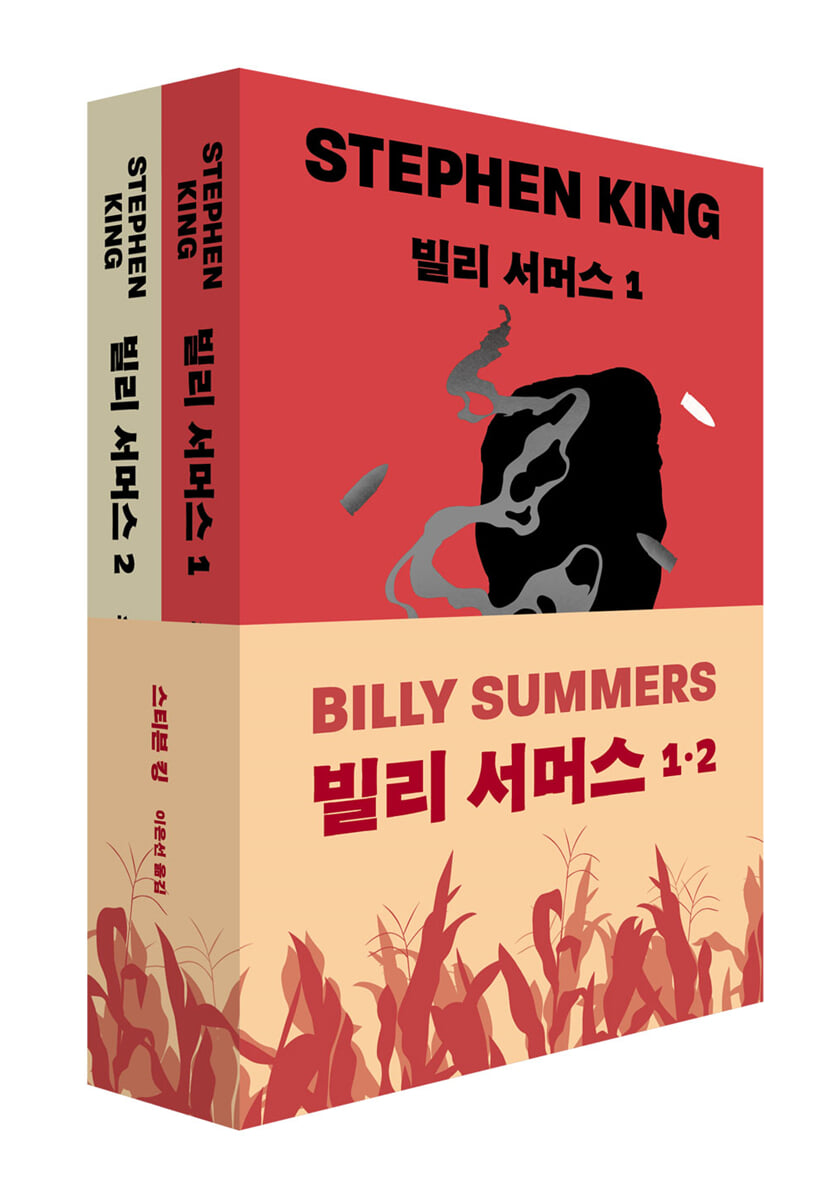 |
Description
Book Introduction
- A word from MD
-
Stephen King's noir thrillerBilly Summers, an assassin nearing retirement, receives one last request.
A request to kill a man who is imprisoned and awaiting trial for murder.
Billy settles down in a nearby town as a potential writer to deal with his subjects, and the writing he begins to write for cover draws out his past.
What lies at the end of a commission that hides a conspiracy?
September 23, 2022. Novel/Poetry PD Park Hyung-wook
Everyone has a story they want to write.
Even to an assassin who has played the fool his entire life.
A new hard-boiled noir thriller from the king of stories, Stephen King!
Stephen King's novel, Billy Summers, a tale of revenge and redemption surrounding the final commission of an assassin who turns author, has been published by Golden Bough.
Amidst the tense suspense of a cat-and-mouse chase involving an assassination request, a contract killer who has been hiding his intelligence and acting as a fake identity discovers himself through writing and is reborn as a true writer, a thrilling "story within a story" unfolds.
Stephen King's hard-boiled noir thriller, which completely excludes the horror and occult elements that would be familiar to his avid readers, immediately rose to the top of the New York Times bestseller list and received praise such as "a work that demonstrates unwavering energy and confidence" (New York Times) and "an ambitious, restrained, and powerful transformation" (Wall Street Journal), showing off his prolific creative power even in his mid-70s.
J., who produced the drama "Castle Rock" based on Stephen King's worldview.
J. Abrams' Bad Robot Productions is developing a dramatization.
Even to an assassin who has played the fool his entire life.
A new hard-boiled noir thriller from the king of stories, Stephen King!
Stephen King's novel, Billy Summers, a tale of revenge and redemption surrounding the final commission of an assassin who turns author, has been published by Golden Bough.
Amidst the tense suspense of a cat-and-mouse chase involving an assassination request, a contract killer who has been hiding his intelligence and acting as a fake identity discovers himself through writing and is reborn as a true writer, a thrilling "story within a story" unfolds.
Stephen King's hard-boiled noir thriller, which completely excludes the horror and occult elements that would be familiar to his avid readers, immediately rose to the top of the New York Times bestseller list and received praise such as "a work that demonstrates unwavering energy and confidence" (New York Times) and "an ambitious, restrained, and powerful transformation" (Wall Street Journal), showing off his prolific creative power even in his mid-70s.
J., who produced the drama "Castle Rock" based on Stephen King's worldview.
J. Abrams' Bad Robot Productions is developing a dramatization.
- You can preview some of the book's contents.
Preview
index
Billy Summers 1
Chapter 11
Chapter 2:32
Chapter 3, 58
Chapter 4, 86
Chapter 5, 113
Chapter 6, 163
Chapter 7, 185
Chapter 8, 209
Chapter 9, 245
Chapter 10, 274
Chapter 11 300
Chapter 12, 334
Chapter 13, 380
Billy Summers 2
Chapter 14, Chapter 7
Chapter 15:49
Chapter 16:77
Chapter 17: 122
Chapter 18, 166
Chapter 19 200
Chapter 20, 234
Chapter 21, 277
Chapter 22, 309
Chapter 23, 339
Chapter 24, 381
Acknowledgements 420
Chapter 11
Chapter 2:32
Chapter 3, 58
Chapter 4, 86
Chapter 5, 113
Chapter 6, 163
Chapter 7, 185
Chapter 8, 209
Chapter 9, 245
Chapter 10, 274
Chapter 11 300
Chapter 12, 334
Chapter 13, 380
Billy Summers 2
Chapter 14, Chapter 7
Chapter 15:49
Chapter 16:77
Chapter 17: 122
Chapter 18, 166
Chapter 19 200
Chapter 20, 234
Chapter 21, 277
Chapter 22, 309
Chapter 23, 339
Chapter 24, 381
Acknowledgements 420
Publisher's Review
The jinx of "one last hit" faced by an assassin nearing retirement
If noir is a genre, 'The Last Gamble' is a subgenre.
In those movies, the last one always ends up being a problem.
Billy is not a thief, he doesn't work with gangsters, and he's not superstitious, but he still gets nervous about the words "one last gamble."_From the text
Forty-four-year-old hitman Billy Summers, who has successfully completed seventeen jobs targeting "bad guys," longs to retire from the world of crime.
However, for a large sum of money that cannot be refused, a request comes in to kill a man who is imprisoned and about to stand trial for murder.
To deal with the sniper, you must lie in wait in a nearby town until the trial date, and the cover identity you have prepared for this is that of a prospective writer.
Billy, who knew the settings of his favorite comic book series by heart and studied the works of Émile Zola, William Faulkner, and Charles Dickens, but who thoroughly presented himself as a dull character called "Stupid Billy" when dealing with clients, was completely unwilling to do this.
However, the diary he began writing to create a perfect disguise gradually awakens buried traumas, from the memory of his 'first murder' to the horrors he witnessed in Iraq during his time in the military.
As Billy becomes more serious about writing than anything else, a hidden conspiracy behind the commission begins to threaten him.
And Billy's 'last gamble', which was off from the start, starts to run in another direction due to the first 'reader' he coincidentally meets during the escape process.
The best Stephen King writing guide since "On Writing"
Stephen King has featured characters who are writers in many of his works, including Misery, Finders Keepers, and It, and his one and only writing guide, On Writing, is always on the must-read list for aspiring novelists.
Billy Summers, which tells the story of a man who loved books but had no affinity for writing, becoming a writer, is also a novel that can be called a writing guide.
Should I change the character's name? Should I include this scene or not? In an interview with Esquire after the publication of "Billy Summers," Stephen King reflected on the experience of writing a character's psychology, asking these questions for the first time. "It took me back to the beginning, to the freedom I felt when I realized I could really lead a story."
“The feeling that I can write a story and reveal a little bit of myself is kind of intoxicating,” he said.
This work, which begins with the rough voice of a child and gradually explores the inner self of Billy through increasingly refined language, is a "story within a story," and its moving conclusion depicts the inspiration it leaves behind. This is the highlight of this work, which allows us to glimpse Stephen King's belief in the power of writing.
This is a challenge.
Could he really write his own life from the perspective of the fictional character, Billy the Fool? It's risky, but it might be possible.
William Faulkner wrote about the idiot in The Sound and the Fury.
The same goes for Daniel Keyes's Flowers for Algernon.
There may be more._From the text
The problem is young Billy's voice.
Billy didn't intend to write with that voice, at least not consciously, but he ended up writing.
As if I was hypnotized and regressed back to that time.
Maybe that's what writing is like, if it's truly meaningful writing.
Now he knows that any writer who publishes his work is taking a risk.
It's something I didn't know about until now and never even thought about, but that's one of the reasons why writing is so fascinating.
Look at me.
I'm showing you what kind of person I am.
I took off my clothes.
Revealing myself._From the text
If noir is a genre, 'The Last Gamble' is a subgenre.
In those movies, the last one always ends up being a problem.
Billy is not a thief, he doesn't work with gangsters, and he's not superstitious, but he still gets nervous about the words "one last gamble."_From the text
Forty-four-year-old hitman Billy Summers, who has successfully completed seventeen jobs targeting "bad guys," longs to retire from the world of crime.
However, for a large sum of money that cannot be refused, a request comes in to kill a man who is imprisoned and about to stand trial for murder.
To deal with the sniper, you must lie in wait in a nearby town until the trial date, and the cover identity you have prepared for this is that of a prospective writer.
Billy, who knew the settings of his favorite comic book series by heart and studied the works of Émile Zola, William Faulkner, and Charles Dickens, but who thoroughly presented himself as a dull character called "Stupid Billy" when dealing with clients, was completely unwilling to do this.
However, the diary he began writing to create a perfect disguise gradually awakens buried traumas, from the memory of his 'first murder' to the horrors he witnessed in Iraq during his time in the military.
As Billy becomes more serious about writing than anything else, a hidden conspiracy behind the commission begins to threaten him.
And Billy's 'last gamble', which was off from the start, starts to run in another direction due to the first 'reader' he coincidentally meets during the escape process.
The best Stephen King writing guide since "On Writing"
Stephen King has featured characters who are writers in many of his works, including Misery, Finders Keepers, and It, and his one and only writing guide, On Writing, is always on the must-read list for aspiring novelists.
Billy Summers, which tells the story of a man who loved books but had no affinity for writing, becoming a writer, is also a novel that can be called a writing guide.
Should I change the character's name? Should I include this scene or not? In an interview with Esquire after the publication of "Billy Summers," Stephen King reflected on the experience of writing a character's psychology, asking these questions for the first time. "It took me back to the beginning, to the freedom I felt when I realized I could really lead a story."
“The feeling that I can write a story and reveal a little bit of myself is kind of intoxicating,” he said.
This work, which begins with the rough voice of a child and gradually explores the inner self of Billy through increasingly refined language, is a "story within a story," and its moving conclusion depicts the inspiration it leaves behind. This is the highlight of this work, which allows us to glimpse Stephen King's belief in the power of writing.
This is a challenge.
Could he really write his own life from the perspective of the fictional character, Billy the Fool? It's risky, but it might be possible.
William Faulkner wrote about the idiot in The Sound and the Fury.
The same goes for Daniel Keyes's Flowers for Algernon.
There may be more._From the text
The problem is young Billy's voice.
Billy didn't intend to write with that voice, at least not consciously, but he ended up writing.
As if I was hypnotized and regressed back to that time.
Maybe that's what writing is like, if it's truly meaningful writing.
Now he knows that any writer who publishes his work is taking a risk.
It's something I didn't know about until now and never even thought about, but that's one of the reasons why writing is so fascinating.
Look at me.
I'm showing you what kind of person I am.
I took off my clothes.
Revealing myself._From the text
GOODS SPECIFICS
- Date of issue: September 8, 2022
- Page count, weight, size: 828 pages | 140*210*60mm
- ISBN13: 9791170521891
- ISBN10: 1170521894
You may also like
카테고리
korean


korean

![GQ KOREA Mark (Monthly): December [2025]](http://librairie.coreenne.fr/cdn/shop/files/8ef265dbbfbf186523ed75ba7319009d.jpg?v=1765340328&width=3840)


