

Margo
 |
Description
Book Introduction
With the most modern and cutting-edge writers of contemporary Korean literature
[Modern Literature Pin Series] The 41st novel in the series has been published! Archivist Han Jeong-hyeon draws A scattered history gathered into a novel The 41st novel in the special feature series "Modern Literature Pin Series" of the monthly magazine "Modern Literature," which selects the most modern and cutting-edge writers of contemporary Korean literature and includes new poetry and novels, has been published. Han Jeong-hyeon's "Mago: Three Female Suspects Entangled in the Murder of Professor Yoon Bak During the US Military Government." The Korean Peninsula was in chaos after the US military government began following the defeat of Japan. This novel, which traces the murder of a university professor that became a hot topic, the events unfolding behind it, and the traces of three suspects involved, is a revised version of the novel published in the September 2021 issue of 『Modern Literature』. |
- You can preview some of the book's contents.
Preview
index
prolog.
Time when the moon rises 009
Chapter 1.
Seoul Detective 019
Chapter 2.
Cafe Songhwa 046
Chapter 3.
Joseon's Witch, Seoul's Star 065
Chapter 4.
Suspects 070
Chapter 5.
The Rose's Fault Isn't the Rose's Fault 089
Chapter 6.
Reversal 106
Chapter 7.
Margo's Voice 127
Chapter 8.
Ordinary Love, Strange Breakups 144
Epilogue.
Beyond Light, Turn Back Time 164
Commentary on the work 191
Author's Note 208
Time when the moon rises 009
Chapter 1.
Seoul Detective 019
Chapter 2.
Cafe Songhwa 046
Chapter 3.
Joseon's Witch, Seoul's Star 065
Chapter 4.
Suspects 070
Chapter 5.
The Rose's Fault Isn't the Rose's Fault 089
Chapter 6.
Reversal 106
Chapter 7.
Margo's Voice 127
Chapter 8.
Ordinary Love, Strange Breakups 144
Epilogue.
Beyond Light, Turn Back Time 164
Commentary on the work 191
Author's Note 208
Into the book
'Three female suspects kill one handsome, academic professor!!!'
At the provocative title of the extra edition, Ga-seong shook his head without realizing it.
If this was good, Ga-seong would have regularly purchased magazines like 『Myeongrang』 or 『Tourism Chosun』.
Magazines targeting women in Joseon loved publishing such gossip and ghost stories.
No, I didn't know that people might have been mistaken into thinking that women liked it because magazines covered it.
But even with that kind of stamina, I had no choice but to read this extra edition to the end today.
This was even more evident when I looked at the documents related to it.
“There’s only one male victim, but three women are suspects, and one of them has already committed suicide...”
--- p.28
“If there is a god here, it is a man and either left-wing or right-wing.
The lives of women, children, and the elderly are of no concern.
“We don’t do things like martyrdom in this Joseon land.”
--- p.129
“Unfortunately, I couldn’t kill Yunbak.
No, I couldn't kill him.
Because I don't think the invitation would want me to become a murderer.
The invitation has always been like that.
Fighting violence with violence is something only war-mongering empires do.
“I don’t like stories about men like that in novels anymore.”
Yeah, didn't he think it wouldn't be strange if one of the three of them killed Yoon Bak?
Monster? Who the hell is the monster?
Unseo, who had been lost in thought, suddenly raised his head at Erica's words.
Erica didn't kill that man?
--- p.153~154
“When the light goes out, I will come to you.”
Unseo, do you remember this story? Erica probably went to find Mr. Cho.
On the other hand, Unseo always came to find the voice first.
Now, Gaeseong was going to go find Unseo.
When we meet, I will release you from the time locked in the pocket watch.
Time has long been read by people as a regular flow, like the visible movement of the sun.
However, in the United States, he came across a book about the theory of relativity by a man named Einstein.
If what he said is true, time is not a fixed rule but a relative perspective.
Ga-seong thought that his time with Unseo would be like that too.
So, if they ever meet again, Gaseong vowed to live their own time again.
The gas went out into the street where the shells were falling.
May was the time when flowers were in full bloom on the Korean Peninsula.
At the provocative title of the extra edition, Ga-seong shook his head without realizing it.
If this was good, Ga-seong would have regularly purchased magazines like 『Myeongrang』 or 『Tourism Chosun』.
Magazines targeting women in Joseon loved publishing such gossip and ghost stories.
No, I didn't know that people might have been mistaken into thinking that women liked it because magazines covered it.
But even with that kind of stamina, I had no choice but to read this extra edition to the end today.
This was even more evident when I looked at the documents related to it.
“There’s only one male victim, but three women are suspects, and one of them has already committed suicide...”
--- p.28
“If there is a god here, it is a man and either left-wing or right-wing.
The lives of women, children, and the elderly are of no concern.
“We don’t do things like martyrdom in this Joseon land.”
--- p.129
“Unfortunately, I couldn’t kill Yunbak.
No, I couldn't kill him.
Because I don't think the invitation would want me to become a murderer.
The invitation has always been like that.
Fighting violence with violence is something only war-mongering empires do.
“I don’t like stories about men like that in novels anymore.”
Yeah, didn't he think it wouldn't be strange if one of the three of them killed Yoon Bak?
Monster? Who the hell is the monster?
Unseo, who had been lost in thought, suddenly raised his head at Erica's words.
Erica didn't kill that man?
--- p.153~154
“When the light goes out, I will come to you.”
Unseo, do you remember this story? Erica probably went to find Mr. Cho.
On the other hand, Unseo always came to find the voice first.
Now, Gaeseong was going to go find Unseo.
When we meet, I will release you from the time locked in the pocket watch.
Time has long been read by people as a regular flow, like the visible movement of the sun.
However, in the United States, he came across a book about the theory of relativity by a man named Einstein.
If what he said is true, time is not a fixed rule but a relative perspective.
Ga-seong thought that his time with Unseo would be like that too.
So, if they ever meet again, Gaseong vowed to live their own time again.
The gas went out into the street where the shells were falling.
May was the time when flowers were in full bloom on the Korean Peninsula.
--- p.186~187
Publisher's Review
Monthly Pin Novel, published by the monthly magazine 『Modern Literature』 on the 25th of every month.
〈Modern Literature Pin Series Novel Selection〉 041 published!
'History' that has not been excavated, but must be excavated
A novel that envisions the genealogy of the other side, beyond, and beside.
Han Jeong-hyeon, who won the Today's Literary Award for her first full-length novel, "Juliana Tokyo," which tells a story of violence, wounds, solidarity, and recovery set in the popular club Juliana Tokyo in the early 1990s, went on to publish a collection of eight short stories, "Girl Entertainer Lee Bona," which can be read as a series, establishing herself as a key icon in the literary world.
Han Jeong-hyeon, who brought people who were previously portrayed as marginalized characters, such as homosexuals, transgenders, and cross-dressers, to the forefront of her novels, was praised for establishing a solid “Han Jeong-hyeon Universe” in her second full-length novel, “Let Me Be Marilyn Monroe,” by “replacing the genealogy of violence in the seemingly solid capital-case history with a genealogy of love” (Kim Cho-yeop) through characters erased by mainstream history.
The recently published novel 『Mago麻姑 - Three Female Suspects Entangled in the Murder of Professor Yoon Park During the US Military Government』 (hereafter referred to as 『Mago麻姑』) is a novel that shows a more solidly expanded world within the “Han Jeong-hyeon Universe.”
As the title Mago suggests, the word 'witch', which appears in the legend of being offered as a sacrifice to light, is used as a motif that represents the weak and the minority, and gives the entire novel the color of love that 'fights violence with the power of optimism' and 'lives without forgetting someone'.
This novel, set in the chaotic Korean Peninsula immediately following the defeat of Japan and the establishment of the US military government, begins with the murder of Professor Yoon Park by US soldiers.
The US military government investigators, concerned that public opinion of the US military government would deteriorate if it was revealed that the murderer was an American soldier, tried to fabricate the case.
Because of this, three innocent women who were reported in the media as being involved in the incident simply because they were in the same space as Professor Yoon Park on the day of the incident become suspects.
Yeon Ga-seong, a forensic scientist at Jongno Police Station and a female detective using the pseudonym "Three Moons," tracks the relationship between Professor Yoon Bak, who may be offered as a sacrifice, and these three women, along with Kwon Woon-seo, a reporter for the culture department.
As the investigation progresses, we learn that Professor Yoon Bak used and exploited the three women enough to warrant a criminal motive, and that this led them to seek to save each other from a relationship that was entangled with resentment and guilt.
Also, the love story and the poem that form the main line of the narrative.
As has been the case since the beginning, they choose to live their lives searching for signs that will save each other.
In this way, the fragments of this novel fit together as the final piece that transcends ‘sexuality, class, race, ethnicity, and ideology’ to realize the sentence of Hyun Cho-ui, a novelist and disciple of Professor Yoon Park who was one of the three suspects in the flow of time, “I will come to you when the light disappears.”
“In a historical space and time where sexuality, class, race, ethnicity, and ideology further divided and oppressed people, Yeon Ga-seong, who had a father who defected to North Korea and a Japanese mother living in Joseon, and Kwon Un-seo, who had a male body but lived as a woman and loved Ga-seong, were recorded. No, to be precise, it visualizes the lives of queers that have always existed in the historical scene, and through this, it reveals the unjust violence inflicted on them.
In that sense, “Mago” is an extension of Han Jeong-hyeon’s literary practice of “queering history.” (Lee Ji-eun)
I do not deny public history itself, and I believe that historical imagination and distortion are entirely different issues.
I don't think there is 'only' one history.
There are probably many 'histories' that have not yet been discovered, or that need to be discovered, and I believe that they are likely to be more personal and specific.
If the record of public history secures a genealogy as fact, I think novels can also envision a genealogy behind, beyond, and beside it.
I wanted to write about those 'sides' that are not yet visible.
―From the author's note
Author's Note
“It’s just a love story.”
The above sentence is a line spoken by Captain Eden in a scene where he shows interest in the protagonist, Yeon Ga-seong, and asks her what the novel, "Standing Behind Your Backs," is about.
Of course, the actual content of the novel is about the revenge of a female independence activist, and it was written by a Japanese person and actually exists.
But for those who don't know Korean, the novel will probably be remembered only as a love story, that is, as a love story.
There are stories that disappear, or are misunderstood and hidden, in places where language has been bypassed.
But in the end, it is also the role of human language to finish that sidetracked story, and I am a novelist who believes that novels can do that, and so my novel 『Margot』, not that novel, is not just a love story, but also a love story, and a story about the era of the US military government.
Because novels can stretch as far as they can between all the different languages.
I wanted to tell all those stories in this novel through the characteristics of that kind of novel.
The forty-first volume of the monthly "Pin Novel" published by the monthly magazine "Modern Literature"!
The "Modern Literature Pin Series" is a project that selects the most modern and cutting-edge writers of contemporary Korean literature, presents them in the monthly magazine "Modern Literature," and then publishes them in book form.
The single volumes presented here are individual works, but are also curated by six authors as a 'series'.
Modern literature hopes that the seriousness of this series will be ironically combined with the delicate lightness of the word 'pin'.
The <Modern Literature Pin Series> novel selection is also a monthly pin published by the monthly magazine 『Modern Literature』.
The follow-up issues, scheduled to be published on the 25th of each month, are designed to allow readers to see new works by Korea's top authors on a set date.
This is a kind of 'salary book' concept that is being introduced for the first time in Korean publishing history.
001 to 006 are composed of works by writers born between 1971 and 1973 and debuted between the late 1990s and 2000s, who are currently the backbone of Korean novels. 007 to 012 are composed of works by writers born between the late 1970s and early 1980s and debuted in the mid-to-late 2000s, who are currently the most active writers in Korean novels.
013 to 018 are comprised of works by authors born between the mid-to-late 1950s and the 1960s, who played a pivotal role in leading the development of contemporary Korean literature, and by authors who debuted between the 1980s and the mid-1990s. 019 to 024 are comprised of works by ambitious young authors who are writing a new history of Korean literature.
The Finn novels, which had been published by generation, were grouped and published under the category of genre novels in 025-030, and 031-036 were composed of works by writers born in the mid-to-late 1970s, when literature was at its peak.
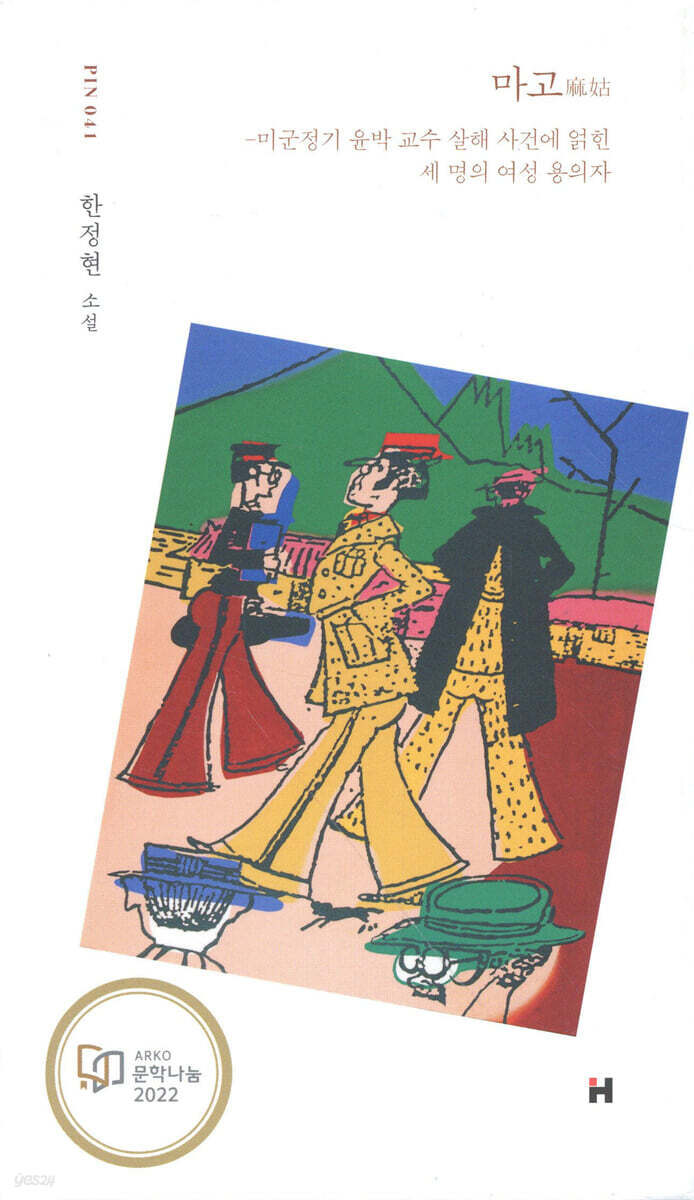
Modern Literature × Artist Lee Dong-gi
The "Modern Literature Pin Series" has become an original novel collection, an art anthology, reconstructed as a special work of art with a cover work imbued with the artist's soul.
The reason each novel possesses its own unique fragrance and profound artistic fascination is probably because of the spiritual harmony created by the meeting of the two worlds of novels and art.
Moving machine
He is an artist who introduced cartoon images into Korean modern art in earnest, and is known for a series of modern art works featuring the character 'Atomouse', which he created in 1993.
His works, which anticipated the 'neo-pop' trend in global art in the 2000s, deal with various elements of modern society. Through various visual and cultural elements ranging from comics, advertisements, and the Internet to classical paintings and abstract art, they suggest the complex relationships between heterogeneous realms such as reality and fiction, heaviness and lightness, material and spirit, and East and West.
He has held over 30 solo exhibitions at venues including the Michael Schultz Gallery in Berlin, the Willemkers Boom Gallery in Amsterdam, and the Ilmin Museum of Art in Seoul, and participated in exhibitions such as the 2011 Venice Biennale side exhibition 'Future Pass' and the 2005 Fukuoka Asian Art Museum 'Animate'.
〈Modern Literature Pin Series Novel Selection〉 041 published!
'History' that has not been excavated, but must be excavated
A novel that envisions the genealogy of the other side, beyond, and beside.
Han Jeong-hyeon, who won the Today's Literary Award for her first full-length novel, "Juliana Tokyo," which tells a story of violence, wounds, solidarity, and recovery set in the popular club Juliana Tokyo in the early 1990s, went on to publish a collection of eight short stories, "Girl Entertainer Lee Bona," which can be read as a series, establishing herself as a key icon in the literary world.
Han Jeong-hyeon, who brought people who were previously portrayed as marginalized characters, such as homosexuals, transgenders, and cross-dressers, to the forefront of her novels, was praised for establishing a solid “Han Jeong-hyeon Universe” in her second full-length novel, “Let Me Be Marilyn Monroe,” by “replacing the genealogy of violence in the seemingly solid capital-case history with a genealogy of love” (Kim Cho-yeop) through characters erased by mainstream history.
The recently published novel 『Mago麻姑 - Three Female Suspects Entangled in the Murder of Professor Yoon Park During the US Military Government』 (hereafter referred to as 『Mago麻姑』) is a novel that shows a more solidly expanded world within the “Han Jeong-hyeon Universe.”
As the title Mago suggests, the word 'witch', which appears in the legend of being offered as a sacrifice to light, is used as a motif that represents the weak and the minority, and gives the entire novel the color of love that 'fights violence with the power of optimism' and 'lives without forgetting someone'.
This novel, set in the chaotic Korean Peninsula immediately following the defeat of Japan and the establishment of the US military government, begins with the murder of Professor Yoon Park by US soldiers.
The US military government investigators, concerned that public opinion of the US military government would deteriorate if it was revealed that the murderer was an American soldier, tried to fabricate the case.
Because of this, three innocent women who were reported in the media as being involved in the incident simply because they were in the same space as Professor Yoon Park on the day of the incident become suspects.
Yeon Ga-seong, a forensic scientist at Jongno Police Station and a female detective using the pseudonym "Three Moons," tracks the relationship between Professor Yoon Bak, who may be offered as a sacrifice, and these three women, along with Kwon Woon-seo, a reporter for the culture department.
As the investigation progresses, we learn that Professor Yoon Bak used and exploited the three women enough to warrant a criminal motive, and that this led them to seek to save each other from a relationship that was entangled with resentment and guilt.
Also, the love story and the poem that form the main line of the narrative.
As has been the case since the beginning, they choose to live their lives searching for signs that will save each other.
In this way, the fragments of this novel fit together as the final piece that transcends ‘sexuality, class, race, ethnicity, and ideology’ to realize the sentence of Hyun Cho-ui, a novelist and disciple of Professor Yoon Park who was one of the three suspects in the flow of time, “I will come to you when the light disappears.”
“In a historical space and time where sexuality, class, race, ethnicity, and ideology further divided and oppressed people, Yeon Ga-seong, who had a father who defected to North Korea and a Japanese mother living in Joseon, and Kwon Un-seo, who had a male body but lived as a woman and loved Ga-seong, were recorded. No, to be precise, it visualizes the lives of queers that have always existed in the historical scene, and through this, it reveals the unjust violence inflicted on them.
In that sense, “Mago” is an extension of Han Jeong-hyeon’s literary practice of “queering history.” (Lee Ji-eun)
I do not deny public history itself, and I believe that historical imagination and distortion are entirely different issues.
I don't think there is 'only' one history.
There are probably many 'histories' that have not yet been discovered, or that need to be discovered, and I believe that they are likely to be more personal and specific.
If the record of public history secures a genealogy as fact, I think novels can also envision a genealogy behind, beyond, and beside it.
I wanted to write about those 'sides' that are not yet visible.
―From the author's note
Author's Note
“It’s just a love story.”
The above sentence is a line spoken by Captain Eden in a scene where he shows interest in the protagonist, Yeon Ga-seong, and asks her what the novel, "Standing Behind Your Backs," is about.
Of course, the actual content of the novel is about the revenge of a female independence activist, and it was written by a Japanese person and actually exists.
But for those who don't know Korean, the novel will probably be remembered only as a love story, that is, as a love story.
There are stories that disappear, or are misunderstood and hidden, in places where language has been bypassed.
But in the end, it is also the role of human language to finish that sidetracked story, and I am a novelist who believes that novels can do that, and so my novel 『Margot』, not that novel, is not just a love story, but also a love story, and a story about the era of the US military government.
Because novels can stretch as far as they can between all the different languages.
I wanted to tell all those stories in this novel through the characteristics of that kind of novel.
The forty-first volume of the monthly "Pin Novel" published by the monthly magazine "Modern Literature"!
The "Modern Literature Pin Series" is a project that selects the most modern and cutting-edge writers of contemporary Korean literature, presents them in the monthly magazine "Modern Literature," and then publishes them in book form.
The single volumes presented here are individual works, but are also curated by six authors as a 'series'.
Modern literature hopes that the seriousness of this series will be ironically combined with the delicate lightness of the word 'pin'.
The <Modern Literature Pin Series> novel selection is also a monthly pin published by the monthly magazine 『Modern Literature』.
The follow-up issues, scheduled to be published on the 25th of each month, are designed to allow readers to see new works by Korea's top authors on a set date.
This is a kind of 'salary book' concept that is being introduced for the first time in Korean publishing history.
001 to 006 are composed of works by writers born between 1971 and 1973 and debuted between the late 1990s and 2000s, who are currently the backbone of Korean novels. 007 to 012 are composed of works by writers born between the late 1970s and early 1980s and debuted in the mid-to-late 2000s, who are currently the most active writers in Korean novels.
013 to 018 are comprised of works by authors born between the mid-to-late 1950s and the 1960s, who played a pivotal role in leading the development of contemporary Korean literature, and by authors who debuted between the 1980s and the mid-1990s. 019 to 024 are comprised of works by ambitious young authors who are writing a new history of Korean literature.
The Finn novels, which had been published by generation, were grouped and published under the category of genre novels in 025-030, and 031-036 were composed of works by writers born in the mid-to-late 1970s, when literature was at its peak.
Modern Literature × Artist Lee Dong-gi
The "Modern Literature Pin Series" has become an original novel collection, an art anthology, reconstructed as a special work of art with a cover work imbued with the artist's soul.
The reason each novel possesses its own unique fragrance and profound artistic fascination is probably because of the spiritual harmony created by the meeting of the two worlds of novels and art.
Moving machine
He is an artist who introduced cartoon images into Korean modern art in earnest, and is known for a series of modern art works featuring the character 'Atomouse', which he created in 1993.
His works, which anticipated the 'neo-pop' trend in global art in the 2000s, deal with various elements of modern society. Through various visual and cultural elements ranging from comics, advertisements, and the Internet to classical paintings and abstract art, they suggest the complex relationships between heterogeneous realms such as reality and fiction, heaviness and lightness, material and spirit, and East and West.
He has held over 30 solo exhibitions at venues including the Michael Schultz Gallery in Berlin, the Willemkers Boom Gallery in Amsterdam, and the Ilmin Museum of Art in Seoul, and participated in exhibitions such as the 2011 Venice Biennale side exhibition 'Future Pass' and the 2005 Fukuoka Asian Art Museum 'Animate'.
GOODS SPECIFICS
- Publication date: June 25, 2022
- Format: Hardcover book binding method guide
- Page count, weight, size: 215 pages | 298g | 112*190*21mm
- ISBN13: 9791167901125
- ISBN10: 1167901126
You may also like
카테고리
korean


korean

![GQ KOREA Mark (Monthly): December [2025]](http://librairie.coreenne.fr/cdn/shop/files/8ef265dbbfbf186523ed75ba7319009d.jpg?v=1765340328&width=3840)


