

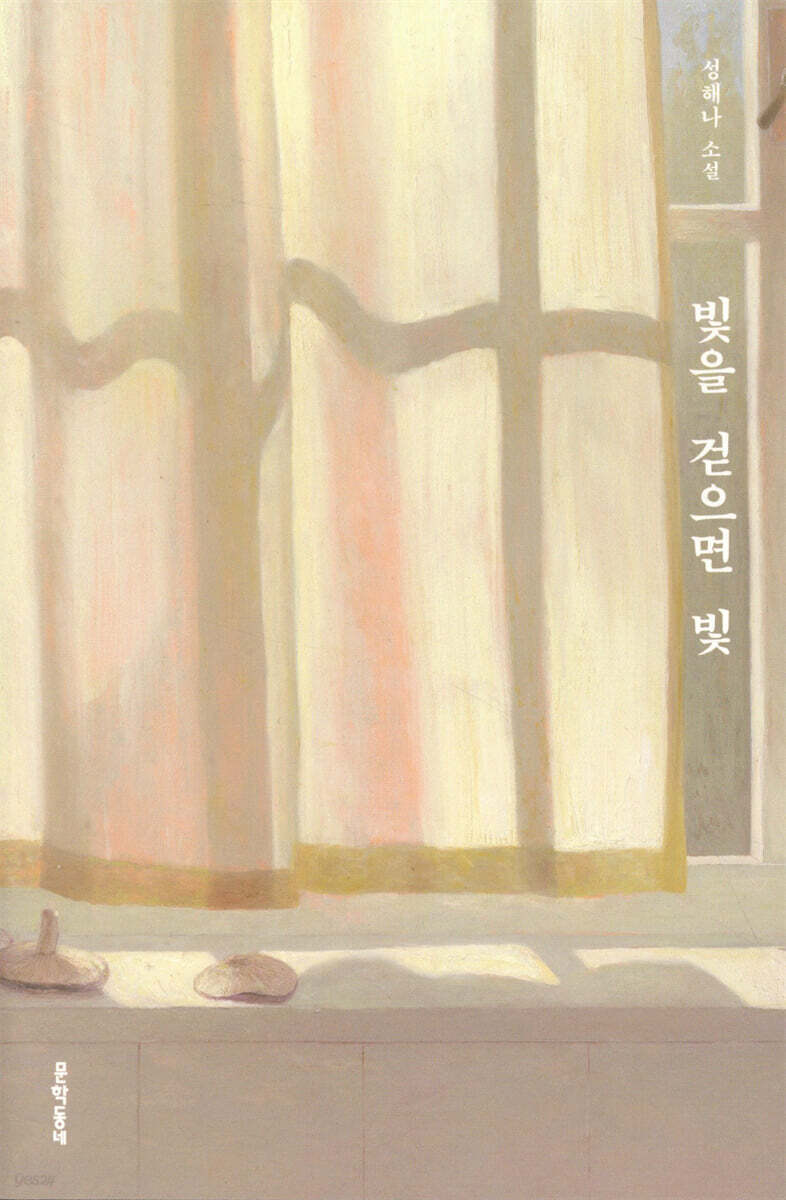
When you walk in the light, there is light
 |
Description
Book Introduction
- A word from MD
-
Others of us walk together toward the lightA story of people from different generations and groups living intertwined.
The walls between characters don't magically disappear, and they don't easily cross those boundaries.
We witness our quiet steps as we move forward together, each carrying our own history, in their lives, taking one step closer and then half a step further.
June 7, 2022. Novel/Poetry PD Park Hyung-wook
A thoughtful exploration of generations and relationships
Seong Hae-na's first novel collection
The first collection of short stories, “When You Walk Away from the Light,” by Seong Hae-na, a new writer who has been praised as “the writer who most skillfully addresses generational differences, conflicts, and communication issues in Korea today” (literary critic Park Seo-yang), has been published, and who is developing her own world of works with neat and serious language.
In the 2019 Dong-A Ilbo New Year’s Literary Contest, the novella “Oz” was praised for its success in “breaking away from stereotypical characters (…) and creating unique characters,” and its “balanced perspective is enough to inspire trust” (judges Gu Hyo-seo and Eun Hee-kyung). Eight of the works she has actively written over the past three years since she began her career were selected and published.
Seong Hae-na's novels are filled with characters who strive to see each other clearly, transcending prejudice and misunderstanding, as if they were a reflection of the author's acceptance speech, in which she said she wanted to be a "kind and generous" person who strives not to prematurely understand or judge others.
Despite the fundamental boundaries between themselves and others, including differences in generation and affiliation, physical and mental differences, and even the boundaries between self and others, those who have no doubt that they can reach others beyond that boundary set out on their journey with that beacon of faith.
Seong Hae-na's first novel collection
The first collection of short stories, “When You Walk Away from the Light,” by Seong Hae-na, a new writer who has been praised as “the writer who most skillfully addresses generational differences, conflicts, and communication issues in Korea today” (literary critic Park Seo-yang), has been published, and who is developing her own world of works with neat and serious language.
In the 2019 Dong-A Ilbo New Year’s Literary Contest, the novella “Oz” was praised for its success in “breaking away from stereotypical characters (…) and creating unique characters,” and its “balanced perspective is enough to inspire trust” (judges Gu Hyo-seo and Eun Hee-kyung). Eight of the works she has actively written over the past three years since she began her career were selected and published.
Seong Hae-na's novels are filled with characters who strive to see each other clearly, transcending prejudice and misunderstanding, as if they were a reflection of the author's acceptance speech, in which she said she wanted to be a "kind and generous" person who strives not to prematurely understand or judge others.
Despite the fundamental boundaries between themselves and others, including differences in generation and affiliation, physical and mental differences, and even the boundaries between self and others, those who have no doubt that they can reach others beyond that boundary set out on their journey with that beacon of faith.
- You can preview some of the book's contents.
Preview
index
Undo… 007
Hwayang Theater… 055
OK, Boomer … 097
Gwandang… 127
The Intimate Blood of Sodom… 173
Tangchun… 209
Oz… 275
The year Kim Il-sung died… 339
Commentary│So Yu-jeong (literary critic)
Record of Falls… 395
Author's Note … 417
Hwayang Theater… 055
OK, Boomer … 097
Gwandang… 127
The Intimate Blood of Sodom… 173
Tangchun… 209
Oz… 275
The year Kim Il-sung died… 339
Commentary│So Yu-jeong (literary critic)
Record of Falls… 395
Author's Note … 417
Into the book
I met Doho through Tinder.
At that time, it was comfortable to have a relationship that didn't require effort, and a relationship where you could reject someone with a simple swipe of the screen if you didn't like them.
I hated the constant variables that arose every time I met someone, and I was tired of having relationships that were going nowhere.
That's how it was back then.
--- p.9~10 From "Undo"
At that time, I think I was trying not to be like the people I knew.
It seems like I was constantly trying not to sympathize carelessly and not to say irresponsible things like, 'I understand everything' or 'It's okay'.
--- p.13 From "Undo"
Mr. Lee Mok said.
One of the reasons people visit the theater is because they treasure the moments of laughter and tears flowing from the same point of view as others, and he said that he feels the same way, so he said that here, you can breathe deeply, laugh, and cry.
--- p.67 From "Hwayang Theater"
I was in a very precarious situation at that time.
If I could go back to that time again… …I would never deceive my heart.
Laugh, cry, and fight comfortably.
I won't stand it.
--- p.69 From “Hwayang Theater”
I lived thinking that if I walked away from the darkness, there would be another darkness, but that wasn't the case. If I walked away from the darkness, there was definitely light within it.
I don't want to survive anymore, I want to live.
Accepting it without enduring it.
--- p.92 From "Hwayang Theater"
Because I've always been like that.
Even though I knew it wouldn't work out, I pinned my hopes on a return to work, wishing for the return of a normal life where I could offer the generous words, "I hope your journey is peaceful," and longing for the fading friendship to continue, however tenuously... ... Foolishly and recklessly.
--- p.250 From "Dangchun"
There was little I could do for her, as I was not tied to her family.
From filling out the hospitalization application to explaining my relationship with my grandmother to the people in the same hospital room, I was always hesitant and wavering when called as the guardian.
The emotional layers that had been gradually built up while living with her were easily destroyed in the name of family and became nothing.
--- p.326 From "Oz"
The new house I found was small and had only one window, but it was quiet because it faced the walking path, and most importantly, it got a lot of sunlight.
The sunlight poured in through the south-facing window, and lying in that light, the words "alone" no longer sounded so lonely.
--- p.337 From "Oz"
The mind can be easily changed.
A mother-daughter relationship is inherently capricious and imperfect; one can hate the other but then suddenly grow fond of it, and one can feel resentment while thinking it's enough.
At that time, it was comfortable to have a relationship that didn't require effort, and a relationship where you could reject someone with a simple swipe of the screen if you didn't like them.
I hated the constant variables that arose every time I met someone, and I was tired of having relationships that were going nowhere.
That's how it was back then.
--- p.9~10 From "Undo"
At that time, I think I was trying not to be like the people I knew.
It seems like I was constantly trying not to sympathize carelessly and not to say irresponsible things like, 'I understand everything' or 'It's okay'.
--- p.13 From "Undo"
Mr. Lee Mok said.
One of the reasons people visit the theater is because they treasure the moments of laughter and tears flowing from the same point of view as others, and he said that he feels the same way, so he said that here, you can breathe deeply, laugh, and cry.
--- p.67 From "Hwayang Theater"
I was in a very precarious situation at that time.
If I could go back to that time again… …I would never deceive my heart.
Laugh, cry, and fight comfortably.
I won't stand it.
--- p.69 From “Hwayang Theater”
I lived thinking that if I walked away from the darkness, there would be another darkness, but that wasn't the case. If I walked away from the darkness, there was definitely light within it.
I don't want to survive anymore, I want to live.
Accepting it without enduring it.
--- p.92 From "Hwayang Theater"
Because I've always been like that.
Even though I knew it wouldn't work out, I pinned my hopes on a return to work, wishing for the return of a normal life where I could offer the generous words, "I hope your journey is peaceful," and longing for the fading friendship to continue, however tenuously... ... Foolishly and recklessly.
--- p.250 From "Dangchun"
There was little I could do for her, as I was not tied to her family.
From filling out the hospitalization application to explaining my relationship with my grandmother to the people in the same hospital room, I was always hesitant and wavering when called as the guardian.
The emotional layers that had been gradually built up while living with her were easily destroyed in the name of family and became nothing.
--- p.326 From "Oz"
The new house I found was small and had only one window, but it was quiet because it faced the walking path, and most importantly, it got a lot of sunlight.
The sunlight poured in through the south-facing window, and lying in that light, the words "alone" no longer sounded so lonely.
--- p.337 From "Oz"
The mind can be easily changed.
A mother-daughter relationship is inherently capricious and imperfect; one can hate the other but then suddenly grow fond of it, and one can feel resentment while thinking it's enough.
--- p.350 From “The Year Kim Il-sung Died”
Publisher's Review
“The light that lights up when you take a step toward someone else.
To the reader who seeks that more beautiful light through soot
“Seong Hae-na’s first novel collection has arrived.”
_Jo Hae-jin (novelist)
Why are we so generous to some people?
Is it really possible to be so cruel to someone?
In the novel "Undo" that opens the door to the collection, while watching a father who runs two households and a mother who tolerates such a father, 'I', who was only looking for "a relationship that doesn't require effort, a relationship that I can reject with a light swipe of the screen when I don't like it" (pp. 9-10), ends up sharing even an intimate family history with 'Doho', whom I met on a dating app.
Doho says that he has sacrificed a lot while living alone with his grandmother, who is a farmer, and 'I' try not to sympathize with Doho carelessly, and try not to say irresponsible things like 'I understand everything' or 'It's okay' (p. 13) and act 'cool', but deep down, I know that it is only because 'that was Doho's life and circumstances' (p. 28).
However, Dohone's life gradually becomes 'my' life as 'I' become closer to Dohone.
Things that I didn't need to understand have now become things that I must understand and endure, and they weigh me down, and I have no choice but to turn away from the weight that has become "too heavy" (page 50).
In "OK, Boomer," I, a progressive teacher belonging to the Korean Teachers and Education Workers Union who prides herself on embracing youth culture, spend a day with my son, who started music while attending graduate school, when he visits my house with his band members.
In the eyes of 'me', a 'baby boomer' and a member of the 586 generation, they, the 'MZ generation', are full of incomprehensible things, but 'I' try to be generous and understand them.
But even though they ate pizza without meat or cheese because they were vegetarians, and did not even give their names in front of adults and only did their own work, I could not stand the way they handled the Korean Teachers and Education Workers Union award that represented my life history so carelessly, so I ended up stubbornly telling them to leave the house.
The scene where I take out all the meat from the refrigerator and grill it after they leave is comical but also leaves a bit of a chill.
If "OK, Boomer" drew the line between generations, "Gwondang" can be said to be a work that reveals the boundaries between belonging, that is, the inside and outside of a community.
I, who live in Jeju, decide to guide Jae Jong-suk and his wife, a Koryoin couple from North Kazakhstan, for half a day.
Although they are no different from other people in terms of kinship, the father says that they are also 'Gwondang' and should be treated well.
Gwendang, a unique culture of Jeju where clan villages developed, refers to a close and tightly knit family relationship. In fact, my Gwendang seems to share affection with my uncle and his wife through the historical pain of the forced migration of Koryo people and the Jeju April 3 Incident.
However, when Jaejongsuk and his wife confess that they came to Jeju Island, their hometown, to obtain work visas in order to bury their father's bones, the Gwandang ostracizes them beyond the boundaries of the Gwandang.
Even though I think I am different from those people, I cannot readily reach out to Jaejongsuk and his wife, and I feel guilty because of their attitude.
Here, the persecution that my aunt had to endure in the past as a woman and an outsider who was not a native of Jeju is depicted, and the failure to face each other expands into the problem of discrimination based on difference and boundaries.
“I lived thinking that if I walked away from the darkness, there would be another darkness.
That wasn't it, if you walk through the darkness, there is definitely light within it."
After going through countless misunderstandings and times of neglect
The moment we finally meet each other's eyes
While previous works focused on showing the stubbornness of boundaries themselves, which lead to misunderstandings and alienation, "Dangchun," "Oz," and "Hwayang Theater" illuminate the moment when characters cross boundaries and finally meet each other's eyes.
In "Dangchun," 'Na' and 'Heonjin', two young men in their twenties who are experiencing economic difficulties due to the aftermath of COVID-19, head to Jincheon after receiving a part-time job offer from 'Uncle Yeong-sik' to teach YouTube video editing skills to elderly people in the countryside.
At first, they dismiss their uncle's ideal of a community where young and old live together as absurd, but as they discover life firmly rooted in the soil they thought was dead, and as they witness the grandparents' unafraidness to change and the courage to willingly fail, they begin to think that perhaps they were wrong.
Oz's 'Na', who carries the guilt of not being able to prevent the accidental death of his younger brother, ends up living with the blunt grandmother 'Oz' through a house-sharing business for the elderly living alone. One day, while they were just being distant from each other, the grandmother discovers a tattoo on 'Na''s body and says that she wants to get a tattoo too.
The body of the grandmother seen in this way has humiliating Japanese characters that suggest she was a victim of the Japanese military's 'comfort women'.
'I', who started tattooing myself to cover up the scars left here and there on my body, is now starting to carve flowers onto my grandmother's scars.
Through this process, the two are able to face each other as 'Oz' and 'Hara', not as 'old people' and 'kids these days'.
"Hwayang Theater", like "Oz," also centers on the relationship between an older woman and a young woman.
After failing the civil service exam several times and returning to his hometown, 'Kyung' finds refuge in 'Hwayang Theater' to escape his father who finds the sound of his breathing disturbing, and meets a grandmother named 'Lee Mok' who seems peculiar.
“Rather than continuing a life summarized in a trivial and insignificant plot, it might not be so bad to just burn out with a few rolls of film” (pp. 57-58), Gyeong, who thought that instead of lecturing like other old people, he would listen to his story and watch old movies with Imok, gradually regains the warmth of life. However, after finding out that Imok has a long-time same-sex lover who is already married and has children, he hesitates because he cannot easily understand this world he does not know.
But soon, Kyung decides to stay by Imok's side despite all this.
“Just as Mr. Lee Mok willingly did so, I also want to be on his side.” (p. 79) The works in this collection, which hesitate in front of the many boundaries that divide regions, generations, and sexual orientations, but ultimately move toward the possibility of solidarity, are even more meaningful in today’s world, where the language of discrimination and exclusion is prevalent.
In “The Year Kim Il-sung Died,” which can also be read as an autobiographical novel, the novelist “I” responds to a student’s question about what a good novel is by thinking as follows:
“A novel that tries to understand the protagonist, but ultimately fails.” (p. 355) Perhaps this is why Seong Hae-na’s characters, who walk toward others, feel trustworthy even though they sometimes stumble and appear precarious.
After reading Seong Hae-na's serious and upright book, which encourages us to look into others and ourselves again where we have failed to understand others without easily judging them, we will realize that a small light has been born in our hearts.
Even if darkness comes again, the light will still be there.
So, isn't this the saying, 'If you walk on the light, there is light'?
Even if the light before our eyes disappears and we cannot see it, there is definitely another light within it. So, let us “accept it without enduring it” and “live on without trying to survive” (Hwayang Theater, p. 92).
In a voice that is sufficiently affectionate and generous.
Author's Note
I think I will probably spend my life writing.
(…)
I believe so now.
I want to live healthily, love, and write in this life.
To the reader who seeks that more beautiful light through soot
“Seong Hae-na’s first novel collection has arrived.”
_Jo Hae-jin (novelist)
Why are we so generous to some people?
Is it really possible to be so cruel to someone?
In the novel "Undo" that opens the door to the collection, while watching a father who runs two households and a mother who tolerates such a father, 'I', who was only looking for "a relationship that doesn't require effort, a relationship that I can reject with a light swipe of the screen when I don't like it" (pp. 9-10), ends up sharing even an intimate family history with 'Doho', whom I met on a dating app.
Doho says that he has sacrificed a lot while living alone with his grandmother, who is a farmer, and 'I' try not to sympathize with Doho carelessly, and try not to say irresponsible things like 'I understand everything' or 'It's okay' (p. 13) and act 'cool', but deep down, I know that it is only because 'that was Doho's life and circumstances' (p. 28).
However, Dohone's life gradually becomes 'my' life as 'I' become closer to Dohone.
Things that I didn't need to understand have now become things that I must understand and endure, and they weigh me down, and I have no choice but to turn away from the weight that has become "too heavy" (page 50).
In "OK, Boomer," I, a progressive teacher belonging to the Korean Teachers and Education Workers Union who prides herself on embracing youth culture, spend a day with my son, who started music while attending graduate school, when he visits my house with his band members.
In the eyes of 'me', a 'baby boomer' and a member of the 586 generation, they, the 'MZ generation', are full of incomprehensible things, but 'I' try to be generous and understand them.
But even though they ate pizza without meat or cheese because they were vegetarians, and did not even give their names in front of adults and only did their own work, I could not stand the way they handled the Korean Teachers and Education Workers Union award that represented my life history so carelessly, so I ended up stubbornly telling them to leave the house.
The scene where I take out all the meat from the refrigerator and grill it after they leave is comical but also leaves a bit of a chill.
If "OK, Boomer" drew the line between generations, "Gwondang" can be said to be a work that reveals the boundaries between belonging, that is, the inside and outside of a community.
I, who live in Jeju, decide to guide Jae Jong-suk and his wife, a Koryoin couple from North Kazakhstan, for half a day.
Although they are no different from other people in terms of kinship, the father says that they are also 'Gwondang' and should be treated well.
Gwendang, a unique culture of Jeju where clan villages developed, refers to a close and tightly knit family relationship. In fact, my Gwendang seems to share affection with my uncle and his wife through the historical pain of the forced migration of Koryo people and the Jeju April 3 Incident.
However, when Jaejongsuk and his wife confess that they came to Jeju Island, their hometown, to obtain work visas in order to bury their father's bones, the Gwandang ostracizes them beyond the boundaries of the Gwandang.
Even though I think I am different from those people, I cannot readily reach out to Jaejongsuk and his wife, and I feel guilty because of their attitude.
Here, the persecution that my aunt had to endure in the past as a woman and an outsider who was not a native of Jeju is depicted, and the failure to face each other expands into the problem of discrimination based on difference and boundaries.
“I lived thinking that if I walked away from the darkness, there would be another darkness.
That wasn't it, if you walk through the darkness, there is definitely light within it."
After going through countless misunderstandings and times of neglect
The moment we finally meet each other's eyes
While previous works focused on showing the stubbornness of boundaries themselves, which lead to misunderstandings and alienation, "Dangchun," "Oz," and "Hwayang Theater" illuminate the moment when characters cross boundaries and finally meet each other's eyes.
In "Dangchun," 'Na' and 'Heonjin', two young men in their twenties who are experiencing economic difficulties due to the aftermath of COVID-19, head to Jincheon after receiving a part-time job offer from 'Uncle Yeong-sik' to teach YouTube video editing skills to elderly people in the countryside.
At first, they dismiss their uncle's ideal of a community where young and old live together as absurd, but as they discover life firmly rooted in the soil they thought was dead, and as they witness the grandparents' unafraidness to change and the courage to willingly fail, they begin to think that perhaps they were wrong.
Oz's 'Na', who carries the guilt of not being able to prevent the accidental death of his younger brother, ends up living with the blunt grandmother 'Oz' through a house-sharing business for the elderly living alone. One day, while they were just being distant from each other, the grandmother discovers a tattoo on 'Na''s body and says that she wants to get a tattoo too.
The body of the grandmother seen in this way has humiliating Japanese characters that suggest she was a victim of the Japanese military's 'comfort women'.
'I', who started tattooing myself to cover up the scars left here and there on my body, is now starting to carve flowers onto my grandmother's scars.
Through this process, the two are able to face each other as 'Oz' and 'Hara', not as 'old people' and 'kids these days'.
"Hwayang Theater", like "Oz," also centers on the relationship between an older woman and a young woman.
After failing the civil service exam several times and returning to his hometown, 'Kyung' finds refuge in 'Hwayang Theater' to escape his father who finds the sound of his breathing disturbing, and meets a grandmother named 'Lee Mok' who seems peculiar.
“Rather than continuing a life summarized in a trivial and insignificant plot, it might not be so bad to just burn out with a few rolls of film” (pp. 57-58), Gyeong, who thought that instead of lecturing like other old people, he would listen to his story and watch old movies with Imok, gradually regains the warmth of life. However, after finding out that Imok has a long-time same-sex lover who is already married and has children, he hesitates because he cannot easily understand this world he does not know.
But soon, Kyung decides to stay by Imok's side despite all this.
“Just as Mr. Lee Mok willingly did so, I also want to be on his side.” (p. 79) The works in this collection, which hesitate in front of the many boundaries that divide regions, generations, and sexual orientations, but ultimately move toward the possibility of solidarity, are even more meaningful in today’s world, where the language of discrimination and exclusion is prevalent.
In “The Year Kim Il-sung Died,” which can also be read as an autobiographical novel, the novelist “I” responds to a student’s question about what a good novel is by thinking as follows:
“A novel that tries to understand the protagonist, but ultimately fails.” (p. 355) Perhaps this is why Seong Hae-na’s characters, who walk toward others, feel trustworthy even though they sometimes stumble and appear precarious.
After reading Seong Hae-na's serious and upright book, which encourages us to look into others and ourselves again where we have failed to understand others without easily judging them, we will realize that a small light has been born in our hearts.
Even if darkness comes again, the light will still be there.
So, isn't this the saying, 'If you walk on the light, there is light'?
Even if the light before our eyes disappears and we cannot see it, there is definitely another light within it. So, let us “accept it without enduring it” and “live on without trying to survive” (Hwayang Theater, p. 92).
In a voice that is sufficiently affectionate and generous.
Author's Note
I think I will probably spend my life writing.
(…)
I believe so now.
I want to live healthily, love, and write in this life.
GOODS SPECIFICS
- Date of issue: May 31, 2022
- Page count, weight, size: 428 pages | 404g | 133*200*20mm
- ISBN13: 9788954693615
- ISBN10: 895469361X
You may also like
카테고리
korean


korean

![GQ KOREA Mark (Monthly): December [2025]](http://librairie.coreenne.fr/cdn/shop/files/8ef265dbbfbf186523ed75ba7319009d.jpg?v=1765340328&width=3840)


