

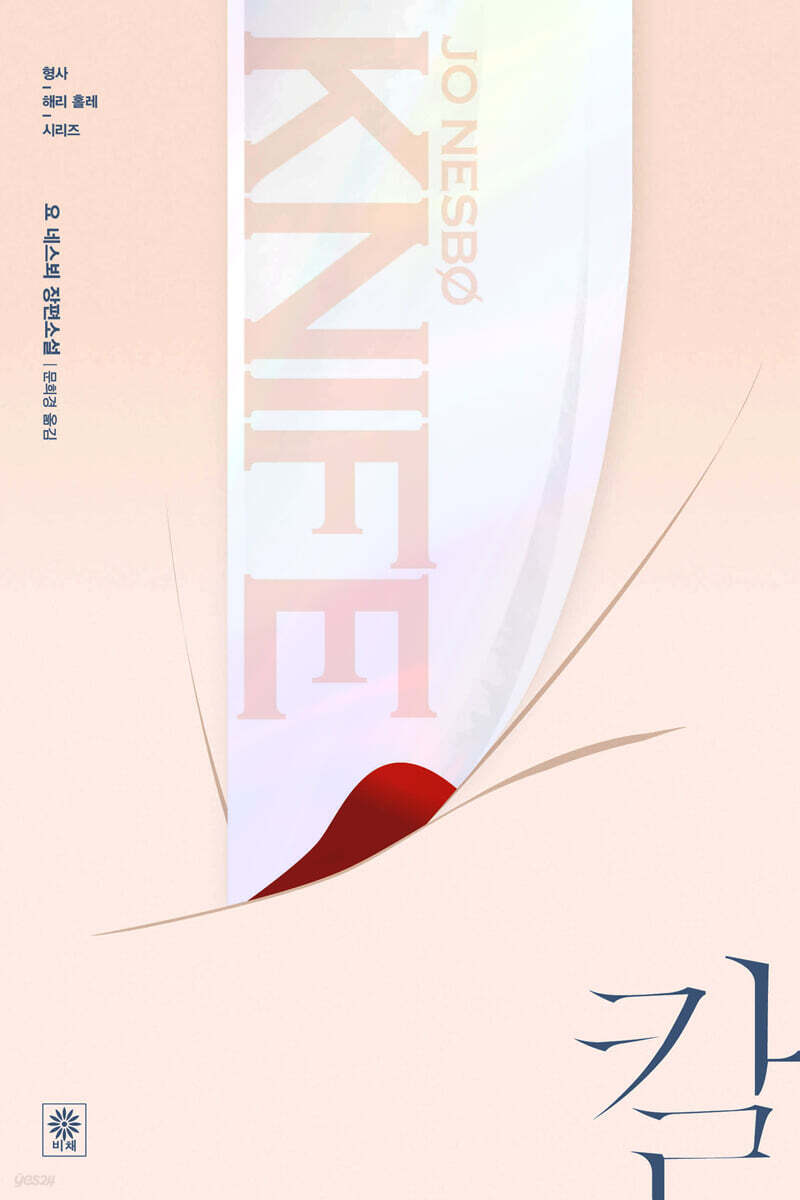
knife
 |
Description
Book Introduction
- A word from MD
- [Detective Harry Hole is back!] Jo Nesbø's Detective Harry Hole series.
Harry Hole returns to the police force, only to find his estranged wife, Raquel, stabbed to death.
Harry begins his investigation alone, and the images of the house, blood, and the phantom-like disappearance of a surveillance camera flash through his mind. Will he be able to uncover the truth? - Novel MD Park Hyung-wook
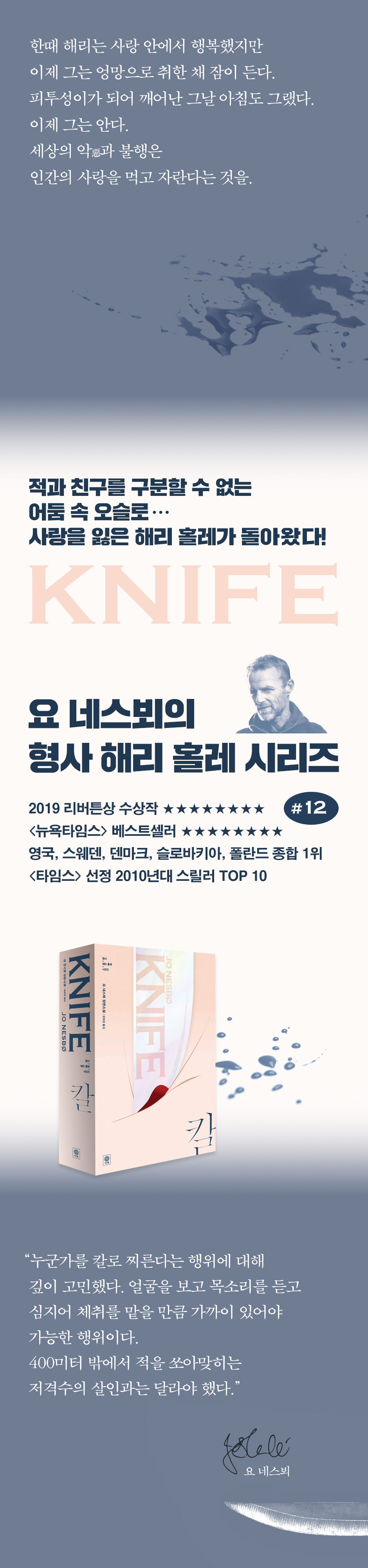
Winner of the 2019 Riverton Award, selected by The Times as one of the top 10 thrillers of the 2010s.
Dark Oslo, the broken Harry Hole returns!
The long-awaited 12th volume of the Harry Hole detective series, "Knife," has finally been published.
This is Jo Nesbø's second Riverton Award-winning work, 22 years after his debut work, "The Bat," which announced the birth of detective Harry.
The worst incident ever, the powerful attraction that captivates readers throughout the overwhelming volume, and the tight foreshadowing that makes you go back to the beginning as soon as you finish the last page seem to say that the author is at his peak right now.
Harry Hole, who had been away from the police force for a long time, has returned to the force.
But he is no longer a legendary detective, having been left with only predictable cases while working as a low-ranking member of the violent crimes unit.
Abandoned by his wife Raquel, who had always been by his side, he began drinking again, often blacking out drunk, and falling into meaningless relationships.
And then something happened that should never have happened.
“Raquel… has been found.” Harry, who had been weighed down by a constant sense of unease, seemed to already know this.
The culprit stabbed Raquel's vital point with precision, without resistance.
Who could possibly get so close to Raquel?
What does Harry have to do with Raquel's death?
Dark Oslo, the broken Harry Hole returns!
The long-awaited 12th volume of the Harry Hole detective series, "Knife," has finally been published.
This is Jo Nesbø's second Riverton Award-winning work, 22 years after his debut work, "The Bat," which announced the birth of detective Harry.
The worst incident ever, the powerful attraction that captivates readers throughout the overwhelming volume, and the tight foreshadowing that makes you go back to the beginning as soon as you finish the last page seem to say that the author is at his peak right now.
Harry Hole, who had been away from the police force for a long time, has returned to the force.
But he is no longer a legendary detective, having been left with only predictable cases while working as a low-ranking member of the violent crimes unit.
Abandoned by his wife Raquel, who had always been by his side, he began drinking again, often blacking out drunk, and falling into meaningless relationships.
And then something happened that should never have happened.
“Raquel… has been found.” Harry, who had been weighed down by a constant sense of unease, seemed to already know this.
The culprit stabbed Raquel's vital point with precision, without resistance.
Who could possibly get so close to Raquel?
What does Harry have to do with Raquel's death?
- You can preview some of the book's contents.
Preview
Detailed image
Into the book
“If a knife goes into my stomach,” he whispered.
“Then that’s the end of it.”
--- p.25
Why are people so afraid of knives? The knife is humanity's first tool, and we've become accustomed to it over 2.5 million years. Yet, some people still fail to appreciate the virtues of this invaluable tool that allowed us to descend from the trees.
Hunting, housing, farming, food, defense.
The sword took life, but it also created new life.
How to gain one, lose the other.
Only those who understood this and accepted the results of humanity's achievements and their origins could love the sword.
Fear and love.
As expected, there are two sides to the same coin.
--- p.26
I was happy during that time.
But happiness is like heroin.
Once you taste it, once you know what happiness is, you cannot live a completely happy life in ordinary life without becoming happy again.
Because happiness is more than simple satisfaction.
Happiness is not a natural state.
Happiness is a thrilling, exceptional state.
It's seconds, minutes, days that are clearly not going to last.
The sadness of unhappy moments comes later, not after happiness, but simultaneously.
Because in moments of happiness we already perceive the terrible truth that we will never be this happy again and that what we have will be gone, we curse our ability to perceive what we might feel, worrying in advance about the pain of being robbed of happiness and the sadness of loss.
--- p.80
In about a month, the buds will sprout, and Oslo will be bathed in the breathtaking sight of spring overnight.
But it would be infinitely meaningless.
He lived almost all his life alone.
It was okay though.
It wasn't okay anymore.
I couldn't breathe.
Carbon dioxide filled my body.
"great.
“Please speak.”
“Raquel is dead, Harry.”
--- p.82
Kaya shook her head.
“I don’t know if I can do that, Harry.
You are… …different.
I knew you were a cross-dresser from the beginning, but this isn't like you.
This is not us.
“This is… ….” She shook her head.
“Just tell me,” Harry said.
“This is hate.
“It’s a terrible mixture of hate and sadness.”
“That’s right,” said Harry.
He took the cigarette out of his mouth and put it back in the pack.
“And I was wrong.
I haven't lost everything yet.
“I am left with hatred.”
--- p.188
Harry put his arm around Björn's shoulder.
“I miss you.
“Can’t the two of us solve a truly gruesome murder case together sometime soon?”
Björn nodded, surprised to see Harry's smiling face.
Eyes that shine unnaturally brightly.
What the hell is going on with his head? Perhaps grief has finally driven him to his knees.
Then I saw Harry's smile suddenly shatter like the ice of an October morning, and a dark, deep, desperate pain resurface.
As if he just wanted to taste happiness.
As if it had been spit out again right away.
“Yes,” Björn said quietly.
“Of course it could be.”
“Then that’s the end of it.”
--- p.25
Why are people so afraid of knives? The knife is humanity's first tool, and we've become accustomed to it over 2.5 million years. Yet, some people still fail to appreciate the virtues of this invaluable tool that allowed us to descend from the trees.
Hunting, housing, farming, food, defense.
The sword took life, but it also created new life.
How to gain one, lose the other.
Only those who understood this and accepted the results of humanity's achievements and their origins could love the sword.
Fear and love.
As expected, there are two sides to the same coin.
--- p.26
I was happy during that time.
But happiness is like heroin.
Once you taste it, once you know what happiness is, you cannot live a completely happy life in ordinary life without becoming happy again.
Because happiness is more than simple satisfaction.
Happiness is not a natural state.
Happiness is a thrilling, exceptional state.
It's seconds, minutes, days that are clearly not going to last.
The sadness of unhappy moments comes later, not after happiness, but simultaneously.
Because in moments of happiness we already perceive the terrible truth that we will never be this happy again and that what we have will be gone, we curse our ability to perceive what we might feel, worrying in advance about the pain of being robbed of happiness and the sadness of loss.
--- p.80
In about a month, the buds will sprout, and Oslo will be bathed in the breathtaking sight of spring overnight.
But it would be infinitely meaningless.
He lived almost all his life alone.
It was okay though.
It wasn't okay anymore.
I couldn't breathe.
Carbon dioxide filled my body.
"great.
“Please speak.”
“Raquel is dead, Harry.”
--- p.82
Kaya shook her head.
“I don’t know if I can do that, Harry.
You are… …different.
I knew you were a cross-dresser from the beginning, but this isn't like you.
This is not us.
“This is… ….” She shook her head.
“Just tell me,” Harry said.
“This is hate.
“It’s a terrible mixture of hate and sadness.”
“That’s right,” said Harry.
He took the cigarette out of his mouth and put it back in the pack.
“And I was wrong.
I haven't lost everything yet.
“I am left with hatred.”
--- p.188
Harry put his arm around Björn's shoulder.
“I miss you.
“Can’t the two of us solve a truly gruesome murder case together sometime soon?”
Björn nodded, surprised to see Harry's smiling face.
Eyes that shine unnaturally brightly.
What the hell is going on with his head? Perhaps grief has finally driven him to his knees.
Then I saw Harry's smile suddenly shatter like the ice of an October morning, and a dark, deep, desperate pain resurface.
As if he just wanted to taste happiness.
As if it had been spit out again right away.
“Yes,” Björn said quietly.
“Of course it could be.”
--- p.259
Publisher's Review
A lost memory, a night left in darkness.
Who is friend and who is enemy?
A peaceful and restless Sunday afternoon.
The novel begins with Harry slowly waking up and trying to recall the events of the previous night.
He left Raquel's house after a falling out with her, and has just left the police academy to return to the Oslo police department.
He was really drunk last night, and judging by the bruises on his hands, he must have had an argument with someone.
In the prequel, "Thirst," Harry, who was bewildered by the unfamiliar happiness of marrying the love of his life, Raquel, is now drinking again, getting into fights, and indulging in a frivolous relationship. What on earth happened?
The legendary detective is nowhere to be seen as he takes on a rather predictable case at the bottom of the violent crimes unit.
Meanwhile, Oslo faces a new crisis when Svein Finne, the biological father of the sex offender Valentin, who was shot and killed by Harry in the prequel, is released from prison after serving his sentence.
And then something happens that should never have happened: Raquel gets stabbed to death.
Harry is convinced that Svein Finne, who usually uses a sword as a weapon, killed Raquel to avenge his son.
While the Oslo Metropolitan Police and the Kripos (Special Investigations Unit) are locked in a power struggle over the investigation into Raquel's death, Harry investigates alone behind the scenes and approaches the truth.
Meanwhile, some images come to mind as if they were welcome.
The familiar house, the large pool of blood, the missing security camera.
What does Raquel's death have to do with Harry?
Can Harry Hole continue to be Harry Hole after all this?
Not everyone uses a knife.
Those who understand that love and fear are one and the same,
Only people who are close to each other are qualified to do so.
Throughout the twelve volumes of the Harry Hole series, Harry Hole has lived a devastated life.
In the process of tracking down the criminal, he lost his first love who was helping him (The Bat), had his finger cut off (The Snowman), had half his face torn off (The Leopard), and was shot in a critical situation (The Phantom).
Harry may have been living in a strange sense of security that only those who have nothing left to lose can experience.
But the balance of his life is thrown out of whack when Raquel Peuke, the person he can never afford to lose, enters his life.
The happier I was, the more anxious I became, and the more I loved, the more fear I had.
The twelfth story in the Harry Hole detective series, "The Knife," tells the story of Harry Hole's endless descent into rock bottom after losing Raquel.
“Love is the root of everything,” Harry said.
“It’s both good and bad.
“Both good and evil.”
Perhaps no other writer has used as many weapons in his novels as Jo Nesbø.
In "Redbreast," a novel that tells the deep wounds left by history, a fictional firearm, the Märklin rifle, was featured; in "The Leopard," a novel that shows human malice, Leopold's Apples, a torture device, was featured; and in "Kingdom," a standalone thriller that deals with the breakdown of a family, a car was featured.
Why did such a writer focus on the ‘sword’, the most primitive tool and weapon?
In several interviews after the publication, Nesbø constantly talked about 'distance'.
“(Stabbing someone with a knife) should be different from killing a sniper who shoots an enemy from 400 meters away.
It is an act that is possible only when you are close enough to see the face, hear the voice, and even smell the body odor.” Close distance breaks down walls and reveals your most vulnerable parts.
Throughout the novel, the author seems to be asking whether one can love despite the fact that another name for intimacy is danger.
Of course Harry Hole did.
This is why the title of Volume 12 had to be ‘Sword’.
As the Wall Street Journal described it, “A book that asks moral questions that are very Dostoevsky,” The Sword is also a novel about guilt.
What Harry Hole finds at his lowest point is a heavy, sinking sense of guilt.
In addition, various forms of guilt appear in "The Sword," such as people who cannot overcome the shock of losing their family to a crime, and people who suffer after causing a fatal accident.
While some people harm others without a second thought, others live their lives unable to escape the giant mirror of guilt.
Guilt is the final punishment given regardless of the severity of the sin, and it is the emotion that makes humans human.
Can Harry Hole endure the punishment that awaits him?
The Harry Hole series continues with the 13th book, Blood Moon.
Author's Note
I thought deeply about the act of stabbing someone with a knife.
It is an act that is possible only when you are close enough to see the face, hear the voice, and even smell the body odor.
It had to be different from a sniper's kill, where he shot the enemy from 400 meters away.
Overseas book reviews
There is not a single sentence in this thick book that could be omitted.
Above all, The Sword raises deeply Dostoevsky-esque moral questions.
The Wall Street Journal
Is there another writer in the world who can portray such a bizarre criminal? I can confidently say that it gives me the creeps.
The only person who can make it is Jo Nesbø.
The New York Times
Why are we so crazy about Jo Nesbø?
If you're curious, read "The Sword."
Los Angeles Times
Major awards
Glass Key Award Winner
Riverton Award Winner
Edgar Award nomination
Dagger Award nomination
Nominated for the IMPAC Dublin Literary Award
Norwegian Book Club Award Winner
Norwegian Bookseller Award Winner
[Kirkus Reviews] Best Novels of 2011
Novel of the Year by the Danish Writers' Association
Selected as Ireland's 2011 Bestselling Author
Winner of the Best Foreign Literature Award from the Finnish Thriller Writers Association
Peer Gynt Award
St. Petersburg Prize winner
Riverton Lifetime Achievement Award
Who is friend and who is enemy?
A peaceful and restless Sunday afternoon.
The novel begins with Harry slowly waking up and trying to recall the events of the previous night.
He left Raquel's house after a falling out with her, and has just left the police academy to return to the Oslo police department.
He was really drunk last night, and judging by the bruises on his hands, he must have had an argument with someone.
In the prequel, "Thirst," Harry, who was bewildered by the unfamiliar happiness of marrying the love of his life, Raquel, is now drinking again, getting into fights, and indulging in a frivolous relationship. What on earth happened?
The legendary detective is nowhere to be seen as he takes on a rather predictable case at the bottom of the violent crimes unit.
Meanwhile, Oslo faces a new crisis when Svein Finne, the biological father of the sex offender Valentin, who was shot and killed by Harry in the prequel, is released from prison after serving his sentence.
And then something happens that should never have happened: Raquel gets stabbed to death.
Harry is convinced that Svein Finne, who usually uses a sword as a weapon, killed Raquel to avenge his son.
While the Oslo Metropolitan Police and the Kripos (Special Investigations Unit) are locked in a power struggle over the investigation into Raquel's death, Harry investigates alone behind the scenes and approaches the truth.
Meanwhile, some images come to mind as if they were welcome.
The familiar house, the large pool of blood, the missing security camera.
What does Raquel's death have to do with Harry?
Can Harry Hole continue to be Harry Hole after all this?
Not everyone uses a knife.
Those who understand that love and fear are one and the same,
Only people who are close to each other are qualified to do so.
Throughout the twelve volumes of the Harry Hole series, Harry Hole has lived a devastated life.
In the process of tracking down the criminal, he lost his first love who was helping him (The Bat), had his finger cut off (The Snowman), had half his face torn off (The Leopard), and was shot in a critical situation (The Phantom).
Harry may have been living in a strange sense of security that only those who have nothing left to lose can experience.
But the balance of his life is thrown out of whack when Raquel Peuke, the person he can never afford to lose, enters his life.
The happier I was, the more anxious I became, and the more I loved, the more fear I had.
The twelfth story in the Harry Hole detective series, "The Knife," tells the story of Harry Hole's endless descent into rock bottom after losing Raquel.
“Love is the root of everything,” Harry said.
“It’s both good and bad.
“Both good and evil.”
Perhaps no other writer has used as many weapons in his novels as Jo Nesbø.
In "Redbreast," a novel that tells the deep wounds left by history, a fictional firearm, the Märklin rifle, was featured; in "The Leopard," a novel that shows human malice, Leopold's Apples, a torture device, was featured; and in "Kingdom," a standalone thriller that deals with the breakdown of a family, a car was featured.
Why did such a writer focus on the ‘sword’, the most primitive tool and weapon?
In several interviews after the publication, Nesbø constantly talked about 'distance'.
“(Stabbing someone with a knife) should be different from killing a sniper who shoots an enemy from 400 meters away.
It is an act that is possible only when you are close enough to see the face, hear the voice, and even smell the body odor.” Close distance breaks down walls and reveals your most vulnerable parts.
Throughout the novel, the author seems to be asking whether one can love despite the fact that another name for intimacy is danger.
Of course Harry Hole did.
This is why the title of Volume 12 had to be ‘Sword’.
As the Wall Street Journal described it, “A book that asks moral questions that are very Dostoevsky,” The Sword is also a novel about guilt.
What Harry Hole finds at his lowest point is a heavy, sinking sense of guilt.
In addition, various forms of guilt appear in "The Sword," such as people who cannot overcome the shock of losing their family to a crime, and people who suffer after causing a fatal accident.
While some people harm others without a second thought, others live their lives unable to escape the giant mirror of guilt.
Guilt is the final punishment given regardless of the severity of the sin, and it is the emotion that makes humans human.
Can Harry Hole endure the punishment that awaits him?
The Harry Hole series continues with the 13th book, Blood Moon.
Author's Note
I thought deeply about the act of stabbing someone with a knife.
It is an act that is possible only when you are close enough to see the face, hear the voice, and even smell the body odor.
It had to be different from a sniper's kill, where he shot the enemy from 400 meters away.
Overseas book reviews
There is not a single sentence in this thick book that could be omitted.
Above all, The Sword raises deeply Dostoevsky-esque moral questions.
The Wall Street Journal
Is there another writer in the world who can portray such a bizarre criminal? I can confidently say that it gives me the creeps.
The only person who can make it is Jo Nesbø.
The New York Times
Why are we so crazy about Jo Nesbø?
If you're curious, read "The Sword."
Los Angeles Times
Major awards
Glass Key Award Winner
Riverton Award Winner
Edgar Award nomination
Dagger Award nomination
Nominated for the IMPAC Dublin Literary Award
Norwegian Book Club Award Winner
Norwegian Bookseller Award Winner
[Kirkus Reviews] Best Novels of 2011
Novel of the Year by the Danish Writers' Association
Selected as Ireland's 2011 Bestselling Author
Winner of the Best Foreign Literature Award from the Finnish Thriller Writers Association
Peer Gynt Award
St. Petersburg Prize winner
Riverton Lifetime Achievement Award
GOODS SPECIFICS
- Publication date: May 25, 2022
- Page count, weight, size: 680 pages | 776g | 140*210*40mm
- ISBN13: 9788934975120
- ISBN10: 8934975121
You may also like
카테고리
korean


korean

![GQ KOREA Mark (Monthly): December [2025]](http://librairie.coreenne.fr/cdn/shop/files/8ef265dbbfbf186523ed75ba7319009d.jpg?v=1765340328&width=3840)


