

Even without trying
 |
Description
Book Introduction
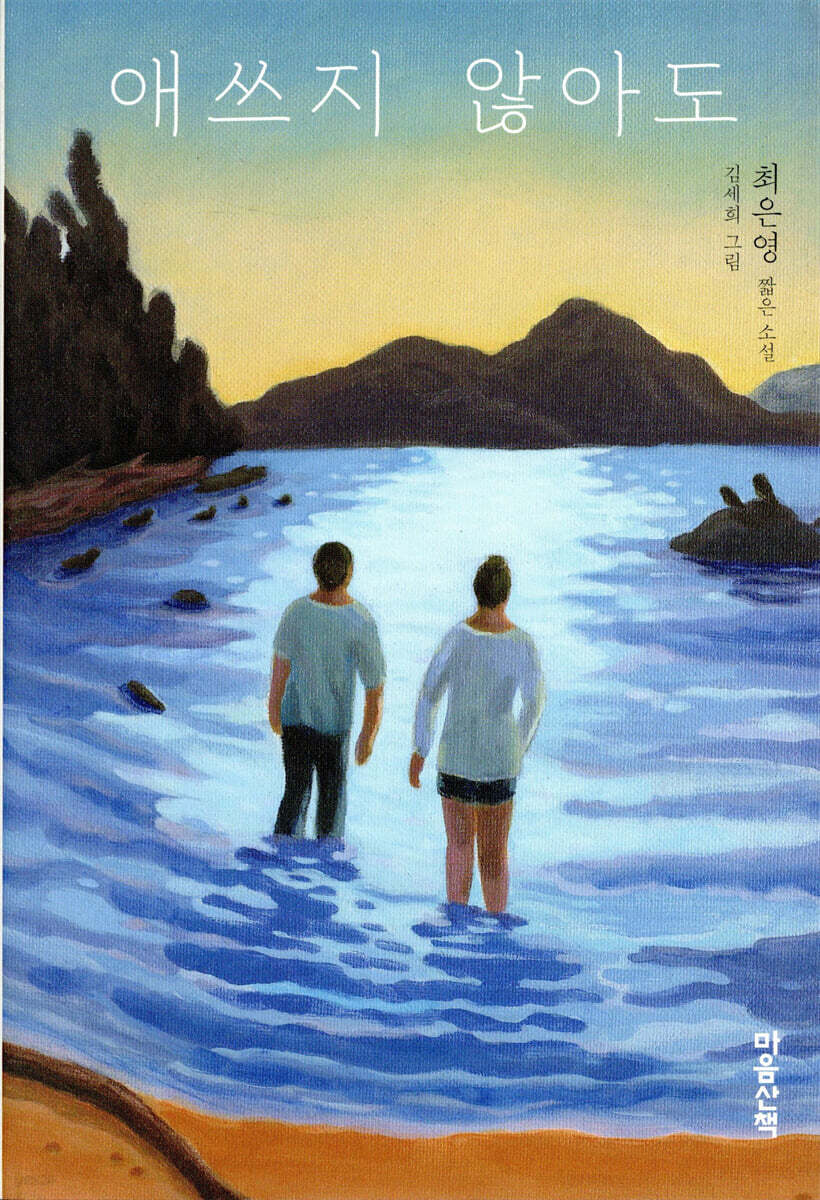
“It seems that the human mind never gets tired. I keep trying to make an effort and get closer. “That feeling is alive in me too.” Eunyoung Choi's new short story collection, "Even Without Trying" Since her debut, author Eunyoung Choi has consistently produced works that soothe the heart with clear and gentle narratives while maintaining a cool attitude toward violence. Her new short story collection, "Even Without Trying," has been published. Author Eunyoung Choi has not only emerged as an important name in Korean literature by winning awards such as the Young Writer's Award, the Hankook Ilbo Literary Award, and the Daesan Literary Award, but she has also published two short story collections ('Shoko's Smile' and 'A Harmless Person to Me') and one full-length novel ('Bright Night'), and has been greatly loved by readers, including being selected as 'Author of the Year by Bookstore People'. Choi Eun-young, who has meticulously examined the friendship and affection between characters in her previously published works, vividly reveals that perspective in this short story collection as well. We take a close look at the relationships we were engrossed in when we were delicate and sensitive, and we caress the sharp edges of our hearts that were hurt. The gaze that looks at the wound is straight and upright, but the sentence that surrounds it is thoughtful and warm. Anyone who has been hurt by a dysfunctional relationship will find comfort in Choi Eun-young's novels. This book, the fourteenth short story in the Mind Walk series, was written by illustrator Kim Se-hee. Artist Kim Se-hee's works, which capture the light that seeps into the landscape and transfer it onto canvas, resemble the warm spring. The pictures, full of affection, remind me of the characters in Choi Eun-young's novels. 『Even Without Effort』 contains thirteen short stories and one short story of about 100 pages. In short stories, which are interwoven with short novels that progress more naturally and briskly, you can encounter Choi Eun-young's unique serious exploration of relationships with a more substantial pace. |
- You can preview some of the book's contents.
Preview
index
Author's Note
Even without trying
Debbie Chang
Dream
End of the forest
Things we can't learn
Hannam-dong rooftop swimming pool
Evening walk
The conversation we had while riding the swing
Moon Dong
Good times
handwritten letter
Limbo Diary
Hello, Kuku
unpaid leave
Even without trying
Debbie Chang
Dream
End of the forest
Things we can't learn
Hannam-dong rooftop swimming pool
Evening walk
The conversation we had while riding the swing
Moon Dong
Good times
handwritten letter
Limbo Diary
Hello, Kuku
unpaid leave
Detailed image
.jpg)
Into the book
Because back then, we could feel love and hate, longing and inferiority, moment and eternity interchangeably.
Because it didn't feel contradictory to want to hurt someone I thought might give me my heart.
--- p.31~32
When Debbie first mentioned the word love, I thought that perhaps the resistance I felt was due to memories of men who had confessed their love to me.
Maybe it was because the memory of the men who had been intoxicated by the words "I love you" and who had forced their feelings on me in ways I didn't want when I didn't accept their confessions had contaminated the word "love" within me.
Because I couldn't forget the memory of the time when the word "love" felt like a threat and made me tremble deep inside.
--- p.43
Did you feel lonely a lot while growing up?
The reason I didn't ask specifically about it was because, for those who were not lonely, a loving family was not a grand dream, but something that was given to them as a given, like air or water.
--- p.44
Namhee, I don't regret anything.
I was lucky.
I could have met her and loved her.
You could experience what it was like when you were born.
When I was young, I couldn't understand why I was born.
But now I know why.
I was born to experience this kind of love.
It's okay now that you know that.
--- p.52
I think you feel the same way as me.
--- p.62
We often meet in your dreams.
You know, it was your choice whether to remember your dreams or not.
You had a choice before you woke up.
And every time I chose not to remember.
--- p.67~68
Perhaps Song Moon, too, would never be able to learn the heart of Song Moon, who had lived as Song Moon.
We live without being able to learn our own mind, and therefore without being able to know it properly.
--- p.95
There are many times when just existing is lonely and difficult.
There are times when we are hurt and in pain due to the inevitable limitations of being human, the difficulty of never being able to achieve what we want, a sick body, not being able to connect with the people we want to be connected with, and being in the wrong relationships.
Life would be difficult enough in itself, but this world creates unnecessary suffering.
The world has hurt you in all sorts of ways.
--- p.124
Love was not a painful labor of searching for evidence.
It wasn't about descending into someone's abyss, crawling on all fours in fear in the dark, or about proving your worth as a reward that could only be earned with difficulty.
Love was natural and gentle.
Because it didn't feel contradictory to want to hurt someone I thought might give me my heart.
--- p.31~32
When Debbie first mentioned the word love, I thought that perhaps the resistance I felt was due to memories of men who had confessed their love to me.
Maybe it was because the memory of the men who had been intoxicated by the words "I love you" and who had forced their feelings on me in ways I didn't want when I didn't accept their confessions had contaminated the word "love" within me.
Because I couldn't forget the memory of the time when the word "love" felt like a threat and made me tremble deep inside.
--- p.43
Did you feel lonely a lot while growing up?
The reason I didn't ask specifically about it was because, for those who were not lonely, a loving family was not a grand dream, but something that was given to them as a given, like air or water.
--- p.44
Namhee, I don't regret anything.
I was lucky.
I could have met her and loved her.
You could experience what it was like when you were born.
When I was young, I couldn't understand why I was born.
But now I know why.
I was born to experience this kind of love.
It's okay now that you know that.
--- p.52
I think you feel the same way as me.
--- p.62
We often meet in your dreams.
You know, it was your choice whether to remember your dreams or not.
You had a choice before you woke up.
And every time I chose not to remember.
--- p.67~68
Perhaps Song Moon, too, would never be able to learn the heart of Song Moon, who had lived as Song Moon.
We live without being able to learn our own mind, and therefore without being able to know it properly.
--- p.95
There are many times when just existing is lonely and difficult.
There are times when we are hurt and in pain due to the inevitable limitations of being human, the difficulty of never being able to achieve what we want, a sick body, not being able to connect with the people we want to be connected with, and being in the wrong relationships.
Life would be difficult enough in itself, but this world creates unnecessary suffering.
The world has hurt you in all sorts of ways.
--- p.124
Love was not a painful labor of searching for evidence.
It wasn't about descending into someone's abyss, crawling on all fours in fear in the dark, or about proving your worth as a reward that could only be earned with difficulty.
Love was natural and gentle.
--- p.220
Publisher's Review
A delicate gaze that embraces the rough edges of life and a firm stance against violence.
Author Eunyoung Choi's new short story collection, "Even Without Trying," has been published.
Since her debut, author Eunyoung Choi has consistently produced works that soothe the heart with clear and gentle narratives while maintaining a cool attitude toward violence. Her new short story collection, "Even Without Trying," has been published.
Author Eunyoung Choi has not only emerged as an important name in Korean literature by winning awards such as the Young Writer's Award, the Hankook Ilbo Literary Award, and the Daesan Literary Award, but she has also published two short story collections ('Shoko's Smile' and 'A Harmless Person to Me') and one full-length novel ('Bright Night'), and has been greatly loved by readers, including being selected as 'Author of the Year by Bookstore People'.
Choi Eun-young, who has meticulously examined the friendship and affection between characters in her previously published works, vividly reveals that perspective in this short story collection as well.
We take a close look at the relationships we were engrossed in when we were delicate and sensitive, and we caress the sharp edges of our hearts that were hurt.
The gaze that looks at the wound is straight and upright, but the sentence that surrounds it is thoughtful and warm.
Anyone who has been hurt by a dysfunctional relationship will find comfort in Choi Eun-young's novels.
This book, the fourteenth short story in the Mind Walk series, was written by illustrator Kim Se-hee.
Artist Kim Se-hee's works, which capture the light that seeps into the landscape and transfer it onto canvas, resemble the warm spring.
The pictures, full of affection, remind me of the characters in Choi Eun-young's novels.
『Even Without Effort』 contains thirteen short stories and one short story of about 100 pages.
In short stories, which are interwoven with short novels that progress more naturally and briskly, you can encounter Choi Eun-young's unique serious exploration of relationships with a more substantial pace.
“Love was not a painful labor of searching for evidence.”
There was a time when it was possible to pour one's heart out to others without any effort.
Look at the place that scratched your heart
In the title piece, “Even Without Trying,” Eunyoung Choi meticulously depicts the times when we were clumsy and immature, when we longed for and loved someone.
The process of feeling close while sharing secrets, only to be betrayed and realize that admiration was actually another name for inferiority is vivid and makes the reader relive a time in their lives.
The story of passing through a feverish period and facing a calm present, accepting others as they are, comes across as a universal story of growth for all of us.
Because back then, we could feel love and hate, longing and inferiority, moment and eternity interchangeably.
Because it didn't feel contradictory to want to hurt someone I thought might give me my heart.
_From "Without Trying", pages 31-32
In relationships, hurt is inevitable.
In particular, words exchanged thoughtlessly often cut into the other person's heart.
Eunyoung Choi describes the inner flow of a person, seething and overflowing, then quickly becoming calm, as she gazes intently at the places where sharp words and actions have scratched her heart.
And it shows the truth that while it is people who hurt, it is also people who ultimately heal and suture him.
The final short story, "Unpaid Leave," features two women who are friends and show how they overcome hurt and find empathy through art, family, and relationships.
Because I didn't have the confidence to have something real, I always chose relationships that I wouldn't be hurt by losing.
I was going to be disappointed anyway, I wanted to be disappointed by someone who wasn't real.
It was because I felt like I wouldn't be able to repair my shattered self if I got hurt by someone I truly loved.
_From "Unpaid Leave," pp. 228-229
“A world that creates unnecessary suffering.
“The world has hurt you in all sorts of ways.”
A straight posture that looks at violence and affection for the weak
What stands out in “Even Without Trying” is Choi Eun-young’s firm attitude toward violence against children and animals.
The author's love for life can be felt in the author's perspective on animals, such as in the story that it originated from the author's childhood experience of not being able to eat meat ("Good Days") and the story of how he develops an aversion to eating meat while raising a chick until it becomes a chicken ("Hello, Kuku").
By showing a character who is hurt by a subway public service advertisement that says something like, “Abused children grow up to become abusive adults” (“Handwritten Letter”), it is said that the indifferent and lazy view of violence is what is violent.
Through the author's descriptions, we realize that in order to avoid becoming desensitized to violence, we must constantly strive to understand others.
Choi Eun-young's boundless affection for the weak and suffering is well expressed in "Words We Shared While Riding the Swing."
‘You’, who have been hurt in the ‘other’ world where we live, are a minority who have suffered from social violence.
The author's voice, comforting him as they ride the swing together in this parallel universe, is incredibly warm.
Rolling our feet together, riding the swing and chatting.
As the sentence in the novel says, 'These are the only things we need.'
These are all we need.
A time when we can sit side by side and ride the swing, a time when we can shine with our natural light, a time when we can be big ears to each other.
_From "The Words We Shared While Riding the Swing," p. 127
With her profound perspective and prose, her upright gaze at injustice, Eunyoung Choi's stories about relationships and society are solid and captivating.
His works, which knock on our hearts, numb to violence, and open the floodgates for emotions blocked by the weight of everyday life, show us why we must read Choi Eun-young now.
As I drift through the world of the story and close the last page, I realize that the familiar air around me has changed a little, and that I am becoming a better person.
A word from Eunyoung Choi (author)
I see people telling those who ask for the bare minimum that they have enough and should not ask for more.
I see people telling me to express my opinion nicely without making others uncomfortable or causing trouble.
I see someone's discomfort being made fun of.
We see people pushing the weak into a corner in a more blatant and public way.
I feel like the bar for humanity is getting lower and lower.
I no longer believe that things will just get better with time.
We need to add more strength.
_From the author's note
Author Eunyoung Choi's new short story collection, "Even Without Trying," has been published.
Since her debut, author Eunyoung Choi has consistently produced works that soothe the heart with clear and gentle narratives while maintaining a cool attitude toward violence. Her new short story collection, "Even Without Trying," has been published.
Author Eunyoung Choi has not only emerged as an important name in Korean literature by winning awards such as the Young Writer's Award, the Hankook Ilbo Literary Award, and the Daesan Literary Award, but she has also published two short story collections ('Shoko's Smile' and 'A Harmless Person to Me') and one full-length novel ('Bright Night'), and has been greatly loved by readers, including being selected as 'Author of the Year by Bookstore People'.
Choi Eun-young, who has meticulously examined the friendship and affection between characters in her previously published works, vividly reveals that perspective in this short story collection as well.
We take a close look at the relationships we were engrossed in when we were delicate and sensitive, and we caress the sharp edges of our hearts that were hurt.
The gaze that looks at the wound is straight and upright, but the sentence that surrounds it is thoughtful and warm.
Anyone who has been hurt by a dysfunctional relationship will find comfort in Choi Eun-young's novels.
This book, the fourteenth short story in the Mind Walk series, was written by illustrator Kim Se-hee.
Artist Kim Se-hee's works, which capture the light that seeps into the landscape and transfer it onto canvas, resemble the warm spring.
The pictures, full of affection, remind me of the characters in Choi Eun-young's novels.
『Even Without Effort』 contains thirteen short stories and one short story of about 100 pages.
In short stories, which are interwoven with short novels that progress more naturally and briskly, you can encounter Choi Eun-young's unique serious exploration of relationships with a more substantial pace.
“Love was not a painful labor of searching for evidence.”
There was a time when it was possible to pour one's heart out to others without any effort.
Look at the place that scratched your heart
In the title piece, “Even Without Trying,” Eunyoung Choi meticulously depicts the times when we were clumsy and immature, when we longed for and loved someone.
The process of feeling close while sharing secrets, only to be betrayed and realize that admiration was actually another name for inferiority is vivid and makes the reader relive a time in their lives.
The story of passing through a feverish period and facing a calm present, accepting others as they are, comes across as a universal story of growth for all of us.
Because back then, we could feel love and hate, longing and inferiority, moment and eternity interchangeably.
Because it didn't feel contradictory to want to hurt someone I thought might give me my heart.
_From "Without Trying", pages 31-32
In relationships, hurt is inevitable.
In particular, words exchanged thoughtlessly often cut into the other person's heart.
Eunyoung Choi describes the inner flow of a person, seething and overflowing, then quickly becoming calm, as she gazes intently at the places where sharp words and actions have scratched her heart.
And it shows the truth that while it is people who hurt, it is also people who ultimately heal and suture him.
The final short story, "Unpaid Leave," features two women who are friends and show how they overcome hurt and find empathy through art, family, and relationships.
Because I didn't have the confidence to have something real, I always chose relationships that I wouldn't be hurt by losing.
I was going to be disappointed anyway, I wanted to be disappointed by someone who wasn't real.
It was because I felt like I wouldn't be able to repair my shattered self if I got hurt by someone I truly loved.
_From "Unpaid Leave," pp. 228-229
“A world that creates unnecessary suffering.
“The world has hurt you in all sorts of ways.”
A straight posture that looks at violence and affection for the weak
What stands out in “Even Without Trying” is Choi Eun-young’s firm attitude toward violence against children and animals.
The author's love for life can be felt in the author's perspective on animals, such as in the story that it originated from the author's childhood experience of not being able to eat meat ("Good Days") and the story of how he develops an aversion to eating meat while raising a chick until it becomes a chicken ("Hello, Kuku").
By showing a character who is hurt by a subway public service advertisement that says something like, “Abused children grow up to become abusive adults” (“Handwritten Letter”), it is said that the indifferent and lazy view of violence is what is violent.
Through the author's descriptions, we realize that in order to avoid becoming desensitized to violence, we must constantly strive to understand others.
Choi Eun-young's boundless affection for the weak and suffering is well expressed in "Words We Shared While Riding the Swing."
‘You’, who have been hurt in the ‘other’ world where we live, are a minority who have suffered from social violence.
The author's voice, comforting him as they ride the swing together in this parallel universe, is incredibly warm.
Rolling our feet together, riding the swing and chatting.
As the sentence in the novel says, 'These are the only things we need.'
These are all we need.
A time when we can sit side by side and ride the swing, a time when we can shine with our natural light, a time when we can be big ears to each other.
_From "The Words We Shared While Riding the Swing," p. 127
With her profound perspective and prose, her upright gaze at injustice, Eunyoung Choi's stories about relationships and society are solid and captivating.
His works, which knock on our hearts, numb to violence, and open the floodgates for emotions blocked by the weight of everyday life, show us why we must read Choi Eun-young now.
As I drift through the world of the story and close the last page, I realize that the familiar air around me has changed a little, and that I am becoming a better person.
A word from Eunyoung Choi (author)
I see people telling those who ask for the bare minimum that they have enough and should not ask for more.
I see people telling me to express my opinion nicely without making others uncomfortable or causing trouble.
I see someone's discomfort being made fun of.
We see people pushing the weak into a corner in a more blatant and public way.
I feel like the bar for humanity is getting lower and lower.
I no longer believe that things will just get better with time.
We need to add more strength.
_From the author's note
GOODS SPECIFICS
- Publication date: April 30, 2022
- Format: Hardcover book binding method guide
- Page count, weight, size: 232 pages | 362g | 135*193*18mm
- ISBN13: 9788960907348
- ISBN10: 8960907340
You may also like
카테고리
korean


korean

![GQ KOREA Mark (Monthly): December [2025]](http://librairie.coreenne.fr/cdn/shop/files/8ef265dbbfbf186523ed75ba7319009d.jpg?v=1765340328&width=3840)


