

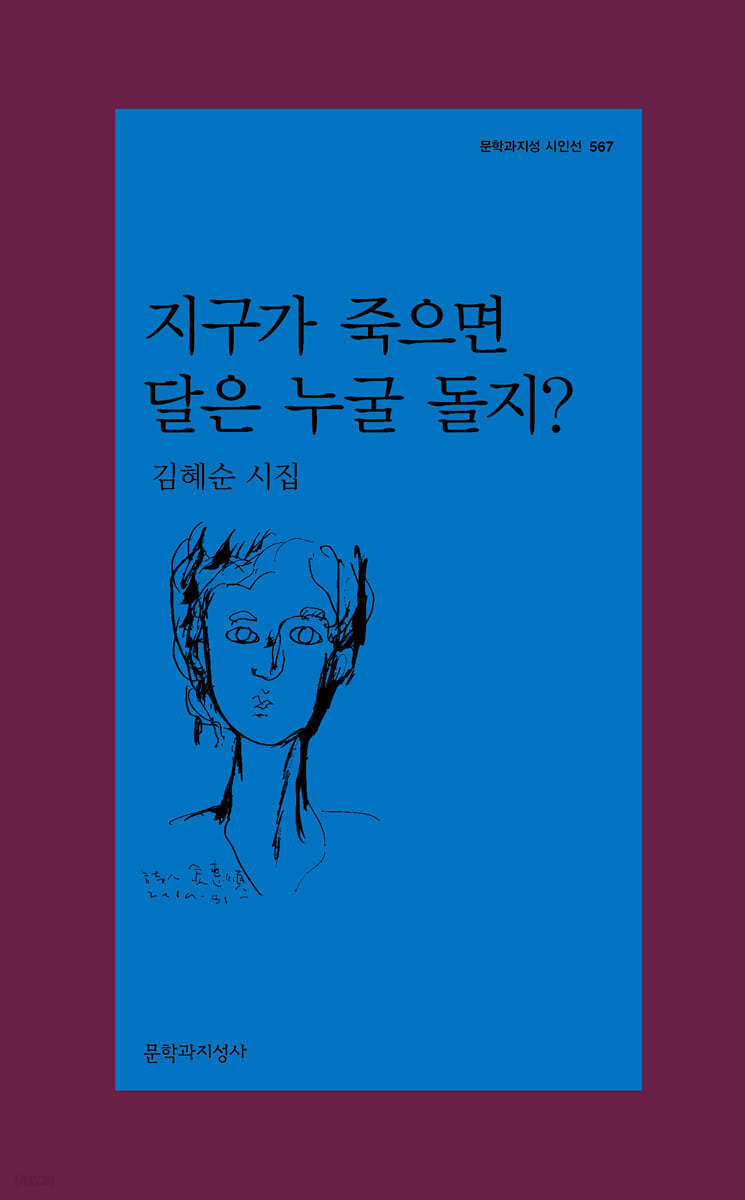
If the Earth dies, who will the moon orbit?
 |
Description
Book Introduction
- A word from MD
-
A new poetry collection by Kim Hye-sun, the "poet of poets."A collection of poems by Kim Hye-sun, the 'poet of poets', who laments the death of the world.
He compiled the poems he wrote while parting ways with his mother and experiencing the disaster of COVID-19.
The infinite movement of life and death, which circle each other throughout, and the daily life that becomes more intense in the midst of this repetition, vividly come to life in the poem.
April 26, 2022. Novel/Poetry PD Park Hyung-wook
“The sands of time are always parting.”
Kim Hye-soon, the "poet of poets," who has renewed the aesthetics of modern Korean poetry with the language of the body that confronts dominant language, has published her fourteenth poetry collection, "If the Earth Dies, Who Will the Moon Revolve Around?" as the 567th edition of Munhak-kwa-Jiseong Poet Selection.
In "If the Earth Dies, Who Will Revolve the Moon?", Kim Hye-soon laments the death of the world.
Part 1 is a collection of poems of sorrow written while the poet was lingering over death, written when his mother was sick and after she passed away.
Part 2 contains the despair of the times faced with the global disaster of COVID-19, and Part 3 contains a record of wandering in an empty desert outside of death.
The poet, through his personal experience of illness and death, looks at the death of the world and the sorrow hidden in each and every death.
As we seek solidarity in grief, we watch with all our might what the fragments of life, shattered like sand, are doing in the desert of oblivion, which is death itself.
Through Kim Hye-sun's poetry, we can finally discover that death is 'something we must infinitely experience and infinitely overcome in life, something we suffer while living.'
Kim Hye-soon, the "poet of poets," who has renewed the aesthetics of modern Korean poetry with the language of the body that confronts dominant language, has published her fourteenth poetry collection, "If the Earth Dies, Who Will the Moon Revolve Around?" as the 567th edition of Munhak-kwa-Jiseong Poet Selection.
In "If the Earth Dies, Who Will Revolve the Moon?", Kim Hye-soon laments the death of the world.
Part 1 is a collection of poems of sorrow written while the poet was lingering over death, written when his mother was sick and after she passed away.
Part 2 contains the despair of the times faced with the global disaster of COVID-19, and Part 3 contains a record of wandering in an empty desert outside of death.
The poet, through his personal experience of illness and death, looks at the death of the world and the sorrow hidden in each and every death.
As we seek solidarity in grief, we watch with all our might what the fragments of life, shattered like sand, are doing in the desert of oblivion, which is death itself.
Through Kim Hye-sun's poetry, we can finally discover that death is 'something we must infinitely experience and infinitely overcome in life, something we suffer while living.'
- You can preview some of the book's contents.
Preview
index
Poet's words
Part 1 When the Earth Dies
Dance is dance
Mom on, mom off
The Double Life of Vowels
Do I go crazy when I die?
Apa's family
The black face of the black horse
dirty white
somatic cell cloning embryos
My mom coughing in my ear
Snow White Special Forces
Forgotten Airplane
The three last essentials in life
In lukewarm mouth
Dawn is breaking
The Black Piano Master
Catch that spring
Refrigerator Hotel
White-haired Satani
Don't cry, chicken
Wake up our baby
Don't cry, yorkie
Wake up our baby
Avocado in an empty house
What is a mother
Baby Powder of Death
drunk fish
Dandelion's white hair
Adam's apple and clitoris
Orphan of Death
It's not a prison without a mirror
Death's Nanny
Piccadilly Circus
A thousand cranes fly up
My mother is my Frankenstein
Sleepless Telescope
I heard the news of my mother's name change.
Part 2 lockdown
Shutdown
The flower that dead people hate the most
erotic zerotic
swan
In the bell
Part 3 Who revolves around the moon?
The realm of adjectives
The Poet's Place
Mike of the Afterlife
A woman with a body that never regrets or apologizes
A woman with a body that is so quiet that it is impossible to even comfort her.
The origin of the woman who left for a different frequency: the spiral resonance of the rod
Potsdamer Platz
Seoul-style space
Dashte Library
If the Earth dies, who will the moon orbit?
Space Mom and Our Mom
Yellowsand
Blackletter
Whitebooks
*Sandman
*start
* nation
* People
* Infinite hug
*language
*pupil
*Body to body
*scripture
*Sand syndrome
*mirage
*Star thing
*at last
hen's digestive system
Desert Host
Sand Dune
foot
oasis
Sahara Aurora
Ajirangi's hair
Dependent subject and subject matter lectures and lectures
Why do birds remind us of dead people?
Sand wash
Sand cremation
Fruit arrived at the hospice gate. When the truck that shouted fruit arrived,
Hair of the Sand
Chilling Beach
Beach of Tears
The naked body of insomnia
Why am I embarrassed when I stand up, leaving the warmth on the metal subway seat?
commentary
Sandstorm·Park Jun-sang
Part 1 When the Earth Dies
Dance is dance
Mom on, mom off
The Double Life of Vowels
Do I go crazy when I die?
Apa's family
The black face of the black horse
dirty white
somatic cell cloning embryos
My mom coughing in my ear
Snow White Special Forces
Forgotten Airplane
The three last essentials in life
In lukewarm mouth
Dawn is breaking
The Black Piano Master
Catch that spring
Refrigerator Hotel
White-haired Satani
Don't cry, chicken
Wake up our baby
Don't cry, yorkie
Wake up our baby
Avocado in an empty house
What is a mother
Baby Powder of Death
drunk fish
Dandelion's white hair
Adam's apple and clitoris
Orphan of Death
It's not a prison without a mirror
Death's Nanny
Piccadilly Circus
A thousand cranes fly up
My mother is my Frankenstein
Sleepless Telescope
I heard the news of my mother's name change.
Part 2 lockdown
Shutdown
The flower that dead people hate the most
erotic zerotic
swan
In the bell
Part 3 Who revolves around the moon?
The realm of adjectives
The Poet's Place
Mike of the Afterlife
A woman with a body that never regrets or apologizes
A woman with a body that is so quiet that it is impossible to even comfort her.
The origin of the woman who left for a different frequency: the spiral resonance of the rod
Potsdamer Platz
Seoul-style space
Dashte Library
If the Earth dies, who will the moon orbit?
Space Mom and Our Mom
Yellowsand
Blackletter
Whitebooks
*Sandman
*start
* nation
* People
* Infinite hug
*language
*pupil
*Body to body
*scripture
*Sand syndrome
*mirage
*Star thing
*at last
hen's digestive system
Desert Host
Sand Dune
foot
oasis
Sahara Aurora
Ajirangi's hair
Dependent subject and subject matter lectures and lectures
Why do birds remind us of dead people?
Sand wash
Sand cremation
Fruit arrived at the hospice gate. When the truck that shouted fruit arrived,
Hair of the Sand
Chilling Beach
Beach of Tears
The naked body of insomnia
Why am I embarrassed when I stand up, leaving the warmth on the metal subway seat?
commentary
Sandstorm·Park Jun-sang
Into the book
Mother treats people in her dreams and people outside her dreams, living and dead, equally.
When I ask for scissors, I say, "Give me those scissors."
Red calf!
Treat everyone like human beings.
My mother speaks better than poets.
They say that we are neither alive nor dead, but are somewhere between life and death.
They say this world is a giant hospital.
--- From "Somatic Cell Cloning Embryos"
Why does language always come last?
Why do poems use shadows?
Fear can make its own body
Regret can be created by myself.
Everyone is an orphan when they conceive death.
The sound of people all over the world calling out to their mothers
Is it language? Or is it the sound of a bird?
--- From "The Forgotten Airplane"
On the bed next to my mother, a woman thirty years younger than her sits round like a small bird.
Always smiling and then wiping away tears.
He is so humble because he lived a social life until the very end.
A social life that is more tenacious than a mental rope.
--- From "The Last Three Essential Things in Life"
Tears are so contagious that they are under the concave lenses of the moon's desert.
A small lake appears in each place.
Still, the two space Mia's are holding a small ice-like house in their hearts.
lying face down on the sand
Without taking your eyes off the last woman on Earth
Looking from the depths of this life.
Are you there?
Are you there?
I came to pay my respects.
Even though the doorbell keeps ringing, we don't open the door.
Playing house with the dead.
(I'm suddenly holding back the urge to act like a daughter to my daughter.)
--- From "If the Earth dies, who will orbit the moon?"
My mother betrayed me twice.
The first is to give birth to me in this world
The second is that the world left me behind
[…]
In the end, my mother betrayed me twice.
The first is to bring death into the world
The second is that he left death in the world.
--- From "What is a Mother"
Even if everyone else is erased, farewells cannot be erased.
--- From "Baby Powder of Death"
The regret of the last breath is felt moment by moment
Pulling mom like a magnet
No, no, not now
Cover each other's faces with white cloths
Slow motion shot of two white flowers blooming in the sand
As if in a film
Groping each other in the hourglass
But there is no clock, no white flower,
They hugged each other's faces in pity, pity, pity
Do I want to overcome this sadness or do I want to embrace it at least?
Now, can the two of them only meet in this sad place?
I screamed, immersed in a sorrow even more pitiful than mine
No, no, not now
--- From "The Land of Adjectives"
I think about it sometimes.
The land of all words in this world.
In fact, the territory of nouns seems to be wide, but the territory of adjectives, adverbs, and conjunctions is even wider.
Among them, I think the territory of the vice-ministers is the largest.
I sometimes wonder if, when we disappear from this world, we will become adjectives, adverbs, or conjunctions, not nouns.
Their boundless freedom from being tied to nouns or pronouns.
Their alliance.
I think that those who left me are also surrounding me now in the form of adjectives, adverbs, and conjunctions.
When I ask for scissors, I say, "Give me those scissors."
Red calf!
Treat everyone like human beings.
My mother speaks better than poets.
They say that we are neither alive nor dead, but are somewhere between life and death.
They say this world is a giant hospital.
--- From "Somatic Cell Cloning Embryos"
Why does language always come last?
Why do poems use shadows?
Fear can make its own body
Regret can be created by myself.
Everyone is an orphan when they conceive death.
The sound of people all over the world calling out to their mothers
Is it language? Or is it the sound of a bird?
--- From "The Forgotten Airplane"
On the bed next to my mother, a woman thirty years younger than her sits round like a small bird.
Always smiling and then wiping away tears.
He is so humble because he lived a social life until the very end.
A social life that is more tenacious than a mental rope.
--- From "The Last Three Essential Things in Life"
Tears are so contagious that they are under the concave lenses of the moon's desert.
A small lake appears in each place.
Still, the two space Mia's are holding a small ice-like house in their hearts.
lying face down on the sand
Without taking your eyes off the last woman on Earth
Looking from the depths of this life.
Are you there?
Are you there?
I came to pay my respects.
Even though the doorbell keeps ringing, we don't open the door.
Playing house with the dead.
(I'm suddenly holding back the urge to act like a daughter to my daughter.)
--- From "If the Earth dies, who will orbit the moon?"
My mother betrayed me twice.
The first is to give birth to me in this world
The second is that the world left me behind
[…]
In the end, my mother betrayed me twice.
The first is to bring death into the world
The second is that he left death in the world.
--- From "What is a Mother"
Even if everyone else is erased, farewells cannot be erased.
--- From "Baby Powder of Death"
The regret of the last breath is felt moment by moment
Pulling mom like a magnet
No, no, not now
Cover each other's faces with white cloths
Slow motion shot of two white flowers blooming in the sand
As if in a film
Groping each other in the hourglass
But there is no clock, no white flower,
They hugged each other's faces in pity, pity, pity
Do I want to overcome this sadness or do I want to embrace it at least?
Now, can the two of them only meet in this sad place?
I screamed, immersed in a sorrow even more pitiful than mine
No, no, not now
--- From "The Land of Adjectives"
I think about it sometimes.
The land of all words in this world.
In fact, the territory of nouns seems to be wide, but the territory of adjectives, adverbs, and conjunctions is even wider.
Among them, I think the territory of the vice-ministers is the largest.
I sometimes wonder if, when we disappear from this world, we will become adjectives, adverbs, or conjunctions, not nouns.
Their boundless freedom from being tied to nouns or pronouns.
Their alliance.
I think that those who left me are also surrounding me now in the form of adjectives, adverbs, and conjunctions.
--- From "The Poet's Writings"
Publisher's Review
"Mom, don't read this poetry book. It's all sand."
Poet Kim Hye-soon, who makes us look at the empty space within us.
Crossing the desert of oblivion, bearing witness to sorrow
The poem of endlessly hot sand
Kim Hye-sun, the "poet of poets," who has renewed the aesthetics of modern Korean poetry with the language of the body that confronts dominant language, has published her fourteenth poetry collection, "If the Earth Dies, Who Will the Moon Revolve Around?", with Munhak-kwa-Jiseongsa.
This is the first poetry collection in three years since the previous work, 『Wing Fantasy Pain』 (2019).
For over 40 years since she began publishing poetry in 1979, Kim Hye-sun has always stood at the “front line of the poetic body that is the first to say goodbye to institutionalized histories” (Lee Gwang-ho).
Kim Hye-soon's poetry collection is more than just the work of one poet; it is a constellation, an archive of poetic experimentation, connecting the most cutting-edge points of modern Korean poetry from each period.
The poet has never ceased to ‘contemplate the way women exist’ and has achieved ‘unique poetic achievements’ (Samsung Ho-Am Prize Art Prize Judges’ Comments).
Furthermore, she demonstrated a distinct international presence by ‘staying true to the emotions and identities that exist in the female body, while simultaneously penetrating nightmares and darkness with a voice that coexists with affection and fury, and at the same time opening up a new poetic ecstasy’ (Swedish Cicada Award judges’ comment).
In "If the Earth Dies, Who Will Revolve the Moon?", Kim Hye-soon laments the death of the world.
Part 1 is a collection of poems of sorrow written while the poet was lingering over death, written when his mother was sick and after she passed away.
Part 2 contains the despair of the times faced with the global disaster of COVID-19, and Part 3 contains a record of wandering in an empty desert outside of death.
The poet, through his personal experience of illness and death, looks at the death of the world and the sorrow hidden in each and every death.
As we seek solidarity in grief, we watch with all our might what the fragments of life, shattered like sand, are doing in the desert of oblivion, which is death itself.
Through Kim Hye-sun's poetry, we can finally discover that death is 'something we must infinitely experience and infinitely overcome in life, something we suffer while living.'
In this collection of poems, mother does not die even if she disappears, and does not disappear even if she dies.
Orphaned women go around becoming each other's mothers and daughters.
While reading the poetry book, I called my mom several times.
Kang Seong-eun (poet)
I have long thought that no poet pronounces death as well as poet Kim Hye-soon.
The more we talk about death, the clearer life becomes, and when we complain about pain, the world strangely becomes lighter.
Through this collection of poems, we will finally be able to gaze into the emptiness within ourselves.
Hwang In-chan (poet)
This collection of poems is filled with the vibration of vowels that call out to the absent mother.
On every page, I saw images of my mother, whom I could no longer see, and I buried my face in them and cried.
Ijeni (poet)
A white bird as big as the Earth sat on a vast sandy plain with endless sand dunes.
The bird flapped its wings once and a huge sandstorm blew up.
You can tell by putting your ear to the poem.
What is going on right now.
Baek Eun-seon (poet)
“Women know why they cry.
I just know”
Hiding and waiting for your turn
Tomorrow, tomorrow, in a world without mothers.
―The “Somatic Cell Cloning Embryo” section
The 33 poems included in Part 1 of this collection, “When the Earth Dies,” were written around 2019, when the poet’s “mother” passed away from her illness.
The poems on the ‘ontology of farewell’ that follow from the previous poetry collection, ‘Wing Fantasy Pain’, which included poems written after experiencing the death of ‘father’, once again confirm that death is not the end but the emergence of new potential through “sentences of mourning that experience both the existence of absence and the absence of existence” (Lee Je-ni).
In Part 1, which contains the story of a 'mother' who hovered around death and the poet who watched her closely, Kim Hye-sun attempts to delve deep into grief.
The air in the hospice ward is filled with death.
“At the hospice, they give you food in the morning, food at lunch, and food in the evening.
There are stains on the teacup and water stains on the towel.
If anything, would everyone be too kind?” (Life’s Last Three Essentials).
In the daughter who watches her mother part ways with the world, “mourning is born before death” (“Catch That Spring”).
To the person who is left alone, everything in the world reminds him of his departed mother.
“When I covered my face with my hands, I felt my mother’s face first.”
The immense sense of loss left by his mother's departure brought silence to the poet, but it also demanded a testimony greater than silence.
Looking at the place of loss, the poet fills the empty hole with sorrow.
It takes out its own body-speech, expands it constantly with new voices, and bears witness to its sorrow.
The mother and daughter, who have swapped bodies, fill this collection of poems with infinite transformation and creation.
In that way, “even if a mother disappears, she does not die, and even if she dies, she does not disappear” (Kang Seong-eun).
“The sands of time are always parting.”
What rises dazzlingly when a mother's body and mind are split apart.
Something sparkling, like golden dust in the sunlight, pouring through my mother's shoulders,
Something like a mirage,
―The "Baby Powder of Death" section
While writing the poems included in the collection, the poet realized that only grief is an act of solidarity with suffering beings and participation in their suffering.
It reaffirmed for Kim Hye-sun the recognition that a poet is someone who enters death and laments it.
The poet's deeply personal experiences lead him to look at death and sorrow scattered around the world through such a process.
The poems in Part 2, “Lockdown,” examine our current reality, having endured the disaster of COVID-19 for years.
“I felt sorry for us, so I wanted to send us a letter” (“The Flower Dead People Hate Most”).
This collection of poems can also be read as a letter to fellow human beings who will experience, overcome, and suffer death together, without a specific recipient.
In this world where “old mothers are dying calling out for younger mothers/Mom, Mom” (“The Dawn Breaks”), sharing each other’s grief through words is more valuable than unfounded optimism or helpless prayers.
The act of writing poetry to testify to pain and sorrow also takes the poet out of grief.
Outside of the sorrow lies a barren, empty desert.
For a poet, literature, the act of writing poetry, is to give form to the experience of the moment when this empty desert approaches him.
Part 3, "Who Does the Moon Revolve Around?" depicts a poet wandering through the "desert," a time and place where no one in the world has ever existed and where all humans have disappeared.
“The sands of this desert are scattered and lonely, scattered and lonely” (“Host of the Desert”).
The sand that fills the desert will be our crumbled 'lives, times, and days.'
And these will be the individual sorrows hidden in the hearts of each and every one of those who left behind someone to leave them in the desert.
Wandering through the desert, where our time ultimately leads, where the dead go, and where all holy power, truth, and 'words' have disappeared, Kim Hye-soon gathers these sands and writes poetry ceaselessly, thereby losing the power of death.
Kim Hye-soon, the poet who pronounces death best, knows well that the poet's job is to "discover the most distant thing from the closest" (Hwang In-chan).
The sandstorm he creates blows.
These 76 sand poems will leave you with a question that you can “know by listening to the poetry collection” (Baek Eun-seon).
Where is this Earth, burdened with sorrow, headed?
Sad people rot
A sick person is in the sand
Crying.
Crying.
Crying.
―From “An essay dedicated to Part 3, ‘Who orbits the moon?’”
Poet's words
Mom, don't read this book of poems, it's all sand.
April 2022
Kim Hye-soon
Poet Kim Hye-soon, who makes us look at the empty space within us.
Crossing the desert of oblivion, bearing witness to sorrow
The poem of endlessly hot sand
Kim Hye-sun, the "poet of poets," who has renewed the aesthetics of modern Korean poetry with the language of the body that confronts dominant language, has published her fourteenth poetry collection, "If the Earth Dies, Who Will the Moon Revolve Around?", with Munhak-kwa-Jiseongsa.
This is the first poetry collection in three years since the previous work, 『Wing Fantasy Pain』 (2019).
For over 40 years since she began publishing poetry in 1979, Kim Hye-sun has always stood at the “front line of the poetic body that is the first to say goodbye to institutionalized histories” (Lee Gwang-ho).
Kim Hye-soon's poetry collection is more than just the work of one poet; it is a constellation, an archive of poetic experimentation, connecting the most cutting-edge points of modern Korean poetry from each period.
The poet has never ceased to ‘contemplate the way women exist’ and has achieved ‘unique poetic achievements’ (Samsung Ho-Am Prize Art Prize Judges’ Comments).
Furthermore, she demonstrated a distinct international presence by ‘staying true to the emotions and identities that exist in the female body, while simultaneously penetrating nightmares and darkness with a voice that coexists with affection and fury, and at the same time opening up a new poetic ecstasy’ (Swedish Cicada Award judges’ comment).
In "If the Earth Dies, Who Will Revolve the Moon?", Kim Hye-soon laments the death of the world.
Part 1 is a collection of poems of sorrow written while the poet was lingering over death, written when his mother was sick and after she passed away.
Part 2 contains the despair of the times faced with the global disaster of COVID-19, and Part 3 contains a record of wandering in an empty desert outside of death.
The poet, through his personal experience of illness and death, looks at the death of the world and the sorrow hidden in each and every death.
As we seek solidarity in grief, we watch with all our might what the fragments of life, shattered like sand, are doing in the desert of oblivion, which is death itself.
Through Kim Hye-sun's poetry, we can finally discover that death is 'something we must infinitely experience and infinitely overcome in life, something we suffer while living.'
In this collection of poems, mother does not die even if she disappears, and does not disappear even if she dies.
Orphaned women go around becoming each other's mothers and daughters.
While reading the poetry book, I called my mom several times.
Kang Seong-eun (poet)
I have long thought that no poet pronounces death as well as poet Kim Hye-soon.
The more we talk about death, the clearer life becomes, and when we complain about pain, the world strangely becomes lighter.
Through this collection of poems, we will finally be able to gaze into the emptiness within ourselves.
Hwang In-chan (poet)
This collection of poems is filled with the vibration of vowels that call out to the absent mother.
On every page, I saw images of my mother, whom I could no longer see, and I buried my face in them and cried.
Ijeni (poet)
A white bird as big as the Earth sat on a vast sandy plain with endless sand dunes.
The bird flapped its wings once and a huge sandstorm blew up.
You can tell by putting your ear to the poem.
What is going on right now.
Baek Eun-seon (poet)
“Women know why they cry.
I just know”
Hiding and waiting for your turn
Tomorrow, tomorrow, in a world without mothers.
―The “Somatic Cell Cloning Embryo” section
The 33 poems included in Part 1 of this collection, “When the Earth Dies,” were written around 2019, when the poet’s “mother” passed away from her illness.
The poems on the ‘ontology of farewell’ that follow from the previous poetry collection, ‘Wing Fantasy Pain’, which included poems written after experiencing the death of ‘father’, once again confirm that death is not the end but the emergence of new potential through “sentences of mourning that experience both the existence of absence and the absence of existence” (Lee Je-ni).
In Part 1, which contains the story of a 'mother' who hovered around death and the poet who watched her closely, Kim Hye-sun attempts to delve deep into grief.
The air in the hospice ward is filled with death.
“At the hospice, they give you food in the morning, food at lunch, and food in the evening.
There are stains on the teacup and water stains on the towel.
If anything, would everyone be too kind?” (Life’s Last Three Essentials).
In the daughter who watches her mother part ways with the world, “mourning is born before death” (“Catch That Spring”).
To the person who is left alone, everything in the world reminds him of his departed mother.
“When I covered my face with my hands, I felt my mother’s face first.”
The immense sense of loss left by his mother's departure brought silence to the poet, but it also demanded a testimony greater than silence.
Looking at the place of loss, the poet fills the empty hole with sorrow.
It takes out its own body-speech, expands it constantly with new voices, and bears witness to its sorrow.
The mother and daughter, who have swapped bodies, fill this collection of poems with infinite transformation and creation.
In that way, “even if a mother disappears, she does not die, and even if she dies, she does not disappear” (Kang Seong-eun).
“The sands of time are always parting.”
What rises dazzlingly when a mother's body and mind are split apart.
Something sparkling, like golden dust in the sunlight, pouring through my mother's shoulders,
Something like a mirage,
―The "Baby Powder of Death" section
While writing the poems included in the collection, the poet realized that only grief is an act of solidarity with suffering beings and participation in their suffering.
It reaffirmed for Kim Hye-sun the recognition that a poet is someone who enters death and laments it.
The poet's deeply personal experiences lead him to look at death and sorrow scattered around the world through such a process.
The poems in Part 2, “Lockdown,” examine our current reality, having endured the disaster of COVID-19 for years.
“I felt sorry for us, so I wanted to send us a letter” (“The Flower Dead People Hate Most”).
This collection of poems can also be read as a letter to fellow human beings who will experience, overcome, and suffer death together, without a specific recipient.
In this world where “old mothers are dying calling out for younger mothers/Mom, Mom” (“The Dawn Breaks”), sharing each other’s grief through words is more valuable than unfounded optimism or helpless prayers.
The act of writing poetry to testify to pain and sorrow also takes the poet out of grief.
Outside of the sorrow lies a barren, empty desert.
For a poet, literature, the act of writing poetry, is to give form to the experience of the moment when this empty desert approaches him.
Part 3, "Who Does the Moon Revolve Around?" depicts a poet wandering through the "desert," a time and place where no one in the world has ever existed and where all humans have disappeared.
“The sands of this desert are scattered and lonely, scattered and lonely” (“Host of the Desert”).
The sand that fills the desert will be our crumbled 'lives, times, and days.'
And these will be the individual sorrows hidden in the hearts of each and every one of those who left behind someone to leave them in the desert.
Wandering through the desert, where our time ultimately leads, where the dead go, and where all holy power, truth, and 'words' have disappeared, Kim Hye-soon gathers these sands and writes poetry ceaselessly, thereby losing the power of death.
Kim Hye-soon, the poet who pronounces death best, knows well that the poet's job is to "discover the most distant thing from the closest" (Hwang In-chan).
The sandstorm he creates blows.
These 76 sand poems will leave you with a question that you can “know by listening to the poetry collection” (Baek Eun-seon).
Where is this Earth, burdened with sorrow, headed?
Sad people rot
A sick person is in the sand
Crying.
Crying.
Crying.
―From “An essay dedicated to Part 3, ‘Who orbits the moon?’”
Poet's words
Mom, don't read this book of poems, it's all sand.
April 2022
Kim Hye-soon
GOODS SPECIFICS
- Date of issue: April 18, 2022
- Page count, weight, size: 274 pages | 318g | 128*205*14mm
- ISBN13: 9788932039985
- ISBN10: 8932039984
You may also like
카테고리
korean


korean

![GQ KOREA Mark (Monthly): December [2025]](http://librairie.coreenne.fr/cdn/shop/files/8ef265dbbfbf186523ed75ba7319009d.jpg?v=1765340328&width=3840)


