

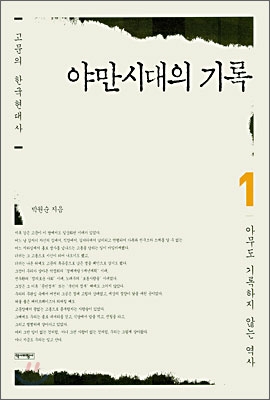
Records of the Savage Age 1
 |
Description
Book Introduction
Through a deep passion for the pain of the times and intense historical research and tracking,
A monumental work by human rights lawyer Park Won-soon, who first uncovered the history of torture in Korea.
Torture has been a dark legacy throughout modern Korean history, transcending regimes. The trilogy "Records of the Savage Age" is a historical record created by the author, who has been a human rights lawyer since the chilling 1980s under military rule, following the trilogy "Research on the National Security Law" and lasting nearly a decade through intense historical research and investigation.
This book is filled with the author's profound insight into the times, his belief in respect for human rights, and the truths of a tragic history.
This is the first record that comprehensively organizes various domestic and international torture cases based on a comprehensive collection of materials, including newspaper articles, magazines, books, theses, group data collections, court decisions, foreign policy data, and human rights organization reports from the Japanese colonial era to the current Roh Moo-hyun administration.
In particular, Volume 1 serves as a general introduction to the entire series, and this volume deeply examines the sociological and historical significance and characteristics of torture, the historical nature and structure of torture, various torture techniques, and related theories, thereby helping the general public gain a comprehensive understanding of torture.
In addition, it provides detailed information on the types of torture perpetrated in Korea, the suffering of torture victims and the reality of perpetrators, laws regarding torture, international conventions for the prevention of torture, the activities of human rights organizations, and recent international torture cases.
A monumental work by human rights lawyer Park Won-soon, who first uncovered the history of torture in Korea.
Torture has been a dark legacy throughout modern Korean history, transcending regimes. The trilogy "Records of the Savage Age" is a historical record created by the author, who has been a human rights lawyer since the chilling 1980s under military rule, following the trilogy "Research on the National Security Law" and lasting nearly a decade through intense historical research and investigation.
This book is filled with the author's profound insight into the times, his belief in respect for human rights, and the truths of a tragic history.
This is the first record that comprehensively organizes various domestic and international torture cases based on a comprehensive collection of materials, including newspaper articles, magazines, books, theses, group data collections, court decisions, foreign policy data, and human rights organization reports from the Japanese colonial era to the current Roh Moo-hyun administration.
In particular, Volume 1 serves as a general introduction to the entire series, and this volume deeply examines the sociological and historical significance and characteristics of torture, the historical nature and structure of torture, various torture techniques, and related theories, thereby helping the general public gain a comprehensive understanding of torture.
In addition, it provides detailed information on the types of torture perpetrated in Korea, the suffering of torture victims and the reality of perpetrators, laws regarding torture, international conventions for the prevention of torture, the activities of human rights organizations, and recent international torture cases.
- You can preview some of the book's contents.
Preview
index
Preface--A Story of My Two Friends
Chapter 1: Introduction: Torture is Everywhere
01 Torture--A Universal Heritage of Humanity?
1.
Modern plagues and torture
2.
What is torture?--a word that cannot be expressed.
3.
Background and Characteristics of Torture--Phenomenology of Torture
1) Unilateralism--Imbalanced relationship
2) Anonymity--the faceless torturer
3) Conflict--double bind
4) Transformation--transformation of body, space, and time
4.
The sin of torture
5.
Can torture ever be justified? --On the 'time bomb' theory
6.
torture techniques
02 Unjust Legacy--Modern Korean History and Torture
1.
Torture, the poisonous mushroom of modern Korean history
1) The historical nature of torture--torture passed down from the Japanese colonial period
2) The structural nature of torture--torture as part of the system
3) The Routineness of Torture--Torture is Everywhere
2.
The Torture Regime and South Korea's Criminal Justice System: "Confession is the King of Evidence" Still in Effect
1) Violent regime and lawlessness
2) Torture and the regression of criminal justice
03 History that no one records
1.
Unorganized history
2.
Torture as a living present
Chapter 2: The Nature of Torture in Korea
01 Standardized torture criminal procedures
1.
The Routine Investigation of Public Security Cases, Rife with Criminal Activity—Cases Stamped Out Like Fish-Shaped Pancakes
2.
One day, suddenly--illegal kidnapping and arrest
3.
Families wander in search of 'missing persons'
4.
Isolation and confinement—a state of isolation and helplessness
5.
Invitation to the torture chamber--Arrival
6.
There's nothing you can't accomplish in 50 days.
7.
Writing a Mystery Novel: The Process of Writing an Autobiography and a Newspaper Report
8.
Erasing traces of torture
9.
Prosecutorial investigations that legitimize the investigation of secret intelligence agencies
10.
Puppet trial process
02 Secret Information and Investigation Agency of Terror
1.
omnipotent power
2.
Central Intelligence Agency--Agency for National Security Planning·National Intelligence Service
3.
Security Forces--Special Forces·Security Command
4.
'Torture Police'--National Security Headquarters Counterintelligence Division or Counterintelligence Division
5.
The prosecution's 'An Ga' and the special investigation office
03 Methods and means of torture
1.
Intimidation/threat
2.
water torture
3.
electric torture
4.
Insulting and humiliating
5.
Don't let me sleep
6.
The 'Elixir' of Confession--The Drug Said to Have Been Administered by the Agency for National Security Planning?
7.
brainwashing
Chapter 3: The Unfinished Crime—The Days of Suffering Continue
01 The scars of torture remain forever.
1.
There is no such thing as 'nothing happens' for humans.
2.
The human soul is as fragile as clay.
3.
Tragedy of the Age, Sacrifice of the Age—Torture Victims and Their Contemporaries
02 The Life and Reality of Torture Victims
1.
Indifference towards torture victims
2.
Characteristics and reality of torture victims
3.
The lives of torture victims
1) People who passed away due to aftereffects of torture
2) People Who Fight Demons--Living with Mental Illness
3) The Shadow of the Evil Spirit--The spy and ex-convict label that still follows you
4) People who live with anger
4.
International support for torture victims
5.
Torture victims' self-help efforts: complaints, accusations, and lawsuits
1) The background of torture victims' inability to make self-help efforts
2) Appeals and petitions by torture victims
3) "Compensate for the years of evil spirits" - A wave of lawsuits filed against victims of torture
03 Urgent measures for torture victims
1.
The state must step in
2.
Establishment of a specialized rehabilitation center for torture victims and a fund for torture victims
3.
Truth-finding and retrial
1) The First Step to Truth—Why Victims Crave the Truth
2) The arduous journey of truth and retrial—some examples of retrial requests
3) Establishment of the Special Act on Retrial and the Past Torture Victims Investigation Headquarters
4.
Compensation and Indemnification
5.
True Torture Prevention: Libraries, Monuments, and History Education
04 Where are the torturers now?
1.
Complaints and accusations against perpetrators and their handling
1) A parade of lawsuits and accusations
2) Prosecutors who do not properly investigate
3) If the prosecution had investigated properly
2.
The shield of political power and the indifference of society
3.
Torture technician, Inspector Lee Geun-an
1) The torture technician of ‘Unknown Name’ – who is he?
2) 12 years on the run
3) The torturer is not lonely.
4.
Representative Jeong Hyeong-geun's responsibility and truth
1) Cases where individuals claim to have been directly tortured by Representative Jeong Hyeong-geun
2) Rep. Jeong Hyeong-geun's evasion of responsibility and the truth
3) The voices of criticism and anger that follow
5.
Punishment or non-punishment
1) The global prevalence of impunity
2) The backlash of impunity—the Pinochet case in Chile
3) Victims want justice and reconciliation.
6.
Torture assistants--doctors who participated in torture
1) Doctors involved in torture crimes
2) Are there no doctors in our country who are involved in torture crimes?
7.
Where is the torturer now?
05 Current Status of Investigative Agency Reform
1.
The reform of the National Intelligence Service is still far away.
1) Reform process of the Agency for National Security Planning and the National Intelligence Service
2) A 'runaway horse' needs reins--a restraint system is needed.
3) Abolition of investigative powers--to a full-fledged intelligence agency
4) Liquidating the National Intelligence Service's past
2.
Military intelligence officers without reflection
3.
From 'torture police' to 'human rights police'
4.
Prosecutorial reform still has a long way to go
06 Preservation of torture records and scenes
Chapter 4: Laws and Realities Regarding Torture
01 Current Status of Torture-Related Laws--Constitution, Criminal Act, Criminal Procedure Act, and National Security Act
1.
The prohibition of torture specified in the Constitution
2.
Torture-related provisions of the Criminal Act and the Criminal Procedure Act
1) Torture punishment provisions of the Criminal Act
2) Provisions related to torture under the Criminal Procedure Act
3) The light and shadow of Supreme Court precedents
3.
The National Security Act and torture have a symbiotic relationship.
1) The legal basis for torture—the National Security Act
2) Excessively expanded state secrets are the main culprit of torture.
4.
UN Convention against Torture
02 Directions for Reforming Current Laws and Practices: Creating a Comprehensive Vision for a Torture-Free Nation
1.
There must be a legal definition and declaration of the nature of torture.
2.
For the full implementation of the UN Convention against Torture
1) Expedited ratification of the reservation provisions
2) Full reflection in domestic law
3.
The lawyer's right to visit the suspect
4.
The right of attorneys to participate in the newspaper process
5.
Denying the evidentiary value of confession
6.
Separation of investigative and detention institutions
7.
Shortening the detention period—Establishing the basic principle of non-custodial investigation
8.
Effectiveness of prosecution and strict punishment of torturers: Let's establish a third-party torture investigation agency.
9.
Securing evidence of torture
10.
The statute of limitations: There is no statute of limitations on torture.
1) Why the statute of limitations should be excluded
2) Movement to exclude the statute of limitations
3) Convention on the Non-Applicability of Statute of Limitations to Nazi Criminals
11.
Arrest? Strengthening detention procedures and other suspect rights
12.
The importance of human rights organizations monitoring torture
03 The practices and crimes of the prosecution and the courts--Shame on that name!
1.
The realistic status of judges and prosecutors
1) Torture was encouraged by judges and prosecutors—'puppet prosecutors, parrot judges'
2) A confession from the judge is required.
2.
Prosecutors' investigation direction and tacit approval, direct torture
1) The prosecution's tacit approval and cover-up of the torture of police officers.
2) Avoidance of detention center inspection and dereliction of duty
3) Direct torture and threats by the prosecution
4) The prosecution's leniency toward the tortured police officer
5) Prosecution investigation through the presence of a torture investigator
6) Are prosecutors representatives of the public interest? A strong sense of self-reflection and responsibility are necessary.
3.
The Court's Role in Torture
1) Expectations and despair about the court
2) Court cooperation in covering up torture
3) Delay in trial and inaction of the court
4) Ignorance of the suspect's psychology and the damage caused
04 A Revolution in Law Enforcement Awareness: We Must Arm Ourselves with Human Rights Awareness
1.
The two wheels of system and consciousness must turn
2.
The unchanging consciousness of investigators
1) Awareness of having worked hard
2) The mindset that ‘I can’t do this’ and ‘it’s okay to torture in important cases’
3) Their own sense of privilege
3.
Systematic human rights education
4.
Judges' worldview and human rights awareness
Chapter 5: Recent Cases of International Torture
01 Freedom is the price of eternal surveillance
02 Torture incidents in Afghanistan, Guantanamo Bay, and Iraqi prisons
1.
Abu Ghraib prison
2.
From Afghanistan to Guantanimo to Abu Ghraib
3.
Responsibility of President Bush and the US Administration
03 British Forces in Northern Ireland
1.
Northern Ireland, the land of tragedy
2.
Abuse of the 'Special Powers Act' and the Investigation of the Truth
3.
The shame of the world's greatest democracy, the UK
Chapter 6 International Conventions against Torture and International Cooperation
01 Convention against Torture
1.
Background of the conclusion of the Convention against Torture
2.
Key contents of the Convention against Torture
3.
Doubts about the effectiveness of the Convention against Torture
02 European Convention against Torture and the European Committee against Torture
03 International intervention against torture countries
04 Domestic Relief Measures for Victims of Torture Abroad--The U.S. Alien Tort Act and the Torture Victim Protection Act
Chapter 7 Efforts for Torture Victims
01 People with torture victims
02 Amnesty International
1. FAST (Fast Action Stops Torture) Campaign
2.
Movement to ban the trade and use of torture devices
03 International Council for the Rehabilitation of Victims of Torture and the Torture Victims Rehabilitation Center
04 Various human rights organizations for the prevention of torture and victims
1.
World Organization for the Prevention of Torture
2.
Anti-torture or torture victim support groups
05 Efforts by the US and Danish governments
1.
American policy
2.
Denmark—the world's leading country on torture
Chapter 8: Conclusion: For a World Without Torture
01 A government that knows how to change the past is a wise government--Now, the Republic of Korea must answer!
02 Turning Indifference into Anger, Anger into Action—The Power of Citizens to End Torture
References
Search
Chapter 1: Introduction: Torture is Everywhere
01 Torture--A Universal Heritage of Humanity?
1.
Modern plagues and torture
2.
What is torture?--a word that cannot be expressed.
3.
Background and Characteristics of Torture--Phenomenology of Torture
1) Unilateralism--Imbalanced relationship
2) Anonymity--the faceless torturer
3) Conflict--double bind
4) Transformation--transformation of body, space, and time
4.
The sin of torture
5.
Can torture ever be justified? --On the 'time bomb' theory
6.
torture techniques
02 Unjust Legacy--Modern Korean History and Torture
1.
Torture, the poisonous mushroom of modern Korean history
1) The historical nature of torture--torture passed down from the Japanese colonial period
2) The structural nature of torture--torture as part of the system
3) The Routineness of Torture--Torture is Everywhere
2.
The Torture Regime and South Korea's Criminal Justice System: "Confession is the King of Evidence" Still in Effect
1) Violent regime and lawlessness
2) Torture and the regression of criminal justice
03 History that no one records
1.
Unorganized history
2.
Torture as a living present
Chapter 2: The Nature of Torture in Korea
01 Standardized torture criminal procedures
1.
The Routine Investigation of Public Security Cases, Rife with Criminal Activity—Cases Stamped Out Like Fish-Shaped Pancakes
2.
One day, suddenly--illegal kidnapping and arrest
3.
Families wander in search of 'missing persons'
4.
Isolation and confinement—a state of isolation and helplessness
5.
Invitation to the torture chamber--Arrival
6.
There's nothing you can't accomplish in 50 days.
7.
Writing a Mystery Novel: The Process of Writing an Autobiography and a Newspaper Report
8.
Erasing traces of torture
9.
Prosecutorial investigations that legitimize the investigation of secret intelligence agencies
10.
Puppet trial process
02 Secret Information and Investigation Agency of Terror
1.
omnipotent power
2.
Central Intelligence Agency--Agency for National Security Planning·National Intelligence Service
3.
Security Forces--Special Forces·Security Command
4.
'Torture Police'--National Security Headquarters Counterintelligence Division or Counterintelligence Division
5.
The prosecution's 'An Ga' and the special investigation office
03 Methods and means of torture
1.
Intimidation/threat
2.
water torture
3.
electric torture
4.
Insulting and humiliating
5.
Don't let me sleep
6.
The 'Elixir' of Confession--The Drug Said to Have Been Administered by the Agency for National Security Planning?
7.
brainwashing
Chapter 3: The Unfinished Crime—The Days of Suffering Continue
01 The scars of torture remain forever.
1.
There is no such thing as 'nothing happens' for humans.
2.
The human soul is as fragile as clay.
3.
Tragedy of the Age, Sacrifice of the Age—Torture Victims and Their Contemporaries
02 The Life and Reality of Torture Victims
1.
Indifference towards torture victims
2.
Characteristics and reality of torture victims
3.
The lives of torture victims
1) People who passed away due to aftereffects of torture
2) People Who Fight Demons--Living with Mental Illness
3) The Shadow of the Evil Spirit--The spy and ex-convict label that still follows you
4) People who live with anger
4.
International support for torture victims
5.
Torture victims' self-help efforts: complaints, accusations, and lawsuits
1) The background of torture victims' inability to make self-help efforts
2) Appeals and petitions by torture victims
3) "Compensate for the years of evil spirits" - A wave of lawsuits filed against victims of torture
03 Urgent measures for torture victims
1.
The state must step in
2.
Establishment of a specialized rehabilitation center for torture victims and a fund for torture victims
3.
Truth-finding and retrial
1) The First Step to Truth—Why Victims Crave the Truth
2) The arduous journey of truth and retrial—some examples of retrial requests
3) Establishment of the Special Act on Retrial and the Past Torture Victims Investigation Headquarters
4.
Compensation and Indemnification
5.
True Torture Prevention: Libraries, Monuments, and History Education
04 Where are the torturers now?
1.
Complaints and accusations against perpetrators and their handling
1) A parade of lawsuits and accusations
2) Prosecutors who do not properly investigate
3) If the prosecution had investigated properly
2.
The shield of political power and the indifference of society
3.
Torture technician, Inspector Lee Geun-an
1) The torture technician of ‘Unknown Name’ – who is he?
2) 12 years on the run
3) The torturer is not lonely.
4.
Representative Jeong Hyeong-geun's responsibility and truth
1) Cases where individuals claim to have been directly tortured by Representative Jeong Hyeong-geun
2) Rep. Jeong Hyeong-geun's evasion of responsibility and the truth
3) The voices of criticism and anger that follow
5.
Punishment or non-punishment
1) The global prevalence of impunity
2) The backlash of impunity—the Pinochet case in Chile
3) Victims want justice and reconciliation.
6.
Torture assistants--doctors who participated in torture
1) Doctors involved in torture crimes
2) Are there no doctors in our country who are involved in torture crimes?
7.
Where is the torturer now?
05 Current Status of Investigative Agency Reform
1.
The reform of the National Intelligence Service is still far away.
1) Reform process of the Agency for National Security Planning and the National Intelligence Service
2) A 'runaway horse' needs reins--a restraint system is needed.
3) Abolition of investigative powers--to a full-fledged intelligence agency
4) Liquidating the National Intelligence Service's past
2.
Military intelligence officers without reflection
3.
From 'torture police' to 'human rights police'
4.
Prosecutorial reform still has a long way to go
06 Preservation of torture records and scenes
Chapter 4: Laws and Realities Regarding Torture
01 Current Status of Torture-Related Laws--Constitution, Criminal Act, Criminal Procedure Act, and National Security Act
1.
The prohibition of torture specified in the Constitution
2.
Torture-related provisions of the Criminal Act and the Criminal Procedure Act
1) Torture punishment provisions of the Criminal Act
2) Provisions related to torture under the Criminal Procedure Act
3) The light and shadow of Supreme Court precedents
3.
The National Security Act and torture have a symbiotic relationship.
1) The legal basis for torture—the National Security Act
2) Excessively expanded state secrets are the main culprit of torture.
4.
UN Convention against Torture
02 Directions for Reforming Current Laws and Practices: Creating a Comprehensive Vision for a Torture-Free Nation
1.
There must be a legal definition and declaration of the nature of torture.
2.
For the full implementation of the UN Convention against Torture
1) Expedited ratification of the reservation provisions
2) Full reflection in domestic law
3.
The lawyer's right to visit the suspect
4.
The right of attorneys to participate in the newspaper process
5.
Denying the evidentiary value of confession
6.
Separation of investigative and detention institutions
7.
Shortening the detention period—Establishing the basic principle of non-custodial investigation
8.
Effectiveness of prosecution and strict punishment of torturers: Let's establish a third-party torture investigation agency.
9.
Securing evidence of torture
10.
The statute of limitations: There is no statute of limitations on torture.
1) Why the statute of limitations should be excluded
2) Movement to exclude the statute of limitations
3) Convention on the Non-Applicability of Statute of Limitations to Nazi Criminals
11.
Arrest? Strengthening detention procedures and other suspect rights
12.
The importance of human rights organizations monitoring torture
03 The practices and crimes of the prosecution and the courts--Shame on that name!
1.
The realistic status of judges and prosecutors
1) Torture was encouraged by judges and prosecutors—'puppet prosecutors, parrot judges'
2) A confession from the judge is required.
2.
Prosecutors' investigation direction and tacit approval, direct torture
1) The prosecution's tacit approval and cover-up of the torture of police officers.
2) Avoidance of detention center inspection and dereliction of duty
3) Direct torture and threats by the prosecution
4) The prosecution's leniency toward the tortured police officer
5) Prosecution investigation through the presence of a torture investigator
6) Are prosecutors representatives of the public interest? A strong sense of self-reflection and responsibility are necessary.
3.
The Court's Role in Torture
1) Expectations and despair about the court
2) Court cooperation in covering up torture
3) Delay in trial and inaction of the court
4) Ignorance of the suspect's psychology and the damage caused
04 A Revolution in Law Enforcement Awareness: We Must Arm Ourselves with Human Rights Awareness
1.
The two wheels of system and consciousness must turn
2.
The unchanging consciousness of investigators
1) Awareness of having worked hard
2) The mindset that ‘I can’t do this’ and ‘it’s okay to torture in important cases’
3) Their own sense of privilege
3.
Systematic human rights education
4.
Judges' worldview and human rights awareness
Chapter 5: Recent Cases of International Torture
01 Freedom is the price of eternal surveillance
02 Torture incidents in Afghanistan, Guantanamo Bay, and Iraqi prisons
1.
Abu Ghraib prison
2.
From Afghanistan to Guantanimo to Abu Ghraib
3.
Responsibility of President Bush and the US Administration
03 British Forces in Northern Ireland
1.
Northern Ireland, the land of tragedy
2.
Abuse of the 'Special Powers Act' and the Investigation of the Truth
3.
The shame of the world's greatest democracy, the UK
Chapter 6 International Conventions against Torture and International Cooperation
01 Convention against Torture
1.
Background of the conclusion of the Convention against Torture
2.
Key contents of the Convention against Torture
3.
Doubts about the effectiveness of the Convention against Torture
02 European Convention against Torture and the European Committee against Torture
03 International intervention against torture countries
04 Domestic Relief Measures for Victims of Torture Abroad--The U.S. Alien Tort Act and the Torture Victim Protection Act
Chapter 7 Efforts for Torture Victims
01 People with torture victims
02 Amnesty International
1. FAST (Fast Action Stops Torture) Campaign
2.
Movement to ban the trade and use of torture devices
03 International Council for the Rehabilitation of Victims of Torture and the Torture Victims Rehabilitation Center
04 Various human rights organizations for the prevention of torture and victims
1.
World Organization for the Prevention of Torture
2.
Anti-torture or torture victim support groups
05 Efforts by the US and Danish governments
1.
American policy
2.
Denmark—the world's leading country on torture
Chapter 8: Conclusion: For a World Without Torture
01 A government that knows how to change the past is a wise government--Now, the Republic of Korea must answer!
02 Turning Indifference into Anger, Anger into Action—The Power of Citizens to End Torture
References
Search
GOODS SPECIFICS
- Date of issue: October 21, 2006
- Page count, weight, size: 544 pages | 1,044g | Checking size
- ISBN13: 9788976965196
- ISBN10: 8976965191
You may also like
카테고리
korean


korean

![GQ KOREA Mark (Monthly): December [2025]](http://librairie.coreenne.fr/cdn/shop/files/8ef265dbbfbf186523ed75ba7319009d.jpg?v=1765340328&width=3840)


