

Family of a gambling addict
 |
Description
Book Introduction
- A word from MD
-
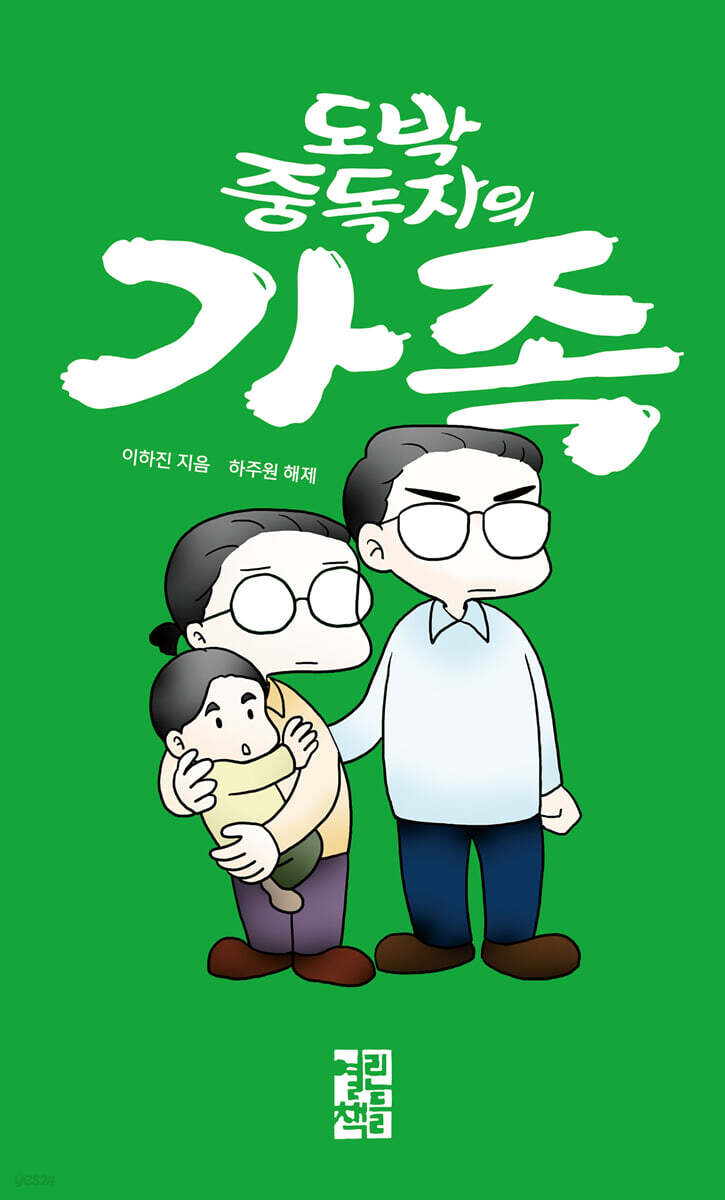
How is your family?An autobiographical story of a cartoonist whose entire family suffered because of his younger brother's gambling addiction.
It is also the story of a working woman who struggled to protect her personal life from the tidal wave of family misfortune that came crashing down on her.
An essential book to help you recognize the easily overlooked "signs of addiction" and protect your precious daily life.
August 19, 2022. Comics/Light Novel PD Shin Eun-ji
Kakao Webtoon views 6.85 million!
In the age of stocks and Bitcoin, how is your family?
The webtoon 『The Family of a Gambler』, which has been a hot topic on social media and online communities, is now available in a book format.
This book is based on the author's experience of having a family member who is a gambling addict.
It vividly shows how one stock investor becomes a gambling addict and what impact that has on his family.
It also examines the concept of "co-dependency" to understand why not only individual gamblers but also their families are influenced by them and their lives are ruined.
This book, which includes unpublished manuscripts, behind-the-scenes stories, and a psychiatrist's commentary, examines the light and dark sides of our times, drawn into gambling not just by one family, but by how to deal with it.
In the age of stocks and Bitcoin, a woman's struggles through addiction in the name of family.
In this age of massive investment, we now have the webtoon "The Family of a Gambling Addict," which vividly portrays the previously overlooked cases of stock addiction through anecdotal accounts and resonates with readers.
This book is a timely reminder of an era consumed by addictions to stocks, coins, alcohol, drugs, games, and social media, and is also a bitter anecdote depicting the process of women losing their sense of self in a patriarchal society.
The book, in addition to the existing series, includes behind-the-scenes stories to help readers gain a direct understanding of gambling addiction, and includes a self-assessment checklist for gambling problems and a helpline for victims.
It also helps to gain a deeper understanding of codependency and recovery through the interpretation of psychiatrist Ha Ju-won.
In the age of stocks and Bitcoin, how is your family?
The webtoon 『The Family of a Gambler』, which has been a hot topic on social media and online communities, is now available in a book format.
This book is based on the author's experience of having a family member who is a gambling addict.
It vividly shows how one stock investor becomes a gambling addict and what impact that has on his family.
It also examines the concept of "co-dependency" to understand why not only individual gamblers but also their families are influenced by them and their lives are ruined.
This book, which includes unpublished manuscripts, behind-the-scenes stories, and a psychiatrist's commentary, examines the light and dark sides of our times, drawn into gambling not just by one family, but by how to deal with it.
In the age of stocks and Bitcoin, a woman's struggles through addiction in the name of family.
In this age of massive investment, we now have the webtoon "The Family of a Gambling Addict," which vividly portrays the previously overlooked cases of stock addiction through anecdotal accounts and resonates with readers.
This book is a timely reminder of an era consumed by addictions to stocks, coins, alcohol, drugs, games, and social media, and is also a bitter anecdote depicting the process of women losing their sense of self in a patriarchal society.
The book, in addition to the existing series, includes behind-the-scenes stories to help readers gain a direct understanding of gambling addiction, and includes a self-assessment checklist for gambling problems and a helpline for victims.
It also helps to gain a deeper understanding of codependency and recovery through the interpretation of psychiatrist Ha Ju-won.
- You can preview some of the book's contents.
Preview
index
Episode 1: An Uneasy Premonition
Episode 2: Conditions of Addiction
Episode 3: The Road to Hell
Episode 4: Mother-in-law
Episode 5: Co-dependence
Episode 6: Family Conflict
Episode 7: Anxiety Neurosis
Episode 8: My Life
Episode 9: Choosing Between Two
Episode 10: Choice
Episode 11 Collapse
Episode 12: Asura
Episode 13: The Duty of a Child
Episode 14: Daughter-in-law
Episode 15: The Floor
Episode 16: Despair
Episode 17: Return Sign
Episode 18: The Child's Wounds
Episode 19: Everyone is having a hard time
Episode 20: Again, Today
Behind the Scenes: The Counselor's Story
My story
Behind-the-scenes cut addictive accident
codependency
At any moment, we must each walk our own paths.
Recommendation
Episode 2: Conditions of Addiction
Episode 3: The Road to Hell
Episode 4: Mother-in-law
Episode 5: Co-dependence
Episode 6: Family Conflict
Episode 7: Anxiety Neurosis
Episode 8: My Life
Episode 9: Choosing Between Two
Episode 10: Choice
Episode 11 Collapse
Episode 12: Asura
Episode 13: The Duty of a Child
Episode 14: Daughter-in-law
Episode 15: The Floor
Episode 16: Despair
Episode 17: Return Sign
Episode 18: The Child's Wounds
Episode 19: Everyone is having a hard time
Episode 20: Again, Today
Behind the Scenes: The Counselor's Story
My story
Behind-the-scenes cut addictive accident
codependency
At any moment, we must each walk our own paths.
Recommendation
Episode 1: An Uneasy Premonition
Episode 2: Conditions of Addiction
Episode 3: The Road to Hell
Episode 4: Mother-in-law
Episode 5: Co-dependence
Episode 6: Family Conflict
Episode 7: Anxiety Neurosis
Episode 8: My Life
Episode 9: Choosing Between Two
Episode 10: Choice
Episode 11 Collapse
Episode 12: Asura
Episode 13: The Duty of a Child
Episode 14: Daughter-in-law
Episode 15: The Floor
Episode 16: Despair
Episode 17: Return Sign
Episode 18: The Child's Wounds
Episode 19: Everyone is having a hard time
Episode 20: Again, Today
Behind the Scenes
A Counselor's Story
My story
Behind the scenes cut
Addictive thinking
codependency
clear
At any given moment, we must each walk our own paths.
supplement
Adult Gambling Problem Self-Assessment
Youth Gambling Problem Self-Assessment
Helpline
Recommendation, Episode 1: An Uneasy Premonition
Episode 2: Conditions of Addiction
Episode 3: The Road to Hell
Episode 4: Mother-in-law
Episode 5: Co-dependence
Episode 6: Family Conflict
Episode 7: Anxiety Neurosis
Episode 8: My Life
Episode 9: Choosing Between Two
Episode 10: Choice
Episode 11 Collapse
Episode 12: Asura
Episode 13: The Duty of a Child
Episode 14: Daughter-in-law
Episode 15: The Floor
Episode 16: Despair
Episode 17: Return Sign
Episode 18: The Child's Wounds
Episode 19: Everyone is having a hard time
Episode 20: Again, Today
Behind the Scenes
A Counselor's Story
My story
Behind the scenes cut
Addictive thinking
codependency
clear
At any given moment, we must each walk our own paths.
supplement
Adult Gambling Problem Self-Assessment
Youth Gambling Problem Self-Assessment
Helpline
Recommendation
Episode 2: Conditions of Addiction
Episode 3: The Road to Hell
Episode 4: Mother-in-law
Episode 5: Co-dependence
Episode 6: Family Conflict
Episode 7: Anxiety Neurosis
Episode 8: My Life
Episode 9: Choosing Between Two
Episode 10: Choice
Episode 11 Collapse
Episode 12: Asura
Episode 13: The Duty of a Child
Episode 14: Daughter-in-law
Episode 15: The Floor
Episode 16: Despair
Episode 17: Return Sign
Episode 18: The Child's Wounds
Episode 19: Everyone is having a hard time
Episode 20: Again, Today
Behind the Scenes
A Counselor's Story
My story
Behind the scenes cut
Addictive thinking
codependency
clear
At any given moment, we must each walk our own paths.
supplement
Adult Gambling Problem Self-Assessment
Youth Gambling Problem Self-Assessment
Helpline
Recommendation, Episode 1: An Uneasy Premonition
Episode 2: Conditions of Addiction
Episode 3: The Road to Hell
Episode 4: Mother-in-law
Episode 5: Co-dependence
Episode 6: Family Conflict
Episode 7: Anxiety Neurosis
Episode 8: My Life
Episode 9: Choosing Between Two
Episode 10: Choice
Episode 11 Collapse
Episode 12: Asura
Episode 13: The Duty of a Child
Episode 14: Daughter-in-law
Episode 15: The Floor
Episode 16: Despair
Episode 17: Return Sign
Episode 18: The Child's Wounds
Episode 19: Everyone is having a hard time
Episode 20: Again, Today
Behind the Scenes
A Counselor's Story
My story
Behind the scenes cut
Addictive thinking
codependency
clear
At any given moment, we must each walk our own paths.
supplement
Adult Gambling Problem Self-Assessment
Youth Gambling Problem Self-Assessment
Helpline
Recommendation
Detailed image

Into the book
"You're saying there's not a penny left? How much money is that?"
"It's not a lie.
We checked the account and confirmed.
"I really didn't have a single penny."
"That's ridiculous.
Who wouldn't be crazy to invest all their money in such a risky gift option? They might have hidden it somewhere.
Let's find a way to deal with it!"
---pp.
35~36
Stock addicts are the most educated and hard-working of the gambling addicts.
Also, not everyone who gambles becomes addicted, but those who have had big wins or made a lot of money are more likely to become addicted.
When you win a lot of money, the hormone called 'dopamine' is released in the brain, and the pleasure you feel at that time is stronger than anything else in the world, so the brain unconsciously pursues this pleasure, rationalizes it, and tries to engage in addictive behavior by making all kinds of excuses.
---pp.
40~41
"Who's going to pay off the third debt? I said I'm only going to take care of my mother's business.
Even my mother just got involved now.
You'll be more careful next time.
And you keep talking about counseling when it's not even certain yet? Let's talk about it once it's confirmed that your third child has a gambling addiction.
Honestly, I feel really bad when I hear stories like that.
Helping family members isn't a bad thing, but you… "
---pp.
75~76
"What, don't men suffer from co-dependency? Come to think of it, we do too. Our husbands and younger siblings don't seem to think much of it.
I'm also the type of person who thinks the third child should take care of things on his own, so I don't really think much about it, but my mother keeps calling me... She keeps calling me..."
---pp.
94~96
"If it were someone else, I would understand, but we are brothers.
I was sad because my family didn't believe me.
"
"Why would my older brother do that? That's what my older brother did.
I said I did it because I promised my wife.
That's why it's important for a woman to come into the house..."
---pp.
155~156
I was depressed about living in Korean society.
The book says that depression starts from a feeling of helplessness and despair that you can't do anything, so you should first move your body and do something.
So I drew a cartoon.
If you have paper and pencil, you can draw, but if you don't have those, you can draw on the floor with a stick.
In the comics, 'I could do anything'.
---pp.
162~163
After I got married, I started living in the 'Korean way' again.
It wasn't because I was a good daughter-in-law, but because I didn't want to fight.
But as I draw cartoons and reflect on life, I realize it again.
Avoiding it won't change anything.
Life is a 'struggle'.
---pp.
166~168
"I understand your feelings, but under the current law, it is difficult to be admitted to the hospital without your consent.
And all family members are adults who must take responsibility for their own actions.
I think you know that too, ma'am.
We can't change other people."
---p.
304
"Codependence is also said like this:
It's about continuing to react normally in abnormal situations.
In an abnormal situation like gambling addiction, you shouldn't react normally, but you should continue to react normally, trying to help the person in need."
---p.
340
That's not what I should have said.
I'm sorry that Mom should have checked in advance and didn't know until now.
How much did it hurt? How sad were you? I'm so upset that Mom didn't know.
I hate myself for neglecting you, my precious one, while worrying about other things.
---pp.
354~356
Most codependent patients are women and mothers with children.
Because I can't run away and leave my child behind.
Because I tried my best to live happily together somehow.
He says he does that because he doesn't know how to earn a living on his own. He lives like that stupidly, and even though he might be ridiculed, he tried to protect his family somehow, and that's how he ended up like that.
---pp.
367~369
"It is said that in ordinary daily life, there are five times more good things than bad things.
They say that when good things and bad things are one to one, people feel that life is really bad.
"
"How can you create so many good things? Don't they just happen?"
“Everyone thinks so, but it doesn’t actually have to be a big deal.
It can be small, too."
---p.
393
It's really amazing.
From a distance, they all seem to be blooming beautifully, but when you get closer, you can see that they are raw, have been eaten by insects, and are covered in dirt. Each plant has its own story.
Just like our lives…
"It's not a lie.
We checked the account and confirmed.
"I really didn't have a single penny."
"That's ridiculous.
Who wouldn't be crazy to invest all their money in such a risky gift option? They might have hidden it somewhere.
Let's find a way to deal with it!"
---pp.
35~36
Stock addicts are the most educated and hard-working of the gambling addicts.
Also, not everyone who gambles becomes addicted, but those who have had big wins or made a lot of money are more likely to become addicted.
When you win a lot of money, the hormone called 'dopamine' is released in the brain, and the pleasure you feel at that time is stronger than anything else in the world, so the brain unconsciously pursues this pleasure, rationalizes it, and tries to engage in addictive behavior by making all kinds of excuses.
---pp.
40~41
"Who's going to pay off the third debt? I said I'm only going to take care of my mother's business.
Even my mother just got involved now.
You'll be more careful next time.
And you keep talking about counseling when it's not even certain yet? Let's talk about it once it's confirmed that your third child has a gambling addiction.
Honestly, I feel really bad when I hear stories like that.
Helping family members isn't a bad thing, but you… "
---pp.
75~76
"What, don't men suffer from co-dependency? Come to think of it, we do too. Our husbands and younger siblings don't seem to think much of it.
I'm also the type of person who thinks the third child should take care of things on his own, so I don't really think much about it, but my mother keeps calling me... She keeps calling me..."
---pp.
94~96
"If it were someone else, I would understand, but we are brothers.
I was sad because my family didn't believe me.
"
"Why would my older brother do that? That's what my older brother did.
I said I did it because I promised my wife.
That's why it's important for a woman to come into the house..."
---pp.
155~156
I was depressed about living in Korean society.
The book says that depression starts from a feeling of helplessness and despair that you can't do anything, so you should first move your body and do something.
So I drew a cartoon.
If you have paper and pencil, you can draw, but if you don't have those, you can draw on the floor with a stick.
In the comics, 'I could do anything'.
---pp.
162~163
After I got married, I started living in the 'Korean way' again.
It wasn't because I was a good daughter-in-law, but because I didn't want to fight.
But as I draw cartoons and reflect on life, I realize it again.
Avoiding it won't change anything.
Life is a 'struggle'.
---pp.
166~168
"I understand your feelings, but under the current law, it is difficult to be admitted to the hospital without your consent.
And all family members are adults who must take responsibility for their own actions.
I think you know that too, ma'am.
We can't change other people."
---p.
304
"Codependence is also said like this:
It's about continuing to react normally in abnormal situations.
In an abnormal situation like gambling addiction, you shouldn't react normally, but you should continue to react normally, trying to help the person in need."
---p.
340
That's not what I should have said.
I'm sorry that Mom should have checked in advance and didn't know until now.
How much did it hurt? How sad were you? I'm so upset that Mom didn't know.
I hate myself for neglecting you, my precious one, while worrying about other things.
---pp.
354~356
Most codependent patients are women and mothers with children.
Because I can't run away and leave my child behind.
Because I tried my best to live happily together somehow.
He says he does that because he doesn't know how to earn a living on his own. He lives like that stupidly, and even though he might be ridiculed, he tried to protect his family somehow, and that's how he ended up like that.
---pp.
367~369
"It is said that in ordinary daily life, there are five times more good things than bad things.
They say that when good things and bad things are one to one, people feel that life is really bad.
"
"How can you create so many good things? Don't they just happen?"
“Everyone thinks so, but it doesn’t actually have to be a big deal.
It can be small, too."
---p.
393
It's really amazing.
From a distance, they all seem to be blooming beautifully, but when you get closer, you can see that they are raw, have been eaten by insects, and are covered in dirt. Each plant has its own story.
Just like our lives…
---p.
411
411
Publisher's Review
This jewel-like work will save many people in the world.
― Recipient (Cartoonist)
An excellent textbook on how to deal with a family member addicted to stocks or coins, and how to protect your own life.
― Wi Geun-woo (popular culture columnist)
This narrative, written from the perspective of someone who has shared the weight of addiction, is invaluable.
― Ha Ju-won (psychiatrist)
The Return of Cassandra Lee Ha-jin
Kakao Webtoon's Biggest Hits of 2022
The number of individual stock investors reached 13.74 million at the end of 2021, more than doubling from the previous year.
The number of overseas stock accounts has increased sixfold over the past three years. One in five MZ generations invests in stocks.
Some analyses suggest that the 2030 generation perceives ultra-high-risk investments as akin to a game (Financial Supervisory Service report, "Characteristics of the MZ Generation and Implications for the Financial Industry").
In the age of massive investment, the shadows are also dark.
Beyond personal bankruptcy and family conflict, there are reports of families being torn apart and tragic incidents one after another.
At a time when national policy-level relief measures are being discussed, it is rare to see excessive stock investment as a form of gambling addiction and recognize its dangers.
This is also the reason why the webtoon, which vividly portrays a case of stock addiction, which had been overlooked until now, from a family's perspective and creates a strong sense of empathy, quickly spread through word of mouth on internet communities and social media.
As a result, the webtoon "The Family of a Gambler," which had accumulated over 7 million views in just 6 months, was finally published as a book.
This book is a vivid account of an individual investor's transformation into a gambling addict.
My brother-in-law, who has been managing the family's assets through stock investments, begins to invest in increasingly risky products.
The author warns his brother-in-law of his possible gambling addiction, but his family condemns him for it.
Their love, which they consider to be their natural duty to cover up the mistakes of their family members and pay off their debts, brings disaster.
The desire to protect one another is constantly betrayed and swayed, leading to a psychological disorder called “codependency.”
A woman's struggle to escape the cycle of misfortune and restore her normal life.
Lee Ha-jin is the author who built a cult following with her webtoon "Cassandra," which reinterprets the Greek classic "Iliad" from a feminist perspective focused on politics and strategy.
After a long period of silence following the publication of Part 2 of "Cassandra" in 2014, he published "The Family of a Gambler" in 2022.
This book explains the reasons for the hiatus and is also a work that captures a period of the author's life.
The author deals with his younger brother's gambling addiction during this time.
My younger brother, who grew up poor and studied stocks with the determination to become rich, takes charge of managing the assets of his mother and brothers.
However, it suffered huge losses due to the global financial crisis caused by the Lehman Brothers incident.
The younger brother cannot forget his experience of making a lot of money in the stock market, and he starts to deal with increasingly risky derivatives to cover his losses, which leads to his gambling addiction.
This book is a memoir of living as a family member of a gambling addict, and at the same time, it is a story of a woman's struggle to seek truth within a patriarchal system.
The narrator, Hajin, whom the author reveals to be a character projected onto Cassandra and herself, is the first among the family members to discover the possibility of her younger brother's gambling addiction.
And he warns his family, but no one listens to him.
In a situation where paying off gambling debts in the name of family is believed to be good intentions, there is nothing a woman who speaks out for the truth can do.
Within a rigid patriarchal system, no matter how pioneering and wise a voice may be, it is only the voice of a woman who is at the bottom and a third party.
Despite the people around her trying to dissuade her, the mother-in-law, who supports her daughter-in-law financially and emotionally, says she cannot give up on her child, and calls her daughter-in-law constantly whenever the situation gets worse.
The author's process of being sucked into co-dependence by being swept up in her mother-in-law's emotional outbursts, a mixture of reproach, avoidance, and nagging, poignantly reveals the reality of women who find it difficult to maintain their own independent lives in their relationship with their "in-laws."
This book is a timely reminder of an era consumed by addictions to stocks, coins, alcohol, drugs, games, and social media, and is also a bitter anecdote depicting the process of women losing their sense of self in a patriarchal society.
It portrays a multi-layered portrait of the Korean patriarchal system that forces women into co-dependence: a mother who does her best to cover up her children's faults but ends up being the biggest obstacle preventing them from solving their problems; and a daughter who develops anxiety disorders because she perceives her parents' failures and flaws as her own responsibility.
Thus, the book becomes a stark case study and a difficult paradox for women who must continue to live as the family of a gambling addict.
Behind the scenes, unlocks, and appendices
Everything You Need to Know About Gambling Addiction in One Volume
This book faithfully complements the theoretical and practical aspects of the work with a wealth of appendices added to the existing serialized comics.
First, through the author's behind-the-scenes cuts and behind-the-scenes stories, the story of a counselor who was a gambling addict, the author's backstory of acknowledging the problems that still remain while deciding to walk his own path, and a 6-panel cartoon explaining addictive thinking and co-dependency, it helps readers directly understand gambling addiction.
At the end, it includes a self-checklist for gambling problems for adults and adolescents, as well as a helpline for victim relief.
It also helps to provide a deeper understanding of codependency and recovery through the commentary by psychiatrist Ha Ju-won, a special director of the Korean Society of Addiction Psychiatry and co-author of 『How to Gamble』 and 『Addiction Psychiatry 2nd Edition』.
As Dr. Ha Ju-won said in the article, we live in an era where we need to “accept the fact that we are people who can gamble.”
Drinking a can of beer a day, a social media window that you can't turn off even for a moment, a stock market trading app or coin exchange app that you can never delete are all signs of addiction.
Nevertheless, “humans are weak beings, but when we acknowledge our weakness, we can become strong.”
This book is a strong hand that reaches out to us like that.
As the author says, "I may never get better from this disease," but just reading about the struggle of taking steps to "live the way I want to live, just for today," while "even so, I resolve to do so again," will make our daily lives a little stronger.
Author's Note
The wind blows.
I too must now go my own way again.
Something might happen again someday, and this illness I have might never get better.
Even so, I reaffirm my resolve this morning.
Just for today, I'm going to live the way I want.
Today is the day.
― Recipient (Cartoonist)
An excellent textbook on how to deal with a family member addicted to stocks or coins, and how to protect your own life.
― Wi Geun-woo (popular culture columnist)
This narrative, written from the perspective of someone who has shared the weight of addiction, is invaluable.
― Ha Ju-won (psychiatrist)
The Return of Cassandra Lee Ha-jin
Kakao Webtoon's Biggest Hits of 2022
The number of individual stock investors reached 13.74 million at the end of 2021, more than doubling from the previous year.
The number of overseas stock accounts has increased sixfold over the past three years. One in five MZ generations invests in stocks.
Some analyses suggest that the 2030 generation perceives ultra-high-risk investments as akin to a game (Financial Supervisory Service report, "Characteristics of the MZ Generation and Implications for the Financial Industry").
In the age of massive investment, the shadows are also dark.
Beyond personal bankruptcy and family conflict, there are reports of families being torn apart and tragic incidents one after another.
At a time when national policy-level relief measures are being discussed, it is rare to see excessive stock investment as a form of gambling addiction and recognize its dangers.
This is also the reason why the webtoon, which vividly portrays a case of stock addiction, which had been overlooked until now, from a family's perspective and creates a strong sense of empathy, quickly spread through word of mouth on internet communities and social media.
As a result, the webtoon "The Family of a Gambler," which had accumulated over 7 million views in just 6 months, was finally published as a book.
This book is a vivid account of an individual investor's transformation into a gambling addict.
My brother-in-law, who has been managing the family's assets through stock investments, begins to invest in increasingly risky products.
The author warns his brother-in-law of his possible gambling addiction, but his family condemns him for it.
Their love, which they consider to be their natural duty to cover up the mistakes of their family members and pay off their debts, brings disaster.
The desire to protect one another is constantly betrayed and swayed, leading to a psychological disorder called “codependency.”
A woman's struggle to escape the cycle of misfortune and restore her normal life.
Lee Ha-jin is the author who built a cult following with her webtoon "Cassandra," which reinterprets the Greek classic "Iliad" from a feminist perspective focused on politics and strategy.
After a long period of silence following the publication of Part 2 of "Cassandra" in 2014, he published "The Family of a Gambler" in 2022.
This book explains the reasons for the hiatus and is also a work that captures a period of the author's life.
The author deals with his younger brother's gambling addiction during this time.
My younger brother, who grew up poor and studied stocks with the determination to become rich, takes charge of managing the assets of his mother and brothers.
However, it suffered huge losses due to the global financial crisis caused by the Lehman Brothers incident.
The younger brother cannot forget his experience of making a lot of money in the stock market, and he starts to deal with increasingly risky derivatives to cover his losses, which leads to his gambling addiction.
This book is a memoir of living as a family member of a gambling addict, and at the same time, it is a story of a woman's struggle to seek truth within a patriarchal system.
The narrator, Hajin, whom the author reveals to be a character projected onto Cassandra and herself, is the first among the family members to discover the possibility of her younger brother's gambling addiction.
And he warns his family, but no one listens to him.
In a situation where paying off gambling debts in the name of family is believed to be good intentions, there is nothing a woman who speaks out for the truth can do.
Within a rigid patriarchal system, no matter how pioneering and wise a voice may be, it is only the voice of a woman who is at the bottom and a third party.
Despite the people around her trying to dissuade her, the mother-in-law, who supports her daughter-in-law financially and emotionally, says she cannot give up on her child, and calls her daughter-in-law constantly whenever the situation gets worse.
The author's process of being sucked into co-dependence by being swept up in her mother-in-law's emotional outbursts, a mixture of reproach, avoidance, and nagging, poignantly reveals the reality of women who find it difficult to maintain their own independent lives in their relationship with their "in-laws."
This book is a timely reminder of an era consumed by addictions to stocks, coins, alcohol, drugs, games, and social media, and is also a bitter anecdote depicting the process of women losing their sense of self in a patriarchal society.
It portrays a multi-layered portrait of the Korean patriarchal system that forces women into co-dependence: a mother who does her best to cover up her children's faults but ends up being the biggest obstacle preventing them from solving their problems; and a daughter who develops anxiety disorders because she perceives her parents' failures and flaws as her own responsibility.
Thus, the book becomes a stark case study and a difficult paradox for women who must continue to live as the family of a gambling addict.
Behind the scenes, unlocks, and appendices
Everything You Need to Know About Gambling Addiction in One Volume
This book faithfully complements the theoretical and practical aspects of the work with a wealth of appendices added to the existing serialized comics.
First, through the author's behind-the-scenes cuts and behind-the-scenes stories, the story of a counselor who was a gambling addict, the author's backstory of acknowledging the problems that still remain while deciding to walk his own path, and a 6-panel cartoon explaining addictive thinking and co-dependency, it helps readers directly understand gambling addiction.
At the end, it includes a self-checklist for gambling problems for adults and adolescents, as well as a helpline for victim relief.
It also helps to provide a deeper understanding of codependency and recovery through the commentary by psychiatrist Ha Ju-won, a special director of the Korean Society of Addiction Psychiatry and co-author of 『How to Gamble』 and 『Addiction Psychiatry 2nd Edition』.
As Dr. Ha Ju-won said in the article, we live in an era where we need to “accept the fact that we are people who can gamble.”
Drinking a can of beer a day, a social media window that you can't turn off even for a moment, a stock market trading app or coin exchange app that you can never delete are all signs of addiction.
Nevertheless, “humans are weak beings, but when we acknowledge our weakness, we can become strong.”
This book is a strong hand that reaches out to us like that.
As the author says, "I may never get better from this disease," but just reading about the struggle of taking steps to "live the way I want to live, just for today," while "even so, I resolve to do so again," will make our daily lives a little stronger.
Author's Note
The wind blows.
I too must now go my own way again.
Something might happen again someday, and this illness I have might never get better.
Even so, I reaffirm my resolve this morning.
Just for today, I'm going to live the way I want.
Today is the day.
GOODS SPECIFICS
- Date of issue: September 5, 2022
- Page count, weight, size: 488 pages | 714g | 127*210*30mm
- ISBN13: 9788932922843
- ISBN10: 8932922845
You may also like
카테고리
korean


korean

![GQ KOREA Mark (Monthly): December [2025]](http://librairie.coreenne.fr/cdn/shop/files/8ef265dbbfbf186523ed75ba7319009d.jpg?v=1765340328&width=3840)


