

Seo Young-dong's story
 |
Description
Book Introduction
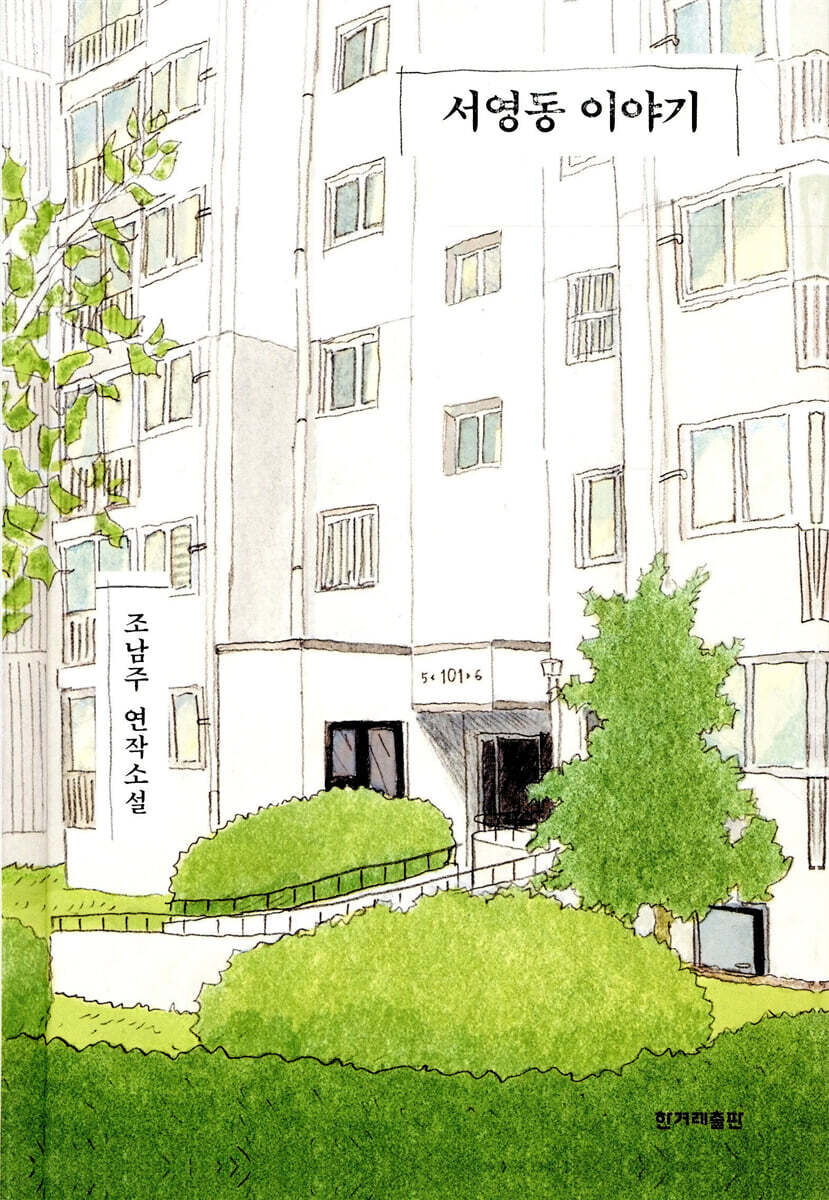
The transparent struggles and ordinary desires of modern people Asking about where we live and what it means to live New work by Cho Nam-joo, author of "Kim Ji-young, Born 1982" The new book 『Seoyoung-dong Story』 by author Cho Nam-joo, who created a modern resonance in Korean women's narratives with 『Kim Ji-young, Born 1982』, is being published. The author, who has keenly delved into the current state of Korean society and offered readers the possibility of empathy and solidarity, delicately portrays the transparent struggles and ordinary desires of modern people climbing the social ladder day after day through the real estate issue, a major topic of discussion today. This book is a series of seven stories that began with "Do You Know Spring Day Dad?" from the thematic novel collection "City Fiction" published in the summer of 2020. The seven stories unfold around the fictional region of Seoyoung-dong. If "Do You Know Spring Dad?" was a topographical map of the conflicts of interest surrounding housing prices, "Seoyeong-dong Story" brings together a diverse cast of characters who live in Seoyeong-dong. The sharp divisions between people due to the steadily rising housing prices, the differences in views on real estate between the older and younger generations, parents' jobs and children's education, and the unreasonable treatment of irregular workers are so uncomfortable that I want to try to hide them, but inside of them lies the realistic wish that the place I live would make my life a little better. It is not difficult to picture in one's mind the landscape of Seoyoung-dong, where inconvenient truths and inevitable desires are intricately intertwined. It is because the appearance of my neighborhood, where I live, overlaps so easily with Seoyoung-dong, and therefore the story of Seoyoung-dong also becomes our story. |
- You can preview some of the book's contents.
Preview
index
Spring Day Dad (New Member)
Warning Man
Sally's mother Eun-ju
Documentary director Ahn Bo-mi
Gyeonghwa, President of Baek Eun Academy Association
Heejin, a cultured citizen of Seoul
Alice in Wonderland
Author's Note
Warning Man
Sally's mother Eun-ju
Documentary director Ahn Bo-mi
Gyeonghwa, President of Baek Eun Academy Association
Heejin, a cultured citizen of Seoul
Alice in Wonderland
Author's Note
Into the book
A huge wave swept through Mayongseong and Nodogang Rivers and flowed all the way to Seoyeongdong.
A 34 pyeong apartment in Noble, which was worth around 1 billion won, is now worth 1.4 billion won.
So, is this a bubble? Or is it just now being properly evaluated? The answer can be found by examining the government's successive real estate policies.
Last month, they announced plans to develop public housing in the metropolitan area and designate additional regulated areas, and today they've gone so far as to strengthen the comprehensive real estate tax, reduce benefits for rental businesses, and block loans to homeowners.
Strong regulations follow? That means you'll never be caught.
--- p.36, from "Spring Day Dad (New Member)"
"How would that person know if his father threw it away or ate it? To that person, his father and the guards are now just accepting the broken apples.
What if I throw it away and what if I curse at my daughter?”
With a good heart, I bought my father's favorite ancestral rite rice cakes and sikhye.
But Yujeong left the security office with a bag of snacks and regretted not coming at all.
Her father didn't even call her to stop her or say goodbye, telling her to go carefully. He just watched Yujeong walk away.
He seemed angry and embarrassed at the same time.
Sometimes he seemed to be thinking deeply, and sometimes he seemed to have no thoughts at all.
It seemed like he had given up, but it also seemed like he had made up his mind.
Anyway, it was a face I was seeing for the first time.
He wasn't like his father.
--- p.64, from "Warning Man"
“Teacher, is there anything else I don’t know about?”
I thought you were going to talk about Kay's mom.
He was the one who trusted me with both of my children and sent them there, the one who cared more about my kindergarten work and cooperated with me than anyone else, and because of the trust and affection I had for him, I couldn't bring myself to tell him to leave.
But the director gave an unexpected reason.
“The mothers in this neighborhood talk a lot, don’t they?” --- p.105, from “Sally’s Mother Eun-ju”
Eun-ju was also sick of it.
Sally's mom, Saebom's mom, the life of trying not to be seen as one of those women, the words surrounding those women, the misunderstandings, the hostility, I was really sick of it.
So what do you want me to do?
What kind of woman is that, and what kind of woman is that?
--- p.109, from "Sally's Mother Eun-ju"
Bomi does not deny that her father was a frugal, honest, and intelligent man.
But I also think it is true that we are a lucky generation that lived through the high-growth period of South Korea.
Back in the day, when regulations weren't as stringent as they are today and there were virtually no taxes on acquisition, transfer, or ownership, my father constantly bought and sold real estate in a manner that bordered on speculation.
We were lucky and the construction industry was booming.
Afterwards, the villa was remodeled into a one-room building and put up for rent. As there are many young office workers in the digital complex, the space has never been vacant and has been a stable source of income for the family to this day.
What does home mean to my father?
What is an apartment?
--- pp.121~122, from “Documentary Director Ahn Bo-mi”
The family was unable to leave room 1102, building 115.
Moving your nest is not something you can decide on quickly and put into action right away.
While the house prices continued to rise, the house was suffering from the noisy upstairs and the sensitive downstairs.
About a year after moving in, the market price became 1.5 billion won.
Heejin both liked and disliked her home.
It was both fortunate and unfortunate to have this house.
I was both happy and depressed.
--- p.208, from “Heejin, a Cultured Citizen of Seoul”
I opened Chrome to check the elementary school progress chart on the academy website, and an article titled "2030 Young-Geul Tribe, Apartment Purchases in the Metropolitan Area Are Serious" appeared on the portal site's main page.
Ayoung was very unfamiliar with the cases of people in their 30s listed in the article.
It was a story from such a different world that I wasn't shocked or angry.
What kind of soul is it that can buy an apartment if you gather it together?
I don't even have a soul.
I laughed, but honestly, it wasn't funny.
A 34 pyeong apartment in Noble, which was worth around 1 billion won, is now worth 1.4 billion won.
So, is this a bubble? Or is it just now being properly evaluated? The answer can be found by examining the government's successive real estate policies.
Last month, they announced plans to develop public housing in the metropolitan area and designate additional regulated areas, and today they've gone so far as to strengthen the comprehensive real estate tax, reduce benefits for rental businesses, and block loans to homeowners.
Strong regulations follow? That means you'll never be caught.
--- p.36, from "Spring Day Dad (New Member)"
"How would that person know if his father threw it away or ate it? To that person, his father and the guards are now just accepting the broken apples.
What if I throw it away and what if I curse at my daughter?”
With a good heart, I bought my father's favorite ancestral rite rice cakes and sikhye.
But Yujeong left the security office with a bag of snacks and regretted not coming at all.
Her father didn't even call her to stop her or say goodbye, telling her to go carefully. He just watched Yujeong walk away.
He seemed angry and embarrassed at the same time.
Sometimes he seemed to be thinking deeply, and sometimes he seemed to have no thoughts at all.
It seemed like he had given up, but it also seemed like he had made up his mind.
Anyway, it was a face I was seeing for the first time.
He wasn't like his father.
--- p.64, from "Warning Man"
“Teacher, is there anything else I don’t know about?”
I thought you were going to talk about Kay's mom.
He was the one who trusted me with both of my children and sent them there, the one who cared more about my kindergarten work and cooperated with me than anyone else, and because of the trust and affection I had for him, I couldn't bring myself to tell him to leave.
But the director gave an unexpected reason.
“The mothers in this neighborhood talk a lot, don’t they?” --- p.105, from “Sally’s Mother Eun-ju”
Eun-ju was also sick of it.
Sally's mom, Saebom's mom, the life of trying not to be seen as one of those women, the words surrounding those women, the misunderstandings, the hostility, I was really sick of it.
So what do you want me to do?
What kind of woman is that, and what kind of woman is that?
--- p.109, from "Sally's Mother Eun-ju"
Bomi does not deny that her father was a frugal, honest, and intelligent man.
But I also think it is true that we are a lucky generation that lived through the high-growth period of South Korea.
Back in the day, when regulations weren't as stringent as they are today and there were virtually no taxes on acquisition, transfer, or ownership, my father constantly bought and sold real estate in a manner that bordered on speculation.
We were lucky and the construction industry was booming.
Afterwards, the villa was remodeled into a one-room building and put up for rent. As there are many young office workers in the digital complex, the space has never been vacant and has been a stable source of income for the family to this day.
What does home mean to my father?
What is an apartment?
--- pp.121~122, from “Documentary Director Ahn Bo-mi”
The family was unable to leave room 1102, building 115.
Moving your nest is not something you can decide on quickly and put into action right away.
While the house prices continued to rise, the house was suffering from the noisy upstairs and the sensitive downstairs.
About a year after moving in, the market price became 1.5 billion won.
Heejin both liked and disliked her home.
It was both fortunate and unfortunate to have this house.
I was both happy and depressed.
--- p.208, from “Heejin, a Cultured Citizen of Seoul”
I opened Chrome to check the elementary school progress chart on the academy website, and an article titled "2030 Young-Geul Tribe, Apartment Purchases in the Metropolitan Area Are Serious" appeared on the portal site's main page.
Ayoung was very unfamiliar with the cases of people in their 30s listed in the article.
It was a story from such a different world that I wasn't shocked or angry.
What kind of soul is it that can buy an apartment if you gather it together?
I don't even have a soul.
I laughed, but honestly, it wasn't funny.
--- pp.240~241, from "Alley in Wonderland"
Publisher's Review
A new work by author Cho Nam-joo of "Kim Ji-young, Born 1982"
The transparent struggles and ordinary desires of modern people
Asking about where we live and what it means to live
“I had a very difficult, painful, and embarrassing time writing this novel.”
_Author's Note
The new book “Seo Young-dong Story” by author Cho Nam-joo, who created a modern resonance in Korean women’s narratives with “Kim Ji-young, Born 1982,” is being published.
The author, who has keenly delved into the current state of Korean society and offered readers the possibility of empathy and solidarity, delicately portrays the transparent struggles and ordinary desires of modern people climbing the social ladder day after day through the real estate issue, a major topic of discussion today.
This book is a series of seven stories that began with "Do You Know Spring Day Dad?" from the thematic novel collection "City Fiction" published in the summer of 2020. The seven stories unfold around the fictional region of Seoyoung-dong.
If "Do You Know Spring Day Dad?" was a topographical map of the conflicts of interest surrounding housing prices, "Seoyeong-dong Story" brings together a diverse cast of characters who live in Seoyeong-dong.
The sharp divisions between people due to the steadily rising housing prices, the differences in views on real estate between the older and younger generations, parents' jobs and children's education, and the unreasonable treatment of irregular workers are so uncomfortable that I want to try to hide them, but inside of them lies the realistic wish that the place I live would make my life a little better.
It is not difficult to picture in one's mind the landscape of Seoyoung-dong, where inconvenient truths and inevitable desires are intricately intertwined.
It is because the appearance of my neighborhood, where I live, overlaps so easily with Seoyoung-dong, and therefore the story of Seoyoung-dong also becomes our story.
“What is a home to us? What is an apartment?”
On the meaning of 'where to live' and 'to live'
In Seoul, owning a home is more of a dream, and with the rise of temporary housing like studio apartments, the meaning of "home" has changed in our society.
The characters in "Seoyoung-dong Story", who are both members of the local community and individuals, apartment residents and property owners, meaningfully illuminate the changing meaning of "a place to live" and "living" as homes have become closer to a means and method for increasing assets rather than a sanctuary where one can rest one's tired body and mind.
Even for the sake of the children, the internet cafe member Bomnalappa (〈Bomnalappa (New Sprout Member)〉) who uses Daechi-dong real estate for high-priced transactions while insisting that the price of houses in Seoyeong-dong should rise; Bomi (〈Documentary Director Bomi〉) who has no choice but to admit that her frugal and honest father made money through real estate speculation and was a beneficiary of the era of development and economic boom; Gyeonghwa (〈Baek Eun Academy Association President Gyeonghwa〉) who is a private academy director, a parent, and a resident of Seoyeong-dong who opposes the construction of a senior welfare facility next to her academy while taking care of her mother who has dementia; and Heejin (〈Seoul Citizen Heejin〉) who, after much hardship, earns an apartment that keeps rising day by day, but ends up collapsing helplessly due to her family's misfortune caused by her neighbors.
As we watch the characters in the novel struggle to increase the value of our neighborhoods and homes, the saying, "The rich get richer," might truly come to mind.
However, the novel does not depict their struggle only as a competition over housing prices.
They are so ordinary beings, as Heejin says, “I like my house and I don’t like it, and I’m both happy and unhappy to have this house,” and they struggle between having a place to live and living like human beings.
When the desire to "live well," which becomes transparent as the novel ends, as if removing a shadow, is revealed through the most perfect and imperfect house in our lives, it suddenly comes to us as something pure and complete.
The people of Seoyoung-dong have a strong human touch.
Just by taking a deep breath of that life, wouldn't we be a little closer to 'living'?
The illusion that I am not that kind of person,
Courage to face the uncomfortable but universal truth
These days, we often hear stories about children's first greetings at the start of a new semester being about the size of their apartment.
"Seoyoung-dong Story" sharply criticizes how easily the space called home acts as a standard of 'class' and how implicitly and generally it is imprinted on us.
The sight of residents rationalizing their abuse of security guards by citing apartment management fees ("Warning Man") and Eun-ju's attitude, which strangely changes after learning the true nature of others while hoping not to become "that kind of mother" in the world of mothers ("Sally's Mom, Eun-ju"), is clearly uncomfortable.
But at the same time, their appearance makes me look back at my complacent thoughts that 'at least I am not that kind of person'.
In the face of that uncomfortable but universal truth, the sense of defeat felt by Ellie (in “Ellie in Wonderland”), who has no soul to gather and is working part-time jobs while reading an article titled “2030 Young-Gul Tribe, Apartment Purchase Tax in the Metropolitan Area is Serious”, comes across as even more pitiful and bitter.
As with the author's novels, "Seo Young-dong's Story" makes us face the compassion felt at the end of discomfort and the courage planted like a small seed within it.
This is why the author's words, "It was very difficult, painful, and shameful," resonate even more deeply in the process of showing the way we live without reservation.
Fortunately and unfortunately, happy and depressed
A hyperrealistic novel that shows a cross-section of our lives
“Sometimes I am happy.
“Sometimes I feel trapped.” Through Ji-young’s words in “Kim Ji-young, Born 1982” and Eun-ju’s words in “The Story of Seoyoung-dong,” “I feel fortunate and unfortunate, happy and depressed,” we can get one step closer to the world the author sees.
There is no life in this world that is always happy, and there is no life that is always sad.
Not everything can go right, and not everything can go wrong.
The author's delicate gaze, which delicately follows this subtly intersecting life, is outstanding, and the cross-section of life reflected before us like a mirror is depicted more realistically through this book.
In a work that is more real than reality, we can become anyone among Bomnalappa, Eunju, Bomi, Gyeonghwa, and Ellie.
After experiencing that wonderful empathy, and pondering Kyunghwa's words, "There is nothing in the world that is only someone else's business," I realize that the people of Seoyoung-dong are still striving to be a little more solidaristic.
“It’s unfair and sad,” but also “I feel ashamed and shameful for feeling so shameless.”
The people in the novel will continue to struggle until the moment the book is closed, and even after that.
Because we will be struggling for a slightly better life, a life where we can live like human beings.
The transparent struggles and ordinary desires of modern people
Asking about where we live and what it means to live
“I had a very difficult, painful, and embarrassing time writing this novel.”
_Author's Note
The new book “Seo Young-dong Story” by author Cho Nam-joo, who created a modern resonance in Korean women’s narratives with “Kim Ji-young, Born 1982,” is being published.
The author, who has keenly delved into the current state of Korean society and offered readers the possibility of empathy and solidarity, delicately portrays the transparent struggles and ordinary desires of modern people climbing the social ladder day after day through the real estate issue, a major topic of discussion today.
This book is a series of seven stories that began with "Do You Know Spring Day Dad?" from the thematic novel collection "City Fiction" published in the summer of 2020. The seven stories unfold around the fictional region of Seoyoung-dong.
If "Do You Know Spring Day Dad?" was a topographical map of the conflicts of interest surrounding housing prices, "Seoyeong-dong Story" brings together a diverse cast of characters who live in Seoyeong-dong.
The sharp divisions between people due to the steadily rising housing prices, the differences in views on real estate between the older and younger generations, parents' jobs and children's education, and the unreasonable treatment of irregular workers are so uncomfortable that I want to try to hide them, but inside of them lies the realistic wish that the place I live would make my life a little better.
It is not difficult to picture in one's mind the landscape of Seoyoung-dong, where inconvenient truths and inevitable desires are intricately intertwined.
It is because the appearance of my neighborhood, where I live, overlaps so easily with Seoyoung-dong, and therefore the story of Seoyoung-dong also becomes our story.
“What is a home to us? What is an apartment?”
On the meaning of 'where to live' and 'to live'
In Seoul, owning a home is more of a dream, and with the rise of temporary housing like studio apartments, the meaning of "home" has changed in our society.
The characters in "Seoyoung-dong Story", who are both members of the local community and individuals, apartment residents and property owners, meaningfully illuminate the changing meaning of "a place to live" and "living" as homes have become closer to a means and method for increasing assets rather than a sanctuary where one can rest one's tired body and mind.
Even for the sake of the children, the internet cafe member Bomnalappa (〈Bomnalappa (New Sprout Member)〉) who uses Daechi-dong real estate for high-priced transactions while insisting that the price of houses in Seoyeong-dong should rise; Bomi (〈Documentary Director Bomi〉) who has no choice but to admit that her frugal and honest father made money through real estate speculation and was a beneficiary of the era of development and economic boom; Gyeonghwa (〈Baek Eun Academy Association President Gyeonghwa〉) who is a private academy director, a parent, and a resident of Seoyeong-dong who opposes the construction of a senior welfare facility next to her academy while taking care of her mother who has dementia; and Heejin (〈Seoul Citizen Heejin〉) who, after much hardship, earns an apartment that keeps rising day by day, but ends up collapsing helplessly due to her family's misfortune caused by her neighbors.
As we watch the characters in the novel struggle to increase the value of our neighborhoods and homes, the saying, "The rich get richer," might truly come to mind.
However, the novel does not depict their struggle only as a competition over housing prices.
They are so ordinary beings, as Heejin says, “I like my house and I don’t like it, and I’m both happy and unhappy to have this house,” and they struggle between having a place to live and living like human beings.
When the desire to "live well," which becomes transparent as the novel ends, as if removing a shadow, is revealed through the most perfect and imperfect house in our lives, it suddenly comes to us as something pure and complete.
The people of Seoyoung-dong have a strong human touch.
Just by taking a deep breath of that life, wouldn't we be a little closer to 'living'?
The illusion that I am not that kind of person,
Courage to face the uncomfortable but universal truth
These days, we often hear stories about children's first greetings at the start of a new semester being about the size of their apartment.
"Seoyoung-dong Story" sharply criticizes how easily the space called home acts as a standard of 'class' and how implicitly and generally it is imprinted on us.
The sight of residents rationalizing their abuse of security guards by citing apartment management fees ("Warning Man") and Eun-ju's attitude, which strangely changes after learning the true nature of others while hoping not to become "that kind of mother" in the world of mothers ("Sally's Mom, Eun-ju"), is clearly uncomfortable.
But at the same time, their appearance makes me look back at my complacent thoughts that 'at least I am not that kind of person'.
In the face of that uncomfortable but universal truth, the sense of defeat felt by Ellie (in “Ellie in Wonderland”), who has no soul to gather and is working part-time jobs while reading an article titled “2030 Young-Gul Tribe, Apartment Purchase Tax in the Metropolitan Area is Serious”, comes across as even more pitiful and bitter.
As with the author's novels, "Seo Young-dong's Story" makes us face the compassion felt at the end of discomfort and the courage planted like a small seed within it.
This is why the author's words, "It was very difficult, painful, and shameful," resonate even more deeply in the process of showing the way we live without reservation.
Fortunately and unfortunately, happy and depressed
A hyperrealistic novel that shows a cross-section of our lives
“Sometimes I am happy.
“Sometimes I feel trapped.” Through Ji-young’s words in “Kim Ji-young, Born 1982” and Eun-ju’s words in “The Story of Seoyoung-dong,” “I feel fortunate and unfortunate, happy and depressed,” we can get one step closer to the world the author sees.
There is no life in this world that is always happy, and there is no life that is always sad.
Not everything can go right, and not everything can go wrong.
The author's delicate gaze, which delicately follows this subtly intersecting life, is outstanding, and the cross-section of life reflected before us like a mirror is depicted more realistically through this book.
In a work that is more real than reality, we can become anyone among Bomnalappa, Eunju, Bomi, Gyeonghwa, and Ellie.
After experiencing that wonderful empathy, and pondering Kyunghwa's words, "There is nothing in the world that is only someone else's business," I realize that the people of Seoyoung-dong are still striving to be a little more solidaristic.
“It’s unfair and sad,” but also “I feel ashamed and shameful for feeling so shameless.”
The people in the novel will continue to struggle until the moment the book is closed, and even after that.
Because we will be struggling for a slightly better life, a life where we can live like human beings.
GOODS SPECIFICS
- Date of issue: January 19, 2022
- Format: Hardcover book binding method guide
- Page count, weight, size: 244 pages | 398g | 135*195*18mm
- ISBN13: 9791160407563
- ISBN10: 1160407568
You may also like
카테고리
korean


korean

![GQ KOREA Mark (Monthly): December [2025]](http://librairie.coreenne.fr/cdn/shop/files/8ef265dbbfbf186523ed75ba7319009d.jpg?v=1765340328&width=3840)


