

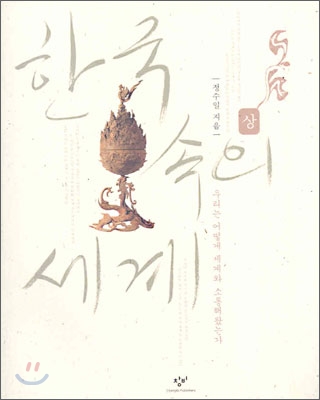
The World in Korea (Part 1)
 |
Description
Book Introduction
A history textbook that uncovers the traces and heritage of the "world" hidden within our history and culture, and makes us reexamine things we once thought were entirely "ours."
From a single grain of rice to the gigantic Seokguram Grotto, from the identities of Cheoyong and Heo Hwang-ok to a Bodhisattva statue wearing a cross around its neck, we look into our past through 50 themes and materials.
The author emphasizes that 'globality' is fully imbued in every aspect of our long history and culture.
It is through exchanging history and culture with nearby countries like China and Japan, and with distant countries like Arabs and Rome, that we have come to be what we are today.
And he emphasizes that the ability to accept that 'world' and make it our own is what demonstrates our originality and open-mindedness.
This book is a collection of articles serialized in a newspaper once a week for the past year under the title “Civilization Exchange Travelogue.”
This is a selection of articles from each era that can best represent the world that has taken root within us through the exchange of civilizations. Of the 50 articles, the last three were not published in newspapers.
From a single grain of rice to the gigantic Seokguram Grotto, from the identities of Cheoyong and Heo Hwang-ok to a Bodhisattva statue wearing a cross around its neck, we look into our past through 50 themes and materials.
The author emphasizes that 'globality' is fully imbued in every aspect of our long history and culture.
It is through exchanging history and culture with nearby countries like China and Japan, and with distant countries like Arabs and Rome, that we have come to be what we are today.
And he emphasizes that the ability to accept that 'world' and make it our own is what demonstrates our originality and open-mindedness.
This book is a collection of articles serialized in a newspaper once a week for the past year under the title “Civilization Exchange Travelogue.”
This is a selection of articles from each era that can best represent the world that has taken root within us through the exchange of civilizations. Of the 50 articles, the last three were not published in newspapers.
- You can preview some of the book's contents.
Preview
index
At the beginning of the book
1.
As we embark on the long journey of ‘Civilization Exchange Travelogue’
2.
The lofty status of the Dangun myth
3.
Comb-patterned pottery that reveals a primordial encounter
4.
Dolmen stands tall in the history of megalithic culture
5.
A bronze sword that embodies the wisdom of Eurasia
6.
Rice, a bond that has lasted thousands of years
7.
Seo Bok, who opened the curtain on Korea-China exchanges
8.
Heo Hwang-ok, who brought about our relationship
9.
The Goguryeo founding myth that highlights the harmony
10.
East Asian glass report Silla
11.
Goguryeo's indelible identity
12.
The proud internationality of Goguryeo
13.
Goguryeo's enterprising exchange
14.
Balhae's Suffering History
15.
Balhae's unchangeable identity
16.
Balhae, a country with connections to the world
17.
Silla gold crown, the 'flower of ancient gold culture'
18.
Baekje Gilt-Bronze Incense Burner, exuding the fragrance of harmony
19.
Perjury in 'Chiljido'
20.
King Muryeong's Tomb, the Melting Pot of Civilization
21.
Buddhism that came by sea
22.
Silla, the kingdom of Roman culture
23.
Western civilization that came like a wave
24.
Silent Witness Mu In-seok
25.
Silla, the utopia of the East
1.
As we embark on the long journey of ‘Civilization Exchange Travelogue’
2.
The lofty status of the Dangun myth
3.
Comb-patterned pottery that reveals a primordial encounter
4.
Dolmen stands tall in the history of megalithic culture
5.
A bronze sword that embodies the wisdom of Eurasia
6.
Rice, a bond that has lasted thousands of years
7.
Seo Bok, who opened the curtain on Korea-China exchanges
8.
Heo Hwang-ok, who brought about our relationship
9.
The Goguryeo founding myth that highlights the harmony
10.
East Asian glass report Silla
11.
Goguryeo's indelible identity
12.
The proud internationality of Goguryeo
13.
Goguryeo's enterprising exchange
14.
Balhae's Suffering History
15.
Balhae's unchangeable identity
16.
Balhae, a country with connections to the world
17.
Silla gold crown, the 'flower of ancient gold culture'
18.
Baekje Gilt-Bronze Incense Burner, exuding the fragrance of harmony
19.
Perjury in 'Chiljido'
20.
King Muryeong's Tomb, the Melting Pot of Civilization
21.
Buddhism that came by sea
22.
Silla, the kingdom of Roman culture
23.
Western civilization that came like a wave
24.
Silent Witness Mu In-seok
25.
Silla, the utopia of the East
Into the book
In fact, ‘Korea in the world’ is an encounter with the world from outside, and ‘the world in Korea’ is an encounter with the world from within.
These two concepts are interconnected in ‘globality’.
In a word, 'globality' refers to the spirit of pursuing knowledge about the world and living together with the world.
The basis of ‘globalization’ and ‘internationalization’, which are becoming solidified as visions of the future, is precisely this ‘globality.’
For us, this 'globality' is not only a spirit needed for today and tomorrow, but also an entity that has existed since yesterday.
It's just that we didn't read it properly.
This 'globality' is fully reflected in every aspect of our long history and culture.
None of it is unrelated to the world.
We have fostered history and culture through exchanges with China and Japan, and with Arabs and Romans as far away as the East.
For example, the world has been within us from a long time ago.
That is why we are where we are today.
These two concepts are interconnected in ‘globality’.
In a word, 'globality' refers to the spirit of pursuing knowledge about the world and living together with the world.
The basis of ‘globalization’ and ‘internationalization’, which are becoming solidified as visions of the future, is precisely this ‘globality.’
For us, this 'globality' is not only a spirit needed for today and tomorrow, but also an entity that has existed since yesterday.
It's just that we didn't read it properly.
This 'globality' is fully reflected in every aspect of our long history and culture.
None of it is unrelated to the world.
We have fostered history and culture through exchanges with China and Japan, and with Arabs and Romans as far away as the East.
For example, the world has been within us from a long time ago.
That is why we are where we are today.
--- From 'Introduction to the Book'
Publisher's Review
Changbi Publishing has published Professor Jeong Su-il's new work, "The World in Korea."
While the author's previous work has been to organize the history of cultural exchanges centered on the Silk Road, this book, on the contrary, seeks to uncover the traces and heritage of the "world" hidden within our history and culture, making us reexamine what we once thought was entirely "ours."
From a single grain of rice to the gigantic Seokguram Grotto, from the identities of Cheoyong and Heo Hwang-ok to a Bodhisattva statue wearing a cross around its neck, we look back on our past through 50 themes and materials, and eloquently demonstrate that the 'world' has always been within 'us', and that the ability to accept that 'world' and digest it as our own is what demonstrates our originality and open-mindedness.
1.
The "world" within "us" as seen by a leading scholar of civilizational exchange studies.
Professor Jeong Su-il, who has introduced and established the study of civilization exchange in our academic world by publishing books such as 『Silk Road Studies』, 『Islamic Civilization』, 『Studies on the History of Civilization Exchange』, and 『History of Ancient Civilization Exchange』, and translated 『Ibn Battuta's Travels』 and 『Wang Ocheonchukguk Jeon』, has published a new book, 『The World in Korea』.
This book starts from a perspective that is diametrically opposed to previous research.
If previous works have focused on our 'outside,' 'The World in Korea' is a book that allows us to feel the world by looking into our 'inside,' a book that touches the traces of global exchange embedded in our history and culture.
The author demonstrates, through a variety of examples, that we have never been left out of the dynamic exchange of world civilizations, that we have taken the best from the flow of countless artifacts and cultures and made them our own.
Looking at the episodes in which the "world" came and went on this land as actively as it does today, we can sympathize with the author's argument that we must abandon the illusion of something that is entirely "ours," and that it is our proud past, in which we "accepted" even other people's things as our own, that has made us who we are today.
The author argues that only by basing our actions on this understanding can we break the self-deprecating myth of the "Land of the Morning Calm" and become a vibrant, vibrant nation. He also asserts that the rise and fall of a nation depends on how actively it communicates with others, citing the harsh laws of civilization.
2.
A journey of civilization exchange through 50 themes and materials.
Another thing that distinguishes "The World in Korea" from Professor Jeong Su-il's previous works is that, unlike previous dry academic books or classics, the narrative is considerably easier and more concise. In addition, rather than delving deeply into one topic, it quickly moves across 50 topics to highlight the "world within us."
This is because the author initially wrote it with newspaper readers in mind in an easy-to-understand manner (this book was written by adding 300 pages of manuscript paper to the newspaper serial and significantly revising the entire book.
(The last three chapters are also being included for the first time), the topics are very diverse, from ancient civilizations such as the Dangun myth, comb-patterned pottery, dolmens, and bronze swords, to enigmatic figures such as Seo Bok, Heo Hwang-ok, and Cheoyong, to familiar Korean heritages such as the Silla gold crown, Baekje gilt-bronze incense burner, King Muryeong's tomb, Seokguram Grotto, the Tripitaka Koreana, and the Jikji Heart Sutra, to global figures such as Hyecho and Go Seonji, Mun Ik-jeom and Choe Bu, and foreigners who naturalized in Goryeo, to Goryeo and Islam, and to sites of encounters between Westerners and Joseon people.
In particular, the story of Seo Bok, who came to find the elixir of life at the order of Qin Shi Huang, the story of revealing that Queen Suro Heo Hwang-ok was a princess from India, the story of carefully suggesting a fabrication theory based on the questions surrounding the Chiljido, the story of revealing that the Gwaereung Muinseok was a bodyguard from the Western Regions, and the story of the 'Doma' statue wearing a cross, etc., provide the fun of reading our history in a new way, as if watching a mystery historical drama.
Moreover, the gilt-bronze incense burner and Silla glass, which we thought we all knew, are connected to Western musical instruments and Rome. Even the most "Korean" of foods, such as soju and chili peppers, are revealed to have originated from foreign countries, including Arabia. These things are no longer familiar.
When we realize that what we believed we knew well and believed to be our own were in fact gifts from people around the world that came to us through a long and arduous process of passing on the baton, and that we, too, played a part in that long process of transmission, our history can no longer be considered "national history."
The purpose of this book is to reinterpret and bring to life the countless artifacts and cultures that surround us within the long flow of civilization, and through this work to revive our "5,000-year history of globalization."
3.
There is no civilization that exists alone - Beyond the framework of national history, from the perspective of a borderlander
Just as Philippe Aries, the 'Sunday historian', created a 'history of the mind' that could not be covered in academic history, Professor Jeong Su-il, the 'historian in prison', has also been quietly conducting research that is difficult for our academic world to handle.
The 'memos' he took out of solitary confinement (25,000 pages of manuscript paper) were bound one by one into thick books, announcing the birth of the study of civilization exchange, and this 'World in Korea' is the first work to return the fruits of that labor to us, rescuing our history and culture from being fossilized in textbooks and finding their place in world history.
This is not limited to simply looking at our history in a new way or finding the roots of our cultural heritage.
Considering today's 'history war', where history is viewed solely as a tool to serve the interests of one's own people, this task is more urgent than ever.
Even as we experience a series of conflicts over historical perspectives, such as the Dokdo issue and the Northeast Project incident, we are unable to free ourselves from the fixed idea that “our history” is an eternal reality.
Even if we call for research on the history of change and cite European examples, it ends up being nothing more than theoretical slogans, and feels somewhat empty.
The historians of the ivory tower have never properly explained when we became 'us' and how we can continue to be 'us'.
Therefore, 『The World in Korea』, which honestly answers the question of 'our ownness' by listening to traces of countless communications and exchanges, is inevitably the work of 'borderline people.'
The author, who has experienced numerous nationalities in his own eventful life, breaks down the boundaries of "our own identity" while simultaneously reestablishing its center.
While the author's previous work has been to organize the history of cultural exchanges centered on the Silk Road, this book, on the contrary, seeks to uncover the traces and heritage of the "world" hidden within our history and culture, making us reexamine what we once thought was entirely "ours."
From a single grain of rice to the gigantic Seokguram Grotto, from the identities of Cheoyong and Heo Hwang-ok to a Bodhisattva statue wearing a cross around its neck, we look back on our past through 50 themes and materials, and eloquently demonstrate that the 'world' has always been within 'us', and that the ability to accept that 'world' and digest it as our own is what demonstrates our originality and open-mindedness.
1.
The "world" within "us" as seen by a leading scholar of civilizational exchange studies.
Professor Jeong Su-il, who has introduced and established the study of civilization exchange in our academic world by publishing books such as 『Silk Road Studies』, 『Islamic Civilization』, 『Studies on the History of Civilization Exchange』, and 『History of Ancient Civilization Exchange』, and translated 『Ibn Battuta's Travels』 and 『Wang Ocheonchukguk Jeon』, has published a new book, 『The World in Korea』.
This book starts from a perspective that is diametrically opposed to previous research.
If previous works have focused on our 'outside,' 'The World in Korea' is a book that allows us to feel the world by looking into our 'inside,' a book that touches the traces of global exchange embedded in our history and culture.
The author demonstrates, through a variety of examples, that we have never been left out of the dynamic exchange of world civilizations, that we have taken the best from the flow of countless artifacts and cultures and made them our own.
Looking at the episodes in which the "world" came and went on this land as actively as it does today, we can sympathize with the author's argument that we must abandon the illusion of something that is entirely "ours," and that it is our proud past, in which we "accepted" even other people's things as our own, that has made us who we are today.
The author argues that only by basing our actions on this understanding can we break the self-deprecating myth of the "Land of the Morning Calm" and become a vibrant, vibrant nation. He also asserts that the rise and fall of a nation depends on how actively it communicates with others, citing the harsh laws of civilization.
2.
A journey of civilization exchange through 50 themes and materials.
Another thing that distinguishes "The World in Korea" from Professor Jeong Su-il's previous works is that, unlike previous dry academic books or classics, the narrative is considerably easier and more concise. In addition, rather than delving deeply into one topic, it quickly moves across 50 topics to highlight the "world within us."
This is because the author initially wrote it with newspaper readers in mind in an easy-to-understand manner (this book was written by adding 300 pages of manuscript paper to the newspaper serial and significantly revising the entire book.
(The last three chapters are also being included for the first time), the topics are very diverse, from ancient civilizations such as the Dangun myth, comb-patterned pottery, dolmens, and bronze swords, to enigmatic figures such as Seo Bok, Heo Hwang-ok, and Cheoyong, to familiar Korean heritages such as the Silla gold crown, Baekje gilt-bronze incense burner, King Muryeong's tomb, Seokguram Grotto, the Tripitaka Koreana, and the Jikji Heart Sutra, to global figures such as Hyecho and Go Seonji, Mun Ik-jeom and Choe Bu, and foreigners who naturalized in Goryeo, to Goryeo and Islam, and to sites of encounters between Westerners and Joseon people.
In particular, the story of Seo Bok, who came to find the elixir of life at the order of Qin Shi Huang, the story of revealing that Queen Suro Heo Hwang-ok was a princess from India, the story of carefully suggesting a fabrication theory based on the questions surrounding the Chiljido, the story of revealing that the Gwaereung Muinseok was a bodyguard from the Western Regions, and the story of the 'Doma' statue wearing a cross, etc., provide the fun of reading our history in a new way, as if watching a mystery historical drama.
Moreover, the gilt-bronze incense burner and Silla glass, which we thought we all knew, are connected to Western musical instruments and Rome. Even the most "Korean" of foods, such as soju and chili peppers, are revealed to have originated from foreign countries, including Arabia. These things are no longer familiar.
When we realize that what we believed we knew well and believed to be our own were in fact gifts from people around the world that came to us through a long and arduous process of passing on the baton, and that we, too, played a part in that long process of transmission, our history can no longer be considered "national history."
The purpose of this book is to reinterpret and bring to life the countless artifacts and cultures that surround us within the long flow of civilization, and through this work to revive our "5,000-year history of globalization."
3.
There is no civilization that exists alone - Beyond the framework of national history, from the perspective of a borderlander
Just as Philippe Aries, the 'Sunday historian', created a 'history of the mind' that could not be covered in academic history, Professor Jeong Su-il, the 'historian in prison', has also been quietly conducting research that is difficult for our academic world to handle.
The 'memos' he took out of solitary confinement (25,000 pages of manuscript paper) were bound one by one into thick books, announcing the birth of the study of civilization exchange, and this 'World in Korea' is the first work to return the fruits of that labor to us, rescuing our history and culture from being fossilized in textbooks and finding their place in world history.
This is not limited to simply looking at our history in a new way or finding the roots of our cultural heritage.
Considering today's 'history war', where history is viewed solely as a tool to serve the interests of one's own people, this task is more urgent than ever.
Even as we experience a series of conflicts over historical perspectives, such as the Dokdo issue and the Northeast Project incident, we are unable to free ourselves from the fixed idea that “our history” is an eternal reality.
Even if we call for research on the history of change and cite European examples, it ends up being nothing more than theoretical slogans, and feels somewhat empty.
The historians of the ivory tower have never properly explained when we became 'us' and how we can continue to be 'us'.
Therefore, 『The World in Korea』, which honestly answers the question of 'our ownness' by listening to traces of countless communications and exchanges, is inevitably the work of 'borderline people.'
The author, who has experienced numerous nationalities in his own eventful life, breaks down the boundaries of "our own identity" while simultaneously reestablishing its center.
GOODS SPECIFICS
- Date of issue: October 25, 2005
- Page count, weight, size: 244 pages | 530g | 165*225*20mm
- ISBN13: 9788936471064
- ISBN10: 8936471066
You may also like
카테고리
korean


korean

![ELLE 엘르 스페셜 에디션 A형 : 12월 [2025]](http://librairie.coreenne.fr/cdn/shop/files/b8e27a3de6c9538896439686c6b0e8fb.jpg?v=1766436872&width=3840)


