

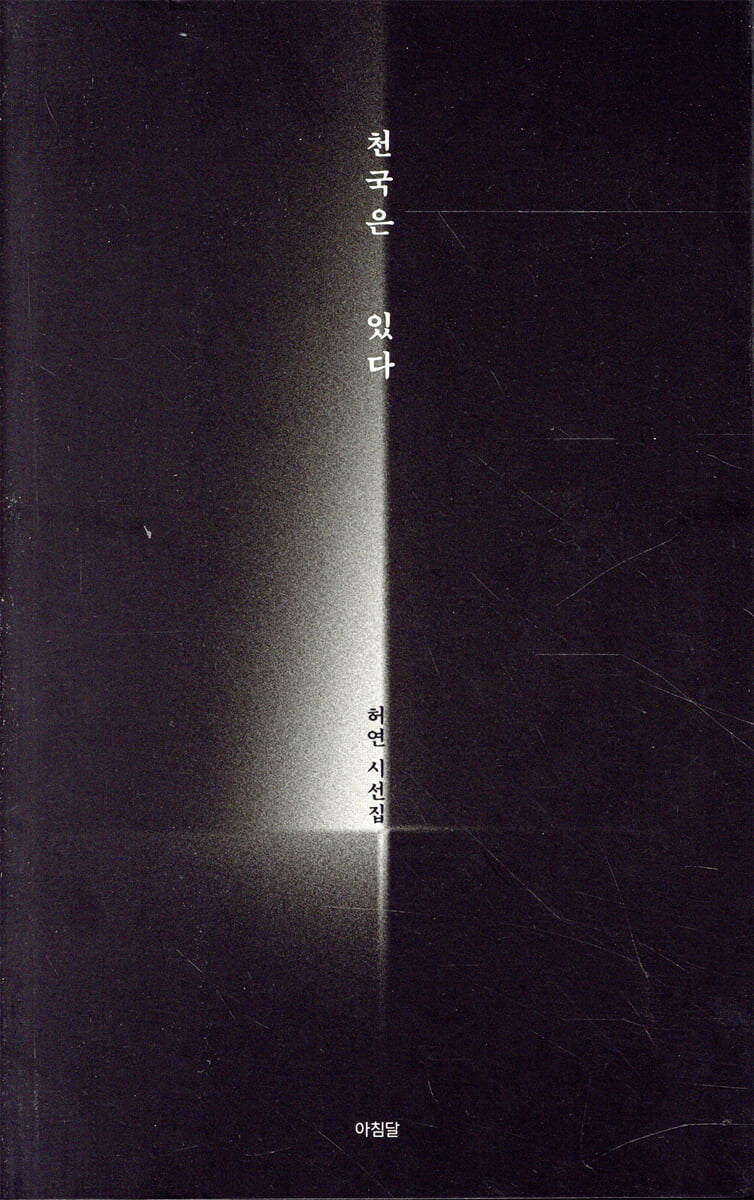
There is heaven
 |
Description
Book Introduction
From his first poetry collection, 『Unsettling Black Blood』 to 『When Will You Become a Song』
The true beauty of Heoyeon's poetry, selected by poets who have been devouring Heoyeon.
Heo Yeon's poetry collection, "Heaven Exists," contains approximately 60 of Heo Yeon's representative works and 12 of Heo Yeon's most recent poems, selected by five fellow writers who have cherished Heo Yeon's poetry.
Since his debut in 1991, Heo Yeon has been presenting his own unique poetry that contains the hidden secrets of life for 30 years.
This collection of poems provides readers with an opportunity to glimpse at the world of poetry that Heo Yeon has cultivated over the years.
The commentary by critic Oh Yeon-gyeong and the preface by poet Yoo Hee-gyeong, included with the 72 poems, will guide readers to a deeper understanding of Heo Yeon's poetry.
The true beauty of Heoyeon's poetry, selected by poets who have been devouring Heoyeon.
Heo Yeon's poetry collection, "Heaven Exists," contains approximately 60 of Heo Yeon's representative works and 12 of Heo Yeon's most recent poems, selected by five fellow writers who have cherished Heo Yeon's poetry.
Since his debut in 1991, Heo Yeon has been presenting his own unique poetry that contains the hidden secrets of life for 30 years.
This collection of poems provides readers with an opportunity to glimpse at the world of poetry that Heo Yeon has cultivated over the years.
The commentary by critic Oh Yeon-gyeong and the preface by poet Yoo Hee-gyeong, included with the 72 poems, will guide readers to a deeper understanding of Heo Yeon's poetry.
- You can preview some of the book's contents.
Preview
index
Death and Retribution 14
Charcoal 16
Adding sorrow to sorrow 18
20 for you who went in the summer
Witness of the Day 22
The Waves Save the Child 24
Poor Street 26
Poem of October 28
Reinterpreting Parting 29
Hearing Test 31
Some things have names 33
Heaven exists 35
Trampoline 38
Some distance 40
November 42
Village Chief 44
Bridge Negative 46
My memory is busy in a place I don't even know about, 48
Unaccompanied 50
1:51 AM
When will you become a song 53
Tears only fall in the river 55
21st Century 57
Room 58 Left Behind
Anarchist Truck 1 62
fifty meters 63
Parcel 64 from the Tropic of Cancer
I couldn't cross the line today either 66
Detail 67
Excited Bloodline 68
Sale Theater 70
Rainy Days 71
Cold Case 2 72
Bomsan 73
River Work 75
Side Story 2 76
The last open-top train 80
Illustration 81
My Madagascar 3 82
The Angel I Want 83
Legend of a Room 86
Nirvana's Playground 87
Anarchist 89
Elementary Particle 2 91
What a Beauty 92
Cold Case 93
There is no heaven 94
The Purpose of Class 95
I heard last night that I was ugly 98
Domi 99
I'm confused 100
He who is inside is already outside 101
Bad Boy Stands 102
Light Passes Through Me 103
Sad Ice Age 2 104
Applause 105
What Are Tears? 1 106
Dormant period 107
Anchovy 108
Ecological Report 3 109
The Sound of Rain in Hell 112
The thought that I am a butterfly 113
I walk away from the light 114
Rain, Save Me 115
Kwon Jin-gyu's Funeral 117
You were the most hopeful person I've met recently. 118
No shoes on that street fit my feet 119
Confessions 120
July 121
My love is 122
Can fall asleep 123
Commute 124
Commentary | The days that were my gods became poetry, and poetry became a song that added sorrow to sorrow. 128
Preface | Dedicated to a Poem Like a Mugwacha 154
Into the book
On nights like that
My father used to come to me in my dreams
My father leaned against the prison wall
The image of the Virgin Mary was carved on the toothbrush holder.
The death of that longing
Engraved in each and every cell
Extreme detail
--- p.14, from “Sa-gyeong”
The good eyes of those who chose death for themselves
When I look up at the sky
A blanket spread out in the yard
When shaking slowly
A small sadness with a bird
flew away
There is no such thing as a petty feeling for you
It was like standing in a form of prayer
I knew that the things I loved were abandoning me
--- p.16, from "Charcoal"
The child is holding a seashell in his hand.
Fall asleep
I see it
It was all summer in the world
I was so happy I couldn't even speak.
I wish everything had abandoned me
--- p.24, from “The Waves Save the Child”
In October, things that were full and hot are packing up to leave.
Memories that realized that also went south.
October is all about parting.
October only knows how to say goodbye.
That's why I kneel in October.
My father used to come to me in my dreams
My father leaned against the prison wall
The image of the Virgin Mary was carved on the toothbrush holder.
The death of that longing
Engraved in each and every cell
Extreme detail
--- p.14, from “Sa-gyeong”
The good eyes of those who chose death for themselves
When I look up at the sky
A blanket spread out in the yard
When shaking slowly
A small sadness with a bird
flew away
There is no such thing as a petty feeling for you
It was like standing in a form of prayer
I knew that the things I loved were abandoning me
--- p.16, from "Charcoal"
The child is holding a seashell in his hand.
Fall asleep
I see it
It was all summer in the world
I was so happy I couldn't even speak.
I wish everything had abandoned me
--- p.24, from “The Waves Save the Child”
In October, things that were full and hot are packing up to leave.
Memories that realized that also went south.
October is all about parting.
October only knows how to say goodbye.
That's why I kneel in October.
--- p.28, from “Poems of October”
Publisher's Review
Heo Yeon's poetry collection, "Heaven Exists," was published by Achimdal.
This anthology contains approximately 60 of Heo Yeon's representative works and 12 of Heo Yeon's recent poems, selected by five fellow writers who have cherished Heo Yeon's poetry.
Since his debut in 1991, Heo Yeon has been presenting his own unique poetry that contains the hidden secrets of life for 30 years.
This collection of poems provides readers with an opportunity to glimpse at the world of poetry that Heo Yeon has cultivated over the years.
The commentary by critic Oh Yeon-gyeong and the preface by poet Yoo Hee-gyeong, included with the 72 poems, will guide readers to a deeper understanding of Heo Yeon's poetry.
It's shining faintly in the distance
Towards the Republic of Sorrow
If there is one emotion that Heo Yeon's poetry consistently portrays, it is loss and loneliness.
His poetry is always lonely and solitary.
But the emotion is not swayed by desolation or a longing for affection.
His speakers always endured loneliness and did not hesitate to face the world alone, as if they were martyrs.
What kind of loss is it that his poetry depicts with such a lonely tone?
At the same time, why is there a melancholy like a rainy day in his poetry?
Why is it that every time we read his poetry, we end up agreeing with and sympathizing with his sentiments?
Literary critic Oh Yeon-kyung calls Heo Yeon's world of poetry "the Republic of Sorrow."
According to him, in Heo Yeon's poetry, there is a world that we have forgotten without even realizing we have lost it, and a world that we long for without even realizing we miss it.
His poetry illuminates the world that remains as ruins and graves deep within our hearts, and through it, takes us to that world where things banished from reality gather.
This is why, in his poetry, we encounter the past we have let go of and feel sadness.
It's not always beautiful to revisit a past that has already become a ghost, but even the ugliness that lingers there is always more beautiful than reality.
Because in reality, we are always entangled in worldly problems.
Desires related to money, love, and fame.
Worries about the future are usually limited to issues such as making a living or health.
But all such things are washed away by the river of time and become the past.
Meanwhile, when we look back on the past, the moments we want to remember from the past are the important issues in our lives that we may have overlooked at some point, rather than those issues.
However, it is a great charm and virtue of Heo Yeon's poetry that it does not look at such topics only from a contemplative perspective.
Heo Yeon's poetry does not stay only in high places.
We live in this city, clothed in a wretched body, enduring the ugliness of the earth.
The reason we can so addictively empathize with the various emotions that appear in his poetry—melancholy, sadness, beauty, and the sacred—is because all of these things already exist within us, who have no choice but to live in the present world.
Heo Yeon's poetry is a secret confession about them.
The sacredness of enduring worldly things
ran away from the monastery
To face God
I knew too many words
-The part about "adding sadness to sadness"
Poet Yoo Hee-kyung's preface included in the anthology is based on an interview with poet Heo Yeon, and reconstructs Yoo Hee-kyung's own story related to Heo Yeon.
The reason why the boy who grew up in a dark room and wanted to become a priest became a poet instead of a priest is revealed like a woodcut through Yoo Hee-kyung's sentences.
We can also catch a glimpse of this in his poem, where he says he knows too many words to “face God.”
Yoo Hee-kyung says, “Heo Yeon’s poetry collection is full of endurance.”
It is a silent endurance that may be misunderstood by some as evasion or giving up.
As if enduring like that is all there is to life.
The religious aspect of his poetry is manifested through this endurance of life.
Readers of his poetry know that the religious aspect of these empty poems is not achieved solely through praise of the sacred or through contemplation bordering on the nihilistic.
There is ugliness in his poetry.
There are times when I have to hear people say, “Last night was ugly.”
However, his poetry makes it possible to elevate the ugliness of existence in dark and desolate landscapes while also creating something beautiful from it.
This is probably because, on the one hand, there is always love for humans, even on the other hand, there is contempt for them.
On the other hand, this ugliness is also a moment of self-objectification between achievement and failure.
The sincerity of confession that comes from knowing that one's own existence is ugly and the precarious sense of balance that comes from this make his poetry come alive.
And this awareness of the past can even lead to the affirmation that “it would be okay if everything about me were to abandon me.”
What is noteworthy in the anthology of poems, “Heaven Exists,” is his gradual changes within this common perception.
There is time there.
There was a time when “Heaven Does Not Exist,” which said that “love is a talent of the past,” changed to “Heaven Exists,” which imagines a heaven that is “clear as calculation and equal as a function.”
There was a time when I wrote poems like “The Waves Save the Child,” standing on the beach and looking at the waves and the child playing.
Through this collection of poems, we can get a glimpse of what Heo Yeon's poetry has achieved so far and what level it will reach in the future.
This anthology contains approximately 60 of Heo Yeon's representative works and 12 of Heo Yeon's recent poems, selected by five fellow writers who have cherished Heo Yeon's poetry.
Since his debut in 1991, Heo Yeon has been presenting his own unique poetry that contains the hidden secrets of life for 30 years.
This collection of poems provides readers with an opportunity to glimpse at the world of poetry that Heo Yeon has cultivated over the years.
The commentary by critic Oh Yeon-gyeong and the preface by poet Yoo Hee-gyeong, included with the 72 poems, will guide readers to a deeper understanding of Heo Yeon's poetry.
It's shining faintly in the distance
Towards the Republic of Sorrow
If there is one emotion that Heo Yeon's poetry consistently portrays, it is loss and loneliness.
His poetry is always lonely and solitary.
But the emotion is not swayed by desolation or a longing for affection.
His speakers always endured loneliness and did not hesitate to face the world alone, as if they were martyrs.
What kind of loss is it that his poetry depicts with such a lonely tone?
At the same time, why is there a melancholy like a rainy day in his poetry?
Why is it that every time we read his poetry, we end up agreeing with and sympathizing with his sentiments?
Literary critic Oh Yeon-kyung calls Heo Yeon's world of poetry "the Republic of Sorrow."
According to him, in Heo Yeon's poetry, there is a world that we have forgotten without even realizing we have lost it, and a world that we long for without even realizing we miss it.
His poetry illuminates the world that remains as ruins and graves deep within our hearts, and through it, takes us to that world where things banished from reality gather.
This is why, in his poetry, we encounter the past we have let go of and feel sadness.
It's not always beautiful to revisit a past that has already become a ghost, but even the ugliness that lingers there is always more beautiful than reality.
Because in reality, we are always entangled in worldly problems.
Desires related to money, love, and fame.
Worries about the future are usually limited to issues such as making a living or health.
But all such things are washed away by the river of time and become the past.
Meanwhile, when we look back on the past, the moments we want to remember from the past are the important issues in our lives that we may have overlooked at some point, rather than those issues.
However, it is a great charm and virtue of Heo Yeon's poetry that it does not look at such topics only from a contemplative perspective.
Heo Yeon's poetry does not stay only in high places.
We live in this city, clothed in a wretched body, enduring the ugliness of the earth.
The reason we can so addictively empathize with the various emotions that appear in his poetry—melancholy, sadness, beauty, and the sacred—is because all of these things already exist within us, who have no choice but to live in the present world.
Heo Yeon's poetry is a secret confession about them.
The sacredness of enduring worldly things
ran away from the monastery
To face God
I knew too many words
-The part about "adding sadness to sadness"
Poet Yoo Hee-kyung's preface included in the anthology is based on an interview with poet Heo Yeon, and reconstructs Yoo Hee-kyung's own story related to Heo Yeon.
The reason why the boy who grew up in a dark room and wanted to become a priest became a poet instead of a priest is revealed like a woodcut through Yoo Hee-kyung's sentences.
We can also catch a glimpse of this in his poem, where he says he knows too many words to “face God.”
Yoo Hee-kyung says, “Heo Yeon’s poetry collection is full of endurance.”
It is a silent endurance that may be misunderstood by some as evasion or giving up.
As if enduring like that is all there is to life.
The religious aspect of his poetry is manifested through this endurance of life.
Readers of his poetry know that the religious aspect of these empty poems is not achieved solely through praise of the sacred or through contemplation bordering on the nihilistic.
There is ugliness in his poetry.
There are times when I have to hear people say, “Last night was ugly.”
However, his poetry makes it possible to elevate the ugliness of existence in dark and desolate landscapes while also creating something beautiful from it.
This is probably because, on the one hand, there is always love for humans, even on the other hand, there is contempt for them.
On the other hand, this ugliness is also a moment of self-objectification between achievement and failure.
The sincerity of confession that comes from knowing that one's own existence is ugly and the precarious sense of balance that comes from this make his poetry come alive.
And this awareness of the past can even lead to the affirmation that “it would be okay if everything about me were to abandon me.”
What is noteworthy in the anthology of poems, “Heaven Exists,” is his gradual changes within this common perception.
There is time there.
There was a time when “Heaven Does Not Exist,” which said that “love is a talent of the past,” changed to “Heaven Exists,” which imagines a heaven that is “clear as calculation and equal as a function.”
There was a time when I wrote poems like “The Waves Save the Child,” standing on the beach and looking at the waves and the child playing.
Through this collection of poems, we can get a glimpse of what Heo Yeon's poetry has achieved so far and what level it will reach in the future.
GOODS SPECIFICS
- Publication date: November 21, 2021
- Page count, weight, size: 176 pages | 264g | 130*205*11mm
- ISBN13: 9791189467326
- ISBN10: 1189467321
You may also like
카테고리
korean


korean

![GQ KOREA Mark (Monthly): December [2025]](http://librairie.coreenne.fr/cdn/shop/files/8ef265dbbfbf186523ed75ba7319009d.jpg?v=1765340328&width=3840)


