

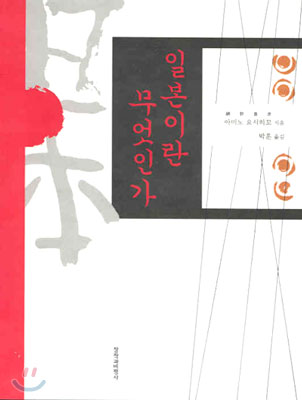
What is Japan?
 |
Description
Book Introduction
Postwar history has failed to have a true historical perspective on 'Japan' itself, and has remained stuck in a vague perception that 'Japan' has existed since time immemorial, as if it came down from heaven.
No history education after the war raised or taught the question of the most important and fundamental fact in Japanese history: when, by whom, and for what purpose the national name “Japan” was established.
Therefore, this book establishes the position of the "nation of Japan" within the history of human society that has existed in the Japanese archipelago for hundreds of thousands of years, and thoroughly summarizes the history of the "nation of Japan" over approximately 1,300 years to introduce its actual state.
No history education after the war raised or taught the question of the most important and fundamental fact in Japanese history: when, by whom, and for what purpose the national name “Japan” was established.
Therefore, this book establishes the position of the "nation of Japan" within the history of human society that has existed in the Japanese archipelago for hundreds of thousands of years, and thoroughly summarizes the history of the "nation of Japan" over approximately 1,300 years to introduce its actual state.
index
1.
The Current State of 'Japanism'
The middle age of human society
Japanese Self-Awareness: The Phenomenon
2.
The Reality of the Japanese Archipelago: A Bridge to the East of the Asian Continent
Inland seas in eastern Asia
Exchange between the archipelago and the western region
Exchanges between the archipelago and the north and south
To the Pacific Ocean in the East
Regional differences in archipelago societies
3.
Archipelago society and Japan
From 'Waeguk' to 'Japan'
Japan and its national system
Differences between different regions of the archipelago
'japan.
The formation of 'Japanese consciousness'
4.
The illusion of 'Mizuho no Kuni Japan'
The common belief that 'Japan is an agricultural society'
The misconception that 'Hakusho is a farmer'
Culture of mountains, fields, and trees
5.
The Prospects of 'Japan Theory'
Overcoming the 'progressive view of history'
Surrounding the division of time periods
The Current State of 'Japanism'
The middle age of human society
Japanese Self-Awareness: The Phenomenon
2.
The Reality of the Japanese Archipelago: A Bridge to the East of the Asian Continent
Inland seas in eastern Asia
Exchange between the archipelago and the western region
Exchanges between the archipelago and the north and south
To the Pacific Ocean in the East
Regional differences in archipelago societies
3.
Archipelago society and Japan
From 'Waeguk' to 'Japan'
Japan and its national system
Differences between different regions of the archipelago
'japan.
The formation of 'Japanese consciousness'
4.
The illusion of 'Mizuho no Kuni Japan'
The common belief that 'Japan is an agricultural society'
The misconception that 'Hakusho is a farmer'
Culture of mountains, fields, and trees
5.
The Prospects of 'Japan Theory'
Overcoming the 'progressive view of history'
Surrounding the division of time periods
Into the book
Japan first appeared on Earth and the Japanese people made their appearance, as I have repeatedly said, when the Yamato rulers, the court of Temmu, who had won the 'Jinshin War', changed the name of the country from 'Wa-koku' to 'Japan-koku'.
It was at the end of the 7th century, between 673 and 701.
Although there are some theories, most ancient history researchers agree that the national name "Japan" was officially established along with the title of Emperor in the Asuka-kiyomihira Edict, which was implemented in 689, after Temmu's death, and that compilation probably began in 681 during the reign of the Temmu dynasty.
Also, as mentioned earlier, it is believed that the Yamato envoy who arrived in mainland China in 702 first used this national title externally in reference to Empress Wu Zetian, who changed the national title of the Tang Dynasty to Zhou.
Nevertheless, it is truly astonishing that the current Japanese people are largely unaware of such crucial facts as the starting point of Japanese history, including the founding of Japan, its emergence on the international stage, and the emergence of the Japanese people.
And while there are indeed deep-rooted problems as to why this happened, the direct background is that the governments after the Meiji era thoroughly imprinted on the people through national education that the Kiki myth was a murder of Japan's "foundation" as depicted in it, and that even postwar historians who criticized it after the defeat and aimed for an academic history based on facts had a critical view of the emperor, but did not raise any issues at all about "Japan," which was inextricably linked to the emperor.
It was at the end of the 7th century, between 673 and 701.
Although there are some theories, most ancient history researchers agree that the national name "Japan" was officially established along with the title of Emperor in the Asuka-kiyomihira Edict, which was implemented in 689, after Temmu's death, and that compilation probably began in 681 during the reign of the Temmu dynasty.
Also, as mentioned earlier, it is believed that the Yamato envoy who arrived in mainland China in 702 first used this national title externally in reference to Empress Wu Zetian, who changed the national title of the Tang Dynasty to Zhou.
Nevertheless, it is truly astonishing that the current Japanese people are largely unaware of such crucial facts as the starting point of Japanese history, including the founding of Japan, its emergence on the international stage, and the emergence of the Japanese people.
And while there are indeed deep-rooted problems as to why this happened, the direct background is that the governments after the Meiji era thoroughly imprinted on the people through national education that the Kiki myth was a murder of Japan's "foundation" as depicted in it, and that even postwar historians who criticized it after the defeat and aimed for an academic history based on facts had a critical view of the emperor, but did not raise any issues at all about "Japan," which was inextricably linked to the emperor.
---pp.
91~92
91~92
Publisher's Review
An introductory book that summarizes the entire picture of the original amino acid history in one volume.
This book was written as a general introduction to the 26 volumes of Koyodansha's "History of Japan" series.
This book is considered the best work that compiles the Amino view of history, which opened new horizons for Japanese medieval history, by meticulously examining historical materials not covered in mainstream history and incorporating the author's unique research method that crosses the methodologies of adjacent disciplines such as archaeology, folklore, and cultural anthropology.
The author rejects narrow-minded historical views such as the one-nation view of history, the progressive view of history (the developmental stage theory), the Eurocentric view of history, the productivity-centered view, and ruralism.
Because of the 'common sense' that progress has progressed step by step from a natural economy to an exchange economy, and from a self-sufficient economy to a commodity money economy, history has so far considered agriculture as the driving force of progress.
The focus was only on industrial development.
The author argues that groups that continued to wander and migrate even after settlement and permanent settlement existed in human society, and that the distribution and exchange they were responsible for existed from time immemorial, expressing skepticism about the possibility of a self-sufficient society.
It also pays attention to those who have been left out of history, such as women, the elderly, children, and the marginalized.
In particular, he criticizes the household registration system that established the patriarchal order, mentioning the status of women as equals in production and commerce.
It was revealed that the household registration system, which was initiated for the purpose of systematically collecting taxes, was borrowed from the male-centered system of mainland China supported by Confucian ideology.
It is also important to note that the modern 'Empire of Japan' forcibly implemented a Japanese-style household registration system in Taiwan and the Korean Peninsula during its colonial rule.
This book is considered the best work that compiles the Amino view of history, which opened new horizons for Japanese medieval history, by meticulously examining historical materials not covered in mainstream history and incorporating the author's unique research method that crosses the methodologies of adjacent disciplines such as archaeology, folklore, and cultural anthropology.
The author rejects narrow-minded historical views such as the one-nation view of history, the progressive view of history (the developmental stage theory), the Eurocentric view of history, the productivity-centered view, and ruralism.
Because of the 'common sense' that progress has progressed step by step from a natural economy to an exchange economy, and from a self-sufficient economy to a commodity money economy, history has so far considered agriculture as the driving force of progress.
The focus was only on industrial development.
The author argues that groups that continued to wander and migrate even after settlement and permanent settlement existed in human society, and that the distribution and exchange they were responsible for existed from time immemorial, expressing skepticism about the possibility of a self-sufficient society.
It also pays attention to those who have been left out of history, such as women, the elderly, children, and the marginalized.
In particular, he criticizes the household registration system that established the patriarchal order, mentioning the status of women as equals in production and commerce.
It was revealed that the household registration system, which was initiated for the purpose of systematically collecting taxes, was borrowed from the male-centered system of mainland China supported by Confucian ideology.
It is also important to note that the modern 'Empire of Japan' forcibly implemented a Japanese-style household registration system in Taiwan and the Korean Peninsula during its colonial rule.
GOODS SPECIFICS
- Date of issue: May 30, 2003
- Page count, weight, size: 408 pages | 685g | Out of specification
- ISBN13: 9788936482275
- ISBN10: 8936482270
You may also like
카테고리
korean


korean

![ELLE 엘르 스페셜 에디션 A형 : 12월 [2025]](http://librairie.coreenne.fr/cdn/shop/files/b8e27a3de6c9538896439686c6b0e8fb.jpg?v=1766436872&width=3840)


