

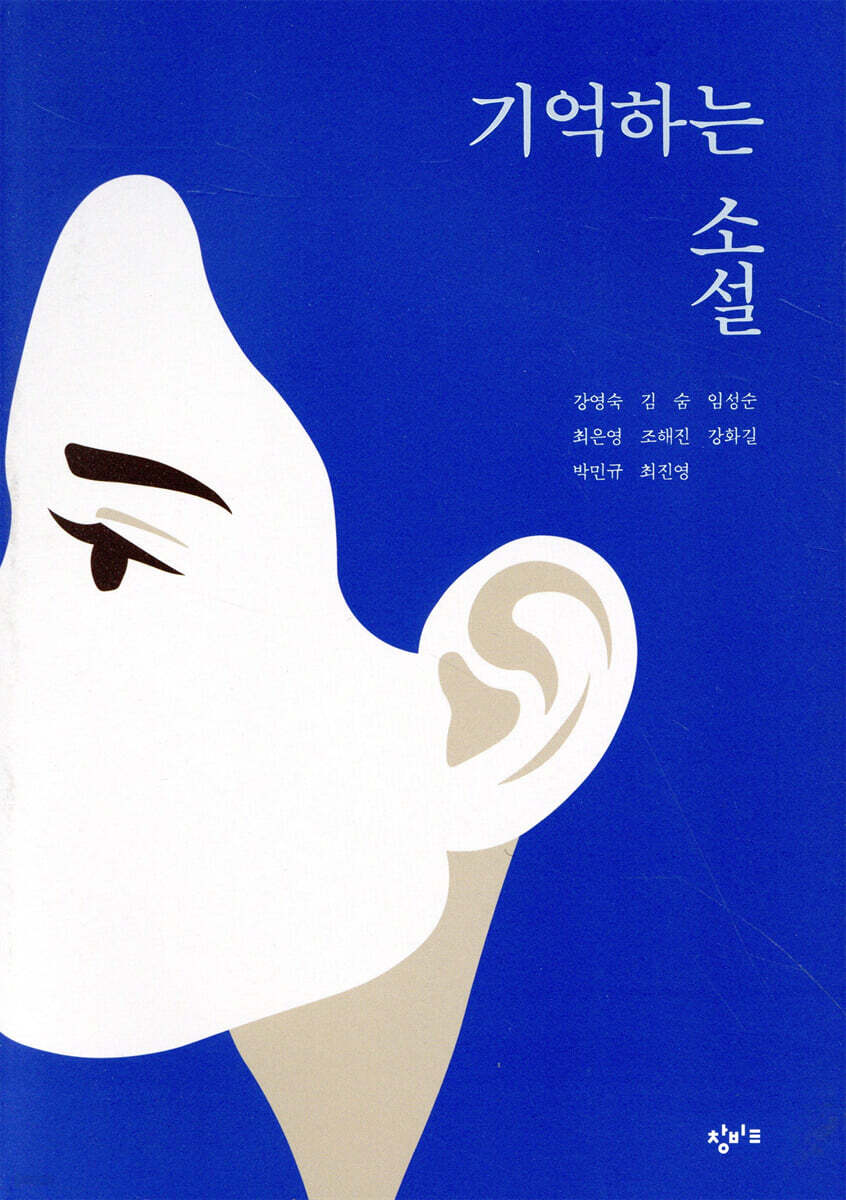
A novel to remember
 |
Description
Book Introduction
- A word from MD
-
Eight Writers Talk DisasterFrom natural disasters to man-made social catastrophes, read about the age of disaster through eight novels.
Through this book, the authors remind us of the values of memory and empathy that we must not lose sight of in the face of the disaster we have faced together, and that a better tomorrow and hope will begin from there.
May 25, 2021. Novel/Poetry PD Park Hyung-wook
“People are cunning animals, they forget.
Look, it's falling down again."
Stories we must remember, too easily and too quickly forgotten
"Novels to Remember," a collection of eight novels on the theme of disaster, from unavoidable natural disasters to man-made social disasters, has been published.
We examine disasters and reflect on our society through stories such as hurricane strikes, foot-and-mouth disease outbreaks, the collapse of the Sampoong Department Store, the sinking of the Sewol Ferry, industrial accidents, the spread of pollutants, climate change, and meteorite impacts.
This book presents eight moments of disaster depicted by contemporary writers Kang Young-sook, Kim Soom, Im Seong-sun, Choi Eun-young, Jo Hae-jin, Kang Hwa-gil, Park Min-gyu, and Choi Jin-young, reminding us of the values of memory and empathy necessary for us living in an age of disaster.
In addition, by facing and remembering the devastation of the disaster, we can recognize that it is 'my disaster' and, furthermore, accept that it is 'our problem', and work together to overcome the disaster and think about our future lives.
This book is the third in the series of themed novels published by Changbi Education, and is a follow-up to 『Sweaty Novel』, which deals with labor, and 『Heart-Pounding Novel』, which deals with love.
For those who know that remembering the pain caused by disaster and empathizing with that sorrow is the first step toward overcoming it, and for those who contemplate a safer and happier tomorrow, this book will serve as a mirror through which they can reflect on themselves.
Look, it's falling down again."
Stories we must remember, too easily and too quickly forgotten
"Novels to Remember," a collection of eight novels on the theme of disaster, from unavoidable natural disasters to man-made social disasters, has been published.
We examine disasters and reflect on our society through stories such as hurricane strikes, foot-and-mouth disease outbreaks, the collapse of the Sampoong Department Store, the sinking of the Sewol Ferry, industrial accidents, the spread of pollutants, climate change, and meteorite impacts.
This book presents eight moments of disaster depicted by contemporary writers Kang Young-sook, Kim Soom, Im Seong-sun, Choi Eun-young, Jo Hae-jin, Kang Hwa-gil, Park Min-gyu, and Choi Jin-young, reminding us of the values of memory and empathy necessary for us living in an age of disaster.
In addition, by facing and remembering the devastation of the disaster, we can recognize that it is 'my disaster' and, furthermore, accept that it is 'our problem', and work together to overcome the disaster and think about our future lives.
This book is the third in the series of themed novels published by Changbi Education, and is a follow-up to 『Sweaty Novel』, which deals with labor, and 『Heart-Pounding Novel』, which deals with love.
For those who know that remembering the pain caused by disaster and empathizing with that sorrow is the first step toward overcoming it, and for those who contemplate a safer and happier tomorrow, this book will serve as a mirror through which they can reflect on themselves.
- You can preview some of the book's contents.
Preview
index
preface
Kang Young-sook and disaster area tour bus
Kim Soom ㆍ Pit
Im Seong-sun ㆍ Mall:mall:沒
Choi Eun-young and Michaela
Cho Hae-jin ㆍ One breath
Gangwha-gil ㆍ Room
Park Min-gyu ㆍ Knee
Choi Jin-young ㆍ One Day (feat.
pebbles)
Editor's Note
Kang Young-sook and disaster area tour bus
Kim Soom ㆍ Pit
Im Seong-sun ㆍ Mall:mall:沒
Choi Eun-young and Michaela
Cho Hae-jin ㆍ One breath
Gangwha-gil ㆍ Room
Park Min-gyu ㆍ Knee
Choi Jin-young ㆍ One Day (feat.
pebbles)
Editor's Note
Detailed image

Into the book
All we could do was sing and cry or join the procession along the river leaving the city.
Later on, I really couldn't even cry.
When a loved one passes away, we always end up laughing and playing some upbeat jazz.
I'm sending it off with a smile.
But back then, nobody was playing exciting jazz.
--- p.27, Kang Young-sook, "Disaster Area Tour Bus"
It was okay when I was actually eating the pork head soup, but I started to feel nauseous later.
Just the day before, they buried 1,500 pigs in a pit and then casually ate pig head soup… … .
--- p.51, Kim Soom, "The Pit"
With a feeling that I was risking my entire life, I reached out to the hand that had emerged from the gap.
And with that hand, the hand that was sticking out through the gap, I clenched my fist with all my might.
Time was intertwined between the joints of my interlocked fingers.
With a longing that would never come again, I pulled the hand I was holding.
--- p.99, Im Seong-sun, "Mall:Mall:沒"
The world quickly forgot about it and tried to cover it up as if it never happened.
She bit her lip when someone at lunchtime brought up the need for a special law and then shut up after being told, "Aren't you tired of it?"
--- p.130, Choi Eun-young, "Michaela"
One lived for 18 years.
As I closed the road window, I suddenly realized it.
If one's consciousness does not return, the world one knows is limited to what one has seen, heard, and felt over the course of 18 years, just like a cricket that thinks that one autumn season is the whole world...
--- p.157, Jo Hae-jin, "One Breath"
Suyeon was adamant about going to the hospital.
She stood above the room like a tree with roots.
She rubbed my hand and said it was okay.
It'll be fine if you get better.
It can get better.
Suyeon held my hand tightly.
--- p.191, Kang Hwa-gil, "Room"
Without trampling or stepping on the eagle, the creature turned away and went on its way.
It was a weary and heavy walk.
I doubted my own eyes, but I was able to confirm my own 'life' as I watched the back of the guy moving away.
It was a brief life.
I cried and cried as I watched the guy slowly move away.
It was a very complex cry.
I was so grateful and desperately needed that bastard's meat.
--- pp.226~227, Park Min-gyu, "Knee"
Mom said she wanted to know.
The universe.
Why the rock was created.
Why is the Earth here and why does it have to collide with it?
If we die, why do we die?
What can I say?
Saying you don't know is honest, but it's not the best option.
Even if I become a liar, I want to do my best for my mom.
Later on, I really couldn't even cry.
When a loved one passes away, we always end up laughing and playing some upbeat jazz.
I'm sending it off with a smile.
But back then, nobody was playing exciting jazz.
--- p.27, Kang Young-sook, "Disaster Area Tour Bus"
It was okay when I was actually eating the pork head soup, but I started to feel nauseous later.
Just the day before, they buried 1,500 pigs in a pit and then casually ate pig head soup… … .
--- p.51, Kim Soom, "The Pit"
With a feeling that I was risking my entire life, I reached out to the hand that had emerged from the gap.
And with that hand, the hand that was sticking out through the gap, I clenched my fist with all my might.
Time was intertwined between the joints of my interlocked fingers.
With a longing that would never come again, I pulled the hand I was holding.
--- p.99, Im Seong-sun, "Mall:Mall:沒"
The world quickly forgot about it and tried to cover it up as if it never happened.
She bit her lip when someone at lunchtime brought up the need for a special law and then shut up after being told, "Aren't you tired of it?"
--- p.130, Choi Eun-young, "Michaela"
One lived for 18 years.
As I closed the road window, I suddenly realized it.
If one's consciousness does not return, the world one knows is limited to what one has seen, heard, and felt over the course of 18 years, just like a cricket that thinks that one autumn season is the whole world...
--- p.157, Jo Hae-jin, "One Breath"
Suyeon was adamant about going to the hospital.
She stood above the room like a tree with roots.
She rubbed my hand and said it was okay.
It'll be fine if you get better.
It can get better.
Suyeon held my hand tightly.
--- p.191, Kang Hwa-gil, "Room"
Without trampling or stepping on the eagle, the creature turned away and went on its way.
It was a weary and heavy walk.
I doubted my own eyes, but I was able to confirm my own 'life' as I watched the back of the guy moving away.
It was a brief life.
I cried and cried as I watched the guy slowly move away.
It was a very complex cry.
I was so grateful and desperately needed that bastard's meat.
--- pp.226~227, Park Min-gyu, "Knee"
Mom said she wanted to know.
The universe.
Why the rock was created.
Why is the Earth here and why does it have to collide with it?
If we die, why do we die?
What can I say?
Saying you don't know is honest, but it's not the best option.
Even if I become a liar, I want to do my best for my mom.
--- p.244, Jinyoung Choi 「One Day (feat.
Pebbles)
Pebbles)
Publisher's Review
In this age of disaster, for you and me who want to find hope again in the ruined places.
A time of memory and empathy led by Kang Young-sook, Kim Soom, Im Seong-sun, Choi Eun-young, Jo Hae-jin, Kang Hwa-gil, Park Min-gyu, and Choi Jin-young.
From natural disasters of unavoidable nature to man-made social disasters, eight novels themed on disaster have been published under the title "Novels to Remember: For Us Living in an Age of Disaster."
We examine disasters and reflect on our society through stories such as hurricane strikes, foot-and-mouth disease outbreaks, the collapse of the Sampoong Department Store, the sinking of the Sewol Ferry, industrial accidents, the spread of pollutants, climate change, and meteorite impacts.
It is a time when it is difficult to even ask how someone is doing.
Infectious diseases are dominating individual lives and bringing to the surface issues that have been dormant for some time across society.
Even before the current pandemic, disasters have been constantly occurring in our society.
The apartments where citizens lived collapsed, and one year, the Han River Bridge collapsed.
There was a time when a large fire broke out in a lodging facility where children went on a retreat and in a subway that citizens rode every day.
Many people died or were injured due to monsoon rains and typhoons, and many lost their homes due to strong earthquakes.
Even though we cannot avoid all disasters, it seems that our society is not improving in its disaster response.
In some cases, measures to recover from damage and prevent recurrence are established, albeit belatedly.
But is this all there is? Can such a thing ever be prevented from happening again? "The Novel That Remembers" explores these concerns and presents eight moments of disaster depicted by contemporary writers Kang Young-sook, Kim Soom, Im Seong-sun, Choi Eun-young, Jo Hae-jin, Kang Hwa-gil, Park Min-gyu, and Choi Jin-young, for those preparing for the aftermath of disaster. It reminds us of the value of memory and empathy, essential for those living in this age of disaster.
For those who know that remembering the pain caused by disaster and empathizing with that sorrow is the first step toward overcoming it, and for those who contemplate a safer and happier tomorrow, this book will serve as a mirror through which they can reflect on themselves.
This book is the third in the series of themed novels published by Changbi Education, and is a follow-up to “Sweaty Novels” and “Heart-Pounding Novels.”
Even disasters are not equal
People who suffer the most in times of chaos
As the pandemic continues, inequality has once again emerged as a social issue.
On the one hand, there are articles reporting that sales at luxury car and luxury goods stores have increased significantly as travel has become difficult due to COVID-19. On the other hand, there are reports that unemployment rates and business closure rates for self-employed people have increased across various occupations due to COVID-19.
There are those who go through disasters in an unusually harsh way.
The same goes for the characters in 『The Novel I Remember』.
Park Min-gyu's "Knee" depicts the survival of a family separated from their flock during a time of sudden climate change.
The leader of the group briefly tells the protagonist, who refuses to move with the group because he cannot leave his sick wife behind, “You will die” (page 210).
Kang Young-sook's work, "Disaster Area Tour Bus," tells the story of people who suffered great damage because they wanted to escape a hurricane but had no means of escape.
“People who were too poor to own a car could not evacuate.
Would you believe that it was all because of the car?
“Can you imagine that there are people in this country who don’t have cars?” (p. 18) They clash with the military over scarce relief supplies, and are suppressed.
The feeling of a natural disaster escalating into a social disaster is expressed like this.
“All black people were poor.
They were so poor that they couldn't even evacuate.
Long-suppressed anger exploded with more force than a hurricane.
“Even hurricanes, even natural disasters, are so cruel to us black people?” (pp. 31-32)
Kang Hwa-gil's work, "Room," tells the story of people who travel to polluted areas to make money.
“The amount the government offered was five times what I earn in a month.
They said that the residence was safe because it was far from the damaged area.
… … While I was reading the text, Suyeon handed me a picture.
He said that if we raised all the target amount, that would be the room we would live in.
… … It was a rental house with many large windows, something I could never have imagined with my current savings.” (p. 178) Even though I knew it was dangerous, I would have felt very heavy-hearted heading towards a city filled with unidentified pollutants, saying, “We’re okay.” (p. 177).
By following these individuals as they make unavoidable, risky choices in the face of unequal disaster, we can see where our society needs to be looking in 2021.
The first steps toward transforming a world that remains unmoved: 'Memory' and 'Empathy'
"The Novel of Remembering" is structured so that readers can accept "memory" and "empathy" as the starting point for overcoming disaster.
By facing and remembering the tragedy, I tried to recognize that it was 'my disaster' and further, 'our problem'.
Through that memory and empathy, we were able to overcome the disaster together and think about life afterward.
Even though we know that memory and empathy are important, when faced with a disaster, people often say innocuous things like, "How could something like that happen these days?"
In Jo Hae-jin's work "One Breath," he says, "Well, these days, where would you get hurt in a factory?
They have all the protective gear, who's going to beat them up and make them work until they collapse?
“It’s different from our time, it’s completely different, right?” (page 156) This statement vaguely reveals the ordinary thoughts of us who regard disasters as something from the past or as someone else’s problem.
There are also cases where people separate themselves from the disaster and say that it has nothing to do with them.
“That’s not what I do.
“I only dig holes.” (p. 65) Kim Soom’s work “Pit” shows the typical example of this, with ‘Junggeun’ shouting, “I only dig holes.”
But ignoring a disaster doesn't make it disappear.
In Im Seong-sun's work "Mall:Mall:沒," a laborer searching for a missing person says, "People are cunning animals, they forget.
Look, it's falling down again.
He warns of the danger of forgetting, muttering, “It will definitely collapse again” (page 104).
The saying, “Because I forgot, time passed and nothing was saved” (page 104) directly shows that not forgetting and remembering are the first steps in dealing with disasters.
Memory expands into empathy.
‘I’, who discovered the missing person’s hand in the rubble of a collapsed building, projects the image of himself and his sister onto a complete stranger, saying, “The hand of someone like me, like my sister, or maybe even my sister, was tightly grasping my hand, begging for help” (p. 100).
In Choi Eun-young's work "Michaela," a "woman" who has been at odds with her daughter identifies with the families of the Sewol victims and hopes that "the path they must walk will not be too long and difficult" (p. 138).
In the face of disaster, humans are small beings, but they remember each other's sorrow and empathize with each other's pain.
Jinyoung Choi's work "One Day (feat.
In “Pebbles,” he shows compassion for himself and others that cannot be hidden even in the midst of a meteorite flying by, saying, “Even though we are like fine dust, I feel sad and regretful that we are disappearing.” (pp. 247-248)
Ultimately, the reason we remember disasters and empathize with their pain is because experiencing and overcoming disasters is the job of 'just people' like you and me.
In this way, 『The Novel of Remembering』 will awaken us to the values necessary for living in an age of disaster, based on the ‘participants in disaster.’
A time of memory and empathy led by Kang Young-sook, Kim Soom, Im Seong-sun, Choi Eun-young, Jo Hae-jin, Kang Hwa-gil, Park Min-gyu, and Choi Jin-young.
From natural disasters of unavoidable nature to man-made social disasters, eight novels themed on disaster have been published under the title "Novels to Remember: For Us Living in an Age of Disaster."
We examine disasters and reflect on our society through stories such as hurricane strikes, foot-and-mouth disease outbreaks, the collapse of the Sampoong Department Store, the sinking of the Sewol Ferry, industrial accidents, the spread of pollutants, climate change, and meteorite impacts.
It is a time when it is difficult to even ask how someone is doing.
Infectious diseases are dominating individual lives and bringing to the surface issues that have been dormant for some time across society.
Even before the current pandemic, disasters have been constantly occurring in our society.
The apartments where citizens lived collapsed, and one year, the Han River Bridge collapsed.
There was a time when a large fire broke out in a lodging facility where children went on a retreat and in a subway that citizens rode every day.
Many people died or were injured due to monsoon rains and typhoons, and many lost their homes due to strong earthquakes.
Even though we cannot avoid all disasters, it seems that our society is not improving in its disaster response.
In some cases, measures to recover from damage and prevent recurrence are established, albeit belatedly.
But is this all there is? Can such a thing ever be prevented from happening again? "The Novel That Remembers" explores these concerns and presents eight moments of disaster depicted by contemporary writers Kang Young-sook, Kim Soom, Im Seong-sun, Choi Eun-young, Jo Hae-jin, Kang Hwa-gil, Park Min-gyu, and Choi Jin-young, for those preparing for the aftermath of disaster. It reminds us of the value of memory and empathy, essential for those living in this age of disaster.
For those who know that remembering the pain caused by disaster and empathizing with that sorrow is the first step toward overcoming it, and for those who contemplate a safer and happier tomorrow, this book will serve as a mirror through which they can reflect on themselves.
This book is the third in the series of themed novels published by Changbi Education, and is a follow-up to “Sweaty Novels” and “Heart-Pounding Novels.”
Even disasters are not equal
People who suffer the most in times of chaos
As the pandemic continues, inequality has once again emerged as a social issue.
On the one hand, there are articles reporting that sales at luxury car and luxury goods stores have increased significantly as travel has become difficult due to COVID-19. On the other hand, there are reports that unemployment rates and business closure rates for self-employed people have increased across various occupations due to COVID-19.
There are those who go through disasters in an unusually harsh way.
The same goes for the characters in 『The Novel I Remember』.
Park Min-gyu's "Knee" depicts the survival of a family separated from their flock during a time of sudden climate change.
The leader of the group briefly tells the protagonist, who refuses to move with the group because he cannot leave his sick wife behind, “You will die” (page 210).
Kang Young-sook's work, "Disaster Area Tour Bus," tells the story of people who suffered great damage because they wanted to escape a hurricane but had no means of escape.
“People who were too poor to own a car could not evacuate.
Would you believe that it was all because of the car?
“Can you imagine that there are people in this country who don’t have cars?” (p. 18) They clash with the military over scarce relief supplies, and are suppressed.
The feeling of a natural disaster escalating into a social disaster is expressed like this.
“All black people were poor.
They were so poor that they couldn't even evacuate.
Long-suppressed anger exploded with more force than a hurricane.
“Even hurricanes, even natural disasters, are so cruel to us black people?” (pp. 31-32)
Kang Hwa-gil's work, "Room," tells the story of people who travel to polluted areas to make money.
“The amount the government offered was five times what I earn in a month.
They said that the residence was safe because it was far from the damaged area.
… … While I was reading the text, Suyeon handed me a picture.
He said that if we raised all the target amount, that would be the room we would live in.
… … It was a rental house with many large windows, something I could never have imagined with my current savings.” (p. 178) Even though I knew it was dangerous, I would have felt very heavy-hearted heading towards a city filled with unidentified pollutants, saying, “We’re okay.” (p. 177).
By following these individuals as they make unavoidable, risky choices in the face of unequal disaster, we can see where our society needs to be looking in 2021.
The first steps toward transforming a world that remains unmoved: 'Memory' and 'Empathy'
"The Novel of Remembering" is structured so that readers can accept "memory" and "empathy" as the starting point for overcoming disaster.
By facing and remembering the tragedy, I tried to recognize that it was 'my disaster' and further, 'our problem'.
Through that memory and empathy, we were able to overcome the disaster together and think about life afterward.
Even though we know that memory and empathy are important, when faced with a disaster, people often say innocuous things like, "How could something like that happen these days?"
In Jo Hae-jin's work "One Breath," he says, "Well, these days, where would you get hurt in a factory?
They have all the protective gear, who's going to beat them up and make them work until they collapse?
“It’s different from our time, it’s completely different, right?” (page 156) This statement vaguely reveals the ordinary thoughts of us who regard disasters as something from the past or as someone else’s problem.
There are also cases where people separate themselves from the disaster and say that it has nothing to do with them.
“That’s not what I do.
“I only dig holes.” (p. 65) Kim Soom’s work “Pit” shows the typical example of this, with ‘Junggeun’ shouting, “I only dig holes.”
But ignoring a disaster doesn't make it disappear.
In Im Seong-sun's work "Mall:Mall:沒," a laborer searching for a missing person says, "People are cunning animals, they forget.
Look, it's falling down again.
He warns of the danger of forgetting, muttering, “It will definitely collapse again” (page 104).
The saying, “Because I forgot, time passed and nothing was saved” (page 104) directly shows that not forgetting and remembering are the first steps in dealing with disasters.
Memory expands into empathy.
‘I’, who discovered the missing person’s hand in the rubble of a collapsed building, projects the image of himself and his sister onto a complete stranger, saying, “The hand of someone like me, like my sister, or maybe even my sister, was tightly grasping my hand, begging for help” (p. 100).
In Choi Eun-young's work "Michaela," a "woman" who has been at odds with her daughter identifies with the families of the Sewol victims and hopes that "the path they must walk will not be too long and difficult" (p. 138).
In the face of disaster, humans are small beings, but they remember each other's sorrow and empathize with each other's pain.
Jinyoung Choi's work "One Day (feat.
In “Pebbles,” he shows compassion for himself and others that cannot be hidden even in the midst of a meteorite flying by, saying, “Even though we are like fine dust, I feel sad and regretful that we are disappearing.” (pp. 247-248)
Ultimately, the reason we remember disasters and empathize with their pain is because experiencing and overcoming disasters is the job of 'just people' like you and me.
In this way, 『The Novel of Remembering』 will awaken us to the values necessary for living in an age of disaster, based on the ‘participants in disaster.’
GOODS SPECIFICS
- Date of issue: May 21, 2021
- Page count, weight, size: 264 pages | 426g | 148*210*15mm
- ISBN13: 9791165700652
- ISBN10: 1165700654
You may also like
카테고리
korean


korean

![GQ KOREA Mark (Monthly): December [2025]](http://librairie.coreenne.fr/cdn/shop/files/8ef265dbbfbf186523ed75ba7319009d.jpg?v=1765340328&width=3840)


